Blue Elephant - Restaurant Bangkok
Housed within a restored century-old mansion on South Sathorn Road, Blue Elephant Bangkok is a culinary landmark where Master Chef Nooror Somany Steppe showcases Thai Heritage Cuisine alongside one of Bangkok's best-established cooking schools. Located directly opposite BTS Surasak station, the Sathorn restaurant combines a remarkable historic setting with more than four decades of Blue Elephant's international experience promoting Thai cuisine.
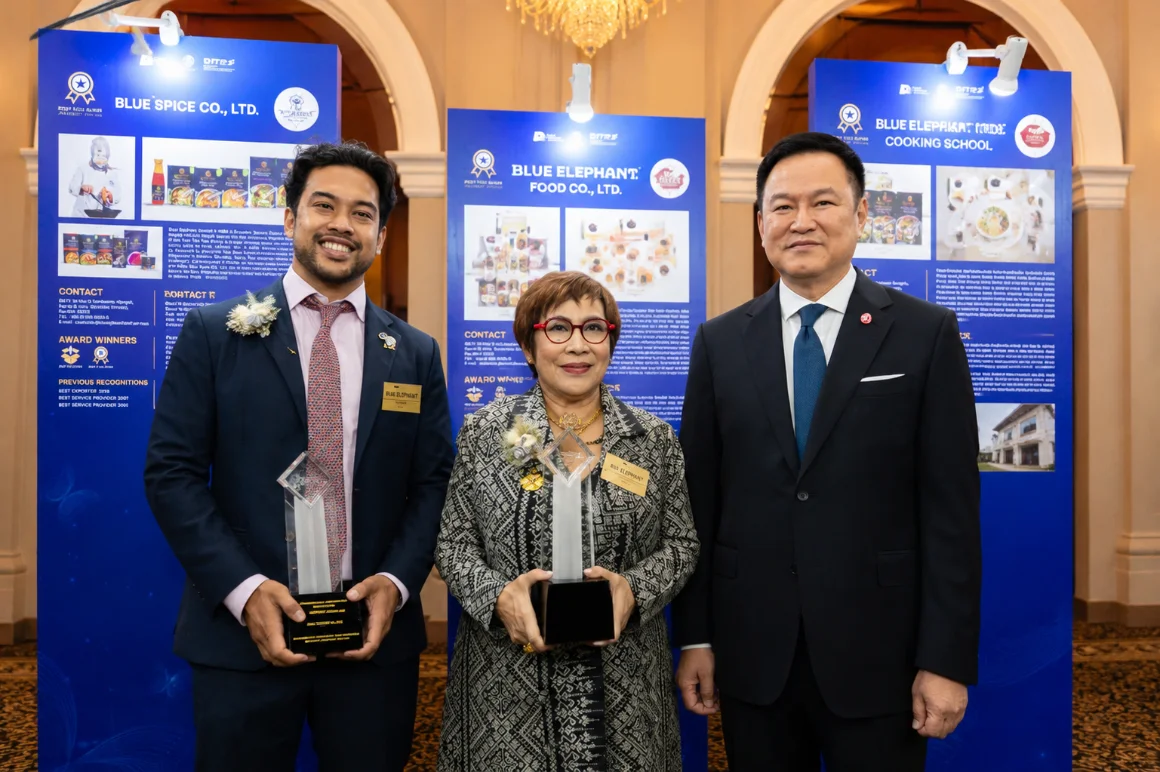
Blue Elephant Bangkok Sathorn is a heritage restaurant and culinary academy operated by the internationally acclaimed Blue Elephant Group. The group's story began in Brussels in 1980, while the Bangkok Sathorn Restaurant and Cooking School opened in 2002. Today, the property caters to culinary tourists, visitors seeking a formal Thai dining experience, and home cooks looking for structured instruction in traditional Thai techniques. In 2026, Blue Elephant Group received both the Best Thai Brand Award and Best Exporter Award at Thailand's Prime Minister's Export Awards, recognising its international reach and contribution to promoting Thai cuisine around the world.

The Historic Colonial Setting on Sathorn Road
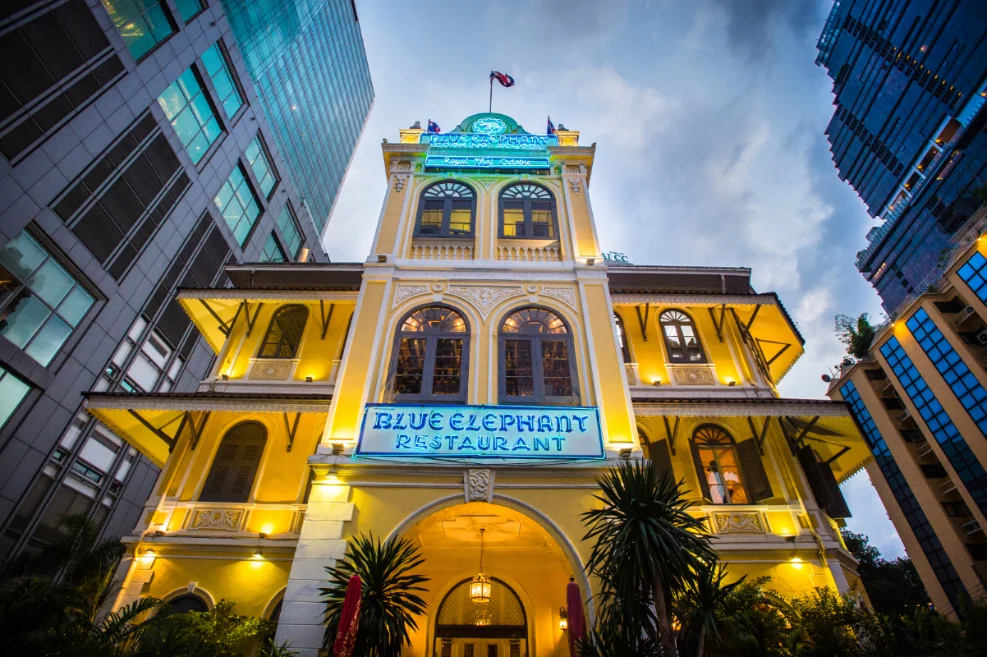
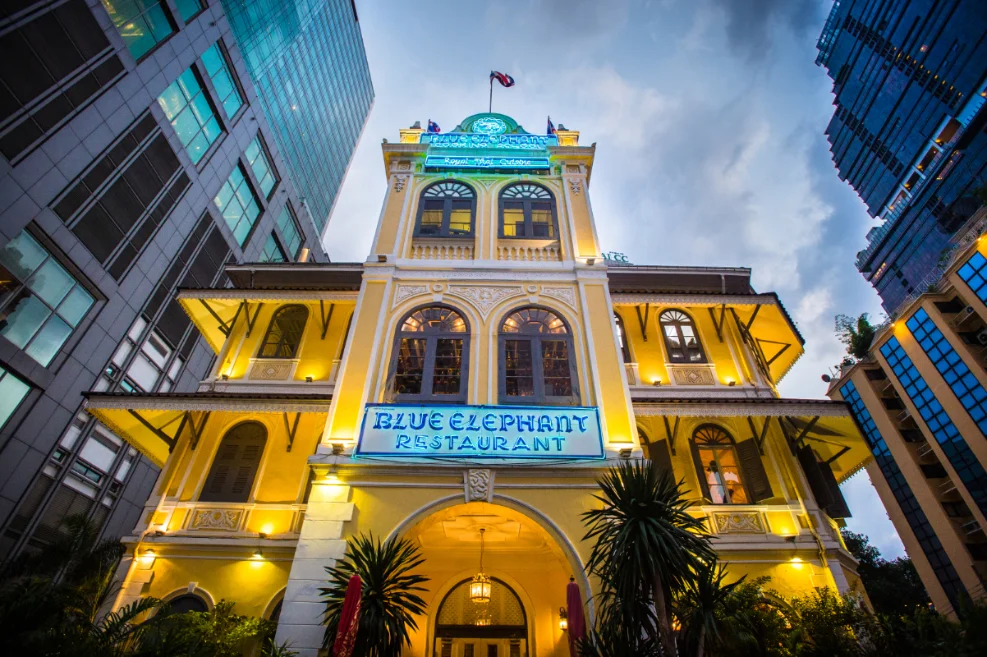
The restaurant occupies the historic Thai Chine building at 41 South Sathorn Road, directly opposite Surasak BTS station. Constructed in 1903, the mansion originally opened as the Bombay Department Store in what was then one of Bangkok's most prestigious neighbourhoods. Its location placed it within walking distance of some of the city's most important hotels and commercial institutions of the period.
In 1928, a group of prominent Chinese businessmen acquired the building as the headquarters of the newly established Thai-Chinese Chamber of Commerce. King Rama VII formally inaugurated the Chamber there in January 1930. During the Second World War, the building was used as a command centre by the Imperial Japanese Army before returning to the Thai-Chinese Chamber of Commerce after the war.
The building continued to serve as offices and function space until the Chamber moved into newer premises behind it. Thailand's Fine Arts Department has cited the property as an exceptional example of colonial-era architecture. Following renovation and restoration, Blue Elephant transformed the mansion into its Bangkok Sathorn Cooking School and Restaurant, which opened in 2002.
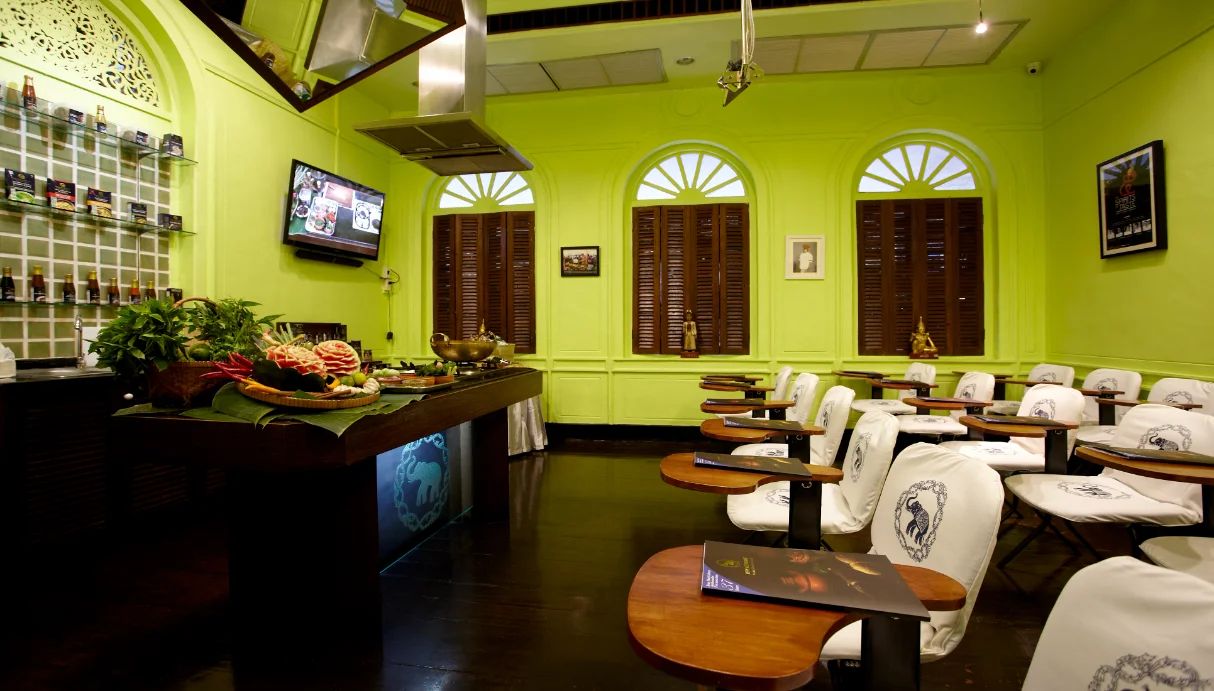
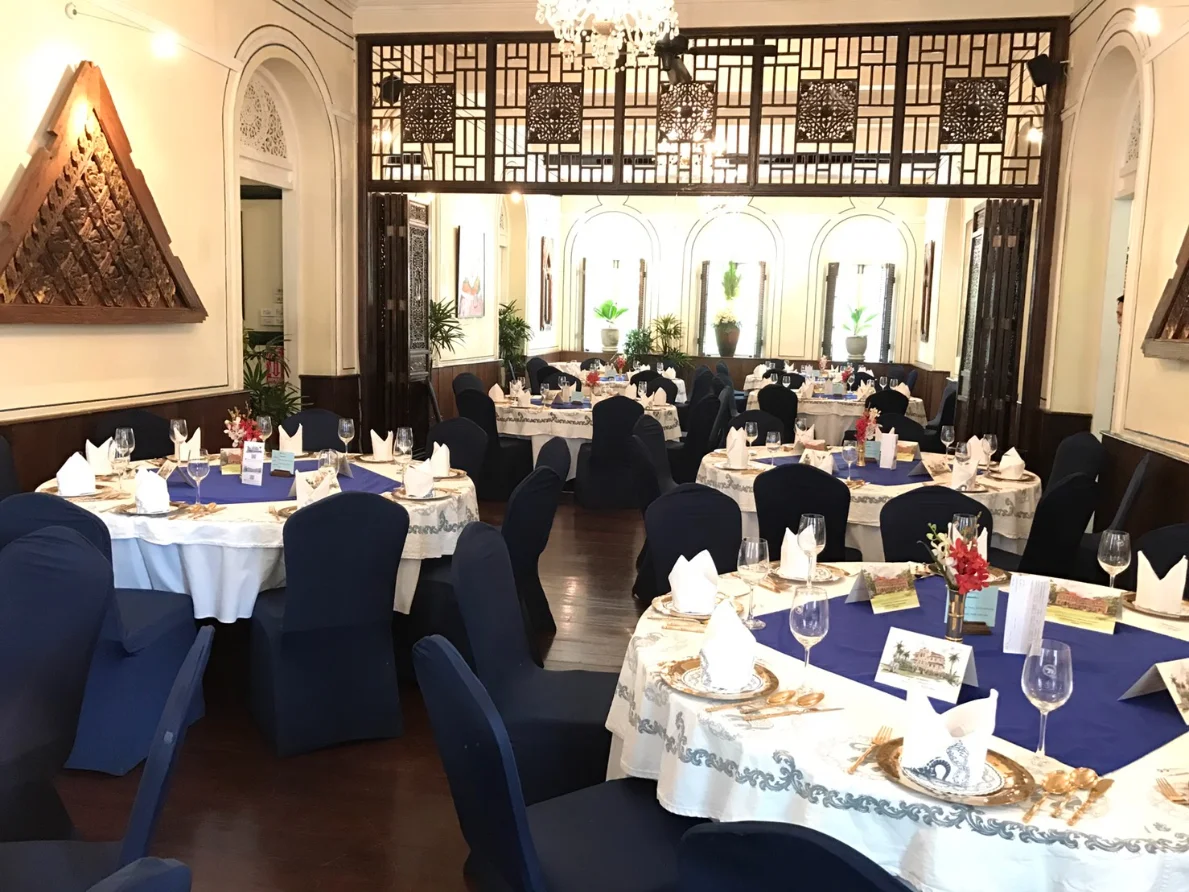
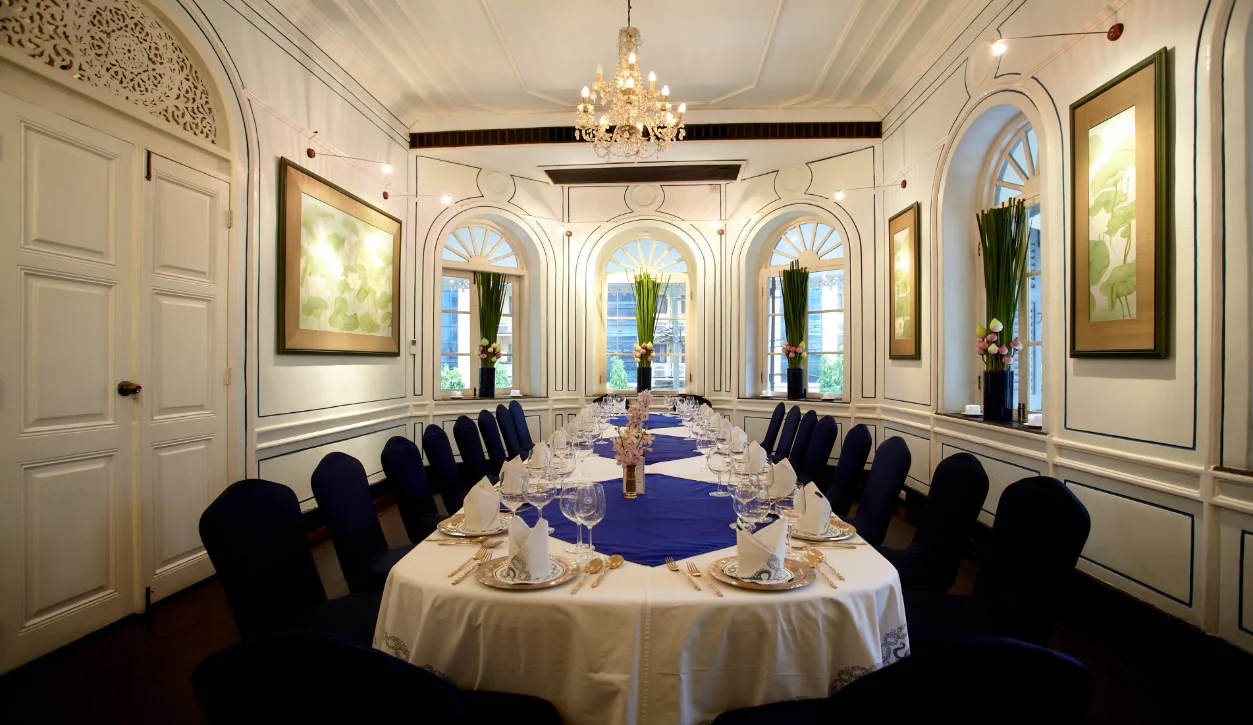
Inside, the formal dining rooms retain the atmosphere of the old mansion, with high ceilings, dark timber, arched windows and period details. The cooking school occupies facilities within the same historic property, creating an unusual combination of heritage architecture and practical culinary education.
The building itself is an important part of the Blue Elephant experience, particularly for visitors interested in Bangkok's architectural and commercial history.
The Culinary Style: Thai Heritage Cuisine and Chef Nooror's Creations
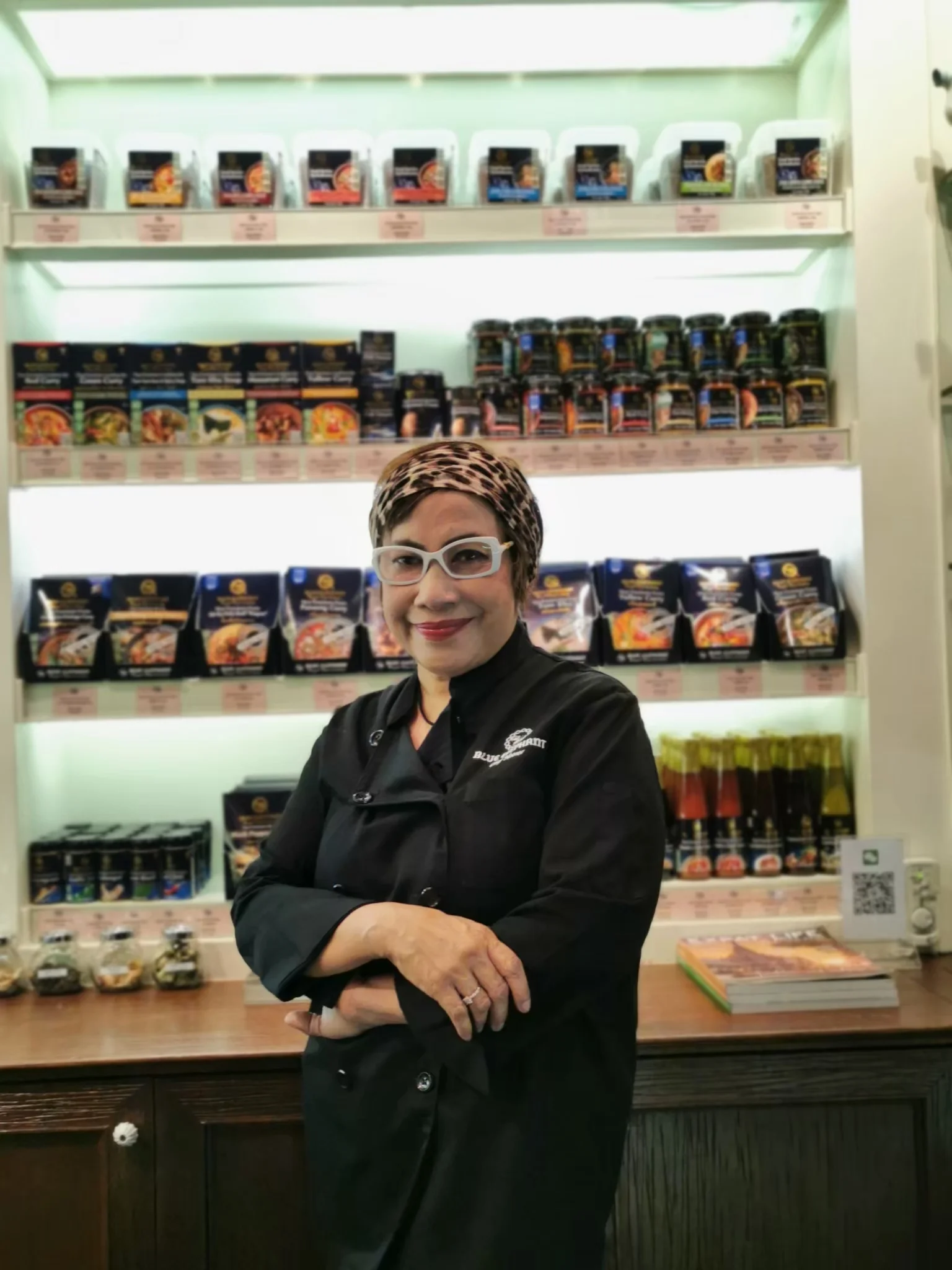
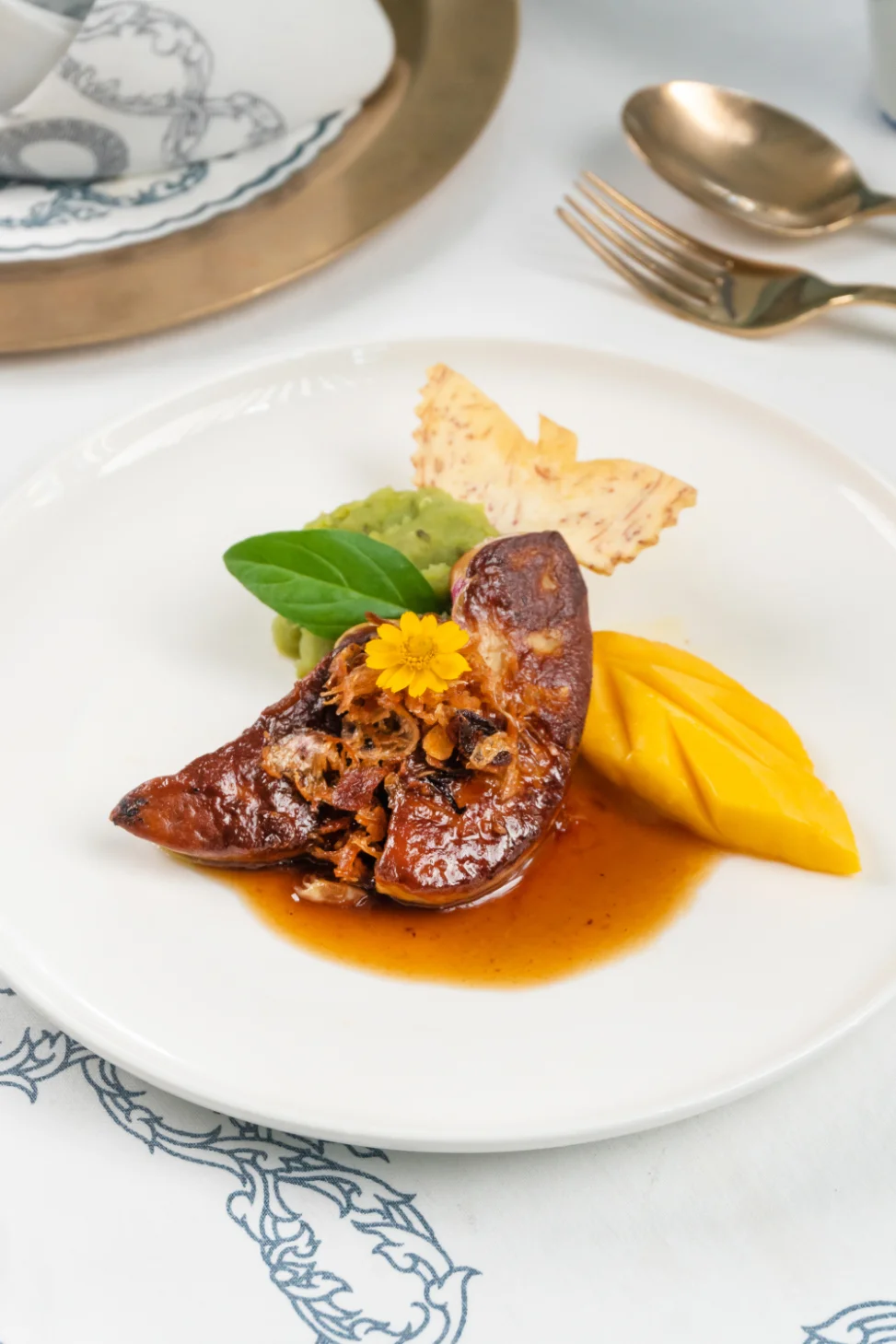
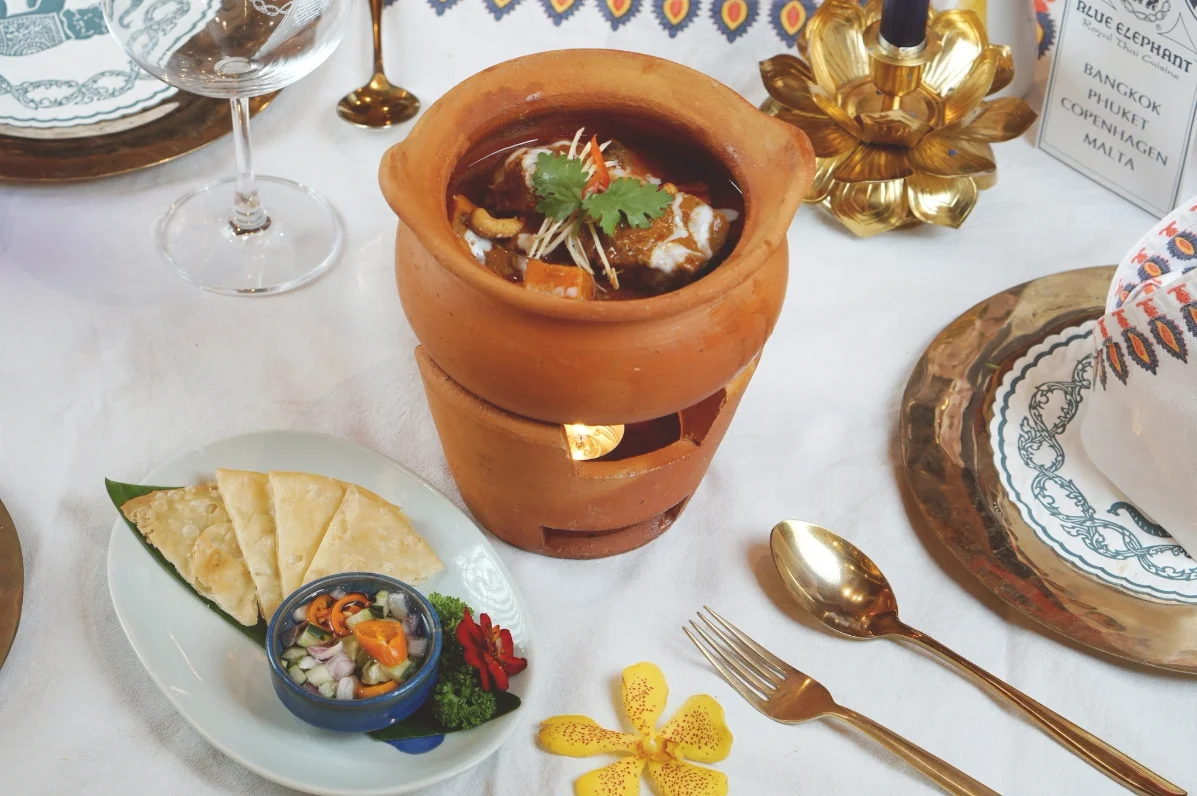
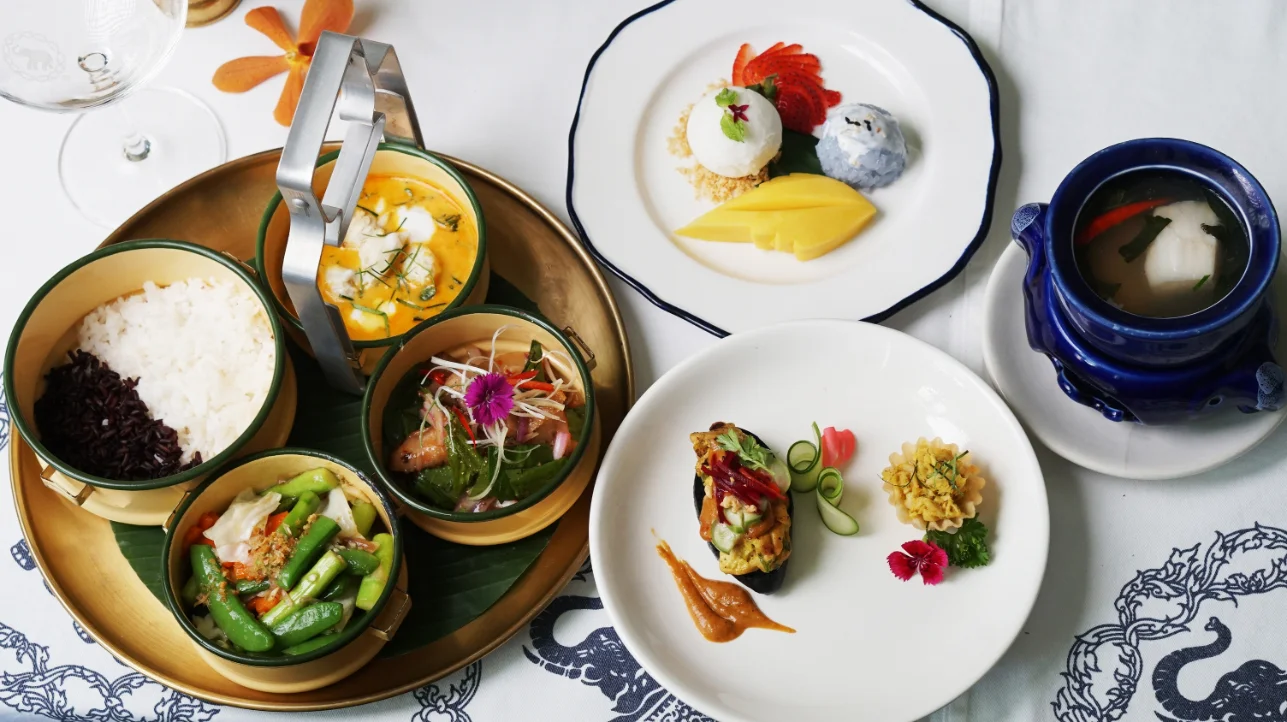
Blue Elephant describes its food as Thai Heritage Cuisine, combining recipes from Thailand's culinary past with newer dishes developed by Master Chef Nooror Somany Steppe and her team. Rather than treating traditional food as something fixed, the restaurant preserves older techniques and flavour combinations while allowing contemporary ideas to sit alongside them.
Chef Nooror's connection with Thai cooking began in Chachoengsao province, where her mother taught her family recipes and the techniques required to make fragrant curry pastes from scratch. She later studied French cuisine at the Jacobs Culinary Institute in Belgium before establishing the first Blue Elephant restaurant in Brussels in 1980.
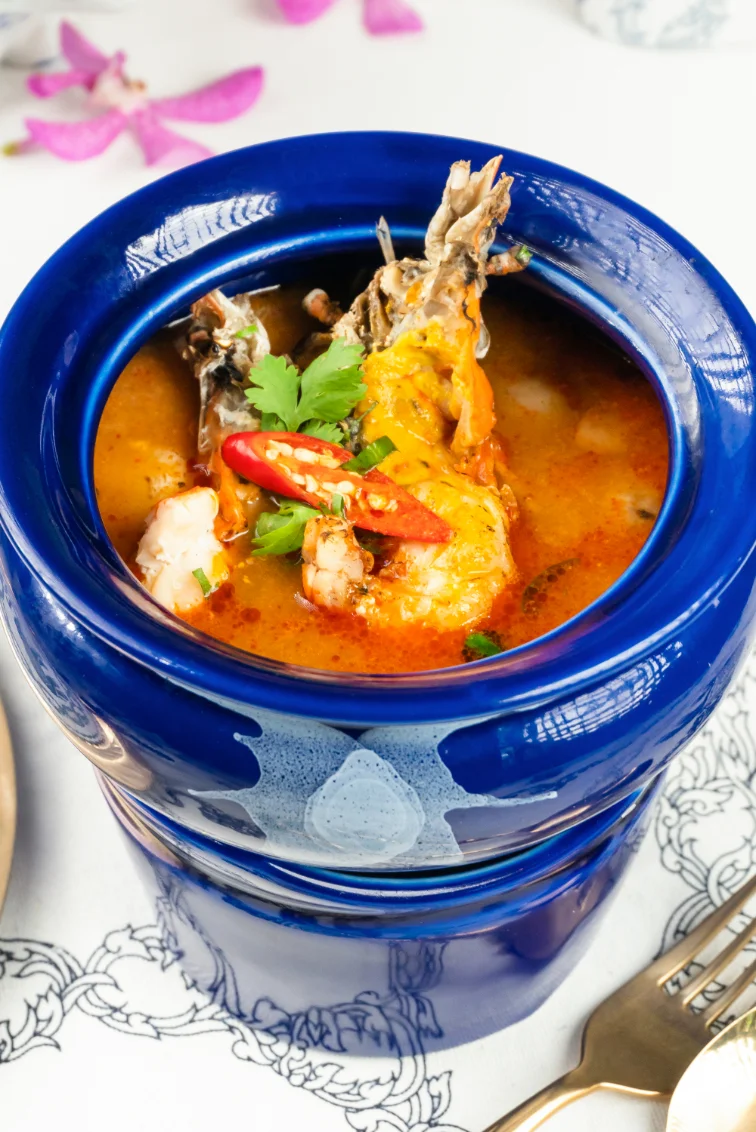
The Blue Elephant menu has developed over more than four decades and combines traditional Thai recipes with what the group describes as "Our Chef's Creation". Premium fresh ingredients are central to the approach, and Blue Elephant has worked with Thai agricultural initiatives including Royal Projects and organic producers.
Chef Nooror's work has taken Thai cuisine far beyond the restaurant itself. She has represented Thailand at international culinary and diplomatic events, taught Thai cooking internationally and helped develop the Blue Elephant range of curry pastes, sauces and other Thai food products now distributed around the world.
The restaurant is particularly interesting for diners who want to explore the breadth of Thai cuisine beyond the dishes most commonly encountered in mainstream tourist restaurants.
| Menu Category | Style | Notes |
|---|---|---|
| Thai Heritage Cuisine | Traditional Thai recipes | Draws on historic dishes and culinary techniques |
| Chef Nooror's Creations | Contemporary Thai cuisine | Modern dishes developed within the Blue Elephant tradition |
| Curry and Spice Dishes | Heritage recipes and house pastes | Closely connected to Chef Nooror's work developing Blue Elephant curry products |
| Seasonal and Local Ingredients | Premium Thai produce | Blue Elephant works with Thai farmers and agricultural initiatives |
Expect 32C days and 80 percent humidity in Bangkok. Beat the 4 PM monsoon downpours by grabbing a 49 THB / 1.15 GBP local poncho at any corner shop.
Blue Elephant Group and the Prime Minister's Export Awards 2026
Blue Elephant began as a single restaurant in Brussels in 1980 and has developed into an international Thai culinary group encompassing restaurants, cooking schools and food manufacturing.
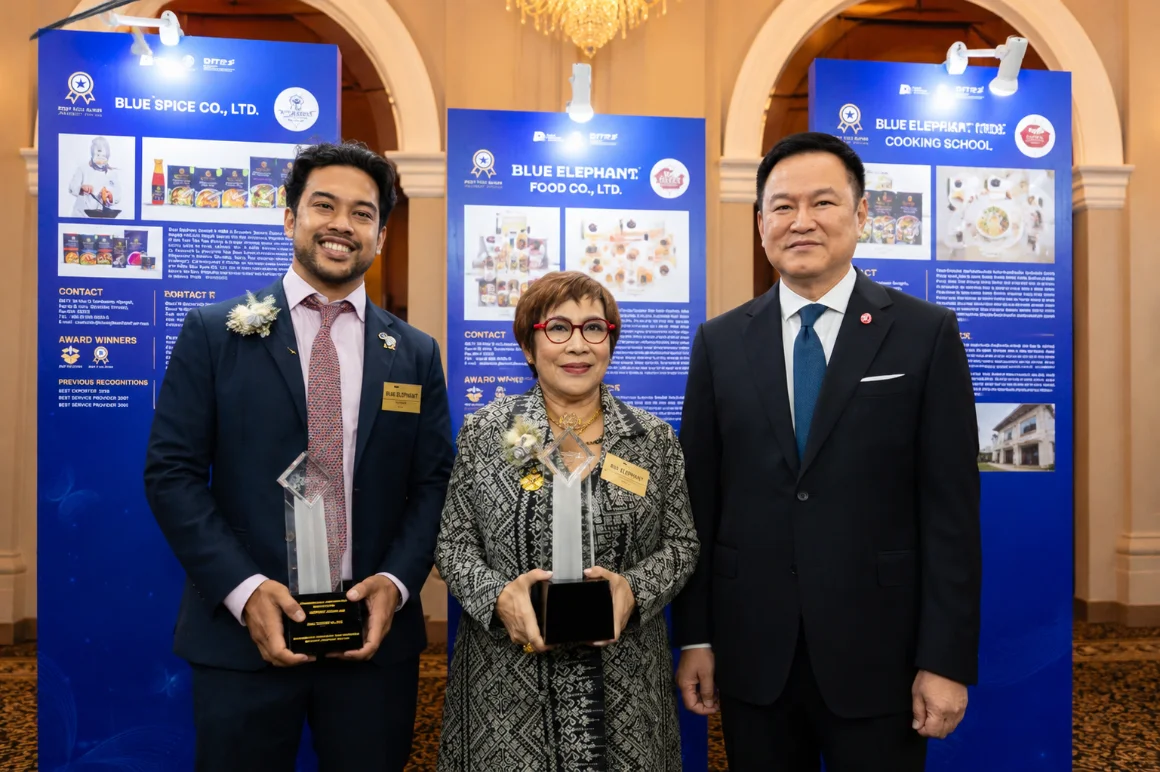
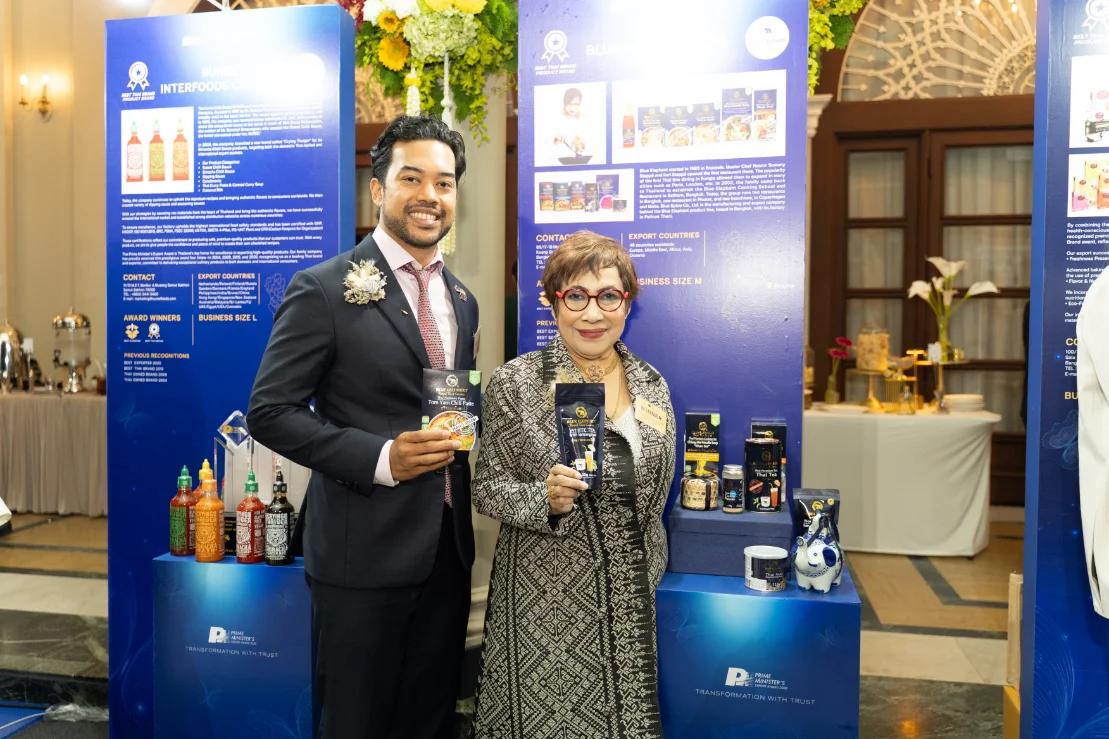
In 2026, Blue Elephant Group received both the Best Thai Brand Award and Best Exporter Award at Thailand's Prime Minister's Export Awards. The annual awards are organised through the Department of International Trade Promotion under the Ministry of Commerce and recognise Thai businesses demonstrating excellence in export performance, innovation, brand development, sustainability and international competitiveness.
The awards marked more than four decades of Blue Elephant promoting Thai cuisine internationally. Chef Nooror described the Best Thai Brand award as recognition of the quality and authenticity of Blue Elephant's Thai curry products, while the Best Exporter award reflected the international success of products now sold in more than 40 countries.
A significant part of that international operation is Blue Spice Co., Ltd., the group's manufacturing arm established in 2006. From its production facility in Pathum Thani, Blue Spice manufactures Thai curry pastes, cooking sauces, spice blends, seasonings and other products based on recipes developed under Chef Nooror's direction.
The business works with Thai farmers and ingredients while combining traditional recipes with modern food-production technology and international quality standards. Blue Elephant describes heritage, innovation and sustainability as three of the principles underpinning the operation.
For visitors to the Bangkok restaurant, the awards help explain why Blue Elephant is more than an individual dining venue. The Sathorn restaurant forms part of a Thai culinary brand that has spent decades exporting Thai food, hospitality and culinary knowledge internationally.
The Interactive Cooking School and Bang Rak Market Tour
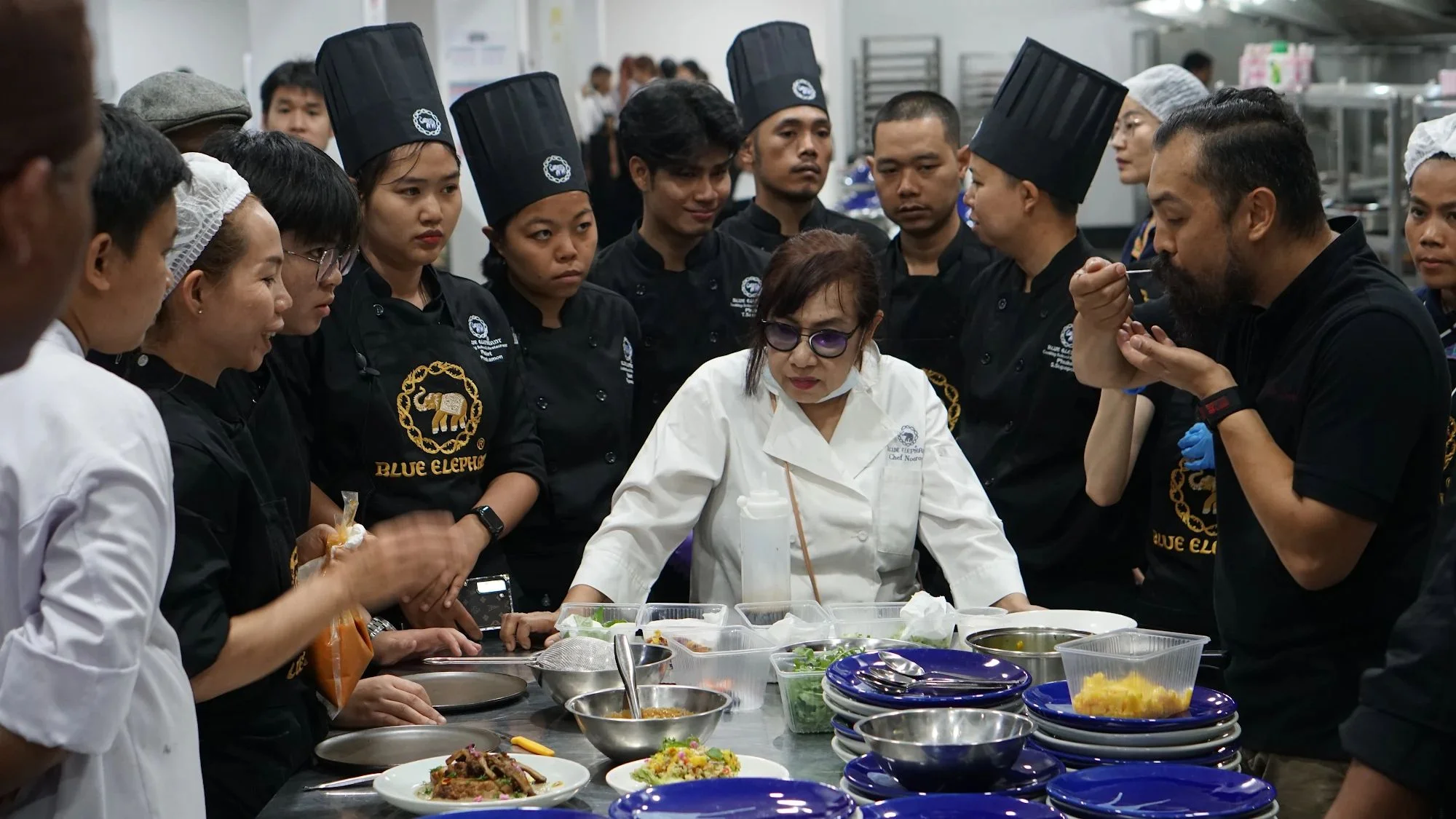
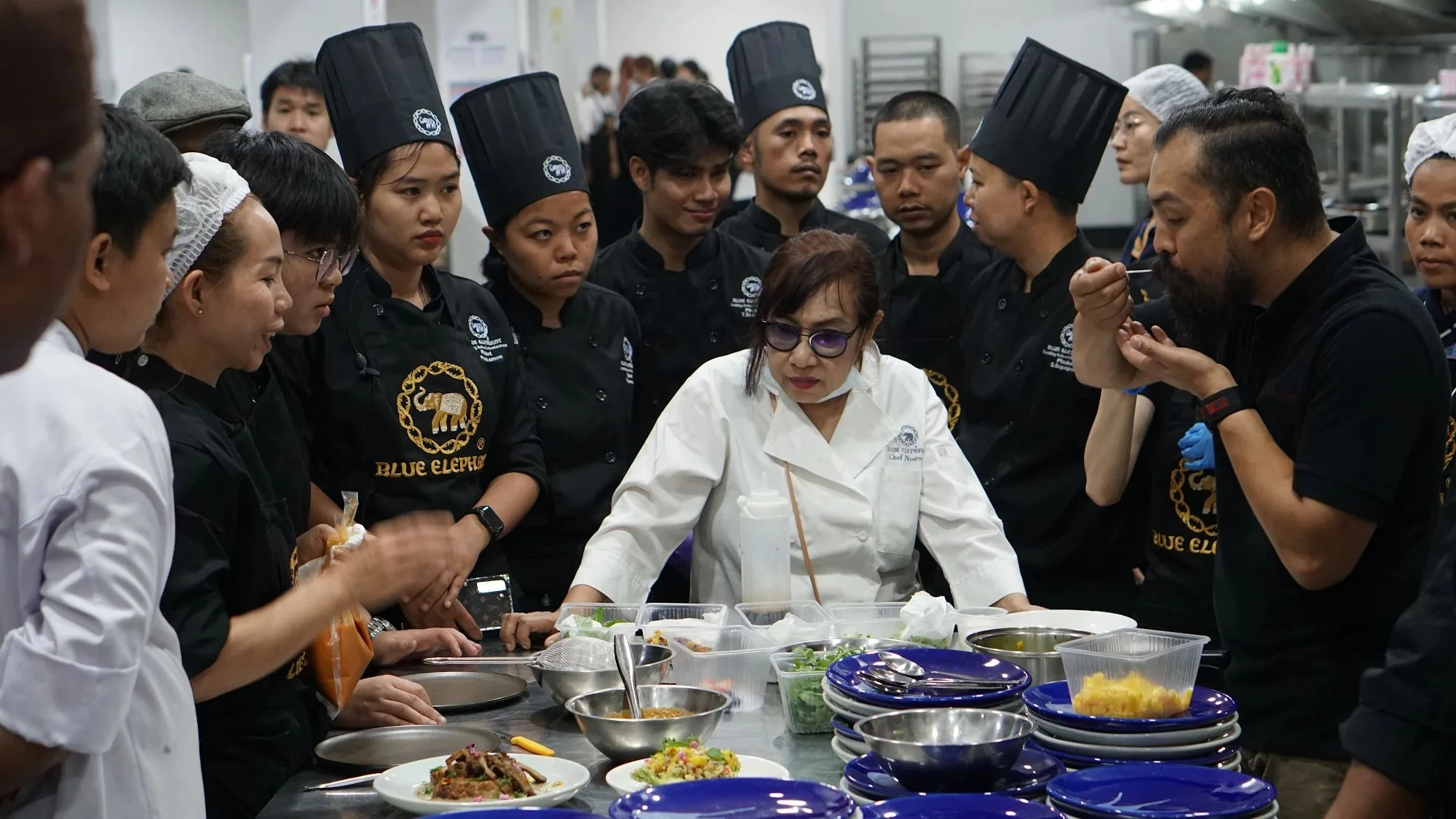
The cooking school is one of the features that most clearly distinguishes Blue Elephant Bangkok from a conventional fine-dining restaurant. The Bangkok Sathorn Cooking School opened alongside the restaurant in 2002 and provides courses aimed at both beginners and more experienced cooks.
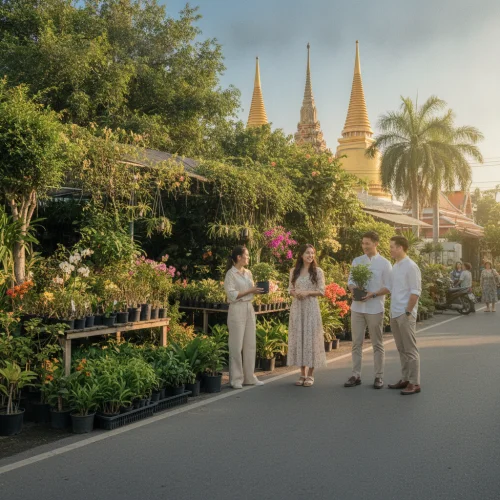
The morning cooking classes begin not in the kitchen, but in the historic lanes of the nearby Bang Rak wet market. Guided by an instructor, you navigate stalls selling ingredients such as fresh ginger, galangal, kaffir lime leaves, herbs and seafood while learning how ingredients used in Thai cooking are selected.
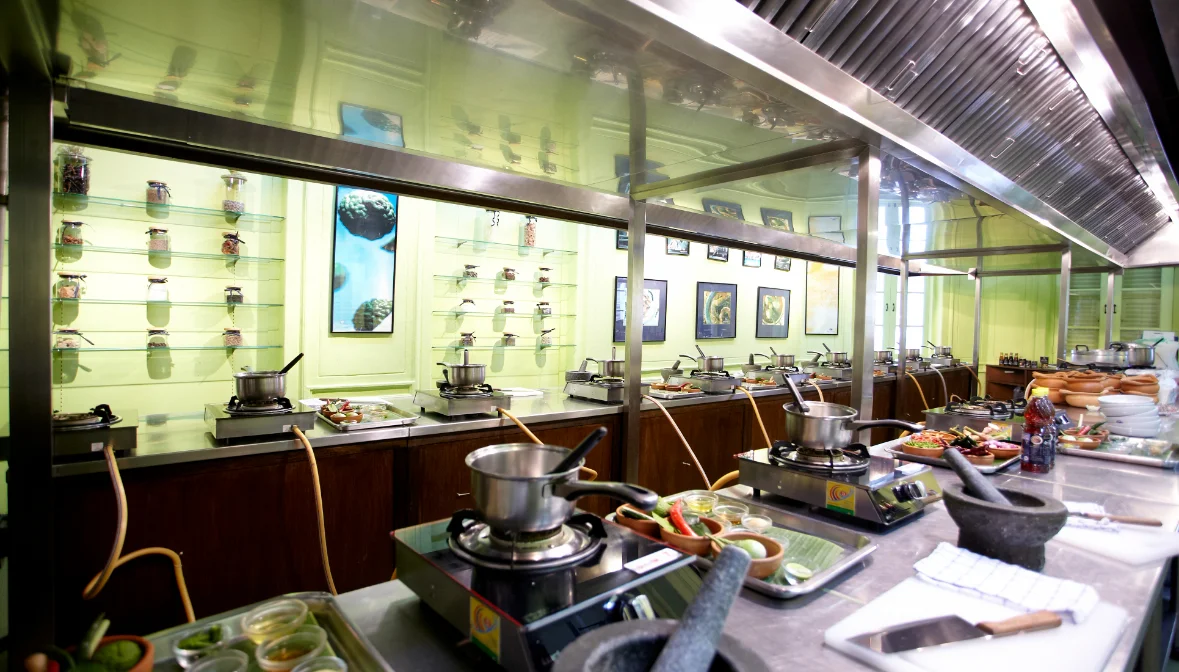
Back at the Sathorn mansion, students move into dedicated cooking facilities where instructors demonstrate the techniques involved in preparing Thai dishes before participants recreate the recipes themselves.
Blue Elephant describes its cooking schools as suitable for both novices and professionals, reflecting the group's wider emphasis on culinary education rather than simply restaurant dining.
The combination of market experience, practical cooking and the historic mansion makes the Sathorn school particularly appealing to visitors who want a more structured introduction to Thai cuisine.
Signature Dishes and Culinary Highlights
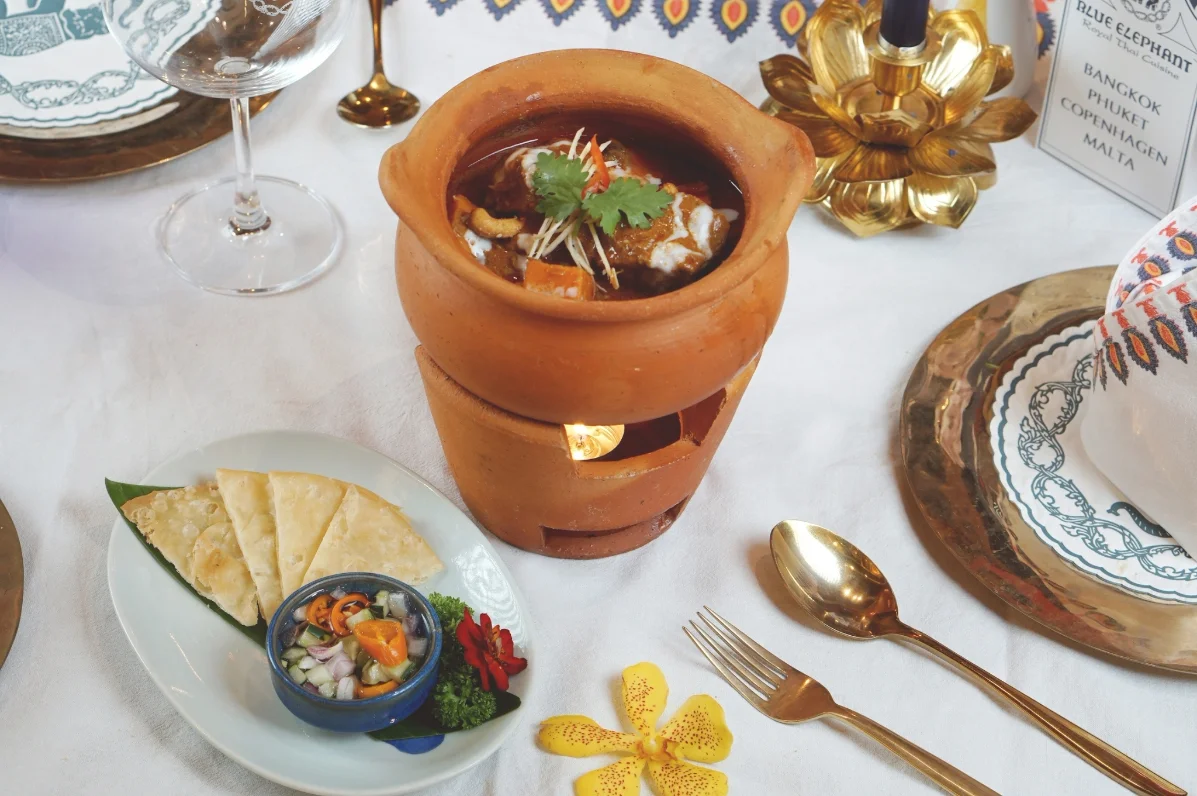
Chef Nooror's cooking is strongly influenced by the curry pastes and traditional recipes she first learned from her mother. Those foundations have remained central to Blue Elephant throughout its international expansion.
The menu moves between Thai Heritage Cuisine and contemporary creations, giving diners the opportunity to experience traditional flavours alongside dishes developed for today's restaurant environment. Blue Elephant has spent decades researching, teaching and adapting Thai recipes while maintaining a strong emphasis on Thai ingredients.
This connection between restaurant cooking and culinary production is unusual. Recipes developed through Blue Elephant's kitchens have also influenced the curry pastes, sauces, spice blends and seasonings produced by Blue Spice for international markets.
Chef Nooror's wider career has included culinary education, diplomatic events, international food festivals and large-scale catering. She has twice represented Thailand at the World Economic Forum in Davos and has participated in culinary events connected with organisations and venues including the United Nations, international exhibitions and Thai government programmes.
Her contribution to Thai cuisine has also received international recognition. Chef Nooror was appointed an Officer of Belgium's Order of Leopold and received an Honorary Master of Arts degree in Home Economics from Kasetsart University.
Dining at the Sathorn restaurant therefore provides an introduction not only to Blue Elephant's food, but also to the work of a chef who has spent much of her career promoting Thai cuisine internationally.
Comparing Sathorn's Heritage Dining Establishments
Bangkok contains several high-end heritage dining options, making it useful to understand how Blue Elephant differs from other premium Thai restaurants. Establishments such as Jim Thompson Restaurant and Celadon at The Sukhothai offer their own approaches to upscale Thai dining.
Blue Elephant's defining feature is the combination of its historic mansion, Thai Heritage Cuisine and active cooking school. The Sathorn property is not simply a restaurant occupying an old building; culinary education forms a substantial part of the operation.
The wider history of the Blue Elephant group also differentiates it. The brand began in Europe in 1980 before establishing its Bangkok Sathorn restaurant in 2002 and has spent decades promoting Thai cuisine internationally through restaurants, cooking schools and food products.
Choose Blue Elephant if you want a dining experience closely connected with Thai culinary history, Chef Nooror's work and hands-on cooking rather than a purely contemporary restaurant experience.
Location and Getting There
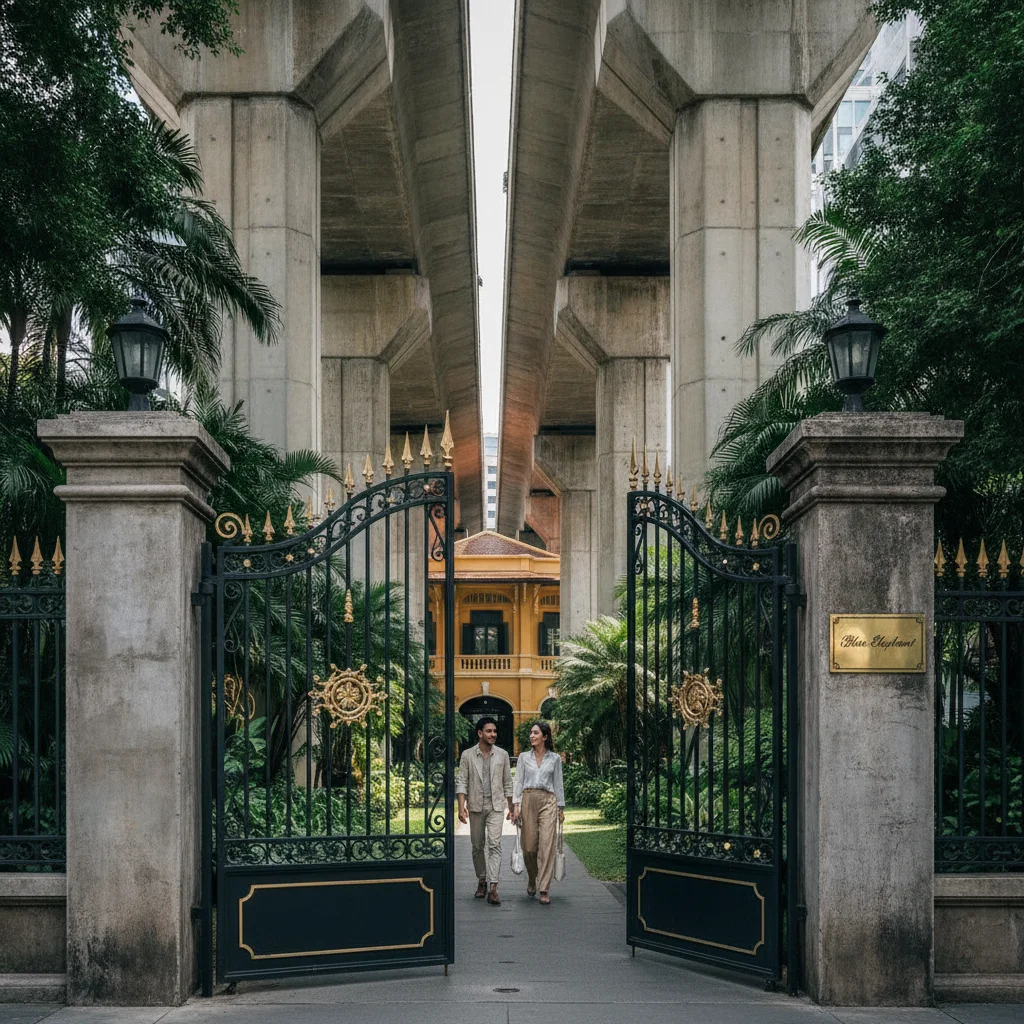
Blue Elephant Bangkok Sathorn is situated at 41 South Sathorn Road in Yannawa, Sathorn, directly opposite BTS Surasak station.
The BTS location makes the restaurant particularly easy to reach from central Bangkok. Visitors travelling from Sukhumvit can change at Siam onto the Silom Line and continue to Surasak. From Silom and other parts of Sathorn, the journey is considerably simpler than travelling by road during Bangkok's busiest periods.
If you are using a taxi or ride-hailing service, make clear that you want Blue Elephant Bangkok Sathorn. Blue Elephant now operates a second Bangkok restaurant on Sukhumvit 13, which opened in July 2024.
The Sathorn location is the historic 1903 mansion containing both the restaurant and cooking school.
Costs and Booking
Blue Elephant positions its Sathorn restaurant and cooking school at the premium end of Bangkok's culinary market. Current restaurant menus, cooking-school schedules and prices can change, and the new materials supplied by Blue Elephant do not provide a current public price list.
For this reason, check the latest rates when booking rather than relying on older published prices. Cooking classes, restaurant reservations and private events can be booked or enquired about directly with Blue Elephant, while third-party platforms may also offer cooking-school reservations.
Advance booking is sensible, particularly for cooking classes and popular dinner periods. Blue Elephant itself notes that the Sathorn restaurant can become fully booked, which was one of the reasons the group opened its second Bangkok location on Sukhumvit 13.
| Experience Option | Current Pricing | Notes |
|---|---|---|
| Bangkok Sathorn Cooking School | Check current rate | Cooking courses for beginners and experienced cooks |
| Restaurant Lunch | Check current menu | Daily service |
| Restaurant Dinner | Check current menu | Daily service |
| Private Events and Catering | On request | Corporate events, weddings, meetings and culinary activities |
Who It Suits Best
This property is particularly well suited to culinary tourists who want to understand the history and techniques behind Thai food rather than simply eat a meal. The cooking school provides a structured introduction to Thai ingredients and preparation, while the restaurant offers a more formal heritage setting.
It also suits returning Bangkok visitors looking for an experience connected with the city's history. The 1903 mansion, its links with the Thai-Chinese Chamber of Commerce and its wartime history give the property considerably more character than a purpose-built modern restaurant.
Blue Elephant also caters for corporate groups, private events, weddings and team-building activities. The group's catering experience ranges from intimate Chef's Table events to major international functions.
Budget travellers and visitors primarily interested in casual street food will find more appropriate options elsewhere in Bangkok. Blue Elephant is best approached as a premium culinary and heritage experience.
What to Know Before You Book
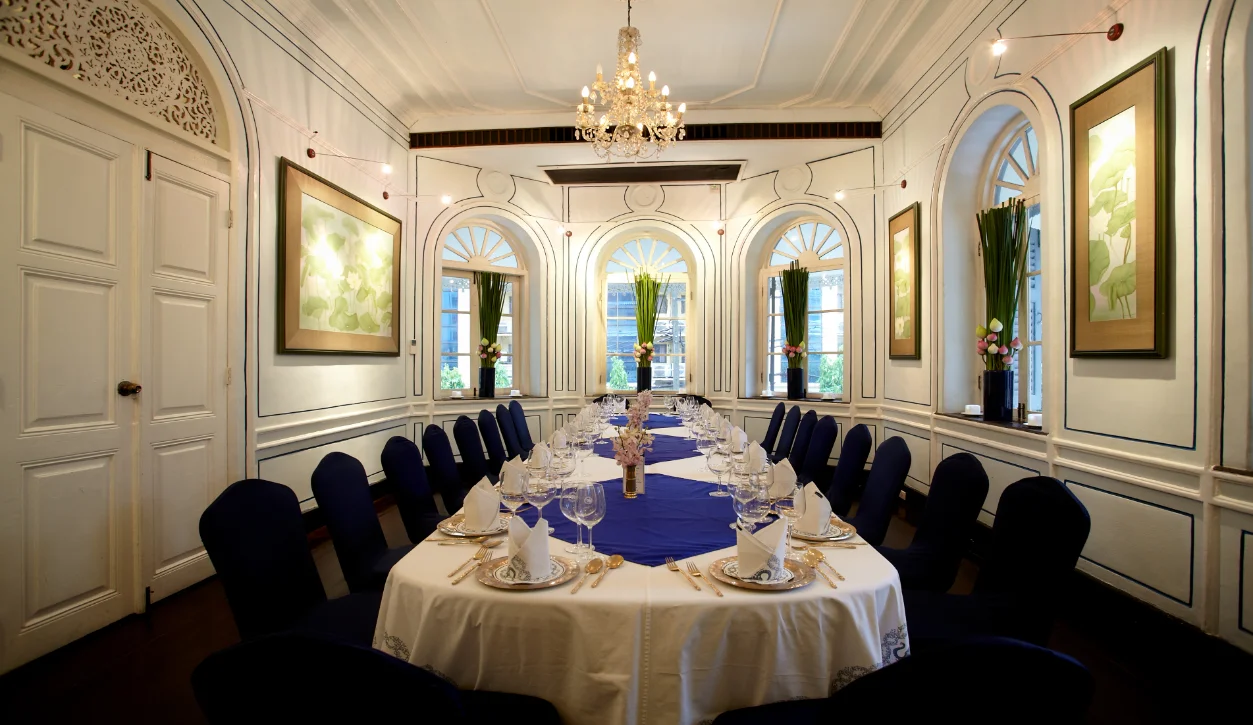
Make sure you book the correct Blue Elephant Bangkok location. The Sathorn restaurant covered here is at 41 South Sathorn Road opposite BTS Surasak and contains the historic mansion and cooking school.
Blue Elephant Bangkok Sukhumvit is a separate restaurant at 27 Sukhumvit 13. It opened in July 2024 inside an approximately 80-year-old wooden house surrounded by gardens and includes the Monkey Pod Garden Bar.
Current Blue Elephant material lists Bangkok Sathorn restaurant service daily, with lunch from 11:30 AM until 2:30 PM last order and dinner from 5:30 PM until 10:00 PM last order.
Cooking-school schedules should be confirmed when booking because course programmes and availability can change.
If you have allergies or specific dietary requirements, contact Blue Elephant before your visit so the restaurant or cooking-school team can advise on suitable dishes and substitutions.
Practical Tips
Book the Cooking School in Advance
The cooking school is one of the main reasons to visit the Sathorn branch and class capacity is naturally more limited than ordinary restaurant seating. Check the current programme and reserve ahead.
Utilise the Skytrain
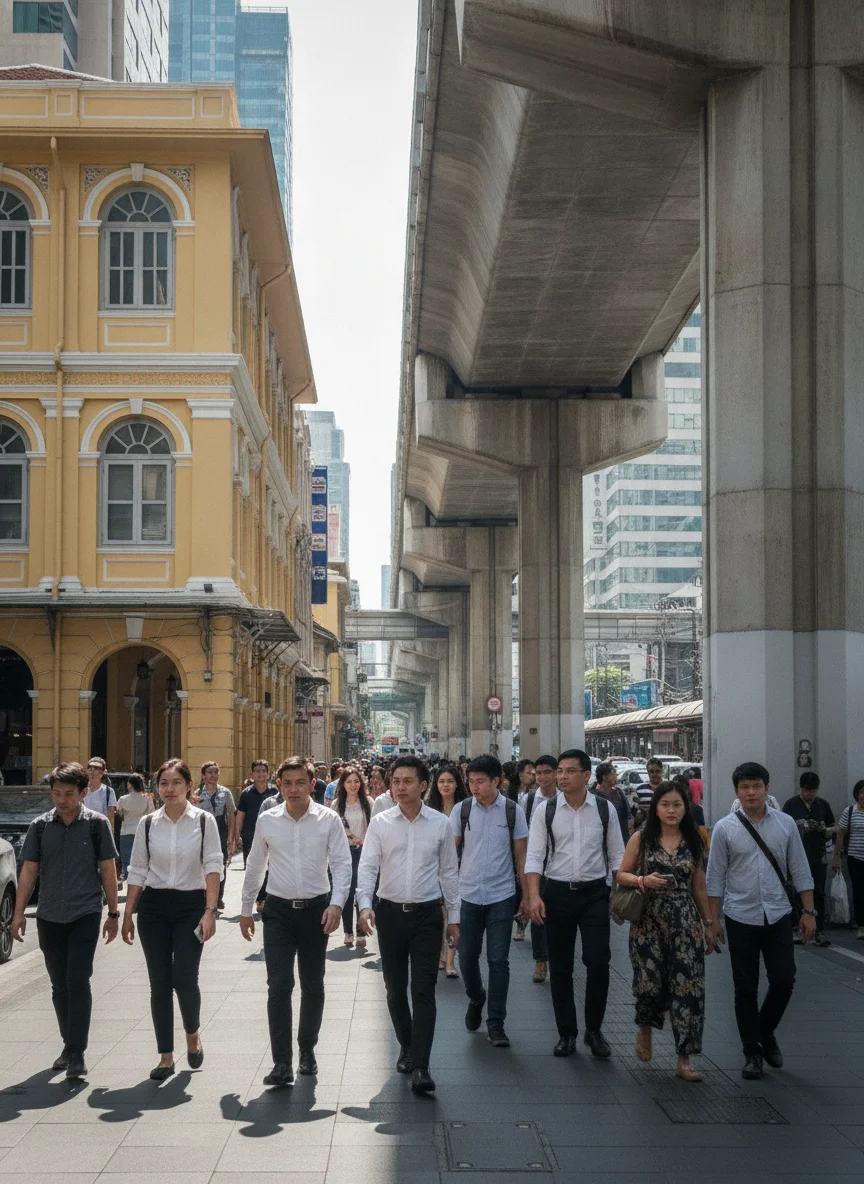
BTS Surasak is directly opposite the restaurant. Using the Skytrain avoids much of the heavy traffic that affects Sathorn Road, particularly during weekday rush hours.
Allow Time for the Building
The mansion is more than decorative architecture. It dates from 1903 and has served as the Bombay Department Store, Thai-Chinese Chamber of Commerce headquarters and a Japanese military command centre before becoming Blue Elephant.
Check Which Bangkok Branch You Are Booking
Bangkok Sathorn is the historic mansion and cooking-school location. Bangkok Sukhumvit is the newer restaurant on Sukhumvit 13.
Explore Chef Nooror's Culinary Heritage
Chef Nooror has spent more than four decades promoting Thai cuisine internationally. The Sathorn restaurant provides a useful introduction to the traditional recipes and contemporary creations that have defined Blue Elephant.
Sample the Blue Elephant Products
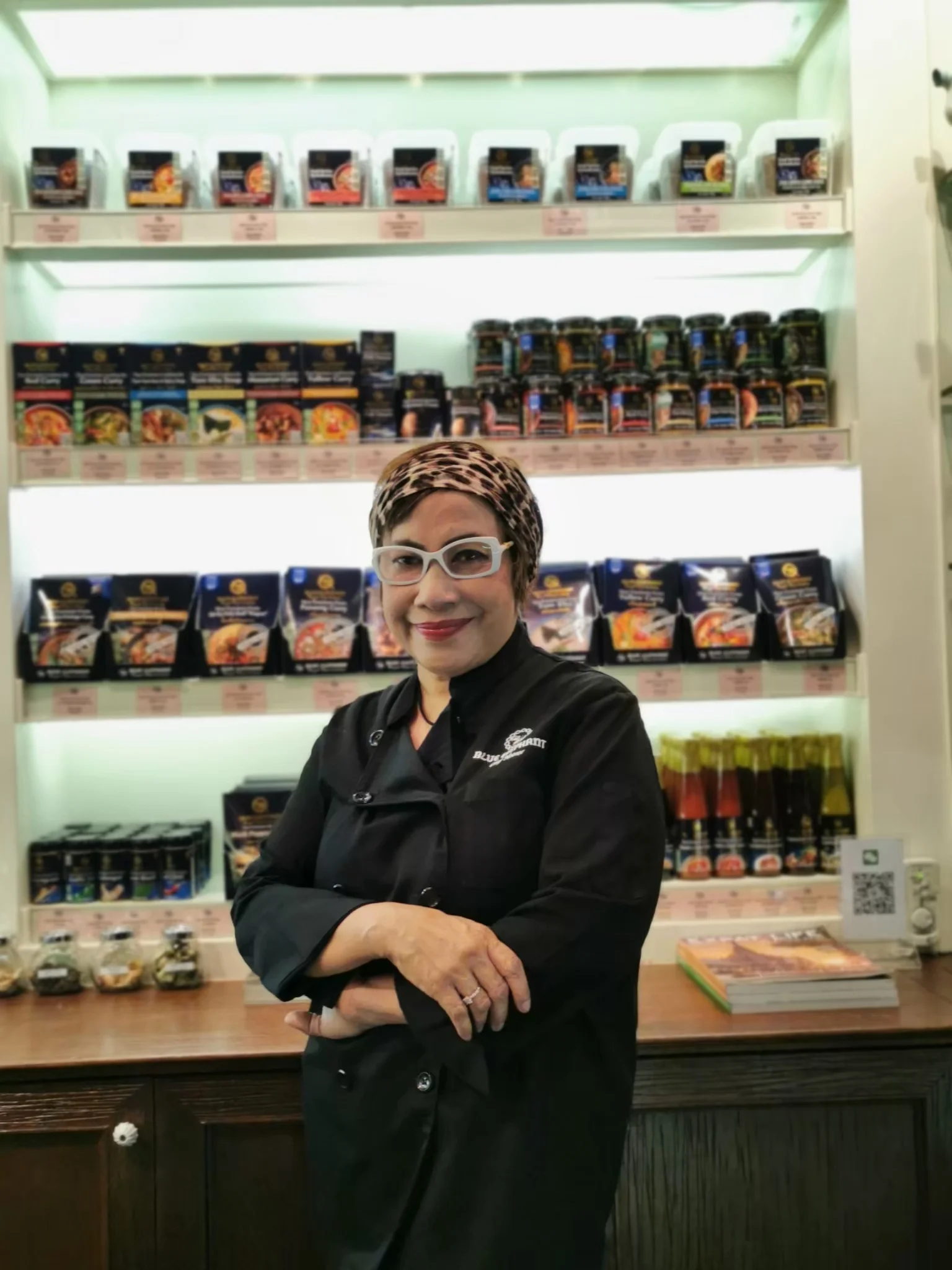
Blue Elephant's packaged curry pastes, sauces, spices and seasonings are produced through Blue Spice, the group's manufacturing arm established in 2006. The products are exported to more than 40 countries.
Notify of Dietary Restrictions Early
Tell the restaurant or cooking school about significant food allergies or dietary requirements when booking so the team can advise what can be accommodated.
Consider the Restaurant's Wider History
The 2026 Best Thai Brand and Best Exporter awards reflect a business that now extends far beyond restaurants. Blue Elephant operates cooking schools and an international Thai food manufacturing and export operation alongside its hospitality business.
Quick Reference
| Item | Detail | Notes |
|---|---|---|
| Property Name | Blue Elephant Bangkok Sathorn | Restaurant and Cooking School |
| Location | 41 South Sathorn Road, Yannawa, Sathorn, Bangkok 10120 | Directly opposite BTS Surasak |
| Bangkok Sathorn Opening | 2002 | Blue Elephant Group founded in Brussels in 1980 |
| Building | Thai Chine Building | Historic mansion constructed in 1903 |
| Property Type | Restaurant and Cooking School | Also caters for private and corporate events |
| Category | Thai Heritage Cuisine / Premium Cooking School | Led by Master Chef Nooror Somany Steppe |
| Opening Hours | Lunch: 11:30 - 14:30, Dinner: 17:30 - 22:00 | Last-order times according to current Blue Elephant material |
| Cooking School | Yes | Courses for beginners and experienced cooks |
| Restaurant | Yes | Lunch and dinner daily |
| Master Chef | Nooror Somany Steppe | Founder of Blue Elephant |
| Major Recent Awards | Best Thai Brand and Best Exporter | Prime Minister's Export Awards 2026 |
| Nearest BTS | Surasak | Directly opposite the property |
| Official Website | blueelephant.com | Group website |
| Booking Platform | Klook | Cooking-school experiences may be available |
FAQ: Blue Elephant Bangkok: Dining & Cooking Class Guide
Who is Blue Elephant Bangkok best suited for?
What is the history of the building that houses Blue Elephant Bangkok?
What kind of cuisine does Blue Elephant Bangkok serve?
What awards has Blue Elephant Group received?
What is the experience like at the Blue Elephant Bangkok cooking school?
What makes Blue Elephant Bangkok unique compared to other high-end Thai restaurants?
How can I get to Blue Elephant Bangkok Sathorn?
Is advance booking recommended for Blue Elephant Bangkok?
Is Blue Elephant Bangkok suitable for budget travellers?
Can I buy Blue Elephant products?
Reviewed by the Thailand Guide Editorial Team • Last reviewed: 18 August 2026
This page is provided for general information only. While we aim for accuracy, details can change — please verify anything important independently before relying on it.