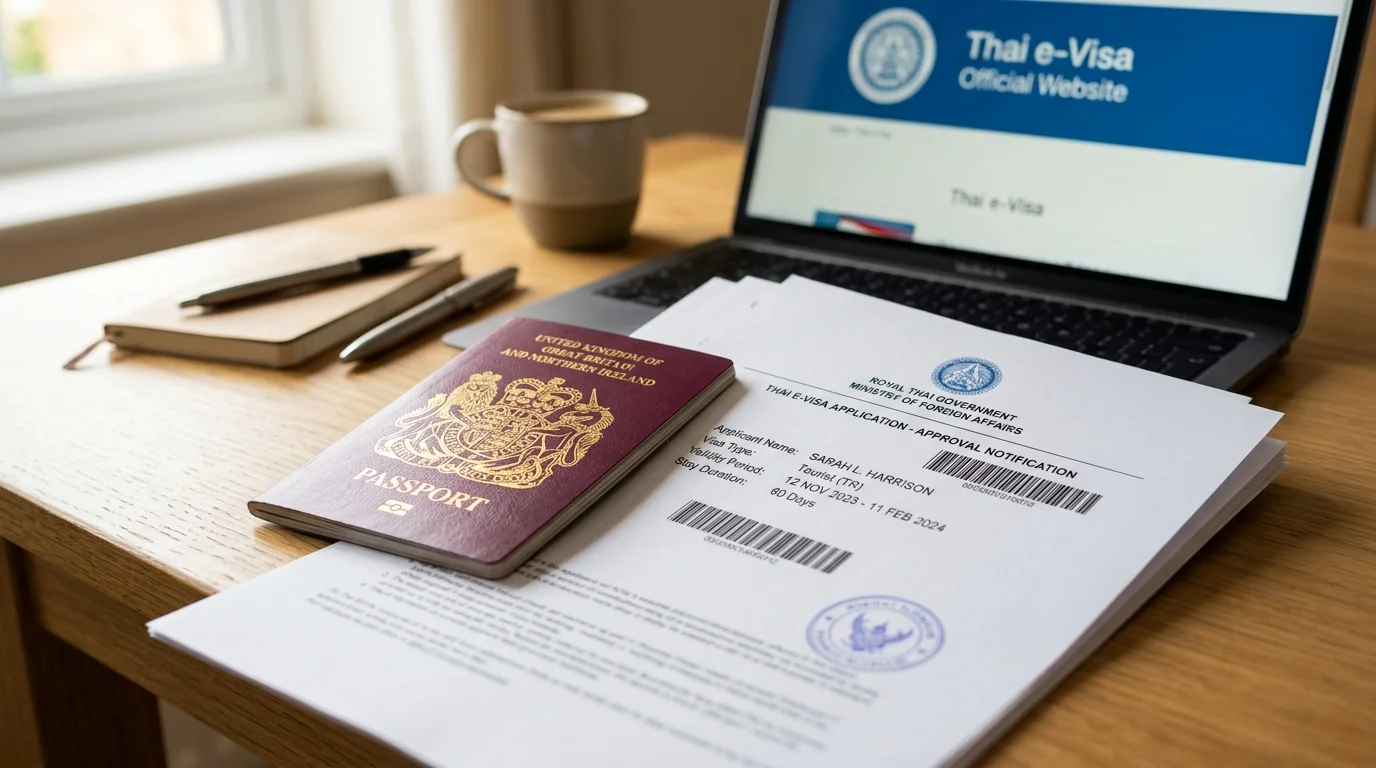
Thailand Digital Nomad Visa
The Thailand Long-Term Resident (LTR) visa grants remote workers ten years of legal residency, provided you can prove an annual income exceeding $80,000 USD. It officially replaces the legal grey area of working remotely on tourist exemptions with a fully compliant digital work permit.
This page breaks down the exact eligibility criteria, employer restrictions, and Board of Investment application process for the Work-from-Thailand Professional LTR visa. It will help you determine if you meet the stringent financial and corporate requirements before investing time in the paperwork. This route is designed exclusively for highly paid corporate remote workers or established freelancers with substantial track records. It is completely unrealistic for entry-level digital nomads, who must look toward standard tourist options or education visas.

Eligibility and Income Thresholds for UK Applicants
The fundamental requirement for the remote worker LTR visa is proving a high, sustained personal income. You must demonstrate a minimum personal income of $80,000 USD (approximately £63,000) per year for the two years immediately preceding your application. The Board of Investment (BOI) assesses this strictly using official UK tax returns (SA302) or corresponding PAYE P60 forms, rather than just bank statements showing deposits. If your income falls between $40,000 and $80,000 USD, you can still qualify, but the BOI demands additional academic or professional leverage. You must hold a Master's degree, own intellectual property, or have secured at least $1 million USD in Series A funding for your own business. Attempting to artificially inflate your income using short-term transfers will result in immediate rejection, as the financial history check is exhaustive. Ensure your UK financial documents clearly delineate salary from dividends if you are a company director, as the BOI scrutinises the source of funds closely. Your success depends entirely on providing undisputed, government-issued proof of historical earnings.
Learn how UK nationals can apply for a Thailand Tourist Visa, compare visa exemptions, check required documents, and understand border rules before flying.
| Income Level | Additional Requirement | Required Evidence |
|---|---|---|
| Over $80,000 USD | None | Two years of UK tax returns (SA302/P60) |
| $40,000 - $80,000 USD | Master's Degree | Original degree certificate legally certified |
| $40,000 - $80,000 USD | Intellectual Property | Official patent or IP ownership documents |
| $40,000 - $80,000 USD | Series A Funding | Financial records proving $1m USD investment |
Employer Corporate Revenue Requirements
Sponsored
Securing this visa requires your employer to meet strict financial and structural criteria, meaning a high personal salary alone is insufficient. If you are employed by a private company, that business must have been operating for at least three years and possess a combined revenue of $150 million USD (around £118 million) over the last three years. Publicly traded companies listed on any recognised global stock exchange are exempt from this specific revenue threshold. You must provide a formal letter from your employer explicitly confirming your position, your salary, and their permission for you to work remotely from Thailand. For UK freelancers or sole traders, the BOI requires you to prove you have worked in your current field for at least five years. You must supply historic contracts, client invoices, and business tax records to demonstrate a stable, long-term freelance practice. The BOI routinely rejects applicants whose employers cannot produce audited financial statements confirming the $150 million USD revenue requirement. Always verify your company's official financial standing with your HR department before initiating the application process.
| Employer Type | Revenue Requirement | Key Document Needed |
|---|---|---|
| Publicly Traded Company | None | Proof of stock exchange listing |
| Private Company | $150m USD over 3 years | Audited corporate financial statements |
| Freelancer / Sole Trader | N/A | 5 years of contracts and invoices |
| All Applicants | N/A | Formal letter authorising remote work |
The Board of Investment Application Process
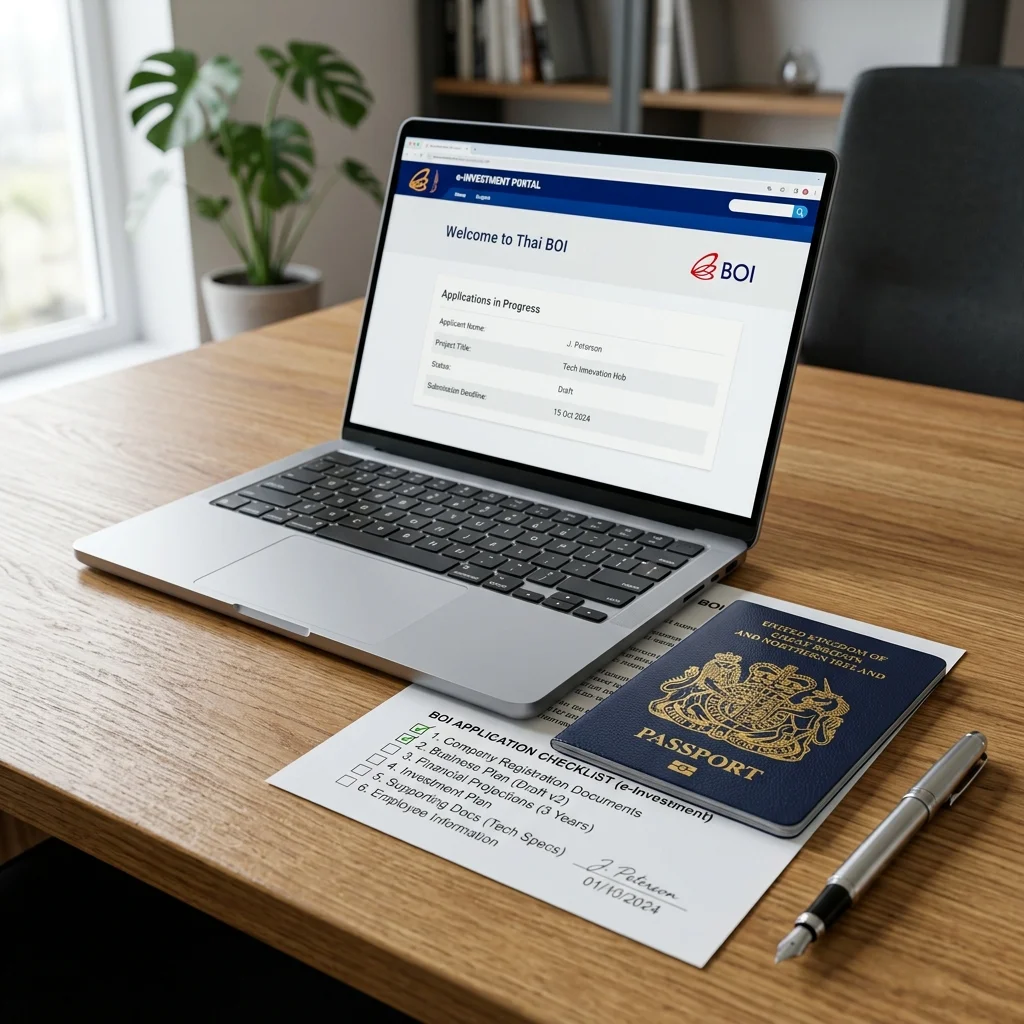
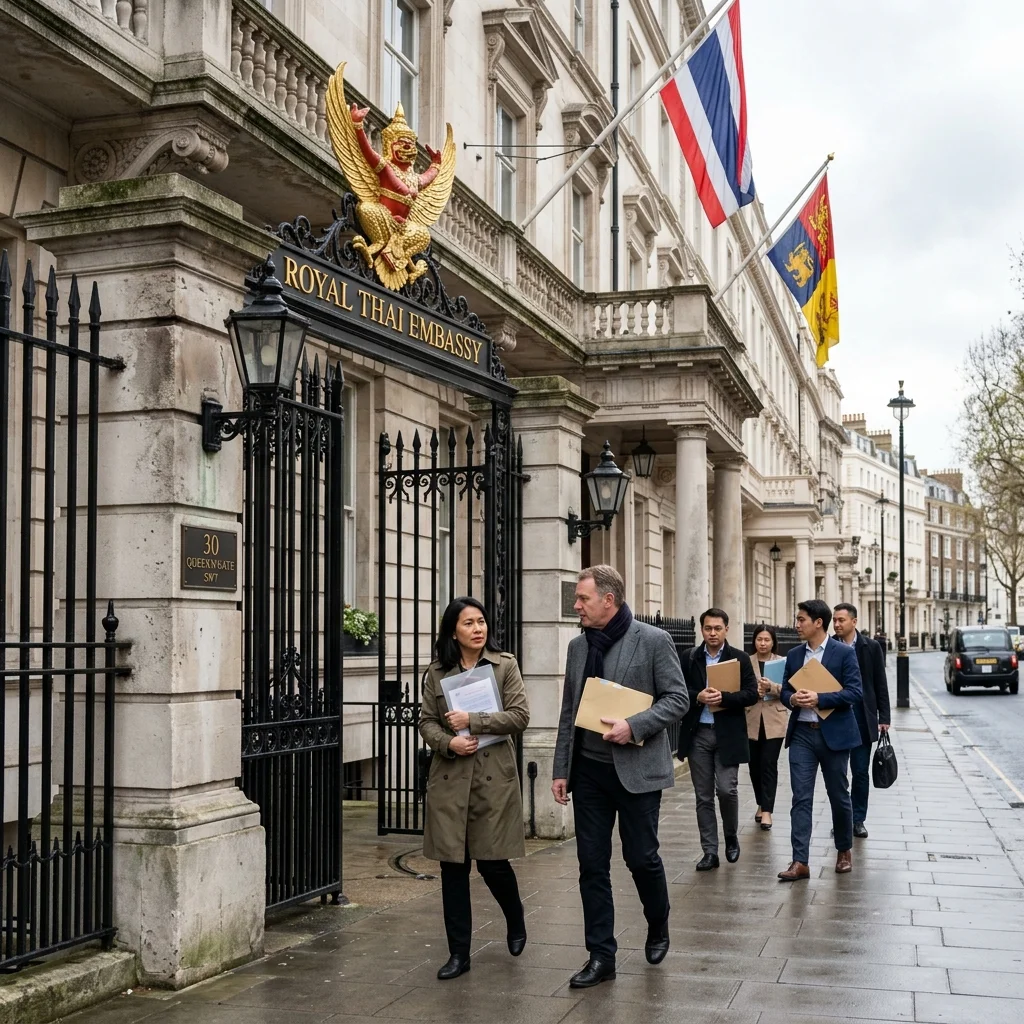
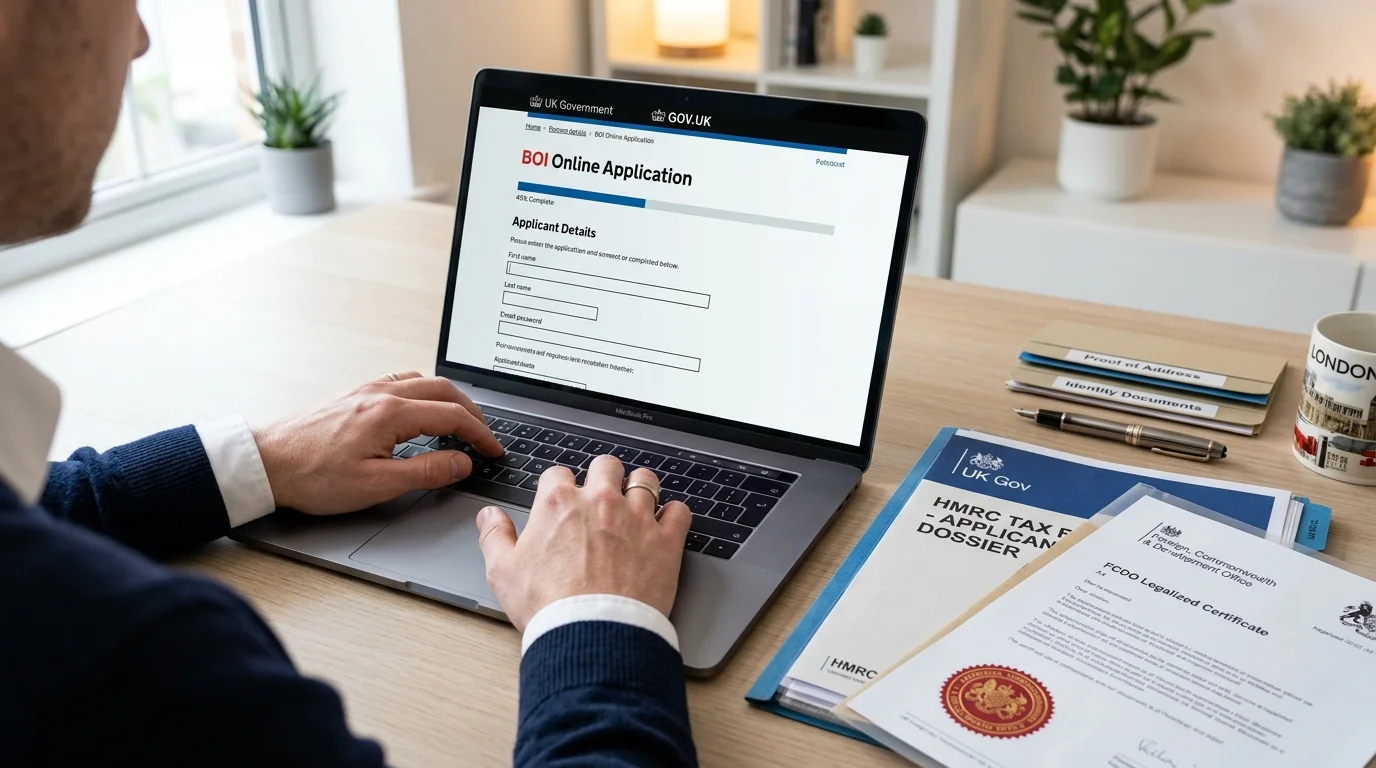
Applying for the LTR visa bypasses standard Thai embassies initially and goes directly through the Board of Investment's digital portal. You must create an account on the official BOI LTR website and upload high-resolution, colour scans of your passport, UK police clearance certificate, financial evidence, and employer documentation. The initial screening process takes between 20 and 30 working days, during which BOI officers will rigorously verify your corporate and financial claims. If approved, you receive a formal Endorsement Letter valid for 60 days. You then take this letter, alongside your original physical documents, to the Royal Thai Embassy in London or a designated Thai immigration office if you are already in the country. The final step involves paying the official visa fee and receiving the physical stamp in your passport. Delays almost always stem from poorly translated documents or missing official certifications on financial records. Track your application status weekly through the portal to catch and resolve requests for additional evidence immediately.
| Application Stage | Location | Processing Time |
|---|---|---|
| Document Submission | BOI Online Portal | 20 to 30 working days |
| Endorsement Issuance | Digital Download | Valid for 60 days |
| Visa Stamping | Thai Embassy / Immigration | 1 to 3 working days |
| Digital Work Permit | Department of Employment | 1 to 3 working days |
Ten-Year Validity and Legal Work Allowances
The LTR visa provides a full decade of legal residency, structured as two consecutive five-year terms. Upon entering Thailand, you receive an initial five-year permission to stay, which is renewable for another five years provided you still meet the core income and employment criteria. Crucially, this visa grants you a digital work permit, legally protecting your right to work remotely for overseas clients or employers while on Thai soil. It entirely removes the burden of 90-day reporting, replacing it with a far more manageable once-a-year address notification. You also gain access to fast-track lanes at major Thai international airports, bypassing standard immigration queues. If you decide to transition to working for a Thai company, the LTR visa allows you to be taxed at a highly favourable flat rate of 17%, rather than the progressive rates that peak at 35%. Remember that the second five-year term is not automatic; you must submit updated financial proof before your initial term expires.
| Feature | LTR Visa | Standard Non-B Visa |
|---|---|---|
| Validity | 10 years (5+5) | 1 year (annual renewal) |
| Reporting | Annually | Every 90 days |
| Work Permit | Digital (Overseas work allowed) | Physical (Tied to Thai employer) |
| Airport Fast Track | Included | Not included |
Health Insurance Requirements and Medical Checks
Securing the LTR visa dictates that you must not become a financial burden on the Thai state medical system. You are legally required to hold comprehensive health insurance that covers medical treatments in Thailand with a minimum coverage limit of $50,000 USD (approximately £39,500). This policy must remain active for the entire duration of your stay, and the BOI will demand proof of annual renewal. Alternatively, if you do not wish to purchase a private policy, you can provide formal documentation proving you hold at least $100,000 USD (£79,000) in a Thai or overseas bank account. This deposit acts as a self-insurance guarantee and must have been held in the account for at least twelve months prior to your application date. Furthermore, you must undergo a medical examination at a recognised clinic or hospital to prove you are free from specific prohibited diseases, such as advanced syphilis or active tuberculosis. Obtaining this medical certificate in the UK before you travel ensures your document package is entirely complete when you submit your initial BOI portal application.
| Insurance Option | Requirement | Evidence Needed |
|---|---|---|
| Private Health Insurance | $50,000 USD minimum coverage | Policy certificate valid for Thailand |
| Self-Insurance Deposit | $100,000 USD held for 12 months | Certified bank statements |
| Medical Check | Free from prohibited diseases | Official medical certificate |
UK Tax Implications and Visa Alternatives
Holding an LTR visa shifts your tax obligations, and it requires careful planning to avoid dual taxation between the UK and Thailand. Historically, foreign-sourced income was tax-exempt in Thailand if brought into the country in a later tax year, but recent legislative changes mean most remitted income is now taxable. However, LTR visa holders retain a specific statutory exemption for overseas income, meaning your UK salary remains safe from Thai revenue collection regardless of when you transfer it. You must still manage your UK tax residency status, as simply holding a Thai visa does not automatically sever your ties to HMRC. If the $80,000 USD income threshold or the $150 million USD employer revenue requirement proves impossible, you will need to evaluate alternatives. The Thailand Elite Visa offers long-term stays up to 20 years but strictly prohibits any form of work, including remote work. Tourist visas and border runs offer short-term solutions but leave you working illegally and at the mercy of increasingly strict immigration officers. Consult a cross-border tax specialist to officially formalise your non-resident status with HMRC before relocating.
| Visa Type | Remote Work Status | Thai Tax on Foreign Income |
|---|---|---|
| LTR Visa | 100% Legal | Exempt |
| Elite Visa | Strictly Illegal | Taxable if remitted |
| Tourist Visa | Strictly Illegal | Taxable if remitted |
| Education Visa | Strictly Illegal | Taxable if remitted |
Costs and Budgeting
Securing the LTR visa involves significant upfront costs beyond just proving your high salary. The primary official fee charged by the Board of Investment is 50,000 THB (£1,110) for the physical ten-year visa stamp, payable when you collect it at the embassy or immigration office. You must also pay 3,000 THB (£66) annually to maintain your digital work permit. Budget carefully for document preparation in the UK. Your criminal record check, degree certificates, and corporate financial statements require notarisation by a UK solicitor and legalisation by the Foreign, Commonwealth and Development Office (FCDO), which costs approximately £30 per document plus courier fees. If you use a specialised immigration lawyer to handle the BOI correspondence, expect professional fees ranging from 50,000 THB to 100,000 THB (£1,110 to £2,220). Always factor in the cost of comprehensive medical insurance, as policies covering ten years of residency represent a major annual expenditure.
| Item | Cost (THB) | Cost (GBP approx) | Notes |
|---|---|---|---|
| BOI Visa Processing Fee | 50,000 THB | £1,110 | Paid once for the 10-year stamp |
| Digital Work Permit Fee | 3,000 THB | £66 | Paid annually to Dept of Employment |
| UK Document Legalisation | 1,350 THB | £30 | Per document via FCDO |
| Immigration Lawyer Fee | 50,000 - 100,000 THB | £1,110 - £2,220 | Optional but highly recommended |
| Minimum Insurance Cover | N/A | Variable | Must cover $50,000 USD minimum |
Common Mistakes and How to Avoid Them

Underestimating employer revenue requirements. Applicants frequently submit their application based on their high salary, only to be rejected because their private employer does not meet the $150 million USD revenue threshold. You must obtain audited corporate financial statements from your HR or finance department before starting your application.
Submitting uncertified UK tax documents. Providing simple printouts of bank statements or standard payslips will stall your application immediately. You must supply official HMRC SA302 forms or P60s, and they often require formal legalisation.
Misunderstanding the freelancer criteria. Self-employed applicants often fail to prove the required five years of continuous experience in their exact current field. You need a meticulously organised portfolio of dated client contracts and corresponding invoices spanning the full 60 months.
Failing to maintain eligibility for the renewal. Visa holders sometimes assume the full ten years are guaranteed, but income drops can prevent the second five-year stamp. You must continue tracking and filing your high-income proof throughout your first five years in Thailand.
Practical Tips
Start gathering your corporate revenue proof early. Private companies often take weeks to approve the release of audited financial statements to individual employees.
Request a formal letter from your employer detailing your remote arrangement. The BOI requires explicit written permission stating you are authorised to perform your specific job from Thailand.
Use a registered courier for FCDO legalisation. Standard postal services can delay document returns by weeks, severely impacting your BOI application timeline.
Separate your dividend income from your base salary clearly. If you are a UK company director, the BOI needs to see exactly how your remuneration is structured on your tax returns.
Check your passport validity before applying. Your passport must have at least six months of validity remaining, but ideally, you should renew it if it expires within the first five-year visa term.
Keep digital backups of all submitted files. The BOI portal can time out or request re-uploads, so having a dedicated folder of compressed, high-resolution PDFs saves hours of frustration.
Monitor the BOI portal weekly rather than waiting for email alerts. Notifications occasionally fail to send, and missing a request for additional documentation will automatically pause your processing time.
Consult a tax advisor regarding your UK HMRC status. Breaking tax residency requires specific forms and declarations, which must be handled before you permanently relocate your operations to Thailand.
[DISCLAIMER: Visa rules and fees are subject to change. Always verify current requirements with the official Thai Immigration Bureau at immigration.go.th or the Royal Thai Embassy before applying.]
Quick Reference Table
| Item | Detail | Notes |
|---|---|---|
| Visa Type | Long-Term Resident (Work-from-Thailand) | Specifically for remote workers |
| Income Eligibility | $80,000 USD annually | Must be proven over the last two years |
| Maximum Stay | 10 Years | Issued as two 5-year terms |
| Application Route | BOI Online Portal | Followed by embassy or local stamping |
| Official Fee | 50,000 THB | Plus 3,000 THB annually for work permit |
| Processing Time | 20 to 30 working days | For the initial BOI screening phase |
| Extension Options | Renewable at year 5 | Must still meet all income criteria |
| Employer Requirement | $150m USD revenue (Private) | Publicly traded companies are exempt |
| Medical Insurance | $50,000 USD coverage | Or a $100,000 USD bank deposit |