Bars and Restaurants in Thailand
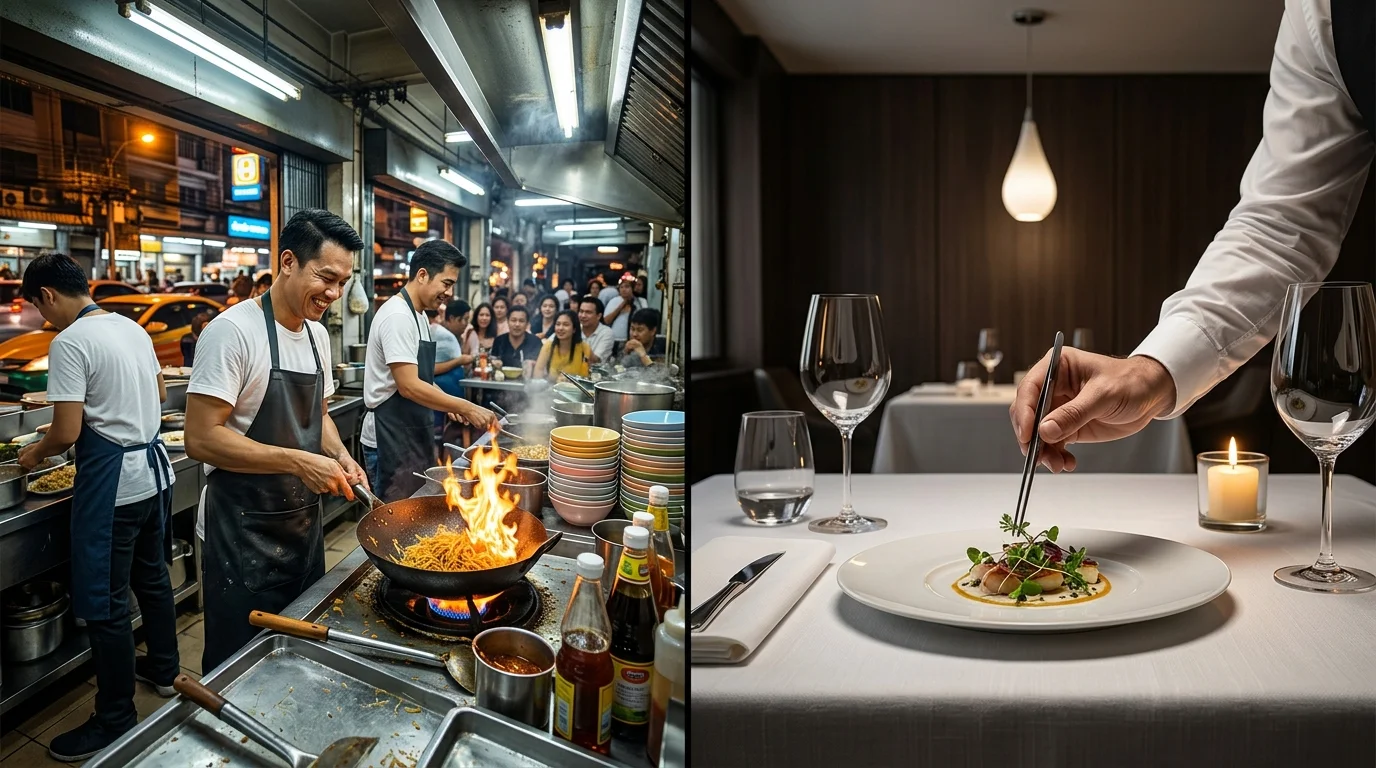
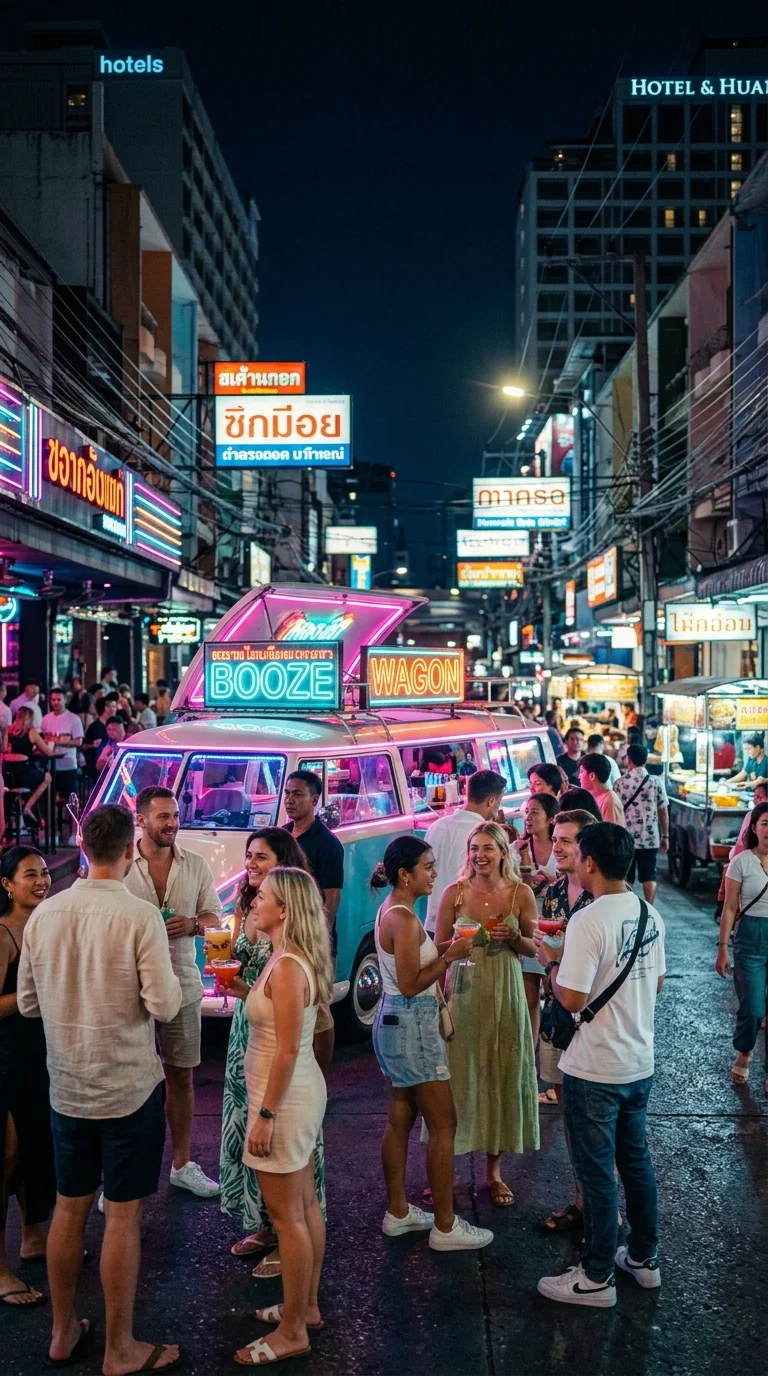
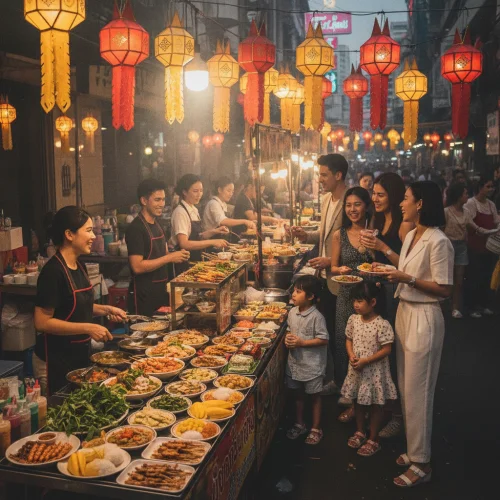
At 6:00 PM in Bangkok, pavement noodle carts fire up their wok burners just as elevator doors open 60 floors above to serve £20 cocktails garnished with gold leaf. The Thai dining scene operates on extreme ends of the spectrum, allowing you to transition from a plastic stool to a Michelin-starred tasting menu in the space of a single postcode.
This guide breaks down exactly how to navigate Thailand’s vast restaurant and bar landscape, from deciphering regional dining hubs to avoiding overpriced tourist traps. You will learn the realities of alcohol licensing laws, how service culture differs drastically from the UK, and where to find the best craft beer and rooftop venues. Whether you are planning a two-week holiday or scouting long-term expat bases, this covers everything required to eat and drink confidently across the country.

The Dining Spectrum: From Shophouses to Fine Dining
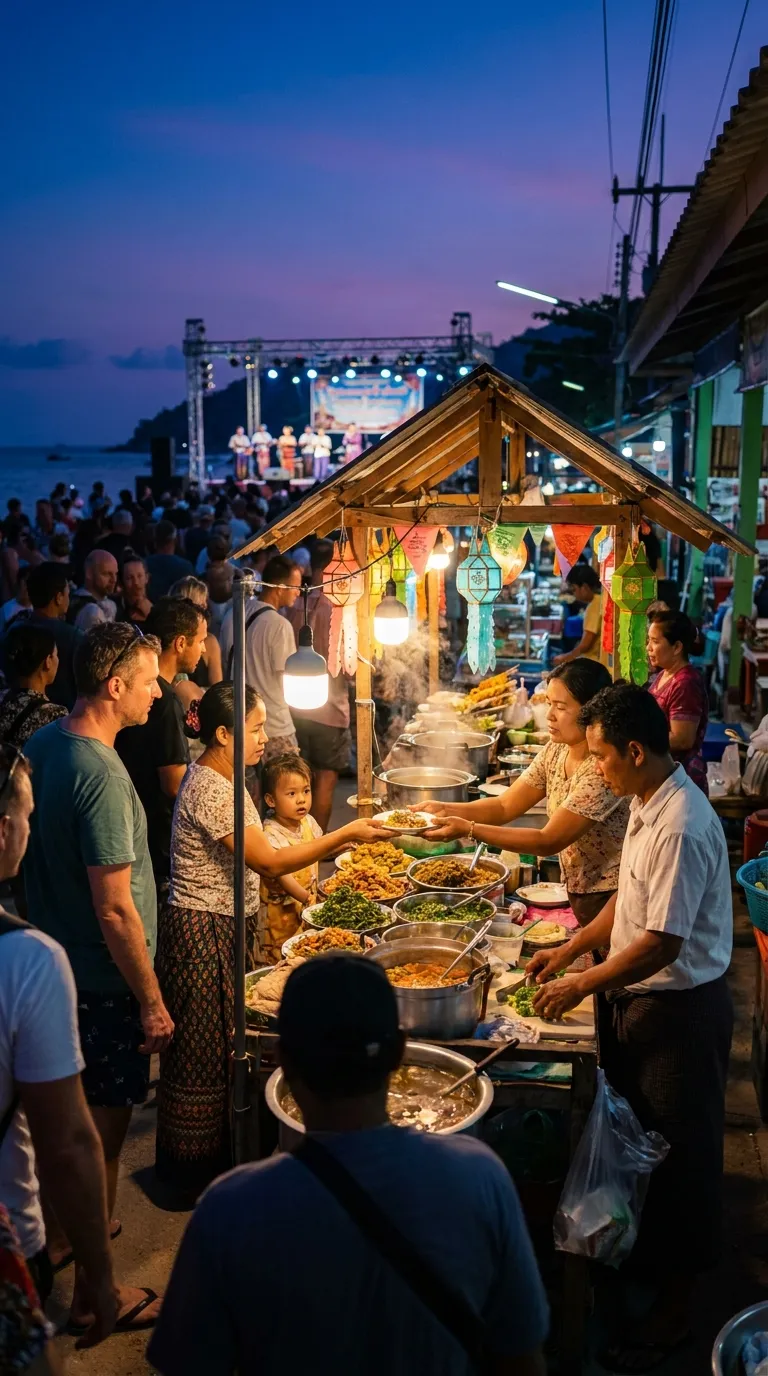
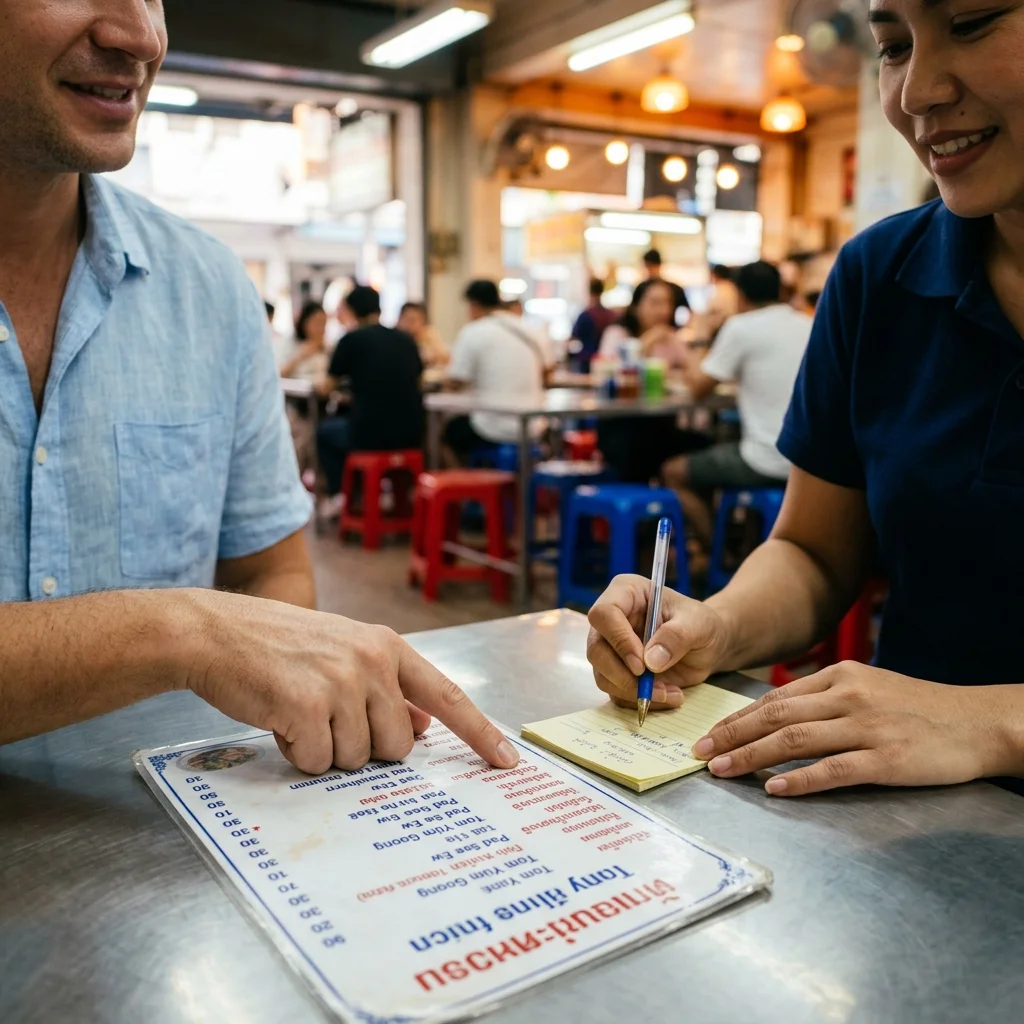
Thailand’s culinary hierarchy refuses to fit neatly into western categories. You will find generational shophouse restaurants operating out of tiled ground floors, where dishes like crispy pork belly with holy basil cost 60 THB (£1.35) and the dining room is cooled by wall-mounted fans. Step into the air-conditioned malls of Sukhumvit or the restored colonial buildings of Charoen Krung, and you enter the realm of serious fine dining. Venues like Sorn and Gaggan Anand command months-long waiting lists and price tags upwards of 4,000 THB (£90) for multi-course tasting menus. Between these extremes sits a massive mid-range tier of modern Thai bistros, expat-owned steakhouses, and regional speciality restaurants. The key difference from the UK is availability; you rarely have to walk more than five minutes to find hot food at any hour. Service is consistently fast, though less formal than British standards, with waiters often hovering near tables rather than returning to a central station.
Master Thai etiquette before your trip. Learn the rules of the wai, temple dress codes, communal dining, and how to avoid cultural mistakes in Thailand.
| Dining Tier | Typical Venue | Average Cost per Person | What to Expect |
|---|---|---|---|
| Street Food | Pavement carts, night markets | 50 - 100 THB (£1.10 - £2.20) | Plastic seating, single-dish specialities, highly informal |
| Shophouse | Open-front ground floor units | 100 - 300 THB (£2.20 - £6.70) | Stainless steel tables, fan cooling, fast service |
| Mid-Range | Air-conditioned bistros, mall restaurants | 400 - 1,200 THB (£9 - £27) | English menus, comfortable seating, alcohol available |
| Fine Dining | Standalone villas, luxury hotels | 3,000 - 8,000+ THB (£67 - £180+) | Tasting menus, extensive wine lists, strict dress codes |
Regional Restaurant Scenes Across Thailand
Where you base yourself dictates exactly what you will be eating and drinking. Bangkok is the undisputed culinary capital, offering the highest density of international cuisine, high-end sushi, and experimental fine dining, alongside immense regional diversity. Chiang Mai operates at a slower, more deliberate pace. Its food scene is heavily focused on Northern Thai staples like khao soi and elevated farm-to-table concepts, making it a haven for long-term expats seeking high-quality organic food at lower prices. Phuket bridges the gap between luxury resort dining and deep-rooted Peranakan heritage, though you must navigate carefully around Patong to avoid inflated prices. The smaller islands, such as Koh Tao or Koh Phangan, rely heavily on imported ingredients. This means Western food is often mediocre and expensive, while local seafood remains the safest and best-value option. For long-term expats, Bangkok and Chiang Mai offer the most sustainable, developed food scenes that will not leave you craving variety after three months. Stick to the major cities if diverse dining is a priority for your relocation.
| Destination | Food Scene Focus | Expat Suitability | Average Meal Cost (Mid-Range) |
|---|---|---|---|
| Bangkok | High-end dining, global cuisine, massive variety | Excellent | 800 THB (£18) |
| Chiang Mai | Farm-to-table, Northern Thai, cafe culture | Excellent | 400 THB (£9) |
| Phuket | Resort dining, seafood, Sino-Portuguese | Good | 1,000 THB (£22) |
| Islands | Basic beach bars, grilled seafood, imported staples | Moderate to Poor | 600 THB (£13.50) |
Rooftop Bars and Elevated Drinking
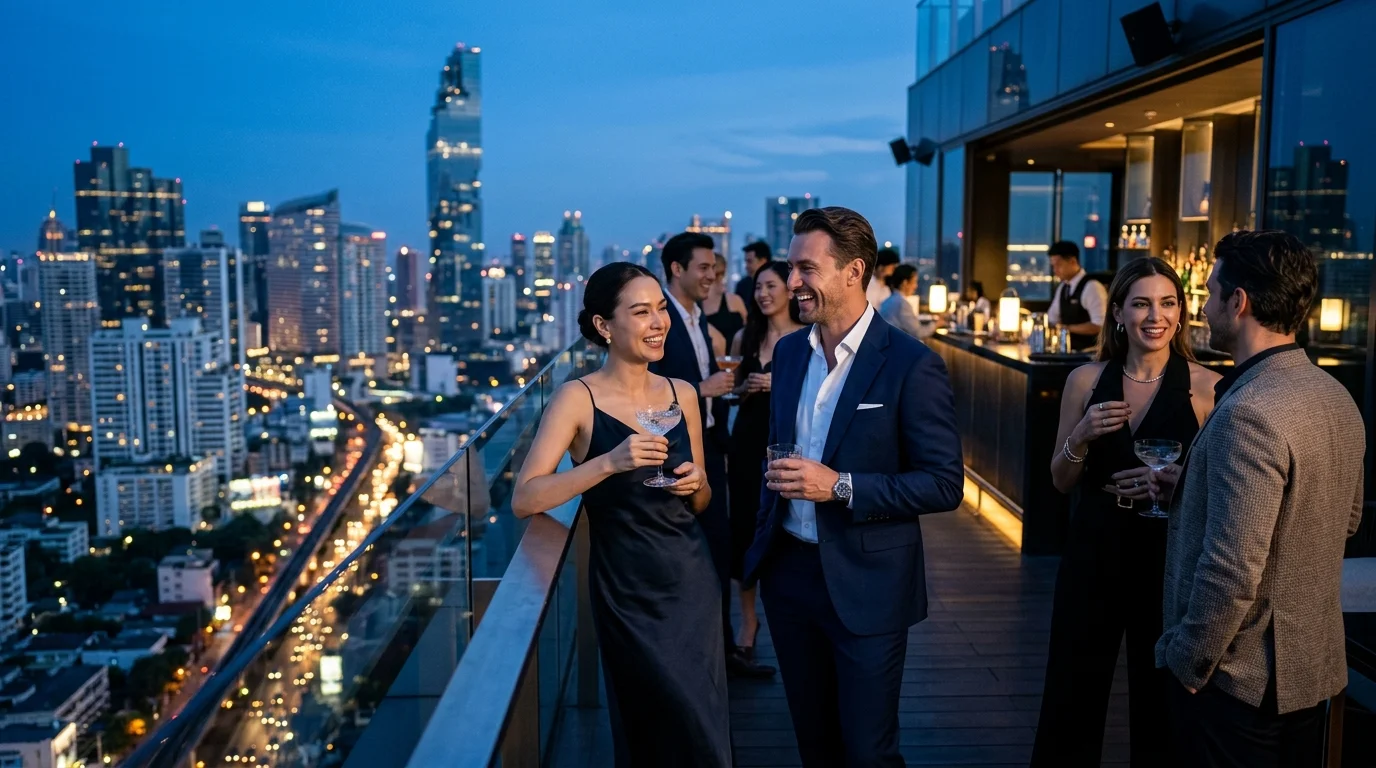
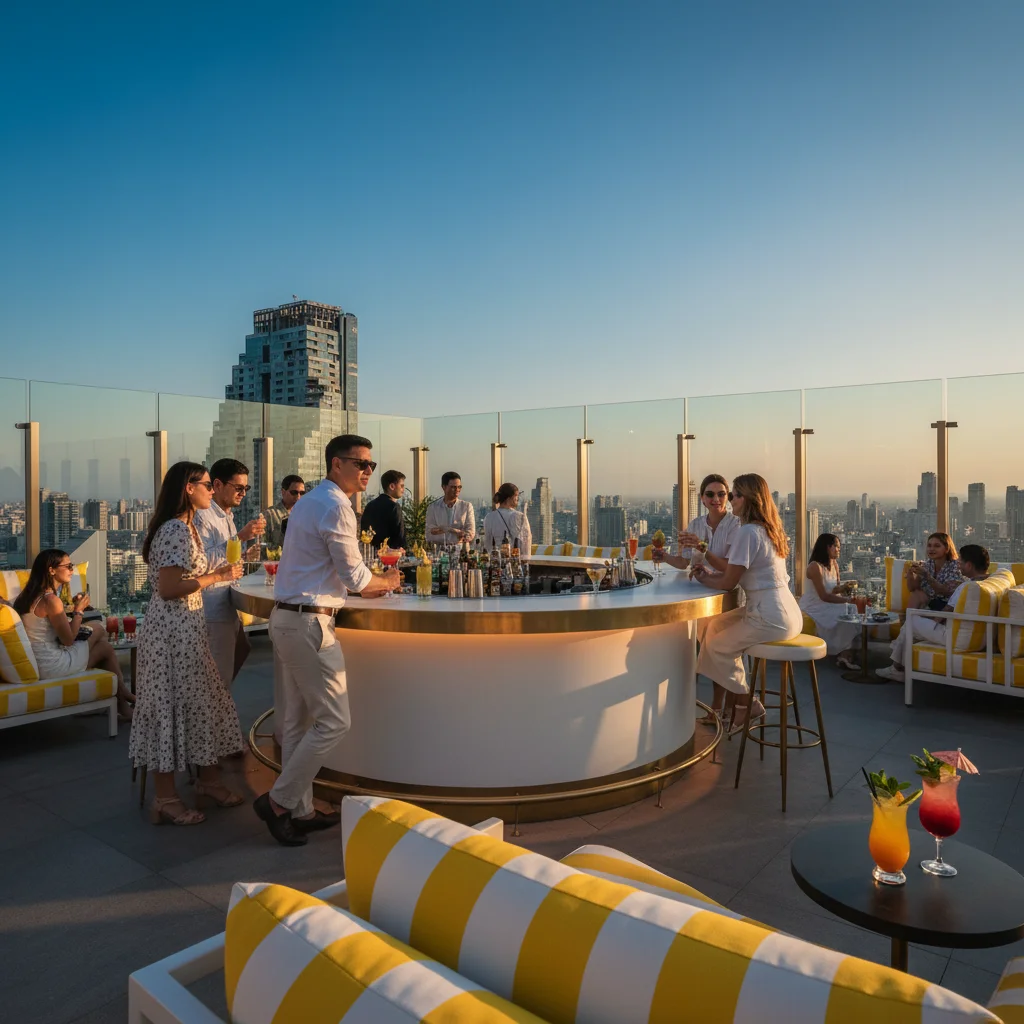
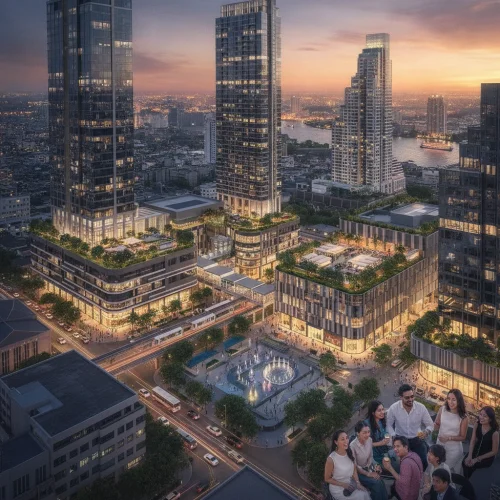
Bangkok’s rooftop bar scene is a distinct subculture, acting as the primary social arena for affluent locals, expats, and visitors. While venues like Sky Bar at Lebua gained global fame from Hollywood, they have largely transitioned into crowded, overpriced photo opportunities where a standard gin and tonic can cost 900 THB (£20) before taxes. Savvy residents look elsewhere. Octave at the Marriott Hotel Sukhumvit offers a genuinely 360-degree view with a more relaxed dress code and drinks closer to 400 THB (£9). Above Eleven on Sukhumvit Soi 11 blends Peruvian-Japanese dining with a multi-level terrace, while speakeasy-style rooftops like Bar.Yard at Kimpton Maa-Lai cater heavily to the expat after-work crowd. Most premium rooftops enforce a strict dress code prohibiting flip-flops, athletic wear, and sleeveless shirts for men. You must also factor in the weather; rainy season downpours from May to October frequently close open-air terraces without warning. Call ahead to confirm the terrace is open if the sky looks threatening.
| Rooftop Venue | Vibe and Crowd | Dress Code | Drink Price Estimate |
|---|---|---|---|
| Sky Bar (Lebua) | Tourist-heavy, crowded, iconic views | Smart Casual (Strict) | 900+ THB (£20+) |
| Octave (Marriott) | Relaxed expat crowd, 360-degree views | Smart Casual (Moderate) | 400 - 500 THB (£9 - £11) |
| Above Eleven | Lively, dinner-to-drinks transition | Smart Casual (Strict) | 450 THB (£10) |
| Bar.Yard (Kimpton) | Tropical, after-work professionals | Casual but neat | 350 - 450 THB (£8 - £10) |
The Independent Bar and Craft Beer Movement
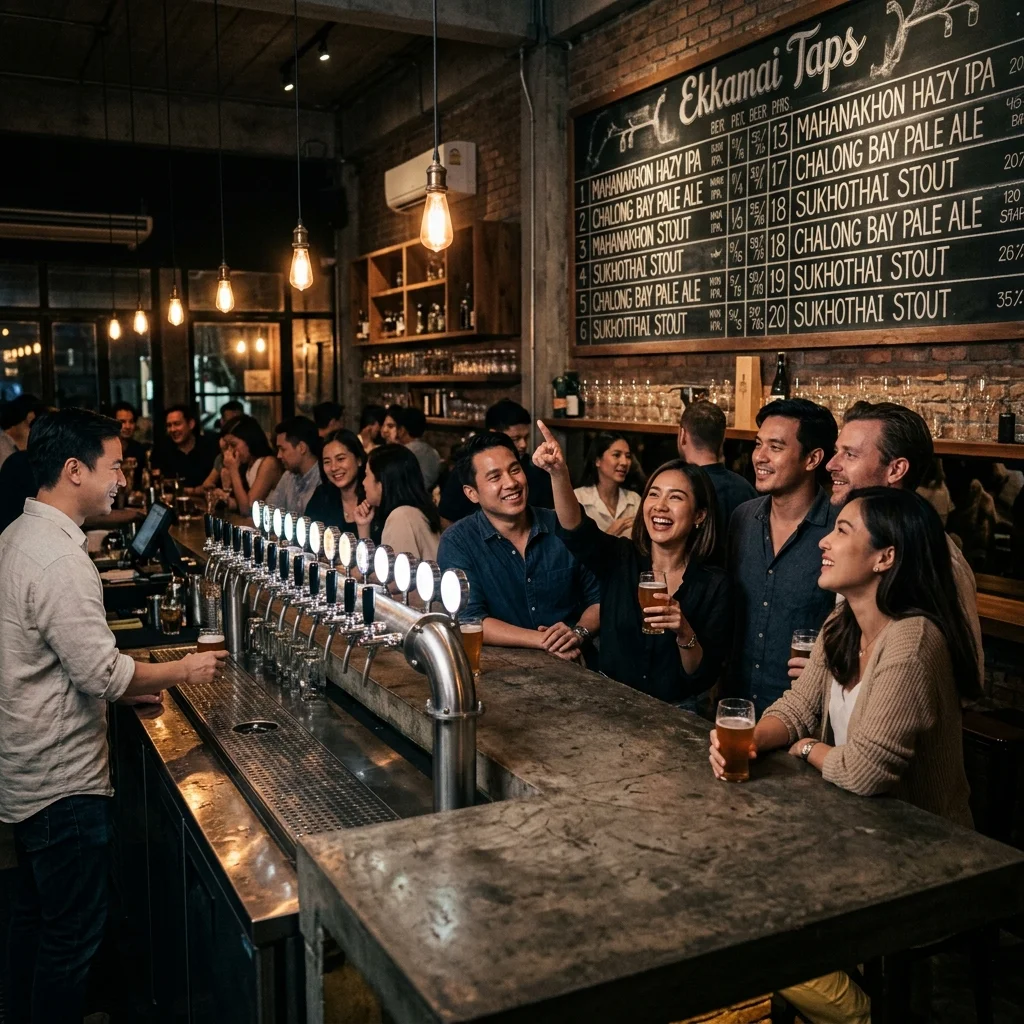
Thailand’s strict alcohol production laws heavily favour massive domestic breweries, making independent brewing incredibly difficult. Despite this, an underground craft beer scene has clawed its way into the mainstream, primarily through importing Thai-owned beer brewed in Cambodia or Vietnam. Areas like Ekkamai and Ari in Bangkok, or the Nimman district in Chiang Mai, are packed with specialist taprooms. Venues like Hair of the Dog or Chit Beer pour rotating selections of local IPAs and stouts, though the complex logistics mean a pint of craft beer often costs 280 to 350 THB (£6.30 to £7.80) — significantly more than a domestic lager. Beyond beer, a sophisticated cocktail culture has exploded across the capital. Small, owner-operated bars hidden behind unmarked doors in Chinatown (Soi Nana) serve complex drinks using local ingredients like pandan, pomelo, and Thai rum. While craft beverages carry a premium price tag, the quality matches top-tier venues in London or Manchester.
| Bar Style | Key Areas | Typical Drink | Expected Cost |
|---|---|---|---|
| Craft Beer Taproom | Ekkamai (BKK), Nimman (CNX) | Thai IPA, Imported Stout | 280 - 350 THB (£6.30 - £7.80) |
| Hidden Cocktail Bar | Charoen Krung, Soi Nana | Pandan infused spirits | 350 - 500 THB (£8 - £11) |
| Expat Pub | Sukhumvit Soi 4, Phrom Phong | Draught Guinness, Cider | 250 - 300 THB (£5.60 - £6.70) |
| Live Music Dive | RCA, Thong Lo | SangSom Rum buckets | 300 THB (£6.70) to share |
Spotting Genuine Quality Versus Tourist Traps
Finding excellent food requires learning how to read the visual cues of a Thai restaurant. Venues employing staff to stand on the pavement waving laminated, multi-language menus at passing pedestrians are almost universally overpriced and underwhelming. These restaurants rely entirely on foot traffic rather than repeat local business, resulting in dishes heavily modified for foreign palates — usually meaning excessive sugar and muted spices. Instead, look for places with a highly focused menu. The best restaurants often serve just three or four variations of a single dish, such as braised pork leg or boat noodles. A queue of local office workers at lunchtime is the most reliable indicator of quality. In tourist-heavy areas like Phuket’s Patong Beach or Bangkok’s Khao San Road, walk three streets back from the main drag to see prices drop by half and food quality double. If you find yourself in a heavily tourist-focused area, seek out nearby shopping mall food courts for a reliable, fairly priced alternative.
| Indicator | Tourist Trap | Genuine Local Spot |
|---|---|---|
| Menu Format | Huge book, photos of every dish | Single page or wall menu, limited items |
| Staff Behaviour | Touting aggressively on the street | Busy serving seated customers |
| Condiments | Pre-mixed sweet chili sauce only | Fresh chilies, fish sauce, vinegar on tables |
| Clientele | Entirely foreigners | Mix of locals, domestic tourists, expats |
Service Culture and Alcohol Licensing Laws
Eating and drinking in Thailand comes with a completely different set of operational rules compared to the UK. Service is communal and fast. Dishes arrive when they are ready, not simultaneously, meaning your green curry might appear ten minutes before your partner's pad thai. Waiters will often stand directly at your table while you read the menu. This is not intended to rush you, but rather to show attentive service. Tipping is not strictly mandatory, but leaving the loose change or 50 to 100 THB (£1.10 to £2.20) for good service is standard practice. Alcohol licensing hours are strictly enforced and occasionally baffling to newcomers. Retail alcohol sales are banned nationwide between 2:00 PM and 5:00 PM, and you cannot buy alcohol anywhere on Buddhist holidays or election days. Most bars must close by midnight or 2:00 AM, depending on their specific zoning license, and police raids to enforce closing times are a routine part of nightlife. Check the local calendar before planning a major celebration to ensure bars are actually legally permitted to open.
| Rule / Custom | UK Standard | Thai Reality |
|---|---|---|
| Food Delivery | All dishes arrive together | Dishes arrive randomly as cooked |
| Tipping | 10-12.5% expected | Round up the bill or leave 50-100 THB |
| Alcohol Sales | Governed by venue license | Banned 2-5 PM daily and on religious days |
| Getting the Bill | Waiter brings it at the end | You must actively signal for the bill |
Top Districts for Food and Drink
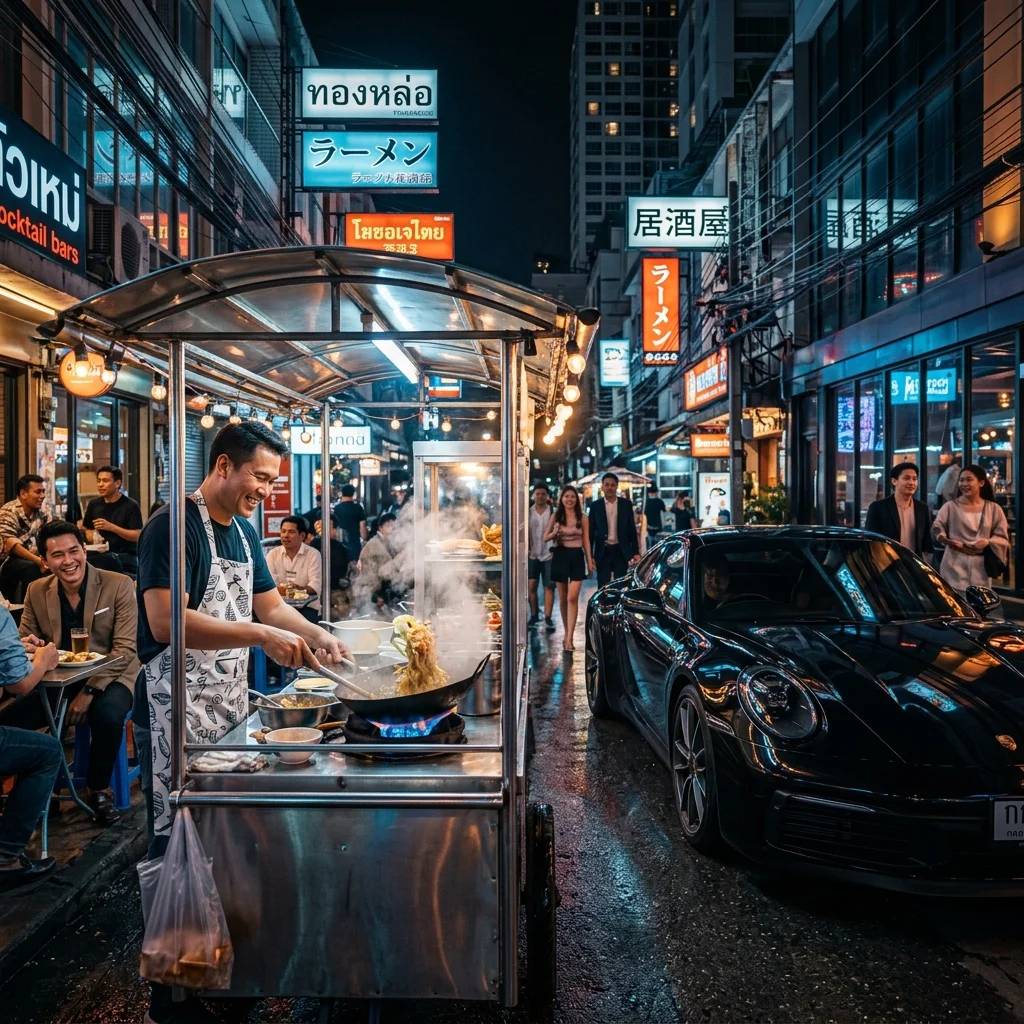
Knowing exactly where to head is half the battle when navigating Thai cities. In Bangkok, Thong Lo and Ekkamai are the epicentres for high-end dining, Japanese izakayas, and premium cocktail bars, catering heavily to wealthy locals and Japanese expats. For a grittier, more creative atmosphere, the Soi Nana area of Chinatown (Charoen Krung) is packed with converted shophouses serving natural wine and tapas. In Chiang Mai, the Nimmanhaemin Road area is densely packed with modern cafes, craft beer bars, and international restaurants. Meanwhile, the Old City caters more to traditional Northern Thai food and backpacker pubs. Down south in Phuket, Phuket Town has emerged as a serious culinary destination. It focuses heavily on Sino-Portuguese heritage restaurants like Raya, far removed from the overpriced tourist menus of Patong Beach. If you are a first-timer wanting a safe but authentic introduction to Thai street food, start at the food courts in major Bangkok malls like Terminal 21, which offer exceptional hygiene and local prices.
Costs and Budgeting
Dining and drinking in Thailand scales dramatically depending on your choices. A bowl of noodles from a street cart remains exceptionally cheap, but imported alcohol and western food will quickly push your budget to UK levels. Wine is heavily taxed and rarely offers good value, often starting at 350 THB (£7.80) for a basic glass. Local beer and spirits are the most cost-effective way to drink. Service charge (10%) and VAT (7%) are frequently added to the final bill at mid-range and premium venues, so check the menu to see if prices are nett.
| Option | Cost (THB) | Cost (GBP approx) | Notes |
|---|---|---|---|
| Local Beer (Large Bottle) | 80 - 120 THB | £1.80 - £2.70 | Chang, Leo, or Singha at a basic restaurant |
| Craft Beer (Pint) | 280 - 380 THB | £6.30 - £8.50 | Imported or locally brewed craft beers |
| Mid-Range Thai Meal | 400 - 800 THB | £9 - £18 | Two dishes and a drink in an air-conditioned venue |
| Western Steak Dinner | 1,500 - 3,000 THB | £33 - £67 | Premium imported beef at an expat steakhouse |
| Glass of House Wine | 300 - 450 THB | £6.70 - £10 | Wine is heavily taxed and generally poor value |
Essential Dining and Drinking Knowledge
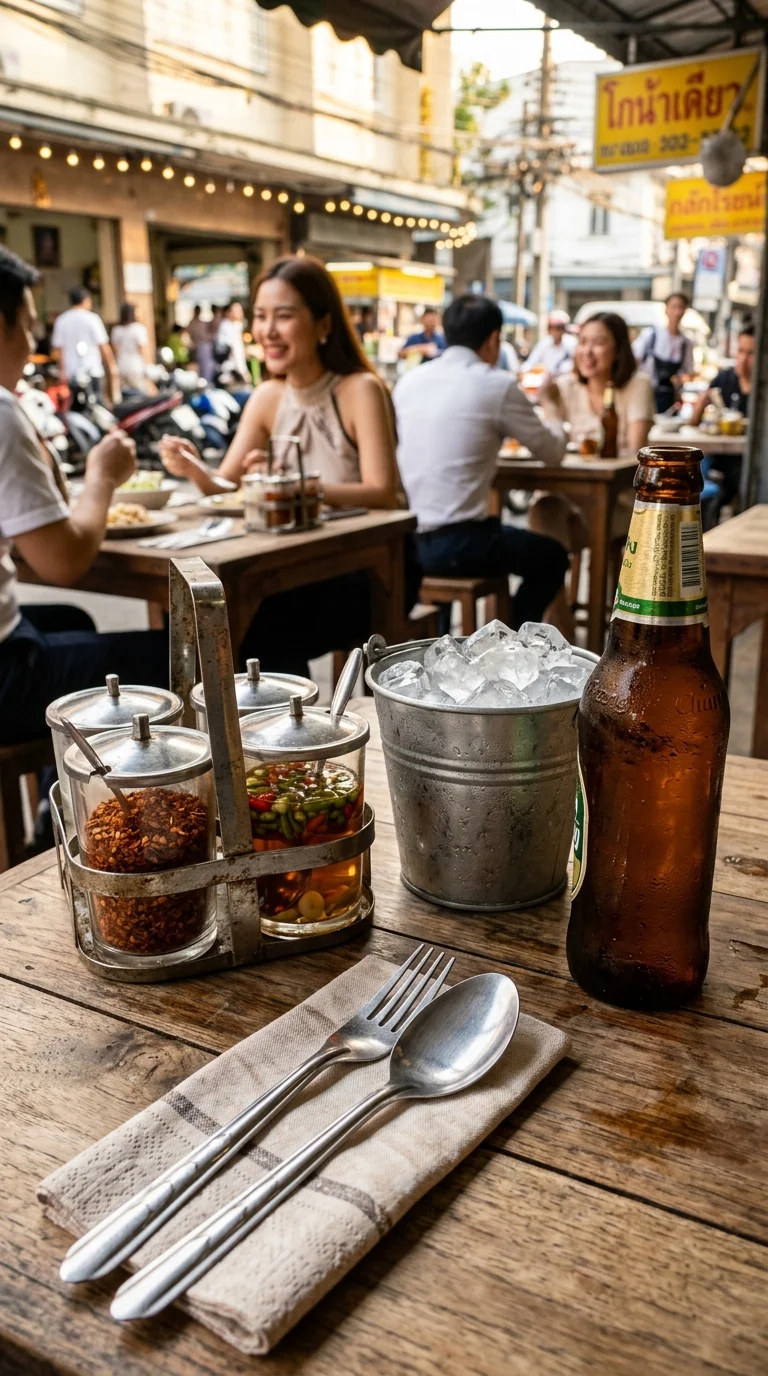
You eat with a spoon and fork, not chopsticks. The fork is used exclusively to push food onto the spoon, which then goes into your mouth, while chopsticks are reserved purely for noodle dishes.
Ice is added to everything, including beer. The oppressive heat means cold drinks warm up in minutes, so locals drink lagers over ice to keep them refreshing.
Condiments are a crucial part of the meal. Thai chefs expect you to balance your own dish using the table caddy of sugar, fish sauce, vinegar, and dried chili.
Getting the bill requires making eye contact and a subtle hand gesture. Wait staff will not bring the cheque until you explicitly ask for it, as bringing it early is considered rude.
Navigating Bars and Restaurants
Download the Eatigo app to secure massive discounts on restaurant bills. Many mid-range and premium venues offer up to 50% off food if you book during off-peak hours.
Carry a light jumper or scarf when dining in shopping malls. Thai air conditioning is famously aggressive and dining rooms can feel like refrigerators.
Look for the 'Shell Shuan Shim' bowl logo on restaurant signs. This is the Thai equivalent of a Michelin recommendation and guarantees exceptional local flavours.
Always carry some cash in smaller denominations. While QR code payments dominate locally, most UK bank apps will not scan Thai PromptPay codes, and small vendors do not take cards.
Specify your spice tolerance clearly when ordering. "A little spicy" to a Thai chef will still cause severe discomfort for the average British palate.
Check the dress code before heading to any venue above the ground floor. Rooftop bars and fine dining restaurants will turn away men in open-toed shoes or shorts without hesitation.
Ensure you have continuous data to use translation apps and navigate to hidden restaurants without relying on patchy venue Wi-Fi.
At a Glance: Dining and Drinking in Thailand
| Item | Detail | Notes |
|---|---|---|
| Alcohol Sales Ban | 2:00 PM to 5:00 PM | Applies to retail shops and supermarkets nationwide. |
| Religious Holidays | Complete alcohol ban | Bars close and shops refuse sales for 24 hours. |
| Tipping | Not mandatory | Leaving 50-100 THB or rounding up is appreciated. |
| Dress Codes | Strict at high-end venues | No shorts, vests, or sandals for men at rooftop bars. |
| Cutlery | Spoon and fork | Fork pushes food onto the spoon; chopsticks for noodles only. |
| Service Charge | 10% | Often added automatically at mid-range and premium venues. |
| VAT | 7% | Check if menu prices are 'nett' or if VAT will be added. |