Car Rental in Thailand

Handing over a 1926 International Driving Permit alongside a UK driving licence at a Bangkok rental desk is the only legal way to drive away in a hire car. Both countries drive on the left, meaning your biggest adjustment on the road is not the steering wheel, but anticipating the swarm of motorbikes filtering at every traffic light.
This guide explains exactly how to rent and drive a car across Thailand legally and safely. You will learn which international booking platforms offer reliable local coverage, the specific documentation required at the rental desk, and how to navigate Thai motorways and toll systems. It breaks down the realities of city versus rural driving, helping you decide whether a self-drive itinerary actually suits your travel plans.

LICENCES AND LEGAL REQUIREMENTS
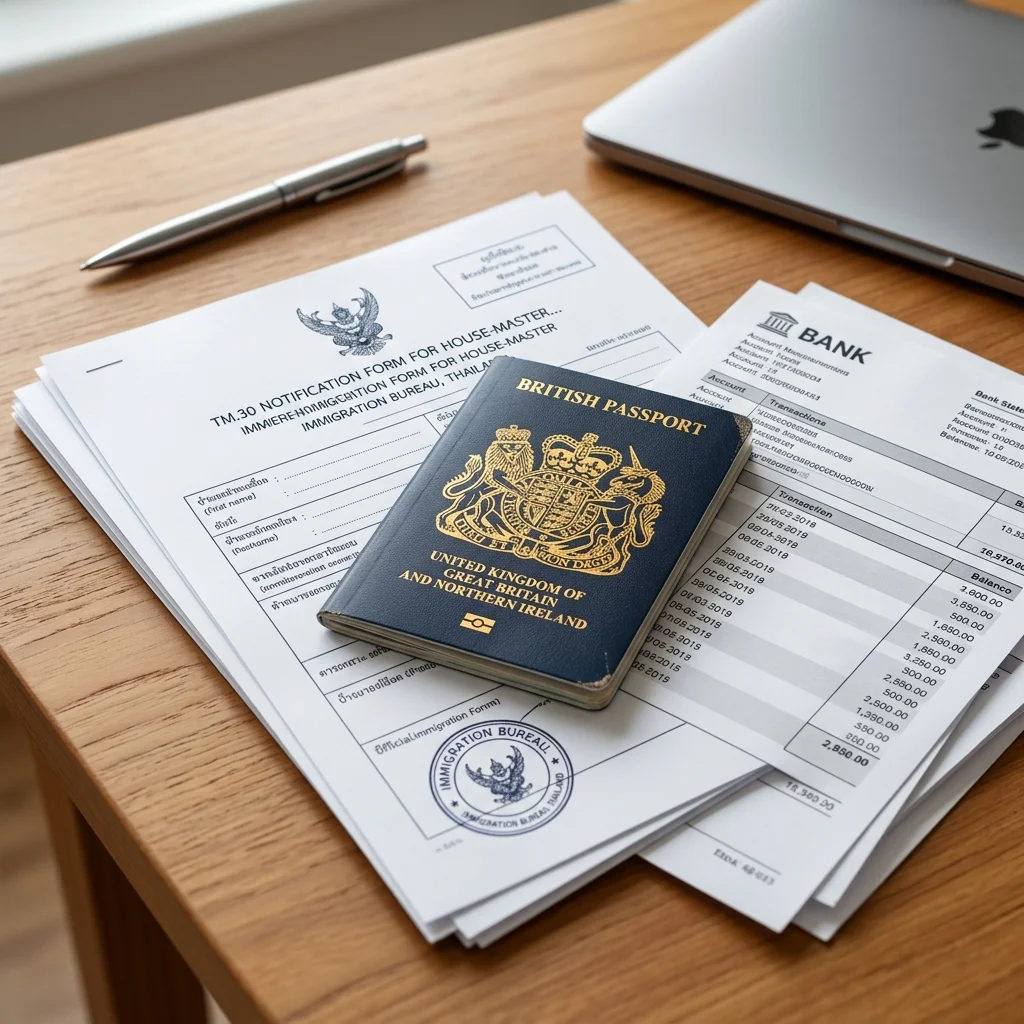
You cannot legally rent or drive a car in Thailand using only a standard UK driving licence. To satisfy both Thai traffic police and your rental company's insurance policy, you must carry a 1926 International Driving Permit (IDP) alongside your physical UK photocard. Do not apply for the 1949 or 1968 versions, as Thailand only recognises the 1926 convention. You can purchase this over the counter at participating UK Post Office branches for £5.50 before you travel. Digital copies or DVLA check codes hold no weight here, so you must present the physical plastic photocard. At the rental desk, staff will photocopy your passport, entry stamp, UK licence, and IDP before handing over the keys. If you are stopped at a police checkpoint without the correct IDP, you face an immediate fine of 500 THB (£11) to 1,000 THB (£22). Worse, driving without one entirely invalidates your rental insurance. Relying on an agency that does not check your documents upon pickup leaves you financially liable for any damage.
Discover the best ways to manage your money in Thailand. Learn how to avoid ATM fees, use travel cards, and find the best Thai Baht exchange rates.
Always secure a 1926 IDP from a UK Post Office before flying to ensure you are legally insured on Thai roads.
CHOOSING A RENTAL COMPANY AND BOOKING PLATFORM
Booking through major international aggregators provides an essential layer of consumer protection when navigating Thai car rentals. Platforms like Rentalcars.com and Booking.com aggregate the major international players operating in Thailand, including Avis, Hertz, Budget, and Sixt. These established brands maintain desks at all major airports such as Bangkok Suvarnabhumi (BKK), Don Mueang (DMK), Phuket (HKT), and Chiang Mai (CNX). They offer newer fleets, usually consisting of Toyota Yaris, Honda City, or Toyota Fortuner models, with clear English-language contracts. Local Thai companies like Bizcar and Thai Rent A Car are also highly reputable and often slightly cheaper, though their deposit requirements can be steeper. Expect a credit card hold ranging from 5,000 THB (£110) for a compact car up to 20,000 THB (£440) for an SUV. Debit cards are almost universally rejected for the security deposit. Inspect the vehicle closely before driving away, photographing every existing scratch and fuel gauge level, as Thai rental agents are meticulous during the return inspection.
Stick to recognised international or large national brands and always use a physical credit card in the main driver's name for the deposit.
| Rental Provider Type | Typical Fleet Age | Deposit Required | Best For |
|---|---|---|---|
| International (Avis, Hertz) | Under 3 years | 10,000 THB (£220) | Airport pickups and English support |
| Large National (Bizcar) | 2 to 5 years | 5,000 THB (£110) | Budget-conscious regional travel |
| Local Independent | Varies wildly | Cash or Passport | Short island hops (proceed with caution) |
INSURANCE OPTIONS AND COVERAGE
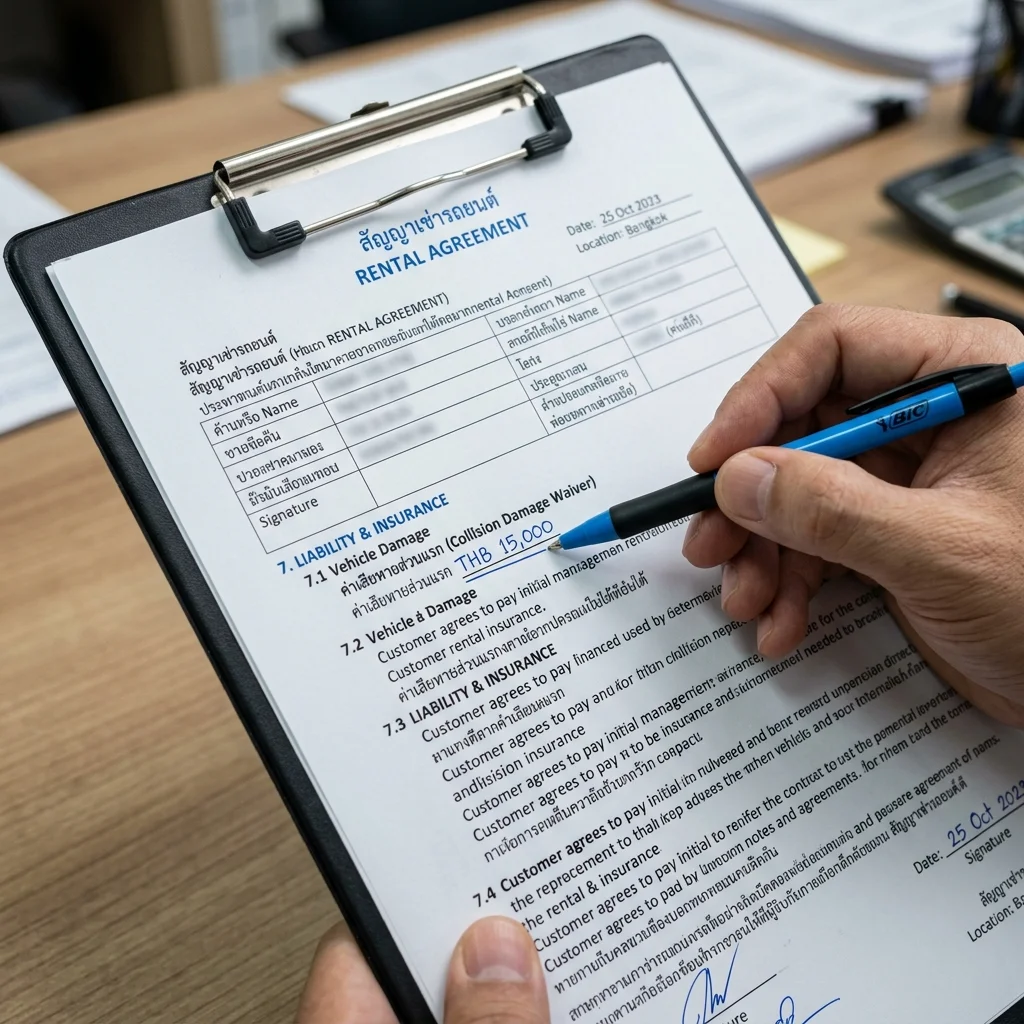
Standard rental agreements in Thailand include basic collision damage waiver, but this often comes with a substantial excess. Most base quotes leave you exposed to an excess of 8,000 THB (£175) to 15,000 THB (£330) if the car is damaged, even if the incident was not your fault. You have two primary routes to protect yourself. The first is purchasing Super Collision Damage Waiver (SCDW) directly at the rental desk, which reduces your liability to zero. This typically costs an additional 200 THB (£4.50) to 500 THB (£11) per day. The second option is buying an independent excess reimbursement policy in the UK before you leave. While independent policies are cheaper, usually around £40 for an annual multi-trip policy, they require you to pay the Thai rental company upfront for any damage and claim the money back later. Given the relatively low cost of local SCDW and the convenience of walking away from a scraped bumper without paperwork, buying direct from the rental desk is often the most practical choice. Ensure your policy covers tyre and glass damage, as rural roads frequently kick up debris.
Pay the daily premium for zero-excess Super CDW at the rental desk to avoid lengthy reimbursement claims back in the UK.
RULES OF THE ROAD AND MOTORWAYS
Sponsored
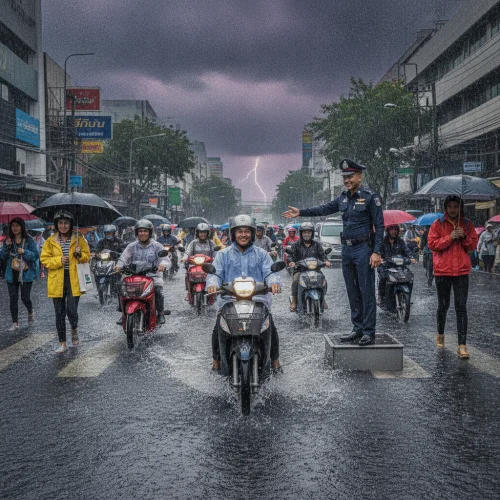
Driving in Thailand feels immediately familiar because traffic flows on the left, but the unwritten rules of the road require sharp attention. Speed limits are strictly enforced by cameras, generally set at 120 km/h on motorways, 90 km/h on rural highways, and 50 km/h in built-up areas. The primary hazard for UK drivers is the sheer volume of scooters. Motorbikes will undertake, overtake, and filter through non-existent gaps, meaning your wing mirrors are your most critical safety tool. The motorway network, particularly around Bangkok and the central provinces, is extensive and heavily reliant on tolls. You will encounter the Expressway (elevated toll roads) and Motorways (routes 7 and 9). Toll booths accept cash, usually charging between 30 THB (£0.65) and 80 THB (£1.75) per plaza. Always keep a stack of 20 and 50 Baht notes in the centre console. Avoid the blue lanes marked M-Flow or Easy Pass, as these are electronic tag lanes for residents; driving through them without a tag incurs hefty fines passed directly to your rental company.
Stay in the cash-only toll lanes and maintain constant awareness of your blind spots to account for filtering motorbikes.
WHERE TO DRIVE AND WHERE TO AVOID
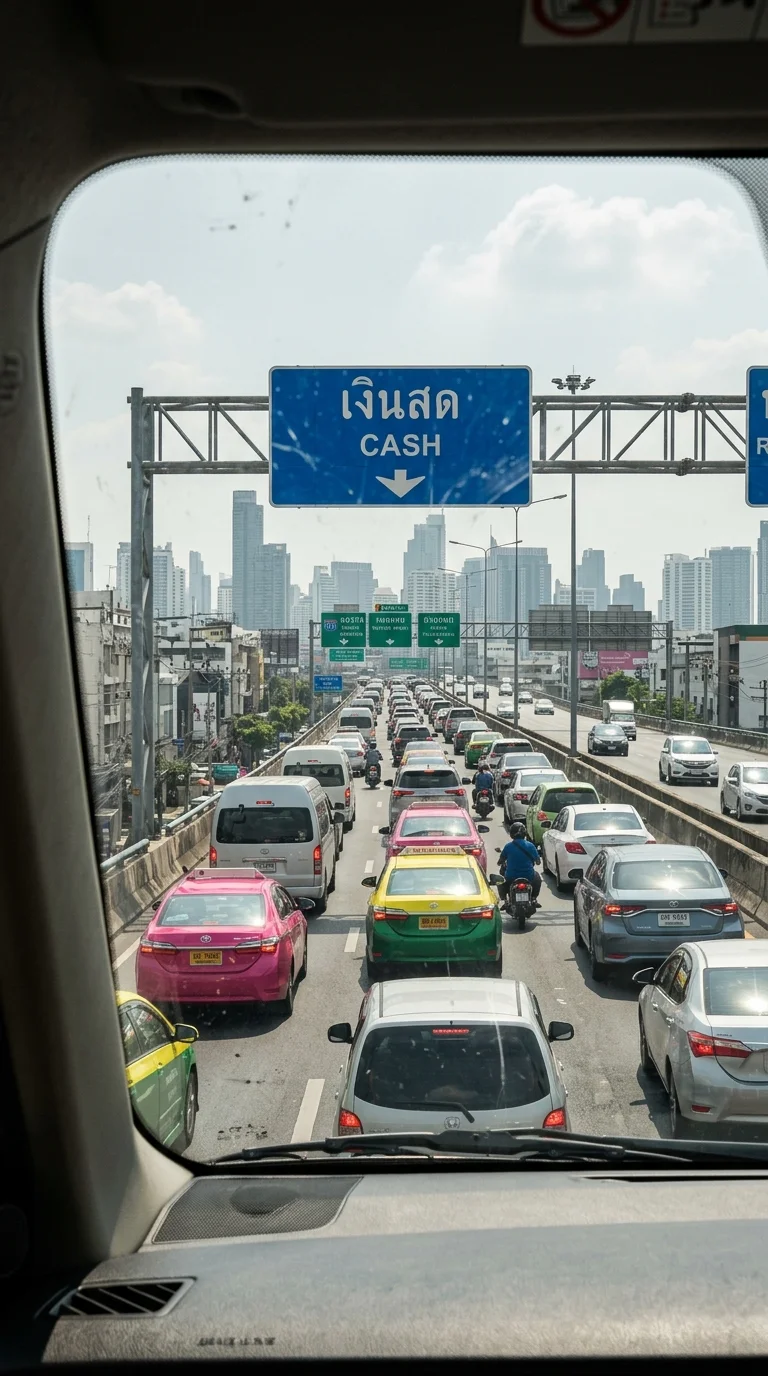
A rental car provides immense freedom in rural provinces but becomes an expensive liability in dense urban centres. Renting a vehicle for your entire trip is rarely the smartest strategy. Bangkok is entirely unsuitable for tourists to drive in due to gridlocked traffic, aggressive lane-changing, and a comprehensive public transport network that makes a car redundant. Similarly, island destinations like Koh Samui and Phuket suffer from steep, winding coastal roads and severe parking shortages. Instead, a self-drive approach excels when exploring northern regions like the Mae Hong Son loop from Chiang Mai, or navigating the sprawling Isaan provinces in the northeast. Driving between central cities, such as Bangkok to Ayutthaya or Kanchanaburi, is also highly practical via well-maintained multi-lane highways. If your itinerary involves a mix of city stays and rural exploration, rent the car only for the days you leave the urban centre. Do not attempt night driving in rural areas, as unlit roads, stray dogs, and poorly marked construction zones present serious hazards.
Limit car rentals to rural road trips and intercity transits, relying on taxis and trains within major cities like Bangkok.
| Region / Destination | Self-Drive Suitability | Primary Challenges |
|---|---|---|
| Bangkok | Very Low | Gridlock, aggressive traffic, no parking |
| Northern Thailand (Chiang Mai out) | High | Mountain switchbacks, steep gradients |
| Isaan (Northeast) | Very High | Long distances between fuel stations |
| Major Islands (Phuket, Samui) | Low to Medium | Congestion, extremely aggressive driving |
COSTS AND BUDGETING
Budgeting for a car rental in Thailand requires factoring in base rates, insurance, fuel, and tolls. The base cost fluctuates significantly depending on the season, with prices peaking between November and February. A compact economy car, perfectly adequate for two people and light luggage, represents the cheapest entry point. Mid-range SUVs are heavily favoured for northern mountain routes due to better ground clearance and engine power. Fuel is comparatively cheap by UK standards; Gasohol 91 or 95 (standard unleaded) costs roughly 38 THB (£0.85) per litre. Tolls will rarely exceed 300 THB (£6.60) for a long cross-country transit. Remember that one-way rentals, where you drop the car off in a different city, incur a relocation fee of 3,000 THB (£66) to 5,000 THB (£110) unless you rent for longer than a week, at which point many major companies waive the charge.
| Option | Cost (THB) | Cost (GBP approx) | Notes |
|---|---|---|---|
| Economy Car (Toyota Yaris) | 800 - 1,200 / day | 17.50 - 26.50 | Best for couples on flat intercity routes |
| SUV (Toyota Fortuner) | 1,800 - 2,500 / day | 39.50 - 55.00 | Essential for heavy luggage or mountain roads |
| Premium / Minivan | 2,500 - 4,000 / day | 55.00 - 88.00 | Ideal for families; requires confident driving |
| Super CDW Insurance | 200 - 500 / day | 4.50 - 11.00 | Highly recommended to avoid excess fees |
| Unleaded Fuel (Per Litre) | 35 - 40 | 0.75 - 0.88 | Pump attendants will fill the tank for you |
COMMON MISTAKES AND HOW TO AVOID THEM
Assuming your UK licence is sufficient alone is a widespread error. Without a 1926 International Driving Permit, your rental insurance is entirely void and police will issue on-the-spot fines. Purchase the correct IDP from a UK Post Office for £5.50 before flying.
Using the electronic toll lanes without a transponder catches out many foreign drivers. Passing through the blue M-Flow lanes triggers an automated fine that your rental company will pass on with an administrative markup. Always queue in the booths marked with a cash symbol.
Failing to photograph the vehicle thoroughly during pickup is a costly oversight. Agents will charge you for pre-existing scratches if you cannot prove they were there before you drove away. Take a slow, continuous video of the exterior and fuel gauge before leaving the lot.
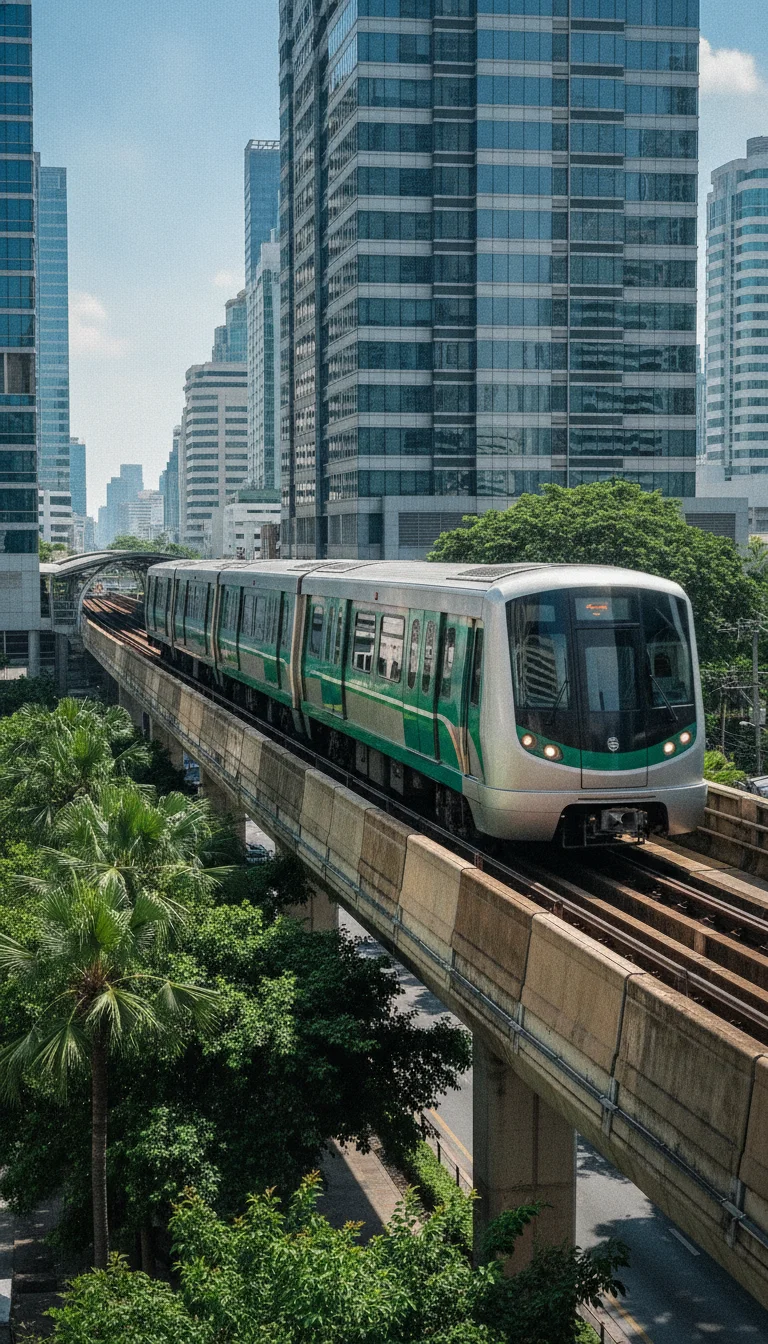
Attempting to drive in central Bangkok ruins many itineraries. The gridlock and aggressive lane discipline cause immense stress and waste valuable holiday time. Rely on the BTS Skytrain in the capital and only rent a car when heading into rural provinces.
PRACTICAL TIPS
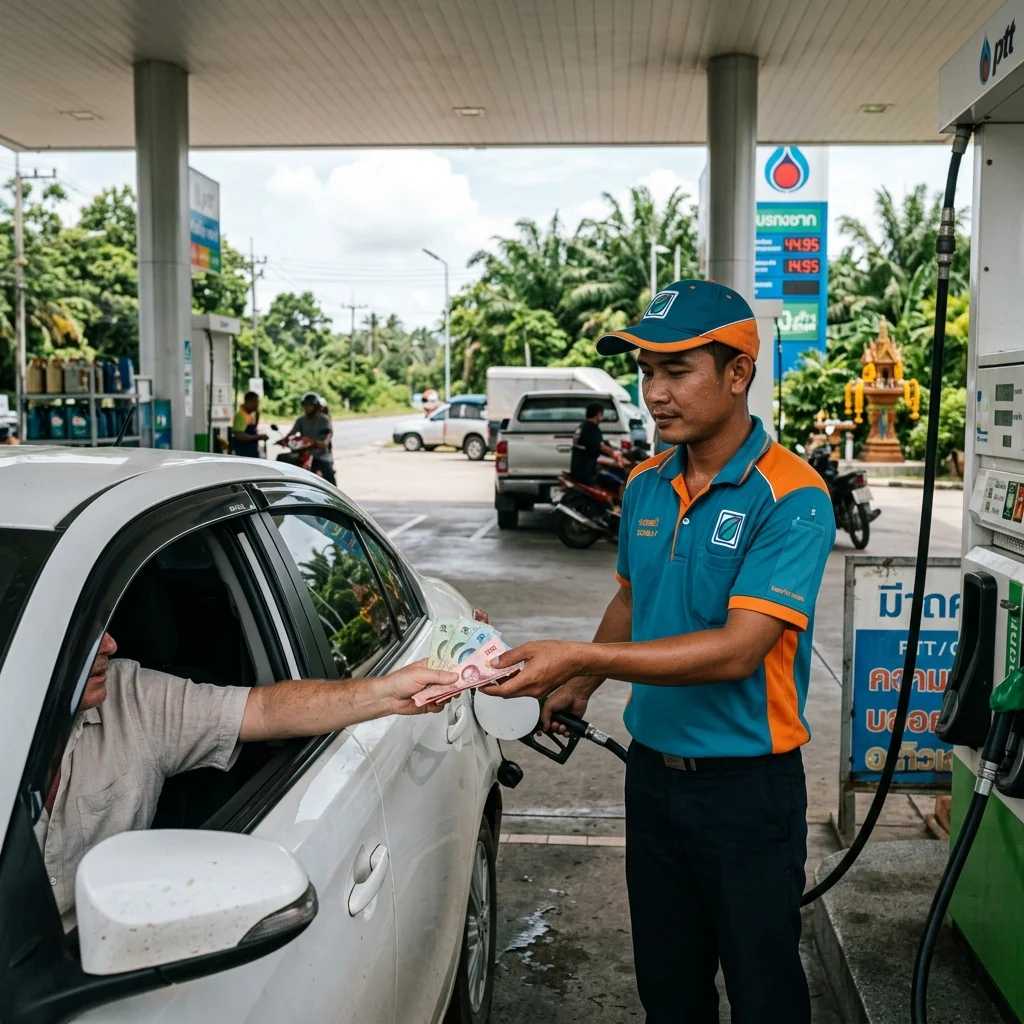
Wait for the pump attendant to fill your car rather than doing it yourself. Thai petrol stations are full-service, so simply wind down your window, specify the fuel type, and hand over your cash or card.
Download offline maps via Google Maps before setting off into rural provinces. Mobile data signals drop frequently in mountainous areas like Chiang Rai, leaving you without navigation if you rely solely on a live connection.
Carry an emergency stash of 20 and 50 Baht notes in the central console. Toll booth attendants cannot easily break 1,000 Baht notes, and fumbling for change angers the drivers queuing behind you.
Avoid parking near corners marked with red and white painted kerbs. These signify strict no-parking zones, and traffic police will swiftly chain your wheel and demand you visit the local station to pay the release fine.
Book an automatic transmission vehicle even if you drive a manual at home. The constant stop-start traffic and steep mountain gradients make manual shifting an unnecessary physical chore.
Familiarise yourself with the headlight flashing etiquette, which differs entirely from the UK. In Thailand, a driver flashing their headlights means they are coming through and will not stop, not that they are giving way to you.
Keep your passport, UK driving licence, and IDP in the glovebox at all times. Police checkpoints are common on provincial borders, and officers will expect immediate presentation of these three specific documents.
FREQUENTLY ASKED QUESTIONS
Can I use my UK driving licence in Thailand?
No, not on its own. A standard UK driving licence alone is not legally sufficient to rent or drive a car in Thailand. You must carry a valid 1926 International Driving Permit alongside your physical UK photocard licence at all times.
Do I need an IDP to rent a car in Thailand?
Yes. Rental companies and Thai traffic police both require a 1926 International Driving Permit. Driving without one invalidates your rental insurance entirely, and you risk an on-the-spot fine of 500 THB to 1,000 THB (£11 to £22) if stopped at a checkpoint.
Where do I get an IDP before travelling to Thailand?
You can buy a 1926 International Driving Permit over the counter at participating UK Post Office branches for £5.50. It must be arranged before you fly, as it cannot be obtained on arrival in Thailand, and only the physical plastic photocard is accepted at rental desks and checkpoints.
Is driving in Thailand safe for UK visitors?
Driving in Thailand is generally safe for confident UK visitors on rural and intercity routes, provided you stay alert to motorbikes filtering between lanes and avoid driving in central Bangkok. Self-drive trips work best in northern Thailand and the northeast, while major cities and congested islands are better navigated by taxi or public transport.
QUICK REFERENCE TABLE
| Item | Detail | Notes |
|---|---|---|
| Driving Side | Left | Identical to the UK; right-hand drive vehicles. |
| Required Licence | UK Photocard + 1926 IDP | The 1949 and 1968 IDP versions are not legally recognised. |
| Minimum Age | 21 years old | Some major companies demand drivers be 23 or older. |
| Security Deposit | 5,000 - 20,000 THB (£110 - £440) | Must be placed on a physical credit card in the main driver's name. |
| Toll Payment | Cash | Keep 20 and 50 THB notes handy; avoid M-Flow lanes. |
| Speed Limits | 120 km/h (Motorways), 50 km/h (Cities) | Strictly enforced by speed cameras; fines sent to rental agency. |
| Fuel Service | Full service | Attendants fill the tank; tipping 20 THB is polite but optional. |
| Drink Drive Limit | 50mg per 100ml of blood | Lower than the UK (80mg); zero tolerance is strongly advised. |