Grand Palace Bangkok
Established in 1782 by King Rama I, this 218,400-square-metre walled complex serves as the definitive architectural symbol of the Chakri Dynasty and houses the Emerald Buddha, Thailand's most sacred religious icon. It remains the most visited historical site in the kingdom, attracting millions of international visitors who come to witness the transition from traditional Thai craftsmanship to European-influenced royal residences.
The Grand Palace is a former royal residence and current ceremonial venue managed by the Bureau of the Royal Household in the Phra Nakhon district of Bangkok. It functions as a massive open-air museum and spiritual centre, housing the Chapel of the Emerald Buddha (Wat Phra Kaew) alongside official state halls and government offices. This destination caters primarily to cultural enthusiasts, history students, and first-time visitors to Thailand who wish to understand the foundations of the nation's monarchy and religious identity. It is a high-traffic, strictly regulated environment where adherence to protocol is mandatory for all guests.
The Evolution of the Royal Seat and Architecture
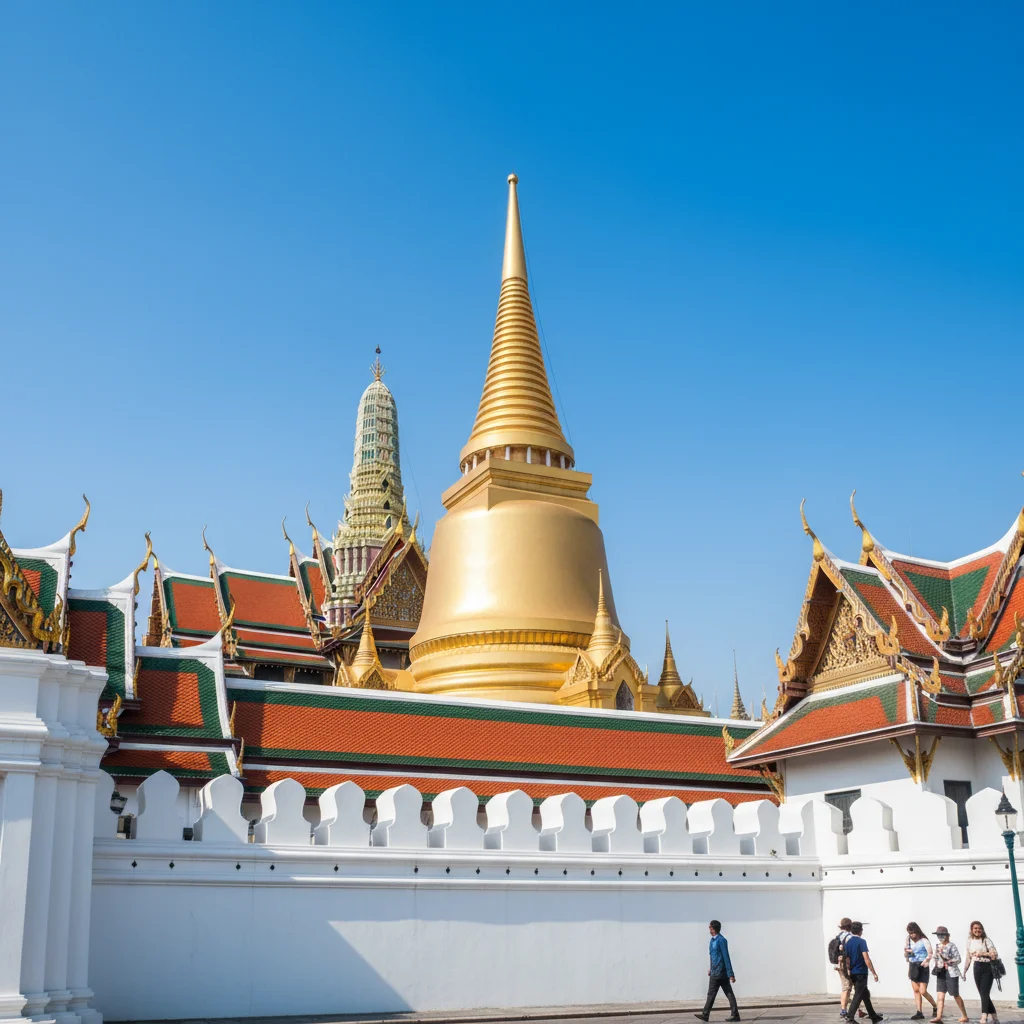
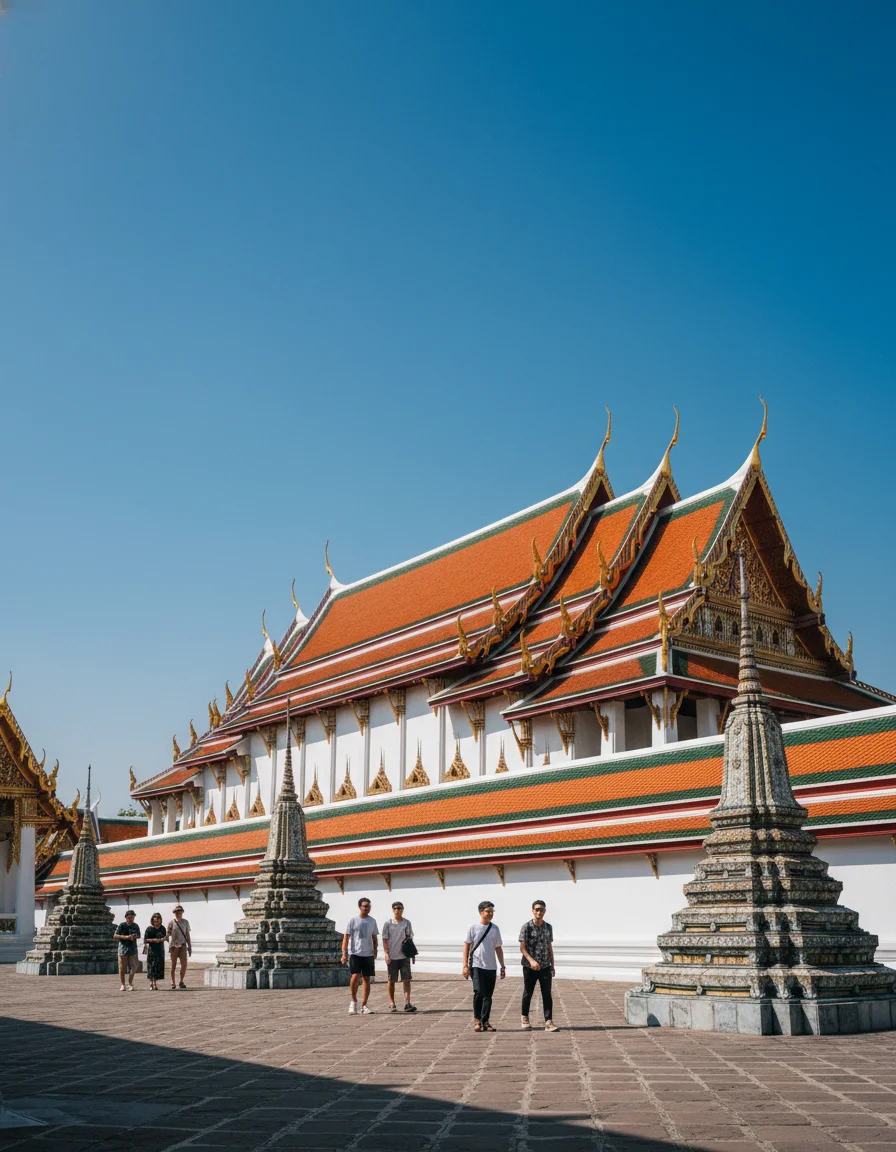
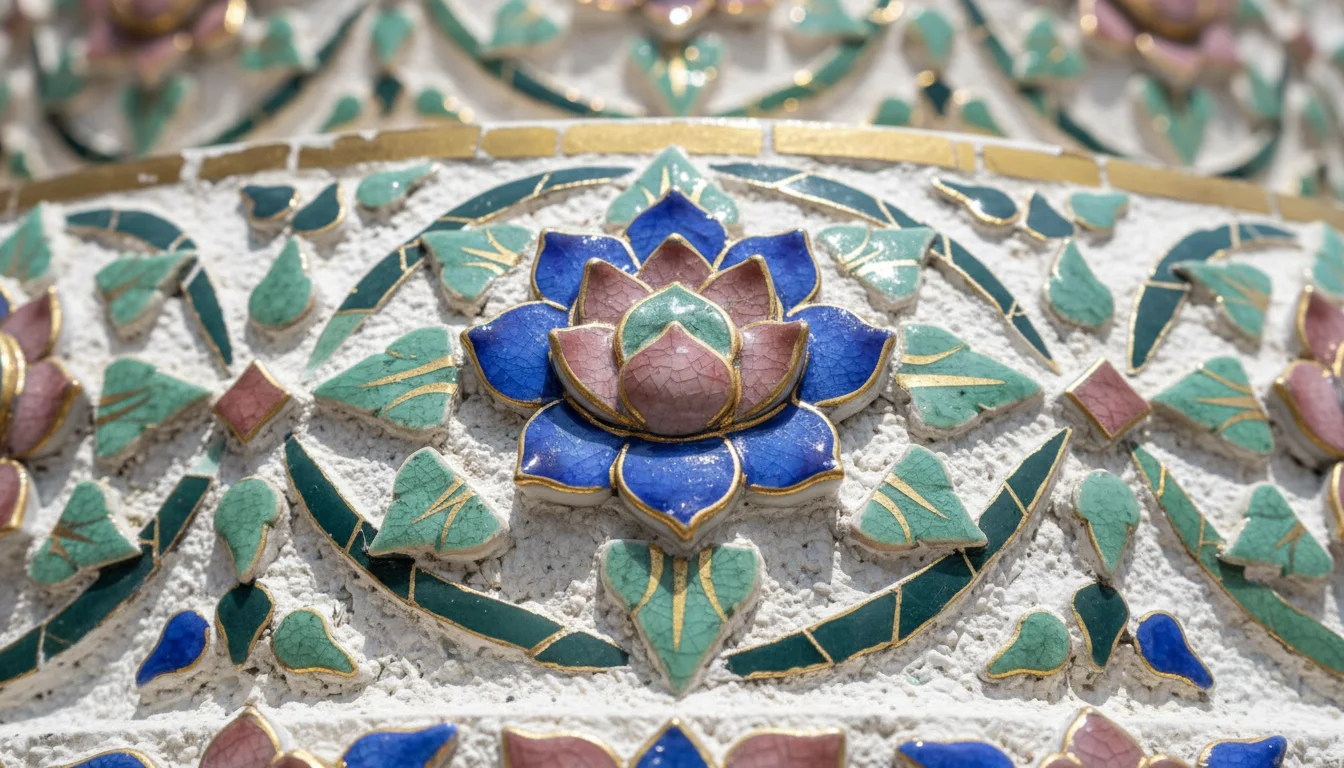
The construction of the palace coincided with the founding of Bangkok as the new capital city following the fall of Ayutthaya and the short-lived Thonburi period. King Rama I moved the royal seat across the Chao Phraya River to Rattanakosin Island, utilising timber and salvaged bricks from the ruins of the old capital to build the original structures. While the earliest buildings followed the strict Ayutthayan architectural style, later monarchs, particularly Rama V (King Chulalongkorn), integrated Western neoclassical and Victorian elements into the design. You will notice this most clearly in the Chakri Maha Prasat Hall, which features a traditional Thai pitched roof atop a building designed in the Italian Renaissance style. The complex is divided into four main courts: the Outer Court, the Middle Court, the Inner Court, and Wat Phra Kaew. Each area served a specific administrative or residential function, though the Inner Court, once the exclusive domain of the King’s harem and children, remains closed to the public. The craftsmanship throughout involves intricate mother-of-pearl inlays, glass mosaics, and gold leaf application that requires constant maintenance by royal artisans.
Discover Bangkok, Thailand's capital. Explore its dual identity, from ancient roots to modern life, and plan your visit to this dynamic city.
The historical significance of the site defines the national identity of modern Thailand.
Wat Phra Kaew and the Emerald Buddha
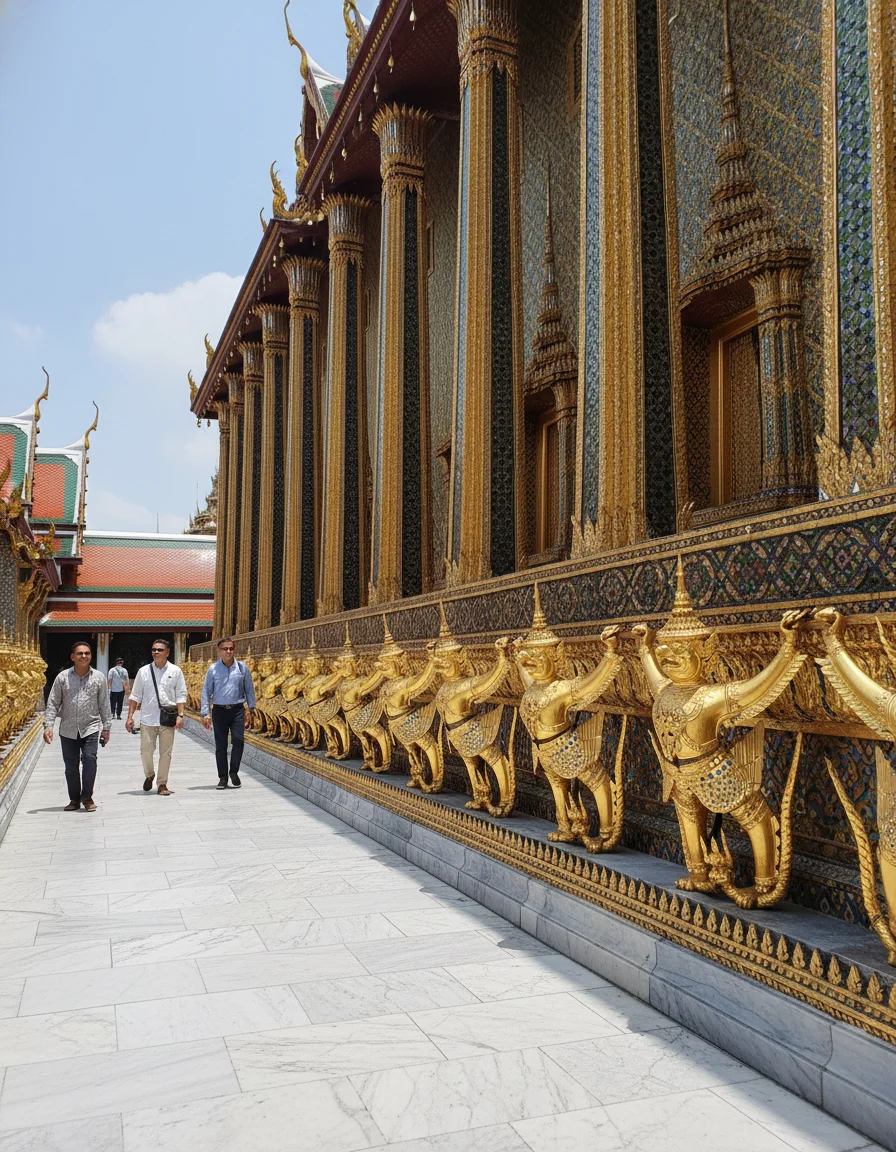
Wat Phra Kaew, known officially as Wat Phra Si Rattana Satsadaram, is unique among Thai temples because it contains no living quarters for monks. The central focus is the Phra Ubosot, which houses the Emerald Buddha, a 66-centimetre tall statue carved from a single block of jade or jasper. You are permitted to enter the hall to pay respects, but photography of the statue is strictly prohibited and silence must be maintained. The Buddha is adorned with three different sets of gold seasonal costumes—summer, rainy, and winter—which are changed personally by the King of Thailand in a formal ceremony at the start of each season. Surrounding the temple is a 2-kilometre long gallery featuring 178 mural panels that depict the Ramakien, the Thai version of the Indian Ramayana epic. These murals are restored every few years to preserve the vivid colours and gold leaf details that tell the story of Prince Rama's quest to rescue his wife, Sita. You should also look for the Phra Mondop, a library built in the Thai style to house sacred Buddhist scriptures, identifiable by its intricate spire and silver floors.
The Emerald Buddha is considered the protector of the Thai nation and its most revered object.
The Middle Court and Ceremonial Halls
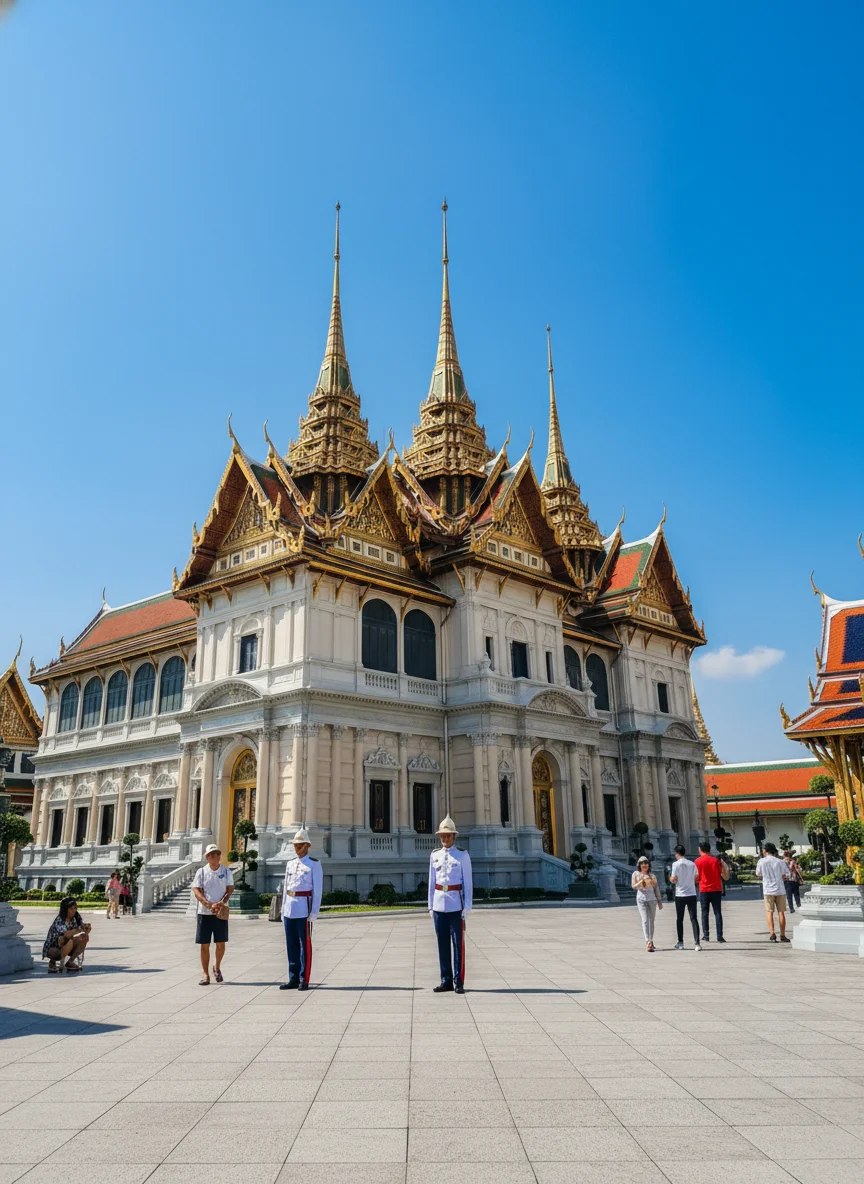
The Middle Court is where the most significant state functions and royal ceremonies take place, including coronation rites and the receiving of foreign ambassadors. The Phra Maha Monthian group consists of several interconnected buildings that served as the primary residence for early kings of the Chakri Dynasty. You can view the Dusit Maha Prasat Hall, a fine example of traditional Thai architecture with a four-tiered roof and a seven-tiered spire, which is used for the lying-in-state of deceased monarchs. Nearby, the Borom Phiman Mansion stands in stark contrast with its French-influenced design; it was built by King Rama V as a residence for the Crown Prince and is now used to house visiting heads of state. While you cannot enter the interiors of most of these halls, the exterior galleries provide a detailed look at the evolution of Thai royal life. The blend of marble, bronze, and teak wood across these structures represents the transition of Thailand into the modern era while maintaining its cultural roots. You will also see the Royal Thai Decorations and Coins Museum near the entrance, which provides context on the insignia used within these halls.
The Middle Court represents the functional intersection of Thai tradition and global diplomatic history.
The Dress Code and Entry Protocol
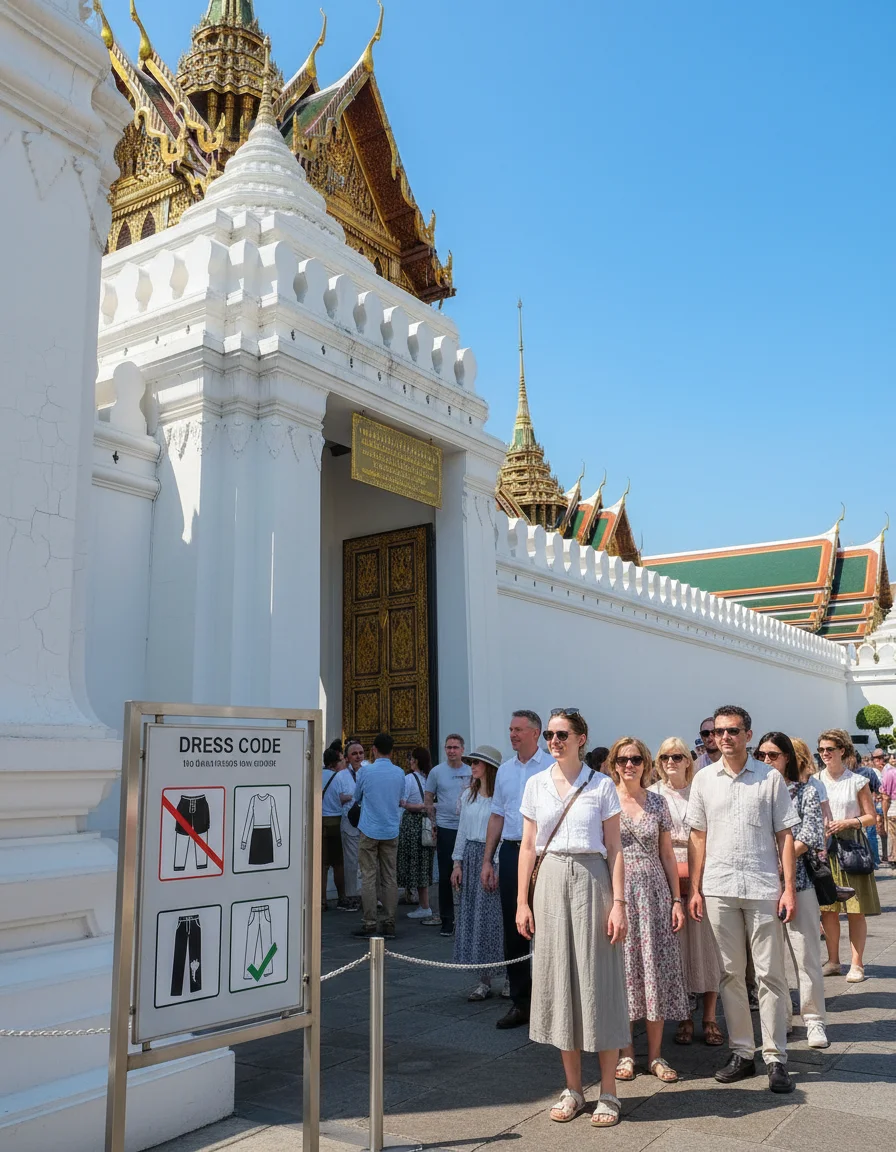
The Grand Palace enforces the strictest dress code of any site in Thailand because it is a functioning royal and religious space. You must wear clothing that covers your shoulders and your knees; this applies to all genders and all ages. Specifically, sleeveless shirts, tank tops, vest tops, see-through garments, short skirts, hot pants, and leggings are forbidden. Ripped or distressed denim is also not permitted, even if the holes are below the knee. If you arrive incorrectly dressed, you will be denied entry at the gate. While there used to be a booth to rent sarongs, this is currently closed, and you will instead be directed to nearby shops where you must purchase appropriate clothing at your own expense. It is highly recommended to wear breathable fabrics like linen or light cotton, as the heat reflecting off the white stone walls can be intense. Footwear must be removed before entering any of the temple buildings, so wearing slip-on shoes or sandals with straps is more practical than laced boots.
Adhering to the dress code is a non-negotiable sign of respect for Thai culture and the monarchy.
Navigating Scams and the Grand Palace Entrance
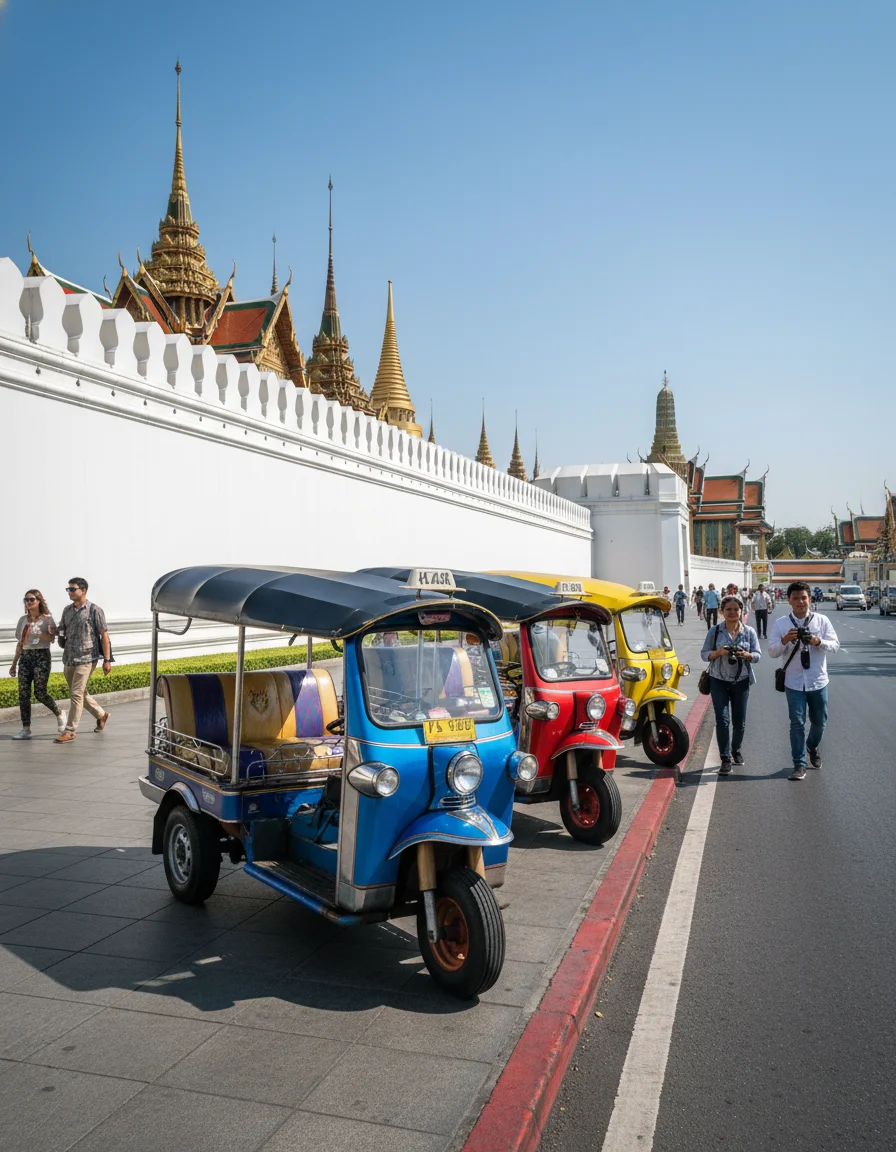
A common challenge for visitors is the prevalence of "palace is closed" scams operating near the main gates. You may be approached by well-dressed individuals or tuk-tuk drivers claiming the palace is closed for a royal ceremony, a holiday, or cleaning. They will then offer to take you to alternative temples or "government export centres" for shopping. Ignore these claims and proceed directly to the Wiset Chaisri Gate, which is the only official entrance for tourists. The palace is open almost every day of the year from 08:30 to 15:30, and any rare official closures are posted on the Bureau of the Royal Household website. Once inside, you will find a ticket office where the 500 THB (£11.50) entry fee is paid. This ticket also includes entry to the Queen Sirikit Museum of Textiles, located within the palace grounds, which showcases the royal silk collection. If you wish to have a guided experience, official guides are available for hire at the ticket office for a fixed fee, which is safer than hiring unofficial guides outside.
Official entry is only through the Wiset Chaisri Gate, regardless of what street touts may tell you.
Location and Getting There
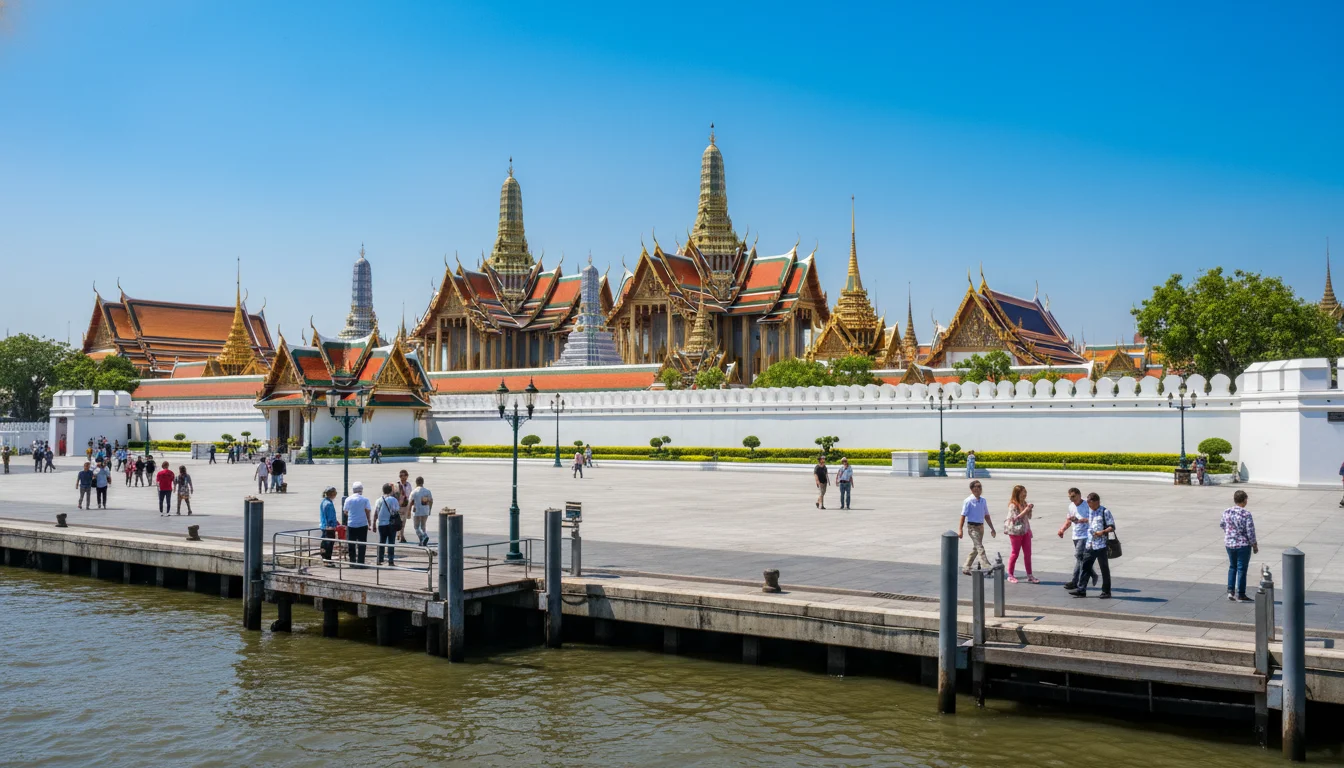
The Grand Palace is located on Na Phralan Road in the Phra Nakhon district, the historic centre of Bangkok. For visitors staying in the Sukhumvit or Silom areas, the most efficient route is taking the BTS Skytrain to Saphan Taksin station (S6), then transferring to the Chao Phraya Express Boat at Sathorn Pier. You should take the boat to Tha Chang Pier (N9), which is a five-minute walk from the palace entrance; the boat trip costs approximately 16 THB (£0.37) to 30 THB (£0.70) depending on the boat type. Alternatively, the MRT Blue Line now serves the Old City at Sanam Chai station, which is about a 12-minute walk from the palace. A taxi from central Bangkok will cost between 100 THB (£2.30) and 200 THB (£4.60) depending on traffic, though the river boat is often faster during peak hours. The journey from Suvarnabhumi Airport takes roughly 45 to 60 minutes by taxi, costing around 400-500 THB (£9.20-£11.50).
Costs and Booking
Visiting the Grand Palace is one of the more expensive cultural activities in Bangkok, with a standard entry fee of 500 THB (£11.50) for non-Thai citizens. This fee is comprehensive, covering entrance to Wat Phra Kaew, the Grand Palace grounds, and the Queen Sirikit Museum of Textiles. You can purchase tickets at the gate or through the official website at least 24 hours in advance. There are no seasonal discounts, but the site is significantly more crowded during the high season from November to February. If you choose to hire an official English-speaking guide at the entrance, expect to pay an additional 200 to 300 THB (£4.60 to £6.90) for a group tour. While the cost is higher than nearby temples like Wat Pho, the scale of the complex and the inclusion of the textile museum provide significant value for a half-day visit.
| Option | Cost (THB) | Cost (GBP approx) | Notes |
|---|---|---|---|
| General Entry Ticket | 500 | £11.50 | Includes Wat Phra Kaew and Textile Museum |
| Official Audio Guide | 200 | £4.60 | Available in English, French, and German |
| Personal Guide | 300+ | £6.90+ | Negotiated at the official guide counter |
| Textile Museum Only | 150 | £3.45 | For those not visiting the full palace |
Who It Suits Best
The Grand Palace is essential for travellers who prioritise cultural history and architectural photography. It is ideally suited for first-time visitors to Thailand and those with a keen interest in Buddhist art and monarchical traditions. However, it may not suit those who struggle with high heat and large crowds, as the complex offers very little shade and involves significant walking on stone surfaces. Families with very young children might find the strict silence rules and lack of seating challenging. It is a destination for those willing to adhere to formal protocols in exchange for seeing the nation's most significant site.
What to Know Before You Book
The heat within the complex is significantly higher than in other parts of the city due to the lack of shade and reflective white surfaces. You should plan to arrive exactly at 08:30 to complete the most exposed sections before the midday sun becomes unbearable. The palace can close without much prior notice for official royal ceremonies or funerals. You should check the official website the day before your planned visit to ensure no state functions have been scheduled. The walk from the main gate to the ticket office and then through the various courts is roughly 2 to 3 kilometres in total. You must be physically prepared for several hours of standing and walking with limited opportunities for rest. Comparison with Wat Pho is common, but they are distinct experiences. Wat Pho is famous for the Reclining Buddha and is more relaxed, while the Grand Palace is a formal state monument.
Practical Tips
Arrive at the Wiset Chaisri Gate by 08:15 to be first in line when the ticket office opens. This allows you to photograph the Emerald Buddha temple before the largest tour groups arrive at 10:00.
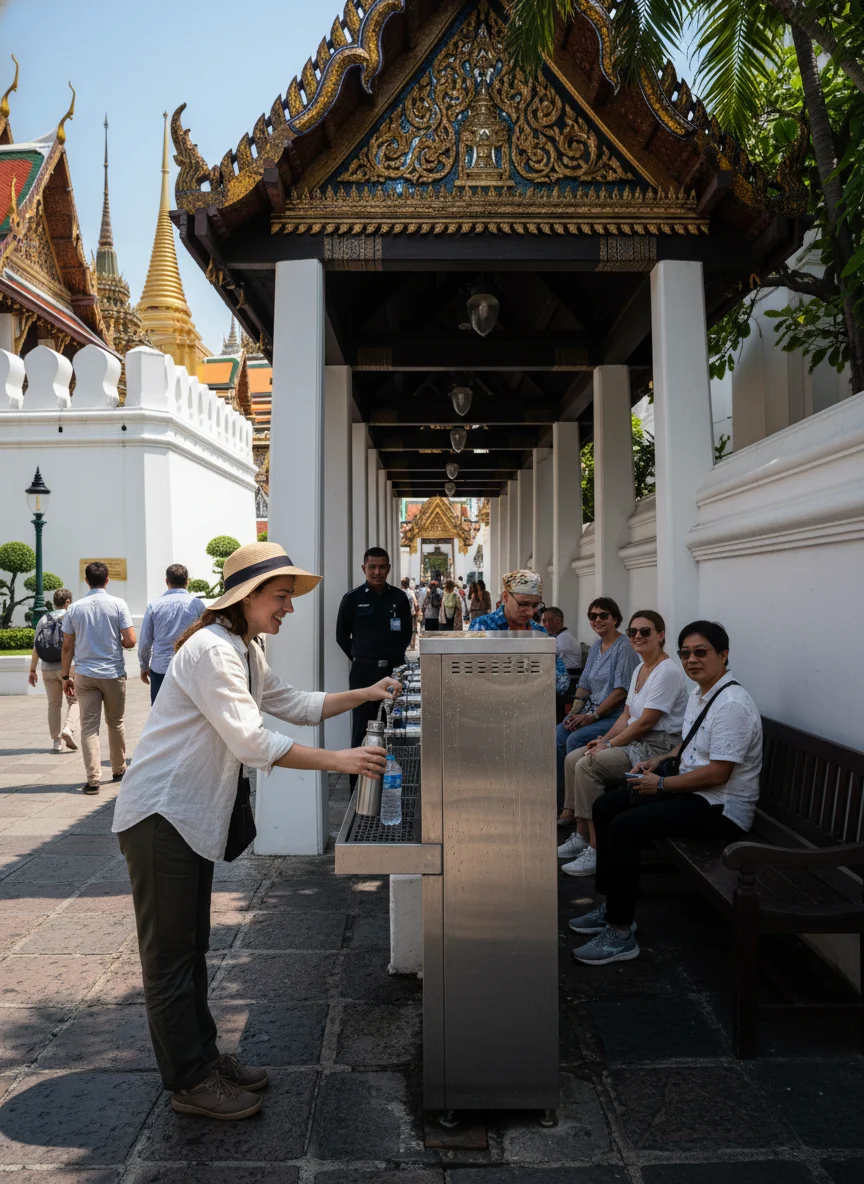
Carry a refillable water bottle as there are filtered water stations located near the exit of the Middle Court. Staying hydrated is vital because the stone courtyard acts as a heat trap during the afternoon.
Visit the Queen Sirikit Museum of Textiles last because it is fully air-conditioned and provides a necessary break from the sun. The museum is located near the exit gate and offers a quiet environment to decompress after the crowds.
Download a digital map of the complex before you enter. The site is sprawling and it is easy to miss the smaller structures like the Model of Angkor Wat if you are just following the flow of the crowd.
Wear socks even if you are wearing sandals. You must remove your shoes to enter the temples, and the wooden or stone floors can become uncomfortably hot for bare feet.
Avoid the "free" maps offered by people outside the gates. These are often used as a conversation starter for scams or to lead you to specific shops.
Combine your visit with Wat Pho, located just south of the palace walls. It is a ten-minute walk between the two, making it efficient to see both in a single morning.
Quick Reference Table
| Item | Detail | Notes |
|---|---|---|
| Property Name | Grand Palace Bangkok | Includes Wat Phra Kaew |
| Location | Phra Nakhon, Bangkok | Rattanakosin Island district |
| Property Type | Royal Palace and Temple | Functioning state and religious site |
| Category | Historical Landmark | Thailand's most visited attraction |
| Capacity | Thousands per day | Highly crowded between 10:00 and 14:00 |
| Opening Times | 08:30 - 15:30 | Ticket office closes at 15:30 |
| Dress Code | Strict | Shoulders and knees must be covered |
| Restaurant | Small cafe on site | Near the exit gates |
| Nearest Transport | Tha Chang Pier (River) | Sanam Chai (MRT) is 1km away |
| Official Website | royalgrandpalace.th | Check for ceremony closures |
| Booking Platform | Agoda / Viator | For nearby hotels or guided tours |