Renting a Scooter in Thailand
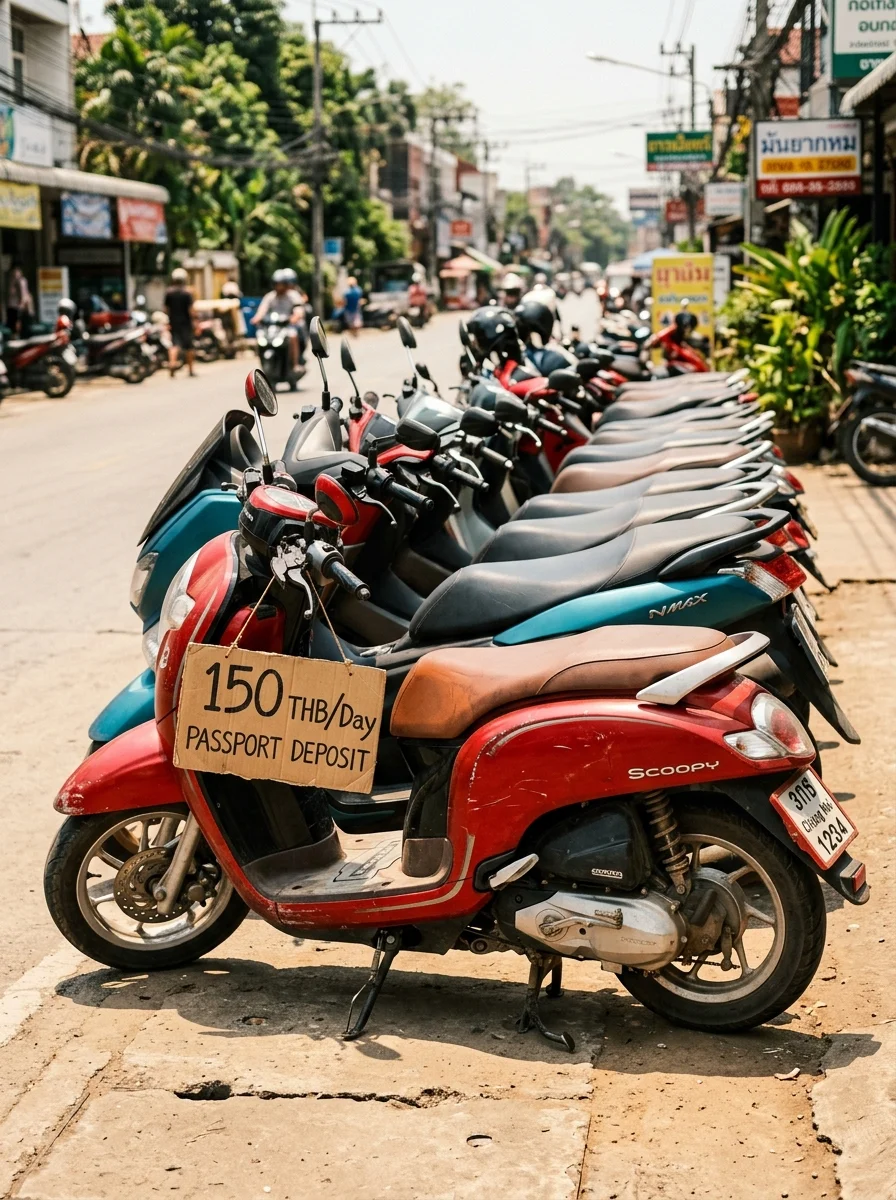
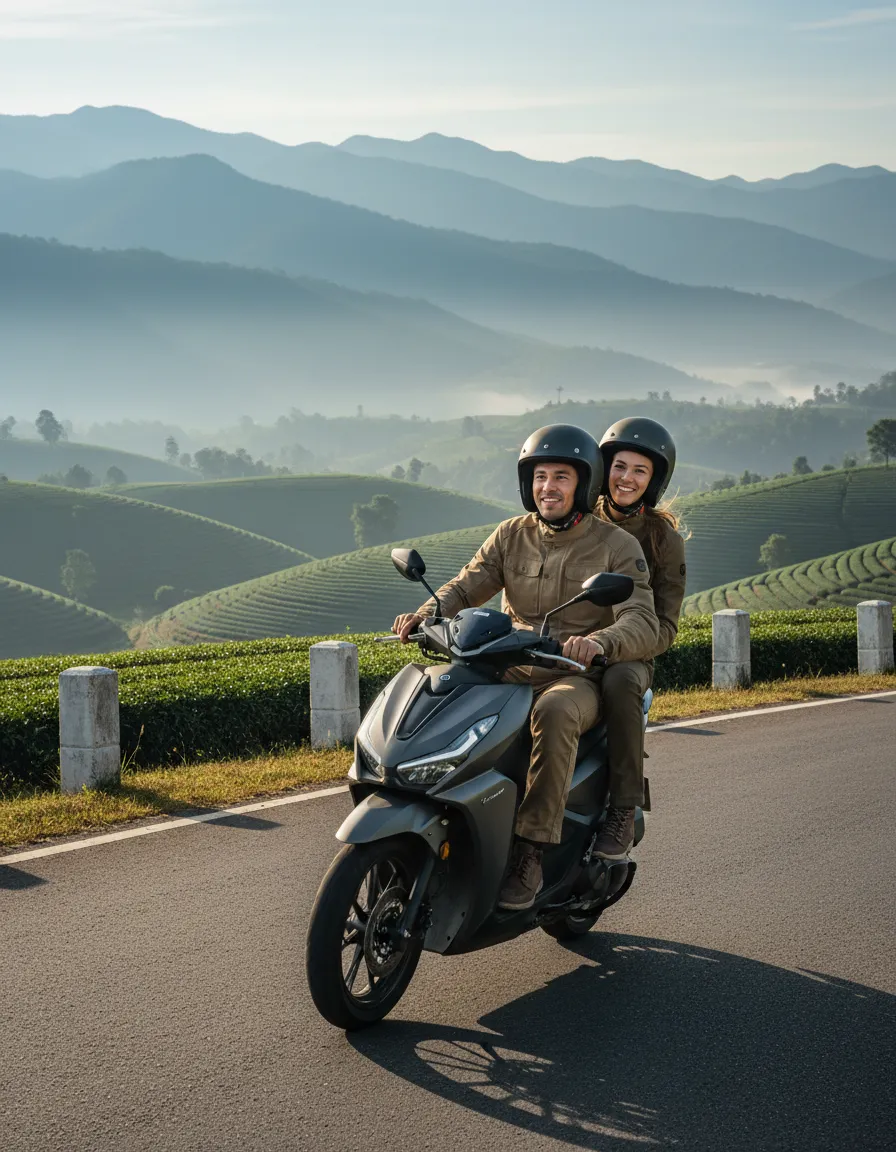
A tourist on a rented Honda Click in Patong without an International Driving Permit is legally driving uninsured, regardless of what their comprehensive travel policy claims. Police checkpoints in major tourist areas issue thousands of 500 THB (£11) fines daily to foreigners riding without the correct legal documentation.
This guide details exactly how to rent and ride a scooter legally in Thailand as a UK visitor. You will learn the strict licence requirements that validate your travel insurance, how to navigate police checkpoints, and what daily rental costs look like on the ground. We cover the stark realities of Thai traffic in places like Chiang Mai and Phuket to help you decide if riding matches your actual experience level.

UK Licence Requirements and Legalities
You cannot legally ride a scooter in Thailand using just a standard UK driving licence or a provisional licence with a CBT certificate. To comply with Thai law and satisfy your travel insurance provider, you must possess a full UK motorcycle licence (Category A1, A2, or A) and a 1968 International Driving Permit (IDP) stamped for motorcycles. Many UK tourists assume their car licence allows them to ride a standard 125cc scooter, but this is legally incorrect in Thailand. Rental shops will happily hand over the keys without checking your qualifications, placing the legal burden entirely on you. If you are stopped at a routine police checkpoint in Phuket or Pattaya, handing over a UK car licence or a 1949 IDP will result in an immediate fine, usually between 500 THB (£11) and 1,000 THB (£22). Worse, riding without the correct Category A endorsement completely invalidates your travel insurance for any medical claims arising from a crash. Always carry your physical UK photocard alongside the correct 1968 IDP when riding.
Discover realistic costs, safety tips, and the best budget accommodation in Thailand. Find your perfect hostel or guesthouse and book your stay today.
Takeaway: Obtain a 1968 IDP with a motorcycle stamp from a UK Post Office before you fly, and only ride if you hold a full UK motorcycle licence.
The Reality of Travel Insurance Exclusions
Travel insurance policies routinely deny expensive medical claims for scooter accidents because riders fail to meet the exact fine print of their coverage. Most UK insurers require you to be riding legally according to the laws of the country you are in, which means holding the aforementioned full motorcycle licence and IDP. Additionally, many policies explicitly exclude any two-wheeled vehicle over 125cc unless you have paid a specific premium add-on. Rental shops frequently push 150cc or 155cc scooters like the Yamaha NMAX or Honda PCX because they handle better on steep hills, but accepting one without checking your policy limits leaves you entirely uninsured. Even if you have the correct licence and vehicle, failing to wear a helmet at the exact moment of an accident is an automatic claim rejection from almost every underwriter. Hospital bills for road traffic accidents in Thailand regularly exceed 500,000 THB (£11,000), making these exclusions financially ruinous.
Takeaway: Read your specific policy wording regarding engine capacity limits and ensure you never ride a scooter larger than your insurance explicitly covers.
Where and How to Rent
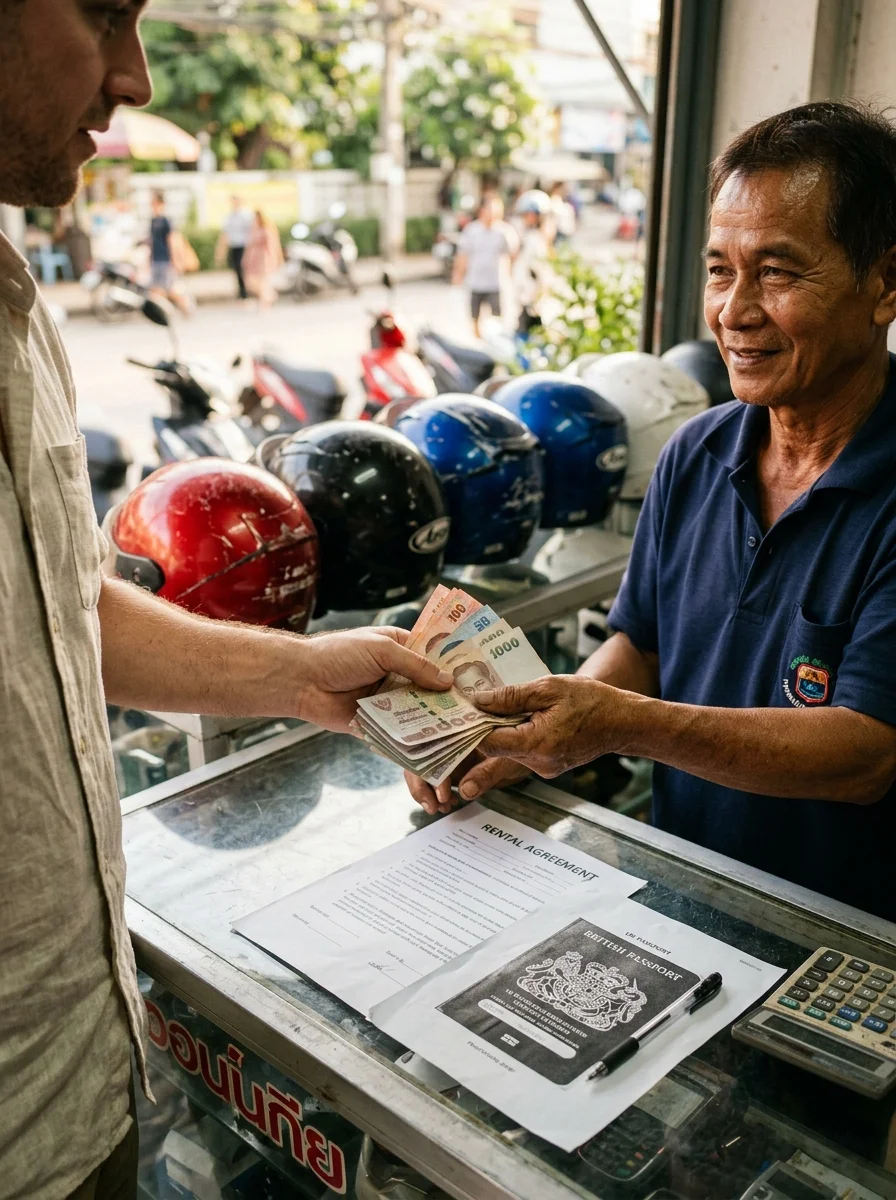
Securing a reliable scooter involves choosing a reputable local dealer over a beachfront tout and heavily documenting the vehicle's condition before riding away. Look for established shops with dozens of recent Google reviews, such as Mango Bikes in Chiang Mai or Karon Scooter Rental in Phuket, rather than renting directly from a small guesthouse. Never hand over your physical UK passport as a deposit. Reputable businesses will accept a clear photocopy of your passport photo page, a copy of your entry stamp, and a cash deposit ranging from 3,000 THB (£66) to 5,000 THB (£111). Before signing the rental agreement, use your phone to film a slow, continuous video of the entire scooter, zooming in on existing scratches, cracked mirrors, and tyre tread depth. Start the engine to ensure the electric starter works, check the brake levers for firmness, and test the indicators. Most rental contracts make you strictly liable for any damage or theft, regardless of fault, so this video is your only leverage against inflated repair claims.
Takeaway: Always leave a cash deposit rather than your passport, and film every inch of the scooter's bodywork before leaving the shop.
| Rental Source | Deposit Requirement | Vehicle Condition | Trust Level |
|---|---|---|---|
| Dedicated Rental Shop | 3,000 THB cash + passport copy | Regularly serviced, newer models | High |
| Hotel or Guesthouse | Often no deposit if staying there | Varies wildly, often older fleet | Medium |
| Street-side Touts | Physical passport demanded | Poorly maintained, high risk of scams | Low |
| Monthly Leasing Firm | 5,000 THB cash + contract | Excellent, comes with maintenance | High |
Thai Roads and Traffic Conditions
Sponsored
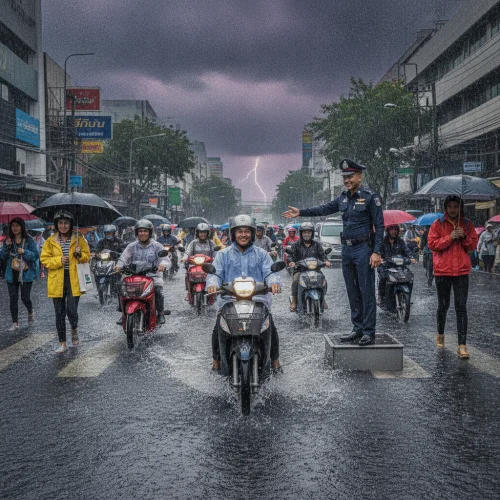
Riding in Thailand requires adapting to a chaotic, fast-paced environment where the unwritten rules of the road override official traffic laws. Thailand consistently ranks among the most dangerous countries globally for road traffic fatalities, and the vast majority of these involve two-wheeled vehicles. In tourist epicentres like Phuket, you must navigate steep, winding coastal roads covered in loose gravel, often while sharing blind corners with aggressive minivans. In Chiang Mai, the moat road operates as a multi-lane racetrack where locals undertake on the inside and pull out from side streets without looking. The hierarchy of Thai roads dictates that larger vehicles have the right of way, meaning trucks and buses will not slow down for a tourist on a scooter. You must ride defensively, constantly scan the road surface for potholes or stray dogs, and never assume that a green light guarantees a safe crossing.
Takeaway: Assume you are invisible to larger vehicles and always yield right of way to cars, buses, and trucks regardless of what the traffic signals indicate.
Experience Levels and Honest Suitability
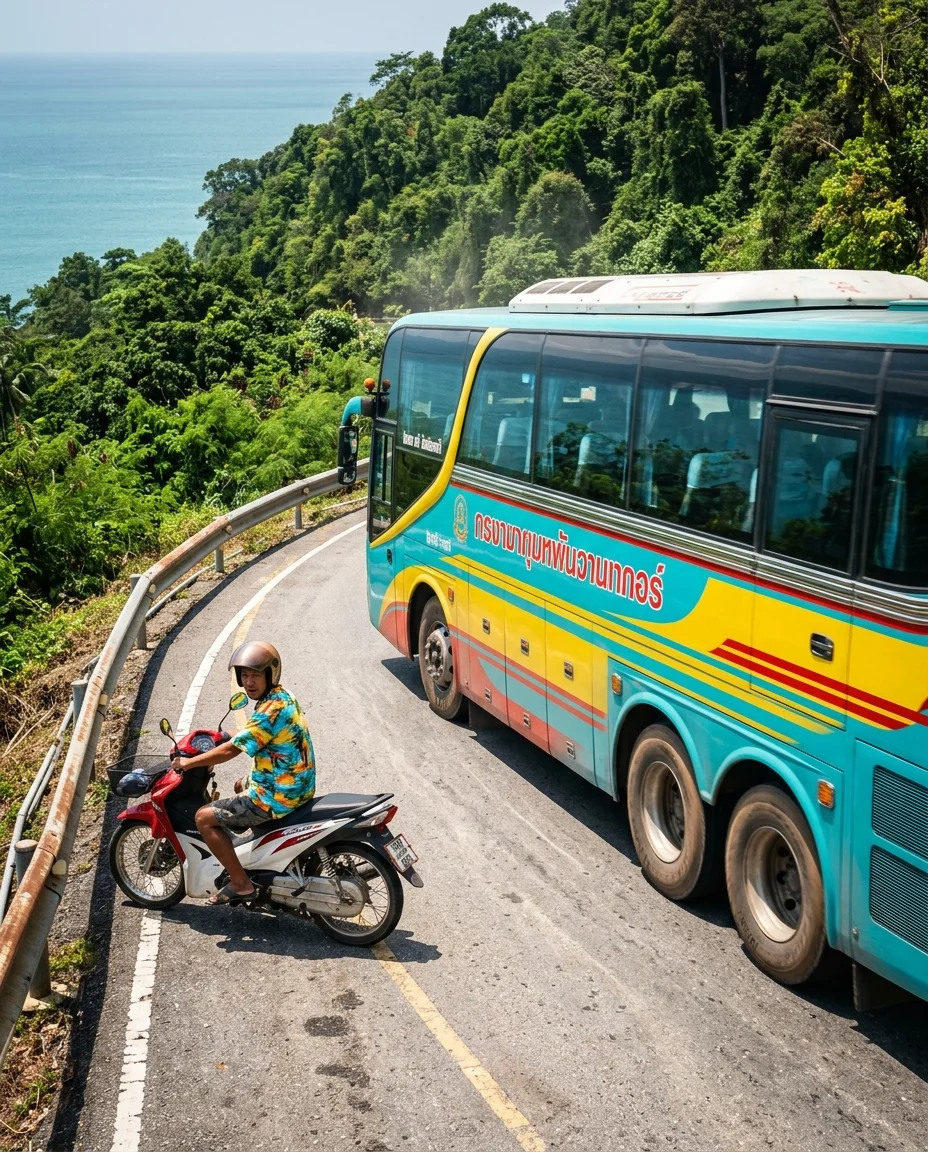
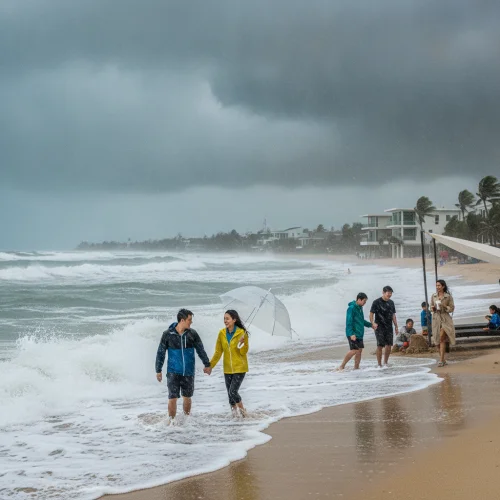
Thailand is objectively the worst place in the world to learn how to ride a motorized two-wheeled vehicle. If you have never ridden a scooter in the UK, renting one in Bangkok or Koh Samui is a severe risk to your physical and financial safety. The learning curve here involves navigating heavy monsoon rain, erratic stray animals, and drivers who routinely drive on the wrong side of the road to avoid U-turns. For complete beginners, public transport, Grab taxis, or tuk-tuks are vastly safer and only marginally more expensive over a two-week holiday. If you have a CBT and some experience riding in the UK, you might manage the quieter islands like Koh Lanta or Koh Phangan, but you must still ride cautiously. Only experienced motorcyclists holding a full Category A licence should attempt to tackle the heavy traffic of Phuket or the Mae Hong Son loop.
Takeaway: Do not rent a scooter in Thailand if you have zero prior riding experience; use Grab or local songthaews instead.
Helmet Laws and Police Checks
Wearing a helmet is a strict legal requirement in Thailand for both the rider and the pillion passenger, though enforcement targets tourists heavily. While you will see locals riding bareheaded everywhere, police in Chiang Mai, Pattaya, and Phuket set up daily checkpoints specifically to catch unhelmeted foreigners. If caught, you face an immediate fine of 500 THB (£11), which you usually have to pay at the nearest police station before retrieving your confiscated scooter keys. Beyond the legalities, the helmets provided free by rental shops are often flimsy, ill-fitting plastic shells lacking proper chin straps or safety certifications. If you plan to ride extensively, go to a local motorcycle shop and buy a DOT or ECE certified helmet for around 1,500 THB (£33). Your head is worth far more than the cost of a basic, safe helmet, and having a visor protects your eyes from dust and insects.
Takeaway: Buy your own certified helmet locally instead of relying on the thin, battered plastic bowls handed out by rental shops.
Costs and Budgeting
Renting a scooter in Thailand remains highly affordable, though prices fluctuate based on location, engine size, and the season. A basic 110cc or 125cc scooter like a Honda Scoopy or Click will cost between 200 THB (£4.40) and 300 THB (£6.60) per day in most areas. If you rent by the month, this daily rate drops dramatically to around 100 THB (£2.20). Mid-range models like the 155cc Yamaha NMAX, which offer better suspension and braking for longer journeys, typically cost 400 THB (£8.80) to 600 THB (£13.20) daily. Premium maxi-scooters like the Honda Forza 300cc command 1,000 THB (£22) to 1,500 THB (£33) per day and require a larger cash deposit. Fuel is incredibly cheap, with a full tank of E20 or 91 octane petrol costing roughly 120 THB (£2.60) at standard PTT stations, providing enough range for several days of local exploring.
| Option | Cost (THB) | Cost (GBP approx) | Notes |
|---|---|---|---|
| Budget (125cc Honda Click) | 200 - 300 | £4.40 - £6.60 | Best for short town trips; struggles on steep hills with two people. |
| Mid-range (155cc Yamaha NMAX) | 400 - 600 | £8.80 - £13.20 | Excellent for longer day trips; requires a licence covering over 125cc. |
| Premium (300cc Honda Forza) | 1,000 - 1,500 | £22.00 - £33.00 | True motorcycle territory; ideal for the Mae Hong Son loop. |
| Monthly Rental (125cc) | 3,000 - 4,500 | £66.00 - £99.00 | Massive savings for long-term visitors; negotiate directly with the shop. |
Common Mistakes and How to Avoid Them
Leaving your passport as a deposit is a severe error. Unscrupulous rental shops will hold your passport hostage against extortionate repair fees for scratches you did not cause, so only rent from shops that accept a cash deposit and a photocopy.
Ignoring the front brake on steep descents leads to brake failure. Relying entirely on the rear brake while riding down hills in Phuket will boil the brake fluid, leaving you with zero stopping power, so use both brakes evenly and let off them periodically to cool.
Riding in flip-flops significantly increases your injury risk. Putting your foot down at a junction in wet sandals often results in a crushed ankle or severe road rash if the bike slips, so always wear closed-toe shoes or sturdy trainers.
Following GPS blindly into rural areas can trap you on unpaved roads. Google Maps frequently directs scooters down steep dirt tracks that are impassable after rain, so check your route using satellite view before setting off.
Practical Tips
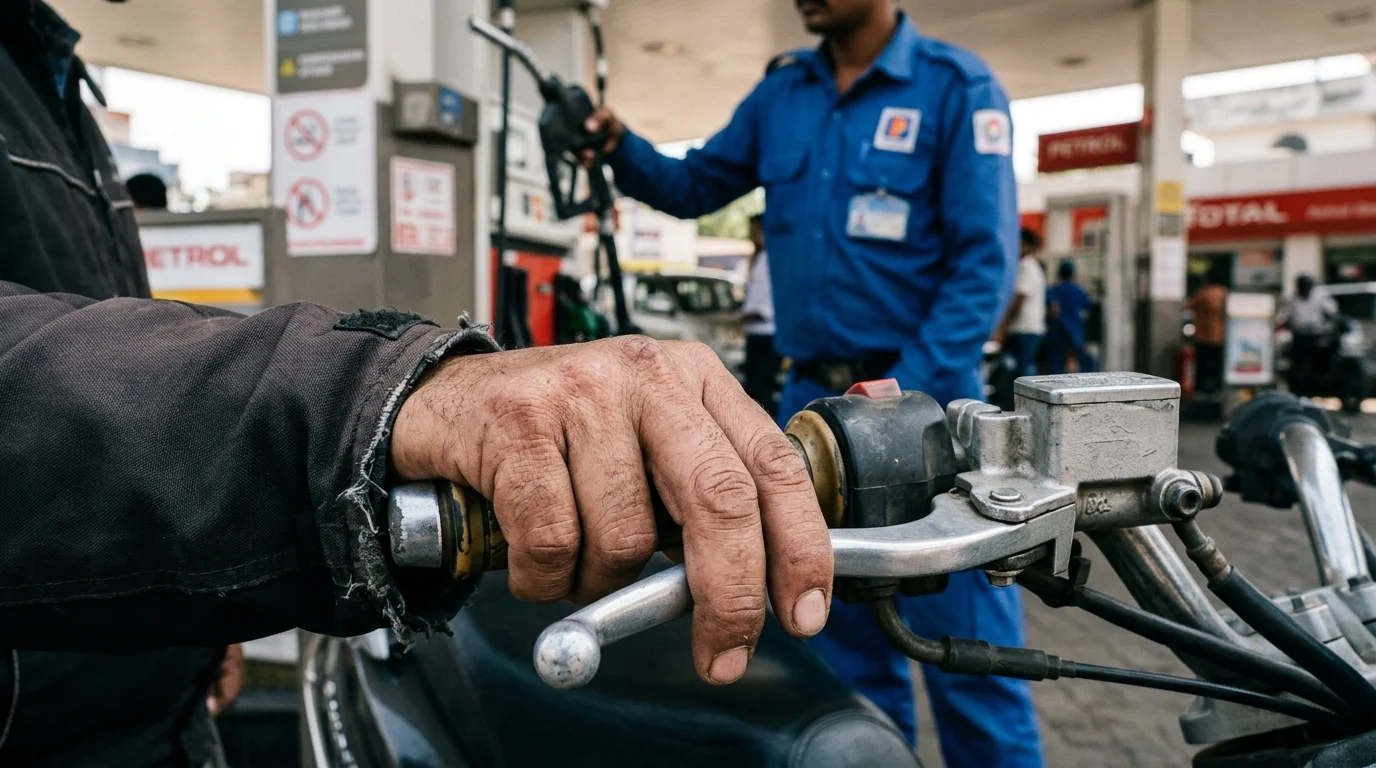
Fill up at proper petrol stations rather than using roadside glass bottles. The fuel sold in old whiskey bottles on the side of the road is heavily marked up and sometimes watered down, which can easily damage the engine over time.
Always check the tyre pressure before embarking on a long ride. Rental shops rarely inflate tyres correctly, and riding on soft tyres dramatically reduces your cornering grip on dusty Thai roads.
Keep 500 THB in a separate pocket away from your main wallet. If you are fined at a police checkpoint, having the exact cash ready prevents you from flashing large amounts of money.
Park exactly where you see other local scooters parked. Leaving your bike in a zone marked with red and white painted curbs will result in it being chained up by the traffic police.
Use a physical phone mount if you need to follow navigation. Holding your phone in one hand while riding is illegal and severely compromises your ability to brake safely in an emergency.
Honk your horn briefly before approaching blind corners on mountain roads. This alerts drivers drifting into your lane that you are coming, which is standard practice in rural Thailand.
Wear sunglasses or a helmet with a clear visor even on cloudy days. Insects and dust kicked up by trucks will temporarily blind you if you ride with unprotected eyes.
Take the keys out immediately when you park, even if just popping into a 7-Eleven. Opportunistic theft is rare but leaving the keys in the ignition is the most common way tourists lose their rentals.
Quick Reference Table
| Item | Detail | Notes |
|---|---|---|
| UK Licence Required | Full Category A, A1, or A2 | A car licence or CBT is legally insufficient. |
| International Driving Permit | 1968 IDP with motorcycle stamp | Get this from a UK Post Office for £5.50 before flying. |
| Standard Daily Cost | 200 - 300 THB (£4.40 - £6.60) | Based on a standard 125cc scooter. |
| Standard Deposit | 3,000 - 5,000 THB (£66 - £111) | Never leave your physical passport. |
| Helmet Law | Mandatory for rider and pillion | 500 THB fine for non-compliance. |
| Standard Fuel | 91 Octane or E20 (Gasohol) | Green or Yellow pumps at PTT stations. |
| Emergency Number | 1155 (Tourist Police) | Save this in your phone before riding. |