Travelling by Ferries and Boats
The crossing from Surat Thani to Koh Samui takes roughly 90 minutes on a high-speed catamaran, but missing the 2:30 PM departure means waiting until the following morning. Navigating Thailand’s water transport network requires understanding the sharp differences between seasonal speedboat operators, heavy-duty car ferries, and local river commuter lines.
This page breaks down exactly how to navigate Thailand’s ferry routes and urban boat networks so you can plan island-hopping itineraries and city transit without getting stranded. You will learn the operational differences between Gulf and Andaman coast schedules, how to compare speedboats against slower vehicle ferries, and the mechanics of using Bangkok’s Chao Phraya Express and khlong canal boats. It provides realistic crossing times, seasonal reliability warnings, and direct advice on booking tickets securely.

Gulf Of Thailand Island Routes
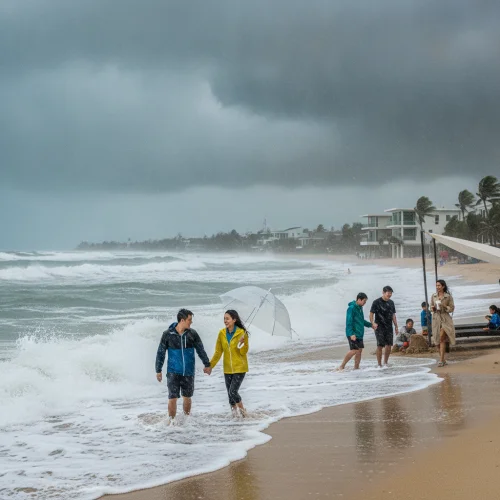
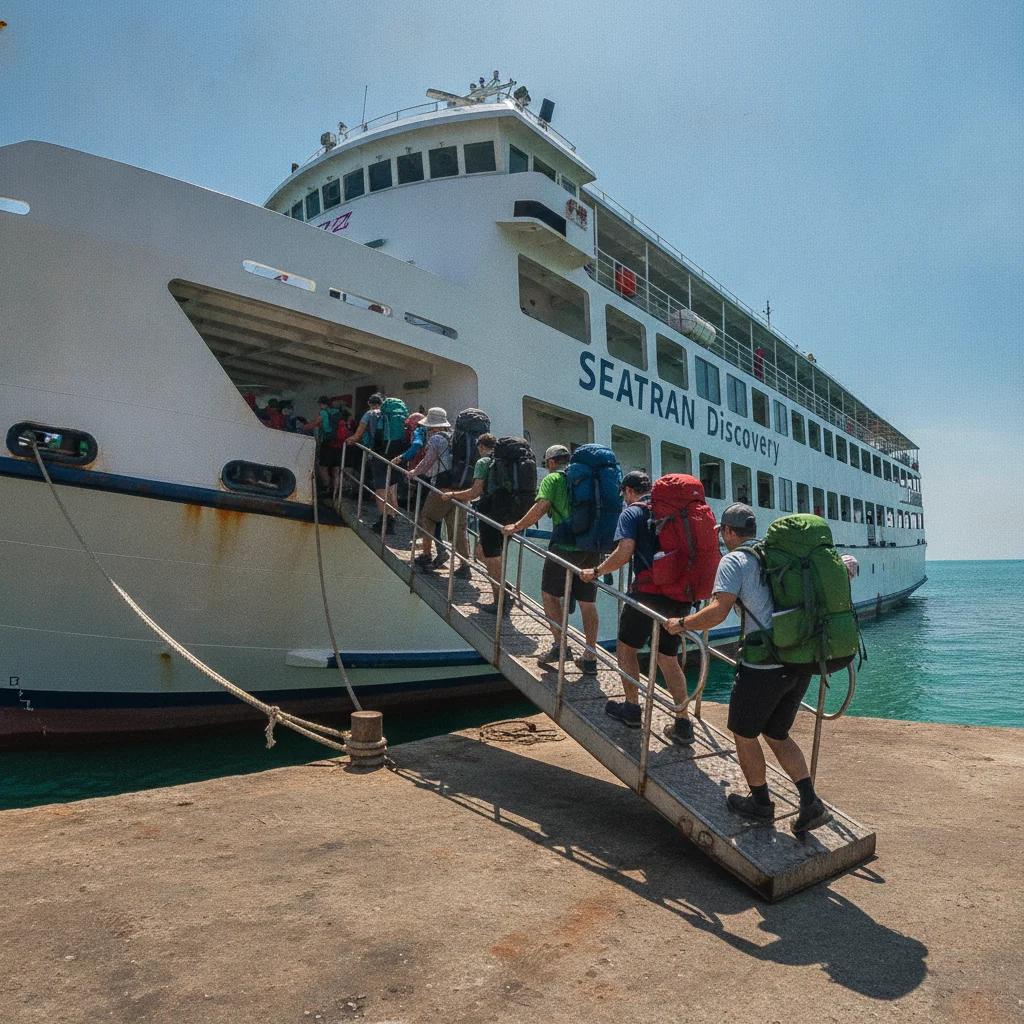
Reaching Koh Samui, Koh Pha-Ngan, and Koh Tao from the mainland requires departing from either Chumphon or Surat Thani. The Gulf islands are serviced primarily by three major operators: Lomprayah, Seatran Discovery, and Raja Ferry. If you are travelling from Bangkok, Chumphon is your closest mainland pier for Koh Tao. Lomprayah operates a two-hour high-speed catamaran crossing from here for around 800 THB (£17.80). Surat Thani’s Donsak Pier serves as the primary hub for Koh Samui and Koh Pha-Ngan. Seatran and Lomprayah run fast passenger ferries taking roughly 90 minutes to Samui, costing 500 to 700 THB (£11.10 to £15.50). Raja Ferry operates the slower, heavier vehicle ferries. These take two and a half hours but charge just 170 THB (£3.80) per foot passenger. Full Moon Party dates severely impact availability, meaning ferries to Koh Pha-Ngan sell out weeks in advance. During the November monsoon on the Gulf coast, high winds frequently force the cancellation of smaller speedboat services. This leaves only the large Raja car ferries operational and capable of handling the heavy swell safely. Always book Gulf ferry tickets at least three days in advance during peak season, and rely on larger vehicle ferries during the rougher November monsoon.
Master your arrival in Bangkok. Discover exactly how to navigate immigration, buy SIM cards, withdraw Baht, and find the best transport into the city.
| Operator | Vessel Type | Speed to Samui | Cost from Donsak |
|---|---|---|---|
| Lomprayah | High-speed catamaran | 90 minutes | 700 THB (£15.50) |
| Seatran Discovery | Passenger cruiser | 90 minutes | 500 THB (£11.10) |
| Raja Ferry | Heavy vehicle ferry | 150 minutes | 170 THB (£3.80) |
| Night Ferry | Converted cargo boat | 6 to 8 hours | 400 THB (£8.80) |
Andaman Coast Connections
The Andaman network links Phuket to Koh Phi Phi and Koh Lanta through a highly seasonal system of passenger ferries and speedboats. Phuket’s Rassada Pier acts as the primary departure point. Getting to Koh Phi Phi’s Tonsai Pier takes roughly two hours on a standard passenger ferry operated by companies like Andaman Wave Master, costing 600 THB (£13.30). A speedboat cuts this journey to one hour but increases the ticket price to 900 THB (£20). From Phi Phi, onward travel to Koh Lanta’s Saladan Pier takes another hour by speedboat. Unlike the Gulf coast, the Andaman ferry network scales back drastically during the wettest months from May to October. Ferries directly connecting Phuket to Koh Lanta stop running entirely. This forces travellers to use mainland minivans via Krabi to reach Lanta. Even during the dry season, the Andaman Sea experiences sudden swells that make speedboat crossings deeply uncomfortable for anyone prone to seasickness. The larger multi-deck ferries remain the steadier, more reliable choice for families or nervous sailors. Plan your Andaman island-hopping strictly between November and April, as rough seas suspend the majority of direct maritime routes during the summer monsoon.
Speedboats Versus Slow Ferries
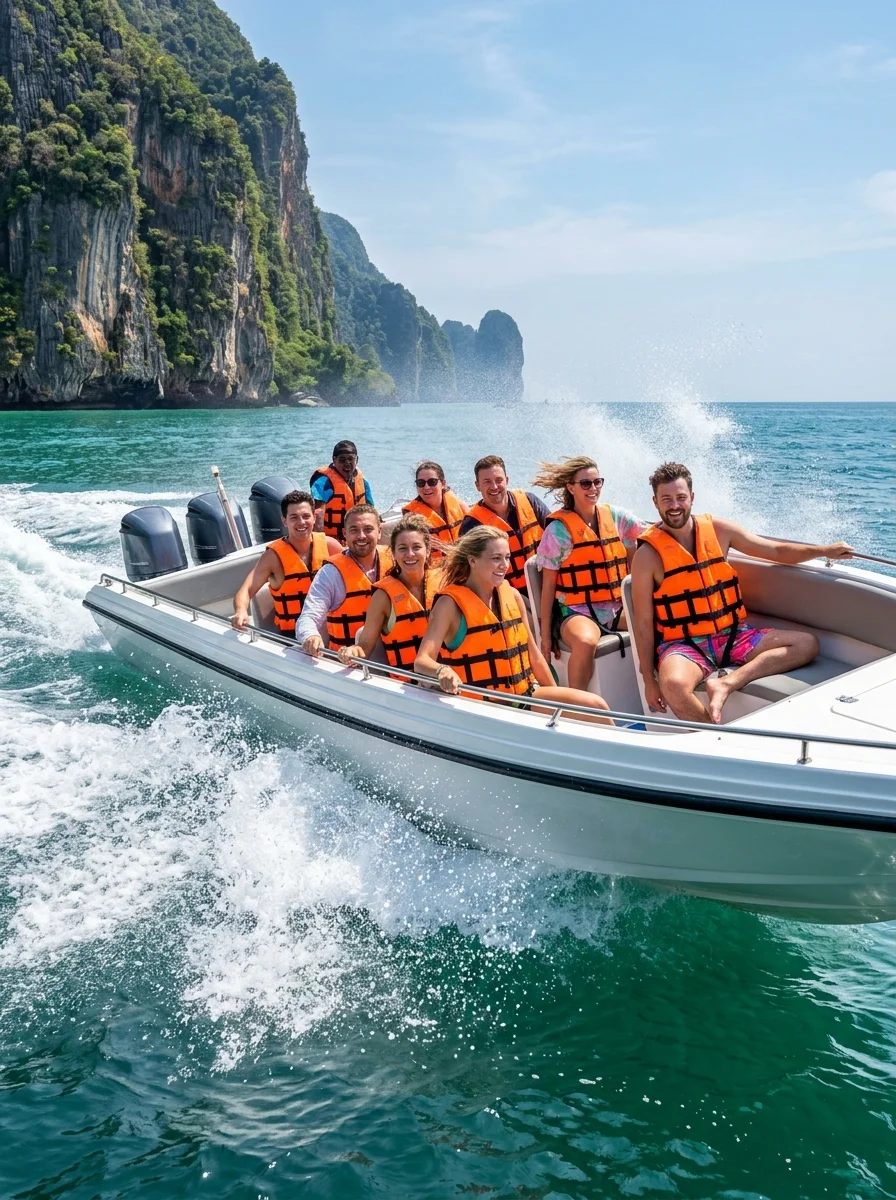
Choosing between a speedboat and a slow ferry dictates not just your transit time, but your physical comfort and safety. Speedboats operate extensively on routes like Phuket to Koh Yao Noi and Chumphon to Koh Tao. They typically feature three or four massive outboard motors and carry between 20 and 40 passengers. While they slash crossing times by up to half, they slam heavily against waves. This makes the ride punishing for anyone with back issues or severe motion sickness. Passenger safety on these vessels varies by operator, so you should always check that life jackets are readily available and not tied down under seats. Slow ferries, including large car ferries and multi-deck cruisers like Seatran, offer air-conditioned cabins, snack bars, and outdoor observation decks. These larger vessels cost 30 to 50 percent less than speedboats and handle rougher swells with far greater stability. They are the only reliable option when weather conditions deteriorate, as port authorities will ground speedboats while allowing car ferries to sail. Select slow ferries for comfort, reliability in poor weather, and budget-friendly travel, reserving speedboats exclusively for calm days when speed is your absolute priority.
| Vessel Type | Average Capacity | Ride Quality in Swell | Best For |
|---|---|---|---|
| Heavy Car Ferry | 200+ passengers | Highly stable, slow | Budget travellers, rough weather |
| Passenger Cruiser | 150 to 250 passengers | Moderate stability | Families, standard crossings |
| High-Speed Catamaran | 100 to 150 passengers | Fast but bumpy | Maximising beach time |
| 3-Engine Speedboat | 20 to 40 passengers | Heavy slamming, punishing | Calm days, short transfers |
Bangkok River And Canal Transit
Sponsored
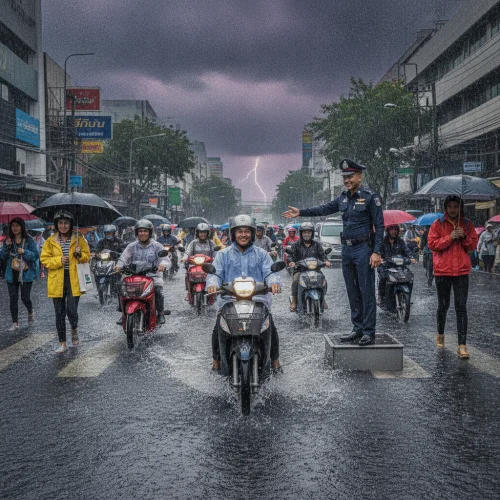
Bangkok’s waterways provide an efficient, traffic-free alternative to road transport using two distinct public boat systems. The Chao Phraya Express Boat network runs up and down the main river, distinguished by coloured flags on the vessels. The Orange Flag line is the most useful for visitors, operating daily and stopping at major piers like Sathorn, Wat Arun, and Phra Arthit. A single journey costs a flat rate of 16 THB (£0.35) regardless of distance. The Blue Flag Tourist Boat costs 30 THB (£0.65) and provides upper-deck seating with English announcements, but it runs less frequently. Inland, the Khlong Saen Saep canal boats cut directly through central Bangkok. These low-slung, loud commuter boats cost between 12 and 22 THB (£0.25 to £0.50) and bypass gridlocked road traffic completely. You board rapidly by stepping onto the gunwale while deckhands hold the ropes tight. Canal water is notoriously dirty, and passengers actively pull up canvas side-shields to avoid being splashed by the wake. Use the Orange Flag river boat for cheap, scenic trips along the Chao Phraya, and the canal boats for high-speed cross-city transit during rush hour.
| Service | Route Focus | Cost per Ride | Operational Style |
|---|---|---|---|
| Orange Flag Express | Main river commuter route | 16 THB (£0.35) | Fast, crowded, basic seating |
| Blue Flag Tourist | Main river tourist sites | 30 THB (£0.65) | Slower, guided announcements |
| Khlong Saen Saep | Inland east-west canal | 12 to 22 THB (£0.25 to £0.50) | Extremely fast, utilitarian |
| Cross-River Ferries | Bank to bank transfers | 5 THB (£0.11) | Continuous short shuttle |
Booking Mechanics And Boarding Procedures
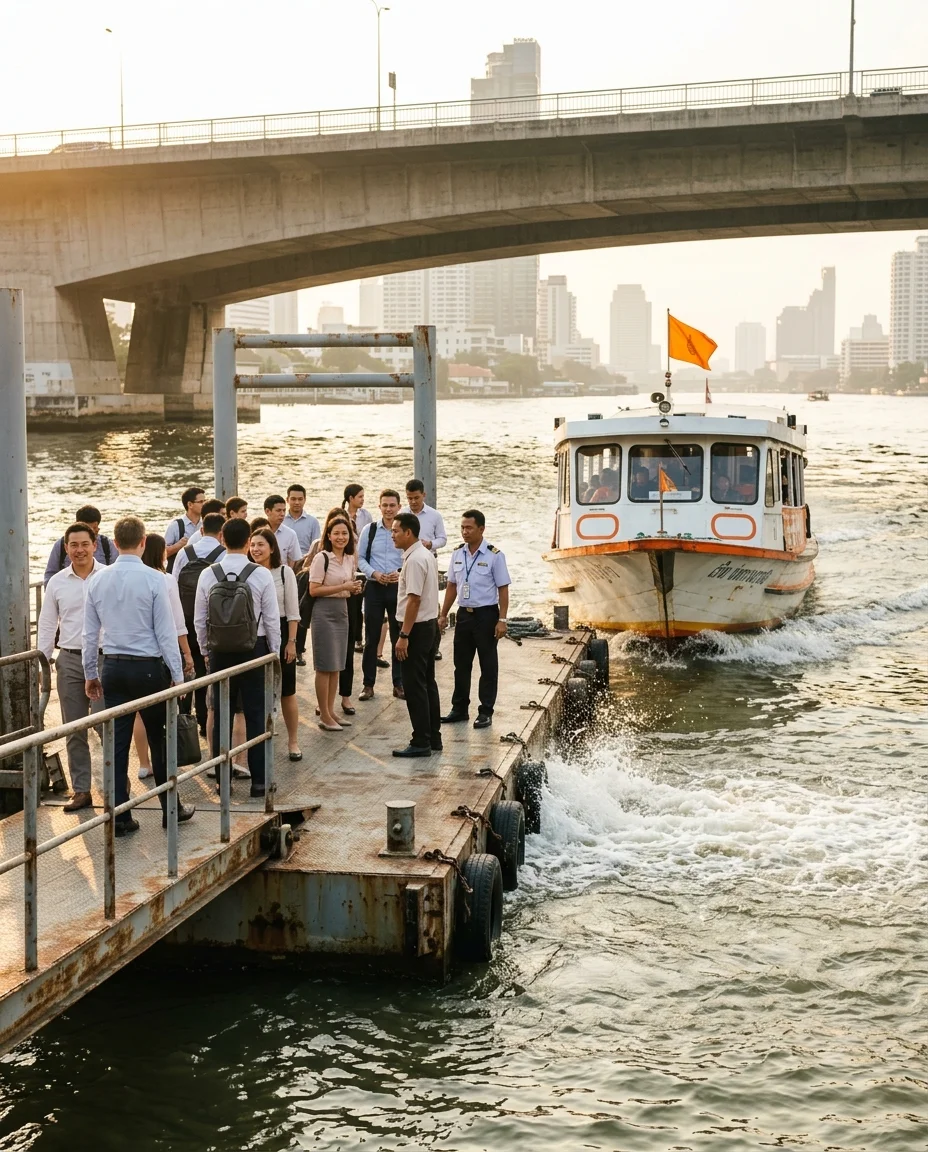
Securing marine transport in Thailand requires understanding when to book ahead online and when to simply pay cash at the pier. Island ferries run by major operators like Lomprayah and Andaman Wave Master should always be booked online in advance, particularly between December and March. Aggregator platforms allow you to buy combined bus-and-ferry joint tickets. This simplifies the transfer from an airport or train station directly to the island pier. When you arrive at a mainland ferry terminal, you must present your digital booking confirmation at the operator’s desk to receive a physical sticker or paper ticket before boarding. Arrive at least 45 minutes before departure, as piers are loud and you will need time to locate the correct queue. Conversely, Bangkok’s urban boat networks never require advance booking. For the Chao Phraya Express and the khlong boats, you simply walk onto the pier, board the vessel, and pay a ticket collector. They will walk up and down the aisle rattling a metal coin cylinder to issue your paper stub. Always pre-book long-distance island ferries using online platforms, but carry small coins to pay on board for all Bangkok river and canal transit.
Costs And Budgeting
Budgeting for water transport in Thailand depends heavily on whether you are using local transit or crossing significant stretches of open ocean. Bangkok commuter boats represent the extreme budget end, where a cross-city canal journey costs just 15 THB (£0.35). For island hopping, budget travellers can utilise the slow vehicle ferries from Surat Thani to Koh Samui for roughly 170 THB (£3.80). Mid-range travel involves high-speed passenger catamarans, which average 600 to 800 THB (£13.30 to £17.80) for a standard Gulf or Andaman crossing. Premium options include private speedboat charters or the Blue Flag tourist boats in Bangkok. A private speedboat transfer from Phuket to an offshore island like Koh Racha can cost upwards of 8,000 THB (£177) for the day, offering total flexibility and privacy. Always factor in pier fees, as many island docks charge a mandatory 10 to 20 THB (£0.20 to £0.40) cash environmental tax upon arrival.
| Option | Cost (THB) | Cost (GBP approx) | Notes |
|---|---|---|---|
| Chao Phraya Express | 16 THB | £0.35 | Flat rate for standard river transit |
| Raja Car Ferry (Gulf) | 170 THB | £3.80 | Cheapest mainland to island crossing |
| Lomprayah Catamaran | 700 THB | £15.50 | Standard mid-range fast crossing |
| Private Speedboat | 8,000+ THB | £177.00+ | Premium full-day offshore charter |
| Island Pier Fee | 10 to 20 THB | £0.20 to £0.40 | Cash only environmental tax |
Common Mistakes And How To Avoid Them
Assuming Andaman ferries run year-round is a frequent error. This leaves travellers stranded in Phuket when trying to reach Koh Lanta in July. Always check seasonal schedules and use mainland minivans during the summer monsoon.
Booking an evening flight before a ferry connection often leads to missed boats. You will be forced to pay for an unplanned overnight stay near the mainland pier. Land at least four hours before your scheduled ferry departure to absorb inevitable delays.
Relying on speedboats during high winds creates miserable journeys. Passengers suffer severe seasickness and bruising from slamming against heavy swells. Switch to a large vehicle ferry when the weather forecast predicts rough seas.
Standing near the edge of a khlong boat exposes you to heavily polluted water. The wake from passing vessels frequently splashes over the low gunwales. Sit towards the centre and use the pull-ropes to raise the protective canvas shields.
Practical Tips
Carry motion sickness pills even if you do not usually suffer from nausea. The Gulf of Thailand can develop steep, short wave patterns that make high-speed catamaran crossings intensely uncomfortable.
Pack your electronics and valuables in a dry bag before boarding a speedboat. Salt spray frequently blows over the open deck and luggage is often piled on the damp bow.
Keep small 10 THB coins accessible in your pocket when arriving at island piers. Most islands, including Koh Tao and Koh Phi Phi, charge a mandatory cash-only environmental cleaning fee as soon as you step off the gangway.
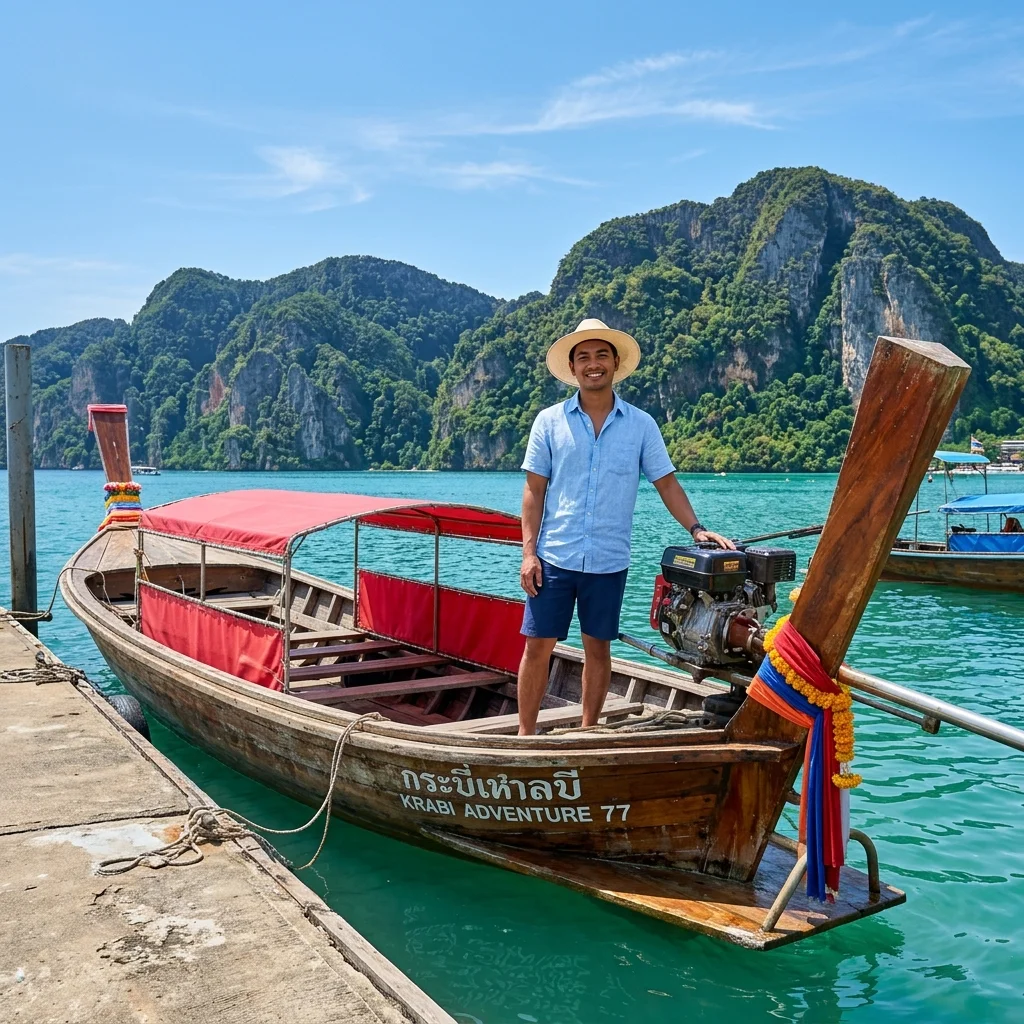
Wear slip-on shoes or sandals for beach departures. Longtail boats and some smaller ferries require you to wade into knee-deep water to climb the boarding ladder.
Ignore touts aggressively selling taxi rides while you are still on the boat. Wait until you have disembarked and walked past the immediate pier exit to find official metered taxis or fixed-rate songthaews.
Check which mainland pier your specific vessel departs from in Surat Thani. The region has multiple departure points spread out along the coast, and arriving at the Raja Ferry port when you hold a Lomprayah ticket means missing your boat.
Do not leave your luggage unattended on the lower deck of a river express boat. Petty theft is rare, but bags placed near the exit gangways can easily fall into the river during chaotic boarding rushes.
SafetyWing covers Thailand medical costs from £1.50/day — sort it before you fly.
Longtail boats serve as the vital last-mile transport for beaches without deep-water piers, such as Railay Beach in Krabi. While they are loud and lack modern amenities, these shallow-draft vessels navigate coral reefs and sandbars where larger ferries cannot pass.
Quick Reference Table
| Item | Detail | Notes |
|---|---|---|
| Primary Gulf Operator | Lomprayah | High-speed catamarans to Samui, Pha-Ngan, Tao. |
| Primary Andaman Operator | Andaman Wave Master | Passenger ferries connecting Phuket to Phi Phi. |
| Cheapest Island Option | Raja Ferry (Gulf) | Slower vehicle ferries, excellent for rough weather. |
| Bangkok River Commuter | Chao Phraya Express (Orange) | 16 THB (£0.35) flat rate, runs daily. |
| Advance Booking | Required for island routes | Use aggregator sites during peak season (Dec-Mar). |
| Baggage Limits | Generally 20kg to 30kg | Speedboats strictly enforce weight; slow ferries rarely check. |
| Pier Arrival Time | 45 minutes before departure | Allows time to exchange digital tickets for physical stubs. |
| Island Pier Fees | 10 to 20 THB (£0.20 to £0.40) | Cash only, collected at the end of the gangway upon arrival. |