Yacht Charter in Thailand
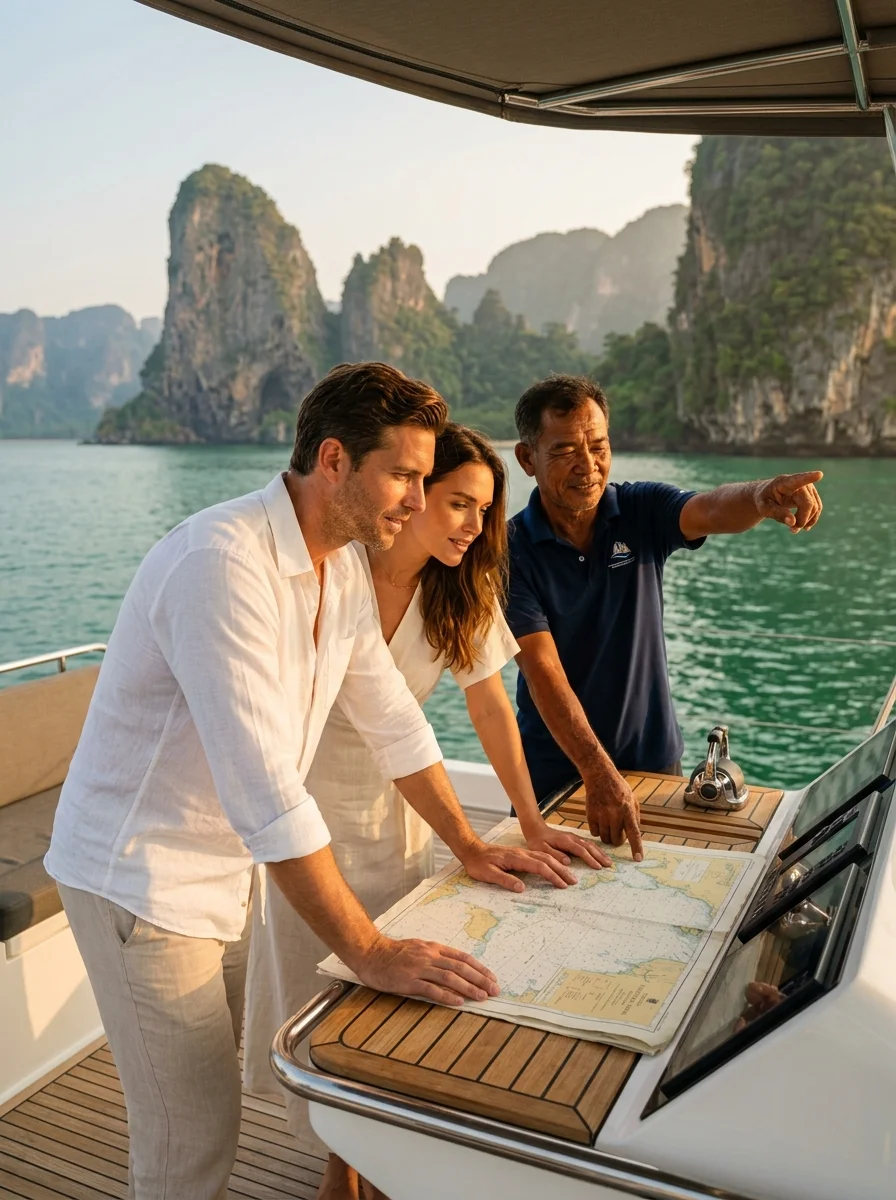
Stepping aboard a 45-foot catamaran at Ao Po Grand Marina instantly swaps the congested roads of Phuket for the empty anchorages of the Andaman Sea. Navigating these waters independently or with a full crew requires understanding seasonal wind shifts, hidden marine park fees, and the distinct variations in hull types before you hand over a deposit.
This guide explains exactly how to arrange a yacht charter in Thailand, whether you want to captain a bareboat monohull or hire a fully crewed luxury motor yacht. It breaks down the primary sailing grounds from Phang Nga Bay down to Koh Lipe, details the financial realities of daily and weekly hires, and outlines the seasonal weather patterns that dictate where you can safely sail. You will learn how to vet operators and avoid hidden costs.

Choosing Between Bareboat and Crewed Charters
Selecting the right charter type dictates your required qualifications, daily responsibilities, and overall budget. Bareboat charters hand you the keys to a vessel, typically a 35 to 50-foot monohull or catamaran, meaning you are legally responsible for navigation, anchoring, and provisioning. You must present an International Certificate of Competence (ICC) or an equivalent RYA Day Skipper licence to the charter operator. Crewed charters remove this burden by providing a skipper, deckhand, and usually a private chef, allowing you to focus entirely on the itinerary rather than weather routing. A middle ground is the 'skippered bareboat', where you hire the yacht and pay an additional 5,000 THB (£110) per day for a local captain to handle the boat handling while you manage your own food and itinerary. Catamarans dominate the Thai charter market because their shallow draughts allow you to anchor closer to the beach, and they remain highly stable in the rolling Andaman swell. Monohulls are generally cheaper and appeal to purists who want better upwind performance when navigating the open crossings to the Similan Islands.
Learn exactly what your Thailand travel insurance must cover, from private hospital costs to scooter rules. Compare UK policies and avoid rejected claims.
Assess your actual sailing experience in tidal waters before committing to a bareboat, as dragging anchor in a crowded Thai bay will cost you more in insurance excess than a skipper's daily wage.
| Charter Type | Required Experience | Suitability | Average Daily Surcharge |
|---|---|---|---|
| Bareboat | RYA Day Skipper / ICC | Experienced sailors wanting complete privacy | None (base boat rate) |
| Skippered | None required | Groups wanting local knowledge without full crew | 5,000 THB (£110) |
| Fully Crewed | None required | Luxury groups seeking a floating hotel experience | Included in premium rate |
| Cabin Charter | None required | Solo travellers or couples on a budget | N/A (per cabin rate) |
The Primary Charter Destinations and Itineraries
Sponsored
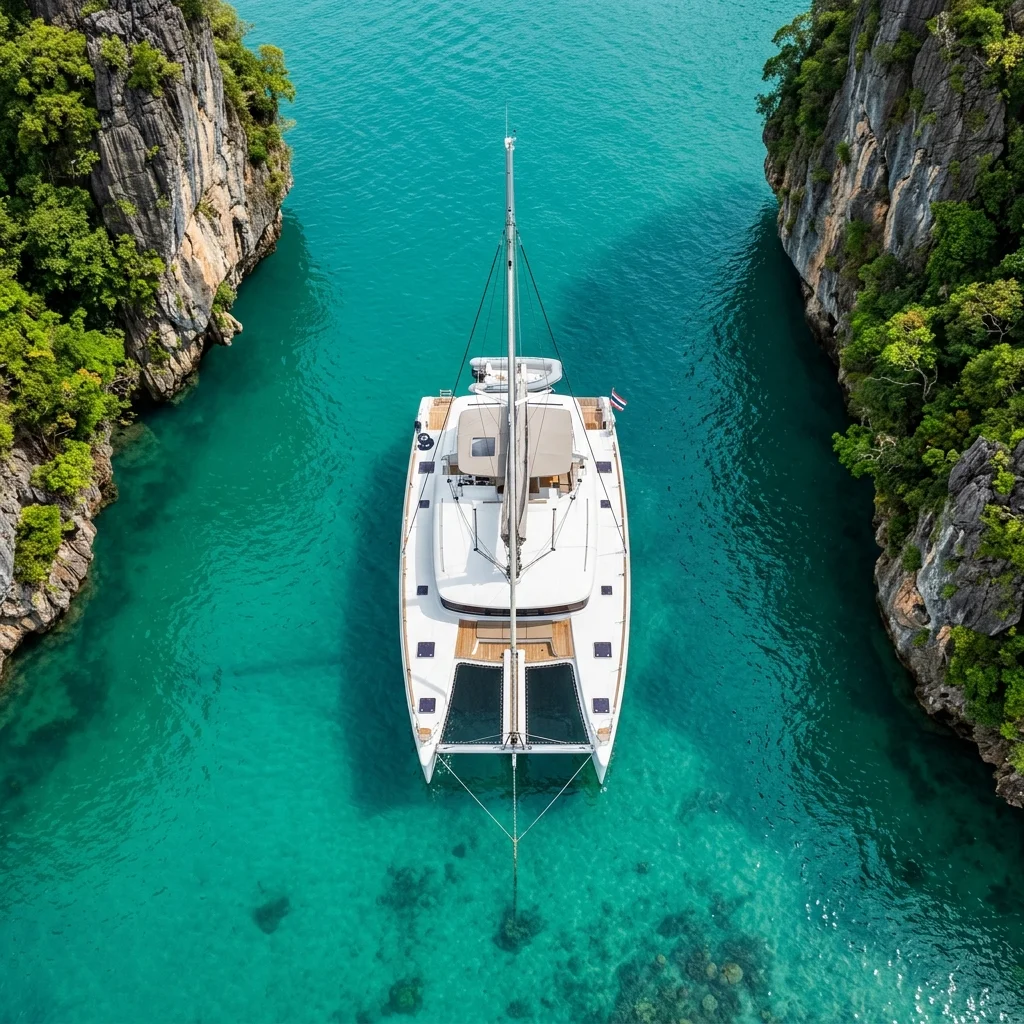
Plotting your route requires matching your available time with the distances between the major Andaman island groups. Phuket serves as the undisputed hub for marine tourism, with major operators like Sunsail, Moorings, and Simpson Marine operating out of Yacht Haven and Ao Po Grand Marina. A typical seven-day itinerary heads east into Phang Nga Bay, where the sheltered waters and towering limestone karsts provide flat sailing regardless of the monsoon. From there, yachts drop south to Krabi and the Phi Phi archipelago, though these anchorages become heavily congested with day-trippers by mid-morning. If you have ten to fourteen days, you can sail further south to Koh Lanta, Koh Muk, and eventually Koh Lipe, near the Malaysian border, where the water clarity improves drastically and the crowds thin out. The Similan and Surin Islands, located 50 nautical miles northwest of Phuket, offer the best diving in the country but demand a sturdy vessel and an overnight open-water passage. Access to the Similans is strictly controlled by the national park authority, requiring advance permits and limiting entry to specific months.
Always build a weather day into your itinerary, especially if your route involves open crossings to the Similans or Koh Lipe.
Decoding the Sailing Seasons and Conditions
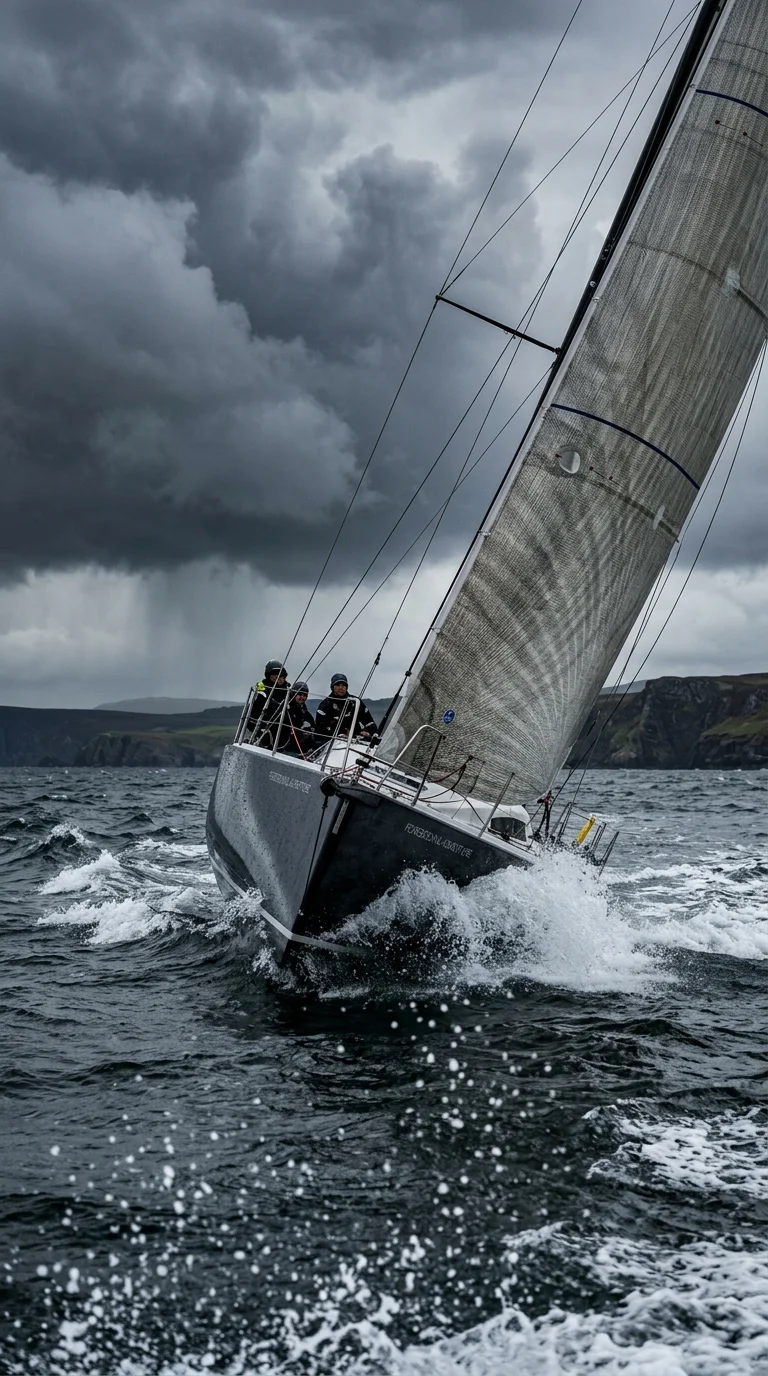
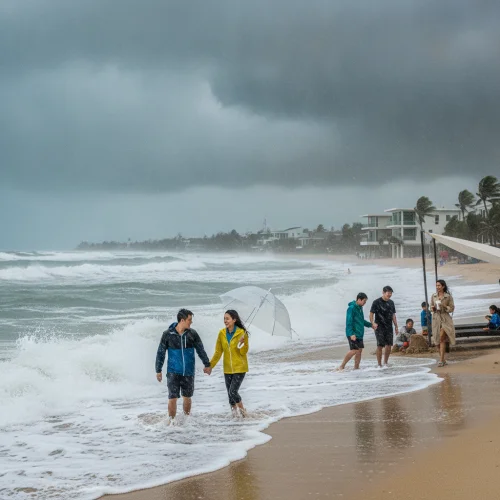
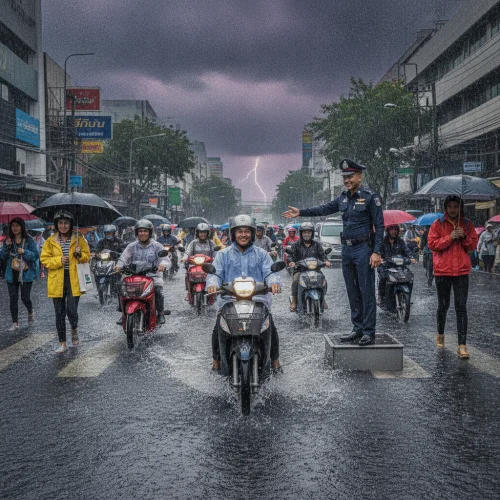
Thailand’s sailing calendar is dictated entirely by two distinct monsoon seasons that alter wind direction, wave height, and anchorage safety. The Northeast Monsoon runs from November to April, bringing dry, sunny weather and consistent winds of 10 to 15 knots from the northeast. This is the peak charter season because the seas off Phuket’s west coast and the Similan Islands are flat, allowing for safe overnight anchoring in exposed bays. Prices peak between mid-December and February. The Southwest Monsoon, spanning May to October, flips the wind direction and brings heavy rain squalls and winds often exceeding 25 knots. During this period, the west coast of Phuket becomes a dangerous lee shore with large swells, and marine parks like the Similans and Koh Rok are legally closed to all vessels. However, sailing remains entirely possible inside the protected waters of Phang Nga Bay and the eastern side of Phuket, where the landmass blocks the ocean swell. Operators offer significant discounts during this low season, sometimes up to forty percent off the base rate.
Charter during the shoulder months of November or April to secure lower rates while still accessing the offshore islands before the heavy swells arrive.
Liveaboards and Specialised Diving Charters
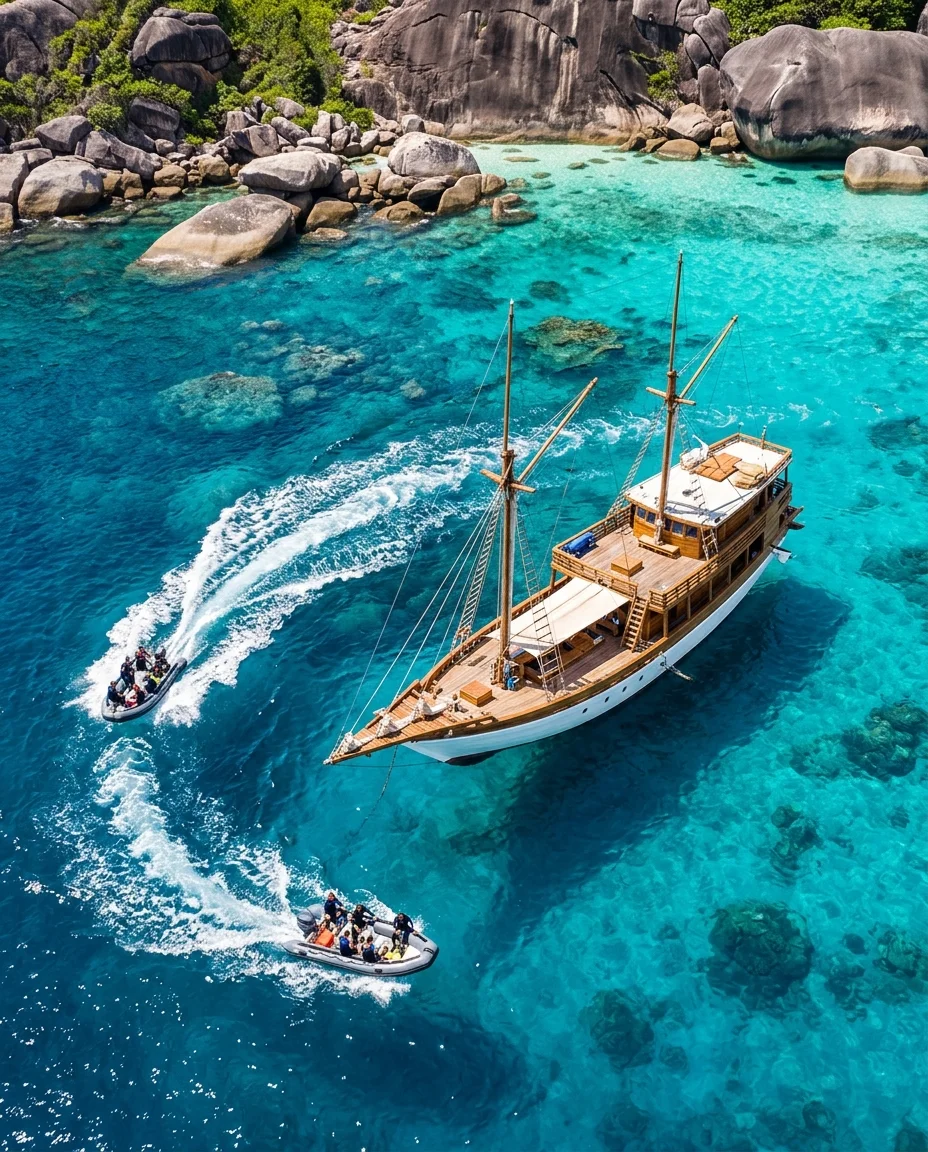
Dedicated liveaboard charters operate on a completely different model to standard yacht rentals, focusing purely on maximising underwater time at remote dive sites. These vessels are typically large steel or wooden motor cruisers, ranging from 25 to 40 metres, designed to accommodate 15 to 25 divers in en-suite cabins. They operate on fixed schedules, departing from Khao Lak or Phuket for four to seven-day trips heading directly to the Similan Islands, Koh Bon, Koh Tachai, and Richelieu Rock. You rent a cabin rather than the whole boat, and the price includes all meals, dive guides, tanks, and weights. Operators like South Siam Divers and Thailand Dive and Sail dominate this space. Unlike sailing yachts, liveaboards feature dedicated dive decks, nitrox compressors, and heavy-duty tenders to drop you directly onto the reef. If you have a non-diving partner, many boats offer snorkelling rates, but the primary focus remains heavily on the dive schedule, which usually involves up to four dives a day starting at 7:00 am.
Book your liveaboard cabin at least six months in advance if you want to secure a spot on a reputable boat during the peak manta ray season in February and March.
What to Expect in a Typical Charter Package
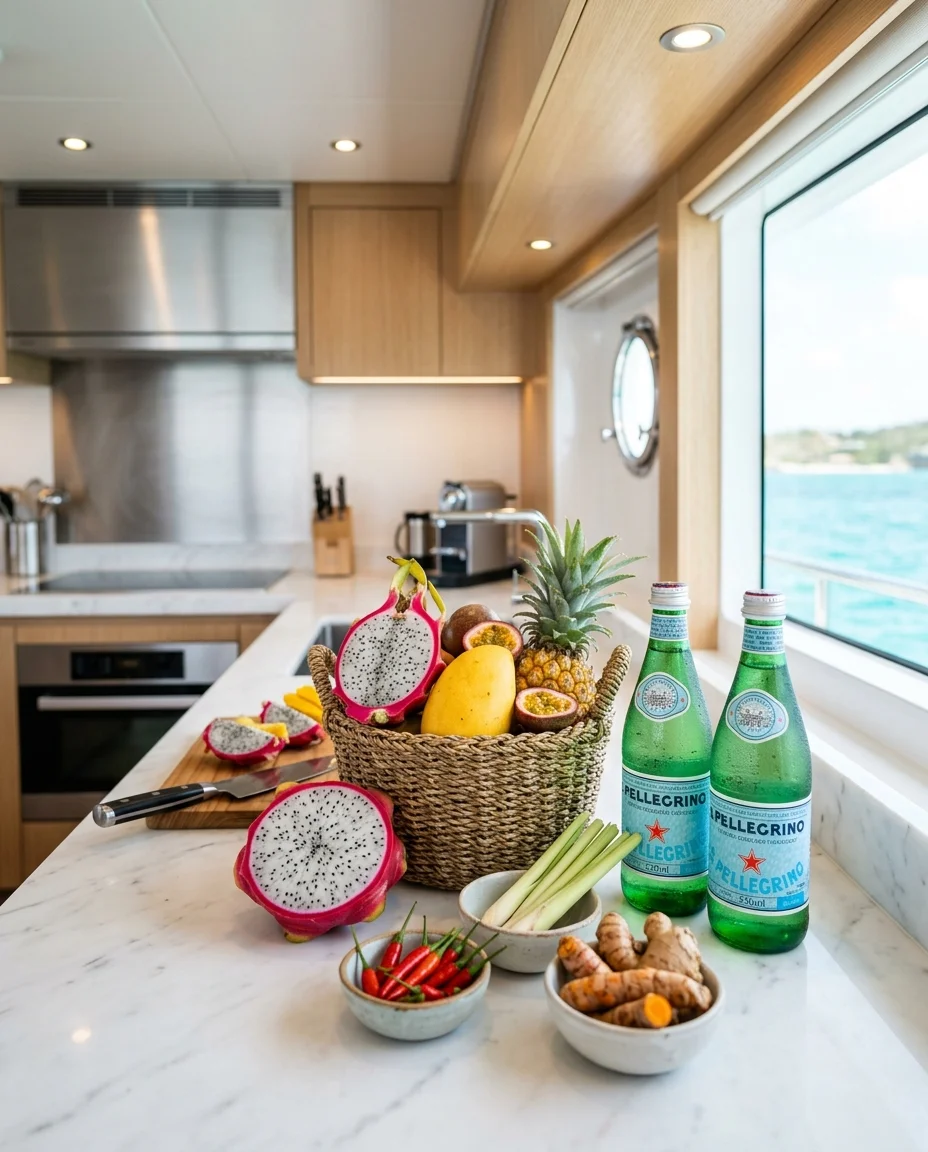
Comparing charter quotes requires scrutinising the fine print to separate the base boat rate from the mandatory extras that quickly inflate the final bill. A standard bareboat quote usually covers the yacht, a tender with a small outboard motor, basic navigation equipment, and initial bed linen. It rarely includes fuel, which is calculated at the end of the trip based on engine hours. You must also budget for national park fees, which range from 400 THB (£9) per person plus 400 THB for the vessel per day in places like Phi Phi. Provisioning is entirely your responsibility; you can either shop at a Phuket supermarket before casting off or pay the charter company a service fee of around 3,500 THB (£78) to stock the boat for you. Crewed charters are often priced as 'All-Inclusive', but this usually limits you to a set number of engine hours per day (typically four) to control fuel costs, and alcoholic beverages are almost always charged as an extra preference sheet item. End-of-charter cleaning fees are standard across the industry, usually costing around 6,000 THB (£133).
Always ask the operator for an itemised list of Mandatory Extras before paying your deposit so you can accurately calculate the total out-of-pocket expense.
| Item | Bareboat Inclusion | Crewed Inclusion | Typical Extra Cost |
|---|---|---|---|
| Fuel | Not included | Usually included (up to 4 hours/day) | 8,000 - 15,000 THB (£175-£330) per week |
| National Park Fees | Not included | Rarely included | 400 THB (£9) per person/day |
| End Cleaning | Mandatory extra | Included | 6,000 THB (£133) per charter |
| Provisioning | Organise yourself | Included (excluding alcohol) | 1,000 THB (£22) per person/day |
Costs and Budgeting
Chartering a yacht in Thailand scales dramatically based on vessel age, the season, and your crew requirements. Budget options typically feature older 35 to 40-foot monohulls on a bareboat basis during the low season from May to October. These cost around 75,000 THB (£1,665) per week. Mid-range budgets open up newer 40 to 45-foot catamarans during the peak Northeast Monsoon, providing significantly more living space. Expect to pay roughly 220,000 THB (£4,880) per week for a bareboat catamaran, plus 35,000 THB (£775) to add a local skipper. Premium charters mean fully crewed motor yachts or large sailing catamarans over 50 feet, complete with a captain and chef. High-end packages begin at 550,000 THB (£12,200) weekly. Always factor in a bareboat security deposit of 100,000 THB to 150,000 THB (£2,200 to £3,300), which is blocked on your credit card upon embarkation.
| Charter Option | Cost Per Week (THB) | Cost Per Week (GBP approx) | Notes |
|---|---|---|---|
| Budget Bareboat Monohull | 75,000 - 100,000 | 1,665 - 2,220 | Older boats, low season pricing |
| Mid-Range Bareboat Catamaran | 180,000 - 250,000 | 4,000 - 5,550 | 40-45ft, peak season, no crew |
| Skippered Catamaran | 215,000 - 285,000 | 4,775 - 6,330 | Mid-range boat plus local captain |
| Fully Crewed Luxury Yacht | 550,000+ | 12,200+ | Includes captain, chef, and most meals |
Common Mistakes and How to Avoid Them
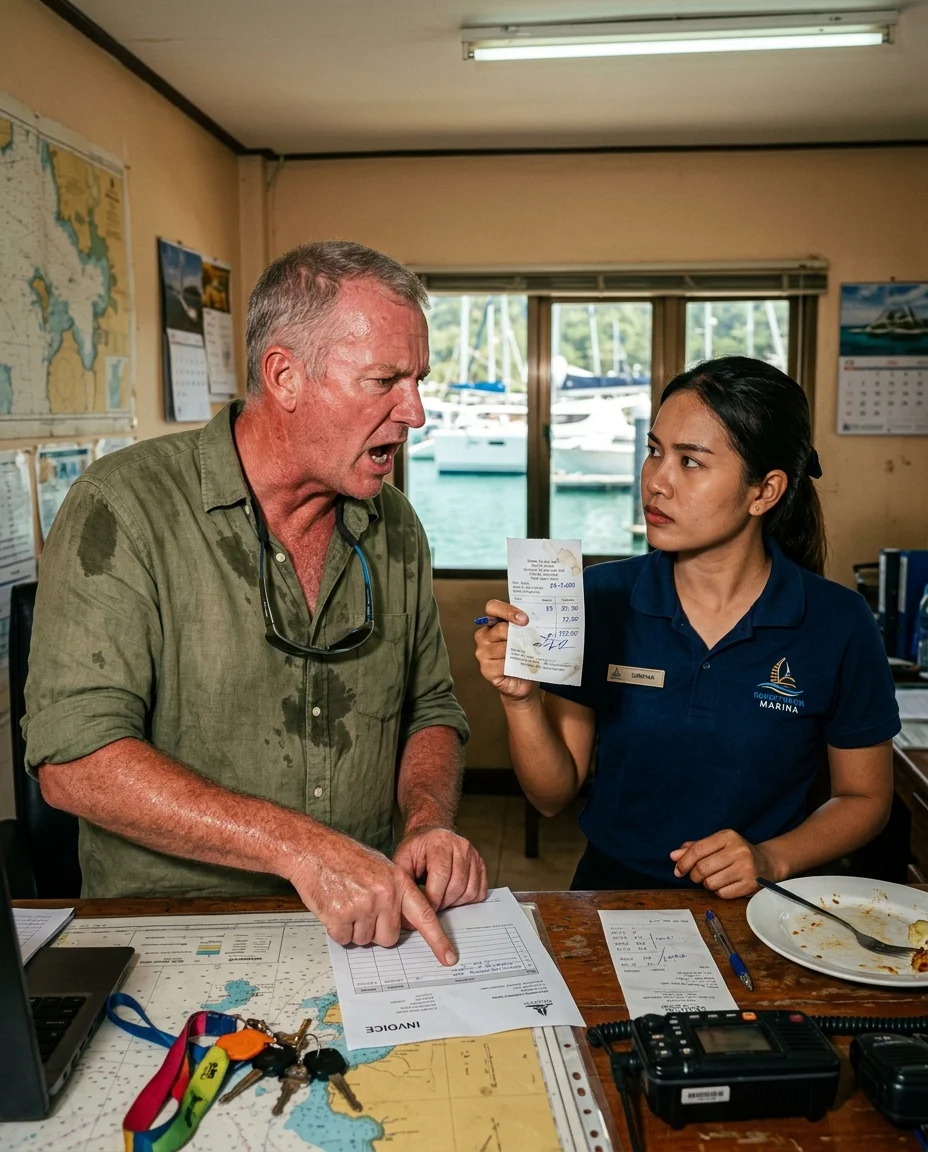
Assuming fuel is included in your bareboat quote is a classic error. This leaves you facing a massive deduction from your deposit when you return the vessel after heavily running the generator for air conditioning. Always clarify the fuel policy and generator consumption rates before signing the contract. Ignoring tidal ranges when anchoring in Phang Nga Bay is another frequent failure. You will wake up grounded on a mudflat waiting six hours for the incoming tide to refloat your keel. Calculate your depth using local tide tables, adding at least a metre for safety. Relying solely on electronic charts without visual checks leads to disaster near coral reefs. Navionics data in Thailand is occasionally offset, meaning you could strike a reef shown as clear water. Keep a crew member on the bow reading water colour when approaching shallow anchorages. Underestimating the cost of island provisioning drains budgets fast. Buying groceries on Koh Lipe costs double the mainland price, forcing you to overspend. Complete a major supermarket run in Phuket before casting off.
Practical Tips
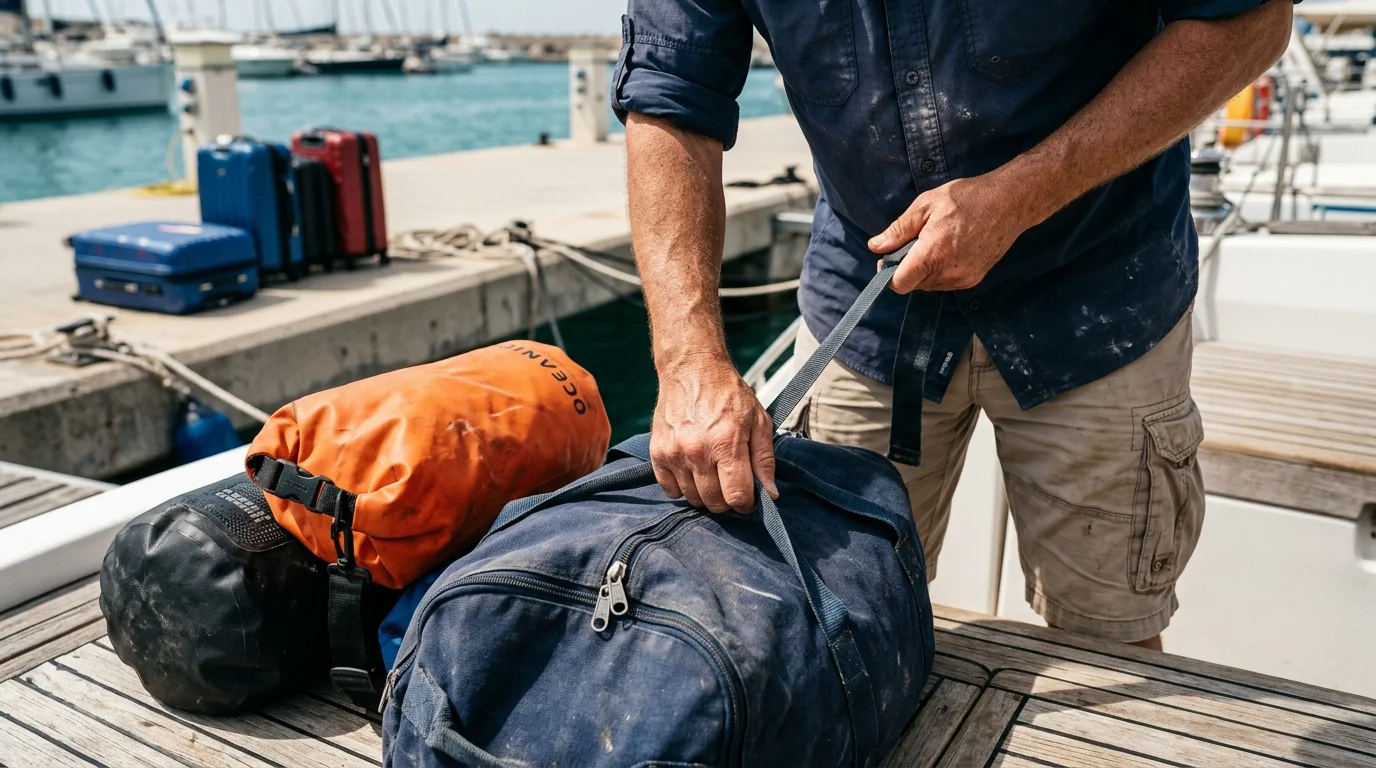
Pack your gear in soft-sided duffel bags rather than rigid suitcases. Hard luggage cannot be easily stowed in the awkward, curved storage lockers of a yacht cabin.
Bring your own high-quality snorkelling mask from the UK. The gear provided by charter companies is often scratched, leaking, and poorly fitted.
Download the 'Windy' app on your smartphone before you arrive. It provides the most accurate local wind and wave forecasts for the Andaman Sea, allowing you to plan safe anchorages.
Buy a waterproof dry bag for your shore excursions. You will be taking a small rubber dinghy to the beach, and electronics will inevitably get splashed during the transit.
Stock up on motion sickness medication even if you have a strong stomach. The rolling swell between Phuket and the Phi Phi islands can be surprisingly sharp and uncomfortable.
Carry plenty of small-denomination Thai Baht notes in amounts of 100 and 500 THB. You will need physical cash to pay national park rangers who approach your boat and to buy ice from local longtail boats.
Inspect the yacht’s tender and outboard motor thoroughly during the handover briefing. A reliable dinghy is your only lifeline to the shore, and a faulty engine will severely limit your trip.
SafetyWing covers Thailand medical costs from £1.50/day — sort it before you fly.
Quick Reference Table
| Item | Detail | Notes |
|---|---|---|
| Primary Charter Hub | Phuket (Ao Po Grand Marina, Yacht Haven) | Most operators and provisioning options are located here. |
| Peak Sailing Season | November to April | Northeast monsoon brings flat seas and steady winds. |
| Low Sailing Season | May to October | Southwest monsoon brings heavy rain and dangerous swells. |
| Required Licence | ICC or RYA Day Skipper | Mandatory for bareboat charters; not needed if hiring a skipper. |
| Similan Islands Access | November to April only | Closed entirely during the low season for reef recovery. |
| Standard Charter Duration | 7 days | Usually runs from Saturday afternoon to Saturday morning. |
| Currency on Islands | Thai Baht (THB) | ATMs are rare on smaller islands; bring sufficient physical cash. |
| National Park Fees | 400 THB (£9) per person/day | Collected by rangers in cash at anchorages like Phi Phi. |