Apartment Rental in Thailand
Under Thai residential tenancy laws, landlords operating five or more properties are legally prohibited from charging tenants more than the official provincial electricity rate for power. Despite this strict regulation, many unverified short-term operators still attempt to add illegal markups of up to 100% on monthly utility bills for unsuspecting foreign tenants.
This guide covers the legal and practical realities of securing a long-stay apartment rental in Thailand for three months or more. It explains how to transition from holiday accommodation into a formal lease, negotiate extended terms, and protect your rental deposit under Thai law. This information is specifically for UK nationals planning to live, work, or retire in Thailand on long-term visas. It is not for tourists seeking temporary holiday lets or serviced apartments.

Transitioning to the Long-Stay Rental Market
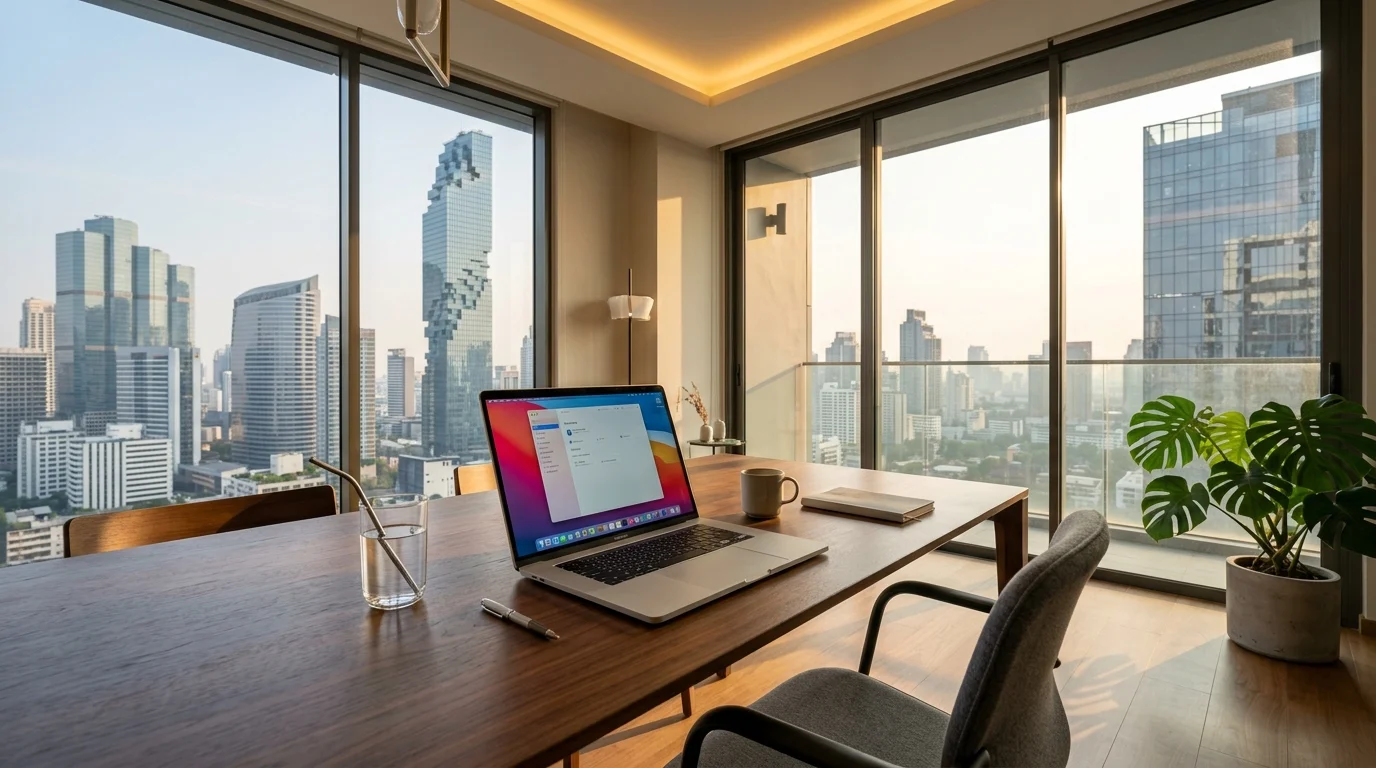
Securing a lease of three months or longer shifts your legal standing from a hotel guest to a residential tenant under the Thai Civil and Commercial Code. Short-term holiday lets are priced at a premium to cover high turnover, cleaning, and void periods. Moving to a three-month contract typically unlocks a 15% to 20% discount on the monthly rate compared to a monthly holiday booking. Committing to a standard 12-month lease often reduces the monthly cost by up to 40%. A typical one-bedroom apartment in a central Bangkok district might cost 35,000 THB (£750) on a short-term monthly basis, but drops to 22,000 THB (£470) when signing a one-year agreement. Property agents in Thailand generally will not assist with searches for contracts under six months, as their commission structure relies on longer commitments. You will need to negotiate directly with landlords or building management for medium-term stays of three to six months. Many UK expats make the error of trying to secure a 12-month lease from abroad before arriving, which often leads to disappointment when the physical property fails to match online photographs. Always book a short-term rental for your first two weeks in Thailand to allow time for in-person viewings before committing to a long-stay contract.
Learn how UK nationals can buy property in Pattaya safely. Discover realistic prices, foreign ownership laws, rental yields, and how to avoid oversupply risks.
Structuring the Long-Stay Lease Agreement
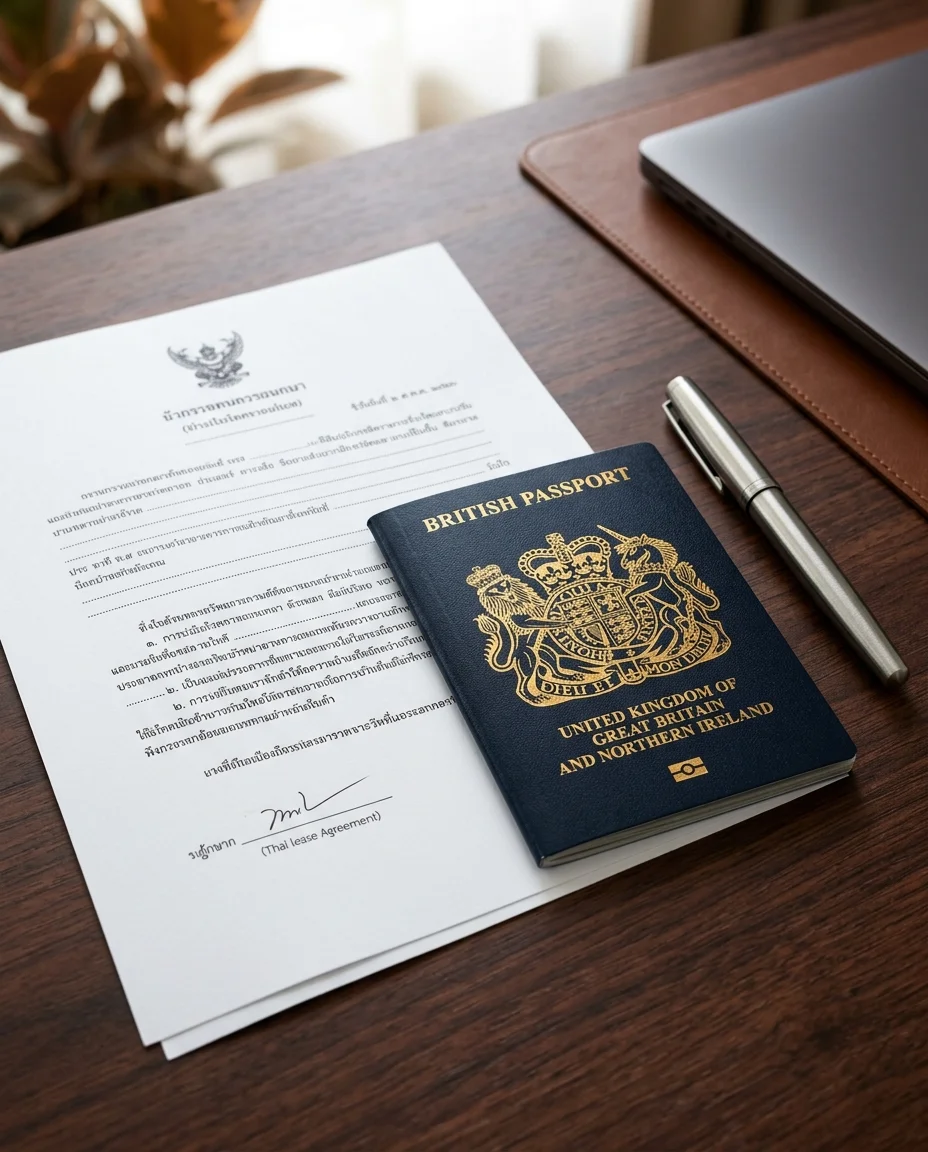
A legally binding Thai residential lease must clearly define the security deposit conditions, notice periods, and the landlord's obligation to register your residence. Unlike holiday rentals where you pay upfront and leave, a long-stay agreement requires a two-month security deposit plus the first month's rent in advance. The contract must stipulate that the landlord will file a TM30 form with Thai Immigration within 24 hours of your arrival. Without this TM30 receipt, you cannot renew your visa, open a local bank account, or apply for a Thai driving licence. The lease should also contain a diplomatic clause or early termination condition if you are signing for a year. This usually requires a 60-day notice period and allows you to break the lease without losing your deposit if your employment or visa status suddenly changes. Ensure the inventory list is highly detailed, noting existing scratches on furniture or marks on walls. Ensure your contract specifies that the security deposit must be returned via bank transfer within 30 days of the lease termination date.
| Contract Duration | Typical Discount vs Short-Term | Agent Assistance Available | Security Deposit Required |
|---|---|---|---|
| 1 to 3 Months | 0% to 10% | Rarely | 1 Month |
| 3 to 6 Months | 15% to 20% | Sometimes | 1 to 2 Months |
| 6 to 12 Months | 25% to 30% | Yes | 2 Months |
| 12+ Months | 35% to 40% | Always | 2 Months |
Utility Bills and Internet Installation
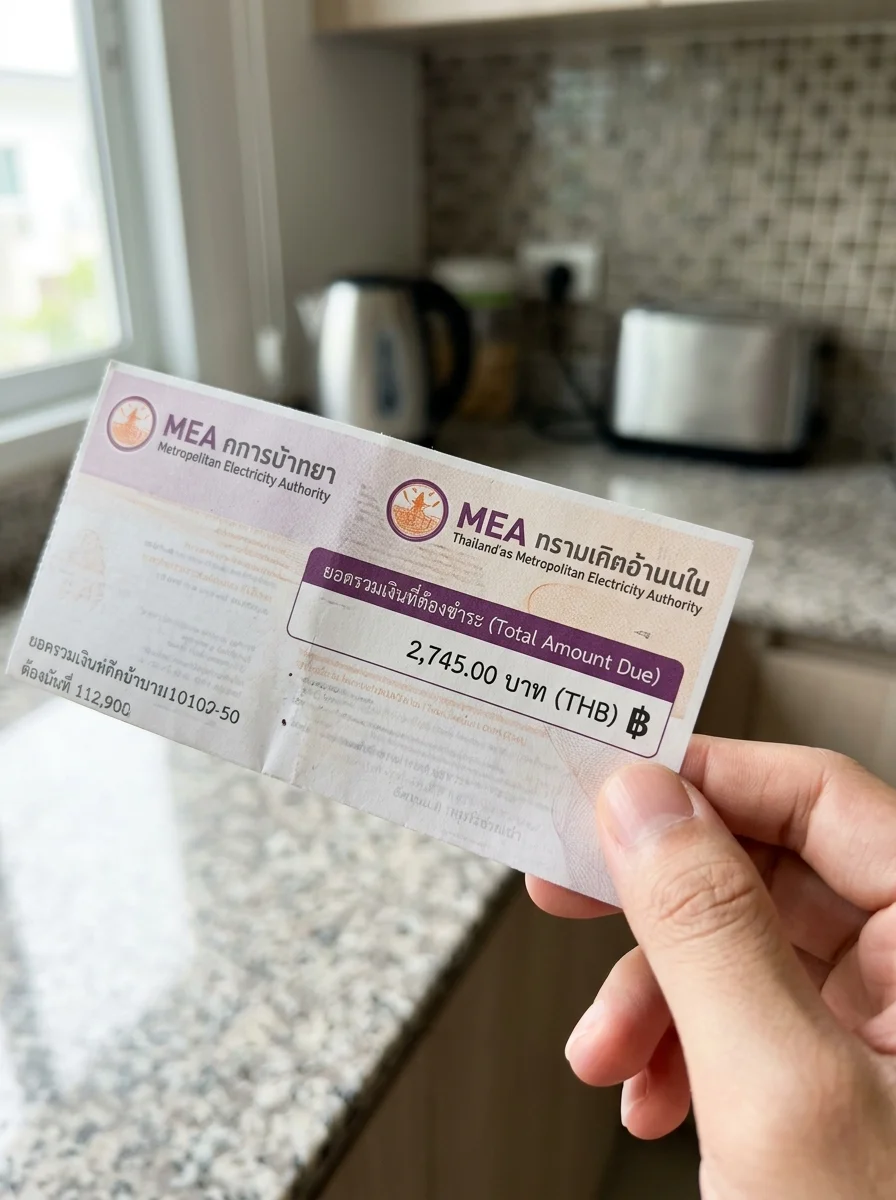
The legal structure of your utility billing represents the most significant ongoing cost difference between a long-stay apartment and a short-term let. In a holiday rental, electricity and water are typically absorbed into the daily rate. In a long-stay contract, you assume direct responsibility for these costs. For electricity, it is crucial that your contract specifies billing at the official government rate provided by the Metropolitan Electricity Authority (MEA) or Provincial Electricity Authority (PEA). This rate is approximately 4.5 THB (£0.10) per unit. Some older buildings or private apartment blocks attempt to charge a flat building rate of 7 to 9 THB (£0.15 to £0.19) per unit, which can double your monthly cooling costs. Water is usually billed by the building juristic office at a flat rate of 18 to 25 THB (£0.40 to £0.55) per unit, typically costing no more than 300 THB (£6.40) monthly. For internet access, avoid relying on shared building wifi for a stay exceeding three months. A long-term lease allows you to install a private fibre-optic connection directly with providers like AIS or TrueMove. A 1Gbps connection costs roughly 600 THB (£13) per month on a 12-month contract, requiring only your passport and signed lease to set up. Confirm with the building juristic office that external internet providers are permitted before signing your lease.
Furnished Versus Unfurnished Apartments
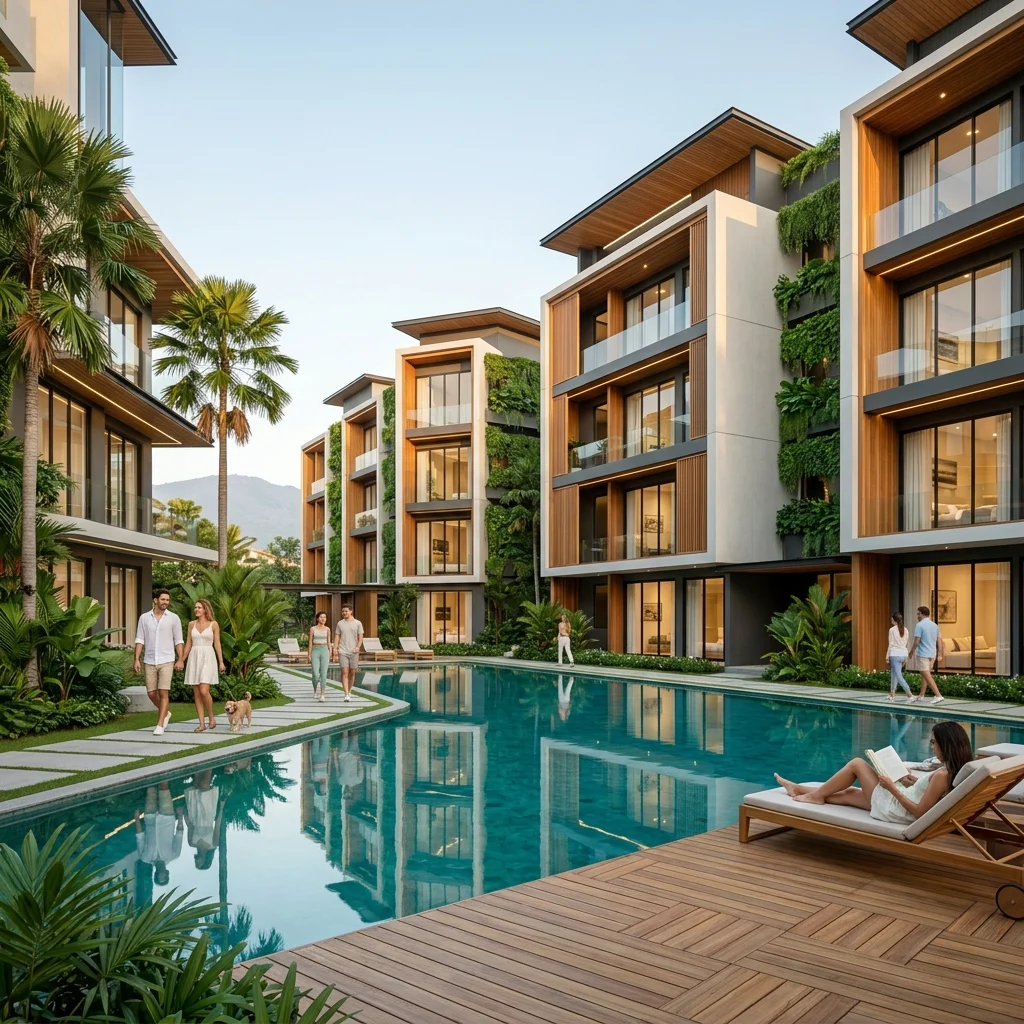
The Thai rental market overwhelmingly favours fully furnished properties, making the transition significantly easier for UK expats arriving without shipping containers of furniture. A standard fully furnished apartment includes all major appliances, televisions, beds, sofas, and often smaller items like microwaves and basic cutlery. Unfurnished properties are rare in the apartment sector and are generally restricted to older buildings, large detached houses, or ultra-luxury penthouses. Opting for an unfurnished property rarely yields a substantial discount on the monthly rent. The price difference between a furnished and unfurnished unit in the same building might only be 2,000 to 3,000 THB (£42 to £64) per month. Consequently, buying brand new furniture for a one-year lease is rarely a sound financial decision. Be aware that Thai bed sizes differ slightly from UK standards, with a Thai King size bed being wider and often featuring an exceptionally firm mattress. When viewing furnished apartments, inspect the quality of the mattress and the air conditioning units closely. Older, non-inverter air conditioners will consume significantly more electricity, easily wiping out any savings made on a slightly cheaper monthly rental rate. Always test the appliances during your viewing and request that any faulty items are replaced before the lease commences.
Location Dynamics and Building Facilities
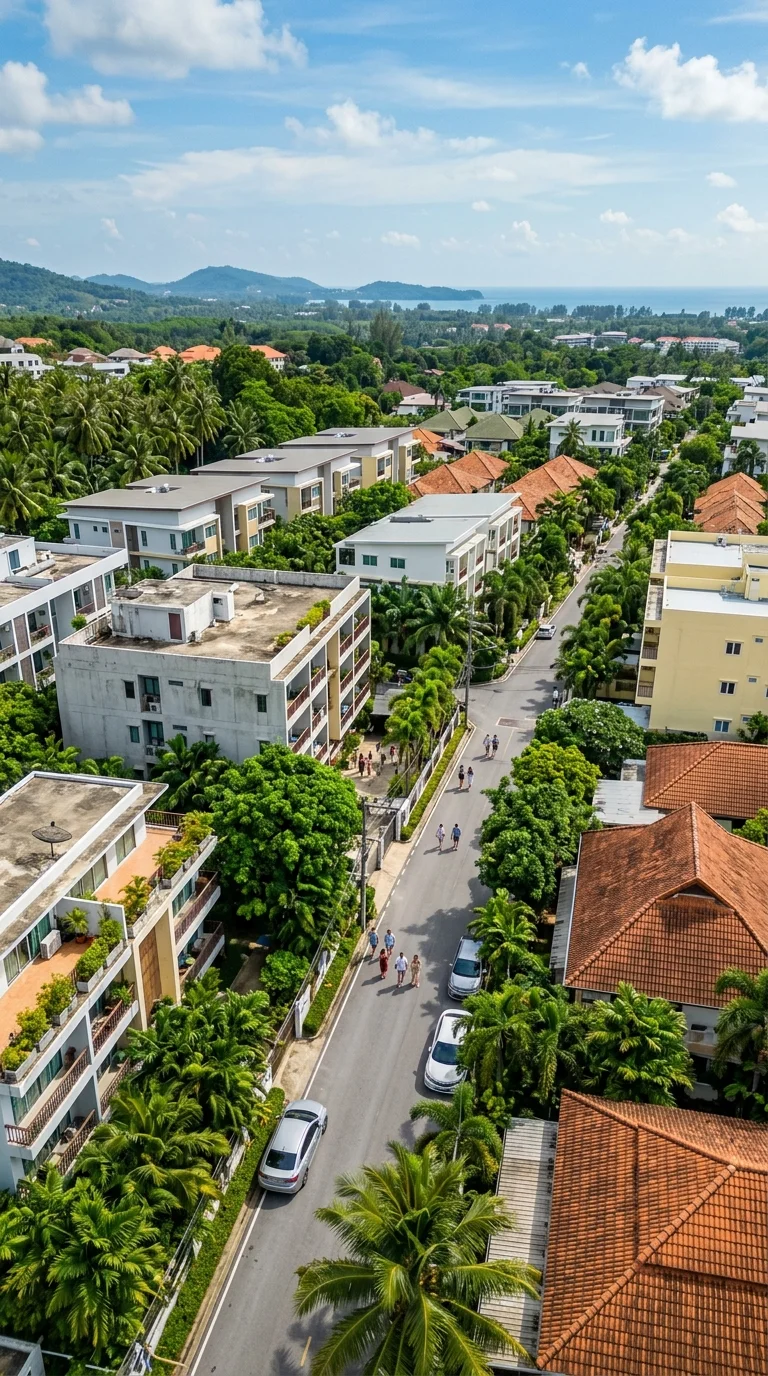
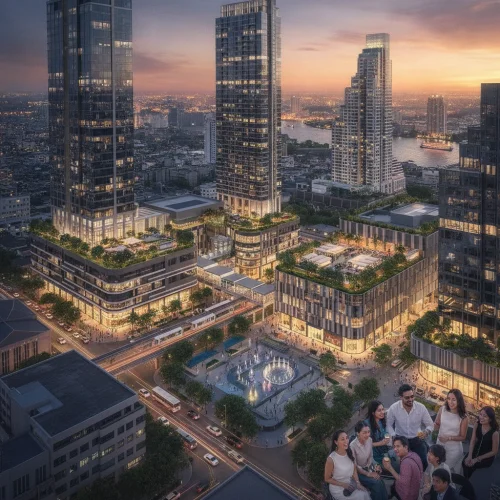
The practical realities of a long-stay rental vary dramatically depending on whether you choose Bangkok, Chiang Mai, or the southern islands. In Bangkok, the market is dominated by high-rise apartments located near BTS Skytrain or MRT stations. A budget of 25,000 THB (£535) per month secures a modern one-bedroom unit with access to a rooftop pool, co-working space, and an extensive gym. In Chiang Mai, the same budget often secures a spacious two-bedroom apartment or a small house, but building facilities are generally older and less comprehensive. The island markets of Phuket and Koh Samui present entirely different challenges. Long-stay rentals here are heavily seasonal, with landlords reluctant to sign 12-month leases that lock in low rates during the peak tourist season from December to March. Island properties also suffer greater wear and tear from salt air and high humidity, making the condition of the air conditioning and plumbing even more critical. If renting on an island, ensure your contract clearly defines who pays for regular maintenance tasks like air conditioning cleaning and pool chemical balancing. Ensure you understand the specific seasonal pricing dynamics of your chosen location before attempting to negotiate a long-term rate.
| Location | Property Type Typical for 25k THB | Primary Transport Access | Seasonal Price Volatility |
|---|---|---|---|
| Bangkok | Modern 1-bed high-rise apartment | BTS Skytrain / MRT | Low |
| Chiang Mai | Spacious 2-bed apartment / house | Private scooter / car | Medium |
| Phuket | 1-bed low-rise apartment / studio | Private scooter / car | High |
| Koh Samui | 1-bed apartment near beach | Private scooter / car | High |
Costs and Fees
Securing a long-stay apartment involves several upfront capital requirements beyond your monthly rent. Unlike purchasing property, the transaction costs for renting are relatively low, but the initial cash outlay remains significant. You must provide a security deposit equivalent to two months of rent, plus the first month paid in advance. For a 30,000 THB (£640) per month apartment, this requires an immediate transfer of 90,000 THB (£1,920). When transferring your initial deposit from the UK, use a regulated currency exchange service to secure the mid-market exchange rate. Property agent commissions are standard practice in Thailand but are entirely paid by the landlord, usually equivalent to one month's rent for a one-year lease. You should never pay a sourcing or viewing fee to an agent. Stamp duty on residential leases is legally required and is calculated at 0.1% of the total lease value. While legally the responsibility of the landlord, some contracts attempt to pass this small fee to the tenant. Building maintenance fees, known as common area fees (CAM), cover security, gym, and pool upkeep. These must be absorbed by the landlord and should be explicitly stated as included in your monthly rent.
| Cost Item | Rate or Amount | Paid By | Notes |
|---|---|---|---|
| Security Deposit | 2 months' rent | Tenant | Refundable within 30 days of lease end |
| Advance Rent | 1 month's rent | Tenant | Applied to the first month of occupancy |
| Agent Commission | 1 month's rent | Landlord | Tenants should never pay agent fees |
| Lease Stamp Duty | 0.1% of total lease value | Landlord | Sometimes passed to tenant in contract |
| Common Area Fee | Varies by building | Landlord | Must be explicitly included in monthly rent |
| Internet Installation | 500 to 1,000 THB | Tenant | Often waived on 12-month contracts |
Common Mistakes and How to Avoid Them
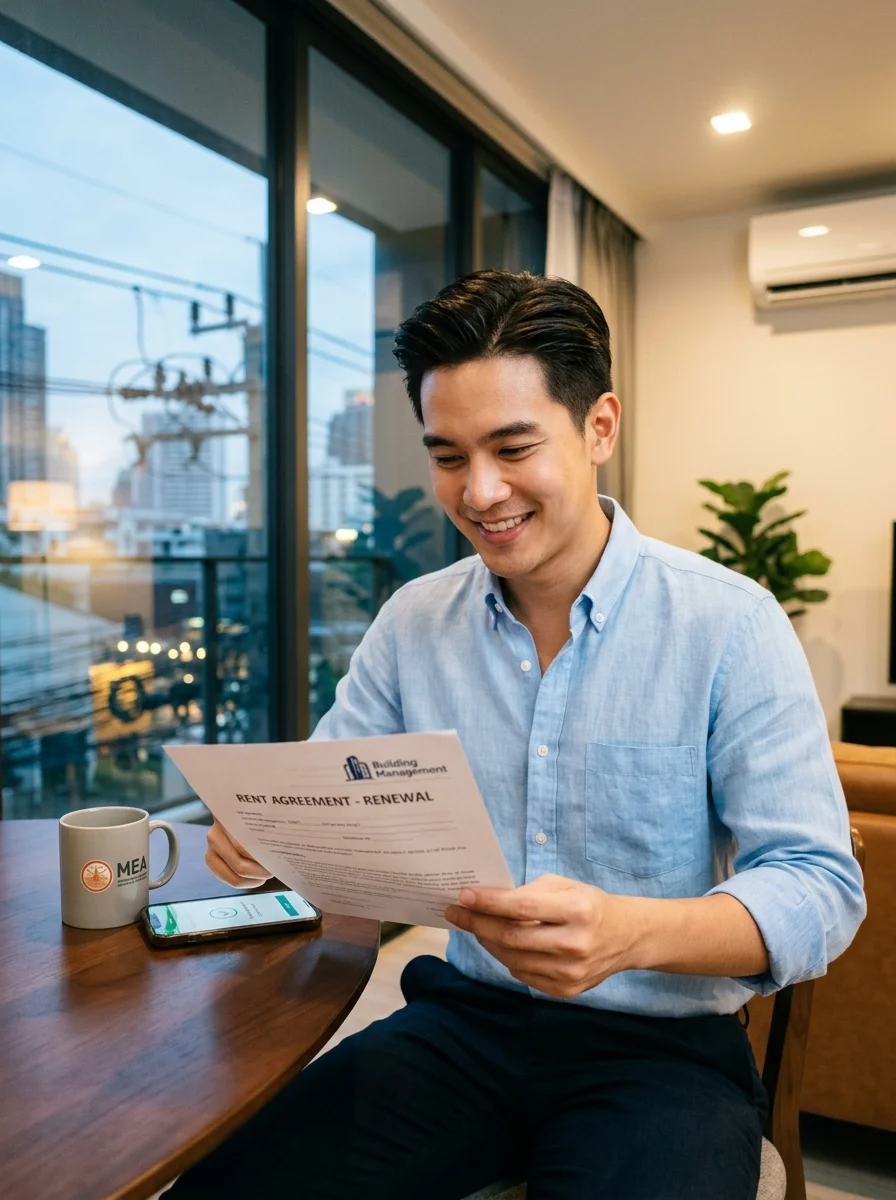
Accepting a fixed building electricity rate. Many tenants sign contracts agreeing to pay 7 or 8 THB per unit directly to the building owner instead of the official government rate. This effectively doubles your monthly air conditioning costs and violates Consumer Protection Board regulations for larger buildings. Demand the lease specifies billing at the official MEA or PEA government rate.
Ignoring the TM30 immigration requirement. Some landlords fail to register their foreign tenants with immigration because they wish to avoid declaring rental income to the Revenue Department. Without a TM30 receipt, you will be unable to extend your visa, open a bank account, or process government paperwork. Add a clause to your lease making the first month's rent contingent on the landlord providing the TM30 receipt.
Failing to document the move-in inventory. Renters often walk through a property quickly and sign the inventory without testing appliances or photographing existing damage. This leaves you financially liable for replacing broken items or repairing scratches that were present before you arrived. Take date-stamped photographs of every wall, floor, and appliance, and email them to the landlord on day one.
Leaving without a formal handover. Tenants sometimes leave the keys with the building juristic office at the end of their lease and expect their deposit to be wired to the UK. Landlords may then claim damage was discovered after departure and withhold the funds. Schedule an in-person inspection with the landlord on your final day and sign a document confirming the property's condition.
Practical Tips

Verify the landlord's identity before transferring any deposit funds. Request a copy of their Thai ID card and the property title deed (Chanote) to ensure they actually own the unit you are renting.
Ensure your lease includes an air conditioning maintenance clause. In Thailand's climate, units require professional cleaning every six months to prevent mould and high electricity consumption, and the contract should specify whether the landlord or tenant covers this 500 THB (£10) cost.
Open a local Thai bank account as soon as your long-stay lease is signed. Paying your rent via domestic bank transfer creates an undeniable digital paper trail and avoids costly international transfer fees every month.
Check the building's juristic rules regarding deliveries and guests. Some high-end apartments have strict policies requiring all visitors to leave their ID at reception, which can complicate things if you have family visiting from the UK.
Negotiate the inclusion of a professional deep clean upon moving out. Agreeing upfront to deduct a fixed 1,500 THB (£32) cleaning fee from your deposit prevents the landlord from charging arbitrary amounts for professional cleaning later.
Look for south or north-facing apartments when viewing properties. West-facing units absorb intense afternoon sun, drastically increasing the internal temperature and leading to massive electricity bills to keep the space cool.
Request a copy of the building's juristic rules translated into English before signing the contract. Some buildings have severe financial penalties for minor infractions like hanging laundry over a balcony railing or leaving shoes in the corridor.
Check the water pressure and drainage in both the kitchen and bathroom during your viewing. Older buildings frequently suffer from poor plumbing, and resolving water pressure issues after you have signed the lease is notoriously difficult.
Quick Reference Table
| Item | Detail | Notes |
|---|---|---|
| Minimum Lease for Agent Help | 6 to 12 months | Agents rarely source shorter terms |
| Standard Security Deposit | 2 months' rent | Paid upfront alongside first month's rent |
| Electricity Billing | Government Rate (MEA/PEA) | Avoid flat building rates of 7+ THB per unit |
| Immigration Requirement | TM30 Registration | Landlord must file within 24 hours of arrival |
| Agent Fees | Paid by Landlord | UK renters should not pay sourcing fees |
| Furnishing Standard | Fully Furnished | Unfurnished units rarely offer large discounts |
| Notice Period | 30 to 60 days | Must be explicitly written into the contract |
| Foreign Quota | Not applicable | Quotas only apply to property purchasing |