Learning the Thai Language

Enrolling in a certified Thai language school provides a legitimate pathway to a 12-month Education Visa, allowing you to stay in the country long-term without relying on frequent border runs. Mastering just the five conversational tones takes the average UK expat between three and six months of consistent, structured weekly practice.
This guide details exactly how to approach learning Thai as a UK national relocating long-term, from securing an Education Visa to selecting the right physical schools or digital platforms. It will help you budget for tuition, understand realistic fluency timelines, and decide whether to tackle the written script. This information is exclusively for prospective expats planning their legal residency and daily lives, rather than short-term visitors seeking basic holiday phrases.

The Reality of Thai Tones and Conversational Timelines
The most significant barrier for English speakers is mastering the five distinct tones that dictate the precise meaning of every Thai word. Thai is an analytical, tonal language, meaning a single phonetic sound can translate to 'near', 'far', 'fever', or 'wood' depending purely on your vocal pitch. Most UK nationals require between 100 and 150 hours of guided instruction to reach a basic conversational level capable of handling routine daily transactions. Reaching intermediate fluency, where you can hold spontaneous conversations with local residents, typically demands 400 to 600 hours of dedicated study. Many expats severely underestimate this timeline, assuming passive listening in public spaces will lead to natural absorption, which rarely works with tonal languages. You must actively train your ear and vocal cords to recognise and produce mid, low, falling, high, and rising tones accurately. By treating language acquisition as a structured commitment rather than a casual hobby, you avoid the frustration of constant misunderstandings. Setting highly realistic expectations prevents early burnout and keeps you sharply focused on incremental progress throughout your first year.
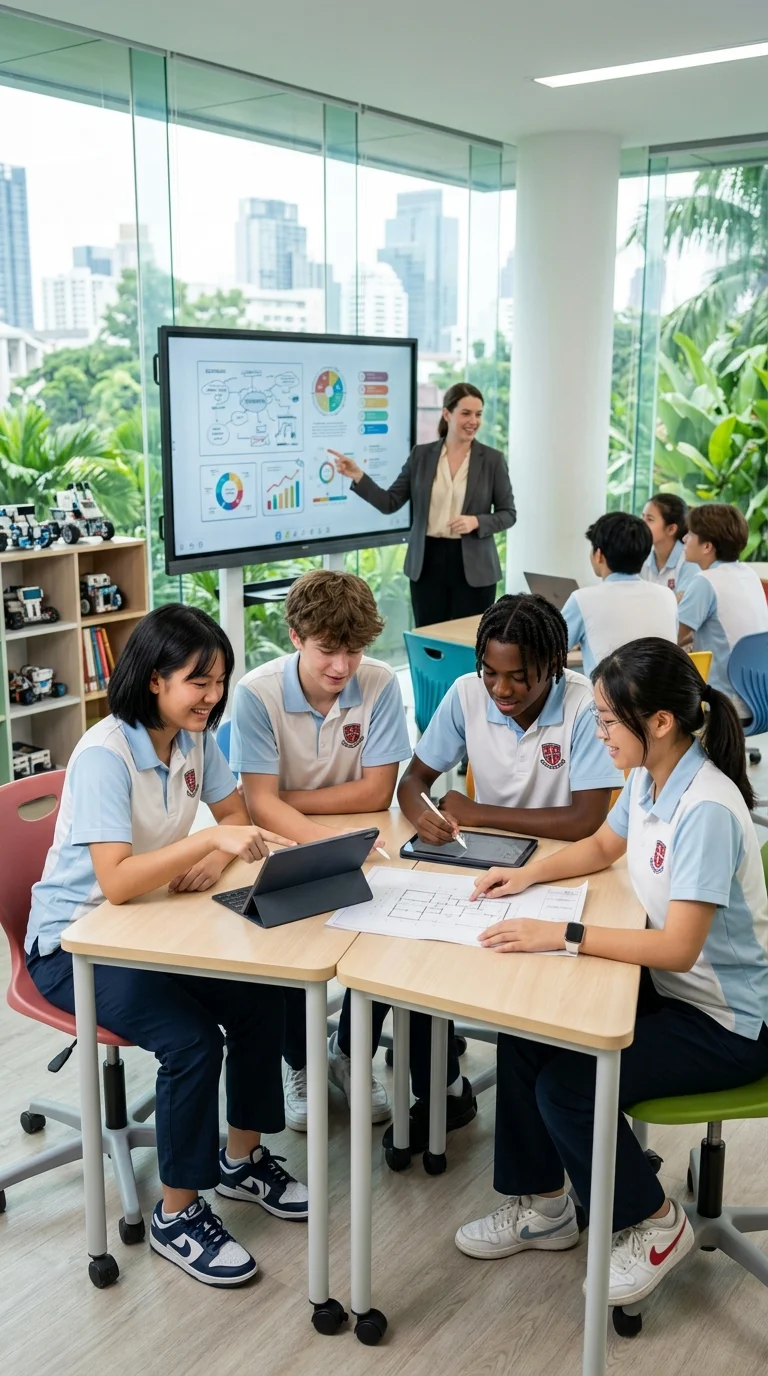
Discover the best international schools in Thailand for UK expat families. Compare British, US, and IB curricula, admission processes, and realistic fees.
The Education Visa Route Through Language Schools
Sponsored
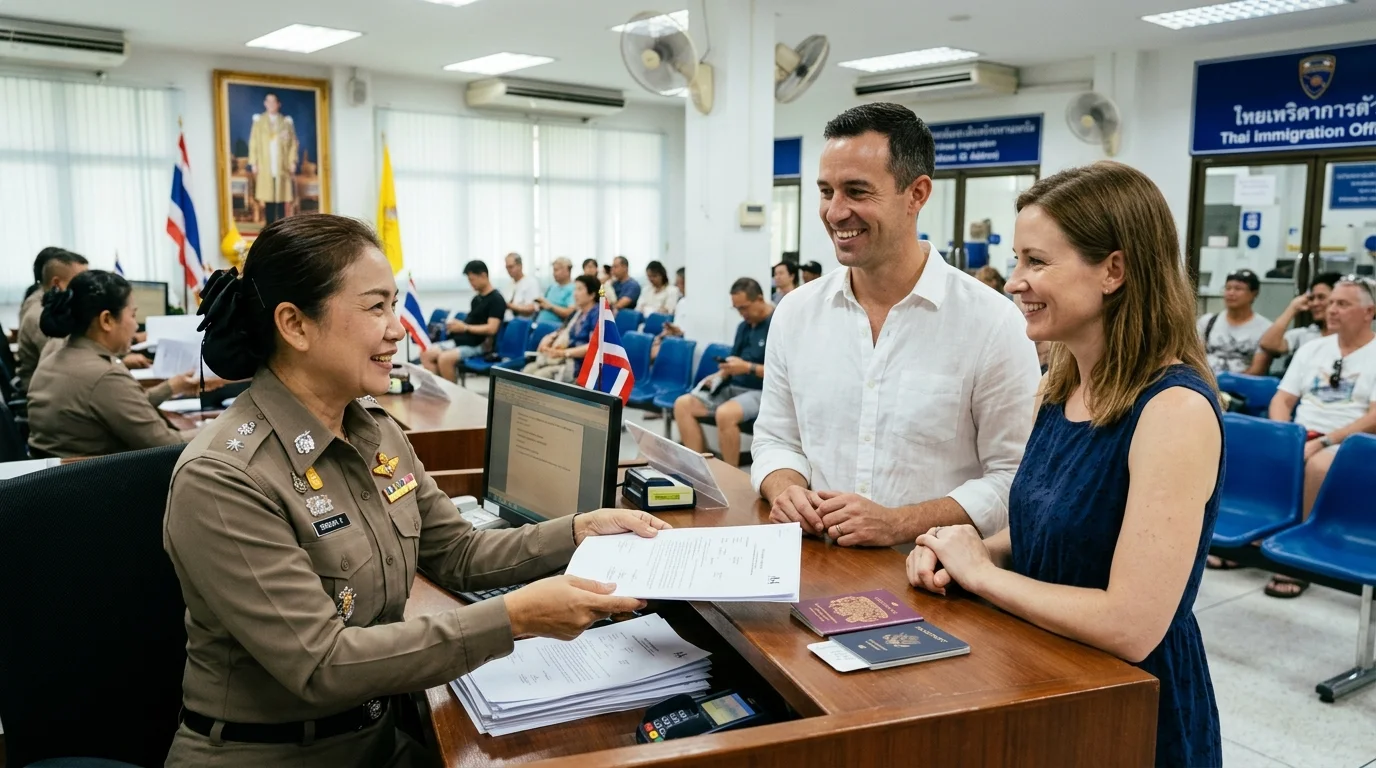
Enrolling in an accredited language school is the most common method for working-age UK nationals to secure a long-term stay without requiring a traditional employment contract. The Non-Immigrant ED Visa grants you a one-year stay, provided you meet the strict minimum attendance requirements set by the Ministry of Education (MOE). You must attend formal classes for at least eight hours per week, usually spread across two or four days, and the school will conduct regular assessments to document your progress. Immigration officers frequently test ED Visa holders at the mandatory 90-day reporting intervals or during border re-entries to ensure they are genuinely studying Thai. The application process requires you to pay your annual tuition in full upfront, after which the school provides the necessary MOE paperwork for your local Thai embassy or immigration office. Choosing an MOE-certified institution is completely non-negotiable if you require the visa to remain in the country legally. Securing your legal status through focused study provides an incredibly stable foundation for your first full year in Thailand.
| Visa Type | Duration | Minimum Attendance | Application Location |
|---|---|---|---|
| Non-Immigrant ED (Language) | 12 months (requires 90-day extensions) | 8 hours per week | Thai Embassy abroad or local Immigration Office |
| Non-Immigrant O (Retirement) | 12 months (requires 90-day reporting) | None | Thai Embassy abroad or local Immigration Office |
| Tourist Visa (TR) | 60 days (extendable by 30 days) | None | Thai Embassy abroad |
| Destination Thailand Visa (DTV) | 5 years (180 days per entry) | None | Thai Embassy abroad |
Best Language Schools in Bangkok and Chiang Mai
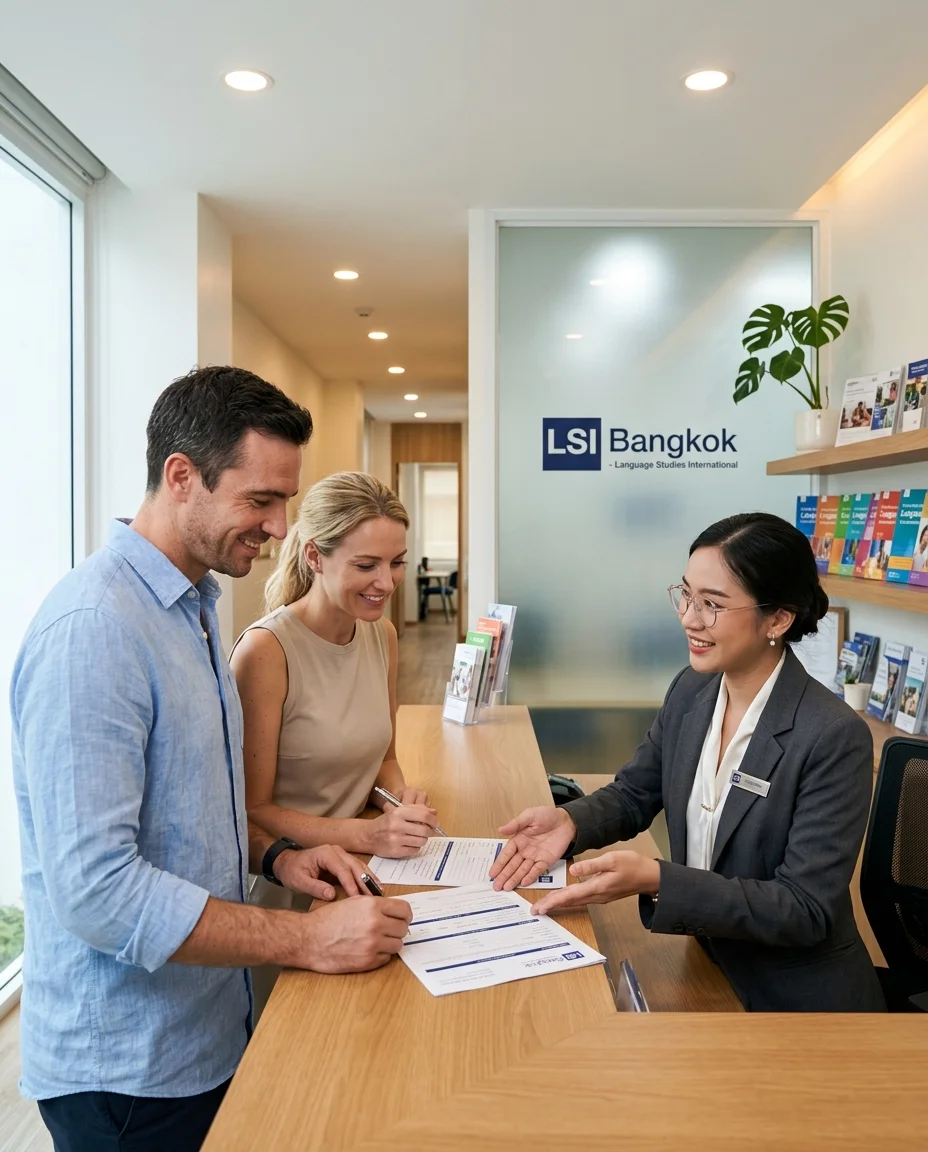
Selecting a highly reputable institution dictates both the quality of your education and the ongoing security of your visa status. In Bangkok, the American University Alumni (AUA) Language Center and Union Language School (ULS) remain the most respected options for serious adult learners. ULS is particularly renowned for its rigorous, highly structured curriculum that heavily emphasises reading and writing from the outset, costing approximately 8,500 THB (£185) per module. AUA uses an Automatic Language Growth method, focusing entirely on listening comprehension before introducing speaking or writing, which suits expats who prefer natural absorption over traditional rote memorisation. In Chiang Mai, universities like Payap University and the Chiang Mai University Language Institute offer intensive one-year programmes that hold excellent reputations with local immigration authorities. Private language centres such as Duke Language School in Bangkok offer a highly modern, conversational approach for about 8,000 THB (£175) per level. You should visit these schools in person to assess the teaching style, class sizes, and the demographic of the student body before committing your funds. Finding a curriculum that matches your specific learning style ensures you will consistently attend the mandatory classes.
Online Learning Options and Private Tuition

Supplementing your formal physical classes with digital tools and private tutoring accelerates your progress and helps correct specific British pronunciation issues. Applications like Ling and Pocket Thai Master are specifically designed for the Thai language, offering gamified tone practice and targeted vocabulary drills that generic global language apps often lack. For structured speaking practice, platforms like italki provide direct access to native Thai tutors for one-on-one sessions, typically costing between 350 THB (£7.50) and 700 THB (£15) per hour. Private tuition allows you to completely bypass the rigid pace of group classes, focusing entirely on the vocabulary relevant to your specific lifestyle, business, or local neighbourhood. While online learning does not qualify you for an Education Visa, it remains the most efficient way to practice conversation if you are entering Thailand on a different legal route, such as a retirement or employment visa. Many UK expats successfully combine an intensive group class for their visa with weekly private online sessions to build practical confidence. Tailoring your education with digital tools ensures you can maintain practice regardless of your physical location.
Speaking Versus Reading and Writing Thai Script
Deciding whether to learn the Thai alphabet or rely solely on phonetic transliteration is a critical choice that fundamentally shapes your entire learning journey. The Thai script consists of 44 consonants and 32 vowel forms, written entirely without spaces between words, which initially appears highly intimidating to English speakers. Relying on transliteration—reading Thai words written in English letters—is sufficient for basic survival Thai, but it severely limits your long-term pronunciation accuracy. Because there is no single standardised system for transliterating Thai, different schools and textbooks spell the exact same words differently, causing massive confusion as your vocabulary expands. Learning to read the actual script forces you to understand the exact tone rules, drastically improving your spoken clarity and overall confidence. It typically takes an additional 40 to 60 hours of highly dedicated study to memorise the alphabet and basic reading rules. If you plan to live in Thailand for more than two years, investing the time to read signs, menus, and official documents fundamentally shifts your relationship with the country. Reading the script completely removes your dependence on English translations.
Daily Life and Integration as a Thai Speaker
The degree to which you successfully learn Thai directly correlates with your overall quality of life, financial outgoings, and acceptance within local communities. While it is entirely possible to survive in central Bangkok, Phuket, or Chiang Mai using only English, doing so effectively traps you in an expensive, isolated expat bubble. Speaking conversational Thai allows you to negotiate residential rent directly with Thai landlords, dispute potential overcharges with local tradespeople, and access standard local pricing at markets and medical clinics. Thai people highly respect foreigners who make a genuine, sustained effort to speak their language, and this effort often transforms purely transactional interactions into genuine social connections. Even mastering basic polite particles—adding 'khrap' for male speakers or 'kha' for female speakers at the end of sentences—demonstrates cultural awareness and immediately softens complex negotiations. You will frequently find that government officials, immigration officers, and local police are significantly more accommodating when addressed respectfully in polite Thai. Integrating linguistically bridges the cultural gap, transitioning you from a long-term tourist into a highly respected, integrated resident.
Costs and Budgeting for Language Learning
Budgeting accurately for your language education requires factoring in upfront tuition, recurring visa extensions, and supplementary learning materials. Group classes at an MOE-certified school typically cost between 30,000 THB (£650) and 45,000 THB (£980) for a comprehensive one-year course covering 200 to 400 hours of instruction. You must pay this entire tuition fee upfront to secure the enrolment paperwork required for your Education Visa application. Alongside the tuition, the ED Visa itself costs 1,900 THB (£41) for the initial 90-day grant, followed by a mandatory 1,900 THB (£41) fee every three months when you extend your stay at the local immigration office. Private tutoring averages 500 THB (£11) per hour, which adds up considerably if you take multiple sessions weekly. Course materials, physical textbooks, and premium app subscriptions will add a further 2,000 THB (£43) to 4,000 THB (£87) annually.
| Item | Monthly Cost (THB) | Monthly Cost (GBP approx) | Notes |
|---|---|---|---|
| Group Language School Tuition (Pro-rated) | 3,000 | 65 | Based on a 36,000 THB annual fee paid entirely upfront. |
| ED Visa Extensions (Pro-rated) | 633 | 14 | 1,900 THB paid every 90 days at your local immigration office. |
| Private Online Tutoring (italki) | 2,000 | 43 | Assumes one standard 500 THB private session per week. |
| App Subscriptions (Ling/Pocket Thai) | 300 | 6 | Monthly premium access for gamified tone and vocabulary practice. |
| Textbooks and Learning Materials | 250 | 5 | Estimated annual cost of 3,000 THB pro-rated across twelve months. |
Common Language Learning Mistakes
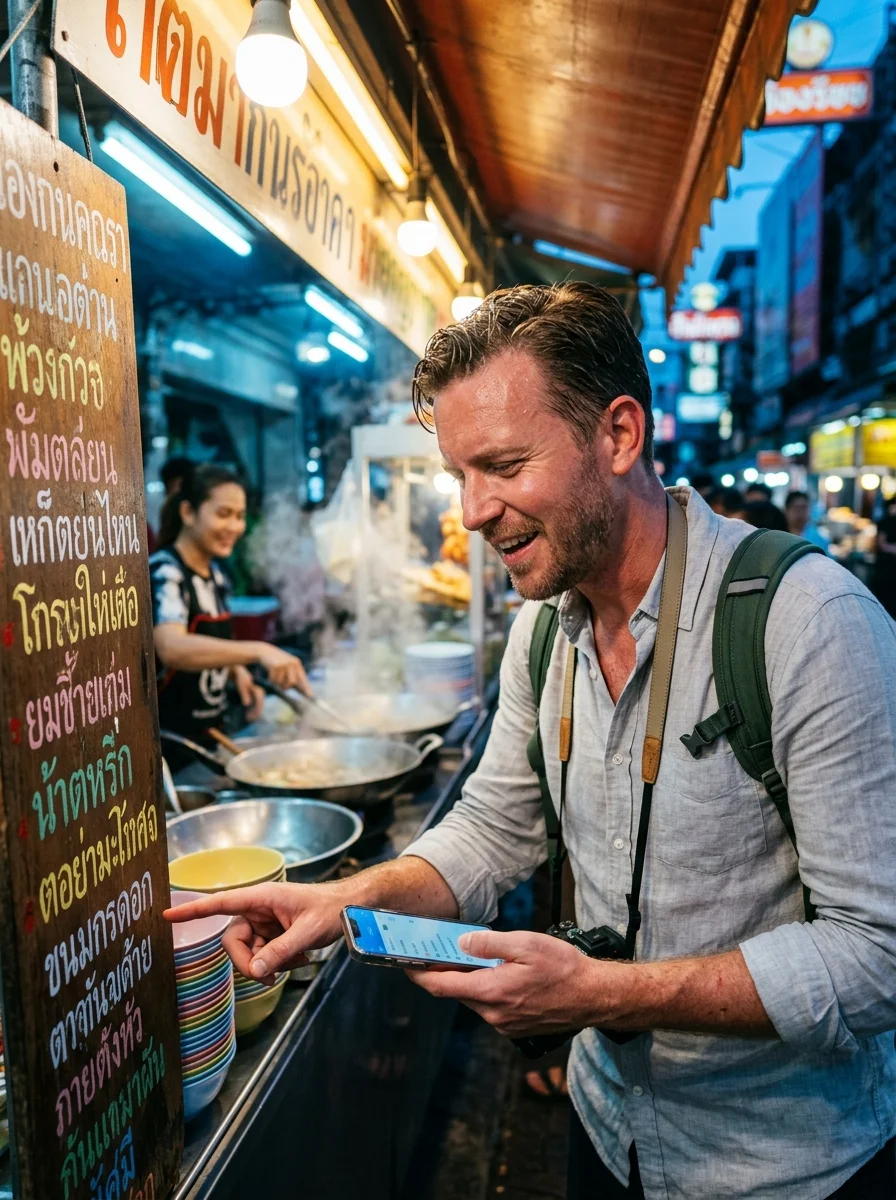
Relying on phonetic transliteration creates ingrained pronunciation errors that are difficult to unlearn. This prevents you from grasping complex tone rules, leaving locals completely unable to comprehend your speech. Learn the Thai script within your first three months to ensure highly accurate pronunciation.
Speaking Thai with standard English intonation guarantees constant, frustrating miscommunications. Raising your pitch at the end of a sentence to ask a question alters the meaning of the final word entirely. Practice reproducing the five distinct tones accurately before building a massive vocabulary.
Assuming an Education Visa allows you to work legally frequently leads to visa cancellation. This route strictly prohibits earning an income within Thailand, and immigration heavily scrutinises local bank accounts. Secure sufficient offshore savings to support yourself fully during your studies.
Choosing a school based solely on the cheapest tuition results in a poor educational experience. Budget institutions feature overcrowded classes and face intense scrutiny from highly skeptical immigration authorities. Invest in a reputable school to protect your legal status.
Practical Tips for Learning Thai

Record your lessons on your smartphone to review the exact pronunciation of your teacher outside of formal class hours. Listening to native speakers helps your ear attune to the subtle differences between mid, low, and falling tones that British English speakers heavily struggle to hear.
Carry a small physical notebook specifically to write down new vocabulary you encounter during your daily routine. Writing words out by hand reinforces muscle memory for the complex Thai script far more effectively than typing on a digital keyboard.
Force yourself to order food and direct taxi drivers entirely in Thai, even if they respond to you in English. Consistent, low-stakes practical application builds conversational confidence much faster than sitting silently in a formal classroom.
Join local hobby groups or sports clubs where Thai is the primary language spoken, rather than sticking exclusively to familiar expat circles. Immersion forces you to adapt to natural speaking speeds and exposes you to colloquial slang that standard textbooks rarely cover.
Schedule your 90-day visa extensions carefully, ensuring you have all your school attendance records signed and stamped before visiting immigration. Arriving at Chaeng Watthana or your local office without the correct MOE documentation will result in an immediate denial of your requested extension.
Use the shadowing technique by repeating dialogue from Thai television shows or local news broadcasts slightly after the speaker. This method rapidly improves the natural rhythm, pacing, and overall cadence of your spoken Thai.
Quick Reference for Learning Thai
| Item | Detail | Notes |
|---|---|---|
| Visa Route | Non-Immigrant ED Visa | Grants a 1-year stay, requiring mandatory 90-day extensions. |
| Minimum Attendance | 8 hours per week | Strictly enforced by the Thai Ministry of Education. |
| Average Annual Tuition | 30,000 to 45,000 THB | Must be paid entirely upfront to secure necessary visa paperwork. |
| Conversational Timeline | 100 to 150 hours | Assumes highly active study and daily practical use in public. |
| Best Schools (Bangkok) | AUA, Union Language School | High reputation with local immigration authorities. |
| Recommended Apps | Ling, Pocket Thai Master | Excellent for daily tone practice and script memorisation. |
| Private Tuition Cost | 350 to 700 THB per hour | Readily available via digital platforms like italki. |
| Work Rights | None | You cannot legally work or earn an income in Thailand on an ED Visa. |