Thailand Visa Residency Guide
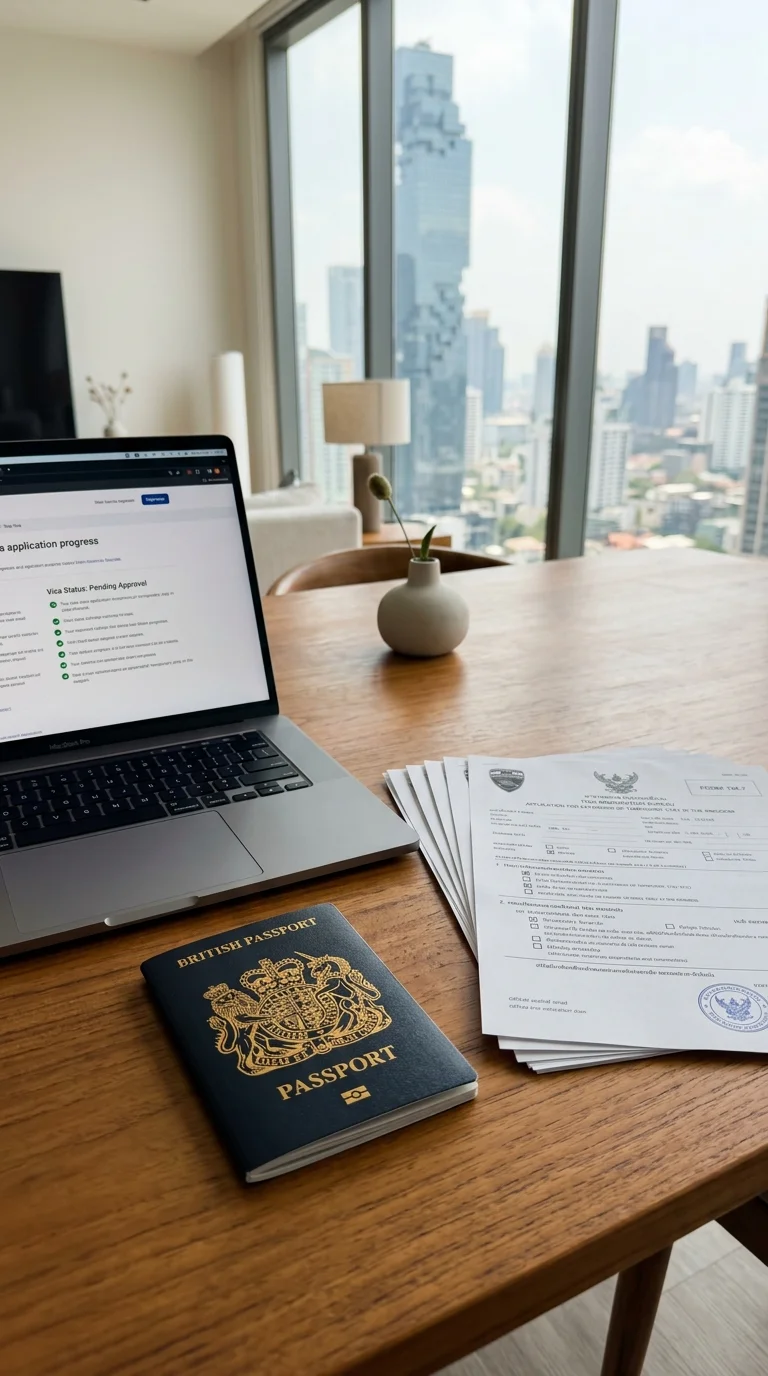
Thailand has announced a reduction in visa-free entry for UK nationals from 60 days to 30 days, reversing the temporary 60-day allowance introduced in 2024. This change has not yet been enacted into law — this page will be updated with full details, including the confirmed implementation date, as soon as the legislation is passed.
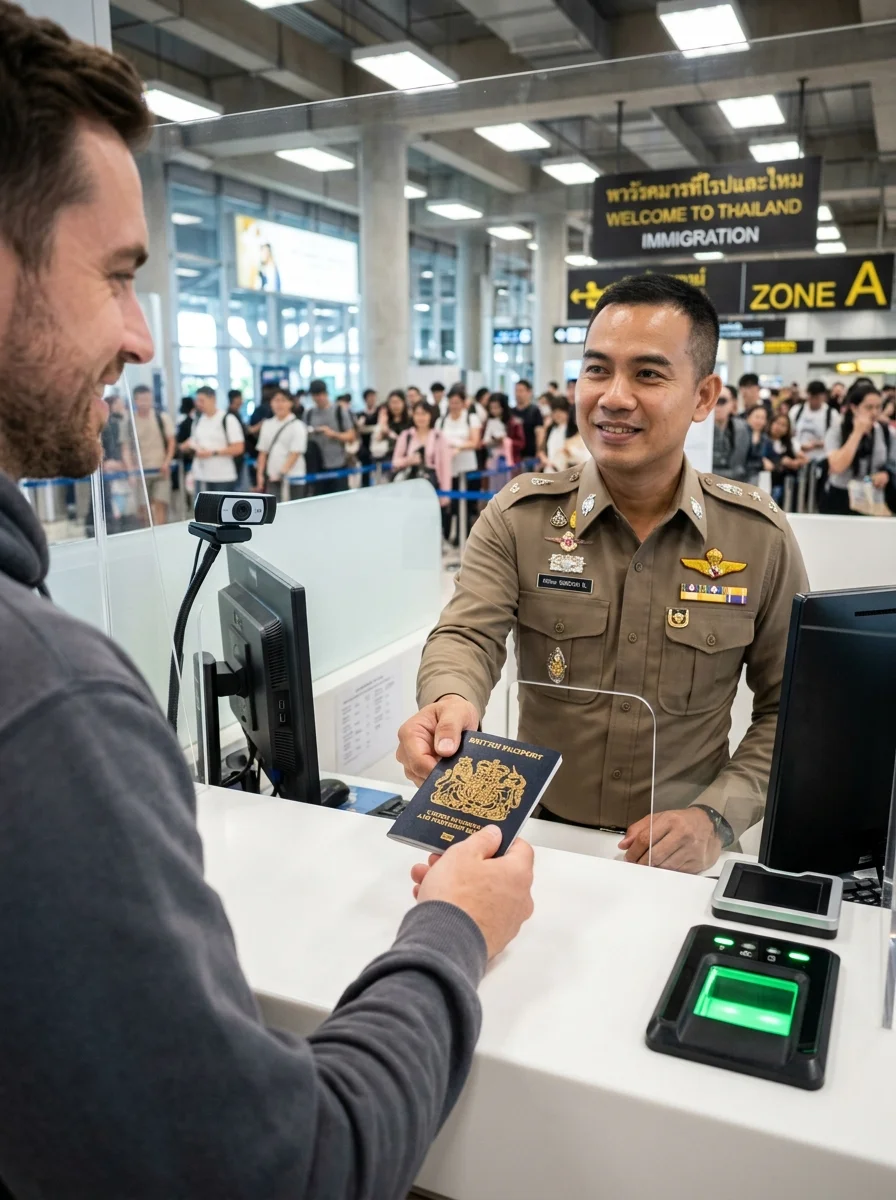
UK passport holders can enter Thailand without a visa for up to 60 days, but staying long-term requires demonstrating specific financial thresholds, such as a monthly income of 65,000 THB (£1,440) for retirees or a 500,000 THB (£11,100) balance for remote workers. Choosing the wrong entry route will force you to leave the country to apply for the correct residency permit from scratch.
This guide outlines every major Thai visa category available to UK nationals to help you identify the correct route for your trip, relocation, or retirement. It breaks down the exact eligibility criteria, financial requirements, and permitted durations for tourist exemptions, remote work visas, retirement extensions, employment permits, and privilege programmes. This page is for anyone starting their immigration research who needs to compare options before committing to a specific application. It will direct you to dedicated, in-depth guides once you have selected your visa path.

Short-Term Travel and Tourism Options
UK nationals arriving for short holidays or brief visits have two primary entry routes depending on their intended length of stay. The standard Tourist Visa Exemption allows you to arrive at any Thai border or international airport and receive a 60-day entry stamp entirely free of charge. You can extend this stamp once at a local immigration office for an additional 30 days by paying a 1,900 THB (£42) processing fee. If you plan to stay up to 90 days from the outset and want to avoid border uncertainty, applying for a Single Entry Tourist Visa (TR Visa) through the official Thai E-Visa portal before departure is a safer route. The TR Visa costs 1,300 THB (£29) and grants an initial 60 days, which is also extendable by 30 days locally. Both routes strictly prohibit any form of employment or business activity in the kingdom. Immigration officers frequently ask for proof of an onward flight within your permitted stay period and evidence of adequate funds, officially set at 10,000 THB (£220) per person or 20,000 THB (£440) per family. Be aware that entering via a land border on a visa exemption is strictly limited to two times per calendar year.
Discover exactly how UK nationals can secure a Thailand Education Visa. Learn about qualifying schools, costs, extensions, and how to apply successfully.
Always secure your onward travel ticket before boarding your flight from London, as airlines often deny boarding to visa-exempt passengers without a return flight.
| Application Route | Tourist Exemption | Tourist Visa (TR) |
|---|---|---|
| Initial Duration | 60 days | 60 days |
| Official Fee | Free | 1,300 THB (£29) |
| Extension Option | 30 days | 30 days |
| Permitted Activities | Tourism only | Tourism only |
The Destination Thailand Visa for Remote Workers
Sponsored

The newly introduced Destination Thailand Visa (DTV) offers remote workers, freelancers, and cultural learners a five-year multiple-entry visa with 180-day stays per entry. This route specifically targets digital nomads who earn their income entirely from outside Thailand, meaning you cannot work for a Thai employer or sell services to Thai clients on this permit. To qualify as a remote worker, you must provide an employment contract or portfolio confirming your foreign income source. Crucially, the financial requirement demands proof of a constant bank balance of at least 500,000 THB (£11,100) held in a UK or international account. The official application fee via the Thai Embassy in London is 350 GBP (approximately 15,750 THB). Once inside Thailand, you can extend each 180-day stay by a further 180 days at a local immigration office for 1,900 THB (£42), meaning you could theoretically remain for nearly a year without leaving. The DTV also covers individuals attending approved Muay Thai training camps, Thai culinary schools, or receiving long-term medical treatments, provided they have formal acceptance letters from certified institutions.
If your work involves any local Thai clients or domestic business meetings, you must apply for a standard Non-Immigrant B visa instead of the DTV.
| DTV Category | Primary Requirement | Financial Proof | Duration Per Entry |
|---|---|---|---|
| Workcation / Remote Worker | Foreign employment contract | 500,000 THB balance | 180 days |
| Soft Power / Education | Acceptance letter from institution | 500,000 THB balance | 180 days |
| Spouse / Dependant | Marriage or birth certificate | 500,000 THB balance | 180 days |
Retirement Visas for UK Nationals Over 50
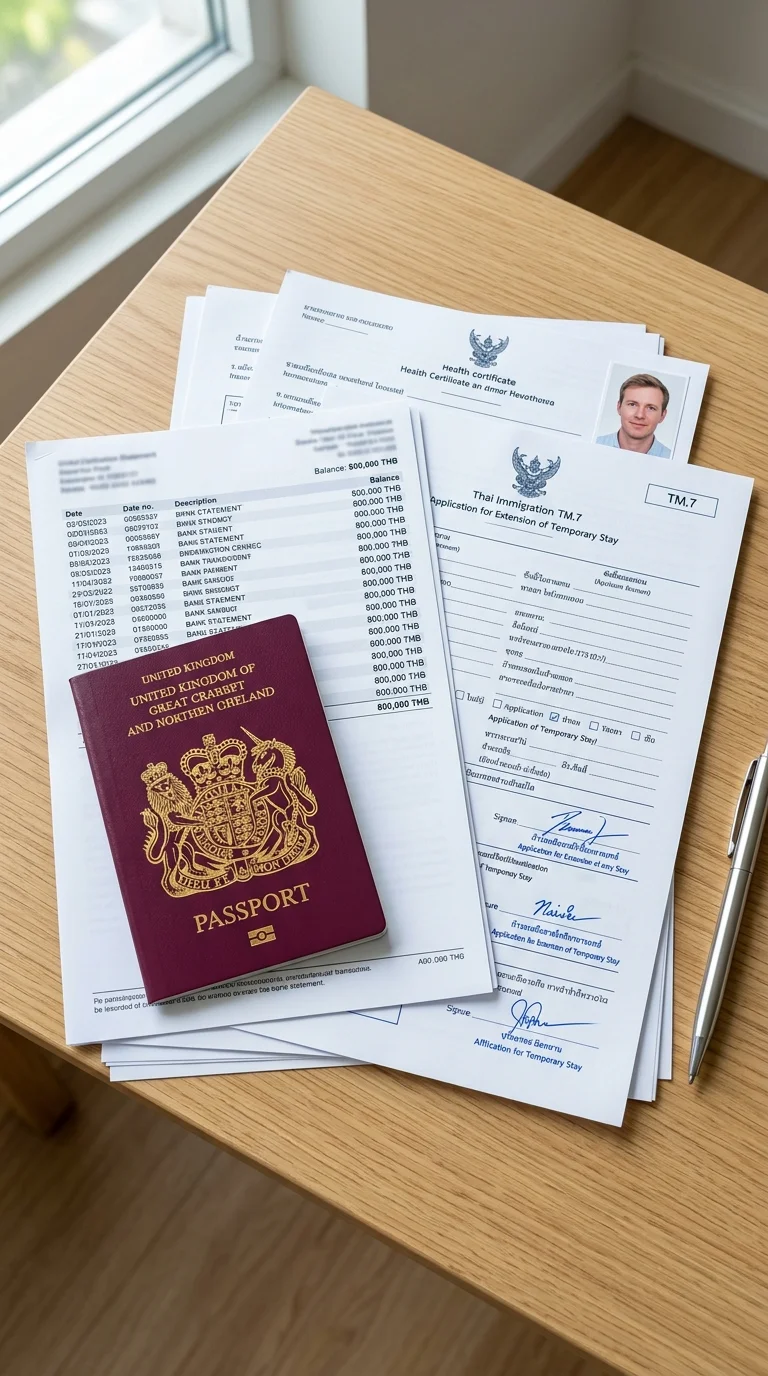
British citizens aged 50 and over can retire in Thailand using either the Non-Immigrant O or the Non-Immigrant O-A visa route. The Non-O is typically acquired as a 90-day single-entry visa, which you then extend annually inside Thailand based on retirement. The O-A is a pre-approved one-year multiple-entry visa processed entirely through the Thai Embassy in London before you travel, requiring an ACRO police certificate and a medical clearance document. Both routes require demonstrating significant financial stability to ensure you will not burden the Thai state. You must prove either a minimum monthly pension income of 65,000 THB (£1,440) or a lump sum bank balance of 800,000 THB (£17,700) deposited in a Thai bank account for at least two months prior to your extension application. The O-A visa carries a strict mandatory health insurance requirement, demanding minimum coverage of 3,000,000 THB (£66,600) for inpatient and outpatient treatment, which must remain active for your entire stay. The Non-O retirement extension processed locally does not currently mandate this insurance, making it the preferred route for many UK expats managing their healthcare costs.
Ensure your UK pension documents are notarised and certified by the Foreign, Commonwealth & Development Office (FCDO) if you intend to use the monthly income method for an embassy application.
| Visa Type | Non-O (Retirement) | Non-O-A |
|---|---|---|
| Application Location | Inside Thailand | UK Embassy |
| Financial Requirement | 65k THB/mo or 800k THB bank | 65k THB/mo or 800k THB bank |
| Health Insurance | Not required | Mandatory (3m THB cover) |
| Police Check | Not required | Mandatory (ACRO) |
Employment, Business, and Family Routes
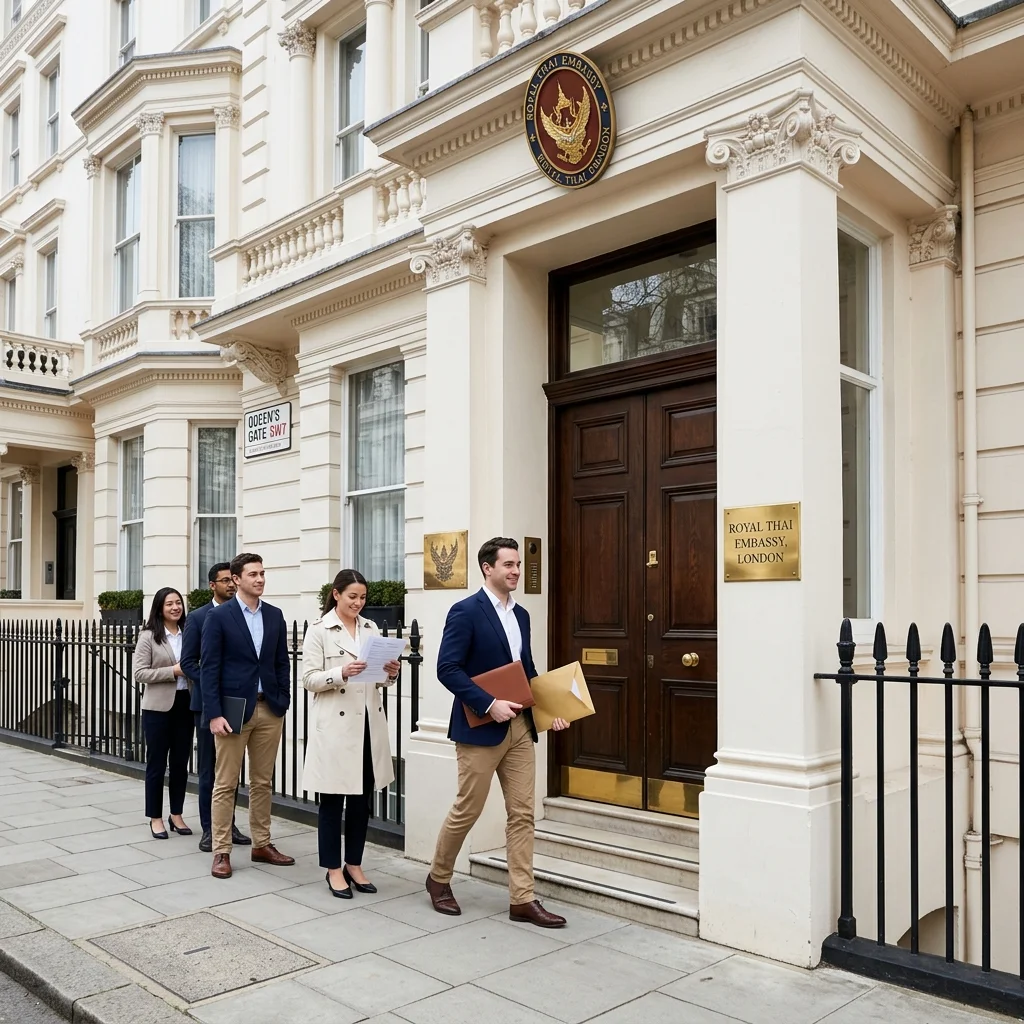
Relocating to Thailand for traditional employment or to join a Thai spouse requires specific Non-Immigrant visas that tie your legal status to an entity or person. The Non-Immigrant B (Business) visa is mandatory for anyone taking a job with a Thai company, teaching at a local school, or setting up their own corporate entity. Your prospective employer must provide a thick dossier of corporate documents, including their company registration, tax records, and a formal WP3 letter requesting your employment, before you can apply. Once inside the country, the Non-B visa is paired with a Thai Work Permit, and your stay is extended to match your employment contract duration. If you are married to a Thai citizen or have Thai children, the Non-Immigrant O (Family) visa is your appropriate route. This requires proving a legally recognised marriage and demonstrating either a monthly income of 40,000 THB (£880) or a bank balance of 400,000 THB (£8,800) held in a Thai bank account for at least two months. Both the Business and Marriage routes demand extensive documentation and patience, with annual extensions requiring you to consistently prove your ongoing employment or marriage status.
Always enter Thailand on the correct Non-Immigrant visa if you plan to work, as converting a tourist entry into a working visa locally is highly restrictive and often requires leaving the country entirely.
| Visa Route | Primary Purpose | Financial/Corporate Requirement | Work Permit Eligibility |
|---|---|---|---|
| Non-Immigrant B | Employment or Corporate | Employer sponsorship and tax records | Yes, mandatory |
| Non-Immigrant O | Marriage to a Thai citizen | 40k THB/mo or 400k THB balance | Yes, with employer sponsorship |
| Non-Immigrant O | Supporting Thai children | 400k THB balance | Yes, with employer sponsorship |
Privilege Visas and Long-Term Resident Programs

High-net-worth individuals and highly skilled professionals can access elite residency tracks that bypass standard immigration queues and annual financial checks. The Thailand Privilege Visa operates as a pay-to-play membership programme offering multiple-entry visas valid for five, ten, fifteen, or twenty years. The entry-level Gold membership costs 900,000 THB (£20,000) for five years, granting you unlimited access to the country, VIP airport fast-tracking, and a dedicated liaison service for your mandatory 90-day reporting. You cannot legally work in Thailand on a Privilege Visa. Alternatively, the Long-Term Resident (LTR) visa targets wealthy global citizens, wealthy pensioners, and highly skilled professionals in targeted industries. The LTR provides a ten-year renewable visa, permission to work without the standard four-to-one Thai-to-foreigner employee ratio, and a flat 17 percent personal income tax rate for skilled professionals. Qualifying for the LTR is exceptionally stringent, requiring minimum personal assets of 1,000,000 USD (£790,000) or an annual income of 80,000 USD (£63,200) depending on your specific category, alongside comprehensive health insurance.
Carefully calculate your long-term plans before purchasing a Privilege membership, as the application fee is entirely non-refundable even if your circumstances change and you leave Thailand after a year.
| Programme | Validity | Entry Cost / Requirement | Working Permitted |
|---|---|---|---|
| Thailand Privilege (Gold) | 5 years | 900,000 THB fee | No |
| Thailand Privilege (Diamond) | 15 years | 2,500,000 THB fee | No |
| LTR (Wealthy Global Citizen) | 10 years | 1m USD assets + 80k USD income | Yes |
| LTR (Highly Skilled Professional) | 10 years | 80k USD income + targeted industry | Yes |
Costs and Budgeting
Budgeting for a Thai visa extends far beyond the embassy application fee, as you must factor in document legalisation, medical certificates, and immigration extension costs. Single-entry tourist visas and short-term options remain highly affordable, but long-term residency routes carry substantial hidden expenses. If you apply for an O-A Retirement Visa in London, expect to pay for a criminal background check, a notarised medical certificate, and the mandatory premium for Thai-compliant health insurance, which can easily exceed 50,000 THB (£1,110) annually depending on your age. Local annual extensions inside Thailand cost a flat rate of 1,900 THB (£42), but using a visa agent to navigate the paperwork will add between 15,000 THB (£330) and 25,000 THB (£550) to your yearly expenses. Always allocate emergency funds for unexpected border runs, document translation services, or sudden changes in financial threshold requirements.
| Item | Cost (THB) | Cost (GBP approx) | Notes |
|---|---|---|---|
| Tourist Visa Exemption | 0 | 0 | Free 60-day entry stamp on arrival |
| Single Entry Tourist Visa | 1,300 | 29 | Applied for online via Thai E-Visa |
| Destination Thailand Visa | 15,750 | 350 | Official embassy fee, valid 5 years |
| Non-Immigrant O-A Visa | 7,850 | 175 | Multiple entry, requires health insurance |
| Local Visa Extension | 1,900 | 42 | Standard fee for 30-day or 1-year extensions |
| Thailand Privilege (Gold) | 900,000 | 20,000 | Five-year membership, entirely non-refundable |
Common Mistakes and How to Avoid Them
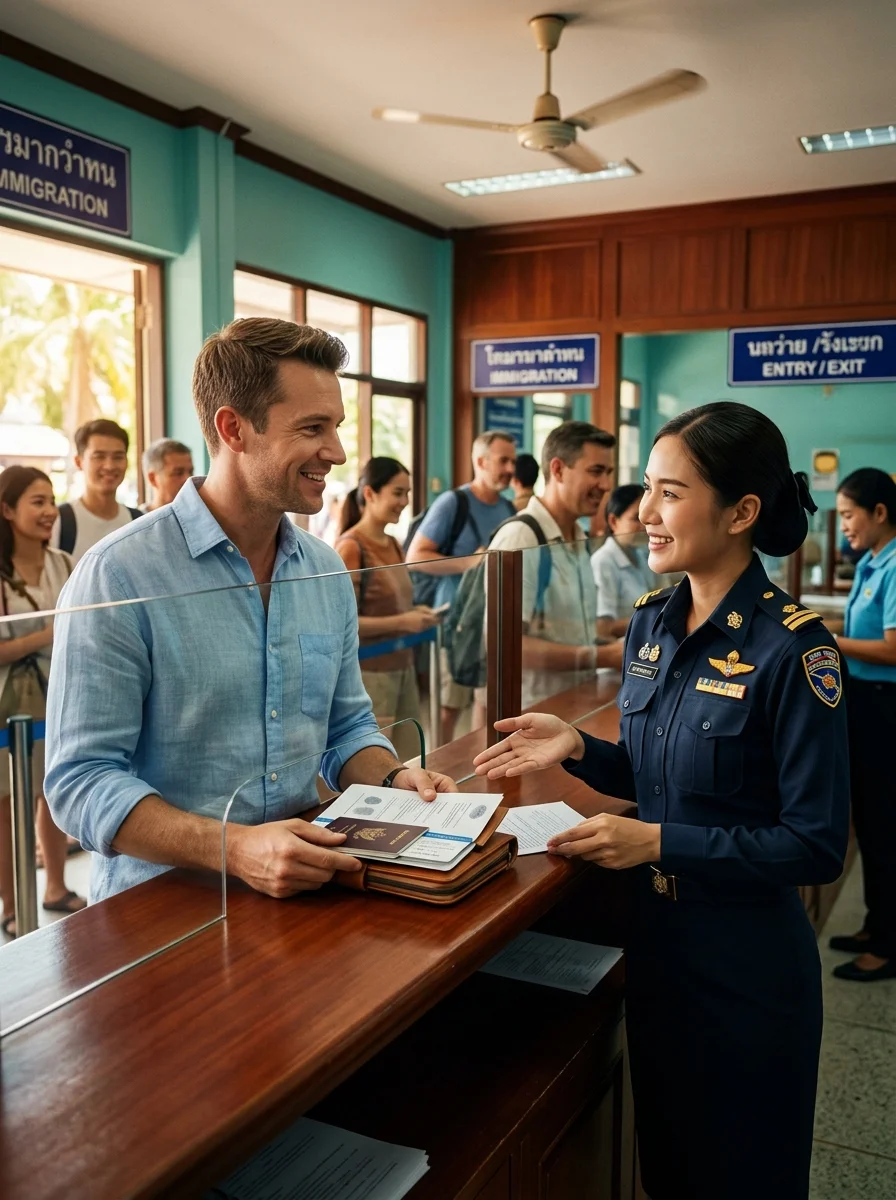
Attempting to live in Thailand on back-to-back tourist exemptions is a severe error. Immigration officers will eventually flag your passport as attempting to reside illegally, resulting in denied entry and a potential ban. Apply for an appropriate long-term visa like the DTV or a Non-Immigrant O if you intend to stay for more than a few months a year.
Failing to maintain the minimum bank balance for the required duration before an extension is a frequent reason for rejection. If your retirement extension requires 800,000 THB in the bank for two months, dipping to 799,000 THB for a single day will invalidate your application. Ensure your funds are deposited early and untouched until your visa is granted.
Entering Thailand on a tourist visa with the intention of working legally is highly problematic. You cannot legally obtain a work permit on a tourist stamp, and converting it requires leaving the country to visit a Thai embassy in a neighbouring nation. Secure your Non-Immigrant B visa before you arrive to ensure your employment starts legally.
Ignoring the 90-day reporting rule will result in escalating fines and potential complications during your next visa extension. Every foreigner on a long-term visa must notify immigration of their address every 90 days, and missing this deadline incurs a 2,000 THB fine. Set an automatic calendar reminder two weeks before your 90-day report is due.
Practical Tips for UK Applicants
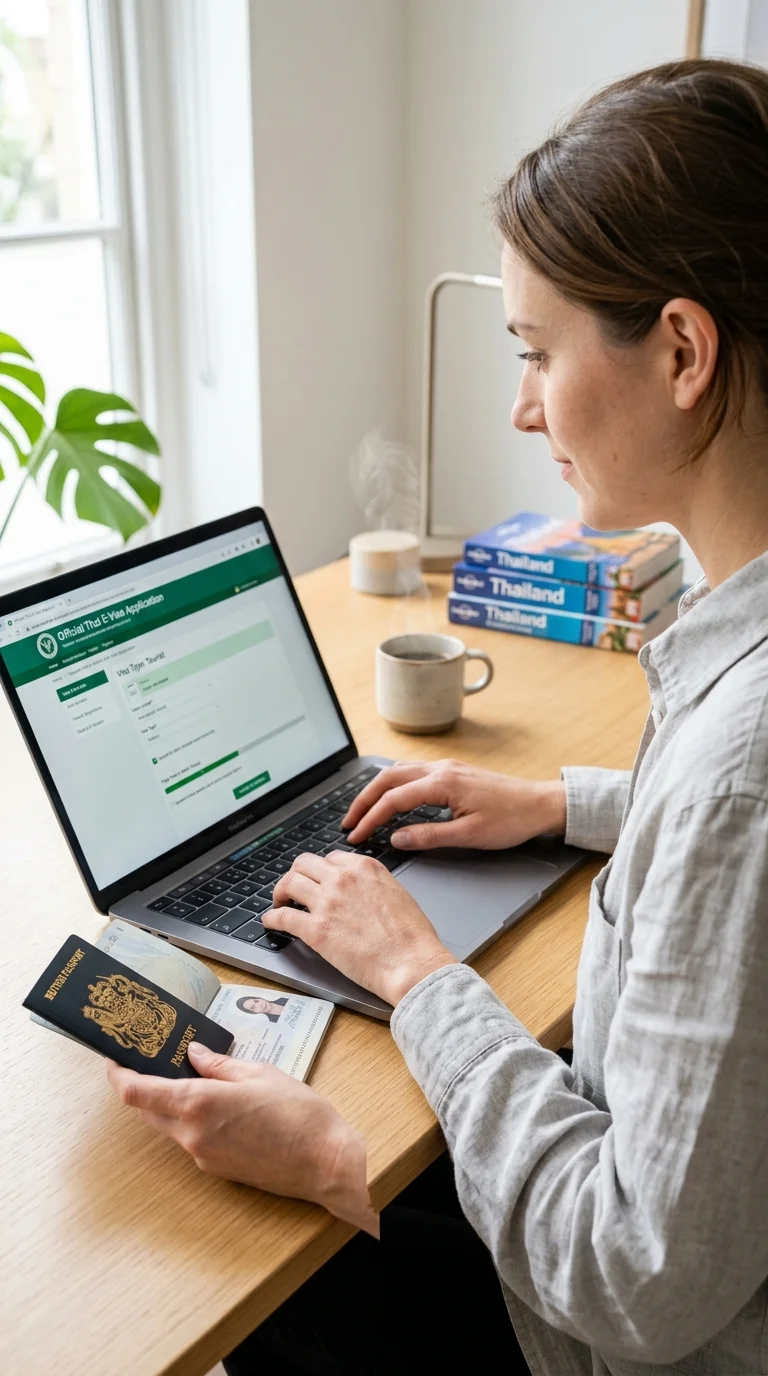
Ensure your UK passport has at least six months of validity remaining from your exact date of entry into Thailand. Airlines will deny you boarding at Heathrow or Gatwick if your passport expires sooner, regardless of your visa status.
Keep physical copies of your TM30 address registration receipt clipped securely into your passport. Immigration officers demand this slip during any extension application or 90-day report, and replacing a lost one requires your landlord to file the registration again.
Always carry your original degree certificates and police clearance reports if you plan to apply for a teaching job or business visa. Thai immigration requires these documents to be physically present and often legally authenticated, meaning digital scans on your phone are entirely useless.
Open a Thai bank account as soon as your visa status allows it to simplify your financial proof for future extensions. Transferring funds directly from your UK bank to a Thai account provides the exact domestic paper trail immigration officers prefer to see.
Book your appointments at the local immigration office online where the system permits. Arriving without an appointment at busy offices like Chaeng Watthana in Bangkok can mean waiting six to eight hours for a simple 30-day extension.
Monitor the Thai Embassy in London website for sudden changes to the E-Visa portal requirements. The platform frequently updates its required document formats, and submitting a PDF that is too large or incorrectly named will cause immediate processing delays.
[DISCLAIMER: Visa rules and fees are subject to change. Always verify current requirements with the official Thai Immigration Bureau at immigration.go.th or the Royal Thai Embassy before applying.]
Visa Category Quick Reference
| Item | Detail | Notes |
|---|---|---|
| Tourist Exemption | 60 days on arrival | Extendable once for 30 days locally |
| Tourist Visa (TR) | 60 days pre-approved | Requires onward flight proof for approval |
| Destination Thailand (DTV) | 5 years validity, 180-day entries | Requires 500,000 THB bank balance |
| Retirement (Non-O/O-A) | 1-year extensions | Age 50+, 65k THB/month or 800k THB balance |
| Business (Non-B) | Tied to work contract | Requires employer sponsorship and work permit |
| Marriage (Non-O) | 1-year extensions | Married to Thai, 40k THB/month or 400k THB balance |
| Thailand Privilege | 5 to 20 years validity | Starts at 900,000 THB, no working permitted |
| Long-Term Resident (LTR) | 10 years validity | Requires high net worth or specialist skills |