Buying Off-Plan Property in Thailand
Unlike the UK market where developer deposits are heavily protected, Thailand lacks a mandatory statutory safety net for off-plan buyers if a construction company goes insolvent before completion. Buying a property before it is built requires aggressive front-end due diligence on the developer’s track record, land title, and corporate health to prevent the complete loss of your stage payments.
This page details the exact mechanics of buying an off-plan property in Thailand, from the initial reservation deposit to staged construction payments and the final transfer of ownership. It is written for UK buyers and investors evaluating pre-construction projects who need to understand developer due diligence, contract protections, and the reality of off-plan risks. This guide is not for buyers looking for immediate occupancy or those unwilling to navigate the specific legal vulnerabilities of the Thai pre-construction market.

The Off-Plan Purchase Process and Payment Schedule
Securing an off-plan property involves a structured payment schedule that should strictly align with verified construction milestones rather than calendar dates. The process begins with a reservation fee, typically between 50,000 THB (£1,100) and 200,000 THB (£4,400), which removes the unit from the open market while you conduct legal checks. Within 14 to 30 days, you will sign the Sale and Purchase Agreement and pay the primary deposit, usually 20% to 30% of the total purchase price. The remaining balance is then divided into stage payments spread across the 18 to 36 months of the build phase. These instalments should trigger only when the developer completes specific structural phases, such as laying the foundation, erecting the superstructure, and installing the roof. If a developer demands 80% of the funds before the roof is on, you are shouldering an unacceptable level of financial risk. The final 5% to 10% must remain unpaid until the project passes a final snagging inspection and the Chanote title deed is successfully registered in your name at the Land Department. This final handover phase is critical. If you pay the balance before the developer rectifies the defects identified in your snagging report, they lose all financial incentive to complete the minor repairs. Never agree to a payment schedule based purely on monthly calendar dates regardless of actual building progress. Furthermore, ensure the contract explicitly prevents the developer from demanding early stage payments if they happen to build faster than anticipated, as this disrupts your agreed cash flow.
Discover the reality of buying a Phuket villa as a UK national. Learn about leasehold structures, purchase costs, rental yields, and legal protections.
Developer Due Diligence and Land Title Verification
Before transferring any funds, you must verify that the developer legally owns the underlying land and possesses the financial capacity to complete the project. Many developers launch off-plan sales before they have fully paid for the land, meaning the Chanote title deed is held by a Thai bank as collateral. If the developer defaults on their commercial loan, the bank can seize the land, leaving off-plan buyers with nothing. Your legal representative must conduct a title search at the local Land Department to check for registered mortgages or encumbrances against the master Chanote. You must also verify the developer's corporate registration at the Department of Business Development to ensure the company is highly capitalised and actively trading. A developer with a registered capital of only two million THB is entirely unsuited to building a one billion THB apartment complex, as they lack the financial buffer to survive supply chain shocks. Reviewing their track record is equally critical, as completing a 20-unit villa estate requires vastly different logistical and financial capabilities than delivering a 400-unit high-rise apartment block. Ask to see the approved building permits and the Environmental Impact Assessment (EIA) approval. If the EIA is not yet approved, the developer cannot legally begin construction, and your completion date could face indefinite delays. Only commit to projects where the developer holds unencumbered title to the land and full planning permission.
| Due Diligence Area | Off-Plan Property | Resale Property |
|---|---|---|
| Land Title Verification | Check master Chanote for developer mortgages | Check individual unit Chanote for seller debts |
| Building Permits | Require EIA and construction permits | Verify existing building compliance |
| Financial Risk | High exposure to developer insolvency | Low exposure, asset already exists |
| Physical Inspection | Rely on show units and technical drawings | Full structural survey possible |
Reviewing Reservation and Sale Contracts
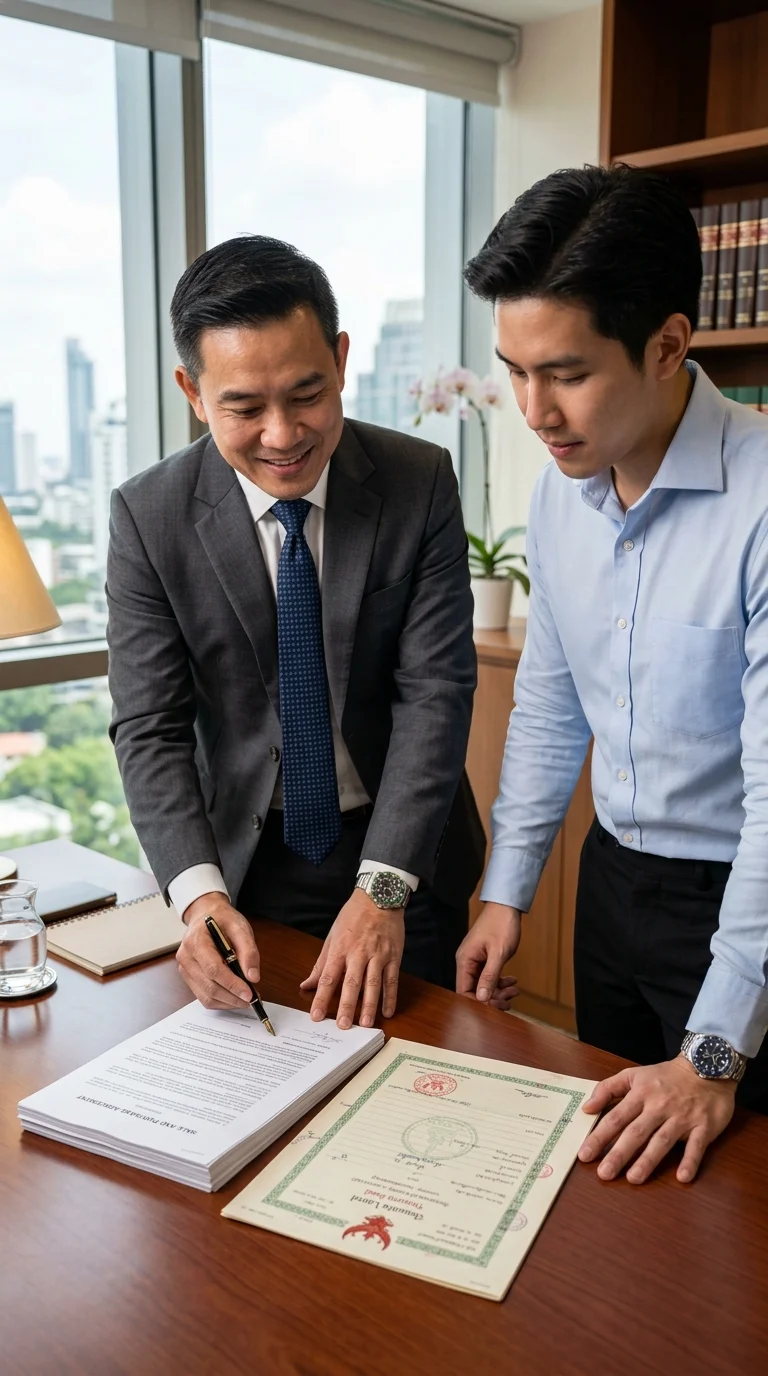
The Sale and Purchase Agreement governs your entire relationship with the developer and must explicitly define penalties for late delivery and specifications for the finished unit. Under the Thai Apartment Act, developers of registered apartment buildings must use a standard contract drafted by the Ministry of Interior, which inherently protects consumer rights by mandating strict handover protocols and fair penalty clauses. However, off-plan villa developments or leasehold projects do not fall under this strict regulation, allowing developers to draft heavily one-sided contracts that heavily favour the construction company. You must ensure the agreement includes a specific completion date and a daily penalty rate for delayed handover, typically set between 0.01% and 0.1% of the purchase price per day. The contract must also contain an exact material specification list detailing the brands and grades of fixtures, flooring, and appliances to prevent the developer from substituting cheaper alternatives during the build. Furthermore, the agreement must clearly state who is responsible for paying the various transfer taxes and specific business taxes at the Land Department upon completion. If a developer refuses to amend a heavily biased contract or resists adding a detailed materials annex, walk away from the transaction.
Legal Protections and Insolvency Risks
Thai property law does not mandate the use of independent stakeholder accounts or trust mechanisms to hold buyer deposits during the construction phase. When you transfer your 30% deposit and subsequent stage payments, those funds go directly into the developer's operating account to fund the build. If the developer mismanages their cash flow, diverts funds to other struggling projects, or goes bankrupt, your money is entirely exposed. While you can pursue a civil litigation case for breach of contract through the Thai courts or file a complaint with the Consumer Protection Board, recovering funds from an insolvent Thai company is a lengthy, expensive, and often fruitless process. Corporate restructuring or liquidation can drag on for years, leaving foreign buyers at the back of the creditor queue. Some top-tier developers voluntarily offer payment protection schemes through partner banks, but this is the exception rather than the rule. To mitigate this severe risk, UK buyers must carefully negotiate the payment terms to keep the initial deposit as low as possible and heavily weight the final payment upon successful transfer of the title deed. You should also ensure that all funds transferred from the UK into Thailand are correctly coded with a Foreign Exchange Transaction Form (FETF) so that you can legally repatriate any recovered funds in the future. Never pay large upfront percentages to a developer who lacks a proven history of successful, fully funded completions.
Brochure Promises Versus Finished Reality
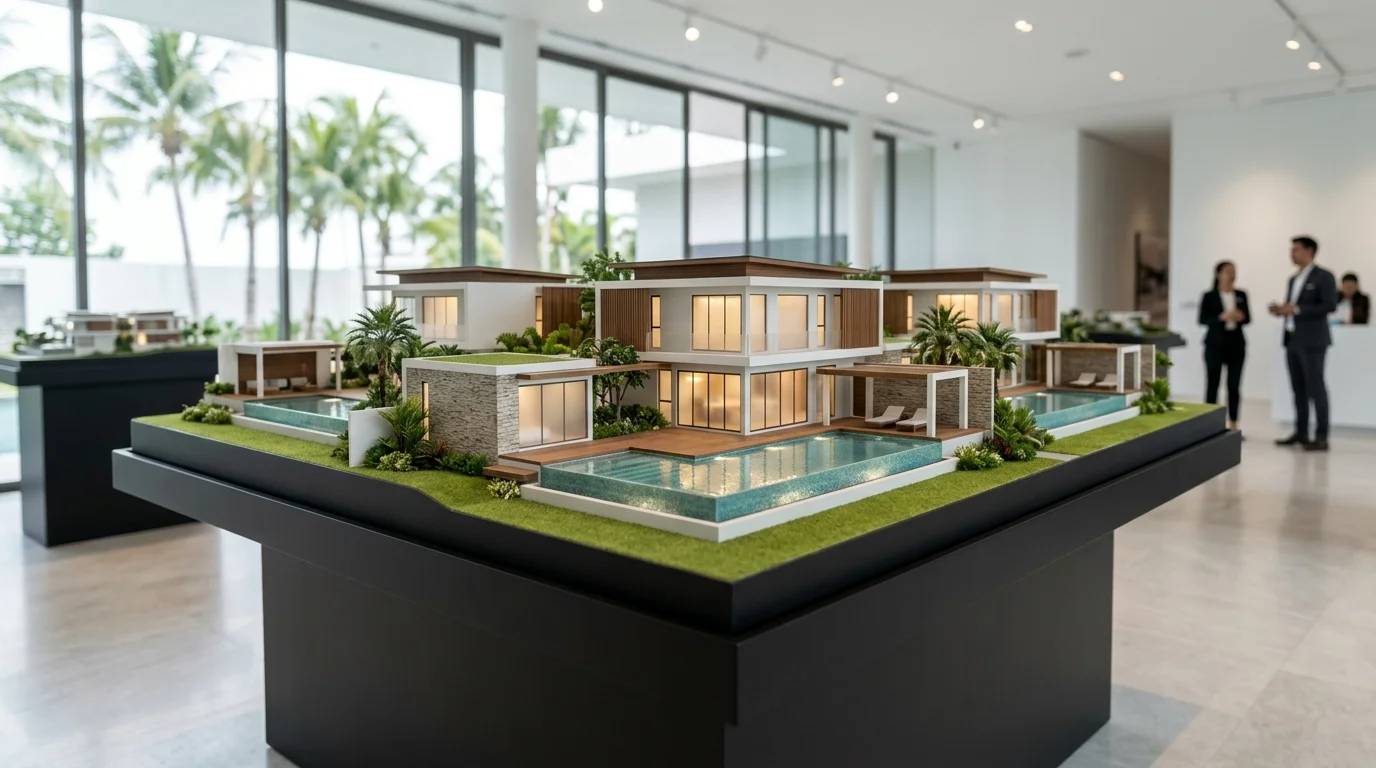
The physical reality of a completed off-plan property frequently diverges from the computer-generated marketing materials presented in the showroom. Developers often include broad substitution clauses in their contracts, allowing them to replace specified materials with those of a similar quality if the originals become unavailable. Without a tightly defined annex attached to your contract, a developer might replace imported European ceramics with cheaper local alternatives while legally remaining within their rights. Additionally, off-plan buyers often face unexpected changes to the project layout due to conditions imposed during the Environmental Impact Assessment approval process. An EIA committee might force the developer to reduce the building height, alter the parking layout, or move the swimming pool to comply with local zoning regulations. You must also account for a margin of error in the final floor area, as Thai contracts typically allow for a 5% variance in the final square meterage compared to the plans. If the unit is larger, you must pay the difference; if it is smaller, the developer refunds the shortfall. Always demand that the contract annex specifies exact material brands, model numbers, and dimensional tolerances before paying the main deposit. Finally, you must verify the statutory warranty periods within the contract. Under Thai law, the developer must provide a five-year warranty for the structural integrity of the building and a one-year warranty for cosmetic fixtures and fittings.
Foreign Quota and Ownership Structures in Off-Plan Developments
When buying off-plan, you must clearly establish how you will legally hold the property once the build completes, as this dictates the type of contract you sign. For an off-plan apartment, UK nationals almost exclusively purchase under the foreign freehold quota. Thai law dictates that foreigners can own up to 49% of the total saleable floor area of a registered apartment building on a freehold basis. You must ensure your reservation agreement explicitly guarantees that your specific unit falls within this 49% allocation. If the foreign quota is already exhausted, the developer may try to sell you the unit under a leasehold agreement, typically lasting for 30 years. Purchasing a 30-year lease provides vastly inferior property rights compared to freehold ownership and completely changes your resale strategy and capital appreciation potential. If you are purchasing an off-plan landed property, such as a pool villa, you cannot hold the underlying land on a freehold basis. Instead, you will enter into a long-term lease agreement for the land while potentially owning the physical structure outright. Your legal representative must verify that the developer has the legal authority to grant a 30-year lease and that the lease contains clear clauses regarding renewal options and succession rights in the event of your death.
Transaction Costs and Ongoing Fees
Buying an off-plan property involves both immediate transaction costs at the Land Department and long-term holding fees once the building completes. The primary transaction cost is the transfer fee, set at 2% of the government-appraised value of the property. For off-plan purchases, developers typically agree to split this 2% fee equally with the buyer. The developer is legally responsible for paying the Specific Business Tax of 3.3% and the Withholding Tax of 1%, though unscrupulous companies may try to pass these onto unaware foreign buyers in unregulated villa contracts. Beyond the purchase price, you must budget for the sinking fund, a one-time reserve payment calculated per square metre. This typically costs between 500 THB (£11) and 1,000 THB (£22) per square metre and is paid upon handover. You will also pay annual maintenance fees in advance, usually ranging from 40 THB (£0.80) to 80 THB (£1.70) per square metre per month. Owners are also liable for the annual Land and Building Tax, though rates are highly discounted for primary residences. Always verify the exact fee structure in writing before committing to the purchase.
| Cost Item | Rate or Amount | Paid By | Notes |
|---|---|---|---|
| Transfer Fee | 2% of appraised value | Usually split 50/50 | Standard across all property types |
| Specific Business Tax | 3.3% of purchase price | Developer / Seller | Payable if sold within 5 years of build |
| Withholding Tax | 1% of purchase price | Developer / Seller | Income tax advance on the sale |
| Sinking Fund | 500 - 1,000 THB per sqm | Buyer | One-time payment upon completion |
| Maintenance Fee | 40 - 80 THB per sqm/month | Buyer | Usually billed annually in advance |
| Legal Fees | 50,000 - 150,000 THB | Buyer | Varies based on contract complexity |
Common Off-Plan Purchasing Mistakes

Signing unregulated reservation agreements without legal review limits your exit options. If the agreement lacks a refund clause contingent on a satisfactory contract review, you will lose your initial deposit when you uncover unacceptable terms later. Always insert a specific clause stating the deposit is fully refundable subject to clear title and legal contract approval before transferring any funds.
Paying stage instalments based on monthly calendar dates exposes you to severe financial risk. If the project stalls but your contract demands a payment every quarter, you are legally obligated to pay for construction progress that has not actually occurred. Ensure your legal representative drafts the contract so payments strictly trigger upon certified structural milestones signed off by an independent surveyor.
Failing to verify the Environmental Impact Assessment status can leave your investment capital trapped indefinitely. If you buy into a project before the state approves the EIA, the developer cannot legally begin the build, and the authorities may force substantial architectural redesigns. Demand documented proof of full EIA approval and local municipal building permits before signing the primary sale agreement.
Ignoring the master land title status means you might be buying a property on mortgaged ground. If the developer defaults on their commercial loan, the lending bank holds the primary legal claim to the land, effectively wiping out your entire off-plan investment. Have your lawyer conduct a thorough title search at the Land Department to ensure the land is completely unencumbered by corporate debt.
Practical Tips for Off-Plan Buyers
Transfer all your purchase funds directly from a UK bank account into Thailand in a foreign currency. The receiving Thai bank will execute the conversion to Thai Baht and issue a Foreign Exchange Transaction Form (FETF), which you legally need to register foreign ownership of an apartment.
Demand a detailed materials annex attached to your Sale and Purchase Agreement. This critical document restricts the developer from substituting inferior materials by clearly stating the exact brands, models, and grades of all fixtures, flooring, and sanitary ware.
Physically visit the developer’s previously completed projects before committing to a new off-plan build. Inspecting their past work reveals the true quality of their construction, how well the buildings age, and whether they actually deliver on their glossy marketing promises.
Negotiate the late delivery penalty rate to a minimum of 0.05% of the purchase price per day. A high penalty rate legally incentivises the developer to finish the project on time and provides meaningful financial compensation if you are forced to rent alternative accommodation during delays.
Never agree to pay the Specific Business Tax or Withholding Tax in an off-plan contract. Under Thai consumer protection guidelines, these taxes remain the strict legal responsibility of the corporate seller, making any attempt to pass them to you a major red flag.
Hire an independent structural inspector to conduct a final snagging report before you pay the final completion instalment. Developers will often pressure you to sign the handover document quickly, but once you pay the final balance, your leverage to force them to fix major defects disappears entirely.
Off-Plan Property Quick Reference
| Item | Detail | Notes |
|---|---|---|
| Ownership Route | Freehold (Apartment) or Leasehold | Foreigners can own 49% of a apartment building's total area |
| Maximum Foreign Quota | 49% | Applies to registered apartment buildings only |
| Title Deed Required | Chanote (Nor Sor 4 Jor) | Verify the master title before buying off-plan |
| Typical Deposit | 20% to 30% | Paid upon signing the Sale and Purchase Agreement |
| Fund Transfer Requirement | FETF documentation | Funds must originate from outside Thailand in foreign currency |
| Legal Representation | Highly Recommended | Essential for drafting milestone-based payment schedules |
| Typical Timescales | 18 to 36 months | Varies heavily based on project size and EIA approval |