Comparing Thailands Premier Island Destinations
Choosing between Thailand’s two premier holiday islands often comes down to a choice of geography, budget, and travel style. Phuket, a sprawling 540-square-kilometre giant in the Andaman Sea connected to the mainland by the Sarasin Bridge, competes directly with Koh Samui, a smaller 228-square-kilometre island in the Gulf of Thailand defined by its 51-kilometre ring road. While both offer upscale dining and direct air connections from Bangkok, they differ significantly in transport costs, monsoon schedules, and local character. Understanding these differences will help you match your expectations to the right coastline for an optimal winter escape.

Koh Samui
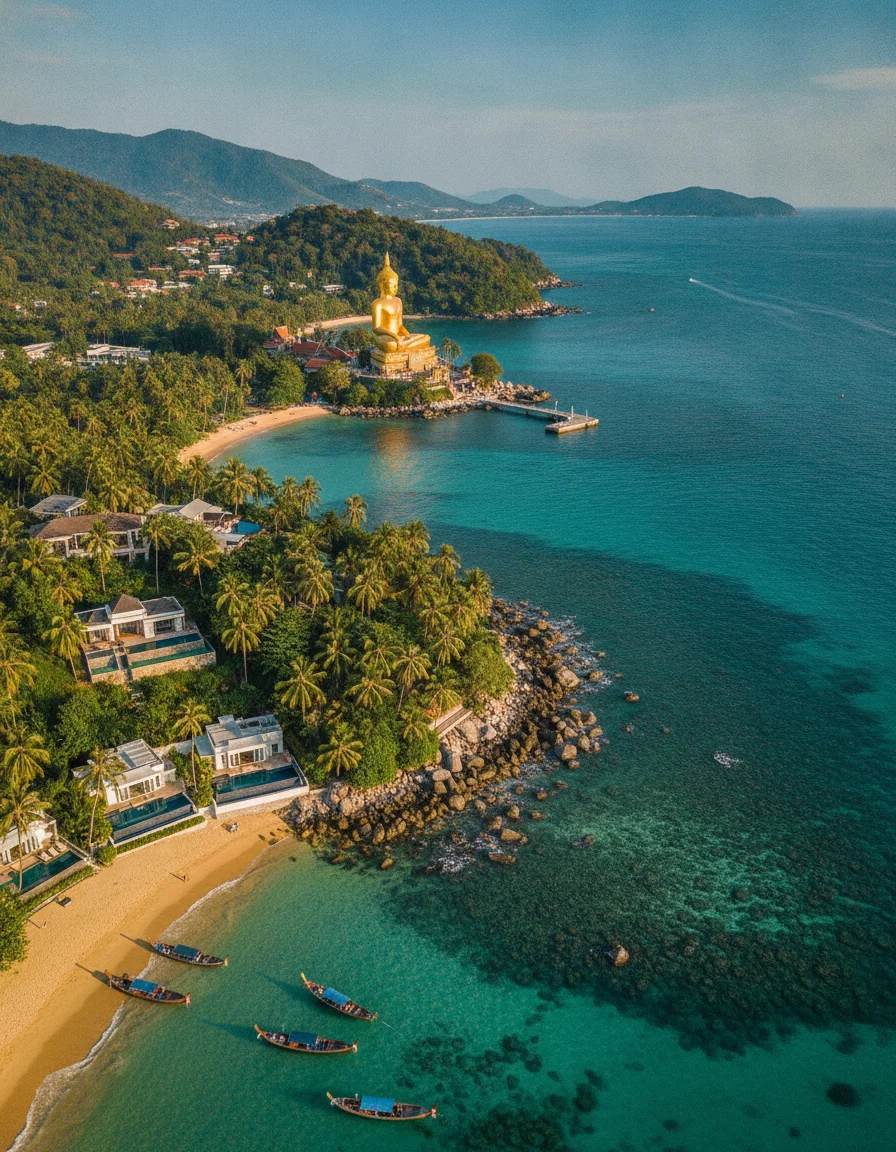
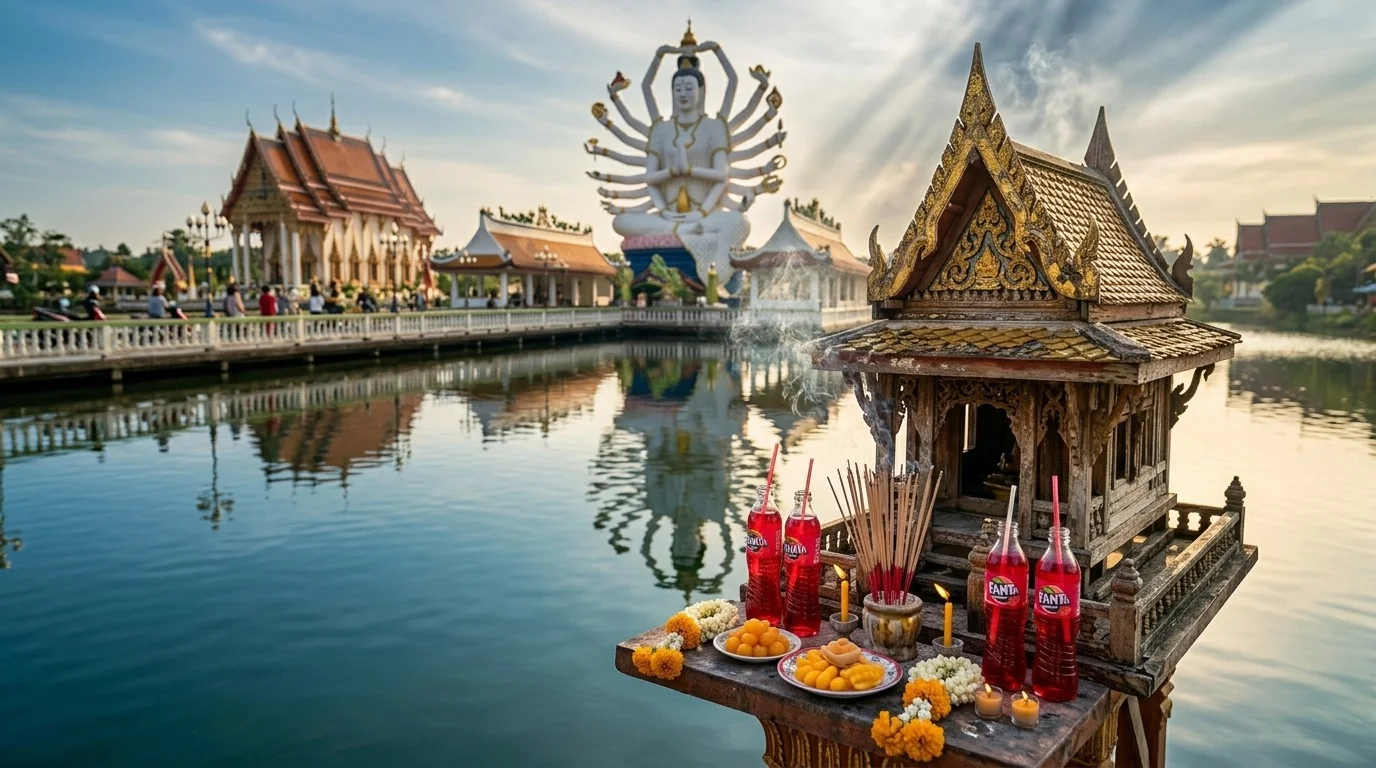
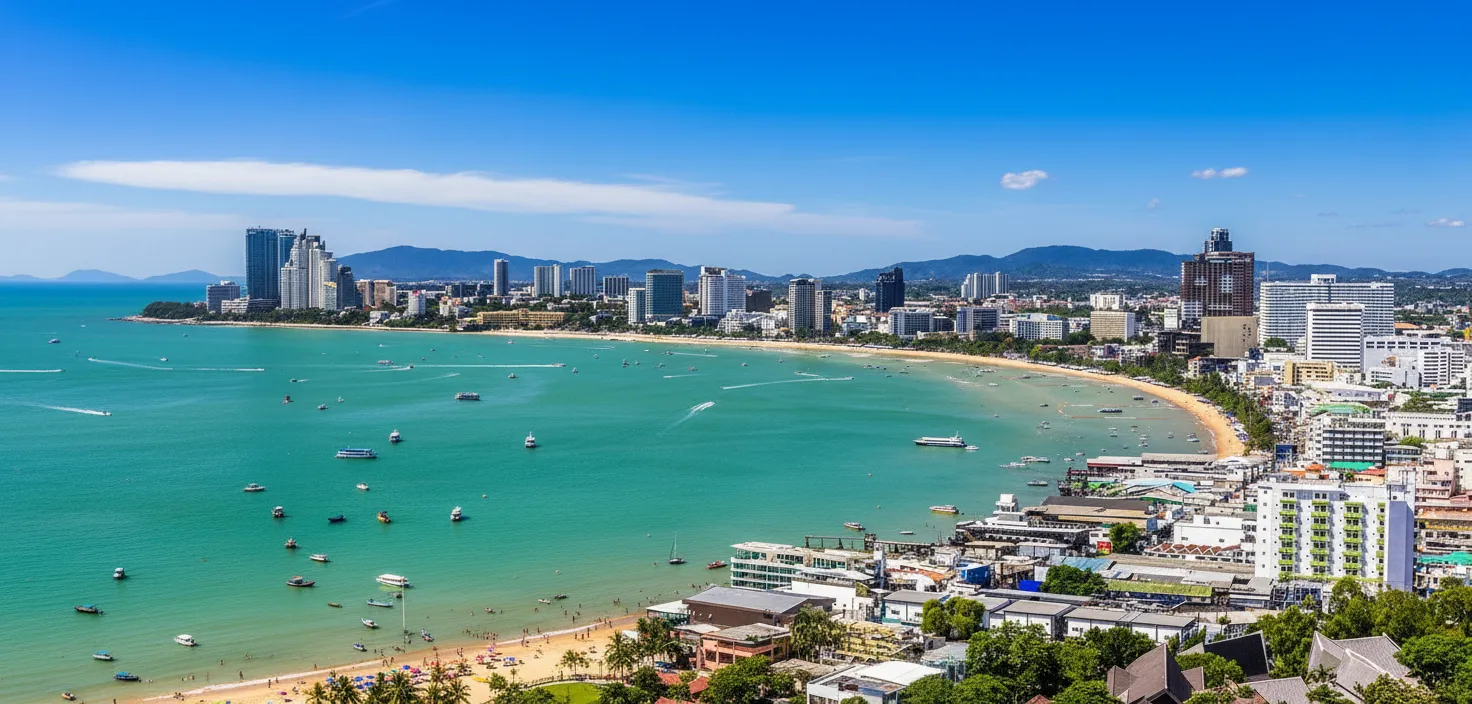
Koh Samui is Thailand’s second-largest island, positioned in the Gulf of Thailand as a highly developed, mid-to-high-end holiday destination that manages to balance commercialised hubs with traditional coastal villages. Its interior features mountainous terrain rising over 600 metres, while the coast is dotted with key areas like busy Chaweng on the east and quiet Maenam on the north. For landmarks, you can visit the iconic Wat Phra Yai, a golden 12-metre-tall Big Buddha temple, or book a speedboat excursion to the 42 islands of Ang Thong National Marine Park. Dining ranges from a 350 THB massaman curry at the hillside Jungle Club to 60 THB meals at local night markets. This island is ideally suited for couples, families, and luxury holidaymakers who want reliable western infrastructure and comfortable resort experiences without roughing it. Conversely, it is poorly suited for budget backpackers because the local airport monopoly keeps flight prices high, with Bangkok flights starting at 3,000 THB. The high transport cost remains its biggest drawback. The single most critical practical fact distinguishing Koh Samui is the high cost of local transport, driven by notoriously fixed and inflated taxi fares alongside high flight costs. The best time to visit is from December to February, whereas the heavy monsoon rains strike late in the year from October to December. For luxury accommodation, high-end travellers often book exclusive hillside villas like W Koh Samui in Mae Nam, which highlights the island's upscale target market.
Phuket
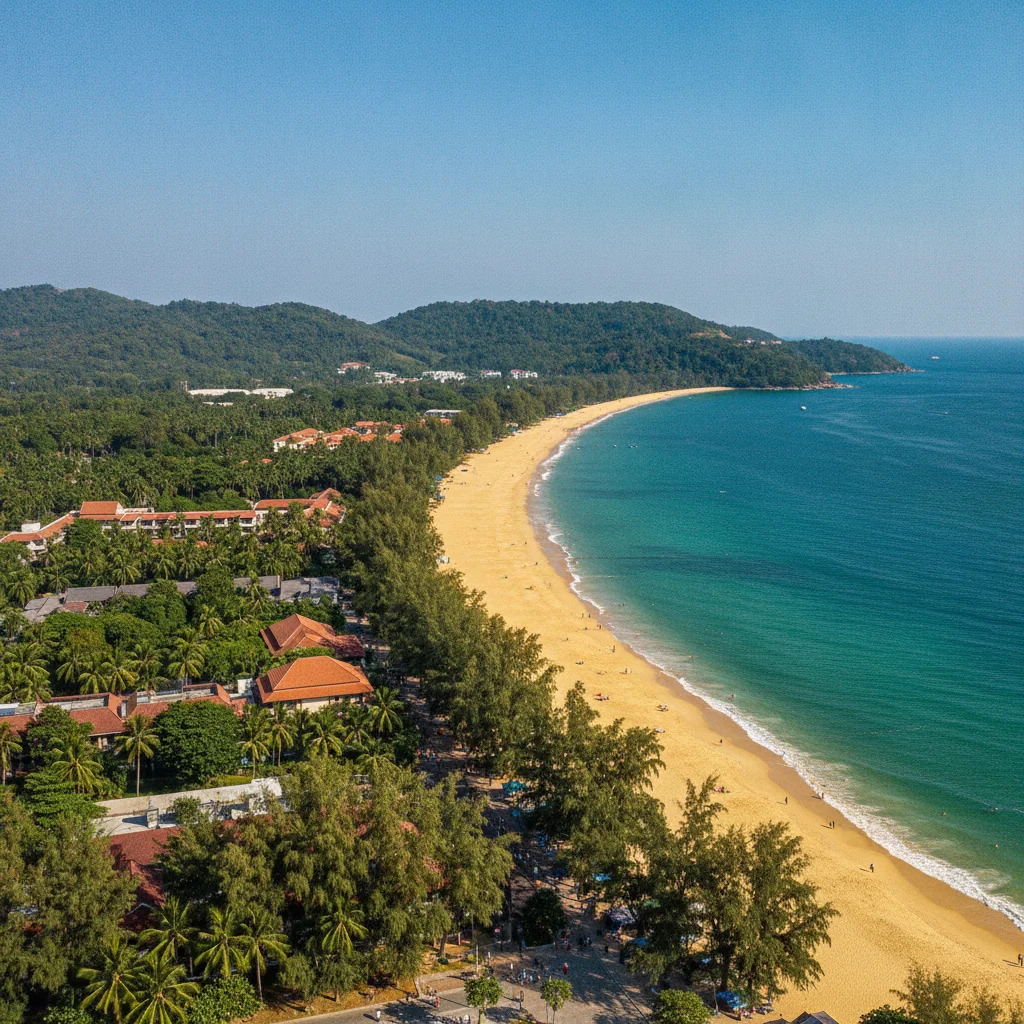
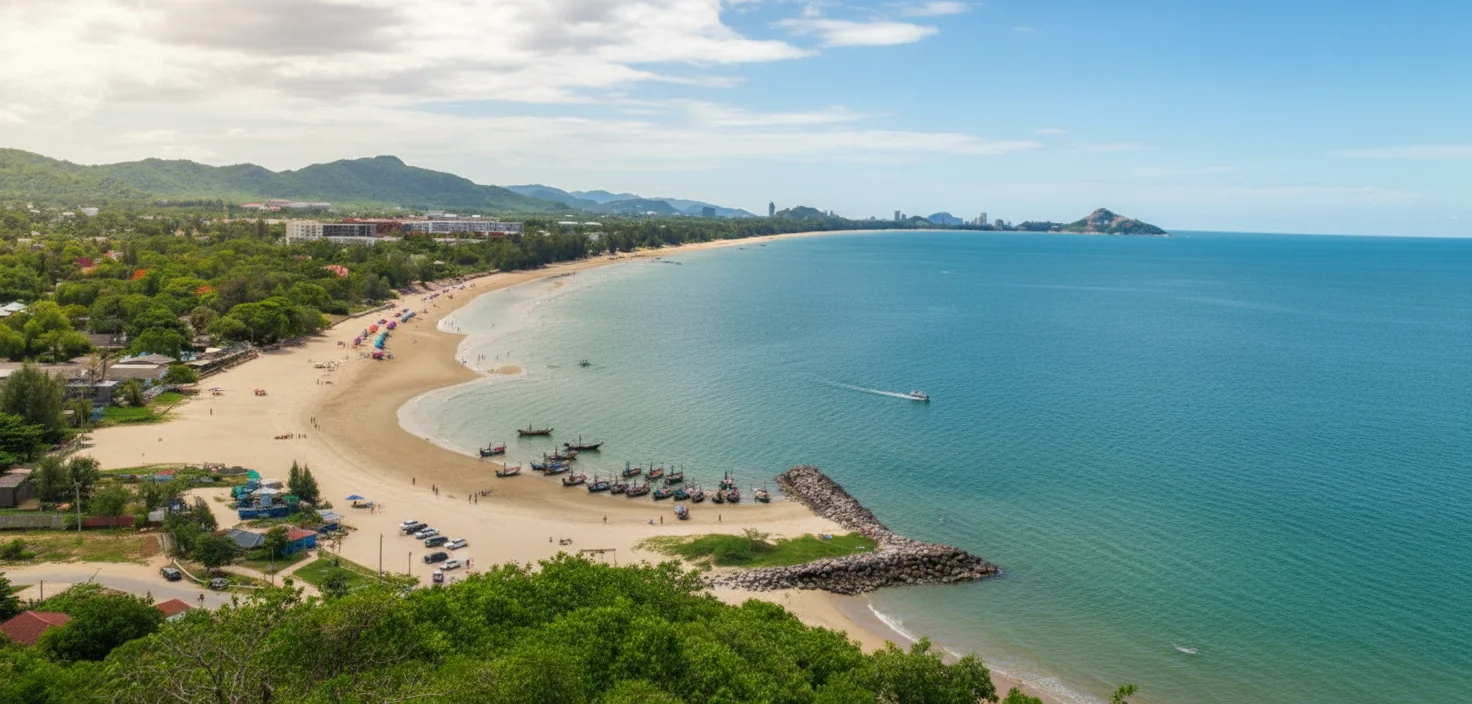
Phuket is a massive 540-square-kilometre island in the Andaman Sea that operates as a major international hub, offering a diverse market that spans from budget-friendly hostels to ultra-exclusive properties. Its geographical landscape is highly fragmented, featuring busy tourist strips like Patong alongside peaceful northern sanctuaries such as Bang Tao and Mai Khao. Visitors can explore the historical Thalang Road in Old Phuket Town, admire the 45-metre marble Big Buddha, or take a day trip to the Phi Phi Islands for 1,500 to 3,500 THB. Food costs here vary widely. Food options range from cheap Hokkien noodles at Mee Ton Poe for 50 to 90 THB to high-end Michelin-starred dining at PRU. It is highly recommended for digital nomads seeking fast Wi-Fi, families wanting beach lifeguards, scuba divers, and long-term retirees. However, it will not suit travellers seeking an isolated, sleepy, or low-cost island experience due to heavy overdevelopment and long travel times between bays. The single most critical practical fact about Phuket is its mainland connectivity via the 660-metre Sarasin Bridge, which eliminates the need for ferry travel and lowers initial entry costs. To avoid the dangerous rip currents of the May-to-October monsoon, you should plan your trip during the dry season from November to April. For those seeking premium accommodation, resorts like Katathani Phuket Beach Resort provide direct coastal access, making it a reliable choice for families.
Discover Phuket's diverse landscapes and origins. Plan your trip to this captivating island destination with our expert guide. Click to explore!
Geography and Local Vibe
When comparing the physical scale of these two destinations, the contrast is stark. Phuket is more than double the size of Koh Samui, meaning your choice of base fundamentally dictates your experience. On Phuket, the western coastline consists of distinct beach towns, each carrying its own subculture. Patong acts as the island’s chaotic nightlife centre, filled with neon lights and crowds, whereas northern beaches like Mai Khao and Bang Tao are quiet and sparsely populated, offering peaceful retreats near the Laguna complex. If you travel south to Rawai, you will find a bohemian community favoured by long-term expats, where the Rawai Beach Sea Gypsies Fish Market offers fresh local seafood.
Koh Samui presents a more compact layout. Its 51-kilometre ring road, Route 4169, allows you to circle the entire island in under two hours, though the steep and winding interior roads require careful driving. The energy on Samui is concentrated on the eastern coast, where Chaweng Beach offers a seven-kilometre stretch of sand backed by dining and shopping. If you prefer a slower, more traditional rhythm, the northern coast hosts the quiet shores of Maenam and Bophut. Bophut’s Fisherman’s Village is famous for its Friday Night Market, where locals and visitors gather to buy street food and handmade crafts.
Accessibility and On Island Transport
Getting to these islands from the UK involves different logistics and cost structures. Phuket is served by Phuket International Airport, which receives direct charter flights and frequent, competitive domestic connections. A flight from Bangkok to Phuket can cost as low as 1,200 THB and takes just over an hour. If you prefer a budget-friendly overland route, overnight buses from Bangkok take roughly twelve hours and cost between 700 and 1,000 THB. Once on the island, the Phuket Smart Bus offers a convenient 100 THB flat fare to travel along the west coast, though private tuk-tuks remain expensive, with a minimum fare of 200 THB even for short trips.
Koh Samui, by contrast, is more exclusive and expensive to reach. Samui International Airport is privately owned, creating a virtual monopoly that keeps flight prices high, with tickets from Bangkok starting at 3,000 THB. For budget travellers, the alternative is an overnight train from Bangkok's Krung State Aphiwat Central Terminal to Surat Thani, followed by a bus and ferry connection, costing around 450 THB. On the island, transport is famously challenging. Local songthaews charge between 50 and 150 THB, but private taxis are notorious for refusing to use meters, leading to highly inflated, fixed rates. Renting a scooter for 250 THB per day is a popular alternative, though you must possess an International Driving Permit.
Daily Budgets and Accommodation Tiers
Your holiday budget will stretch differently depending on which island you choose. Phuket offers a broader spectrum of prices, making it highly accessible for budget-conscious travellers and digital nomads. You can easily find hostel beds from 400 to 800 THB per night, while mid-range resorts like Katathani cost between 3,500 and 7,000 THB. For those seeking luxury, Phuket is home to world-renowned properties like Amanpuri, where rates can exceed 35,000 THB per night. Long-stay visitors often base themselves in Rawai, where monthly villa rentals start at 45,000 THB, supported by excellent coworking spaces.
Koh Samui is generally more expensive across all tiers, meaning budget travellers will find their money does not go as far here as it would in Phuket. Budget beach bungalows on Samui cost between 600 and 1,200 THB, while mid-range resorts average 3,500 to 6,000 THB. High-end luxury villas, such as those in Taling Ngam or Choeng Mon, range from 15,000 to 35,000 THB per night. A realistic daily spend for a mid-range traveller on Samui is around 4,000 THB, which includes accommodation, meals, and occasional transport. On Phuket, a similar standard of travel can be maintained for roughly 3,000 to 6,000 THB, with the added benefit of cheaper dining options.
Culinary Scenes and Local Dining
The culinary landscapes of both islands are rich, but they cater to different tastes. Phuket is a culinary heavyweight, celebrated for its distinct Southern Thai and Peranakan heritage. In Old Phuket Town, you can sample historical dishes like Hokkien noodles at Mee Ton Poe for under 90 THB, or enjoy traditional roti at Aroon Poojana. For an upscale dining experience, Phuket features PRU at the Trisara resort, a Michelin-starred establishment that uses locally sourced ingredients and offers menus starting at 6,500 THB.
Koh Samui’s dining scene is highly westernised but retains excellent local options. The island is famous for its sweet Kalamae candy, made from coconut, sticky rice, and palm sugar, which you can purchase for about 50 THB. For a memorable dining experience, many visitors head to the Jungle Club, a hillside restaurant offering views of Chaweng and serving massaman curry for 350 THB. Street food is widely available at the Bophut Fisherman’s Village Friday Night Market, where meals start from 60 THB. While Samui lacks the density of Michelin-recognised venues found on Phuket, it offers highly atmospheric dining experiences, with many restaurants situated directly on the sand.
Activities and Natural Landscapes
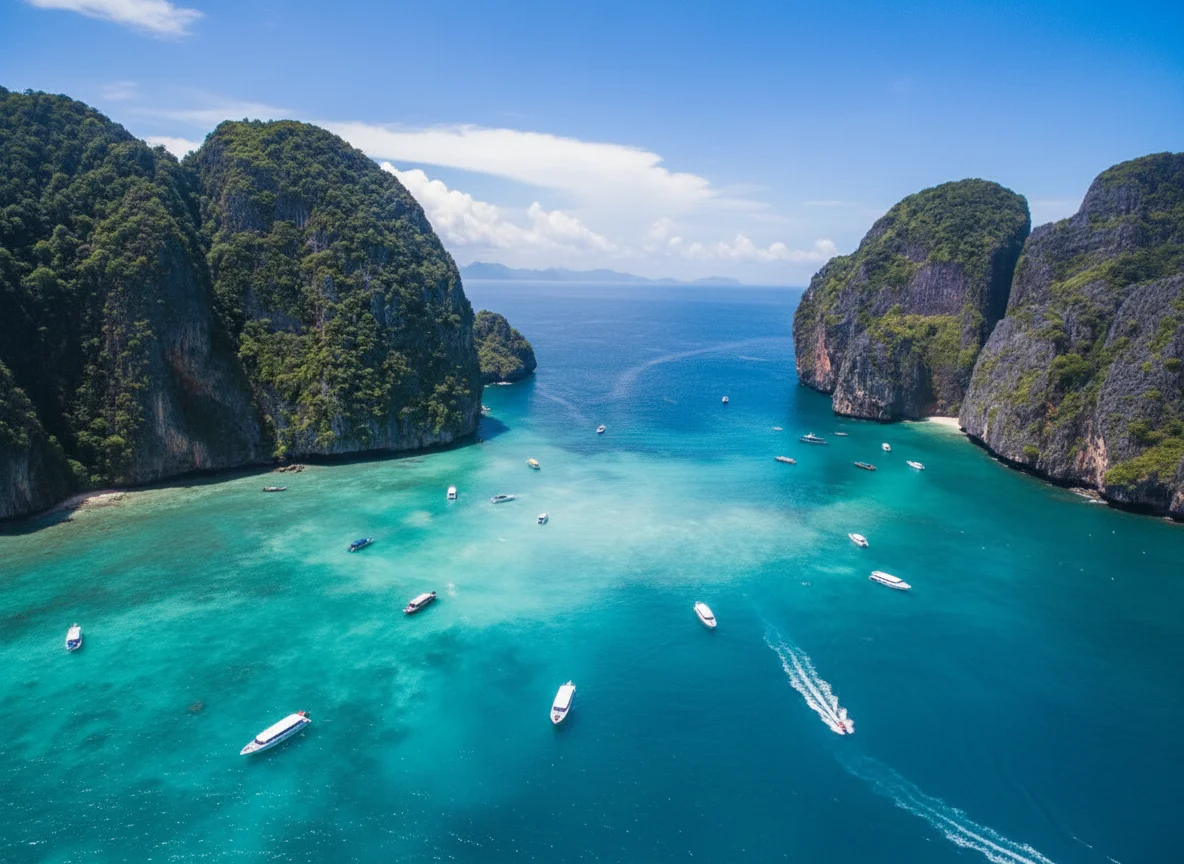
Beyond the beaches, both islands offer a wealth of activities, though their natural landscapes differ. Phuket is a prime destination for active travellers, offering excellent scuba diving opportunities from Chalong Pier and surf lessons for 800 THB per hour during the low season. The island’s interior features the Khao Phra Thaeo National Park, where you can hike through untouched rainforest and visit local waterfalls. Cultural landmarks are highly prominent, with the 45-metre marble Big Buddha providing views of the southern coast. For day trips, Phuket acts as a gateway to the dramatic limestone karsts of the Phi Phi Islands, with tours ranging from 1,500 to 3,500 THB.
Koh Samui offers a more laid-back selection of activities centered on its coastal beauty and marine environment. The premier excursion is a speedboat tour to Ang Thong National Marine Park, costing between 2,000 and 2,500 THB, where you can kayak among 42 pristine islands and hike to the spectacular Koh Mae Koh viewpoint. On the main island, natural attractions include the Na Muang Waterfalls, though these can dry up during the hot months of March to May. For cultural sightseeing, the golden 12-metre Big Buddha at Wat Phra Yai is a must-see, connected to the mainland by a scenic causeway.
Comparing the Two Islands
| Koh Samui | Phuket | |
|---|---|---|
| Island Size and Location | 228 square kilometres in the Gulf of Thailand | 540 square kilometres in the southwest Andaman Sea |
| Main Entry Airport | Samui International Airport with a flight monopoly | Phuket International Airport with high-frequency cheap flights |
| Key Signature Landmark | Wat Phra Yai's golden 12-metre Big Buddha on a causeway | Phuket's 45-metre marble hilltop Big Buddha |
| Local Transport Issue | Fixed and highly inflated taxi and songthaew rates | Expensive private taxi and tuk-tuk mafia cartels |
| Ideal Dry Season | December to February with monsoons peaking late from October to December | November to April with monsoons bringing dangerous rip currents from May to October |
| Daily Mid-Range Budget | Around 4,000 THB or eighty-eight pounds ninety pence per day | Around 3,000 to 6,000 THB per day |
| Signature Food Experience | Massaman curry at Jungle Club or local Friday night markets | Hokkien noodles at Mee Ton Poe or Michelin-starred dining at PRU |
| Best Suited For | Couples and luxury seekers who prefer a structured holiday environment | Digital nomads, retirees, surfers, and divers needing extensive infrastructure |
The Final Verdict
If you are looking for a romantic couple's escape or a highly structured family holiday where you can easily navigate a single 51-kilometre ring road, Koh Samui is your best option. This choice is justified because Samui provides a slower, more traditional coastal pace on its northern shores, such as Maenam Beach, which contrasts with its commercialised hubs. If you are a digital nomad, scuba diver, or budget-conscious traveller who requires extensive transport links and low-cost flights from Bangkok starting at 1,200 THB, you should choose Phuket instead. This decision is grounded in Phuket's vastly superior infrastructure, which includes the Phuket Smart Bus with its 100 THB flat fare, and easier access to excellent dive sites from Chalong Pier.