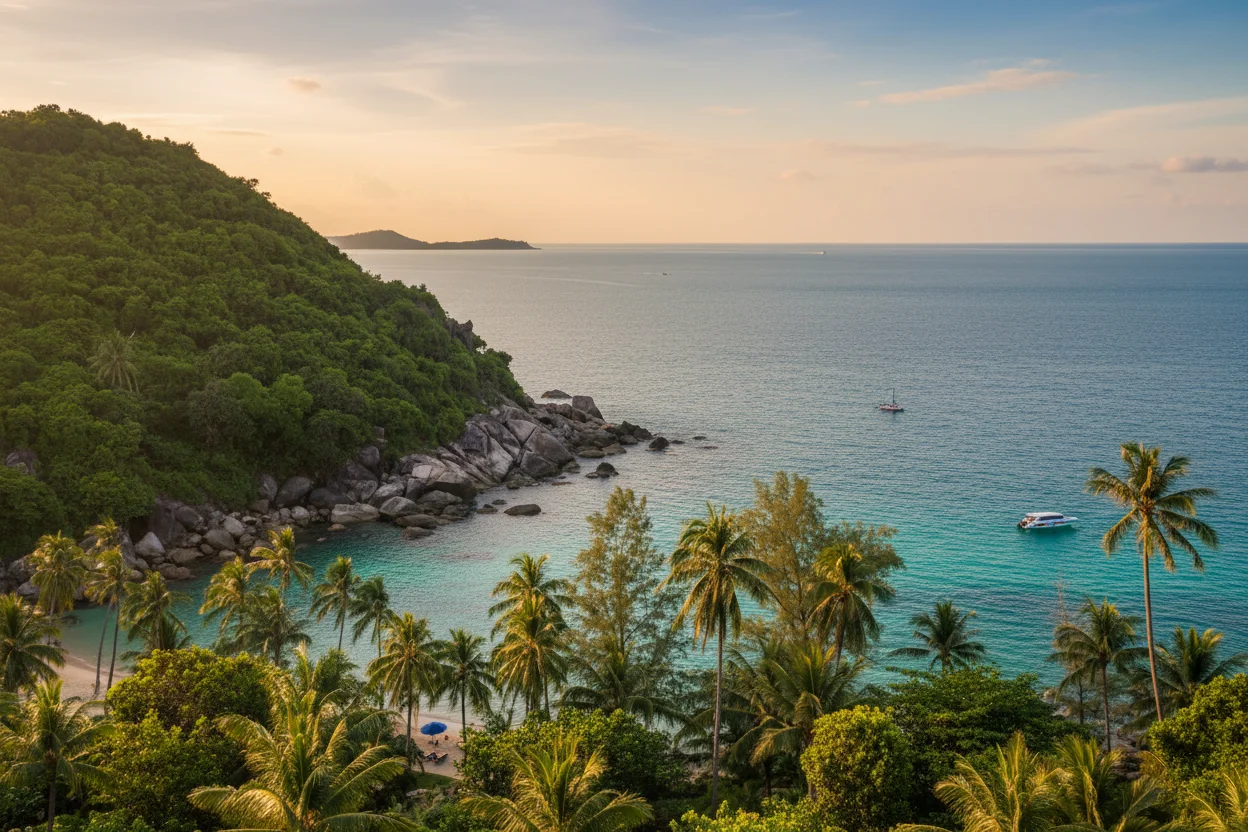
Coconut farming shaped this island long before the boutique resorts arrived, leaving a legacy of deep-rooted agricultural pragmatism that still underpins the local mindset.
Most guides paint the palm-fringed shores merely as a backdrop for wellness retreats, completely missing how the original families still control the land and tempo of life here from their hillside plantations. You feel this enduring, quiet authority the moment you step away from the beach clubs and into the shaded interior.
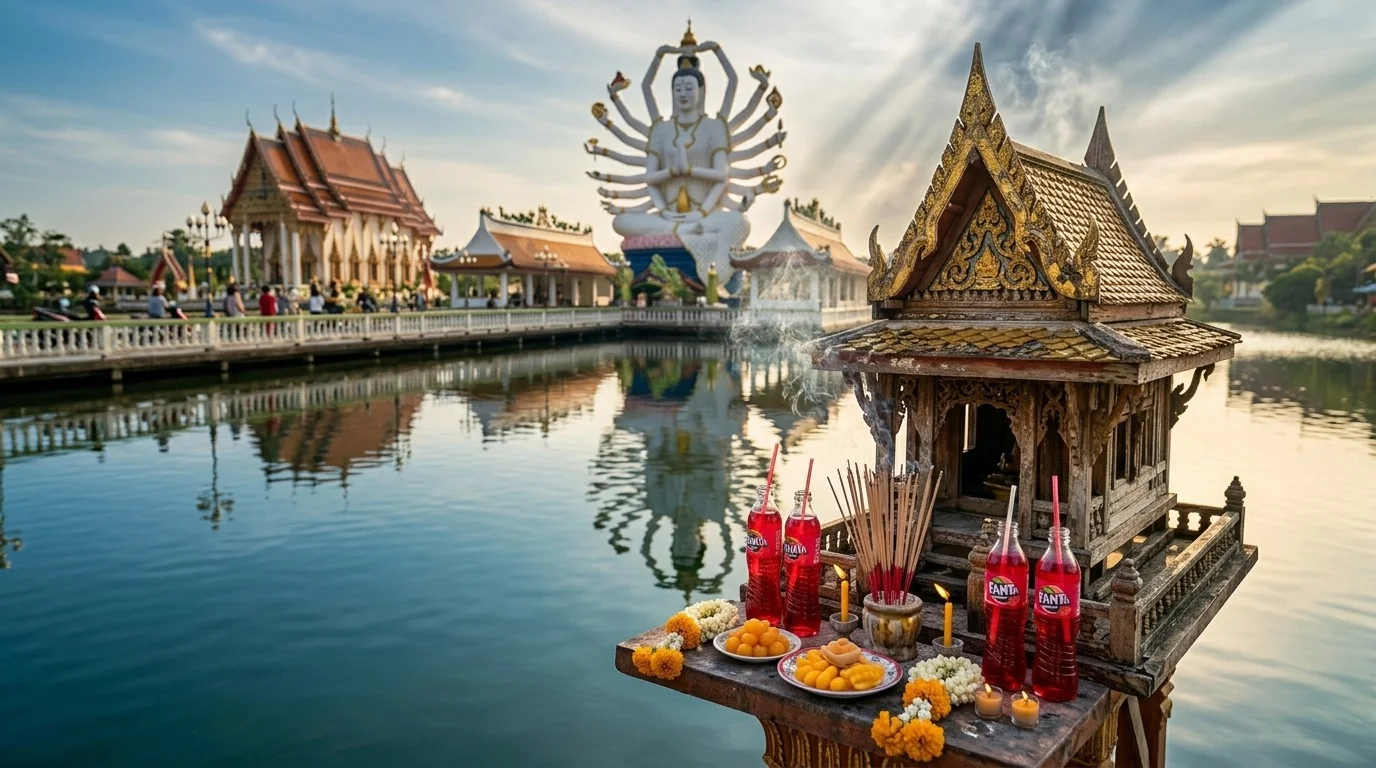
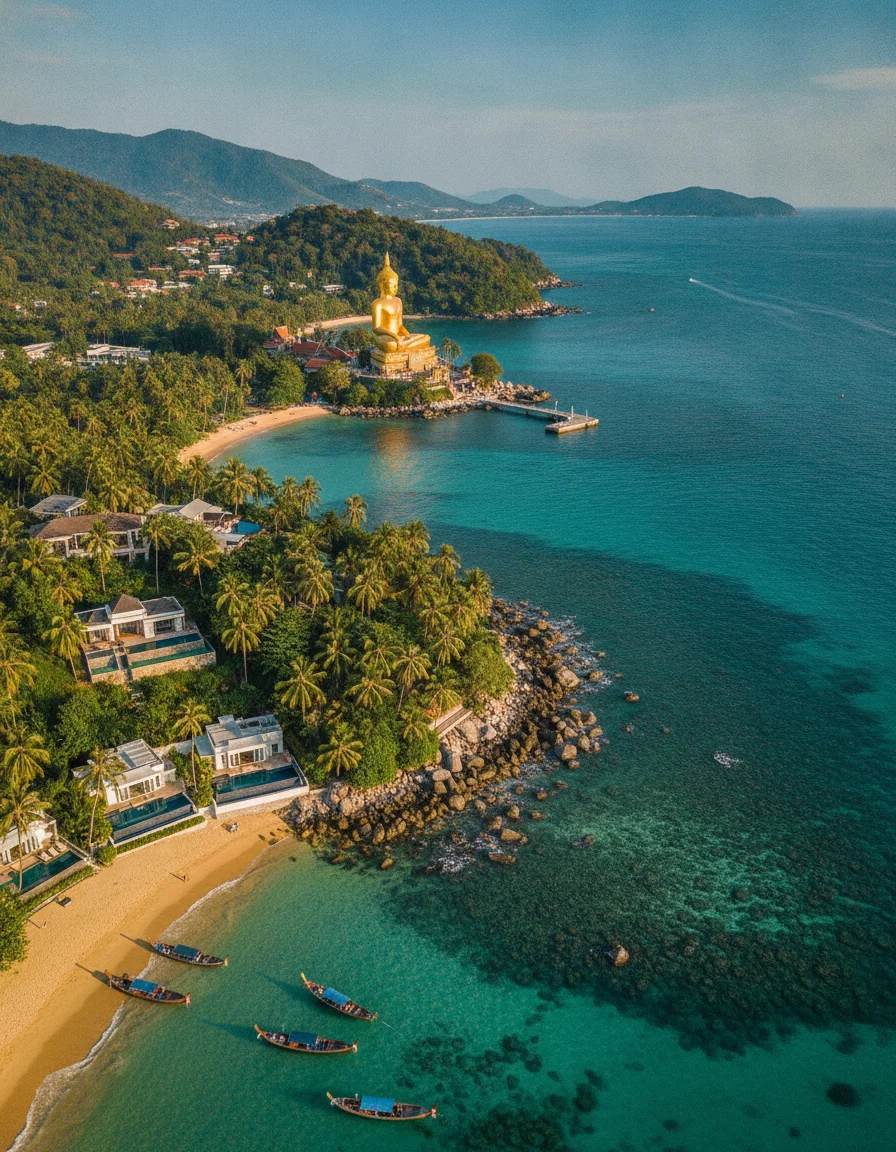
Faith here operates with a distinct island pragmatism, seamlessly blending Theravada Buddhism with animist sea beliefs. You will see fishermen offering strawberry Fanta and lit cigarettes to spirit houses before setting sail. It startles visitors expecting silent meditation. Wat Plai Laem (free entry, though a 100 THB / £2.20 donation is customary) showcases this syncretism perfectly, dominated by a towering Guanyin statue that reflects the deep Hainanese Chinese heritage. Skip the overcrowded Big Buddha. Instead, visit Wat Khunaram (free, donations welcome), where the mummified monk Luang Pho Daeng sits in Ray-Ban sunglasses. These shades were added not for style, but to respectfully hide his deteriorating eye sockets from devotees. It is a profoundly unsentimental approach to mortality that captures the local religious outlook perfectly. Monks still walk the main ring road at dawn for alms, though these days they often navigate around delivery scooters.
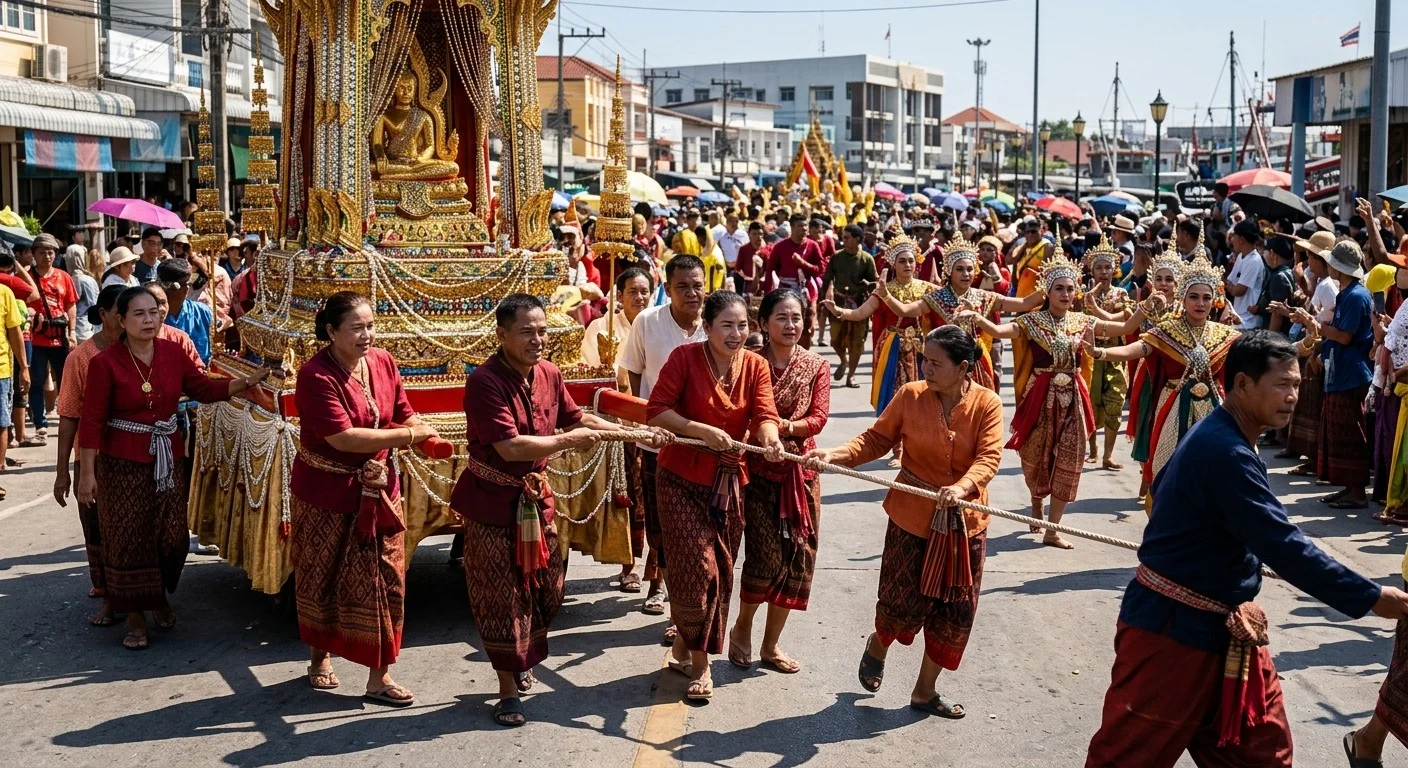
The calendar dances to a rhythm heavily influenced by the monsoon and maritime heritage. Songkran arrives in April with the expected nationwide water fights, but here it takes on a beach-party intensity that completely paralyses the Chaweng ring road for three days. If you need to catch a flight during this time, leave hours early and expect to arrive soaked. Far more revealing is the local Chak Phra festival in October, marking the end of Buddhist Lent. While the rest of Thailand prepares to float offerings on rivers for Loy Krathong, locals here drag elaborately decorated temple carts through the streets and host longboat races at Nathon pier. Most guides skip the sheer volume of southern Thai folk music, known as Nora, that accompanies these processions. The relentless, percussive rhythm goes on for hours, turning the quiet administrative capital into a massive impromptu street dance. Traffic crawls to a halt. Government offices close. September brings the Tenth Lunar Month Festival, a deeply southern tradition where families offer elaborately shaped sweets to their ancestors. Markets overflow with these treats, making it a brilliant time for curious eaters to explore.
TRADITIONS & CUSTOMS
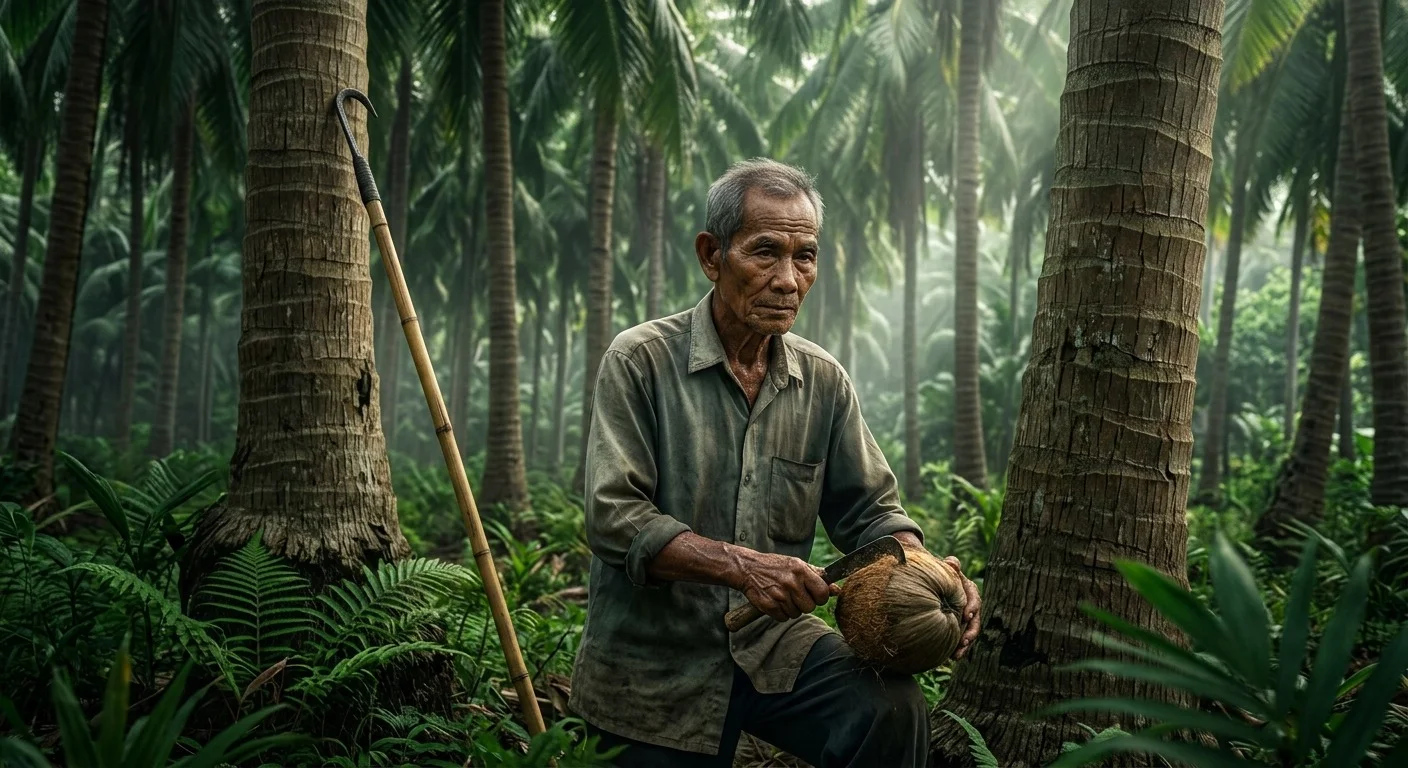
Island society operates on a strict hierarchy of respect that the casual beachwear culture completely obscures. Locals have a deep-seated aversion to losing face. Public confrontations are disastrous. The most common mistake British visitors make is treating hospitality staff with a matey, overly familiar sarcasm that simply does not translate and causes quiet embarrassment. Southern Thais are generally more direct than their northern counterparts. This trait can feel abrupt to outsiders until you realise it is a sign of practical efficiency rather than rudeness. When eating together, the most senior person at the table always pays. Attempting to split the bill Dutch-style causes immense social awkwardness. A strictly local custom revolves around the coconut harvest. You must never step over a coconut picker's bamboo pole, as it is considered deeply disrespectful to their livelihood. Dress codes matter immensely off the sand. Walking bare-chested or in a bikini beyond the immediate shoreline is viewed with intense, silent disapproval.
Carved coconut shell artistry is the genuine heritage craft of this island, evolving from simple utensils into incredibly intricate household items. You can find authentic artisans working in the villages around Lipa Noi, where a hand-carved coconut wood bowl takes days to produce and costs around 800 THB (£17.50). The Friday night walking street in Bophut is flooded with mass-produced wooden elephants imported from factories on the mainland. Look instead for the slightly irregular, darker coconut wood pieces sold by older vendors. The imperfections guarantee you are buying island heritage rather than a factory souvenir.
Southern Thai food is fiercely spicy, but the sea-urchin salad (yam hoi men) specifically defines coastal identity here. Eating is an inherently communal act designed to balance flavours and social bonds simultaneously. You never order an individual dish. Instead, a table shares a fiery sour curry heavily tempered by sweet, freshly scraped coconut meat from the family plantation. The night markets in Nathon serve as the island's true living rooms. Families gather here not just to eat, but to reaffirm community ties over skewers of grilled squid. Sharing food is the ultimate expression of trust.
LANGUAGE & COMMUNICATION
The southern dialect spoken here is notoriously fast and heavily clipped, often dropping the final syllables of words entirely. A simple nod and a soft smile go further than stumbling through complex sentences. Using the southern greeting "Pan prue bang?" (How are things?) instead of the standard "Sawasdee" will instantly break the ice and earn you genuine, surprised smiles. A basic, two-hour introductory Thai language class locally costs around 600 THB (£13).
Never touch anyone on the head, as it is considered the most sacred part of the body. Always remove your shoes before entering a local home or any small, family-run shop, even if the owner waves you inside. Pointing with your feet is highly offensive. Tuck them beneath you when sitting on the floor. Specifically on this island, never complain about the erratic schedule of the local songthaews (shared taxis). The drivers hold immense local clout, and a public argument will leave you stranded. Finally, return a bowed greeting to equals, but simply smile at children.