Non-Immigrant OA Retirement Visa
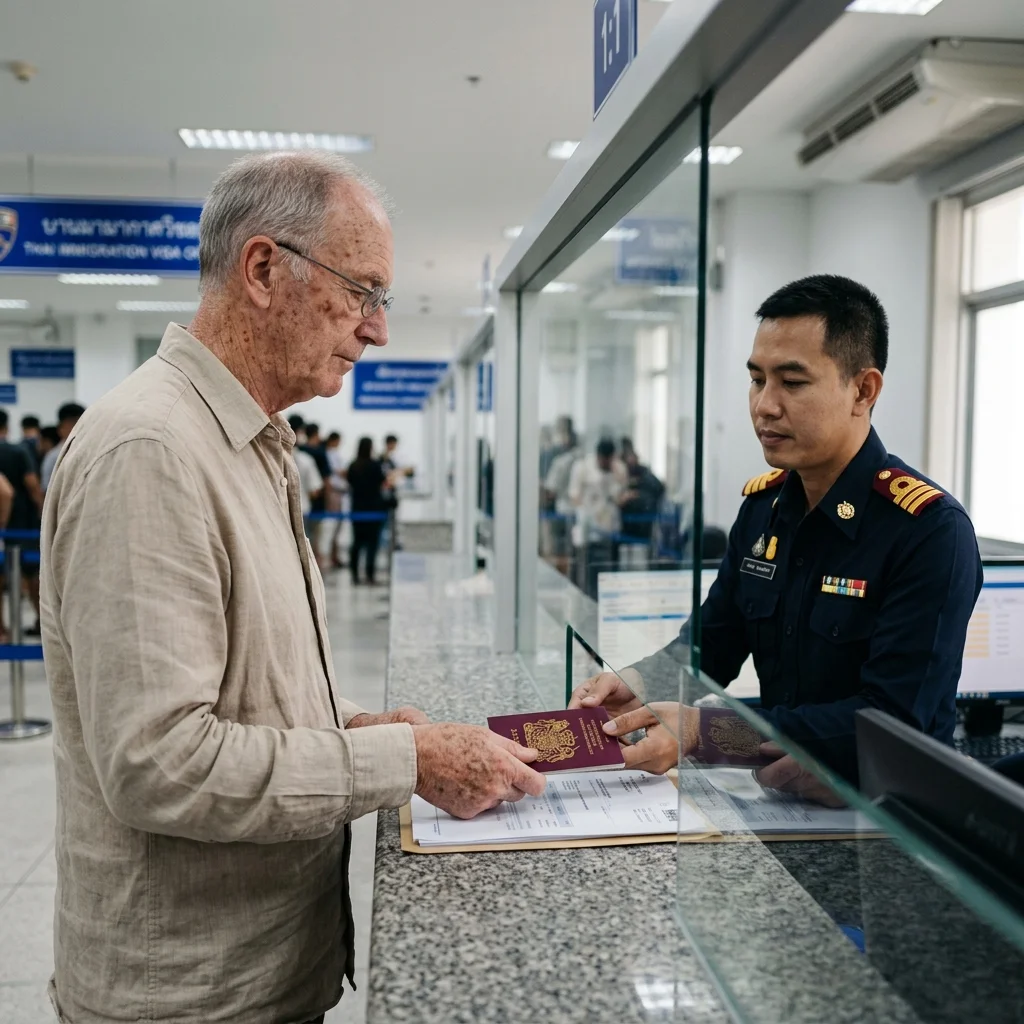
This guide breaks down exactly how to secure and maintain a Non-Immigrant OA visa, helping you choose the right financial proof method and navigate the strict documentary requirements from the UK. It details the precise health insurance mandates, criminal record checks, and the ongoing obligations like 90-day reporting. This visa is exclusively for financially independent retirees aged 50 and above who intend to reside in Thailand without working. It is not suitable for digital nomads, investors, or those under 50.

Age and Initial Eligibility Requirements
You must be at least 50 years old on the day you submit your application to qualify for the Non-Immigrant OA visa. Age verification is strictly enforced. The Thai Embassy in London will check your date of birth against your passport, which must have at least 18 months of validity remaining from your planned date of travel. Spouses accompanying the primary applicant must also meet the 50-year age requirement to apply for their own OA visa. If your spouse is under 50, they cannot apply for an OA visa. They must instead apply for a Non-Immigrant O (Dependent) visa linked to your primary retirement status. The primary applicant is expressly forbidden from undertaking any form of employment in Thailand. This restriction covers unpaid volunteer work, consulting for UK companies, and managing online businesses while physically present in the Kingdom. Breach of this condition leads to immediate visa cancellation and deportation. Your eligibility rests entirely on proving you have the means to support yourself without entering the local labour market. Establish your baseline eligibility before paying any non-refundable embassy fees.
| Applicant Type | Minimum Age | Employment Status | Visa Category |
|---|---|---|---|
| Primary Applicant | 50 years old | Strictly prohibited | Non-Immigrant OA |
| Dependent Spouse (Over 50) | 50 years old | Strictly prohibited | Non-Immigrant OA |
| Dependent Spouse (Under 50) | No minimum | Strictly prohibited | Non-Immigrant O (Dependent) |
| Dependent Children | Under 20 years old | Strictly prohibited | Non-Immigrant O (Dependent) |
The Financial Proof Options and Seasoning Rules
Sponsored
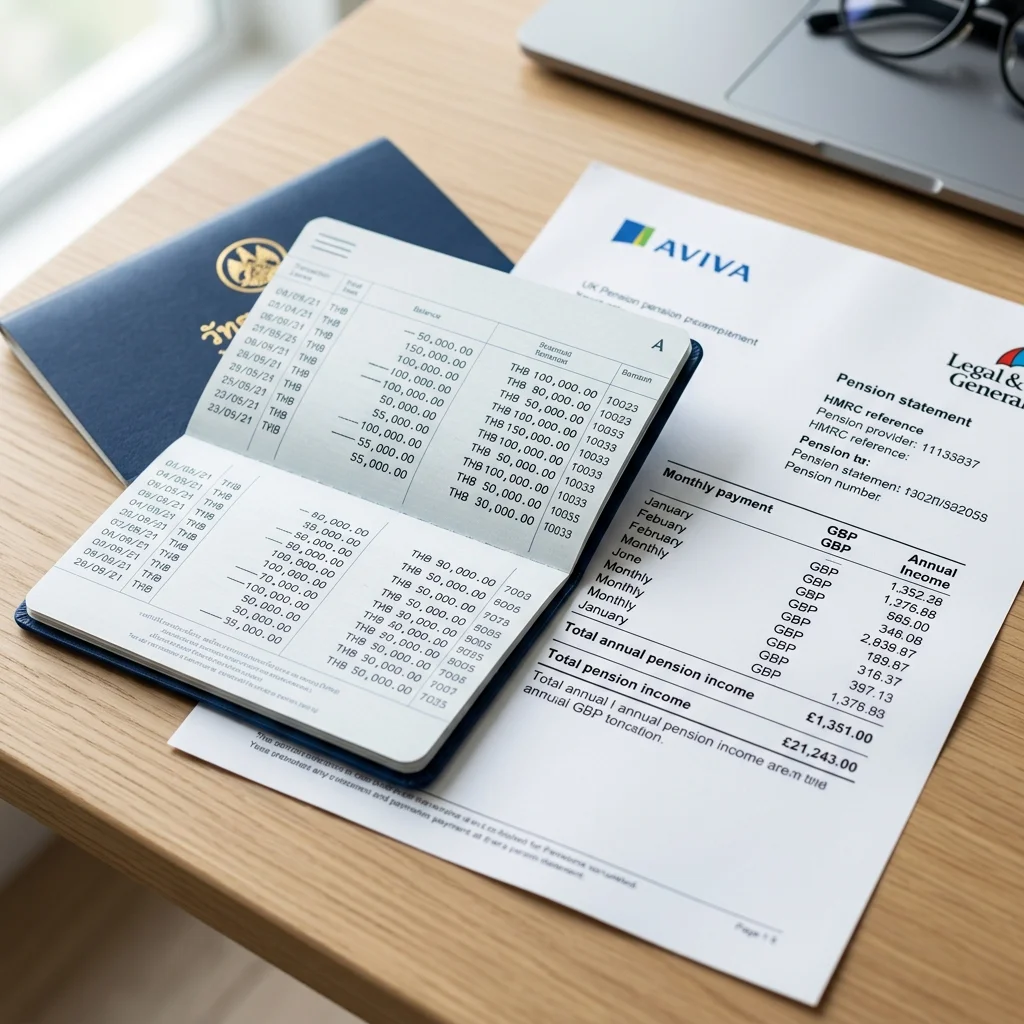
Thai immigration law mandates that you prove sufficient financial resources through one of two strict pathways. You can deposit 800,000 THB (£17,750) into a Thai bank account, or you can demonstrate a guaranteed monthly income of at least 65,000 THB (£1,440) from a UK pension. A combination of both is no longer reliably accepted by all immigration offices. Selecting one distinct route is highly advised. The bank deposit method carries a strict seasoning rule. Your 800,000 THB must clear into your Thai bank account and remain untouched for at least two months prior to your initial application. Furthermore, it must stay at or above that threshold for three months after your visa is granted. Only then can the balance drop, but it must never fall below 400,000 THB (£8,875) at any point during the visa year. If you choose the monthly income route, you must obtain an annual income letter from the British Embassy in Bangkok or provide 12 months of UK bank statements showing the exact pension deposits. Choose the financial route you can sustain permanently, as switching methods during your annual renewal often triggers intense scrutiny.
Compare Thailand visa services against applying directly. Discover typical agent fees, processing times, red flags, and when UK nationals should use them.
| Financial Route | Minimum Requirement | Seasoning Rule | Post-Approval Requirement |
|---|---|---|---|
| Thai Bank Deposit | 800,000 THB (£17,750) | 2 months before application | Maintain 800k for 3 months, never drop below 400k |
| Monthly Income | 65,000 THB (£1,440) / month | 12 months of consistent deposits | Maintain ongoing monthly transfers |
| Combined Method | 800,000 THB equivalent total | Varies heavily by local office | Not recommended due to inconsistent enforcement |
| Embassy Letter | Proof of 65,000 THB monthly | Verified by British Embassy | Must be updated annually |
Required Documents for UK Applicants
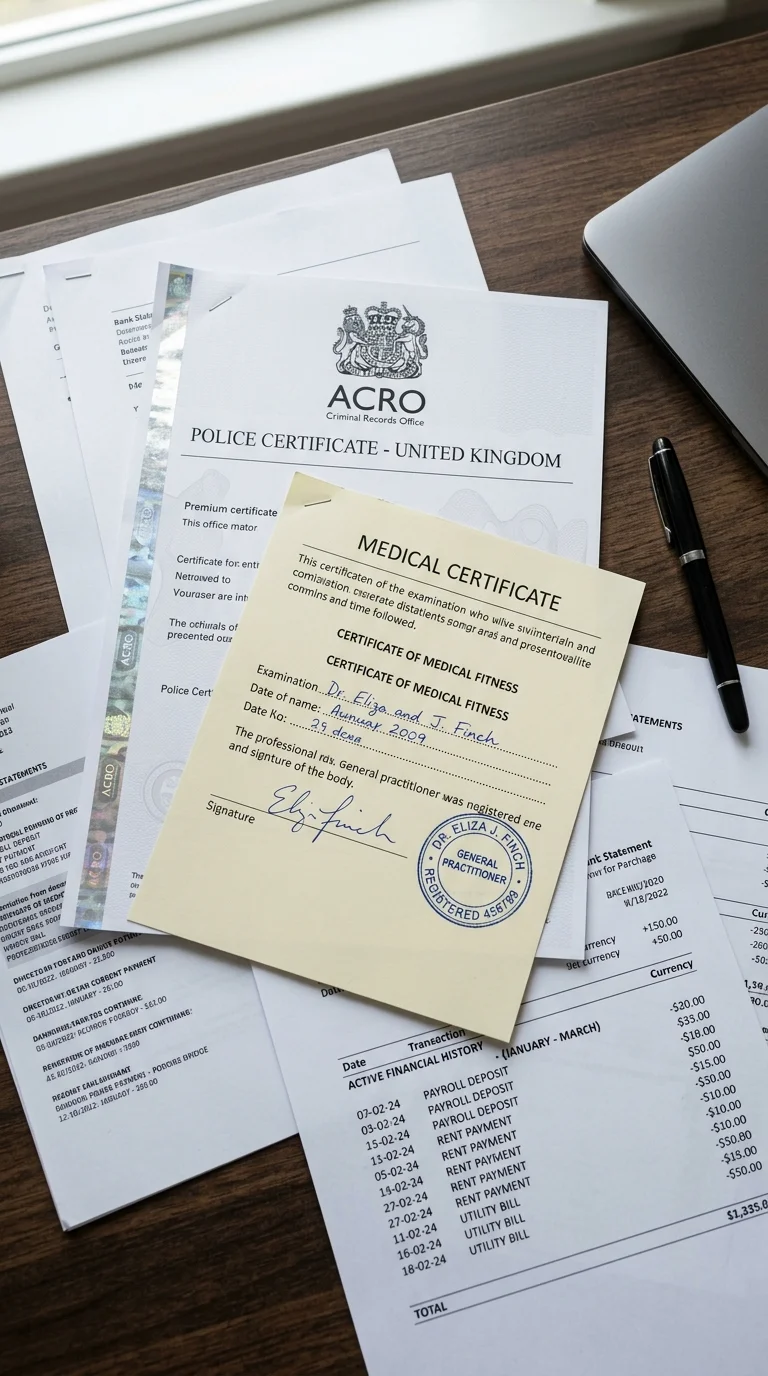
Securing the Non-Immigrant OA visa from the UK requires a specific portfolio of legalised documents that go far beyond a standard tourist application. You must obtain an ACRO Police Certificate proving you have no criminal record. This certificate must be issued within three months of your application date. You also need a medical certificate from a UK doctor confirming you do not suffer from leprosy, tuberculosis, drug addiction, elephantiasis, or third-stage syphilis. Getting a UK GP to sign this specific Thai Ministry of Public Health form can be difficult. Many applicants have to use private clinics in London or regional private doctors who charge up to £150 for the service. Both the ACRO certificate and the medical form must be notarised by a UK solicitor and then legalised by the Foreign, Commonwealth & Development Office (FCDO) before the Thai Embassy will accept them. Your financial evidence, whether pension statements or bank letters, must also carry original signatures or branch stamps. Presenting uncertified internet banking printouts will result in an automatic rejection. Begin gathering these documents at least eight weeks before your intended application date to account for FCDO legalisation delays.
| Document Type | Issuing Authority | Validity Period | Legalisation Required |
|---|---|---|---|
| Police Clearance | ACRO Criminal Records Office | 3 months from issue date | Yes (Solicitor + FCDO) |
| Medical Certificate | UK Registered Doctor / GP | 3 months from issue date | Yes (Solicitor + FCDO) |
| Bank Statements | UK or Thai Bank | Recent 30 days | Must be stamped by branch |
| Passport | HM Passport Office | 18 months minimum validity | No |
The Application Process: London Embassy Versus In-Country Conversion
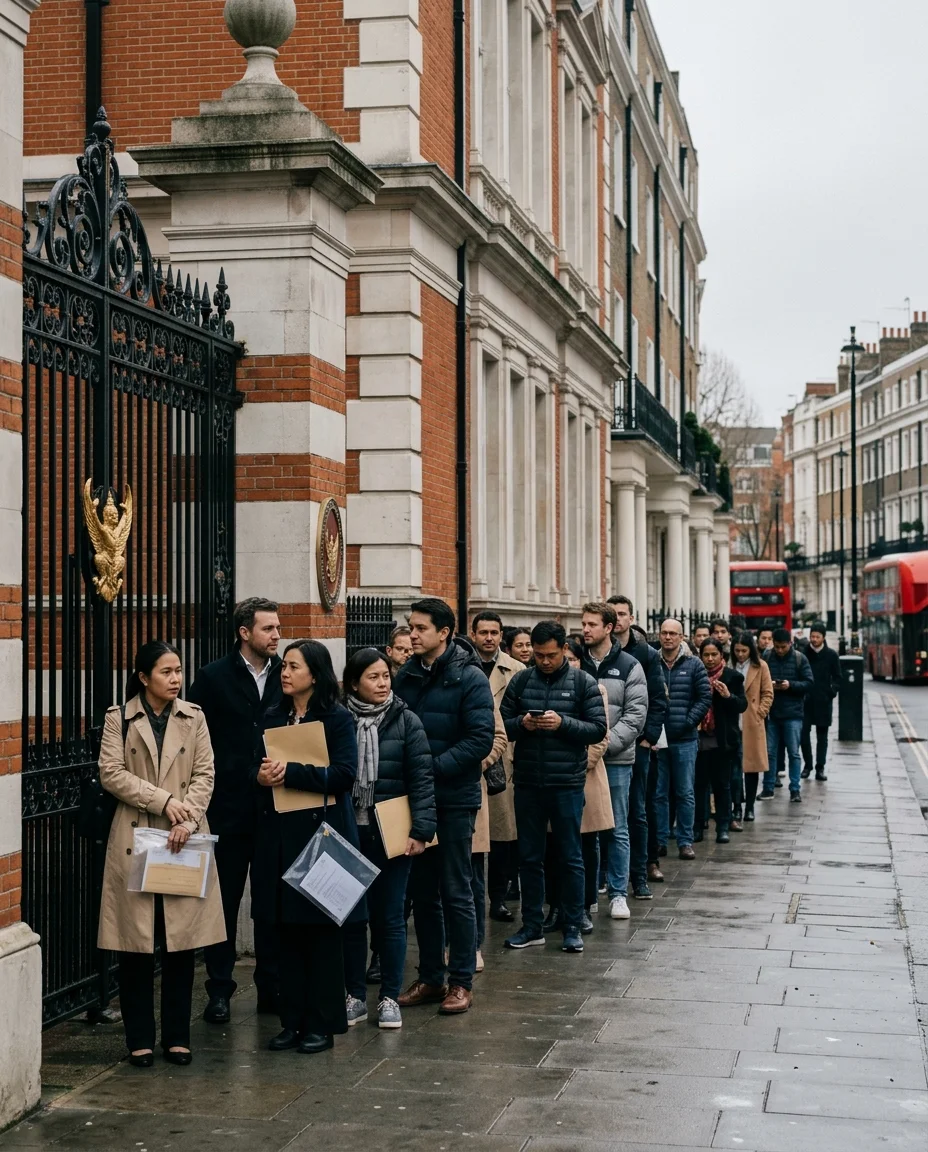
You have two distinct pathways to secure your retirement status: applying directly through the Thai Embassy in London or entering Thailand on a Tourist Visa and converting it at a local immigration office. Applying from the UK grants you the full Non-Immigrant OA visa before you fly. This route requires submitting all documents electronically via the Thai E-Visa portal, waiting up to four weeks for processing, and arriving with your retirement status fully active. However, the UK route requires the complex FCDO legalisation of your medical and police checks. Alternatively, you can enter Thailand on a standard 60-day Tourist Visa or 30-day visa exemption. Once in-country, you open a Thai bank account, deposit your 800,000 THB, wait the mandatory two-month seasoning period, and apply for a Non-Immigrant O (Retirement) visa at offices like Chaeng Watthana in Bangkok. This in-country route bypasses the UK police check and FCDO legalisation requirements entirely. It does, however, require precise timing to ensure your initial entry stamp does not expire before the seasoning period completes. Assess your willingness to handle legalisation paperwork in the UK against the pressure of securing a Thai bank account quickly upon arrival.
| Application Route | Where to Apply | Police & Medical Checks | Processing Time |
|---|---|---|---|
| UK Application (OA Visa) | Thai E-Visa Portal (London Embassy) | Mandatory, FCDO Legalised | 2 to 4 weeks |
| In-Country Conversion (O Visa) | Thai Immigration Office | Not required | 4 to 6 weeks |
| Visa Agent Assisted | Thai Immigration Office | Not required | Fast-tracked (1 to 2 weeks) |
| Consulate Application | Neighbouring Country (e.g., Laos) | Rarely required | 2 to 3 days |
Mandatory Health Insurance Requirements
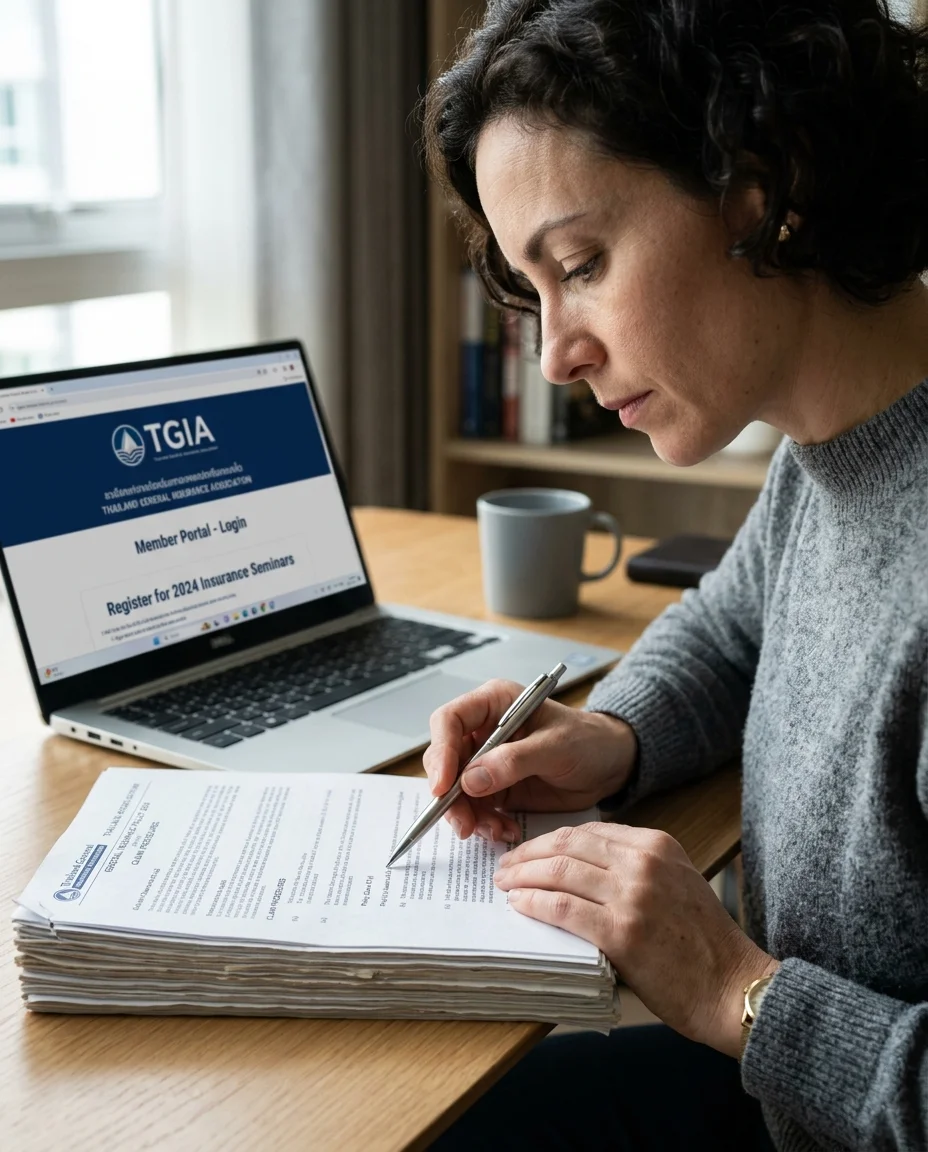
The Thai government enforces strict health insurance mandates specifically for the Non-Immigrant OA visa that do not apply to the in-country Non-Immigrant O retirement route. If you hold an OA visa, you must maintain an active health insurance policy that covers at least 3,000,000 THB (£66,600) or $100,000 USD in medical expenses per policy year. This coverage must specifically include treatment for COVID-19. The policy must be purchased from an approved provider listed on the Thai General Insurance Association (TGIA) website, or from a foreign provider if accompanied by the official Foreign Insurance Certificate signed by the insurer. Premiums for this level of cover increase dramatically as you age. A 60-year-old UK national might pay 40,000 THB (£885) annually, while a 75-year-old could face premiums exceeding 120,000 THB (£2,660). Crucially, this insurance must cover the entire duration of your permitted stay. If your insurance policy expires after 10 months, the immigration officer at the airport will only stamp you into the country for those 10 months, regardless of your visa's validity. Secure your insurance from an approved provider before submitting your application to avoid shortened entry stamps.
| Insurance Origin | Minimum Coverage | Required Documentation | Approval Status |
|---|---|---|---|
| Thai Provider (TGIA Approved) | 3,000,000 THB / $100,000 USD | Standard policy documents | Automatically accepted |
| Foreign Provider (UK Based) | 3,000,000 THB / $100,000 USD | Signed Foreign Insurance Certificate | Accepted if form is correct |
| Foreign Provider (Uncertified) | 3,000,000 THB / $100,000 USD | Standard policy documents | Rejected at immigration |
| No Insurance | N/A | N/A | Visa application denied |
Maintaining the Visa: 90-Day Reports and Renewals
Securing the visa is a one-time event, but maintaining it requires strict ongoing compliance with the Thai Immigration Bureau. Every 90 days that you remain continuously in Thailand, you must file a notification of your residential address. This 90-day report, known as a TM47, can be completed in person at your local immigration office, by mail, or via the official online portal. Leaving the country resets the 90-day clock; your next report will be due 90 days from the date of your re-entry. Your actual visa extension occurs annually. For this, you must present updated financial evidence showing you have maintained the 800,000 THB deposit or the 65,000 THB monthly income. Crucially, the bank balance must not have dipped below 400,000 THB at any point during the year, and must be back at 800,000 THB for at least two months prior to your renewal date. You will also need a fresh bank guarantee letter issued on the exact day you visit immigration. Calendar your 90-day reporting dates and bank seasoning milestones to prevent accidental overstays or financial disqualifications.
| Compliance Task | Frequency | Official Form | Submission Method |
|---|---|---|---|
| Address Notification | Every 90 continuous days | TM47 | Online, In-person, or Mail |
| Annual Visa Extension | Once per year | TM7 | In-person at Immigration |
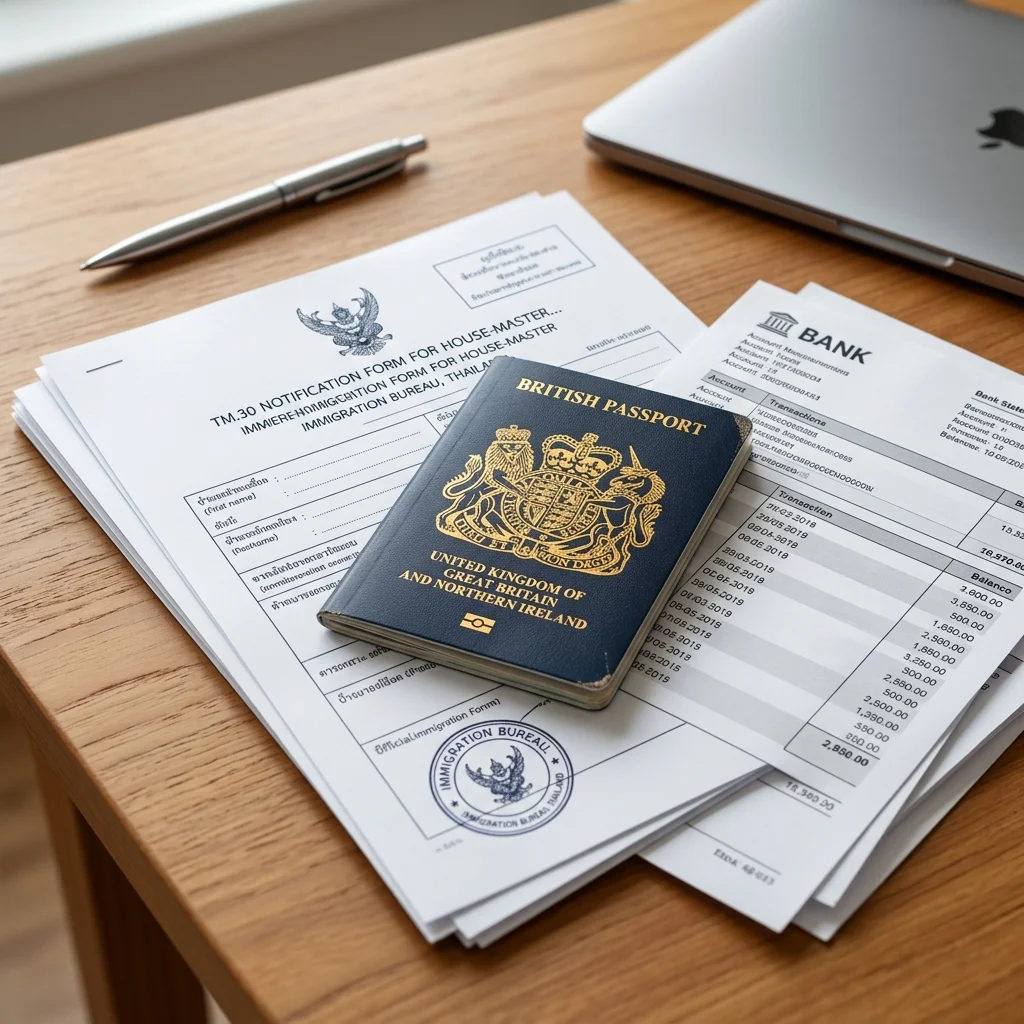
| Address Registration | Within 24h of moving | TM30 | Online or In-person by landlord |
| Re-Entry Permit | Before leaving Thailand | TM8 | In-person at Immigration or Airport |
Costs and Budgeting
Budgeting for a Thai Retirement Visa involves far more than the official embassy fee. The application fee for a multiple-entry Non-Immigrant OA visa at the London Embassy is 5,000 THB (£110). However, the supporting documentation often costs significantly more. Securing an ACRO Police Certificate costs around 2,500 THB (£55), and a private medical certificate can run up to 6,800 THB (£150). FCDO legalisation fees add 1,350 THB (£30) per document, plus solicitor certification fees. Health insurance is the largest variable expense, starting at roughly 40,000 THB (£885) annually for younger retirees but escalating sharply with age. When you renew annually in Thailand, the official extension fee is 1,900 THB (£42). If you use a visa agent to assist with the process in-country, expect to pay between 15,000 and 25,000 THB (£330 to £555) in service fees.
| Item | Cost (THB) | Cost (GBP approx) | Notes |
|---|---|---|---|
| Official OA Visa Fee | 5,000 | £110 | Multiple-entry, paid to London Embassy |
| ACRO Police Certificate | 2,500 | £55 | Valid for 3 months |
| Private Medical Certificate | 6,800 | £150 | Estimated cost from UK private clinic |
| FCDO Legalisation | 1,350 | £30 | Per document, excludes solicitor fees |
| Annual Health Insurance | 40,000+ | £885+ | Varies significantly based on age |
| Annual Extension Fee | 1,900 | £42 | Paid directly to Thai Immigration |
| Visa Agent Fee (Optional) | 20,000 | £440 | Average cost for in-country assistance |
Common Mistakes and How to Avoid Them
1. Failing to maintain the 800,000 THB balance for a full three months after the visa is granted. This results in an automatic rejection when you apply for your annual extension. Leave the funds untouched until day 91, and never let the balance drop below 400,000 THB.
2. Submitting an unapproved foreign health insurance policy without the official Foreign Insurance Certificate. Immigration officers will reject your application or limit your entry stamp if the policy is not certified. Always demand your provider signs the specific Thai General Insurance Association form.
3. Assuming a standard UK GP letter satisfies the medical certificate requirement. Submitting a generic health summary will lead to immediate application refusal at the embassy. You must use the exact medical form prescribed by the Thai Ministry of Public Health.
4. Booking FCDO document legalisation too late in the process. Processing delays at the legalisation office frequently cause applicants to miss their intended flight dates. Submit your police and medical certificates for FCDO legalisation at least six weeks prior to your visa appointment.
Practical Tips
Open your Thai bank account immediately upon arrival if you are converting a tourist visa in-country. Bank policies change frequently, and you need the maximum possible time to clear the two-month seasoning period.
Request a multiple-entry re-entry permit when you secure your annual extension. This prevents your visa from being cancelled if you need to travel back to the UK unexpectedly.
Use a dedicated currency transfer service rather than a standard bank wire when moving your 800,000 THB. You will secure a significantly better exchange rate and receive official transfer receipts required by immigration.
Set calendar reminders for your 90-day reports two weeks before the due date. The online reporting system is prone to outages, and early reminders give you time to visit the immigration office in person if necessary.
Photocopy every page of your passport, including all entry stamps and departure cards. Thai immigration requires physical copies of your complete travel history during every annual renewal.
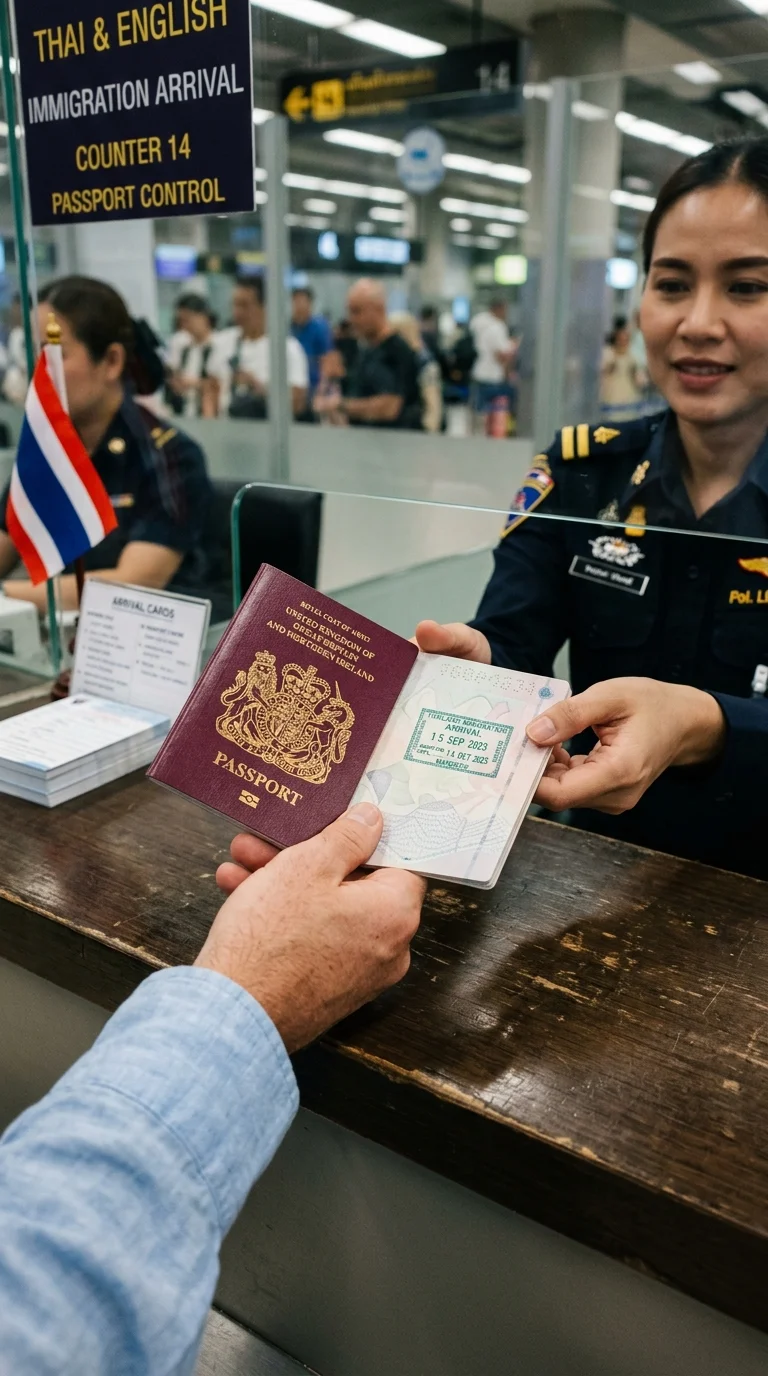
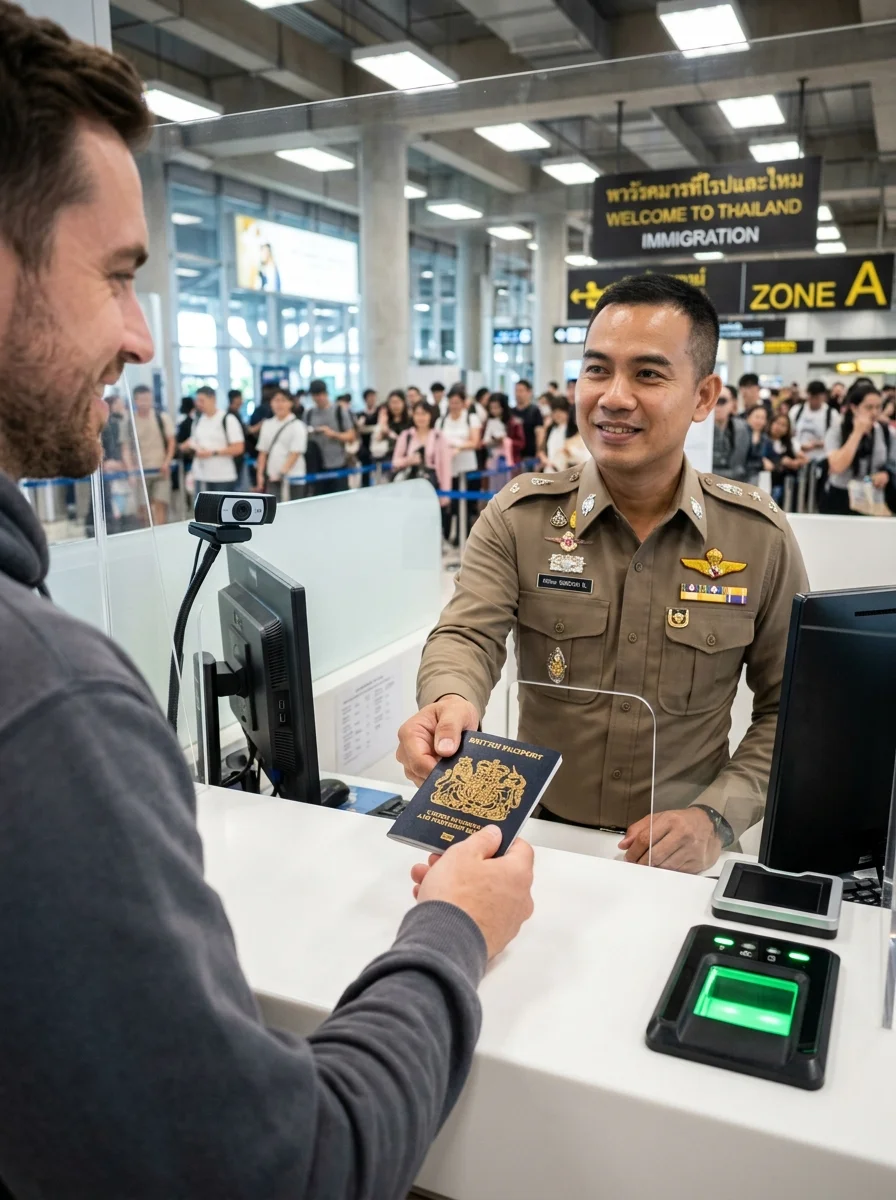
Carry your medical insurance certificate with you when passing through Thai border control. Immigration officers frequently demand proof of coverage before stamping your passport, even if you hold a valid OA visa.
Register your residential address using the TM30 system within 24 hours of moving into a new property. Failing to log your address will block your ability to file 90-day reports or renew your visa.
[DISCLAIMER: Visa rules and fees are subject to change. Always verify current requirements with the official Thai Immigration Bureau at immigration.go.th or the Royal Thai Embassy before applying.]
Quick Reference Guide
| Item | Detail | Notes |
|---|---|---|
| Visa Type | Non-Immigrant OA (Retirement) | For retirees aged 50 and over |
| Maximum Initial Stay | 1 Year | Multiple entry permitted |
| Financial Requirement | 800,000 THB or 65,000 THB/month | Bank balance requires seasoning |
| Official Fee | 5,000 THB (£110) | Paid at the London Embassy |
| Processing Time | 2 to 4 weeks | Excludes UK document legalisation time |
| Extension Options | Annual renewals indefinitely | Requires updated financial proof |
| Health Insurance | Mandatory | Minimum 3,000,000 THB coverage |
| Reporting Requirement | Every 90 days | Required if staying continuously |