Internet & WiFi in Thailand
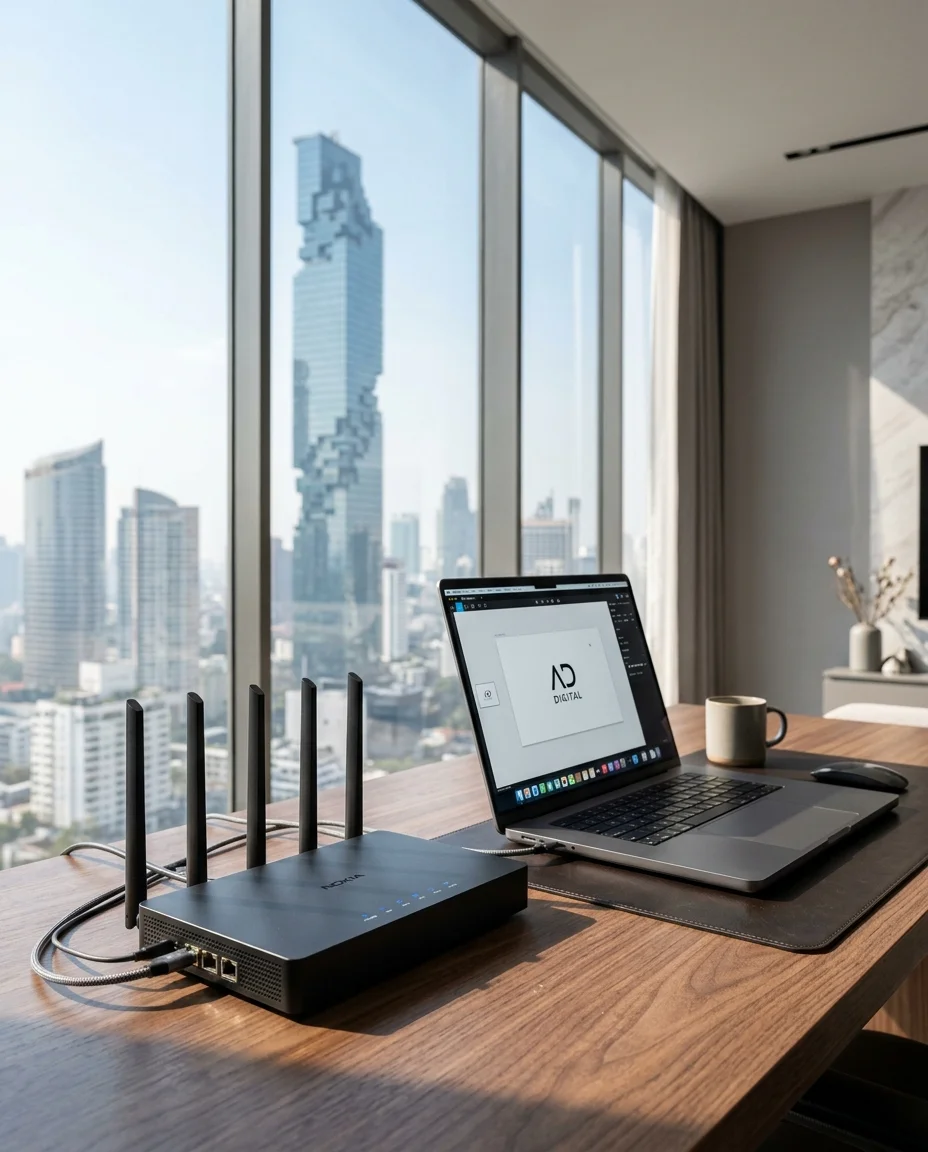
Thailand’s home fibre broadband consistently ranks among the top ten globally for speed, delivering gigabit connections for under 1,000 THB (£22) a month. Securing this infrastructure as a UK national requires navigating specific visa documentation and choosing the right provider for your exact location.
This guide details exactly how to establish reliable internet access across Thailand, from setting up home fibre broadband to securing 5G mobile data. You will learn the exact documentation required by providers like AIS and True, realistic costs, and how connectivity varies between Bangkok, the islands, and rural areas. This is for remote workers, digital nomads, and expats needing stable connections, rather than short-term holidaymakers relying on hotel WiFi.

Home Fibre Broadband Providers and Speeds
Thailand's home broadband market is heavily consolidated, offering exceptional speeds that frequently surpass average UK connections. AIS Fibre, True Online, and NT (National Telecom) dominate the national infrastructure, delivering connections that start at 500 Mbps and scale up to 2 Gbps. True Online and AIS Fibre remain the premier choices for urban expats, providing the most reliable customer service and dedicated English-language support lines. NT serves as the legacy state provider, which is often the only viable option in deep rural provinces but is prone to slower repair times. For a standard 1 Gbps / 500 Mbps package, you will pay between 599 THB (£13) and 899 THB (£20) per month. Most contracts lock you in for 12 or 24 months, with early cancellation incurring penalty fees equivalent to the remaining months or the original equipment costs. Routers are universally provided free of charge on loan. Some premium packages bundle mesh WiFi pods, which are essential for penetrating the thick concrete walls common in Thai apartment construction. Choose AIS or True if you live in a major city or expat hub, as their English-speaking technical support teams resolve localised faults rapidly. Always request an English-language contract and verify if your apartment is hardwired for AIS or True before signing a lease.
Learn how UK digital nomads can open a Thai bank account on a DTV visa, manage GBP to THB currency transfers, and avoid high ATM fees while living abroad.
| Provider | Best For | Typical 1 Gbps Monthly Cost |
|---|---|---|
| AIS Fibre | Urban expats and smart home setups | 799 THB (£17) |
| True Online | Apartment residents and bundle deals | 799 THB (£17) |
| NT Broadband | Deep rural areas and provincial villages | 599 THB (£13) |
The Setup Process and Visa Requirements
Sponsored
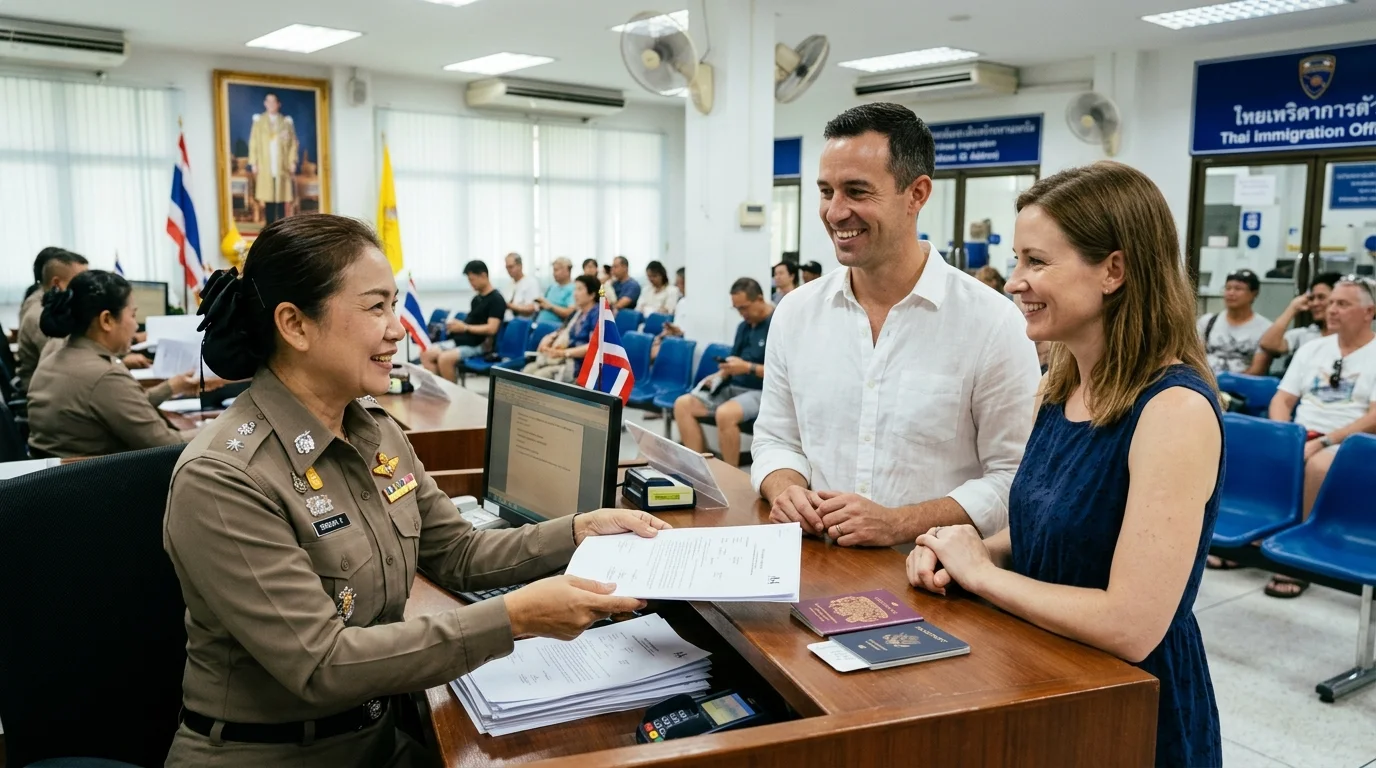
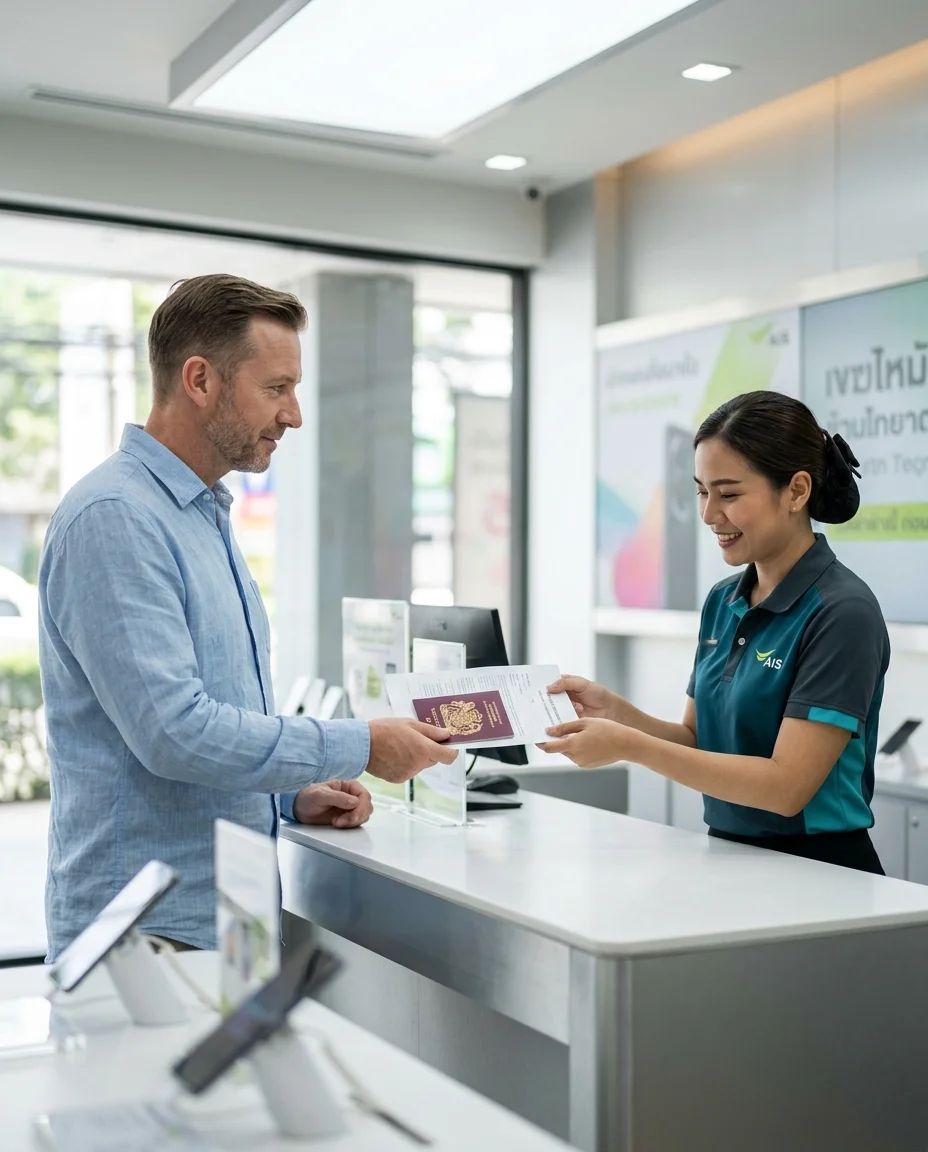
Securing a post-paid home broadband contract as a foreigner requires proving your long-term legal status in the country. Providers will not install fibre for tourists entering on 30-day visa exemptions or holding standard 60-day tourist visas. You must present your original passport and proof of a long-term visa, such as a Non-Immigrant B, O, ED, or the Destination Thailand Visa (DTV). Alongside your visa, you need a signed copy of your lease agreement matching the installation address and occasionally a certificate of residence issued by Thai Immigration. The process requires visiting a provider's official branch in a major shopping mall, because smaller franchise kiosks cannot process foreign applications. Installation is typically rapid, often completed within three to five days of signing the contract. Technicians will run the fibre optic cable directly into your unit, test the speeds, and configure the router on-site. If you lack a long-term visa, your only alternative is asking your Thai landlord to put the contract in their name, which you then pay monthly. Prepare a physical folder containing your passport, long-term visa stamp, signed lease, and landlord's ID copy before visiting a telecom branch.
Mobile Data Options and 5G Coverage
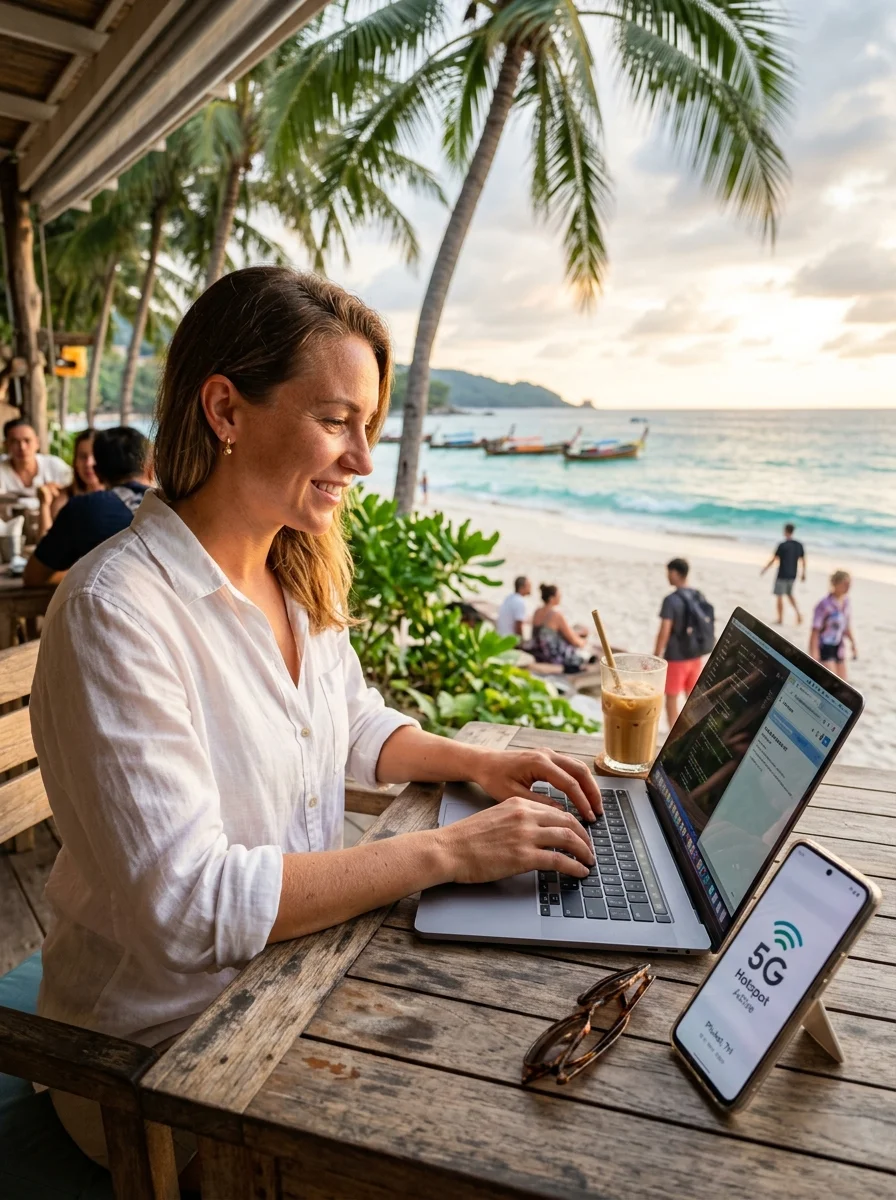
Thailand possesses one of the most extensive 5G networks in Southeast Asia, making mobile tethering a highly viable backup for remote workers. AIS and TrueMove H are the two primary mobile operators, having aggressively expanded their 5G infrastructure far beyond Bangkok and Chiang Mai. You can expect reliable 5G coverage across nearly all provincial capitals, major islands, and established expat hubs. Monthly post-paid mobile plans offering unlimited 5G data at maximum speeds cost approximately 1,199 THB (£26). Cheaper unlimited packages exist around 300 THB (£6.50) but heavily throttle speeds to 15 Mbps or 20 Mbps, which is sufficient for emails but risky for high-definition video calls. Setting up a post-paid mobile contract requires the exact same long-term visa documentation as home broadband. Alternatively, digital nomads waiting for visa approval can purchase pre-paid SIM cards at the airport or any local convenience store. Pre-paid packages are slightly more expensive per gigabyte but require only a passport scan to activate. Purchase an unlimited, unthrottled 5G package from AIS or TrueMove to guarantee a stable backup connection during occasional regional power cuts.
| Mobile Network | 5G Coverage Strength | Unlimited 5G Cost |
|---|---|---|
| AIS | Exceptional nationwide and on major islands | 1,199 THB (£26) |
| TrueMove H | Excellent in Bangkok and major provincial hubs | 1,199 THB (£26) |
| dtac | Good in urban areas, weaker in rural provinces | 1,099 THB (£24) |
Island Reliability versus the Mainland
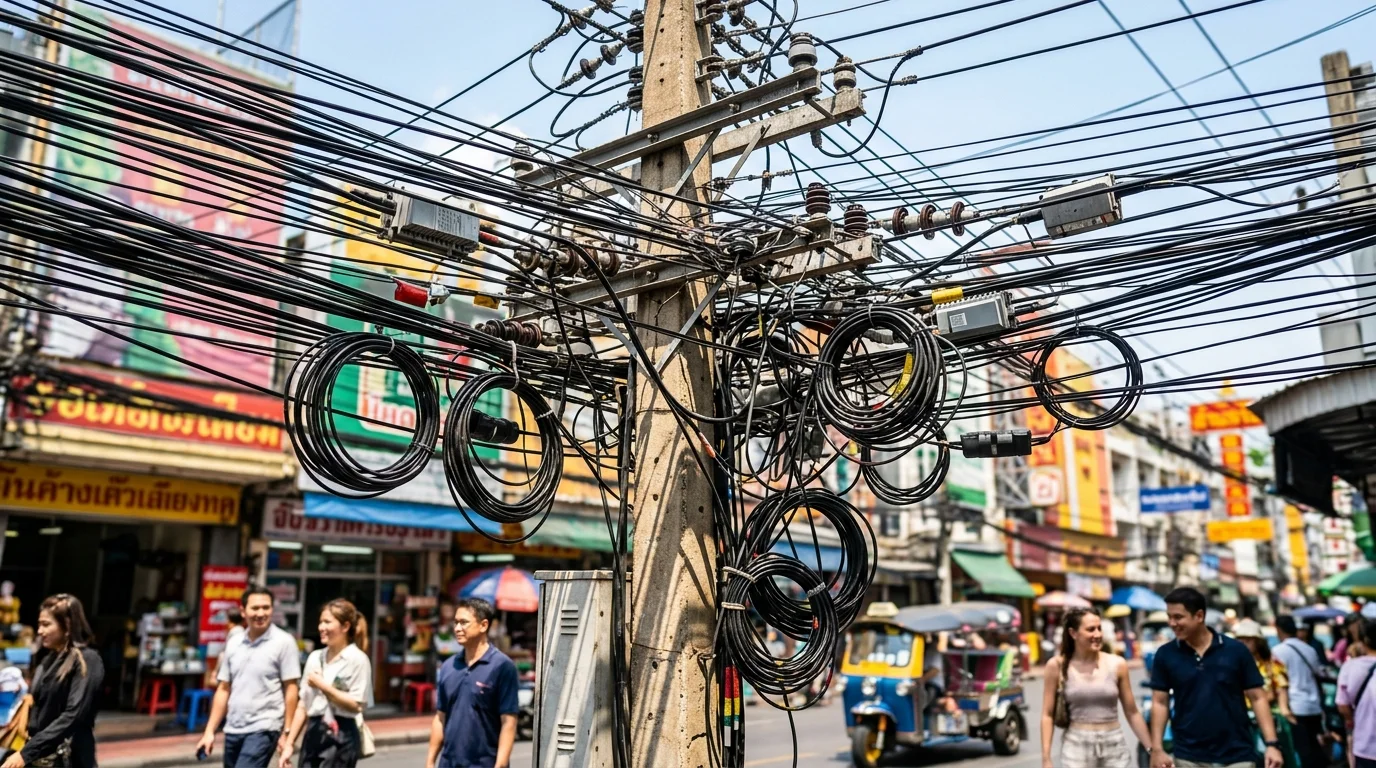
Internet stability varies dramatically depending on whether you are located in central Bangkok, a provincial mainland town, or a southern island. Bangkok, Chiang Mai, and mainland hubs like Hua Hin benefit from redundant underground and secure overhead fibre routing. You will rarely experience outages in these locations unless a severe tropical storm physically damages localised cabling. Conversely, islands like Koh Phangan, Koh Tao, and Koh Lanta face significant infrastructure vulnerabilities. Island internet is heavily reliant on submarine cables and overhead lines that are frequently disrupted by monsoon weather, falling trees, or localised power blackouts. When the island power grid fails, the local cellular towers usually drop offline within an hour as their backup batteries deplete. Remote workers relying on constant connectivity on smaller islands must invest in uninterruptible power supply (UPS) units for their routers. Even on highly developed islands like Phuket or Koh Samui, connection speeds can drop noticeably during peak tourist seasons when the local network becomes heavily congested. If your income depends on uninterrupted video calls, base yourself on the mainland or larger islands with highly developed infrastructure like Phuket.
VPN Usage and Remote Work Security
Maintaining digital security and accessing UK-based corporate networks requires a reliable Virtual Private Network, which operates under specific constraints in Thailand. The use of a VPN is completely legal in Thailand for personal privacy, remote work, and bypassing geographical content restrictions. However, the Thai government actively blocks illegal gambling portals, certain adult content, and websites deemed critical of the state. While a VPN circumvents these local ISP blocks, routing your traffic from Bangkok to London introduces significant physical latency. You can expect ping times to the UK to hover between 200ms and 250ms, which creates a noticeable split-second delay during live video calls. Public WiFi networks in Thai coffee shops, co-working spaces, and airports are heavily targeted by packet-sniffing software, making an always-on VPN essential for digital nomads. To mitigate speed loss, choose a premium VPN provider with dedicated obfuscated servers in Singapore or Hong Kong for general browsing. You should switch to UK servers only when accessing British banking apps or corporate intranets. Install a premium VPN with split-tunneling capabilities on all your devices before leaving the UK, as downloading them locally can sometimes be restricted.
Rural Connectivity and Smaller Towns
Moving away from Thailand's major metropolitan areas and established expat hubs introduces a different set of connectivity challenges. In smaller provincial towns across regions like Isaan or the deep north, internet infrastructure relies heavily on legacy networks. While fibre cables are gradually replacing older copper lines, the rollout is inconsistent outside provincial capitals. National Telecom (NT) is frequently the only provider willing to run cables to isolated village properties, operating as the state-backed safety net for rural internet access. You can still secure decent speeds of around 300 Mbps, but the connection will suffer from higher latency and occasional micro-drops. Repair times in rural areas are noticeably slower than in Bangkok. If a local truck snags an overhead cable on your street, you might wait three days for a technician rather than three hours. Expats building homes in rural Thailand should factor in the cost of erecting their own concrete utility poles to bring the fibre line from the main road to the property. Ensure you maintain a strong 5G mobile backup, as cellular towers in rural farming districts often have less congestion than urban networks.
Costs and Budgeting
Budgeting for internet and connectivity in Thailand is highly predictable, though initial setup costs can catch new arrivals off guard. Your monthly outgoing for a premium 1 Gbps home fibre connection and an unthrottled 5G mobile plan will rarely exceed 2,000 THB (£44). However, when moving into a new apartment, expect to pay a one-time installation or activation fee, alongside a potential security deposit for the router if your visa status is deemed temporary. Utilities such as electricity to run your home office setup, including air conditioning, will add roughly 2,500 THB (£55) to your monthly expenses. Co-working spaces offer an alternative for digital nomads, with hot-desk memberships in Bangkok or Chiang Mai averaging 3,500 THB (£77) per month. These spaces provide enterprise-grade redundant internet, eliminating the need to manage your own backup connections.
| Item | Monthly Cost (THB) | Monthly Cost (GBP approx) | Notes |
|---|---|---|---|
| 1 Gbps Home Fibre | 799 | 17 | Includes free router loan |
| Unlimited 5G Mobile Plan | 1,199 | 26 | Unthrottled maximum speeds |
| Co-working Space Hot Desk | 3,500 | 77 | Based on Bangkok/Chiang Mai average |
| Home Electricity (Inc. A/C) | 2,500 | 55 | Higher during the hot season |
Common Mistakes and How to Avoid Them

Many UK nationals mistakenly try securing fibre contracts while holding temporary tourist visas. This causes immediate rejection at the telecom office and forces reliance on expensive pre-paid data. Secure your long-term visa first or request the landlord keeps the utility in their name.
Remote workers frequently move to smaller islands without realising localised power outages happen weekly. You will drop off client calls when the local grid fails and takes cell towers offline. Always purchase a UPS battery backup for your home router to prevent disconnections.
Expats regularly sign leases only to discover the apartment restricts access to one poor-quality internet provider. You will be legally blocked from installing a reliable connection from AIS or True. Ask the juristic office which providers are permitted before paying your security deposit.
Digital nomads often forget that physical distance creates a severe delay when routing through UK servers. This creates awkward overlapping speech and lag during live corporate video meetings. Connect your VPN to Singapore for lower latency or warn clients about the audio delay.
Practical Tips for Staying Connected
Request a public IPv4 address from your Thai internet provider upon installation. Many ISPs use Carrier-Grade NAT by default, which can block access to UK corporate VPNs and remote desktop software.
Buy a local unthrottled 5G SIM card immediately upon arrival at Suvarnabhumi Airport. This guarantees you have immediate mapping and translation capabilities while navigating Bangkok before your home broadband is installed.
Ask your building's juristic person to communicate scheduled power maintenance via the Line app. Thai authorities frequently cut power to entire streets for grid upgrades, and knowing the schedule prevents unexpected work interruptions.
Retain all original installation paperwork and the router box in a safe place. Thai telecom providers will charge you the full replacement cost of the hardware if you cannot return every cable when cancelling the contract.
Switch your UK mobile network to a provider that supports cheap international roaming or Wi-Fi calling before you leave. This allows you to receive two-factor authentication SMS messages from British banks without incurring massive data charges in Thailand.
Test the mobile data signal inside your specific apartment unit before signing a long-term lease. Thick concrete walls in Thai high-rises frequently block 5G signals, rendering mobile hotspots useless as a backup connection.
Pay your monthly broadband bill via your Thai banking app using the QR code on the invoice. This method updates your account instantly, whereas paying at a convenience store counter can take 24 hours to process and risks a temporary disconnection.
Purchase a dual-WAN router if your remote work demands absolute network stability. This allows you to plug your 5G mobile connection directly into your home network, automatically failing over if the primary fibre line drops.
Quick Reference: Remote Work and Relocation
| Item | Detail | Notes |
|---|---|---|
| Visa Route | Destination Thailand Visa (DTV) or Non-Immigrant B | Required for post-paid contracts |
| Minimum Income | 500,000 THB (£11,000) savings for DTV | Visa requirements vary by route |
| Average Monthly Cost | 2,000 THB (£44) for home fibre and mobile | Excludes coworking space fees |
| Typical Lease Terms | 12 to 24 months | Early exit incurs penalty fees |
| Healthcare Options | International comprehensive insurance | Essential for private hospital access |
| Best Areas for Expats | Bangkok, Chiang Mai, Phuket, Hua Hin | Strongest internet infrastructure |
| Language Considerations | English support available with AIS and True | Request English contracts in-store |