Renting Property in Thailand
Foreigners renting property in Thailand must legally ensure their landlord files a TM30 notification within 24 hours of arrival, as failure to do so blocks visa extensions. Security deposits are legally capped at two months of rent, though recovering these funds requires meticulous photographic evidence of the property's condition upon moving in.
This guide explains the mechanics of renting residential property in Thailand as a UK national. You will learn how to navigate the rental market, negotiate lease terms, handle standard deposits, and enforce your rights as a tenant. It details everything from property agent practices to utility billing and mandatory immigration reporting. This information is for individuals seeking long-term rentals of six months or more, rather than those looking for short holiday lets.

The Rental Market and Property Agents
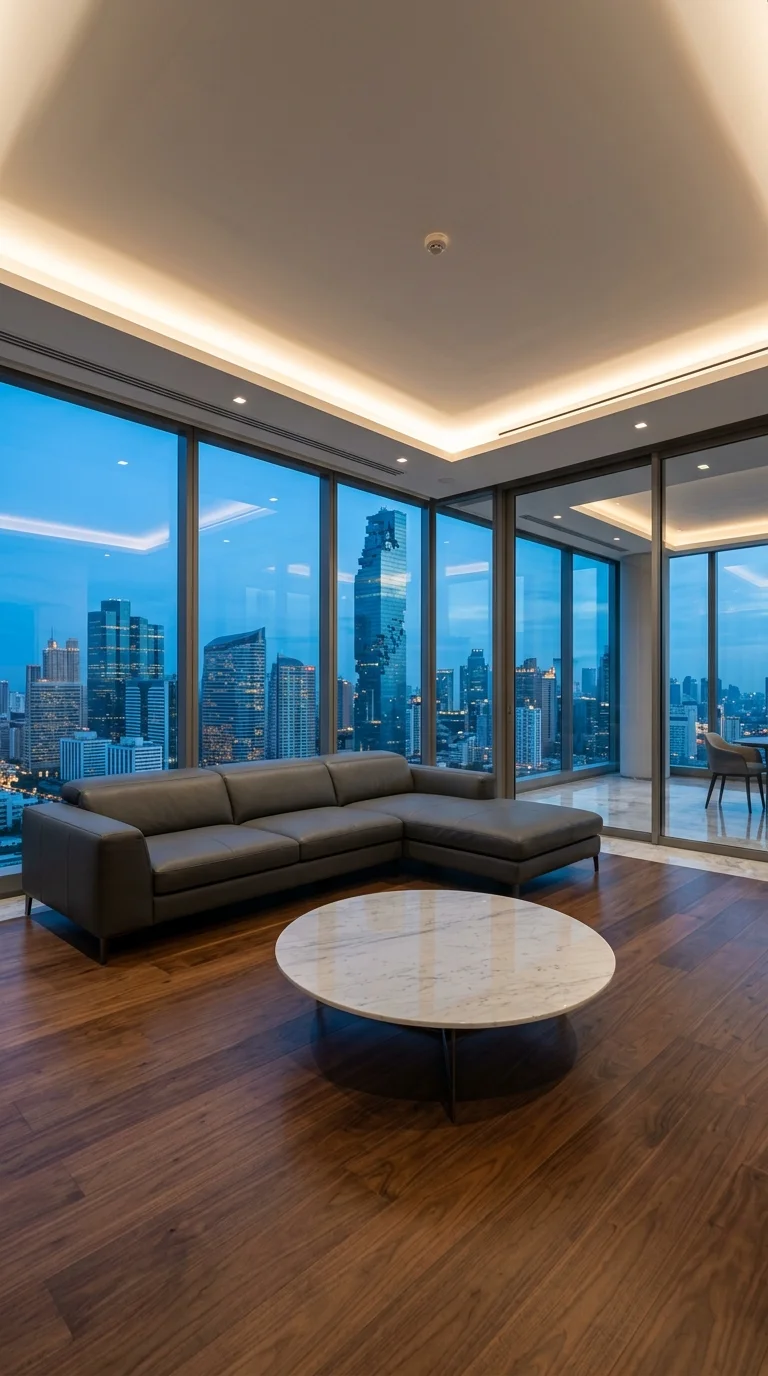
UK nationals can rent residential property in Thailand without the stringent legal restrictions that apply to foreign ownership, but the market operates through a decentralised network of property agents and direct landlord negotiations. In Bangkok, the market is heavily dominated by agents who manage high-density apartment rentals on behalf of absentee landlords or investors. By contrast, Chiang Mai offers more detached houses within gated communities where direct landlord negotiation is common. Phuket and the southern islands feature a mix of managed villa estates and private lets, often with aggressive seasonal pricing spikes during the European winter. When you rent through a property agent, you do not pay a finder's fee; the landlord pays the agent a commission equivalent to one month of rent for a standard 12-month lease. Agents handle the property search, facilitate viewings, and provide dual-language tenancy agreements, which acts as a crucial buffer if your landlord does not speak English. Going direct to a developer or landlord can sometimes yield a lower monthly rate, but it leaves you solely responsible for translating legal documents and enforcing maintenance requests. Always use a reputable, locally established property agent for long-term leases, as their commission is absorbed by the landlord while providing you with essential translation and negotiation support.
Discover the realistic rental yields and capital appreciation rates for Thai property. Learn how to calculate net returns, taxes, and avoid developer traps.
| Market Approach | Financial Implication | Legal & Practical Support |
|---|---|---|
| Using a Property Agent | No direct cost to tenant; landlord pays commission | High; agent provides dual-language contracts and mediation |
| Direct to Landlord | Potential for 5% to 10% lower rent | Low; tenant must handle all translations and disputes |
| Direct to Developer | Fixed corporate rates; minimal negotiation | Medium; standard corporate contracts, often English-friendly |
Viewing Properties and Negotiating Rent
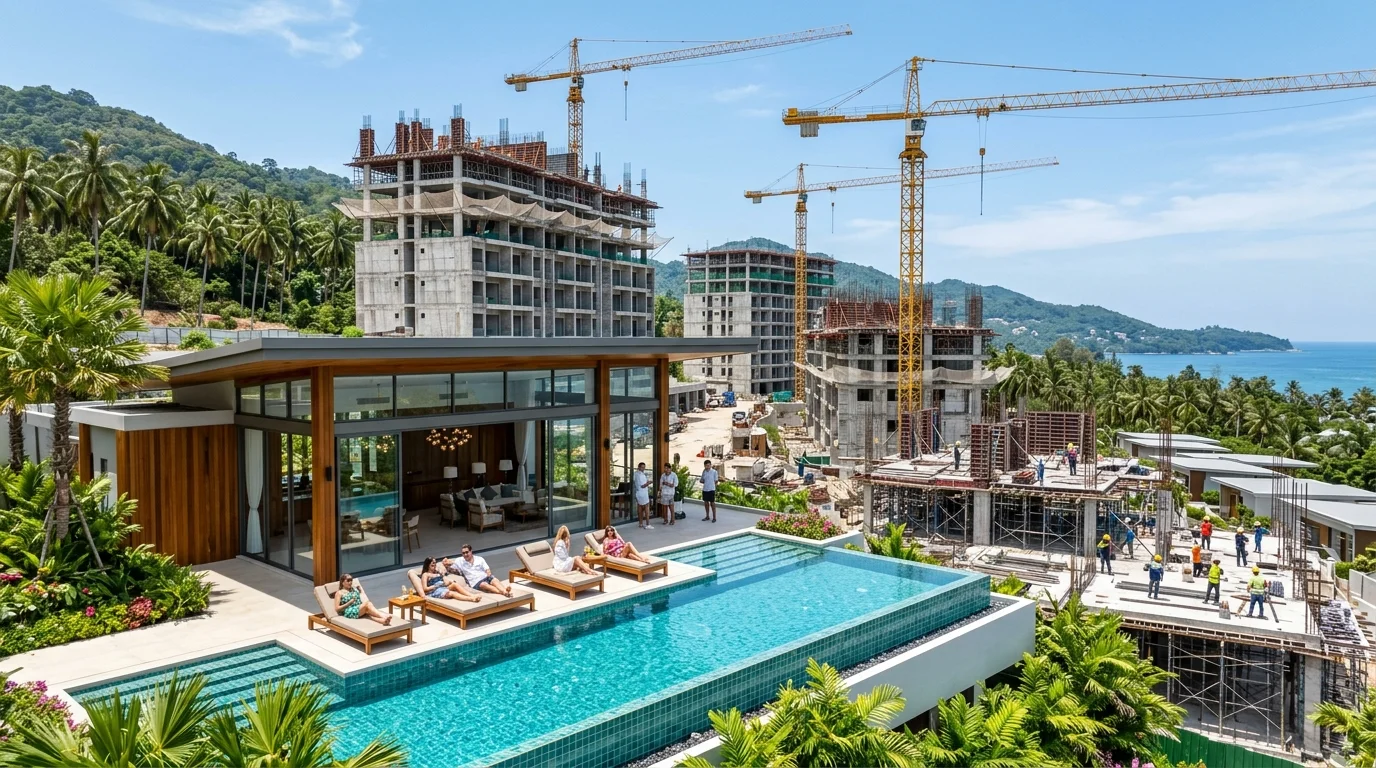
When viewing rental properties in Thailand, inspecting the specific infrastructure of the unit is far more important than the cosmetic appearance of the furniture. You must test the air conditioning units to ensure they run quietly and blow cold air, as poorly maintained compressors are a leading cause of high electricity bills. Turn on the showers to check water pressure, which can be notoriously weak in older buildings or top-floor apartments without dedicated water pumps. Additionally, verify whether the internet line is a dedicated fibre connection or a shared building network, as the latter will cause significant speed drops during evening hours. Noise pollution is another critical factor; inspect the immediate surroundings for active construction sites, outdoor bars, or large populations of street dogs, as Thai zoning laws are loosely enforced. Rent is almost always negotiable for long-term leases. If you commit to a 12-month term, landlords will typically accept a reduction of 5% to 10% off the advertised rate, especially if you offer to pay several months of rent in advance. Document the exact condition of all furniture, fixtures, and existing damage during the viewing, as this forms the absolute baseline for your deposit return.
The Tenancy Agreement and Lease Terms
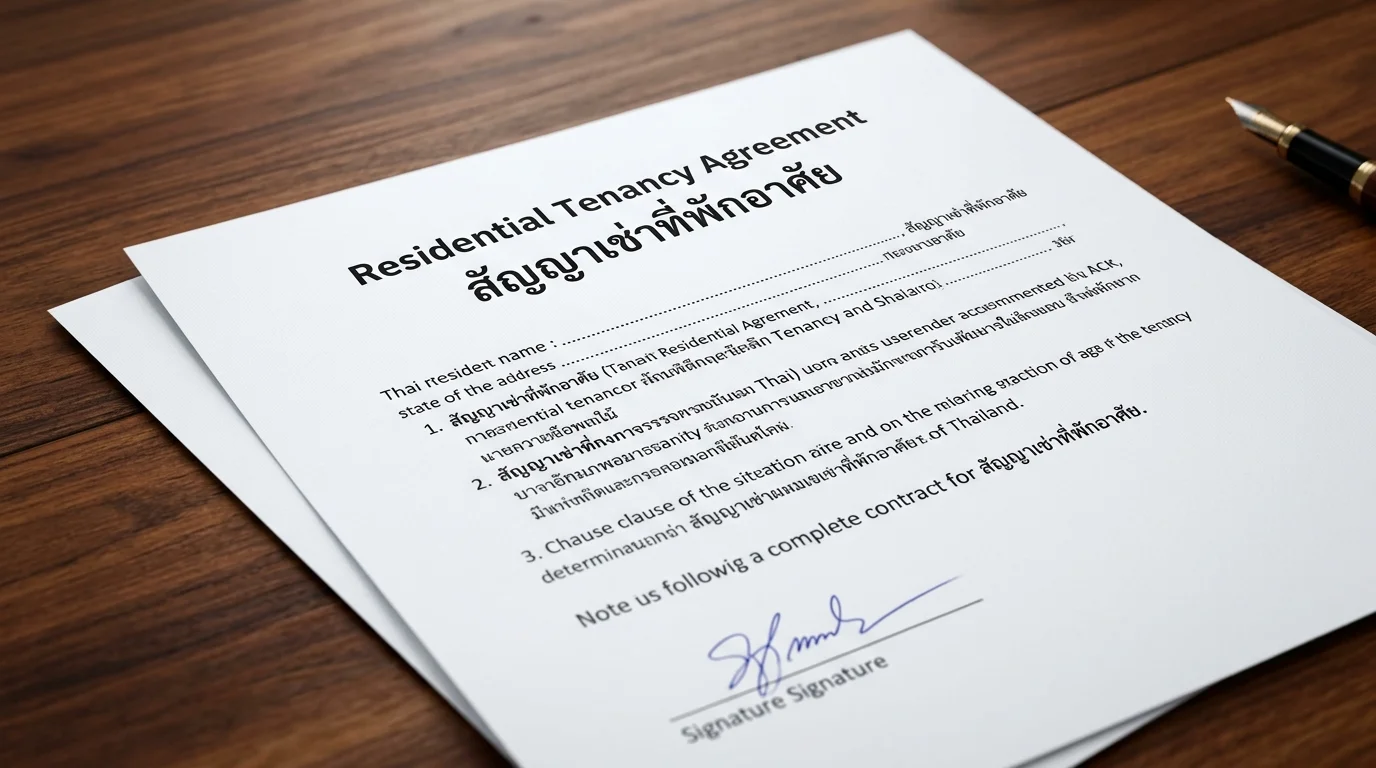
Thai tenancy agreements must legally outline the rental period, payment schedules, and deposit conditions, but standard templates heavily favour the landlord unless actively amended. The standard residential lease in Thailand runs for 12 months. Shorter terms of three or six months are available but usually command a premium of 15% to 20% on the monthly rent. A critical inclusion for UK expatriates is the diplomatic clause, also known as a break clause. This allows you to terminate the lease early without forfeiting your security deposit if your employer unexpectedly relocates you or your visa status changes, typically requiring 60 days of written notice. The agreement must clearly define maintenance responsibilities. Standard practice dictates that the tenant pays for minor repairs under 500 THB (11 GBP) to 1,000 THB (22 GBP), such as replacing lightbulbs or fixing minor leaks, while the landlord is financially liable for major structural issues, appliance breakdowns, and routine air conditioning servicing. Ensure the contract explicitly states that the landlord will deep-clean the air conditioning units at least twice a year at their expense. Insist that any English translation of the lease is signed alongside the Thai original, and verify in writing which version takes legal precedence in the event of a dispute.
Inclusions, Utilities, and Building Management Fees
Landlords operating buildings with five or more rental units are legally prohibited from charging a markup on government electricity and water rates. When renting a standalone apartment unit, you should pay utilities directly to the Metropolitan Electricity Authority (MEA) or Provincial Electricity Authority (PEA). The current government electricity rate fluctuates around 4 to 5 THB (0.09 to 0.11 GBP) per unit. If you rent an apartment in a single-owner building, the landlord may legally charge a flat rate, which is often inflated to 7 or 8 THB (0.16 to 0.18 GBP) per unit, significantly increasing your monthly costs. Your monthly rent should entirely cover the Common Area Maintenance (CAM) fees or juristic person fees. These fees fund the building's security, pool maintenance, gym upkeep, and lift servicing. Never sign a lease that makes you responsible for paying the CAM fees separately, as these are the legal liability of the property owner. Internet and premium television packages are rarely included in the rent and require you to set up a personal contract with providers like AIS or TrueMove, which costs between 500 THB (11 GBP) and 1,000 THB (22 GBP) per month. Check the utility meters on your move-in day to ensure you are billed directly by the government authorities rather than the building management.
The TM30 Registration Requirement
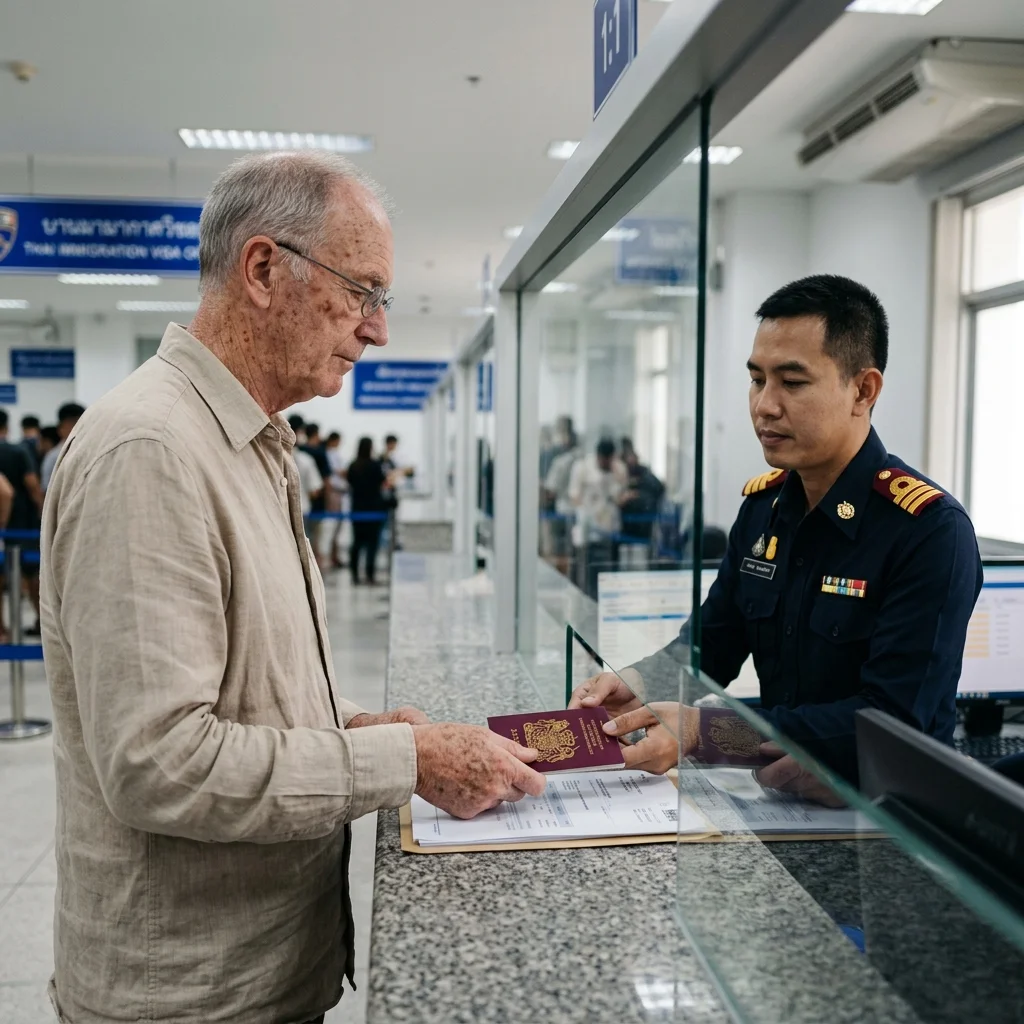
Under Section 38 of the Thai Immigration Act, your landlord must report your residence to the local immigration office within 24 hours of your arrival at the property. This notification, known as the TM30, is a strict legal requirement designed to track foreign nationals residing in the country. The legal burden to file the TM30 falls entirely on the landlord, not the tenant. However, the practical consequences of a missing TM30 fall squarely on you. If your landlord fails to register your presence, Thai Immigration will refuse to process your 90-day reports, deny any visa extension applications, and may issue a fine when you eventually attempt to use their services. To file the TM30, the landlord needs a copy of your passport data page, your visa, and your entry stamp. Many property agents will handle this filing electronically on the landlord's behalf. If your landlord is uncooperative or claims it is unnecessary, you must insist, as immigration officials do not grant leniency for landlord negligence. Request the TM30 receipt slip or a screenshot of the electronic confirmation from your landlord immediately after moving in, as you will need to present this document for all future immigration matters.
Tenant Rights and Dispute Resolution
Thai consumer protection laws cap residential security deposits at a maximum of two months of rent and mandate that landlords return these funds within seven days of the lease ending. This regulation strictly applies to landlords who own and rent out five or more properties. In reality, many single-unit landlords still operate under older norms, sometimes attempting to withhold deposits for standard wear and tear or taking weeks to release the funds. The Thai legal system offers a dedicated Consumer Protection Board (OCPB) and a Small Claims Court to handle rental disputes. However, pursuing legal action over a withheld deposit of 40,000 THB (890 GBP) to 80,000 THB (1,780 GBP) is highly impractical for most UK nationals due to the time, legal fees, and translation costs involved. Therefore, protecting your deposit relies entirely on preventative measures. A meticulously detailed inventory signed by both parties at check-in, supported by timestamped photographs of every room, is your best defence. When disputes over deductions occur, mediation through your property agent is the most effective resolution method. Maintain polite, written communication through your agent when disputes arise, as aggressive confrontation causes a loss of face and rarely yields a positive financial outcome in Thailand.
Rental Costs and Fees
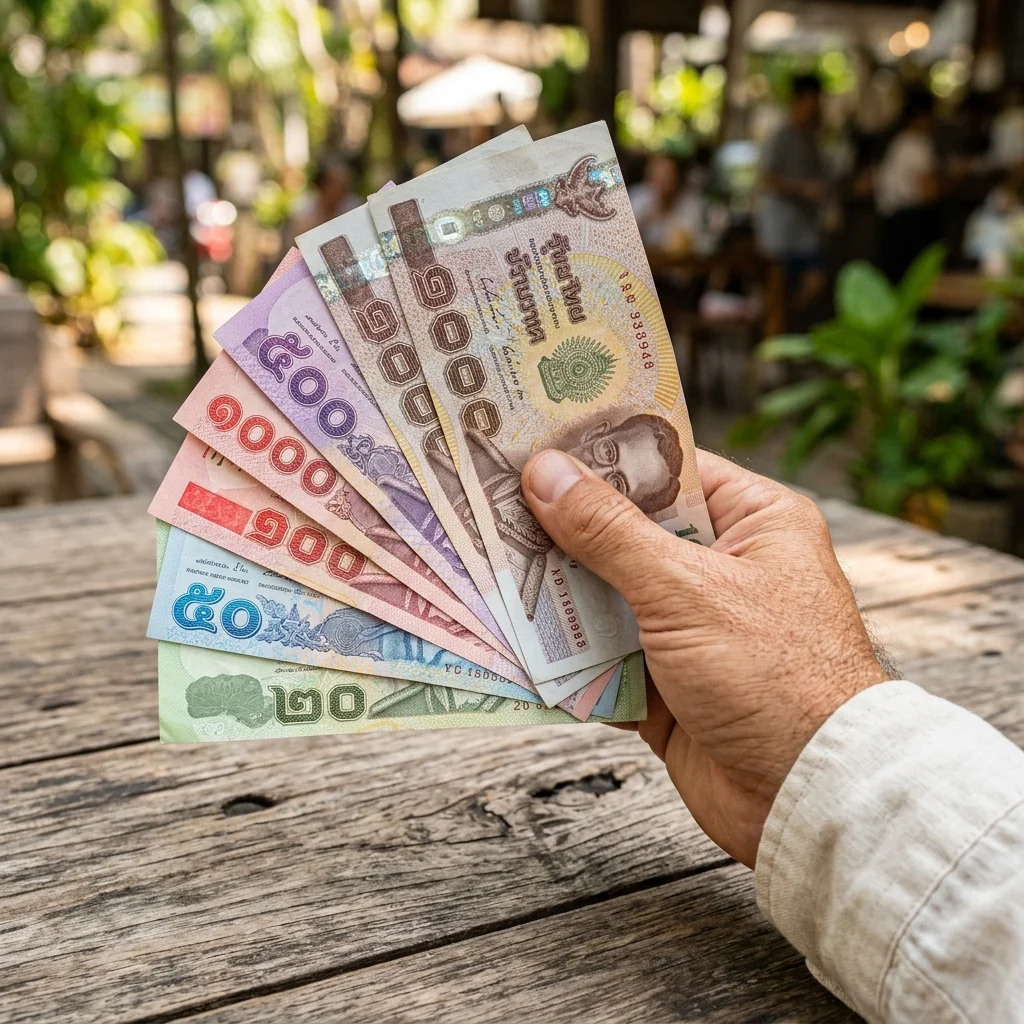
Securing a rental property in Thailand involves specific upfront transaction costs. The standard financial requirement to move in is three months of rent in total: a security deposit equal to two months of rent, plus the first month of rent paid in advance. For a apartment costing 25,000 THB (555 GBP) per month, you must transfer 75,000 THB (1,665 GBP) before receiving the keys. Property agent commissions are entirely the responsibility of the landlord. By law, lease agreements are subject to a nominal government stamp duty of 0.1% of the total lease value, which is usually paid by the landlord, though some contracts stipulate a 50/50 split. You may also need to pay small utility connection deposits for internet installation, typically ranging from 1,000 THB (22 GBP) to 2,000 THB (44 GBP).
| Cost Item | Rate or Amount | Paid By | Notes |
|---|---|---|---|
| Security Deposit | 1 to 2 months of rent | Tenant | Capped at 2 months by law for major landlords |
| Advance Rent | 1 month of rent | Tenant | Covers your first month of occupancy |
| Agent Commission | 1 month of rent per year | Landlord | Tenants should never pay finder's fees |
| Lease Stamp Duty | 0.1% of total lease value | Landlord | Occasionally split 50/50 depending on terms |
| Utility Deposits | 1,000 THB to 2,000 THB | Tenant | Refundable deposits for internet routers |
Common Mistakes and How to Avoid Them
Accepting inflated utility rates is a costly error. Landlords in single-owner apartment buildings often charge flat electricity rates well above the government tier, draining your finances over a 12-month lease. Always request a apartment unit where you pay the Metropolitan or Provincial Electricity Authority directly.
Relying on verbal agreements for repairs leaves you legally exposed. If a landlord promises to replace a mattress or fix an air conditioning unit before you move in, but it is not written into the tenancy agreement, you have no legal mechanism to enforce it. Ensure every requested repair is documented as a contractual condition of your deposit payment.
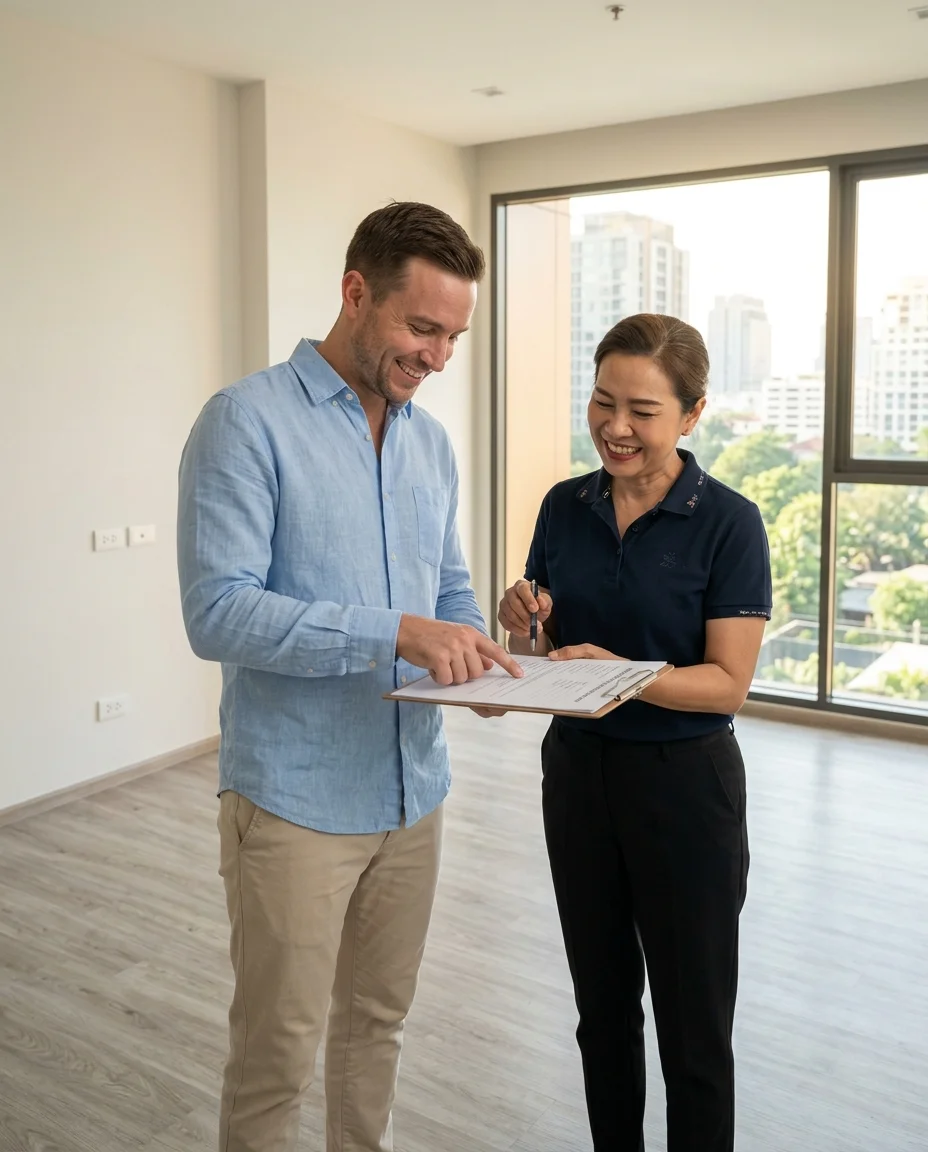
Failing to document the move-in condition guarantees deposit disputes. Tenants who sign a generic inventory sheet without taking their own timestamped photographs often pay for pre-existing damage when moving out. Take extensive photos of all walls, floors, and appliances, and email them to the agent on day one.
Ignoring the TM30 requirement severely disrupts your legal standing in Thailand. Tenants who do not push their landlord to file the TM30 within 24 hours find themselves blocked from renewing visas or securing re-entry permits. Demand the TM30 confirmation slip as soon as you sign the lease.
Practical Tips
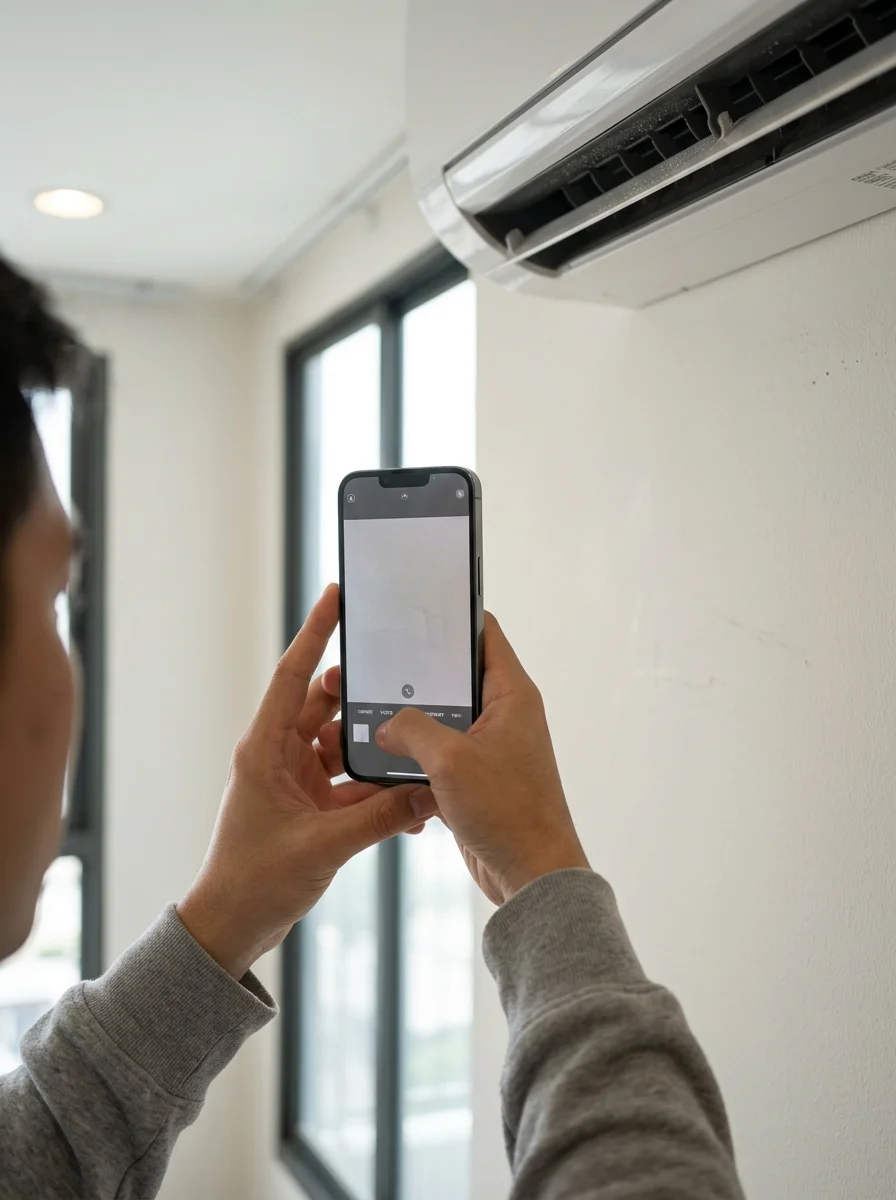
Conduct a rigorous inspection of the air conditioning filters and compressors during your viewing. Units that rattle or drip water indicate poor maintenance and will consume excessive electricity while failing to cool the room.
Confirm the rules of the building's Juristic Person before signing a lease. Many high-end buildings strictly prohibit pets, short-term subletting, or specific types of renovations, and violating these rules can result in immediate eviction regardless of your landlord's leniency.
Secure a diplomatic break clause if you are working in Thailand on a Non-Immigrant B visa. This legally protects your security deposit if your employment terminates unexpectedly and you are forced to leave the country before the lease expires.
Read the building's utility meters alongside the landlord or agent on the exact day you receive the keys. Record the numbers and photograph the dials to prevent paying for the previous tenant's outstanding water or electricity usage.
Always pay your rent and deposit via traceable bank transfers rather than cash. Using a Thai bank account or an international transfer service creates an undeniable financial paper trail that protects you if the landlord claims non-payment.
Review the English translation of your tenancy agreement with extreme care. Ensure the translation explicitly mirrors the Thai text regarding deposit return timelines, notice periods, and maintenance liabilities to prevent legal ambiguities during checkout.
Quick Reference Guide
| Item | Detail | Notes |
|---|---|---|
| Maximum Deposit | 2 months of rent | Legally capped for landlords with 5+ properties |
| Advance Rent | 1 month | Standard requirement across all regions |
| Standard Lease Term | 12 months | 3 or 6-month terms incur higher monthly rates |
| Agent Fees | Paid by landlord | Tenants do not pay commission or finder's fees |
| Notice Period | 30 to 60 days | Must be clearly defined in the tenancy agreement |
| Utility Billing | Direct to government | Avoid buildings that charge inflated flat rates |
| Immigration Requirement | TM30 Notification | Landlord must file within 24 hours of your arrival |