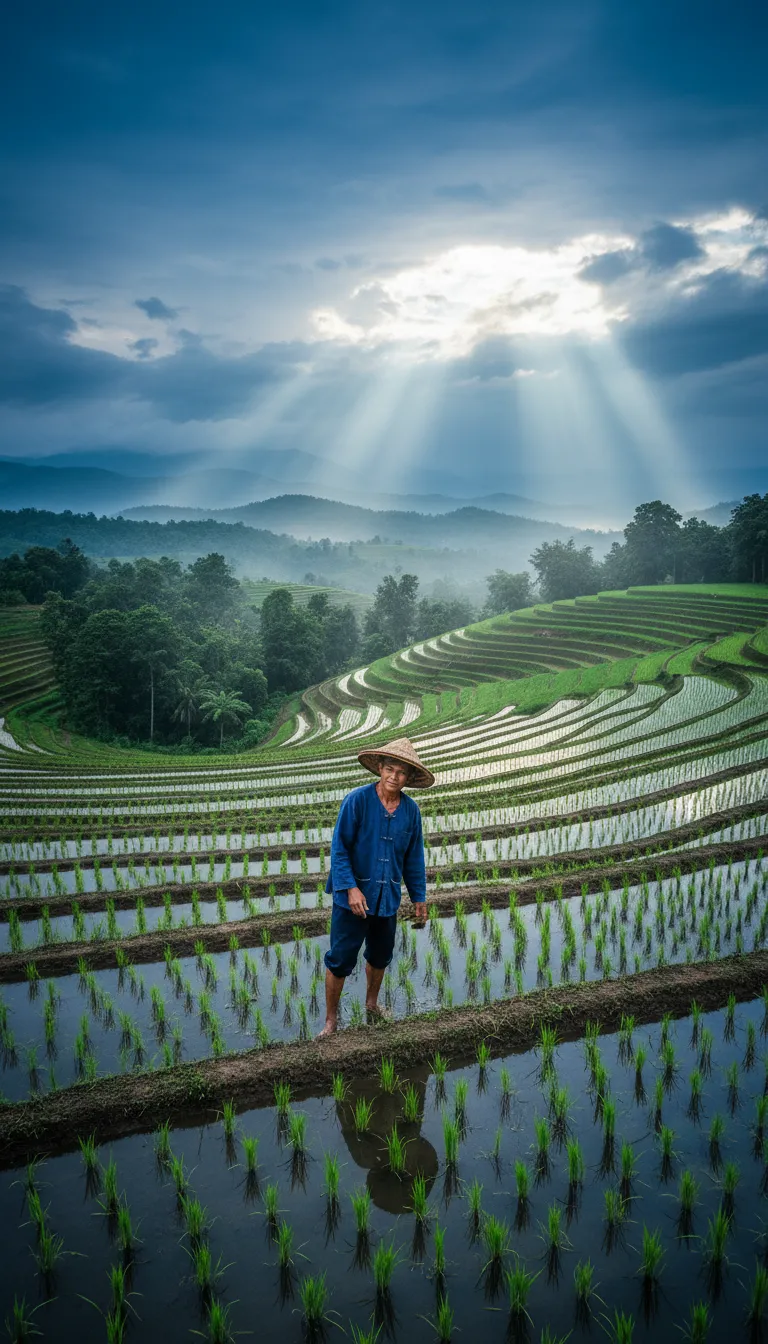
Far from being merely a quieter northern outpost, this border province is defined by an unexpectedly avant-garde artistic rebellion.
Most guidebooks portray it as an ancient Lanna relic, entirely missing that its modern cultural identity has been deliberately sculpted by eccentric local artists. They turned the landscape into a sprawling, surreal canvas.
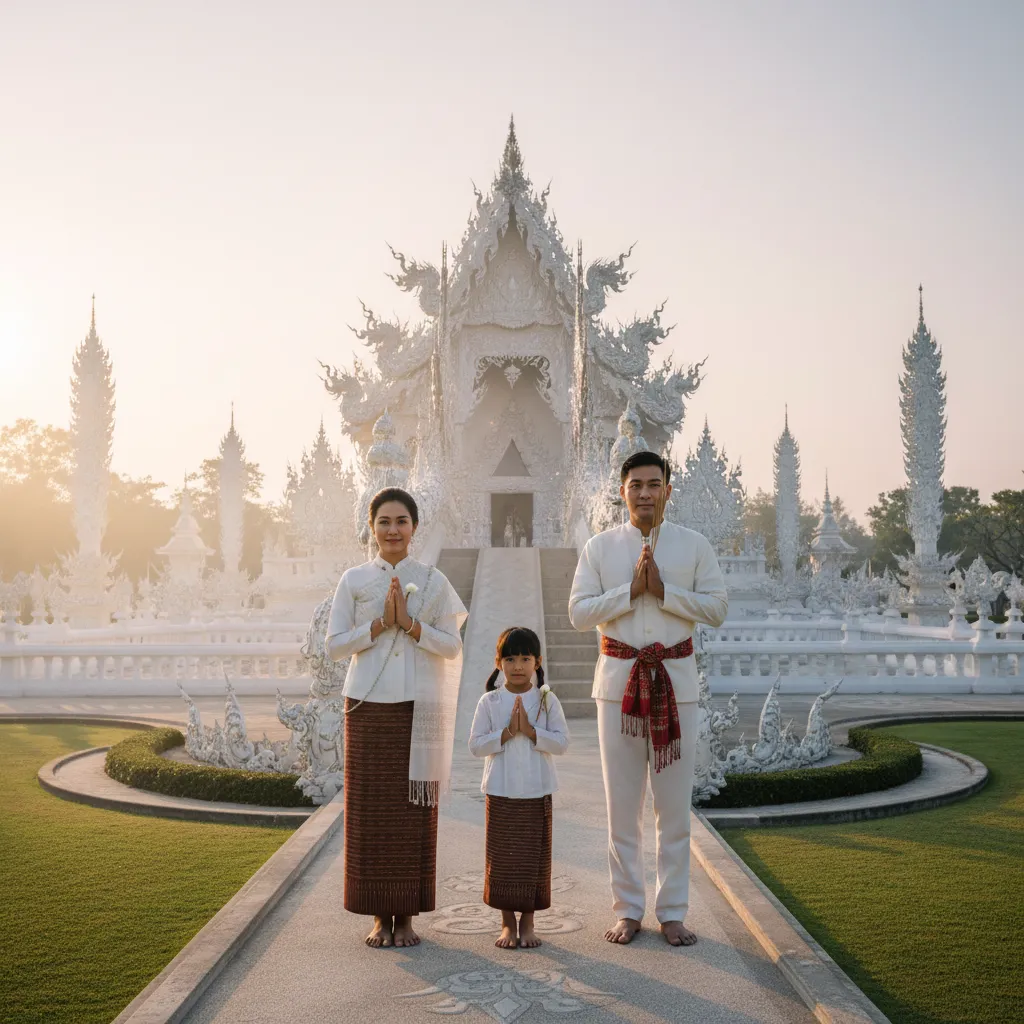
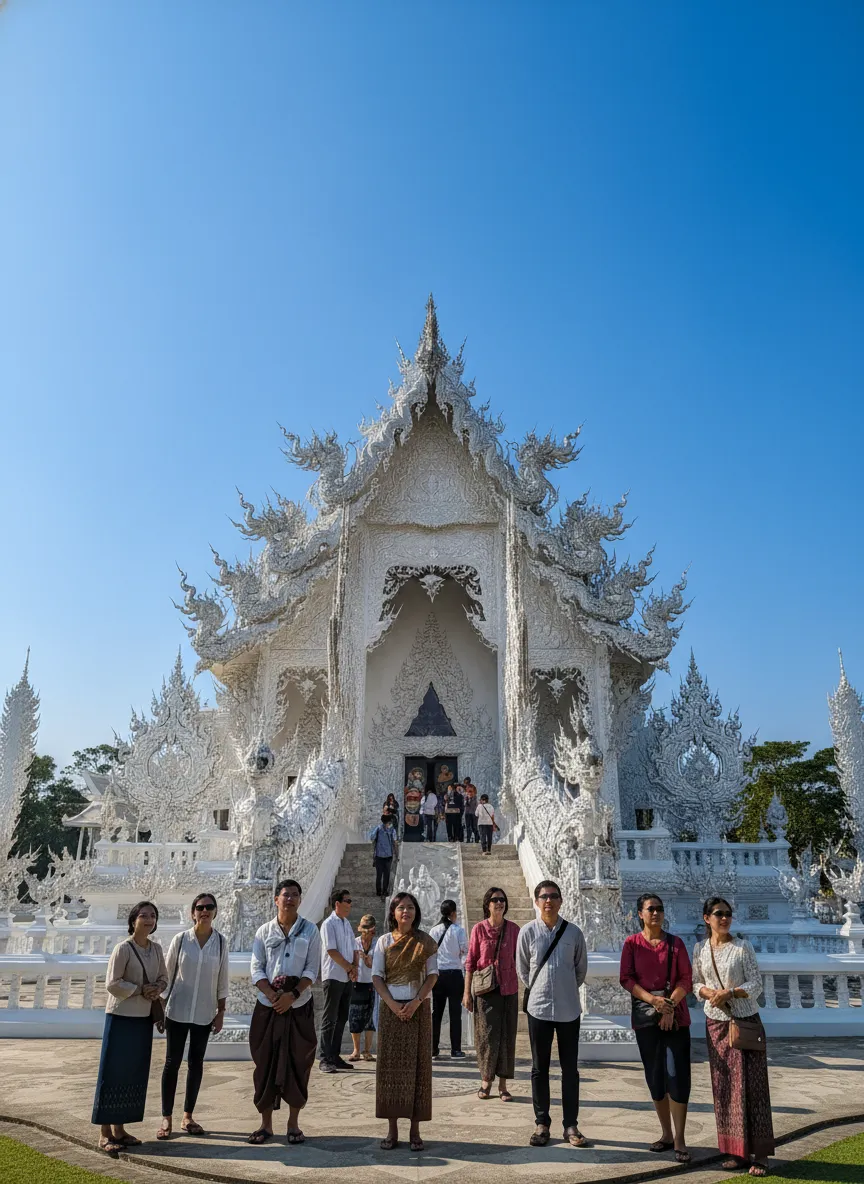
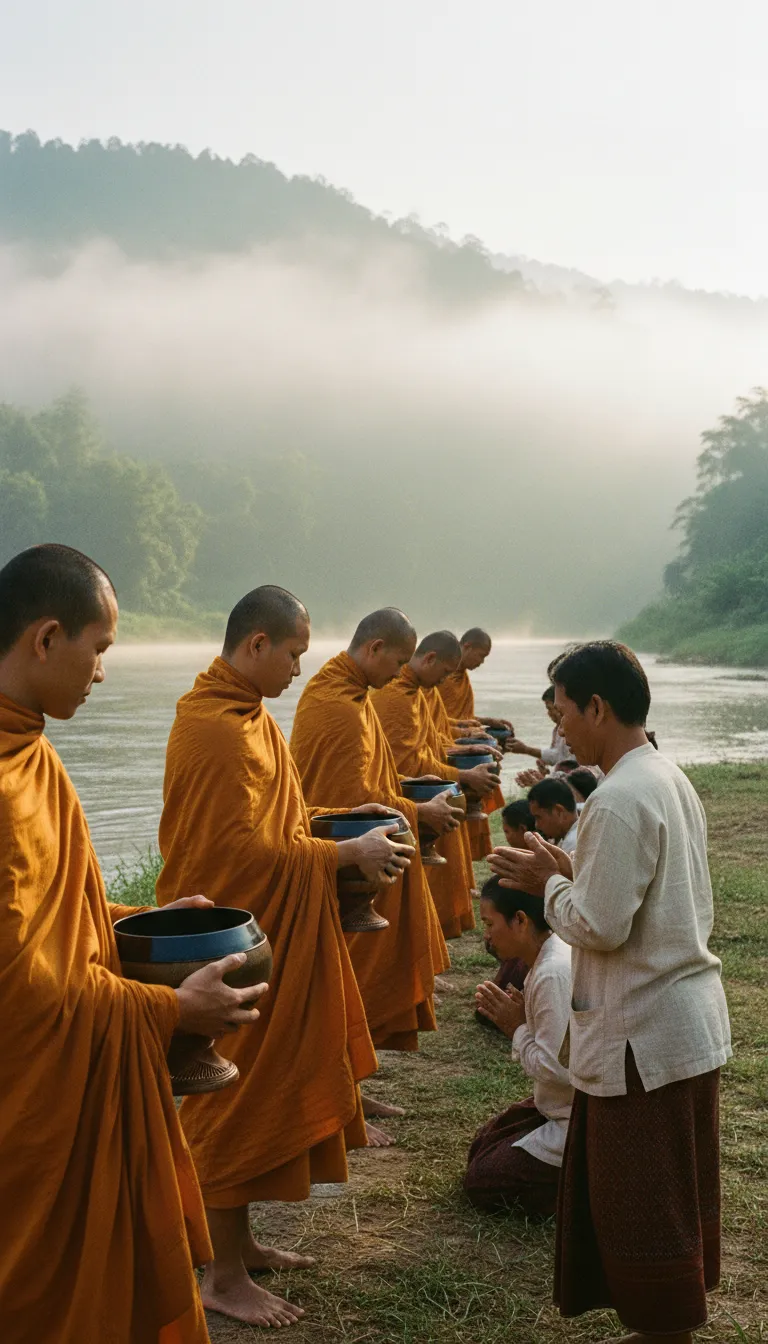
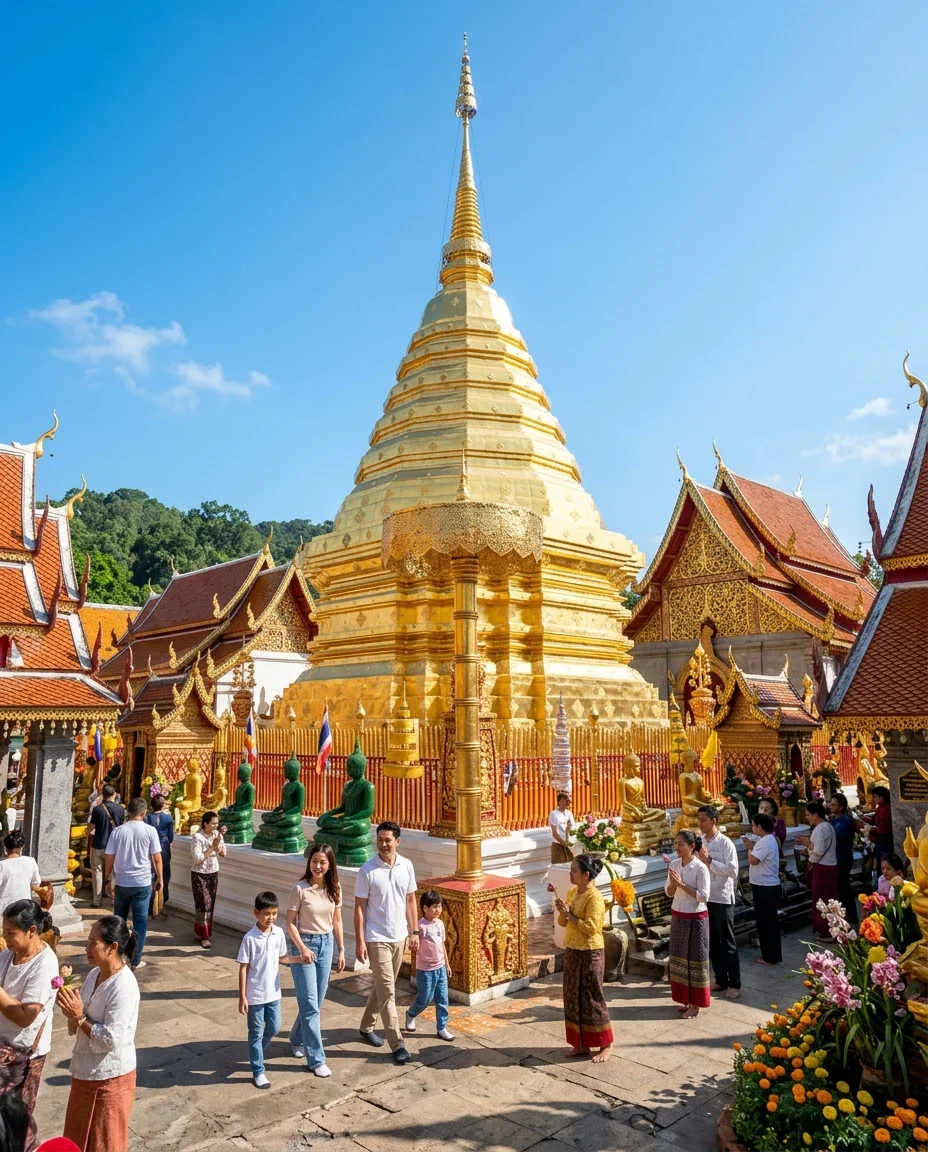
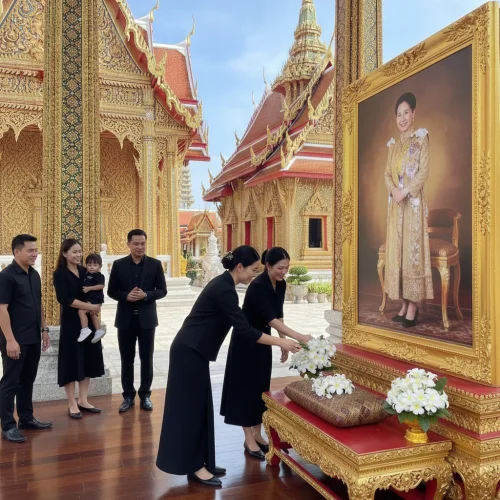
Faith here feels intensely personal and visually dramatic. Monks collect morning alms wrapped in the heavy mist rolling off the Kok River. Their saffron robes provide a stark contrast to the deep green hills. The White Temple (Wat Rong Khun) demands attention. It blends orthodox Buddhist teachings with surreal contemporary murals featuring comic book heroes, costing 100 THB (£2.20) to enter. Less crowded is the Blue Temple (Wat Rong Suea Ten), free to enter, where the atmosphere remains remarkably relaxed despite the intense cerulean interiors. What catches most Westerners off guard is the syncretism. You will routinely see locals offering red Fanta to spirit houses before walking into a strict Theravada Buddhist prayer hall. They seamlessly blend ancient animism with formal religious doctrine. It is a deeply pragmatic approach to the spiritual world.
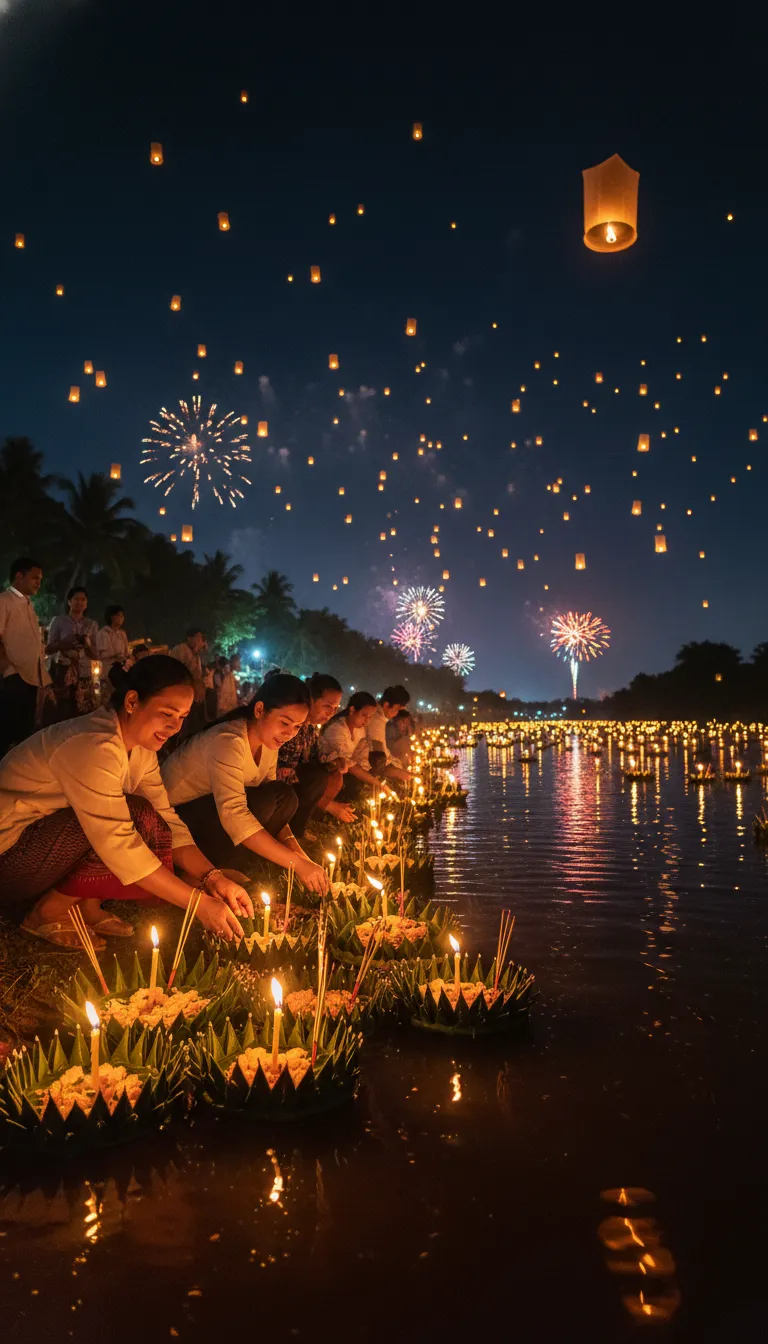
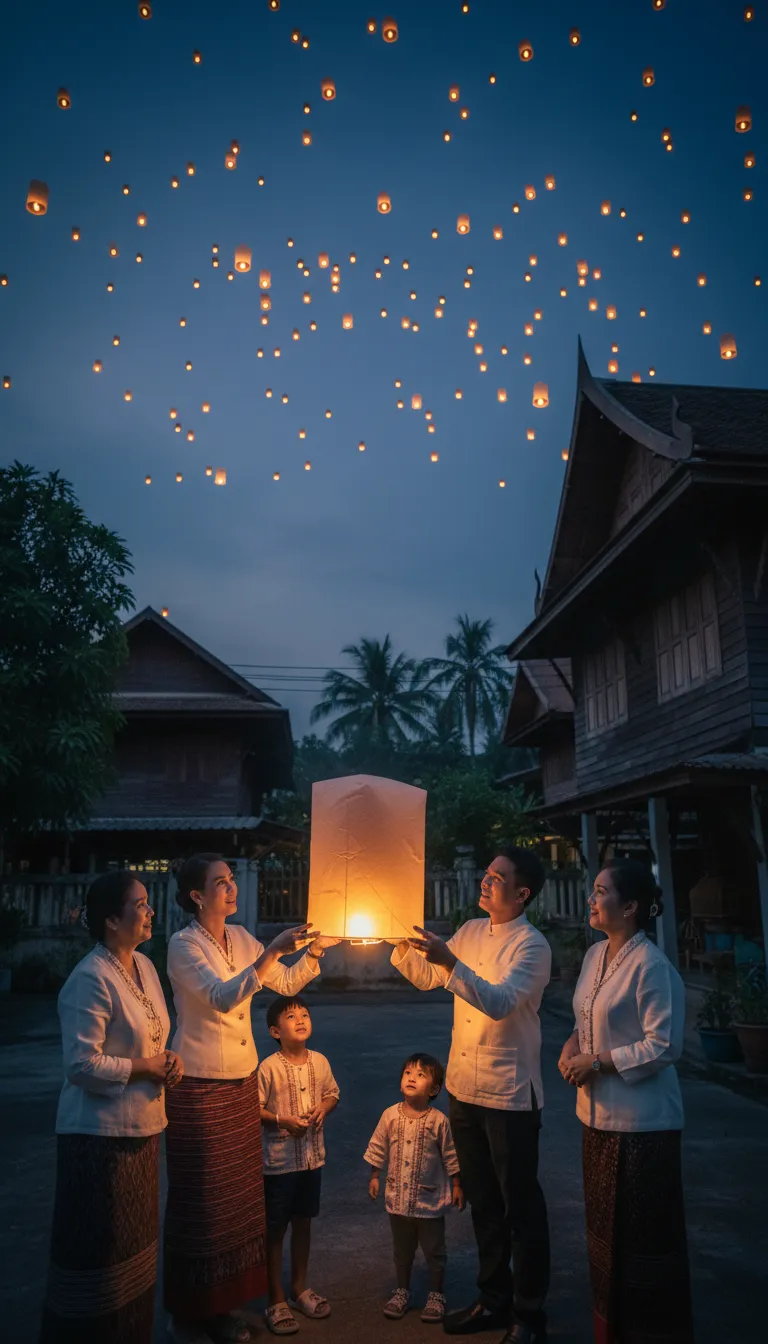
When November arrives, Loy Krathong dominates the waterways, running concurrently with the northern festival of Yi Peng. Thousands of paper lanterns drift into the night sky. The reality on the ground involves dodging smouldering debris and navigating heavy traffic around the riverside. Most guides skip the fact that the days leading up to the full moon are actually the best time to participate. Local neighbourhoods host smaller, far more intimate lantern releases away from the main tourist hubs. Then there is the Flower Festival spanning late December to January. Rather than a stuffy horticultural show, it operates as a massive social event. Families picnic among millions of temperate blooms while live folk music plays late into the chilly evenings. Expect hotels to be booked solid and city centre roads to be heavily congested. Songkran in April brings the usual nationwide water fights. However, the northern version integrates a deeply respectful ritual where younger family members pour scented water over the hands of their elders before the street chaos begins.
TRADITIONS & CUSTOMS
Life in the far north moves at its own deliberate pace. The concept of a cool heart dictates social interaction. Any display of anger or impatience achieves absolutely nothing beyond intense public embarrassment. When greeting, the wai is standard. Up here you will notice locals often pair it with a slight bow of the head to acknowledge elders, a nod to the lingering regional hierarchy. One custom entirely specific to this border region is the casual integration of hill tribe etiquette in daily commerce. Aggressive haggling is viewed as deeply offensive rather than clever negotiation. The most common mistake Westerners make is treating the local traditional dress as a costume. Locals wear indigo-dyed mo hom shirts daily with immense pride. Tying them around your waist like a dirty rag while hiking shows a distinct lack of respect.
The province is the undisputed heartland of Thai contemporary art and traditional ceramics. Doi Din Dang Pottery, tucked away in the forest, produces exceptional earth-glazed stoneware using local clay. You can pick up a beautifully fired teacup for around 300 THB (£6.60). Larger statement pieces run to 3,000 THB (£66). The genuine article feels weighty and bears the subtle imperfections of hand-throwing. Be wary of the night bazaar stalls selling aggressively polished, uniform celadon pieces. These are almost always mass-produced factory knock-offs shipped up from the central plains. They lack both local soul and durability.
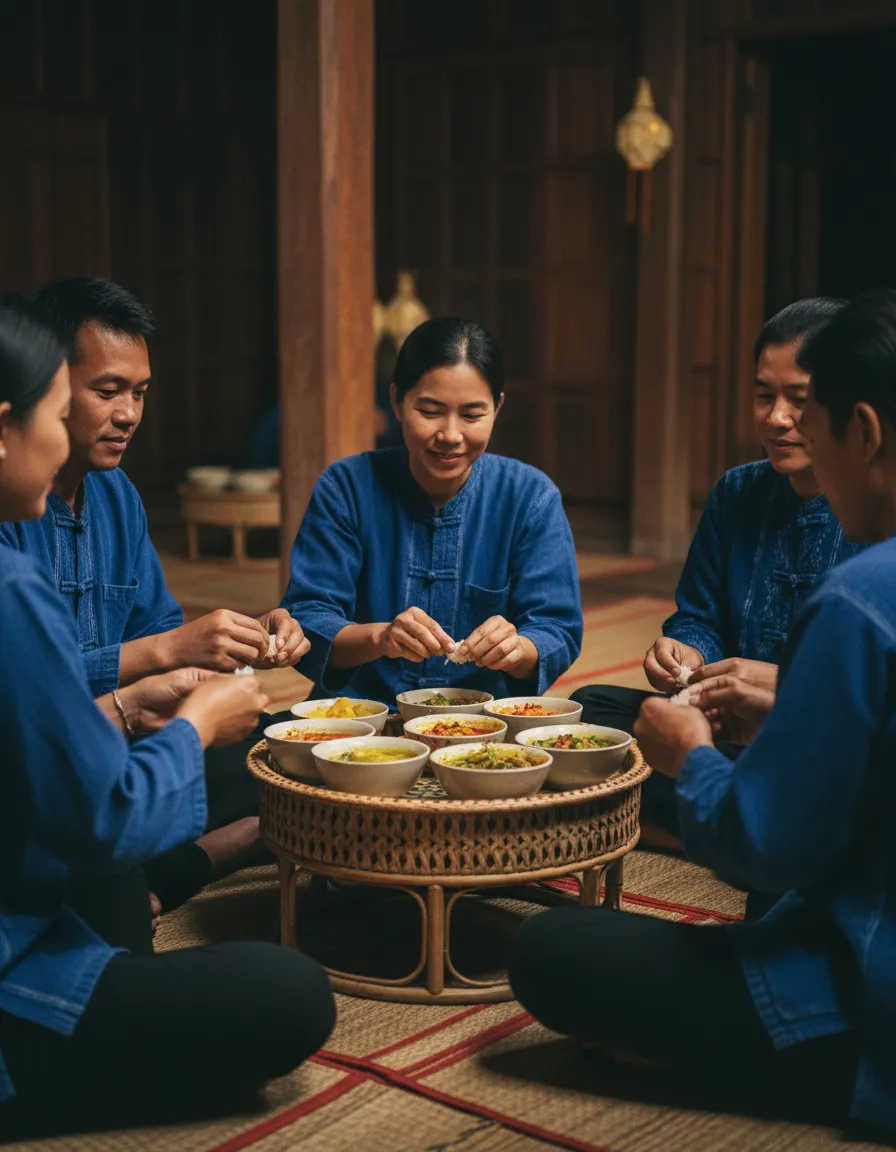
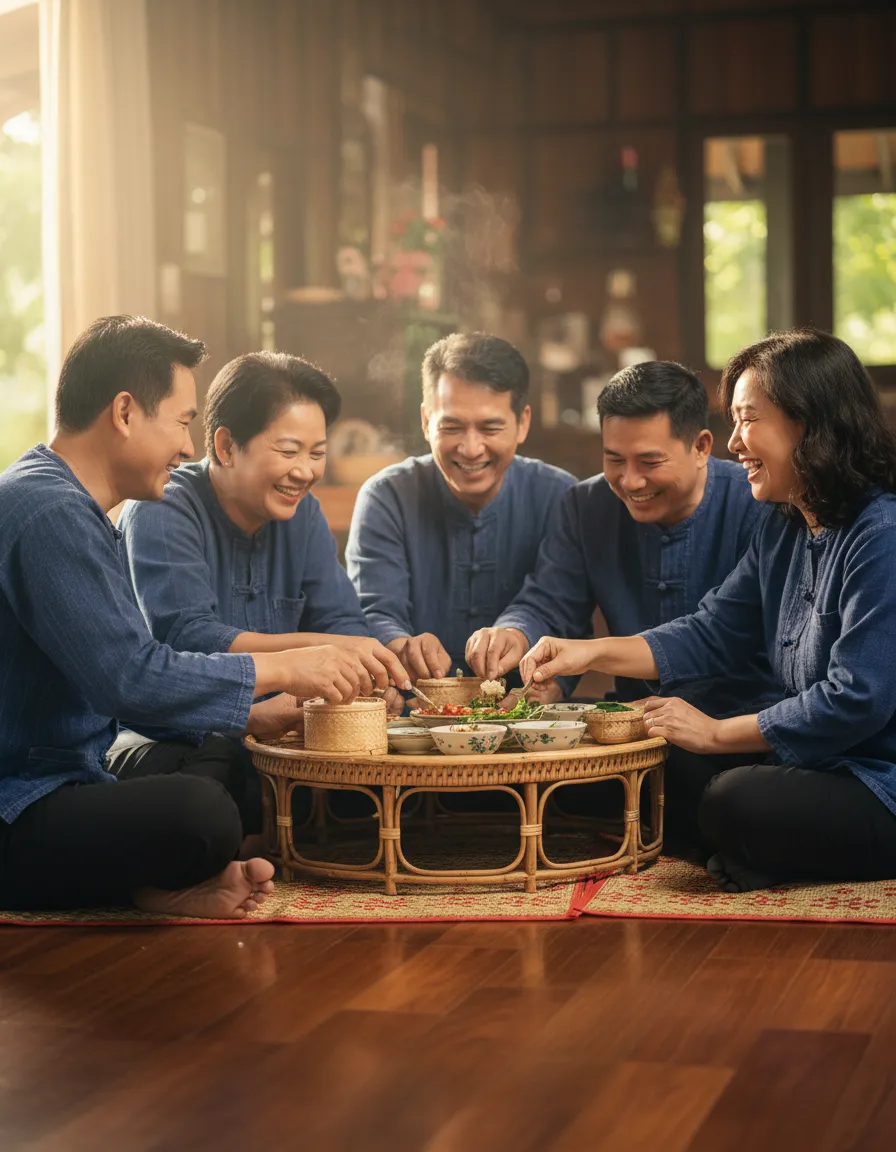
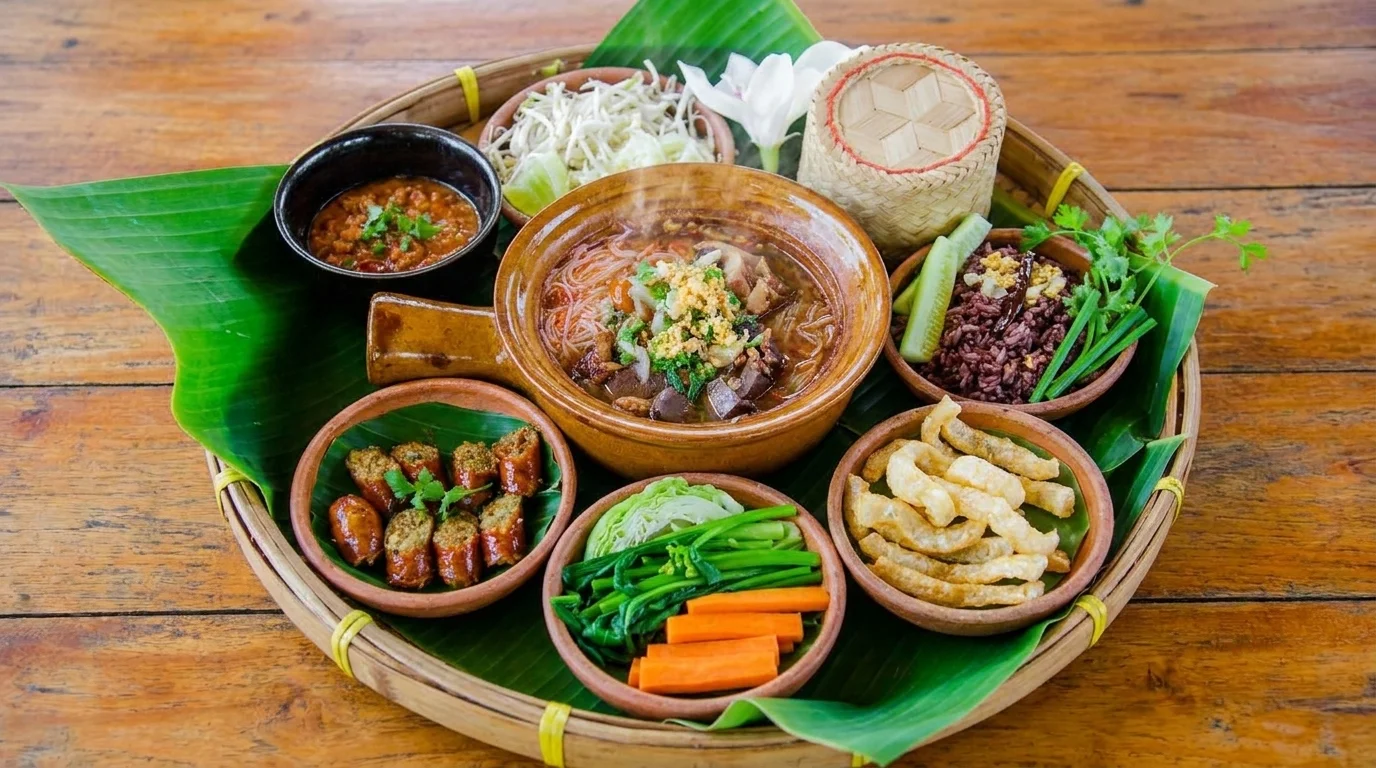
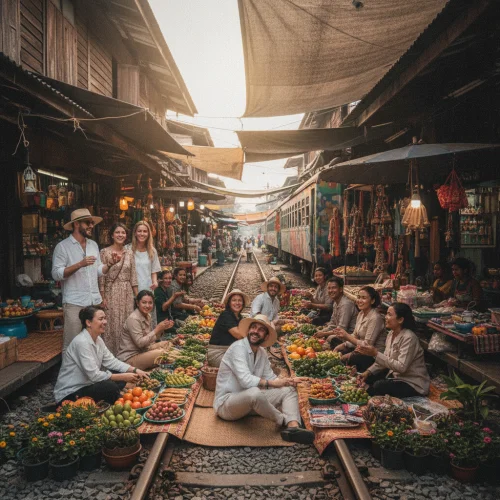
Eating here is an inherently communal act anchored by a bamboo woven table called a khantoke. Meals are never solitary affairs. You sit on the floor sharing small bowls of nam prik num, a fiery roasted green chilli dip. Diners peel off balls of sticky rice to scoop it up. This shared platter physically forces people to lean in, creating a natural intimacy that defines northern social life. The morning market is the true cultural equalizer. Monks, wealthy business owners, and farmers all converge at dawn to buy steaming bags of soy milk. They reaffirm their shared community bonds before the day begins.
LANGUAGE & COMMUNICATION
The northern dialect sounds noticeably softer and slower than standard Thai. Swapping the standard thank you for the local yin dee jao (if you are female) or yin dee krab (if male) will immediately win you smiles. Locals tend to point with their chin rather than their fingers. It is a subtle gesture worth adopting. Taking a basic two-hour language class at a local school costs roughly 500 THB (£11) and pays massive dividends in goodwill.
Never touch anyone's head. It is considered the most sacred part of the body. Always remove your shoes before entering a home or a temple building. Stepping on the wooden threshold rather than over it causes genuine offence, as it disrespects the resident guardian spirits. Dress modestly when visiting the highland villages in the surrounding mountains. Unlike the southern beaches where swimwear is tolerated in towns, walking around this northern province in a bikini top or bare-chested is considered shockingly rude. Always return a smile. A blank expression is often interpreted as outright hostility.