Northern Thai cuisine gets distilled into its purest, most herbal form right at the mountainous borderlands, heavily influenced by Tai Yai, Burmese, and Akha hill tribes.
The smoke-wreathed night markets here run on a hyper-local larder of foraged forest greens and bitter roots that you simply cannot find in the capital. It is a brilliant, complex food landscape that rewards anyone willing to pull up a plastic stool and dive into proper Lanna cooking.
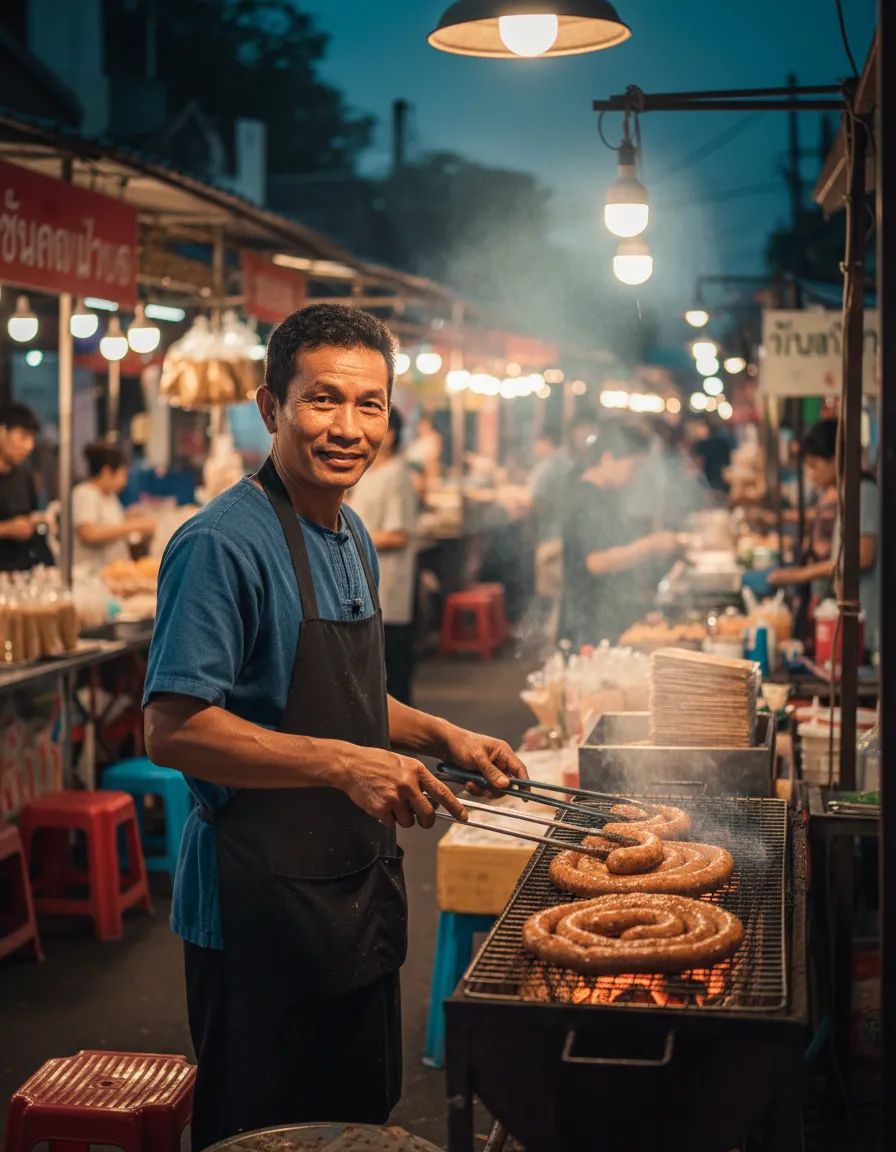
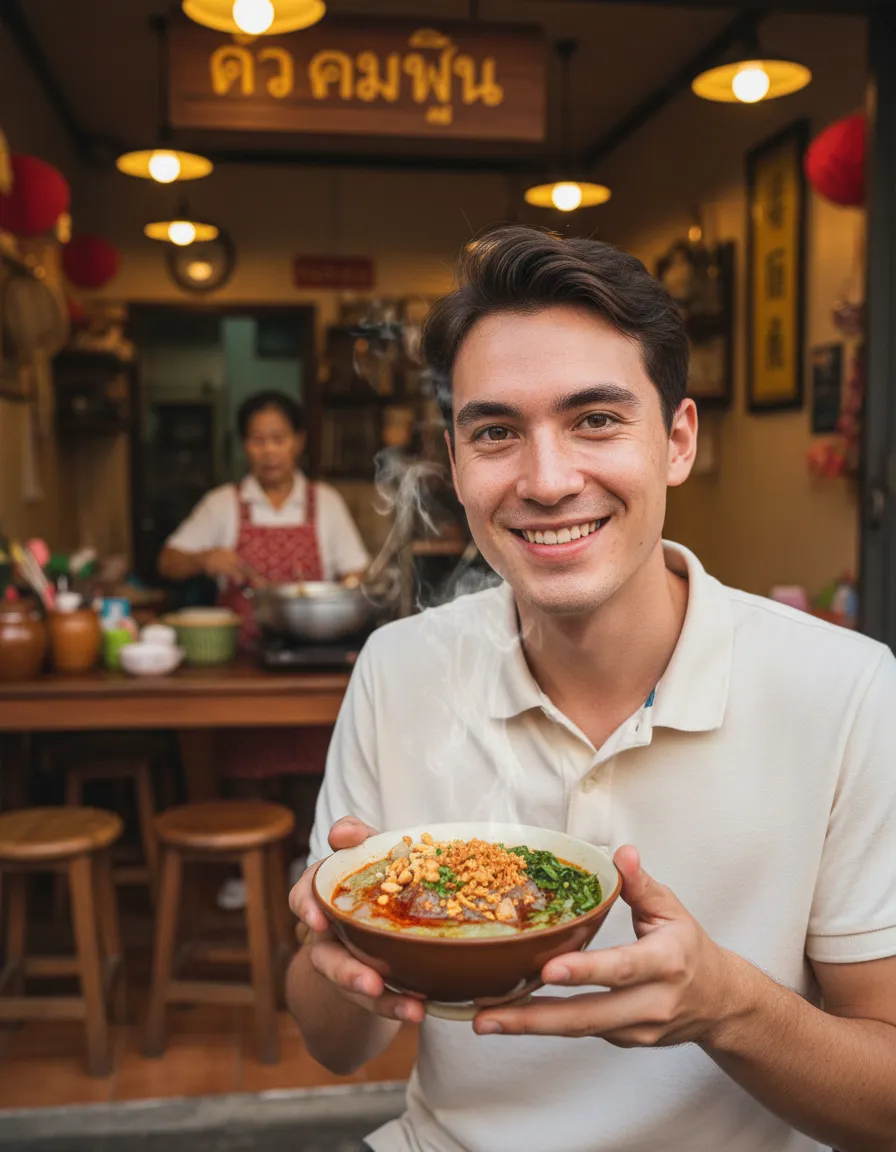
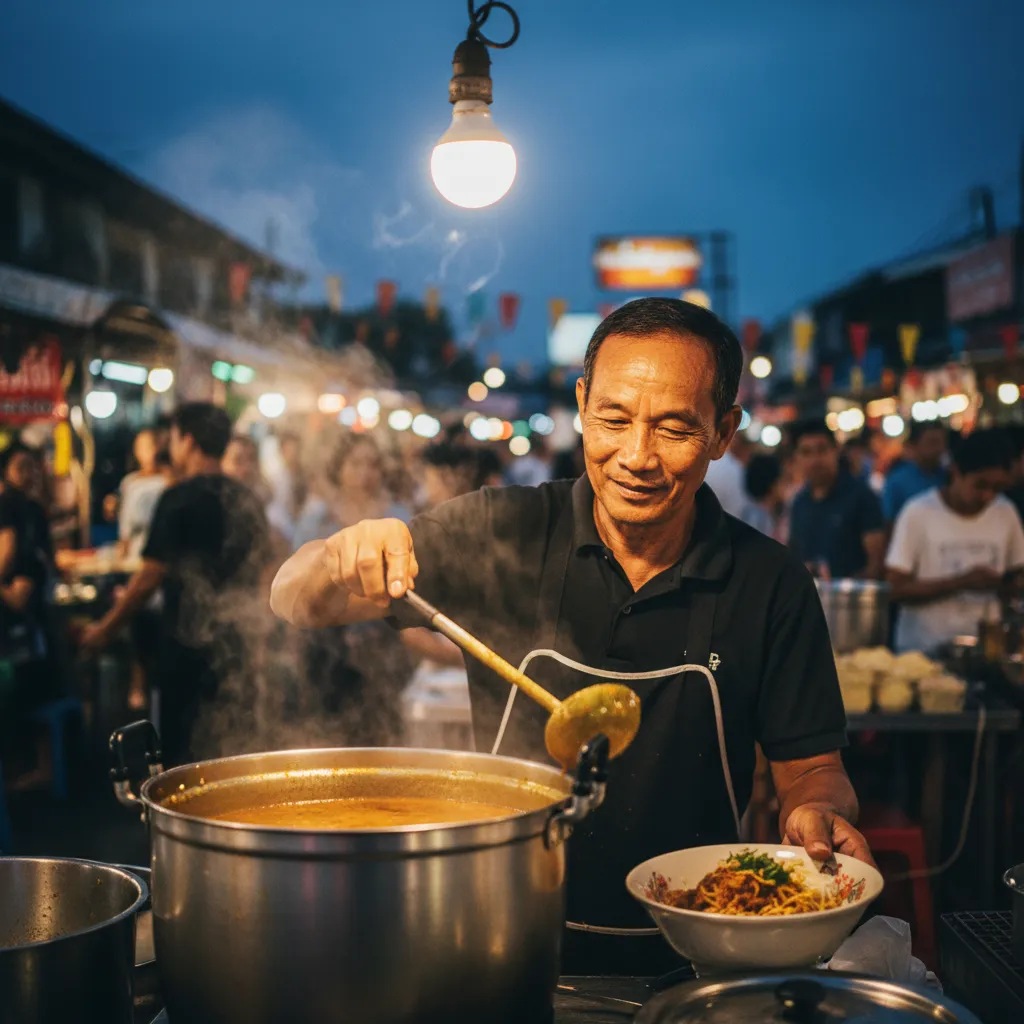
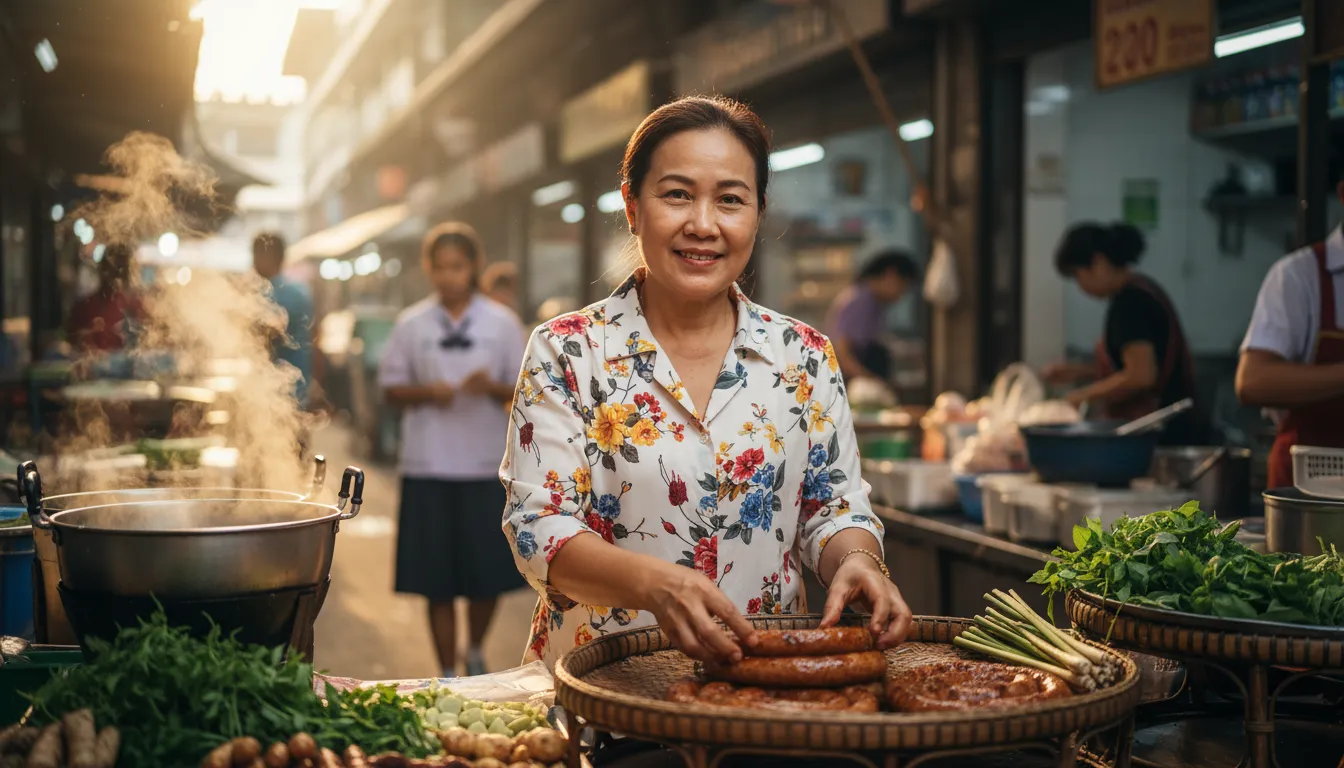
You cannot talk about Lanna cooking without starting with khao soi. This coconut curry noodle soup balances rich, warming spice with a sharp hit of pickled mustard greens. At the nameless stalls near the Clock Tower, a bowl sets you back just 50 THB (£1.10) and tastes intensely earthy. Then there is nam ngiao. This is a soupy, tomato-based rice noodle broth bobbing with pork ribs and cubes of curdled blood. It carries a deeply savoury, slightly tart profile, best eaten at the specialist shophouses behind the main hospital for around 40 THB (£0.90). You also need to track down sai ua. This northern pork sausage is packed with lemongrass, galangal, and fiery chillies. It is smoky, herbaceous, and packs a lingering heat, usually sold by weight at Kad Luang for about 100 THB (£2.20) a coil. Another staple is jin som mok, fermented minced pork wrapped in banana leaves and grilled over charcoal. It delivers a sour punch tempered by the fire, easily found at the Sunday Walking Street for 30 THB (£0.65). Finally, look out for khao kan chin. Rice is kneaded with minced pork and pork blood, then steamed in a banana leaf parcel. Despite the daunting description, it tastes rich, savoury, and comforting, especially when topped with crispy fried garlic at the morning market for 25 THB (£0.55).
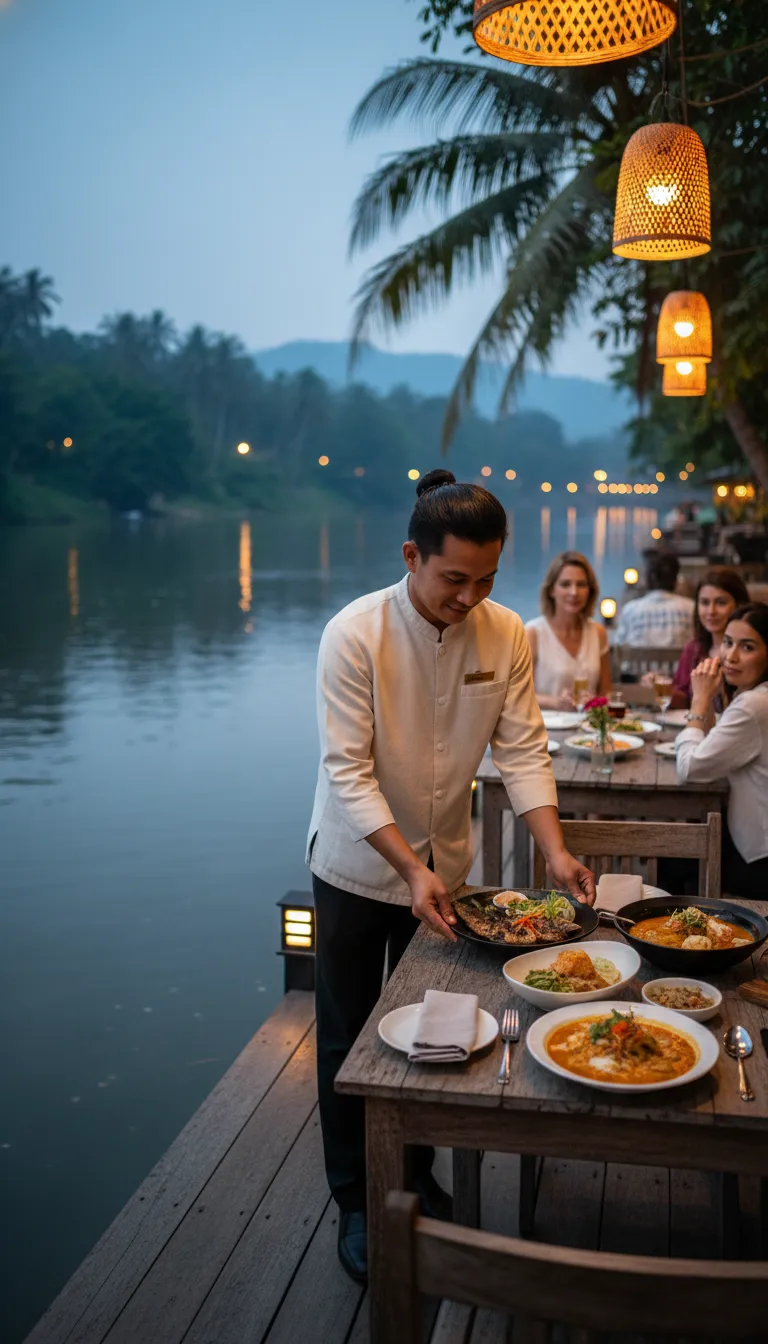
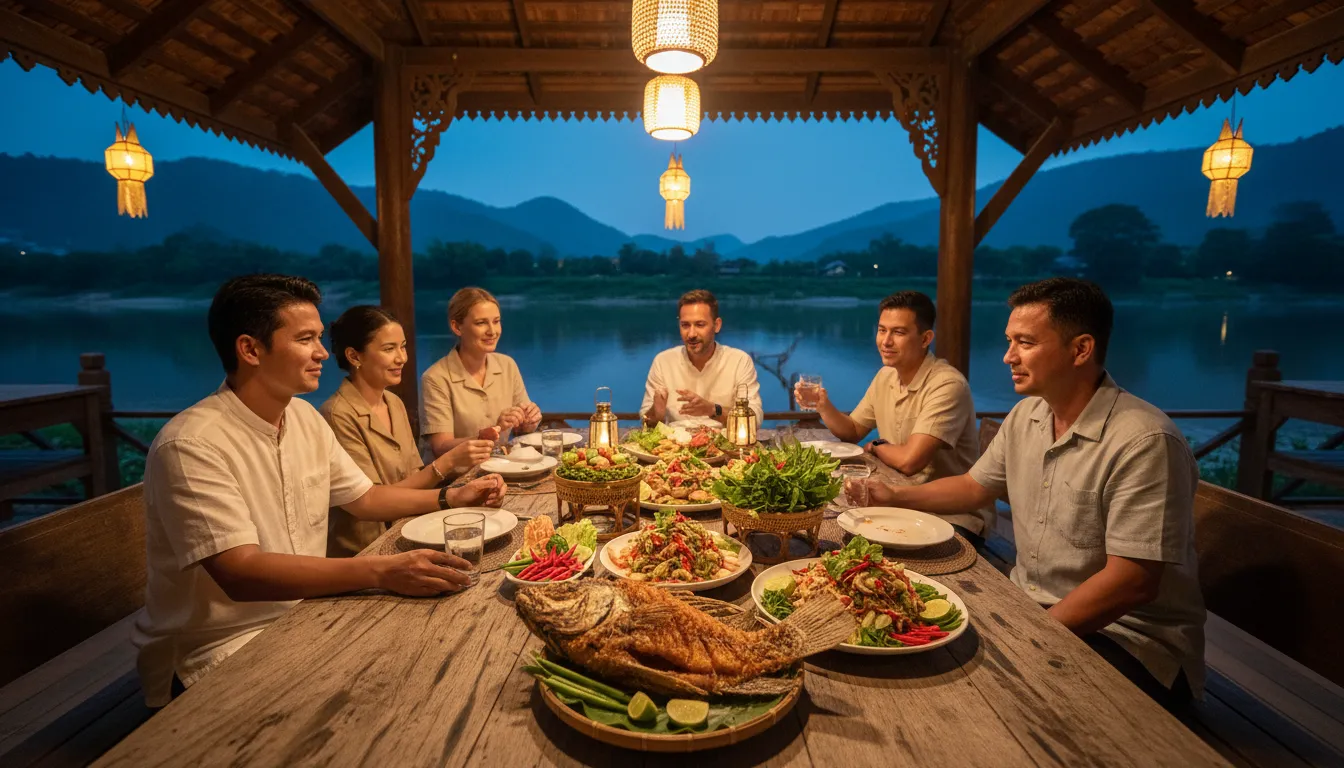
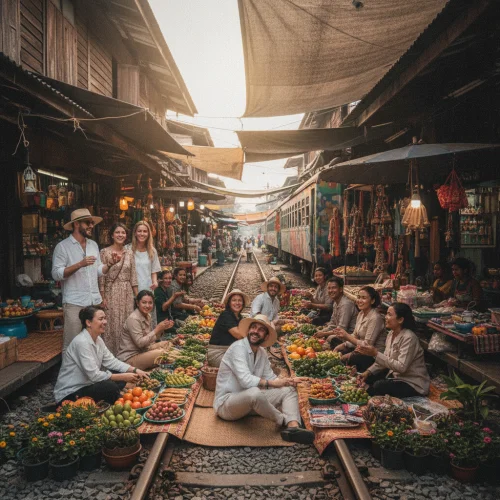
The Chiang Rai Night Bazaar is the obvious starting point for most arrivals. It offers sprawling food courts where a solid plate of pad thai or grilled tilapia costs roughly 150 THB (£3.30). For a much more localised experience, head down to San Khong Noi Road on a weekend evening. This is where domestic tourists go for regional specialities, dropping around 300 THB (£6.60) per person for a sprawling feast of dips and grilled meats. If you want to eat where the actual residents do, wake up early and navigate the labyrinthine alleys of Kad Luang, the municipal market. This multi-level hub is brilliant for grazing on 20 THB (£0.45) snacks and steaming bowls of congee before the heat sets in. For a slightly more elevated evening, the riverside stretch along the Kok River features wooden pavilions serving deep-fried snakehead fish and fiery salads. Expect the bill here to come in at 500 THB (£11.00) a head.
STREET FOOD GUIDE
Timing is everything here. The best street food windows are sharply defined. Morning markets peak at 6am and shut entirely by 9am, while night stalls rarely fire up their woks before dusk. Look for vendors with queues of locals in school or hospital uniforms. They always know where the turnover is highest. Skip the pre-cut fruit sitting under neon lights and hand 40 THB (£0.90) to a vendor to slice a whole mango to order. When sitting at shared tables in the Chiang Rai Night Bazaar, simply leave a small gap between your group and strangers to politely claim your space without causing offence.
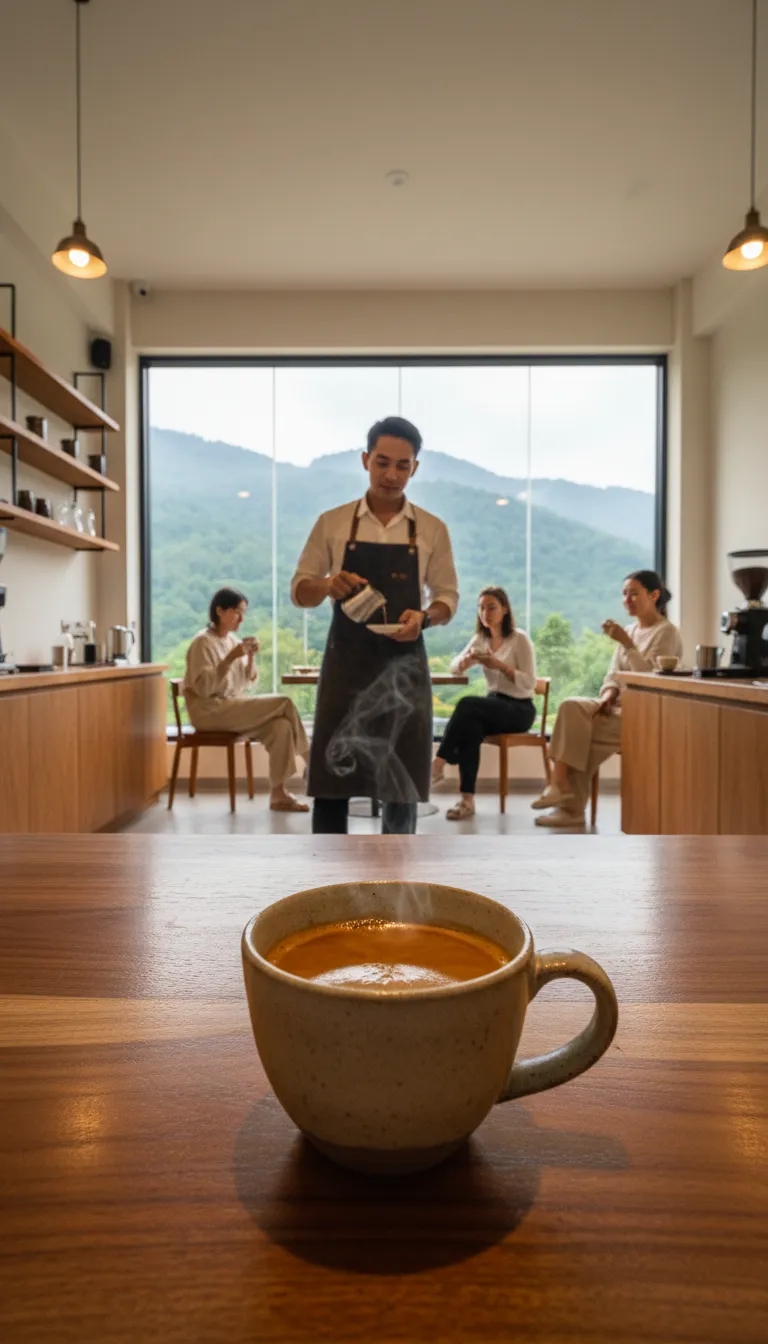
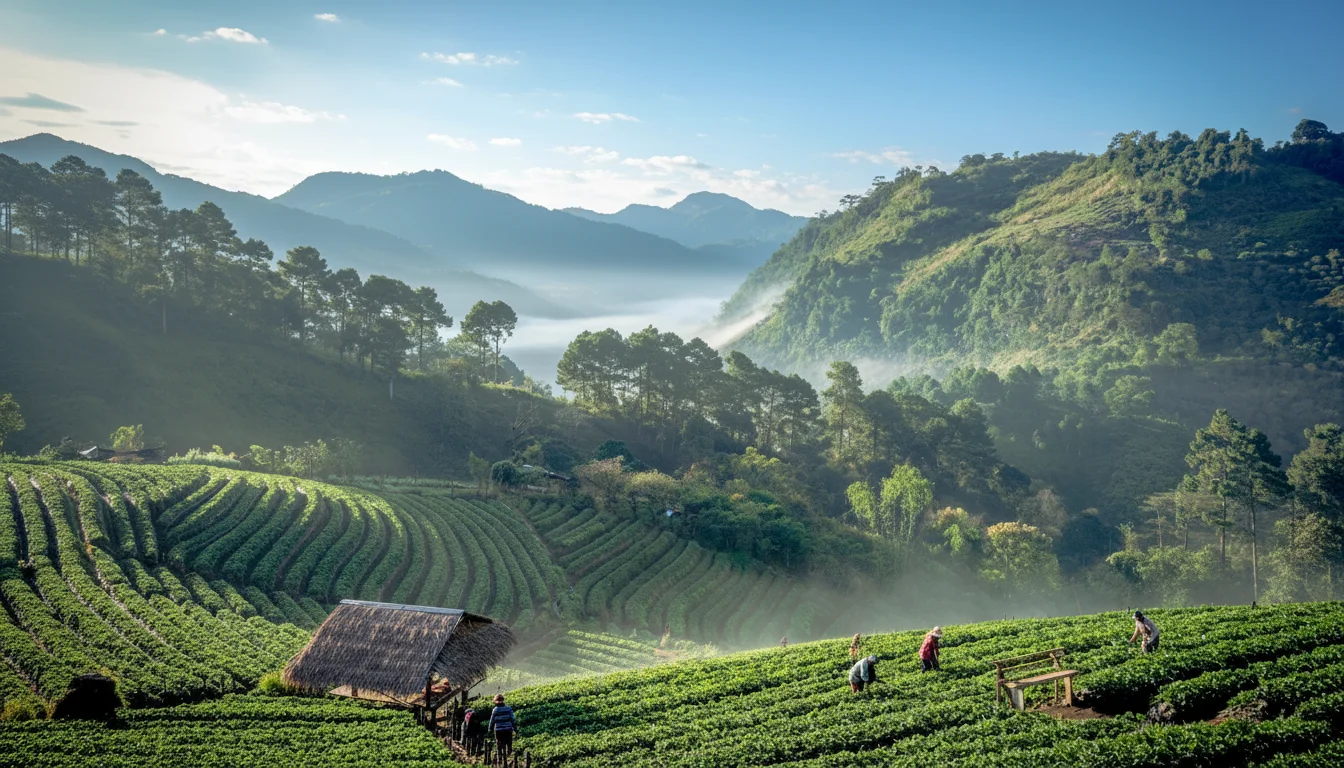
Coffee is the lifeblood of this province. Beans from the nearby Doi Chang peaks produce a rich, chocolatey espresso, poured in nearly every independent cafe for around 60 THB (£1.30). As evening falls, massive frosted jugs of Leo or Chang beer dominate the tables, usually priced at 90 THB (£2.00) for a large bottle. For something distinctly northern, try nam bua yai. This sweet, pink pennywort juice costs just 20 THB (£0.45).
The restaurants immediately encircling the White Temple charge inflated prices for thoroughly diluted, uninspired curries. You are much better off jumping in a 100 THB (£2.20) tuk-tuk and riding ten minutes back toward the city centre to find a bustling roadside noodle shack. Similarly, avoid the temptation to order standard green curry in this province. The region excels at clear, broth-based curries without coconut milk. Pivot to a complex, herbaceous gaeng hang lay instead.