Wat Phra That Doi Suthep
Wat Phra That Doi Suthep stands at an elevation of 1,053 metres, housing a relic of the Buddha supposedly carried up the mountain by a legendary white elephant in 1383. This active monastery remains northern Thailand’s most venerated religious site, distinguished by a 24-metre-tall gold-plated chedi that dominates the Chiang Mai skyline.
Operating as an active Theravada Buddhist monastery, Wat Phra That Doi Suthep is the definitive cultural landmark of Chiang Mai Province. It serves a dual role as both a major pilgrimage destination for Thai Buddhists and a primary attraction for international visitors exploring northern Thailand. The complex suits travellers interested in Lanna religious architecture, theological history, and high-altitude city viewpoints. Because it balances daily monastic routines with heavy international footfall, it requires visitors to engage respectfully with local customs, making it ideal for those seeking an authentic, heavily trafficked spiritual site.
The Legend and the Golden Chedi
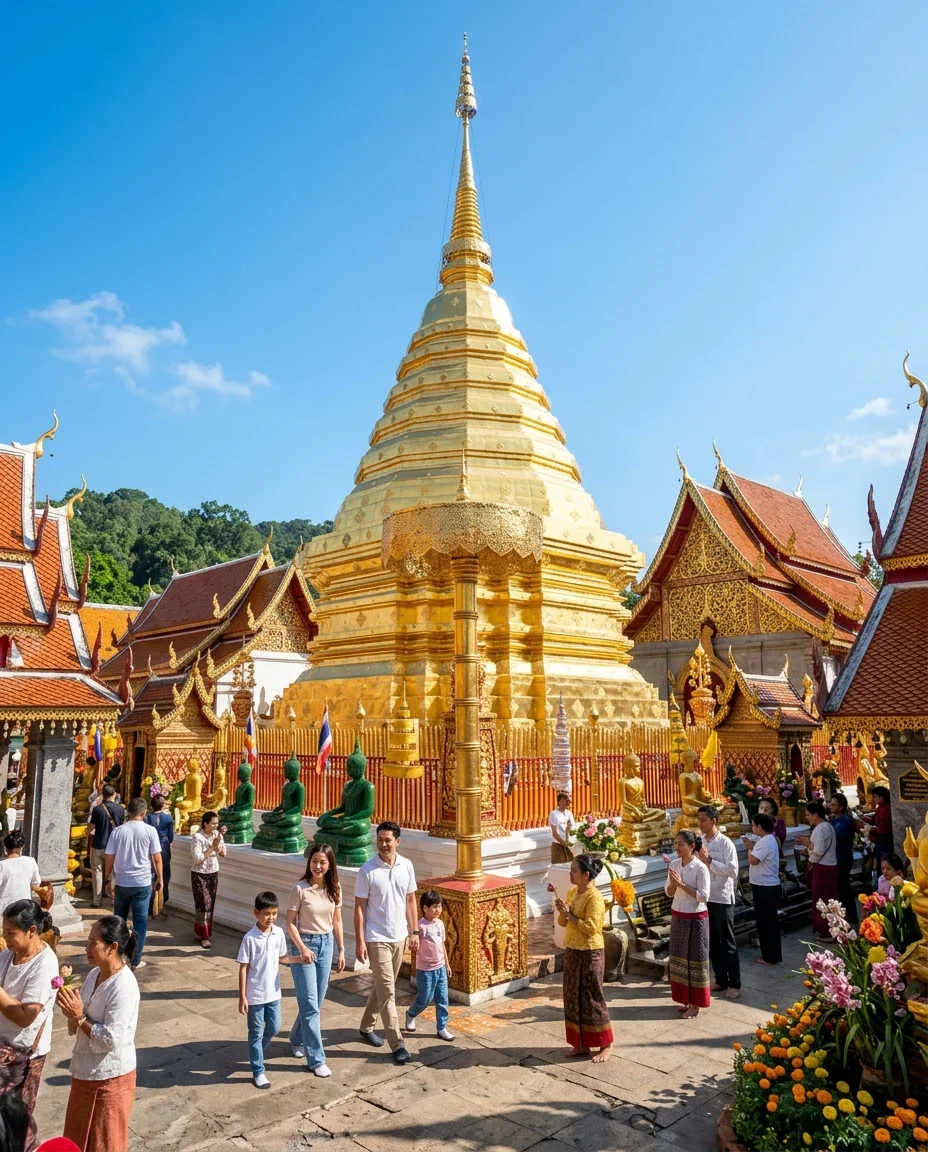
The defining focal point of Wat Phra That Doi Suthep is the 24-metre-tall, gold-plated chedi that enshrines a bone relic of the historical Buddha. According to 14th-century Lanna chronicles, King Kuena placed this relic on the back of a sacred white elephant, which climbed the mountain, trumpeted three times, turned in circles, and died, thereby choosing the site for the temple. You will see the bronze monument marking this elephant near the main entrance. The central chedi itself is a masterpiece of northern Thai Lanna architecture, featuring a stepped octagonal base and a bell-shaped spire topped with a five-tiered ceremonial umbrella. Surrounding the base, devotees walk clockwise holding lotus blossoms, lit incense, and yellow candles in quiet reverence. Beyond the central monument, the inner courtyard contains detailed, hand-painted murals depicting the Jataka tales—the previous lives of the Buddha—alongside dozens of Buddha images in varying postures cast in bronze, stone, and jade. A visit here requires observing the sharp distinction between the architectural grandeur and the active religious devotion taking place around you. Take time to examine the intricate filigree work on the golden parasols that flank the four corners of the main stupa.
Master the terrain of northern Thailand. Our Chiang Mai geography guide covers the 2,565-metre peak of Doi Inthanon, local topography, and monsoon forests.
The Naga Staircase and Cable Car
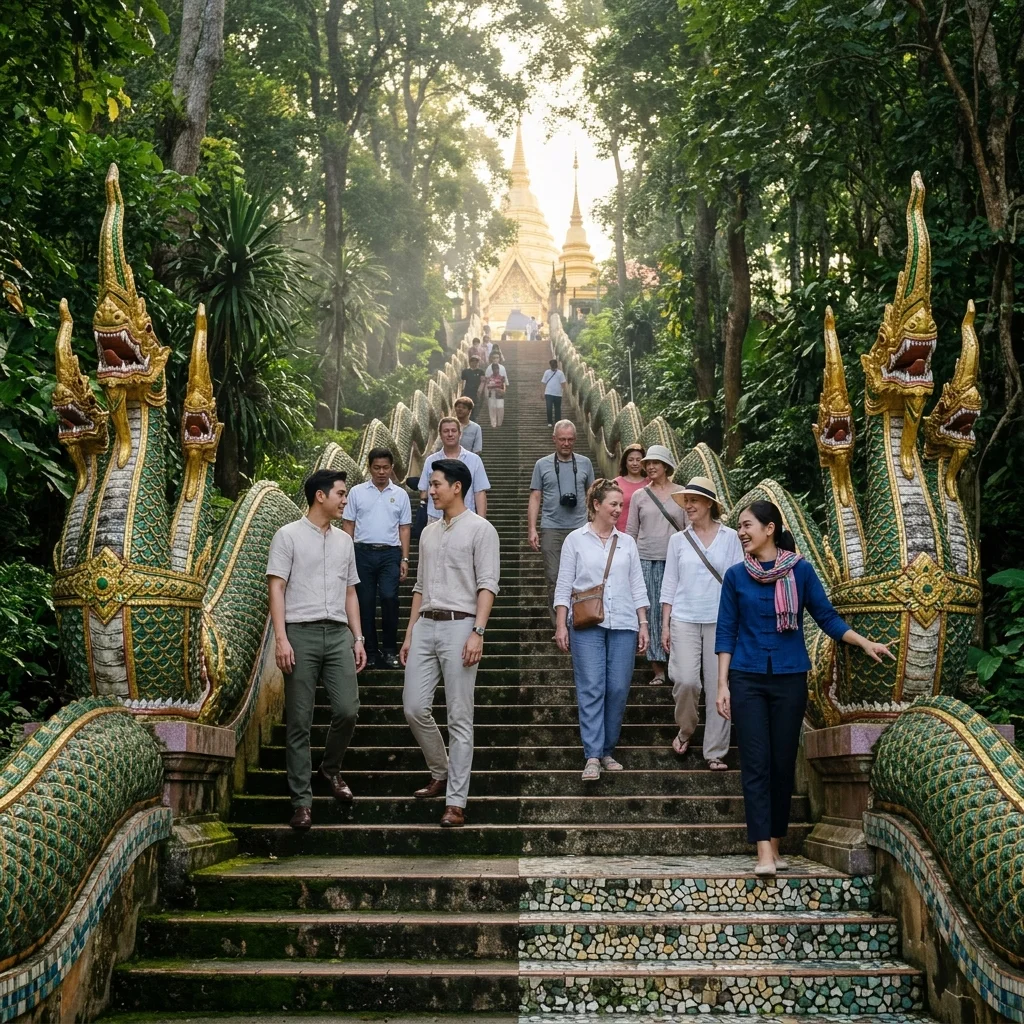
Accessing the upper temple complex requires navigating the steep incline from the road level to the monastic grounds. The traditional route involves climbing a 306-step staircase flanked by two imposing, multi-headed Naga (mythological serpents) whose undulating, scale-covered bodies form the balustrades all the way to the top. The staircase presents a physical challenge in the northern Thai heat, but it forms an important, merit-making part of the pilgrimage experience for many local visitors. Along the lower steps, you will encounter local Hmong children in traditional dress and various vendors selling hill-tribe textiles and carved wooden crafts. If mobility is an issue or you prefer to conserve energy, an enclosed funicular cable car operates alongside the staircase. This glass-sided, air-conditioned vernacular railway costs 20 THB (0.45 GBP) for foreigners and takes approximately three minutes to reach the summit. It deposits you directly at the upper terrace, bypassing the physical exertion entirely while offering limited views of the surrounding tree canopy. Whether you climb or ride, arriving at the summit courtyard provides a distinct sense of transition from the commercial lower levels to the sacred upper precincts. Choose the method that best matches your physical comfort level and available time.
Inside the Inner Courtyard
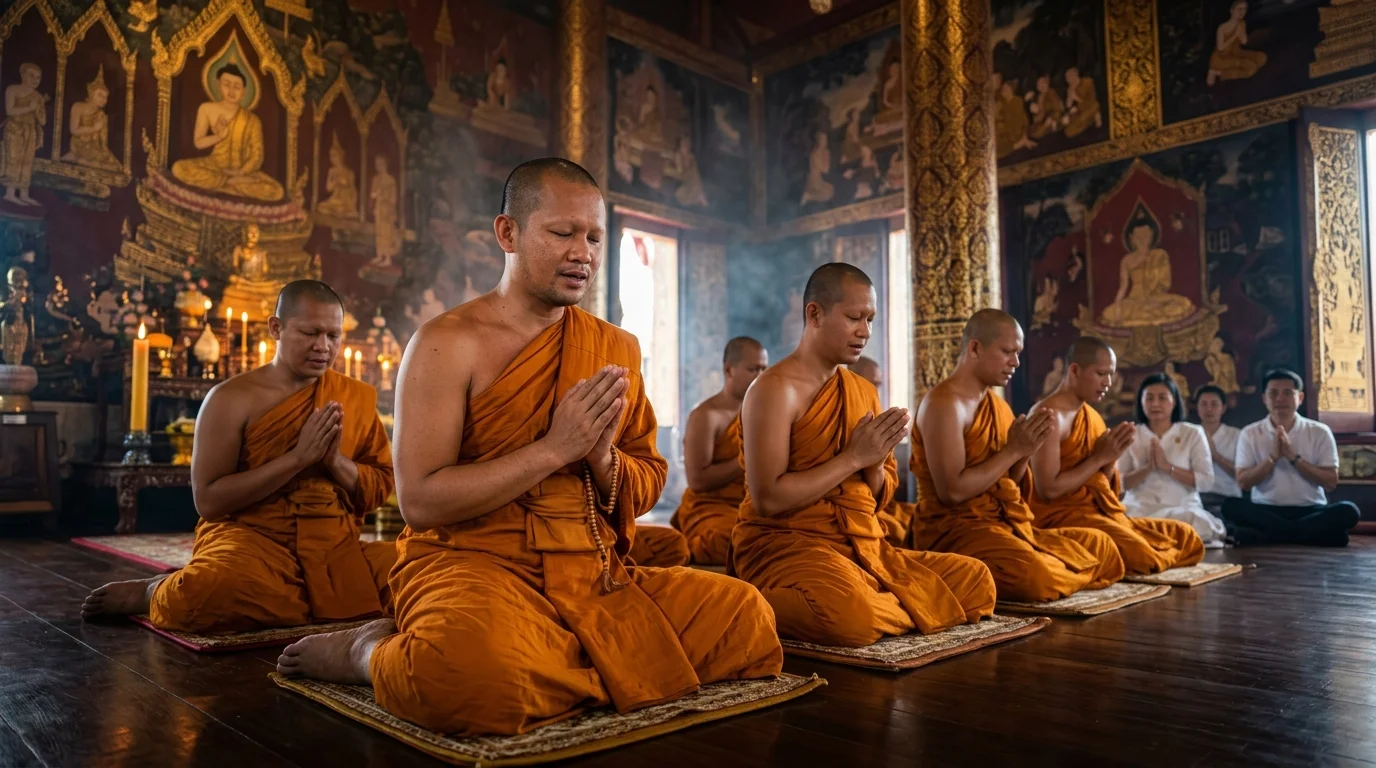
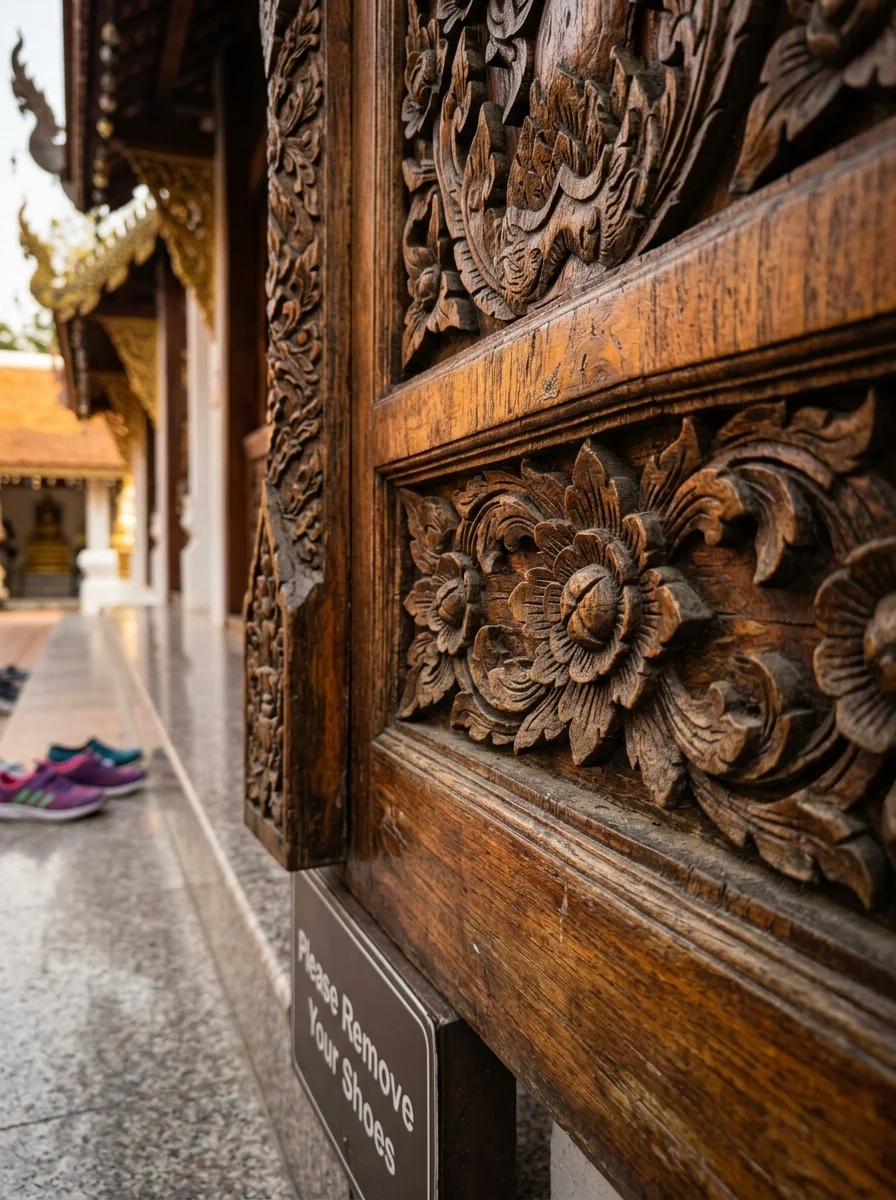
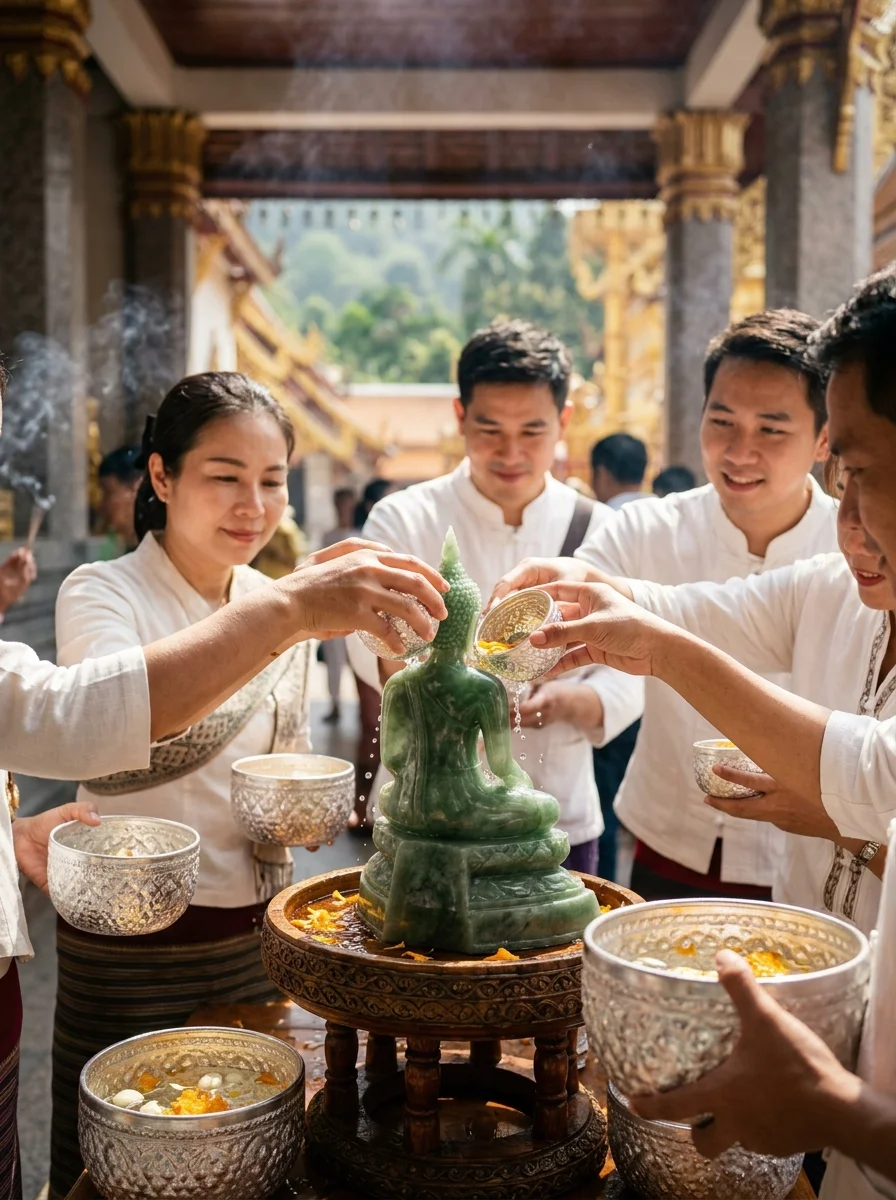
The inner courtyard operates as the spiritual nucleus of the temple, demanding strict adherence to dress codes and behavioural norms. Before stepping over the raised wooden threshold—which you must step over, never on, to respect the guardian spirits—you are required to remove your shoes and leave them on the provided metal racks. Inside, the atmosphere shifts abruptly from the noise of the outer terraces to a concentrated quiet, punctuated by the rhythmic chanting of resident monks and the shaking of bamboo fortune sticks (siem si). The main viharn (assembly hall) houses the principal Buddha image, a heavily gilded statue seated in the subduing Mara posture beneath a tiered wooden roof. If you arrive during a Buddhist ceremony, which occur frequently on lunar holidays and weekend mornings, you will see laypeople offering alms and receiving water blessings from the senior monks. The perimeter gallery contains an extensive collection of historical Buddha statues, each labelled with its specific mudra (hand gesture) and historical period. Visitors are welcome to sit on the carpeted floor, provided they tuck their feet backwards, pointing soles away from the religious figures. Spend at least twenty minutes observing the quiet rituals rather than merely photographing the architecture.
Phra Tamnak Phu Ping Royal Palace Grounds
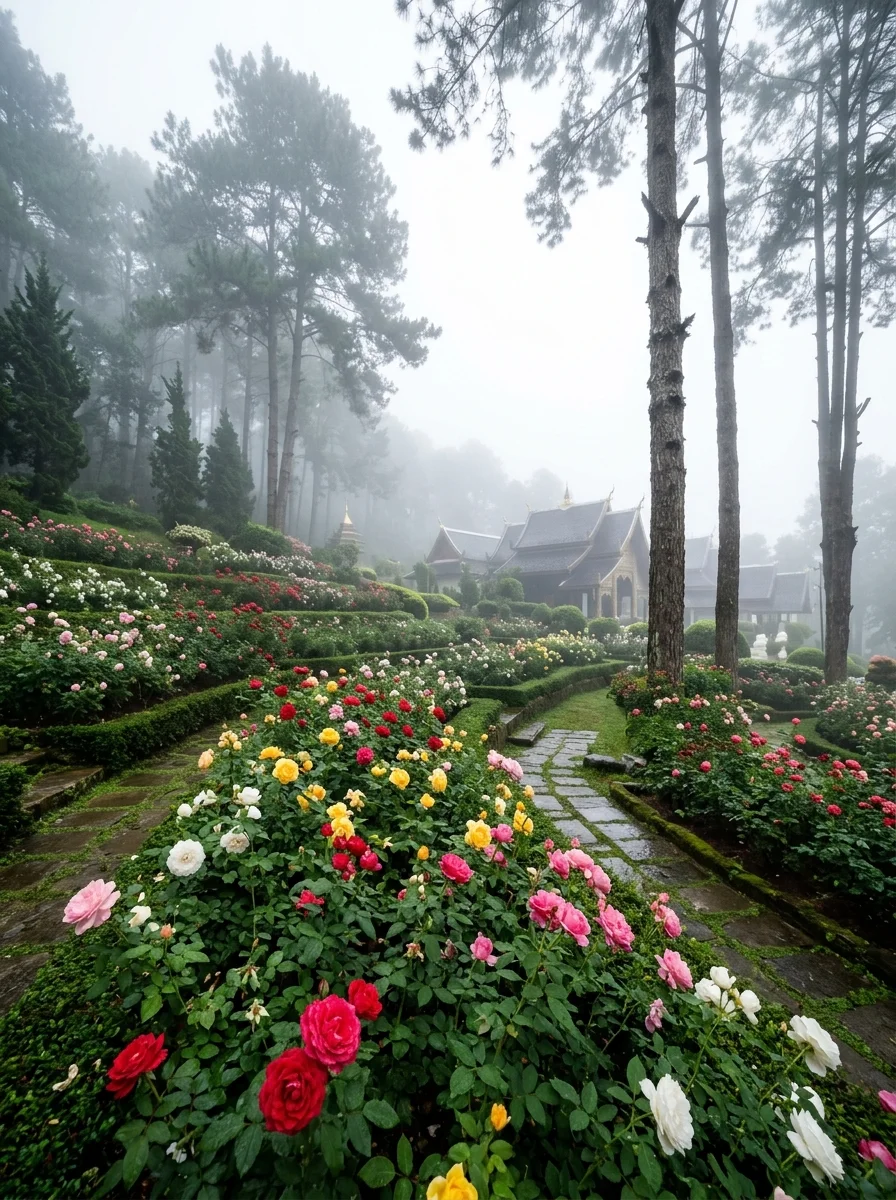
Located four kilometres further up the mountain road from the temple, the Phra Tamnak Phu Ping serves as the official winter residence for the Thai Royal Family. While managed by a completely distinct administration, a visit here logically pairs with your Doi Suthep itinerary. Built in 1961, the central palace buildings themselves are strictly closed to the public, but the extensive botanical gardens open daily when the Royal Family is not in residence. The high altitude supports temperate flora rarely seen elsewhere in Thailand, including an expansive, meticulously maintained rose garden (Suan Suwaree) and giant bamboo groves that line the walking paths. The paved pathways wind through fern gullies, past large water reservoirs, and up to a rustic teak log cabin previously used by the late King Bhumibol. Dress code enforcement here is even stricter than at the temple; no exposed shoulders, shorts, or tight trousers are permitted, and clothing rental is no longer reliably available at the front gate. The air is noticeably cooler and fresher at this elevation, offering a quiet contrast to the dense crowds at the temple complex. Combining both sites provides a complete picture of the mountain's cultural and royal significance.
Panoramic Views and Temple Grounds
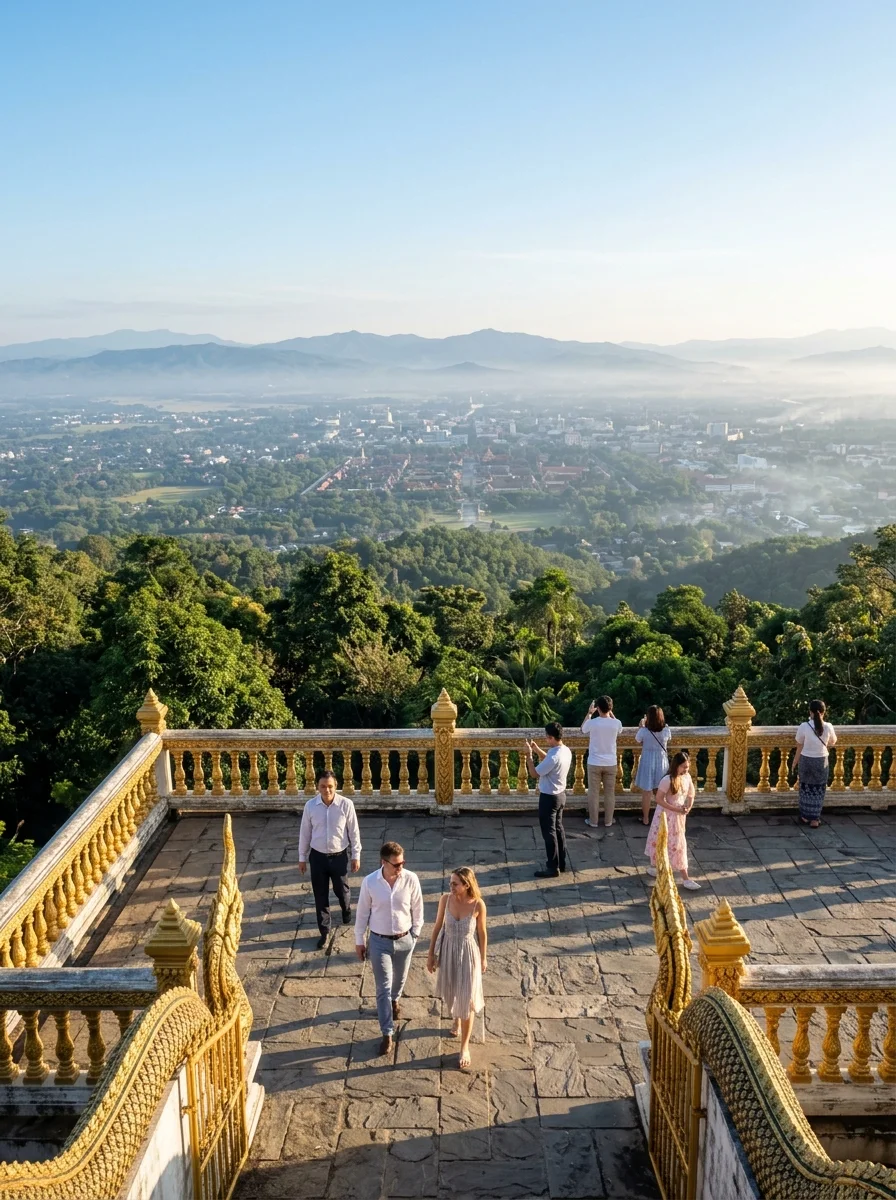
The expansive outer terrace of the temple complex delivers an unobstructed vantage point over the entire Chiang Mai valley. Walking around the marble-tiled perimeter, you will find a large, stone-paved viewing platform equipped with coin-operated binoculars pointing eastwards. On a clear day, the square grid of the old city moat, the runway of Chiang Mai International Airport, and the distant peaks of the Mae Rim district are entirely visible. The outer grounds also house several secondary shrines, including a prominent statue dedicated to the Hindu god Ganesh, reflecting the syncretic nature of Thai Buddhism. A series of large bronze bells line the western edge of the terrace; visitors strike these sequentially with a wooden mallet to accumulate merit and announce their presence to the heavens. Large, ancient bodhi trees provide deep shade across the courtyard, with stone benches placed strategically for rest near a small coffee stand. During the annual burning season (February to April), the valley view is often entirely obscured by thick agricultural smoke, making the immediate temple architecture the primary focus. Check the local air quality index before planning your visit if the viewpoint is your main priority.
Location and Getting There
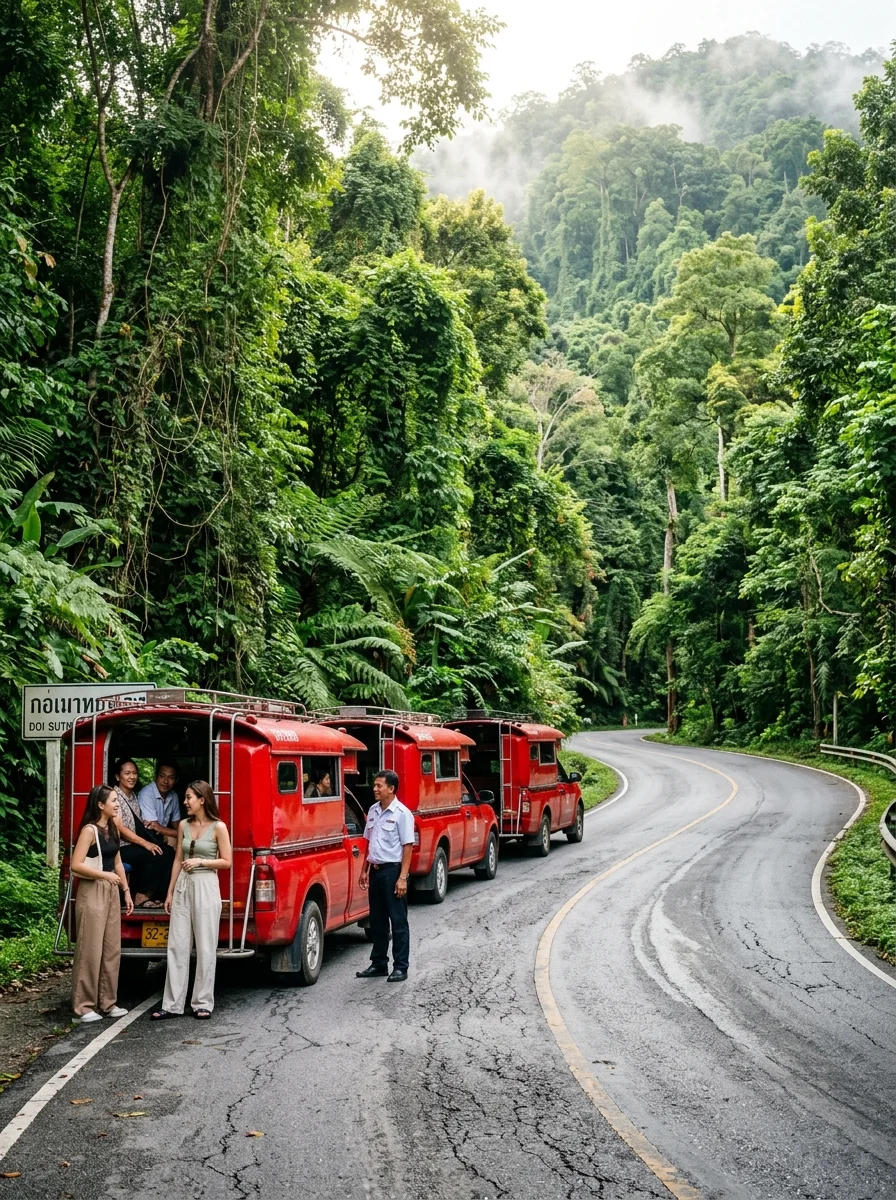
Wat Phra That Doi Suthep sits 15 kilometres west of Chiang Mai's city centre, perched on the densely forested eastern flank of the Doi Suthep-Pui National Park. Reaching the temple requires navigating Highway 1004, a steep, continuously winding road with numerous sharp switchbacks that climbs rapidly from the city limits. For most UK visitors, the most practical and traditional transport method is a shared red songthaew (converted pickup truck with two bench seats). These depart from the Chang Phuak Gate or the Chiang Mai Zoo entrance, leaving only once they have collected eight to ten passengers. A one-way shared trip costs between 50 THB and 80 THB (1.10 GBP to 1.80 GBP) per person, taking roughly 40 minutes from the city base. Alternatively, you can charter a private songthaew for approximately 600 THB (13.50 GBP) round-trip, which allows you to set your own timetable, avoid waiting for other passengers, and include the nearby Phu Ping Palace. Ride-hailing apps like Grab will drop you at the entrance, but securing a return journey via the app is incredibly difficult due to limited cellular reception and driver availability on the mountain.
Costs and Booking
Wat Phra That Doi Suthep operates on a straightforward entry fee system, with no advance booking required or available for general admission. Foreign visitors must purchase a physical ticket at the small kiosks located at the base of the Naga staircase or directly adjacent to the cable car station. The standard entry fee is nominal and goes entirely towards the upkeep of the monastic grounds, cleaning facilities, and maintaining the complex. If you opt to use the funicular cable car instead of climbing the stairs, a separate transport ticket is required. Unlike commercial hotels or private attractions, there are no seasonal price fluctuations; the rates remain static throughout the peak high season (November to February) and the rainy low season. Guided tour operators in Chiang Mai will frequently bundle these entry costs with private transport, hotel pick-up, and the services of an English-speaking guide, usually charging around 1,200 THB (27.00 GBP) for a half-day package. Be aware that donations inside the temple—for purchasing incense, lotus flowers, candles, or specific merit-making activities—are entirely voluntary and separate from the admission fee.
| Option | Cost (THB) | Cost (GBP approx) | Notes |
|---|---|---|---|
| Foreigner Entry Ticket | 30 THB | 0.70 GBP | Mandatory for non-Thai nationals, purchased at the gate. |
| Cable Car Ticket (One Way) | 20 THB | 0.45 GBP | Optional alternative to the 306-step Naga staircase. |
| Phu Ping Palace Entry | 50 THB | 1.10 GBP | Separate attraction 4km further up the mountain. |
| Private Songthaew Charter | 600 THB | 13.50 GBP | Round trip from Chiang Mai city, includes waiting time. |
Who It Suits Best
This site is essential for first-time visitors to northern Thailand, cultural history enthusiasts, and photographers interested in Lanna religious architecture. It accommodates families well, provided children can manage the steep stairs or parents are willing to use the cable car. Solo travellers will find it exceptionally safe, welcoming, and easy to navigate independently without a guide. It is not suitable for visitors unwilling to adhere to strict modest dress codes or those seeking a quiet, solitary meditation retreat, as the main terraces are heavily congested with large tour groups daily. Travellers with severe mobility restrictions can access the upper levels via the cable car but may find the uneven floor tiles and raised wooden thresholds challenging.
What to Know Before You Visit
The dress code is strictly enforced at all entry points by temple staff. You must wear clothing that covers your shoulders and knees completely; sheer fabrics, ripped jeans, and tight leggings will result in denied entry until you hire a cover-up sarong.
Crowds peak between 10:00 and 14:00 when the large, multi-axle coach tours arrive from the city hotels. Arriving precisely at sunrise (around 06:00) allows you to witness the monks collecting alms and photograph the golden chedi without hundreds of people in the frame.
The mountain road is notoriously winding and highly prone to inducing motion sickness. If you suffer from travel sickness, take preventative medication 30 minutes before boarding a songthaew, as the driver will rarely stop during the ascent.
Footwear must be removed frequently when entering specific pavilions and the inner courtyard. Wear slip-on shoes or sandals that are easy to manage, but ensure they have enough grip for the steep exterior staircases and wet marble floors.
Practical Tips
Bring a pair of clean socks in your day bag. The marble tiles around the central chedi absorb intense heat by midday, making barefoot walking highly uncomfortable.
Carry small denomination baht notes (20s and 50s). You will need exact change for the cable car, transport fares, public toilets, and optional merit-making activities inside the complex.
Avoid pointing your feet at any Buddha image or monk when sitting on the floor inside the viharn. This is considered highly offensive in Thai culture; always tuck your legs underneath or behind you.
Check the Chiang Mai air quality index between February and April before making the journey. The famous panoramic view is completely lost to agricultural smog during these months, altering the value of the trip if you are only going for the photos.
Walk clockwise around the main golden chedi when you enter the inner courtyard. This follows the Buddhist tradition of circumambulation, showing respect for the relics enshrined within the monument.
Do not engage with the vendors selling caged birds for release near the car park. While marketed as a merit-making activity, it sustains an unethical wildlife capture industry that harms local bird populations.
Drink plenty of water before beginning the 306-step ascent from the road level. The humidity and altitude combination can cause rapid dehydration, and beverages are only sold at the top and bottom of the stairs.
Quick Reference
| Item | Detail | Notes |
|---|---|---|
| Property Name | Wat Phra That Doi Suthep | Often referred to simply as 'Doi Suthep'. |
| Location | Doi Suthep-Pui National Park, Chiang Mai | 15 km west of the old city. |
| Property Type | Active Buddhist Temple & Attraction | Royal temple of the second class. |
| Category | Must-See Cultural Landmark | Top visited site in northern Thailand. |
| Operating Hours | 06:00 to 20:00 Daily | Sunrise visits highly recommended. |
| Nearest Airport | Chiang Mai International Airport (CNX) | Approximately 45 minutes by car. |
| Distance to City Centre | 15 Kilometres | 40 minutes via Highway 1004. |
| Dress Code | Strict Modesty Required | Covered shoulders and knees mandatory. |