Thailand - Visa Extensions
Thailand has announced a reduction in visa-free entry for UK nationals from 60 days to 30 days, reversing the temporary 60-day allowance introduced in 2024. This change has not yet been enacted into law — this page will be updated with full details, including the confirmed implementation date, as soon as the legislation is passed.
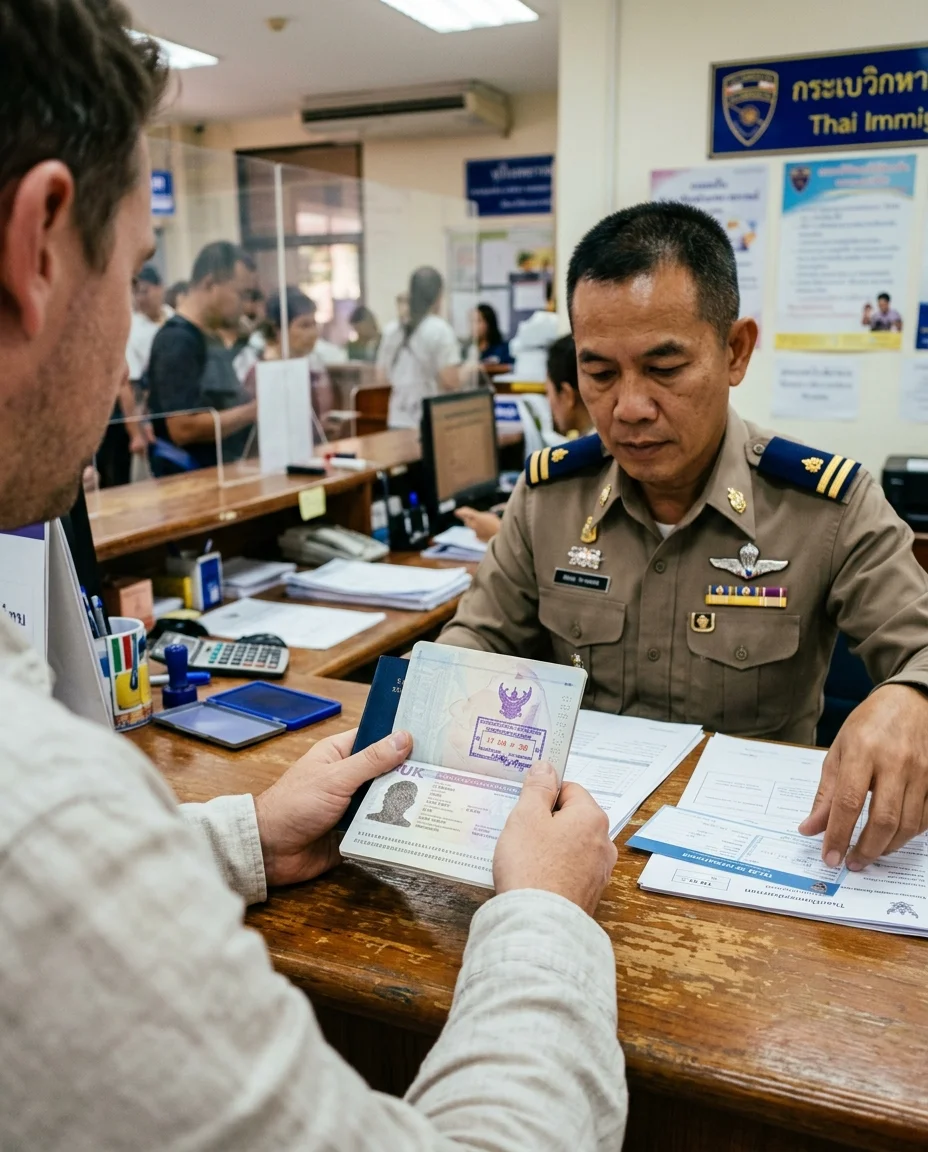
Extending any Thai visa or entry exemption costs exactly 1,900 THB and must be completed in person at an immigration office before your current permission to stay expires. Failing to secure an extension results in a daily 500 THB overstay fine and potential deportation.
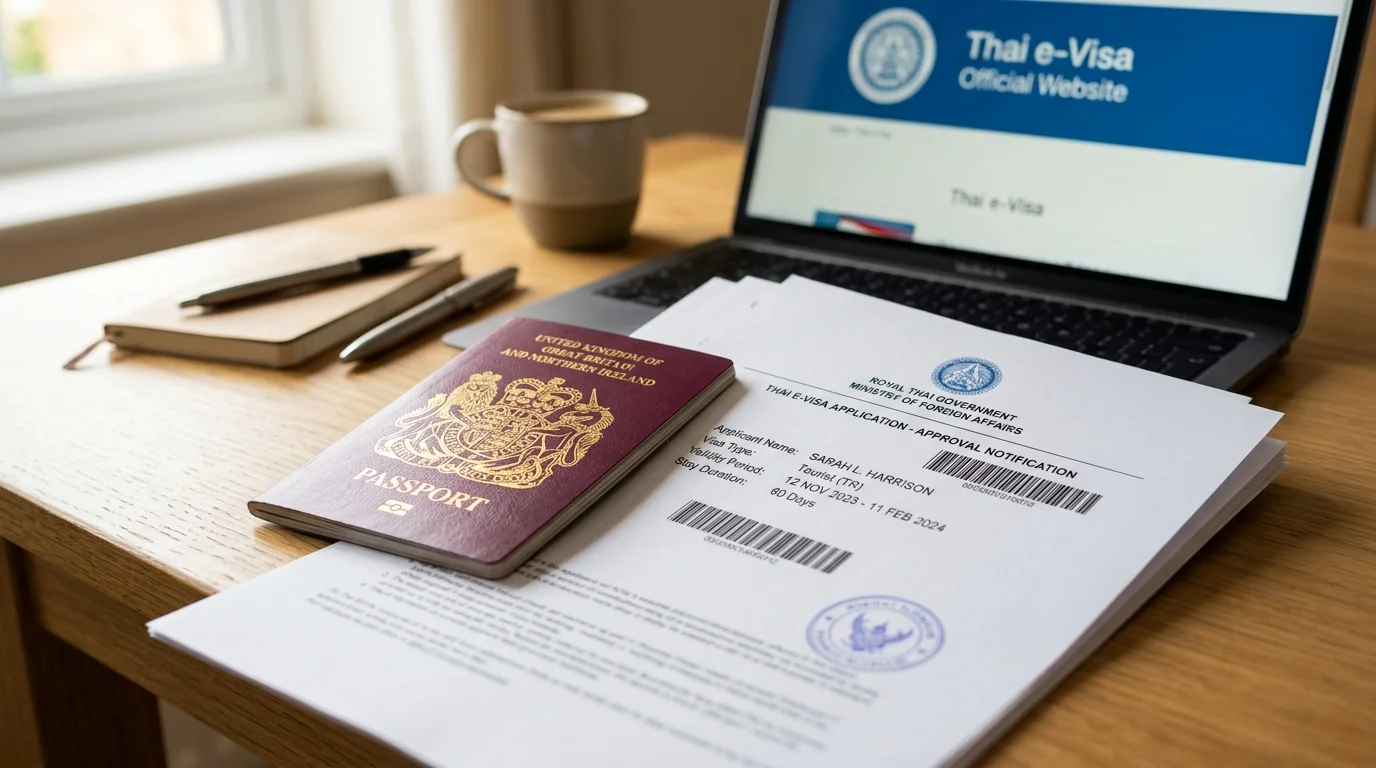
This guide explains exactly how to extend your stay in Thailand, detailing the requirements for 60-day visa exemptions, Tourist Visas, and Non-Immigrant OA, B, and ED visas. It will help you navigate the application process at major immigration offices, prepare the correct documents, and understand your TM30 reporting obligations. This information is specifically for UK nationals already inside Thailand seeking legal extensions, not those applying for initial visas from abroad.

Visa Extension Rules by Type
The duration of your extension depends entirely on the visa category you entered Thailand with. UK nationals entering on the 60-day visa exemption scheme can extend their stay once for an additional 30 days at any local immigration office. If you hold a 60-day Tourist Visa (TR) obtained from a Thai embassy in the UK, you are equally eligible for a single 30-day extension, bringing your total consecutive stay to 90 days. Non-Immigrant visa holders face significantly more complex rules. Those on a Non-Immigrant ED (Education) visa typically receive 90-day extensions, which are strictly tied to their school's curriculum, attendance records, and periodic language tests administered by immigration officers. Non-Immigrant B (Business) visa extensions require extensive corporate documentation from your employer, alignment with your valid work permit, and are usually granted for one year. Non-Immigrant OA (Retirement) holders must prove ongoing financial stability, such as maintaining 800,000 THB in a Thai bank account for three months prior to application or demonstrating a monthly income of 65,000 THB, to secure their annual extension. Applications must be submitted within the final 30 days of your current stamp, or within the final 45 days for retirement visas. Always apply for your extension at least one week before your current stamp expires to allow time for document corrections.
Understand Thailand's health entry requirements, from recommended UK vaccinations to mandatory health insurance minimums for long-stay visas like the Non-O-A.
| Visa Category | Initial Stay Limit | Extension Granted |
|---|---|---|
| Visa Exemption | 60 Days | 30 Days |
| Tourist Visa (TR) | 60 Days | 30 Days |
| Non-Immigrant ED | 90 Days | Up to 90 Days |
| Non-Immigrant OA | 1 Year | 1 Year |
Required Documents for Every Extension
Sponsored
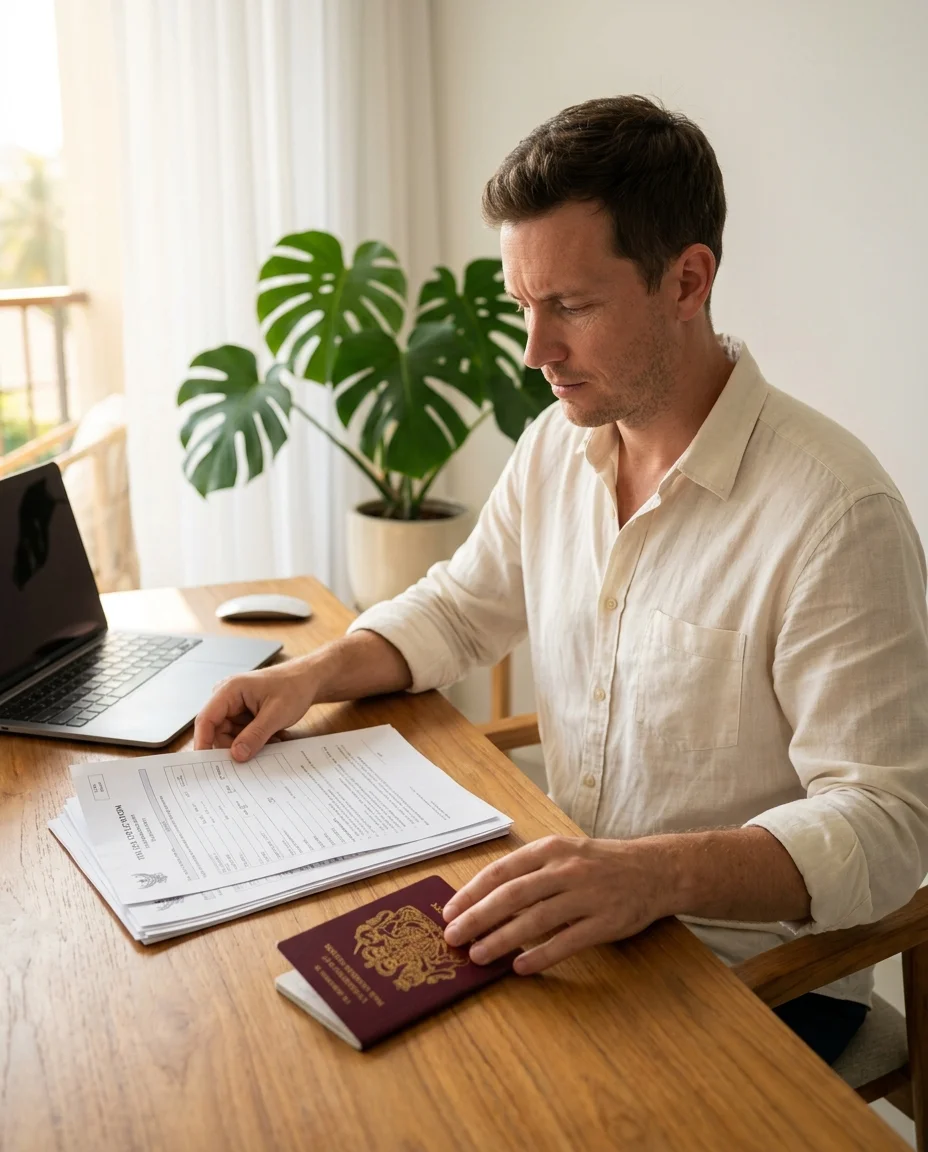
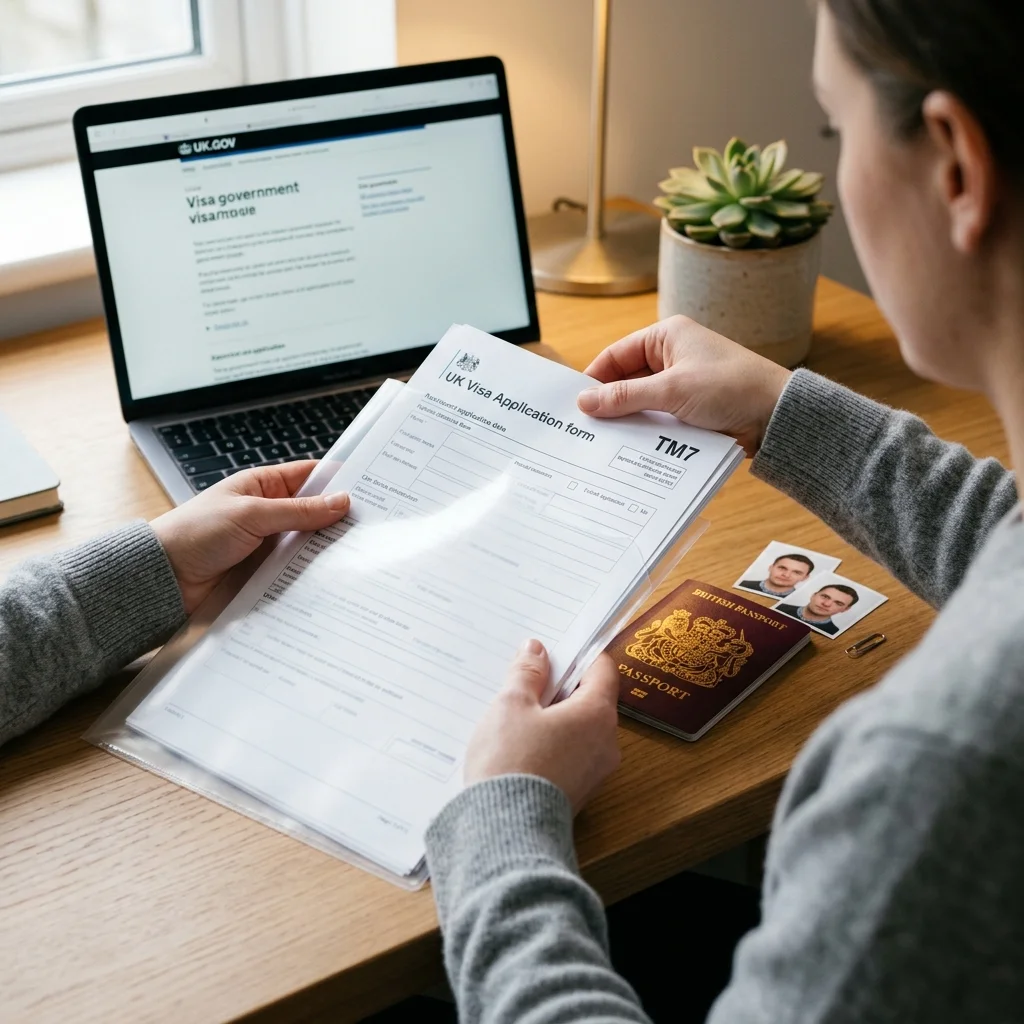
You must supply a specific set of standard documents for any extension, alongside visa-specific paperwork tailored to your status. Every applicant needs a completed TM7 extension form, which you can download online or collect directly at the immigration office. You must provide your original UK passport containing at least six months of validity. You must also supply photocopies of the biometric details page, your current Thai visa, the entry stamp showing your permission to stay, and your departure card (TM6) if one was issued. Two recent passport-sized photographs measuring exactly 4x6 cm must be glued securely to the TM7 form. Alongside these basics, you must provide proof of your address in Thailand. This requires a printed copy of your TM30 receipt, demonstrating your landlord has registered your presence. Non-Immigrant extensions demand heavily regulated supporting evidence. ED visa holders need an official certification letter from the Ministry of Education alongside detailed school attendance records. Non-B applicants must supply their company registration papers, monthly tax filings, and a valid work permit book. Bring a blue ballpoint pen to sign every single photocopy, as black ink is frequently rejected by Thai immigration officers during the initial document screening. Prepare all photocopies and photographs before arriving at the immigration office to avoid paying inflated fees at on-site copy shops.
| Document Required | Short-Term (Tourist/Exempt) | Long-Term (Non-Immigrant) |
|---|---|---|
| Original Passport & Copies | Yes | Yes |
| Completed TM7 Form & Photos | Yes | Yes |
| TM30 Address Proof | Yes | Yes |
| Financial/Corporate Evidence | No | Yes |
Where to Apply and Realistic Wait Times
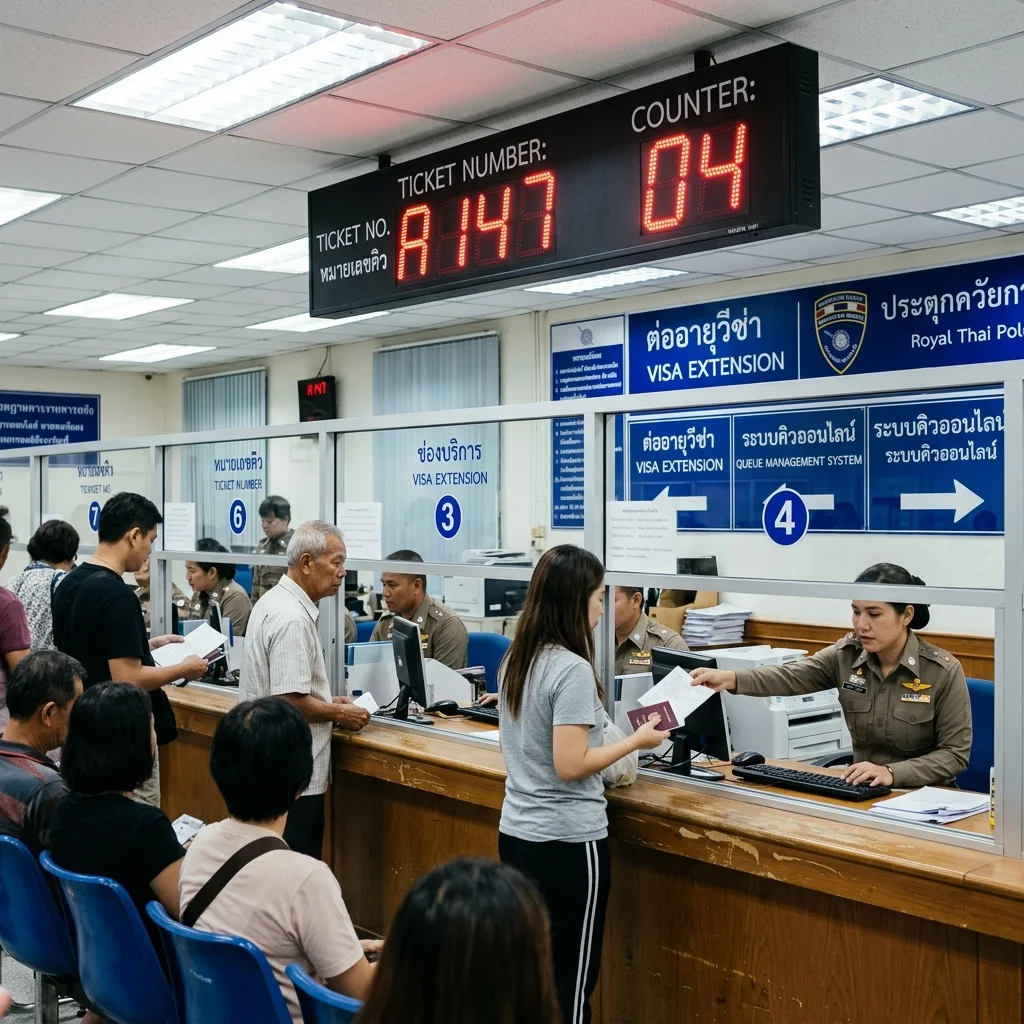
Extension applications must be submitted to the specific immigration office that holds jurisdiction over your registered residential address. In Bangkok, most short-term extensions for tourist visas and exemptions are processed at the IT Square Laksi office, while long-term Non-Immigrant extensions are handled at the sprawling Government Complex at Chaeng Watthana. Wait times in Bangkok vary drastically based on the time of day. Arriving when doors open at 8:30 AM usually means a two-hour wait, whereas arriving at midday can easily push processing into the late afternoon. The Phuket Immigration Office in Phuket Town is notoriously busy, often requiring a stressful half-day commitment during the peak tourist season running from November to March. In Chiang Mai, the primary office located near the airport heavily promotes an online queuing system, but walk-in applicants should expect to wait between three and four hours in crowded conditions. The Jomtien office in Pattaya handles an exceptionally high volume of retirement extensions and operates efficiently, often processing standard applications in under two hours. Be aware that immigration officers take a mandatory lunch break between 12:00 PM and 1:00 PM nationwide, during which all processing stops entirely. Arrive at your designated office 30 minutes before it opens to secure an early queue number and avoid the afternoon backlog.
| Location | Primary Office Focus | Expected Wait Time |
|---|---|---|
| Bangkok (Chaeng Watthana) | Long-term & Non-Immigrant | 2 to 4 hours |
| Bangkok (IT Square Laksi) | Tourist & Exemption | 1 to 3 hours |
| Phuket Town | All visa types | 3 to 5 hours |
| Pattaya (Jomtien) | Retirement & Tourist | 1 to 2 hours |
The Application Process on the Day
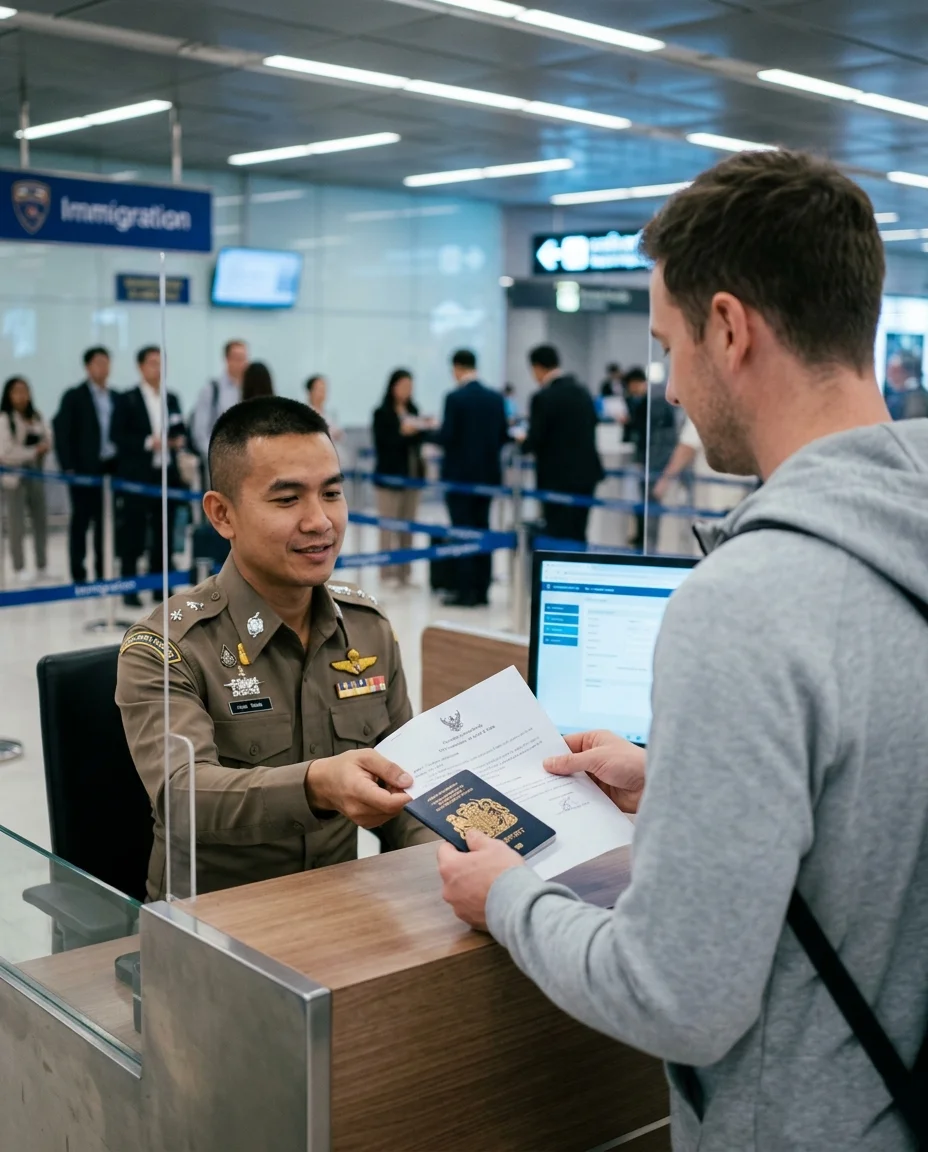
Navigating a Thai immigration office requires patience and a clear understanding of the bureaucratic sequence. Upon arrival, you must present your fully completed TM7 form and supporting documents to a preliminary screening desk. The officer here will quickly review your paperwork to ensure nothing is missing and that all photocopies are signed in blue ink. Once approved at screening, you will be handed a numbered queue ticket and directed to a specific waiting area. When your number appears on the digital screens, you must approach the designated counter and hand over your passport alongside the 1,900 THB fee. The officer will take your photograph using a webcam and may ask brief questions regarding your accommodation or onward travel plans. You will then be asked to sit down again while a senior officer reviews and physically signs off on the extension stamp. Finally, your name will be called to retrieve your passport, complete with the new permission to stay date stamped inside. Always verify the new expiration date on the stamp before leaving the immigration counter to ensure no clerical errors were made.
The TM30 and 90-Day Reporting Reality
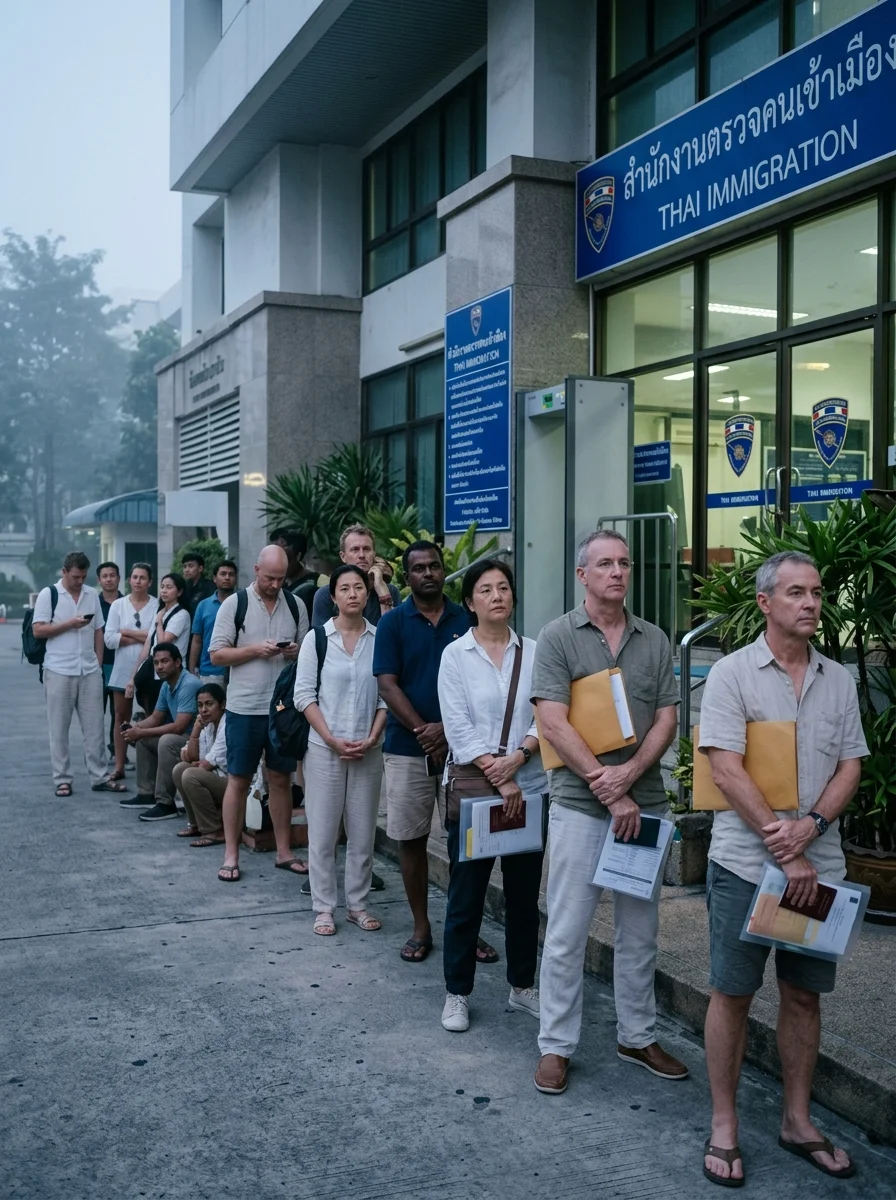
Holding a valid visa extension requires strict compliance with address reporting regulations under Thai immigration law. The TM30 is a legal obligation for landlords to report a foreigner's arrival at their property within 24 hours, but the bureaucratic burden of proof falls entirely on you during an extension application. If your landlord has not filed a TM30, the immigration office will refuse your TM7 extension form until the omission is corrected. For UK nationals holding long-term Non-Immigrant visas, the 90-day reporting requirement (form TM47) runs parallel to your visa extension. You must confirm your current residential address with immigration every 90 days you remain continuously in the country. This report is entirely separate from your annual extension and does not grant any additional days of stay. You can file the 90-day report online, by registered post, or in person up to 15 days before or 7 days after the specified due date. Missing this critical deadline incurs a 2,000 THB fine, which rises to 5,000 THB if you are arrested for an unrelated reason. Always ask your landlord for a screenshot or printed receipt of the TM30 submission the day after you check into a new property.
Overstay Rules and the 7-Day Grace Period
Remaining in Thailand past your stamped exit date carries severe financial penalties and risks future bans from entering the country. If you overstay your visa, you will be fined exactly 500 THB per day, up to a strict maximum of 20,000 THB. This fine is payable in cash at the airport departure desk or at a local immigration office. However, if police catch you on an overstay during a routine check before you voluntarily declare it, you face immediate detention at the Immigration Detention Centre (IDC) and subsequent deportation back to the UK. Overstays exceeding 90 days result in an automatic one-year ban from re-entering Thailand, scaling up to a ten-year ban for longer offenses. A frequent misconception among UK travellers is the existence of an automatic grace period. There is absolutely no grace period for overstaying your permitted time. What people often refer to is the "7-day stamp." If you apply for an extension and immigration denies your request, they will stamp your passport giving you precisely 7 days to leave the country. You must still pay the full 1,900 THB application fee to receive this denial stamp. Never rely on the 7-day denial stamp as a planned travel strategy, as repeated use will severely flag your passport for future entry denials.
| Overstay Duration | Financial Penalty | Re-entry Ban |
|---|---|---|
| 1 to 39 Days | 500 THB per day | None |
| 40+ Days | 20,000 THB maximum | None |
| Over 90 Days | 20,000 THB maximum | 1 Year Ban |
| Over 1 Year | 20,000 THB maximum | 3 Year Ban |
Costs and Budgeting
Budgeting for a Thai visa extension involves more than just the official government application fee. The standard fee for any extension, regardless of whether you hold a tourist visa or a retirement visa, is exactly 1,900 THB (£42). You must pay this sum in cash directly at the immigration office counter, as card payments and bank transfers are entirely unaccepted. Beyond the primary government fee, you should allocate additional funds for necessary document preparation. Expect to pay around 100 THB (£2) for a set of passport-sized photographs and 20 THB (£0.50) for photocopies if completed at local print shops before you arrive. If you rely on the dedicated copy services located inside immigration offices, these prices often double. UK nationals applying for Non-Immigrant extensions may also incur costs for mandatory medical certificates, typically costing 500 THB (£11) at a local clinic. Hiring a professional visa agent to manage complex paperwork or secure advance queue numbers can cost between 5,000 THB and 15,000 THB (£110 to £330), depending on the specific visa type and required service level.
| Item | Cost (THB) | Cost (GBP approx) | Notes |
|---|---|---|---|
| Official Extension Fee | 1,900 THB | £42 | Cash only at the counter |
| Passport Photos (x2) | 100 THB | £2 | Obtain before arriving |
| Document Photocopies | 20 THB | £0.50 | Varies by page count |
| Medical Certificate | 500 THB | £11 | Required for specific Non-Immigrant visas |
Common Mistakes and How to Avoid Them
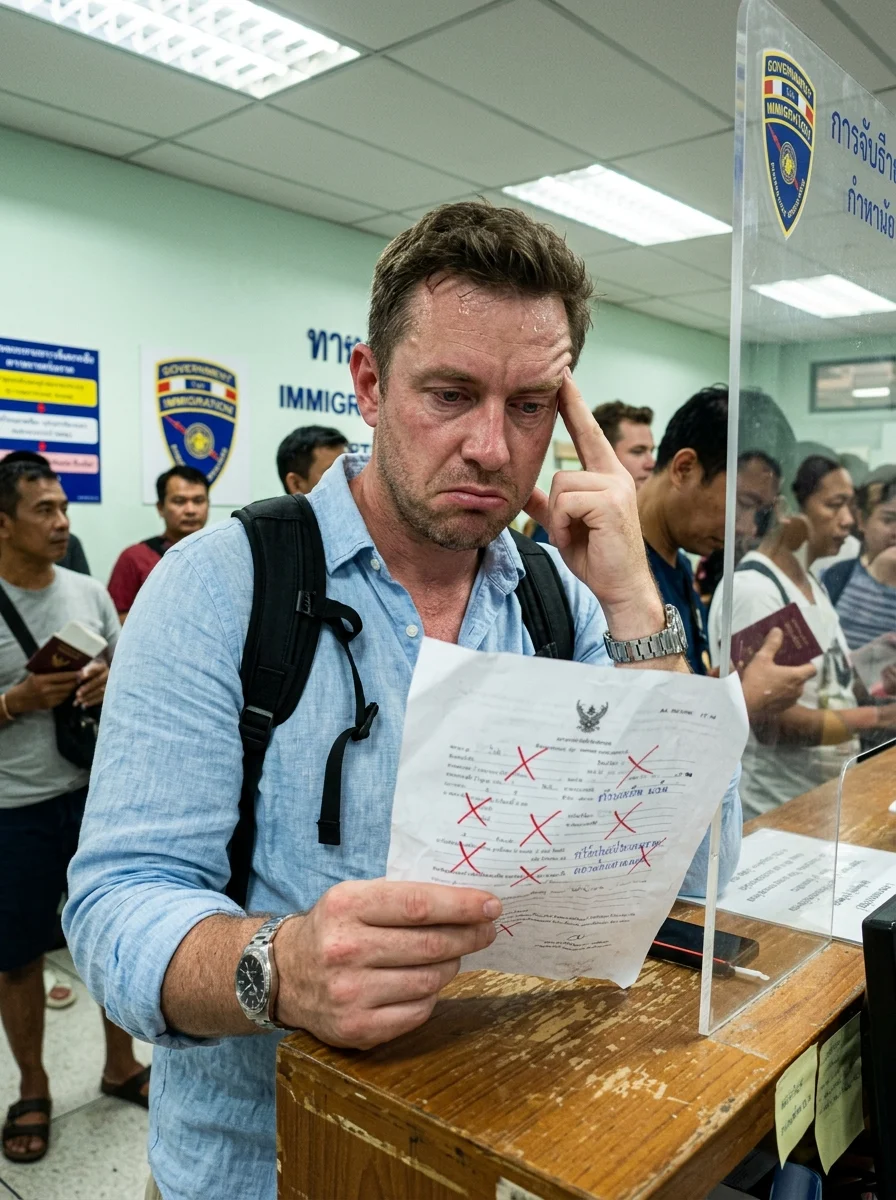
Applying on your expiration date leaves zero room for document errors. If your paperwork is incomplete and the office closes, you will incur an overstay fine the next day. Apply at least one week early to guarantee processing.
Failing to secure a TM30 receipt halts the entire application process. Immigration officers will refuse your TM7 extension form without proof of address. Demand a copy of the TM30 submission from your landlord before visiting the office.
Signing photocopies with black ink violates Thai bureaucratic standards. Officials will reject your document bundle and force you to copy and sign everything again. Bring a blue pen to sign every page of your supporting evidence.
Assuming the 90-day report grants an extension leads to unintentional overstays. The TM47 address report merely confirms your location, while the TM7 application extends your permission to stay. Track both obligations independently based on your passport stamps.
Practical Tips
Dress conservatively when visiting any Thai immigration office. Officials enforce a strict dress code and will turn you away if you wear vests, shorts, or flip-flops.
Download and complete the TM7 extension form before you leave home. Arriving with paperwork already filled out allows you to bypass the forms desk and immediately pull a queue ticket.
Carry exactly 1,900 THB in exact change for the application fee. Immigration officers rarely have change for large 1,000 THB notes early in the morning.
Always glue your passport photograph to the TM7 form rather than stapling it. Metal staples damage the processing scanners and officers will force you to remove them and re-attach the photo.
Monitor Thai public holidays closely around your expiration date. Immigration offices close entirely on national holidays, meaning you must apply beforehand to avoid accidental overstays.
Retain the lower tear-off slip from your TM7 application carefully. This slip acts as your receipt and must be presented alongside your passport if you need to return for a secondary stamp.
Ensure your passport has at least one completely blank visa page remaining. Thai immigration requires a full page to apply the large extension stamp and signature block.
[DISCLAIMER: Visa rules and fees are subject to change. Always verify current requirements with the official Thai Immigration Bureau at immigration.go.th or the Royal Thai Embassy before applying.]
Quick Reference Table
| Item | Detail | Notes |
|---|---|---|
| Standard Extension Fee | 1,900 THB | Payable in cash only |
| Visa Exemption Extension | 30 Days | Only one extension permitted per entry |
| Tourist Visa Extension | 30 Days | Only one extension permitted per entry |
| Overstay Fine | 500 THB per day | Capped at 20,000 THB |
| Application Window | Final 30 days of stay | Final 45 days for retirement visas |
| TM30 Requirement | Mandatory | Must be submitted by your landlord |