Thai Cuisine Guide: Food, Spices & Dining
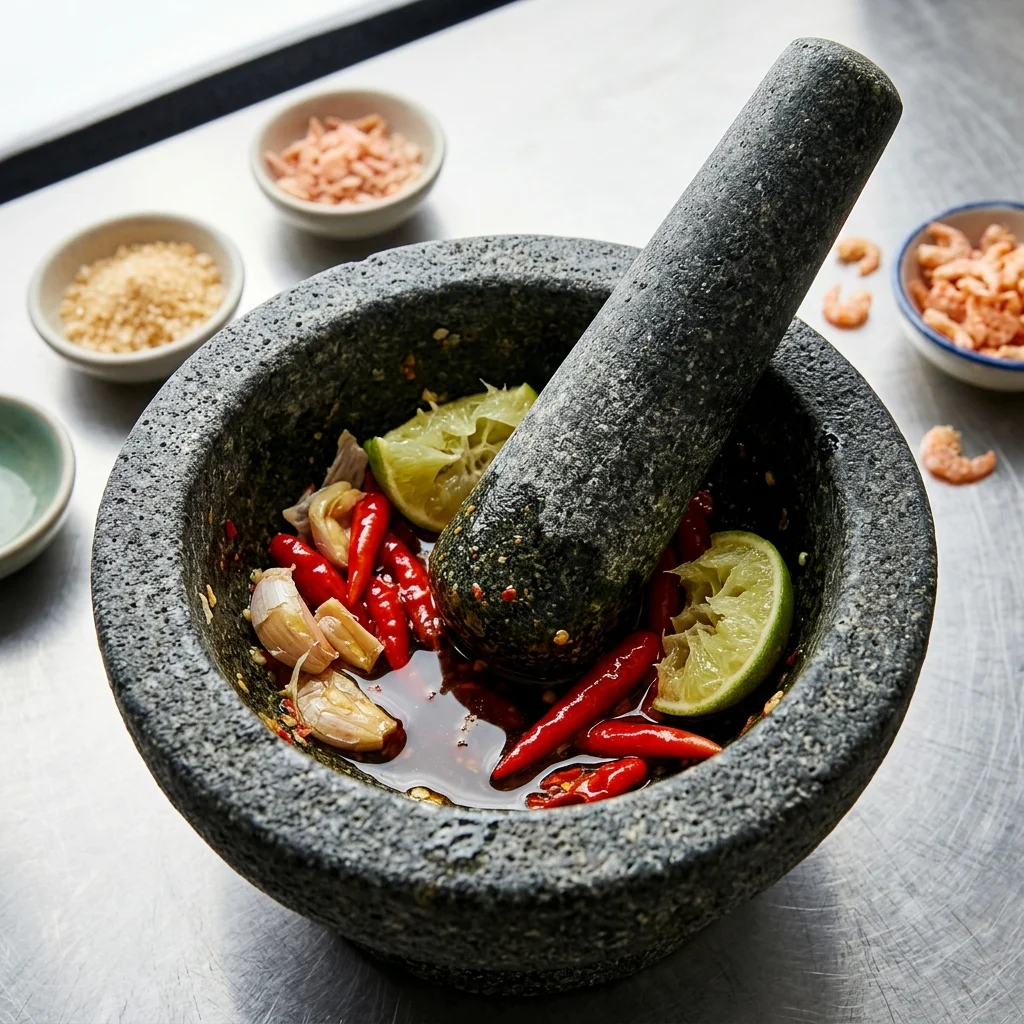
A proper Som Tum from an Isaan street cart will hit your palate with lime juice, fish sauce, palm sugar, dried shrimp, and bird’s eye chilies all within the first microsecond of tasting it. True Thai cooking relies on this exact collision of sweet, sour, salty, spicy, and umami in almost every mouthful.
This guide decodes Thai cuisine for UK visitors and expats, moving you past familiar takeaway menus into how food is actually prepared, ordered, and eaten in Thailand. You will learn to navigate regional variations, communicate your spice tolerance, and distinguish genuine local dishes from watered-down tourist fare. Whether you are pulling up a plastic stool at a Bangkok street cart or dining in Chiang Mai, you will know exactly what to order and how to eat it safely.

The Foundation of Thai Flavour
Every genuine Thai dish is engineered around a deliberate tension between sweet, sour, salty, spicy, and umami. When you eat at a UK takeaway, the food is typically heavily sweetened and the sharp, fermented notes are dialled down to suit a European palate. In Thailand, the flavour profile is entirely uncompromising. Cooks achieve sourness using fresh lime juice or thick tamarind paste, while salt and umami come from pungent fish sauce (nam pla) or fermented shrimp paste (kapi). Sweetness relies on raw palm sugar, and the intense heat is delivered via crushed bird’s eye chilies. A proper Tom Yum Goong soup demonstrates this perfectly, hitting you with sharp lime, deep prawn umami, and aggressive chili heat simultaneously. The balance shifts depending on the dish, but the objective is always a multi-layered taste rather than a single dominant note. You will notice that local diners rarely eat a dish exactly as it arrives from the kitchen. They taste it first, then use the table condiments to tweak the balance, adding a dash of vinegar for acidity or a spoonful of sugar to temper extreme spice. Taste your food before reaching for the condiment caddy, as the chef has likely already balanced the flavours to their intended profile.
Master shopping in Thailand. Discover the best Bangkok mega-malls, find genuine bargains, avoid tailor scams, and learn how to claim your tourist VAT refund.
Regional Cuisines Across the Country
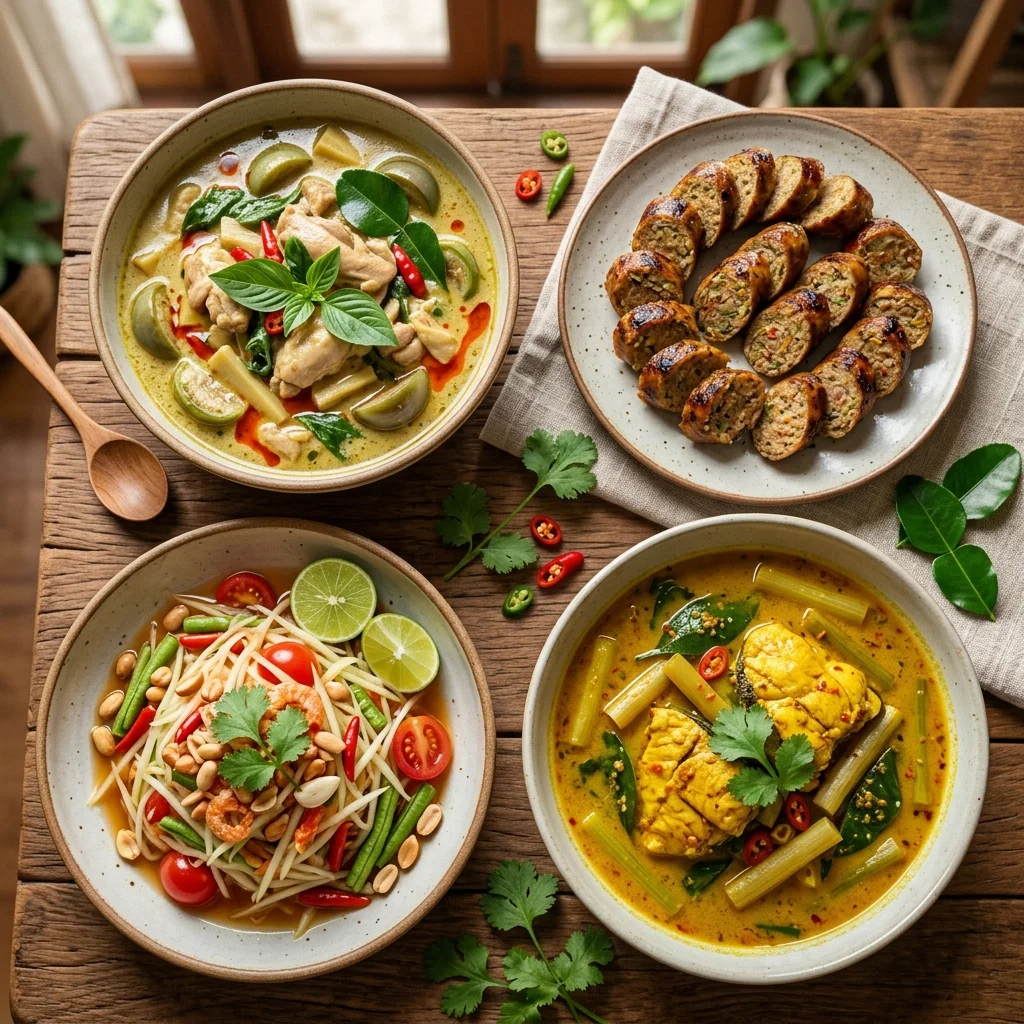
Thailand is geographically diverse, and its food is strictly divided into four main regional profiles: Central, Northern, Northeastern (Isaan), and Southern. Central Thai food, which includes Bangkok, heavily features coconut milk, resulting in the creamy green and red curries most familiar to UK visitors. The food here leans slightly sweeter and often incorporates influences from royal palace cooking. Northern Thai (Lanna) cuisine developed in a cooler, mountainous climate. It completely omits coconut milk in its traditional curries, favouring earthy, herbal, and bitter notes, with Khao Soi (curry noodle soup) being the most famous export. Northeastern or Isaan food is the most widely consumed cuisine in the country, characterised by extreme heat, sticky rice, grilled meats, and the heavy use of fermented fish sauce (plaa raa) in dishes like Som Tum (papaya salad). Southern Thai food takes the heat to an entirely different level. It relies heavily on turmeric, fresh seafood, and pungent shrimp pastes, producing intensely spicy, sharp dishes like Gaeng Som (sour curry) that will test even the strongest spice tolerance. Match your orders to your location to ensure you are eating the freshest local ingredients prepared by chefs who grew up with those specific flavour profiles.
| Region | Flavour Profile | Signature Dish | Spice Level |
|---|---|---|---|
| Central | Sweet, creamy, balanced | Green Curry (Gaeng Keow Wan) | Moderate |
| Northern | Earthy, herbal, bitter | Curry Noodles (Khao Soi) | Mild to Moderate |
| Northeastern (Isaan) | Sour, pungent, fiercely hot | Papaya Salad (Som Tum) | Very High |
| Southern | Sharp, salty, turmeric-heavy | Sour Curry (Gaeng Som) | Extreme |
How Thais Actually Eat
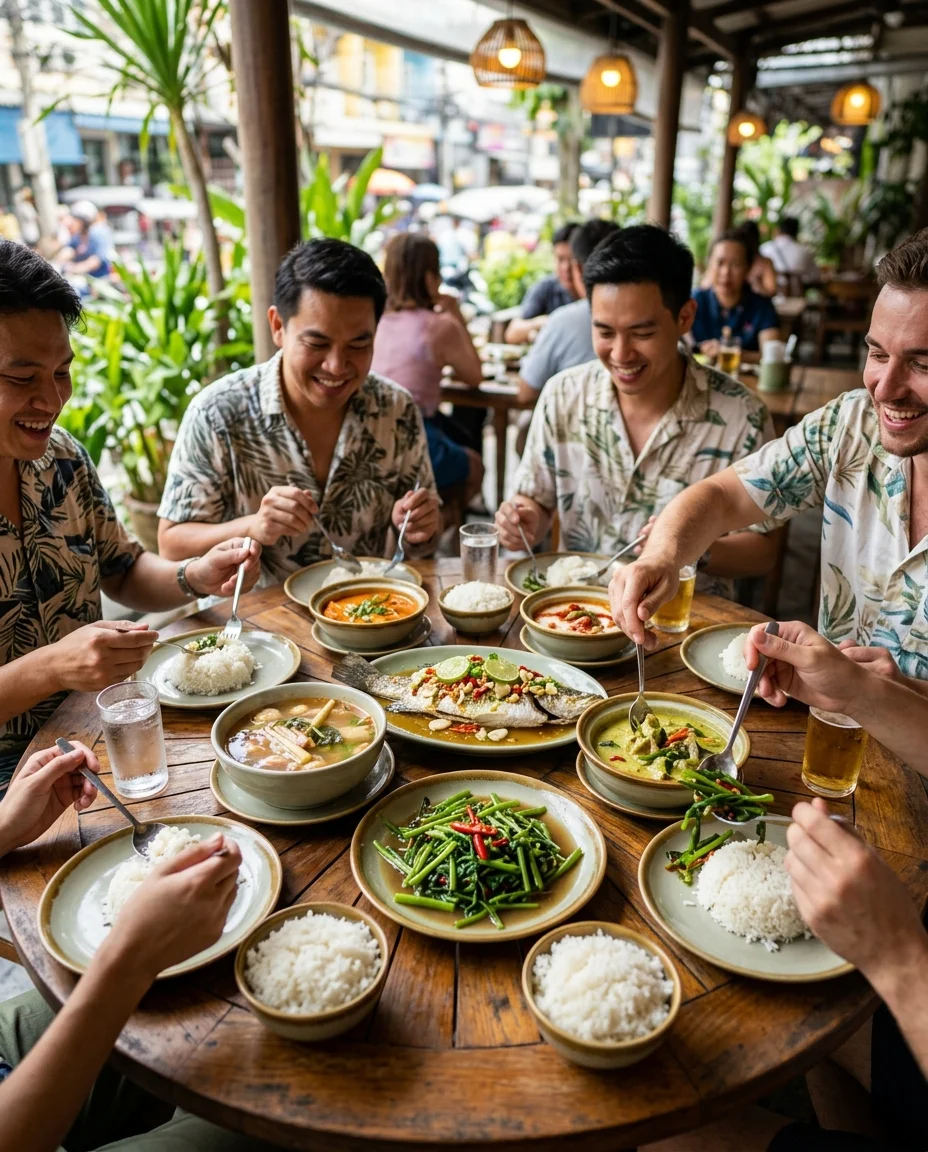
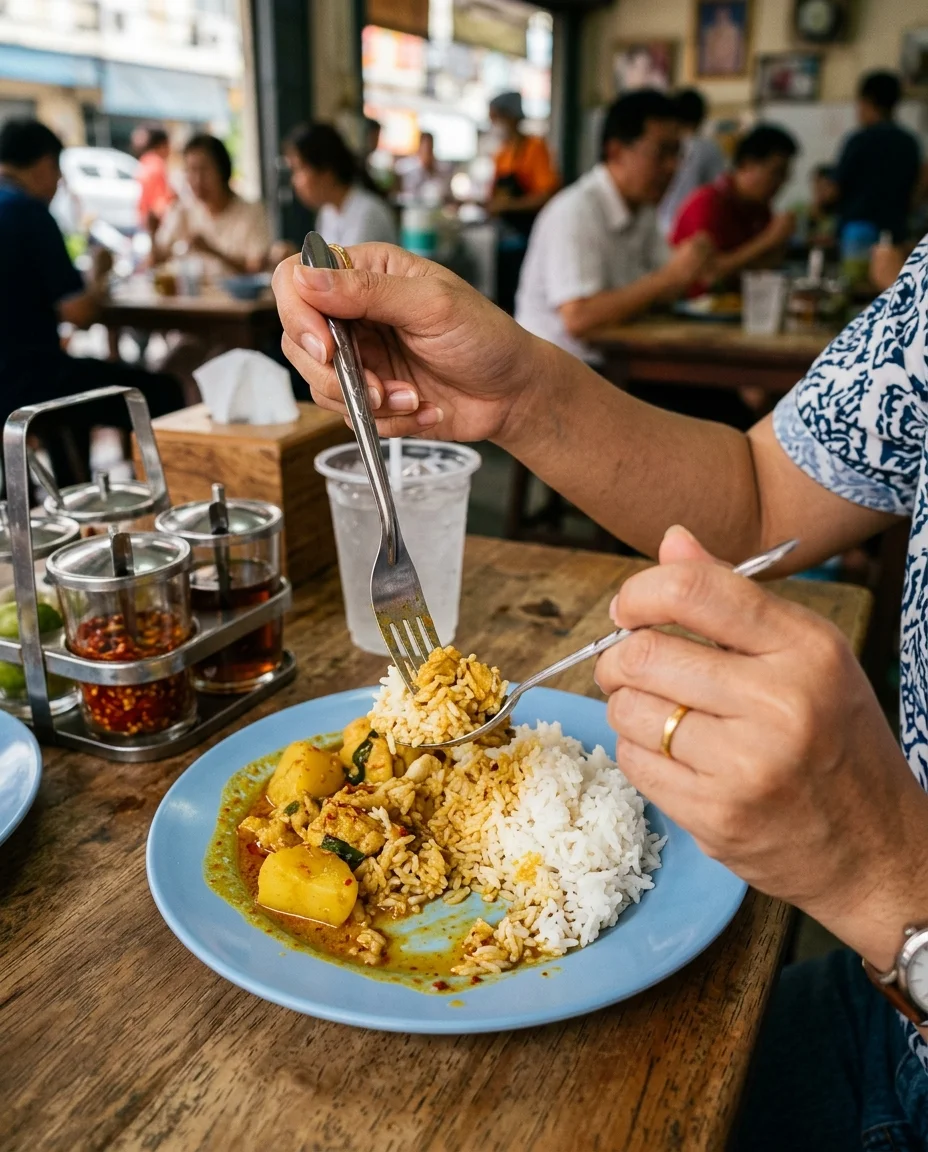
Thai dining is inherently communal, revolving around a central spread of contrasting dishes shared among the whole table. There is no concept of starters arriving before main courses in traditional dining. Kitchens send out plates exactly when they are ready, meaning a spicy salad might land next to a hot soup, followed ten minutes later by a steamed fish. You will be given an individual plate with a portion of plain jasmine rice. You eat using a spoon in your right hand and a fork in your left. The fork never goes into your mouth; its sole purpose is to push small amounts of food onto the spoon. Chopsticks are strictly reserved for standalone noodle dishes served in bowls. When eating communally, it is poor etiquette to scoop a large portion of a shared dish onto your rice all at once. Instead, you take one or two spoonfuls of a single dish, eat it with some rice, and then move on to sample something else. Order a balanced spread for the table that includes a soup, a curry, a dry stir-fry, and a fresh salad rather than just selecting individual dishes for each person.
Heat Levels and Tourist Food
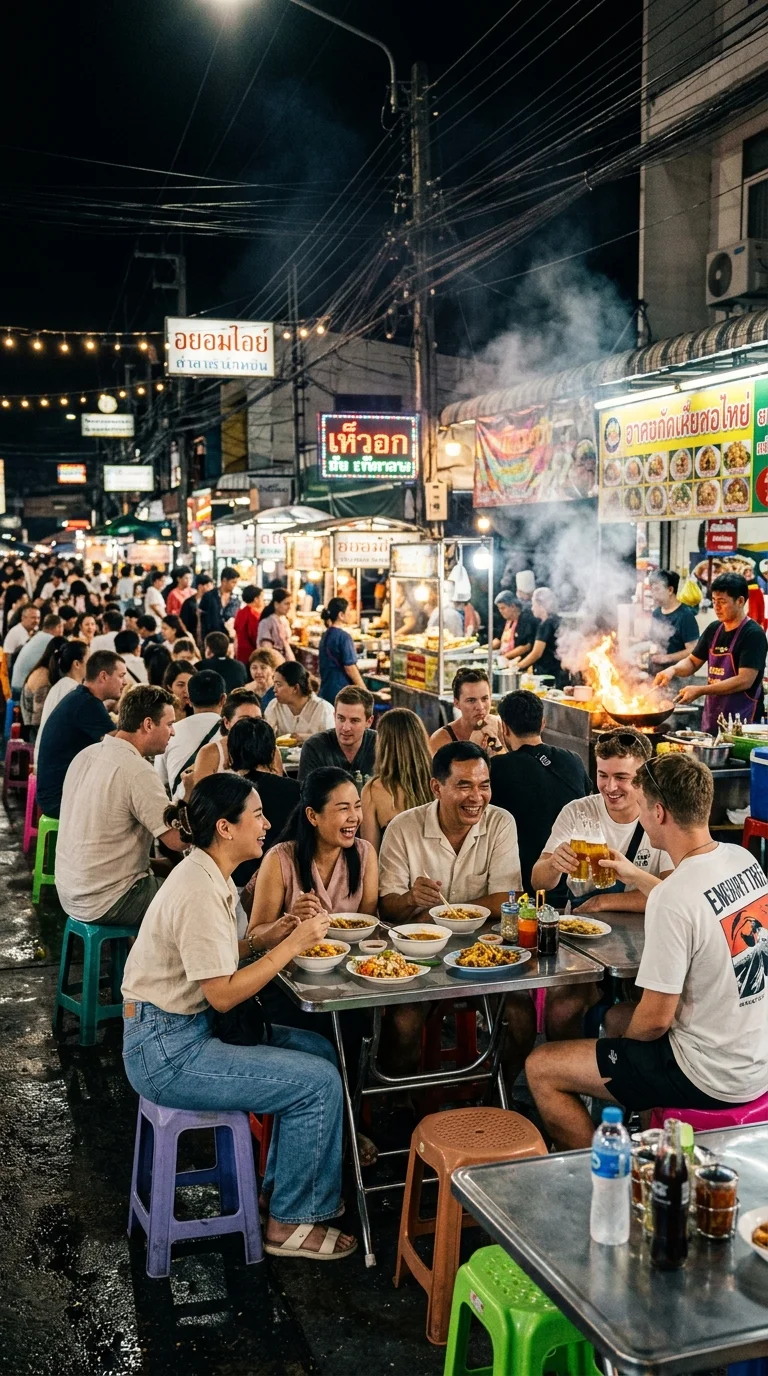
Understanding how to request your preferred spice level will save your palate while ensuring you still get to taste authentic local recipes. Standard Thai heat is blistering for most UK visitors, often incorporating a handful of raw chilies into a single portion of salad. If you ask for a dish "mai pet" (not spicy), many tourist-facing restaurants on Sukhumvit Road in Bangkok or the beaches of Phuket will serve you a heavily sanitised, sweetened version of the meal that lacks any real depth. To experience the genuine flavour without the pain, ask for "pet nit noi" (a little spicy). This signals to the cook that you want the authentic flavour profile but restricted to one or two chilies. You must also recognise the difference between food cooked for foreigners and food cooked for locals. Establishments with laminated, multi-language menus and staff aggressively beckoning you inside almost always serve watered-down variations. The most complex, uncompromising flavours are found in shophouses and markets where the menus are written primarily in Thai script. Learn the phrase "pet nit noi" to experience the intended flavour profile of a dish without overwhelming your heat tolerance.
Street Food Culture and Hygiene Realities
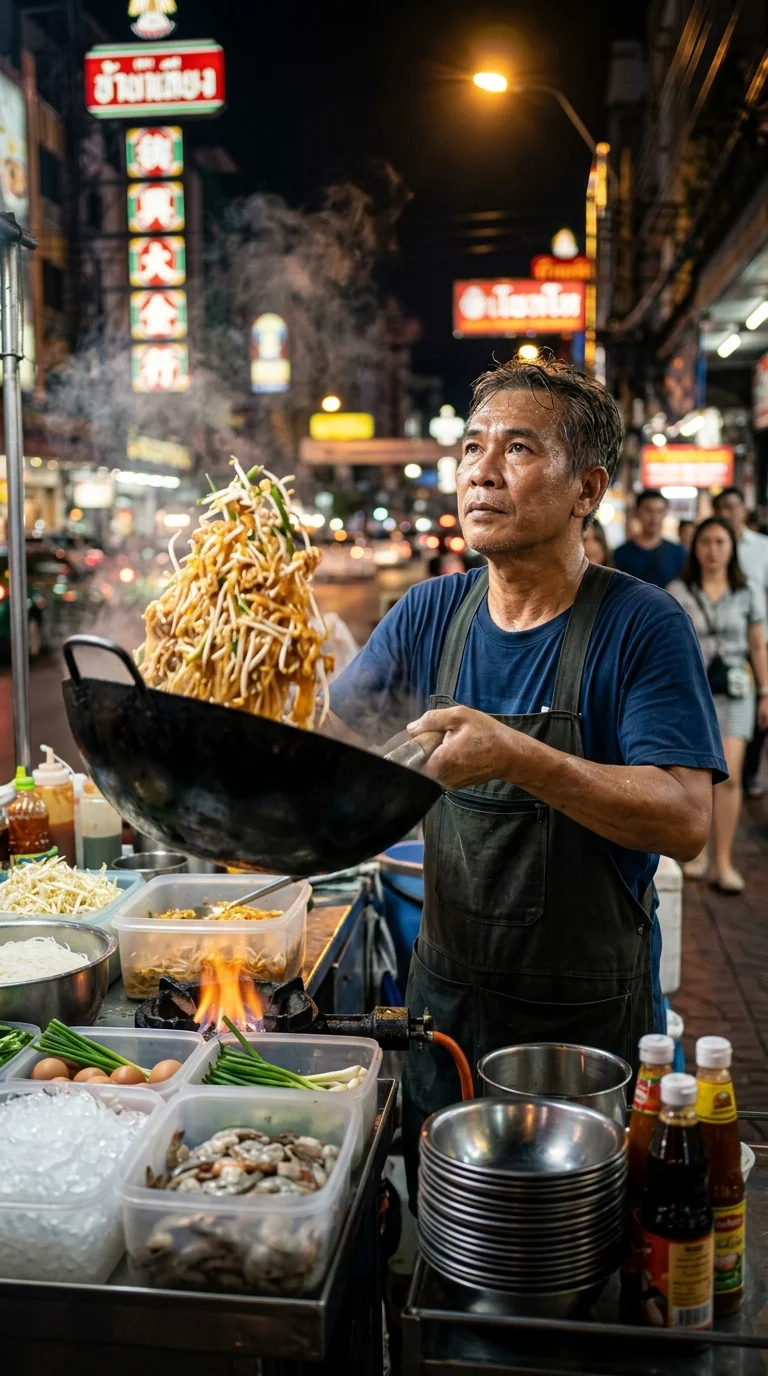
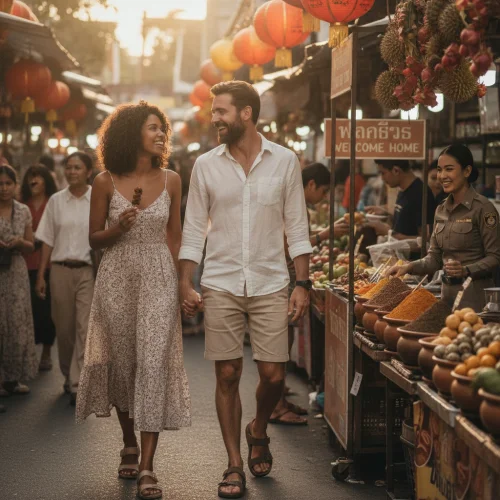
Eating from street carts is a fundamental part of daily Thai life, offering some of the best and cheapest food in the country. Street food vendors are highly specialised. A cook might spend thirty years perfecting nothing but Pad Kra Pao (holy basil stir-fry) or a specific type of pork noodle soup. This intense specialisation results in a depth of flavour that broad-menu restaurants struggle to replicate. Hygiene is naturally a concern for newly arrived UK expats, but applying basic logic keeps you safe. High heat kills bacteria, so a wok dish cooked rapidly over a jet-engine gas burner is generally safer than a lukewarm buffet. Ice served in drinks is produced in commercial purification plants and is entirely safe to consume, provided it has the standard tubular shape with a hole through the middle. You should avoid Khao Gaeng (curry over rice) stalls late in the afternoon, as the pre-cooked trays of food will have been sitting at ambient temperature for hours. Select street food stalls that have a visible queue of local Thai residents and where you can watch the food being cooked fresh to order over high heat.
| Dining Style | Average Meal Price | Atmosphere | Best For |
|---|---|---|---|
| Street Carts | 40 - 70 THB | Pavement seating, noisy, fast | Wok dishes, noodle soups |
| Shophouses | 60 - 120 THB | Basic tables, fans, local crowds | Speciality heritage recipes |
| Food Courts | 50 - 100 THB | Air-conditioned, clean, busy | Safe introduction to street food |
| Sit-down Restaurants | 250 - 600 THB | Comfortable, full service, relaxed | Large shared communal meals |
Where to Find the Best Thai Food
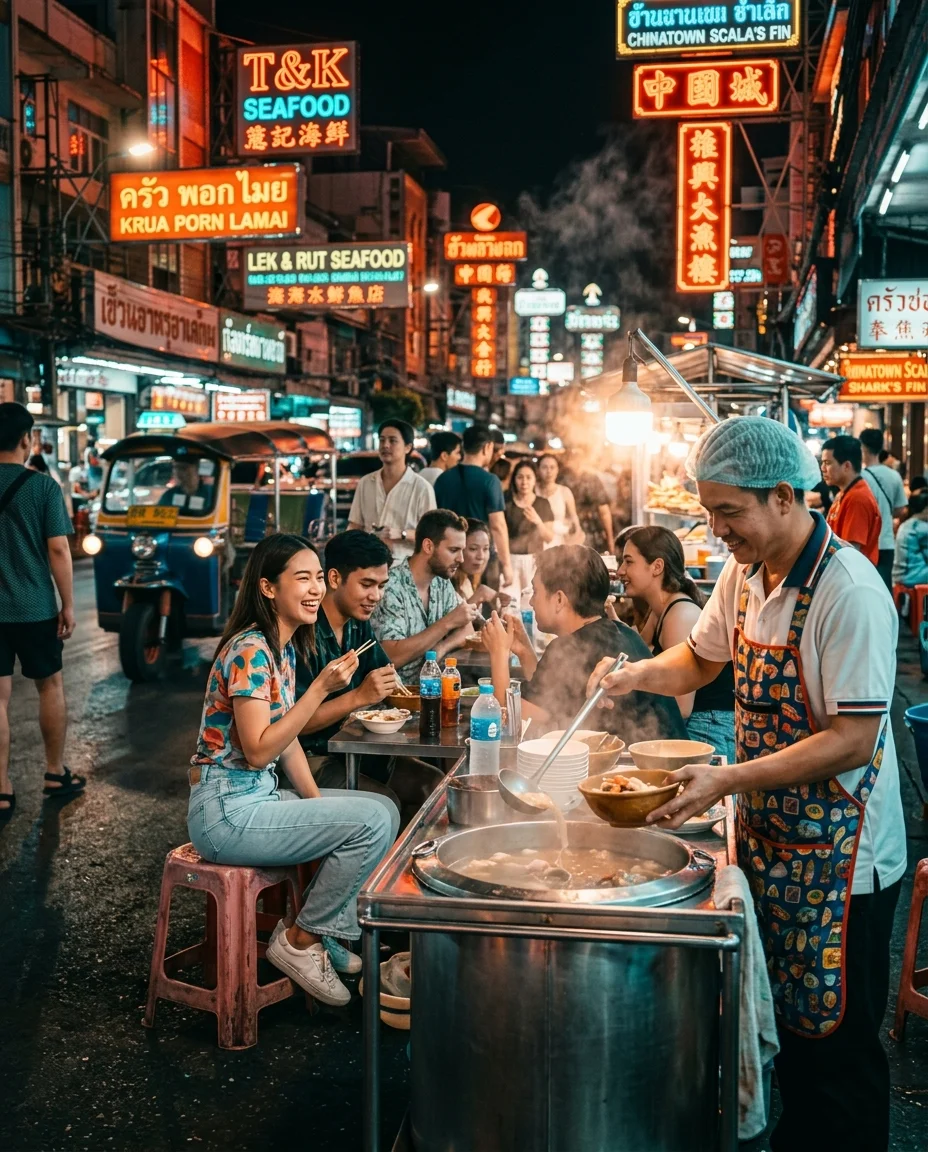
Bangkok is the undisputed culinary capital, and Yaowarat Road (Chinatown) provides the most intense introduction to street food, with vendors serving everything from rolled noodles in peppery broth to toasted buns stuffed with pandan custard. For a highly sanitised but incredibly authentic street food experience, visit the Pier 21 food court at Terminal 21 in Asok, where you can eat excellent Pad Thai for just 40 THB (£0.90). If you want premium seafood without the street-side grime, Somboon Seafood in Bangkok serves a legendary fried curry crab. In Chiang Mai, head straight to Khao Soi Khun Yai, a modest daytime stall serving the city's best coconut curry noodles for 50 THB (£1.10). Down south in Phuket, Raya Restaurant occupies a historic Sino-Portuguese house and serves an uncompromisingly spicy crab meat curry with betel leaves (Gaeng Pu Bai Cha-plu) that perfectly represents southern coastal flavours. Do not limit yourself to one style of dining; the best culinary education involves mixing cheap market stalls with established family-run shophouses. Start your culinary education at a high-end mall food court like Pier 21 in Bangkok to sample regional dishes safely before graduating to the pavement carts of Yaowarat.
Costs and Budgeting
Thai food accommodates every financial situation, from a £1 bowl of noodles to a £150 Michelin-starred tasting menu. Street food and simple shophouse restaurants keep daily food costs incredibly low, typically around 50 to 80 THB (£1.10 to £1.80) per meal. Mid-range dining in air-conditioned standalone restaurants or mall establishments will cost between 300 and 600 THB (£6.80 to £13.60) per person. High-end dining, particularly in Bangkok’s thriving fine-dining scene, aligns more closely with London prices, demanding 2,500 THB (£56.00) or more for a multi-course menu. Alcohol significantly inflates the bill; a large local beer like Singha or Leo often costs as much as a street food main course, usually around 80 to 120 THB (£1.80 to £2.70).
| Dining Tier | Cost (THB) | Cost (GBP approx) | Notes |
|---|---|---|---|
| Budget (Street Food) | 50 - 80 THB | £1.10 - £1.80 | Single plate meals or noodle soups |
| Mid-Range (Local Restaurant) | 300 - 600 THB | £6.80 - £13.60 | Shared dishes, air-conditioning, soft drinks |
| Premium (Fine Dining) | 2,500+ THB | £56.00+ | Tasting menus, high-end service, excludes wine |
| Domestic Beer (Large) | 80 - 120 THB | £1.80 - £2.70 | Singha, Leo, or Chang in standard restaurants |
What to Know Before You Eat
MSG is a standard ingredient in Thai cooking, not a taboo additive. It provides the essential savoury umami base for most soups, stir-fries, and marinades, so requesting food without it often results in flat flavours.
Tipping is not culturally expected at street food stalls or basic shophouses. You simply pay the exact amount requested, though leaving a 20 THB note at mid-range sit-down restaurants is increasingly common.
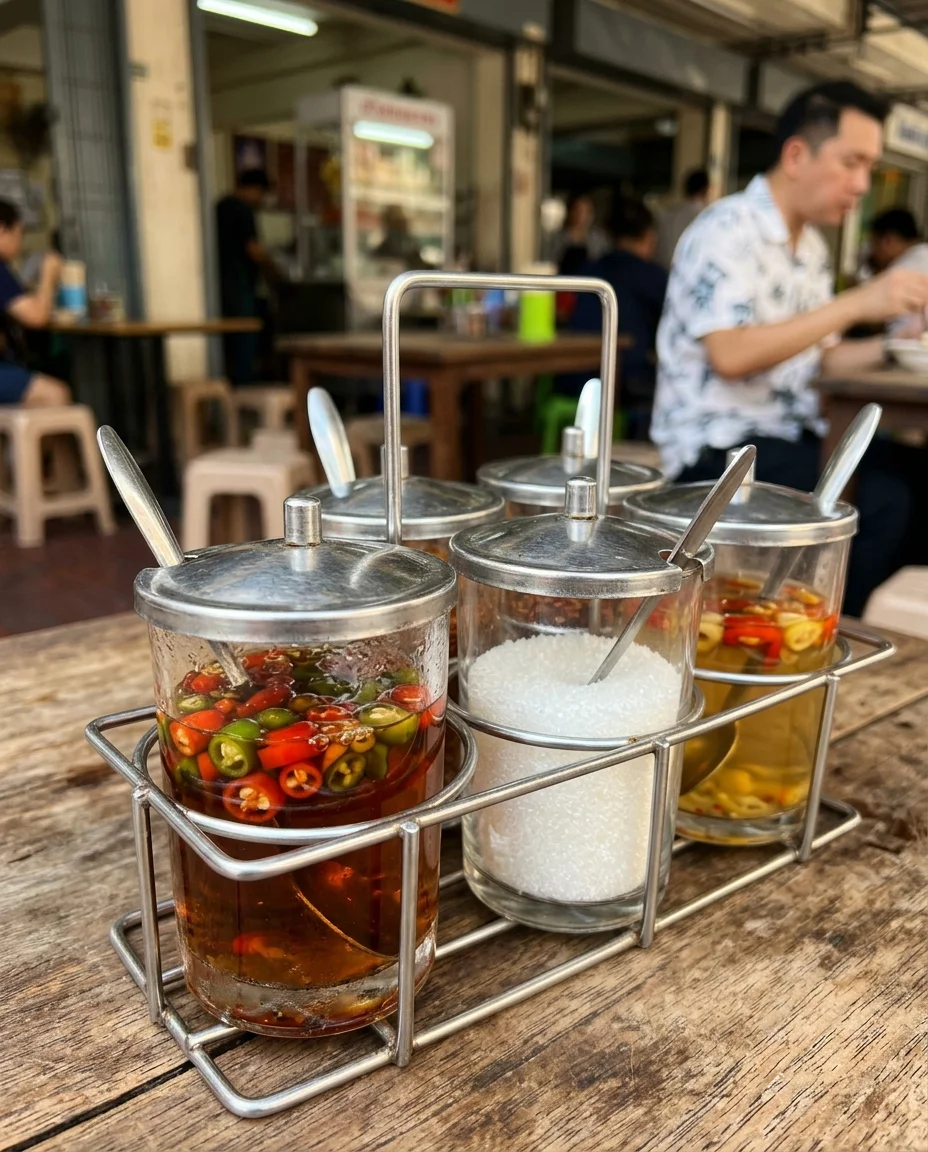
The condiment caddy on your table is meant to be used actively during your meal. Thais season their individual bowls of noodle soup with sugar, fish sauce, vinegar, and chili flakes to hit their personal flavour preference.
Tap water is not safe to drink anywhere in Thailand. Always order bottled water, but rest assured that the commercial ice served in drinks is produced in purified factories and is entirely safe.
Practical Tips for Eating in Thailand
Always carry small cash denominations like 20, 50, and 100 THB notes. Street vendors rarely have change for a 1000 THB note, and many do not accept card payments.
Use the QR code payment systems if you have set up a Thai bank account or a compatible tourist app. It is currently the most widely used payment method across the country, even at the smallest rural food carts.
Wash your hands or use sanitizer before eating sticky rice. You must roll the rice into small balls using your bare fingers, making hand hygiene essential.
Look for the "Shell Shuan Shim" bowl logo on restaurant signs. This green bowl symbol is Thailand's equivalent to a Michelin recommendation and guarantees a high standard of local flavour.
Do not leave your chopsticks sticking vertically out of a noodle bowl. This resembles incense sticks at a funeral and is considered highly disrespectful in Thai-Chinese culture.
Order dishes to share rather than requesting a separate main course for yourself. This allows you to experience the crucial balance of contrasting flavours that defines a proper Thai meal.
Check the table for a small box of tissue paper rather than expecting cloth napkins. Thais use these small tissues to wipe cutlery before eating and to clean their mouths during the meal.
Experience the contrast of traditional flavours in a premium setting.
Quick Reference Guide
| Item | Detail | Notes |
|---|---|---|
| Cutlery Etiquette | Spoon in right hand, fork in left | Fork pushes food onto spoon; never goes in mouth |
| Chopsticks | For noodle soups only | Never use for rice dishes |
| Spice Request | "Pet nit noi" (A little spicy) | Prevents getting bland tourist food |
| Water Safety | Bottled only | Tubular ice with a hole is factory-made and safe |
| Tipping | Not expected at street stalls | 20-50 THB is polite in mid-range restaurants |
| Payment | Cash is king for street food | Carry 20, 50, and 100 THB notes |
| Sharing | Meals are communal | Order soup, curry, stir-fry, and salad for the table |