Finding Rental Properties in Thailand
Most online rental listings on Thai property portals remain active long after the property is let, making direct communication with local agents essential for accurate availability. Furthermore, landlords routinely reject foreign tenants who cannot provide a valid visa and proof of income before signing a standard 12-month lease.
This page details exactly where and how to find long-term rental properties in Thailand as a UK national. It covers the crucial differences between major property portals, how to leverage Facebook expat groups for direct landlord negotiations, and why local agents operate entirely differently than their UK counterparts. This guide is for those seeking a lease of six months or longer, and will help you navigate the search process safely.

Searching Before Arrival versus On-the-Ground Reality

Securing a long-term lease from the UK before arriving in Thailand carries high financial risks regarding property condition and accurate location representation. You should never sign a 12-month contract or transfer a standard two-month deposit internationally without physically inspecting the unit, checking the water pressure, and verifying the immediate noise levels from surrounding construction. The most effective strategy is to book a serviced apartment for your first two to four weeks. This temporary base provides a legal TM30 address required for your 90-day visa reporting, while allowing you to arrange viewings in your target neighbourhoods without pressure. Searching on the ground also allows you to walk into apartment buildings directly, speak with the juristic office (building management), and ask about unadvertised units available for rent. Property managers often hold keys for absentee landlords and can show you vacant apartments immediately. Being physically present also proves to landlords that you are a serious prospective tenant who has already successfully navigated Thai immigration, making them far more willing to negotiate on monthly rental rates.
Understand the legal risks, payment schedules, and due diligence required when buying off-plan property in Thailand. Protect your stage payments today.
The Major Property Portals Compared
The Thai online property market is dominated by four main portals, each serving a slightly different segment of the rental sector. DDProperty and Dot Property offer the highest volume of listings across all price points, but suffer heavily from duplicate listings posted by multiple competing agents. FazWaz operates a more tightly controlled database, acting as a hybrid portal and agency, which means their availability data is generally more accurate. Hipflat aggregates data well and provides highly useful historical rental price trends for specific apartment buildings, helping you gauge if a landlord's asking price is artificially inflated. When using these platforms, understand that property agents frequently use attractive, underpriced "bait" listings to capture your contact details, only to inform you the specific unit is taken before offering alternatives. You should use property portals primarily to identify active agents operating in your desired area and to establish baseline pricing for specific buildings. Do not assume a specific advertised unit is vacant. Once you find an agent with high-quality listings, contact them directly via messaging apps to request a curated list of properties that match your budget and exact move-in date.
| Portal Name | Primary Strength | Listing Accuracy | Best Used For |
|---|---|---|---|
| DDProperty | Massive volume of properties nationwide | Low (many duplicates and outdated listings) | Finding baseline prices and active local agents |
| FazWaz | Hybrid agency model with verified data | High (listings are actively managed) | Accurate availability and 3D virtual tours |
| Hipflat | Strong historical price data and trends | Medium (relies on agent updates) | Researching price history for specific buildings |
| Dot Property | Excellent coverage of new developments | Low to Medium | Finding new apartment builds and developer contacts |
Local Property Agents versus Direct Search

Property agents in Thailand represent the landlord, who pays their commission entirely, meaning their property search services are completely free for you as a tenant. A standard agency commission is one month's rent for a 12-month lease. Because agents rely on this specific financial structure, few will entertain searches for budgets under 10,000 THB (£220) per month or terms shorter than six months. Unlike UK high street estate agents, Thai agents operate largely independently or through small regional franchises, relying heavily on LINE (the dominant messaging app in Thailand) rather than email to communicate. Finding a responsive agent is often far more valuable than endlessly scrolling through property portals. A competent local agent will arrange a complete itinerary of viewings in a single afternoon, drive you between locations, and negotiate the inclusion of specific furniture or appliances on your behalf. They also act as a crucial buffer during lease negotiations, ensuring the agreement includes an essential diplomatic clause (break clause) if your work permit or visa status changes unexpectedly during the tenancy.
Facebook Groups and Expat Communities
For UK nationals seeking to bypass agent delays or negotiate specific lease terms, local Facebook groups serve as a major channel for direct landlord communication. Dedicated groups exist for every prominent expat hub, such as 'Bangkok Apartment Rentals' or 'Chiang Mai Real Estate Direct'. Searching these community pages allows you to find private owners who are often more flexible on deposit amounts, lease durations, or pet policies. Renting directly from a landlord can occasionally yield a lower monthly rate, as the owner saves the standard 8.3% annual agent commission and may pass those savings to you. However, proceeding without an agent means you have no professional intermediary to handle translation issues, maintenance disputes, or the mandatory registration of your TM30 address with Thai Immigration. When using Facebook to find a home, you must verify the person posting the advertisement is the actual legal owner. Always request a copy of their Thai ID card and the corresponding Chanote (title deed) before transferring any reservation fees to secure the property.
Direct Developer Enquiries for Long-Stay Rentals
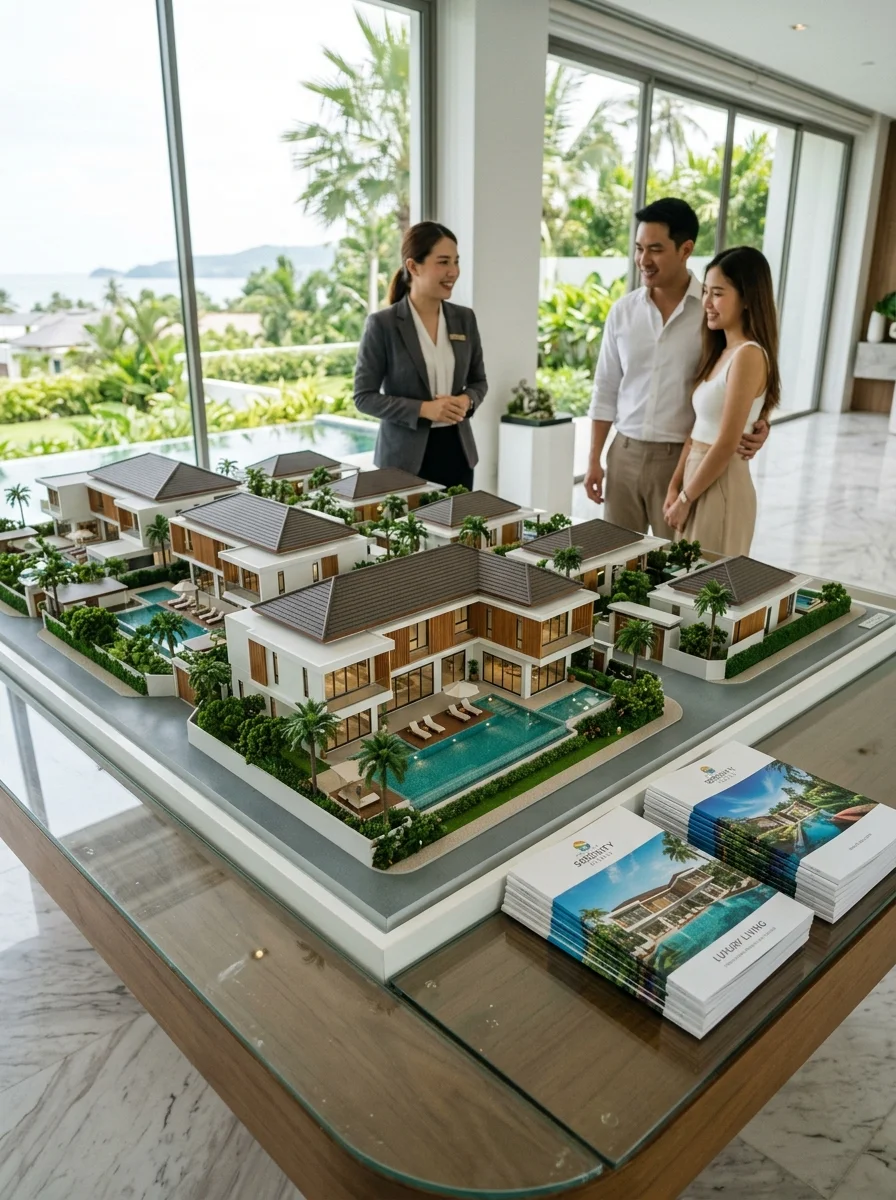
Engaging directly with property developers is an underutilised strategy for securing high-quality, long-term rentals, particularly in areas with a surplus of new construction. Many major Thai developers retain a percentage of units within their newly completed apartment or villa projects specifically for their own rental portfolios. Walking into a developer's sales office or showroom allows you to bypass the secondary agent market entirely. Developers often provide long-stay discounts of 10% to 15% for foreign tenants willing to sign two-year leases on their remaining inventory. Renting directly from a corporate developer also guarantees that the property management, maintenance requests, and juristic fees are handled professionally through a central office rather than an unresponsive private landlord. This approach provides significant legal security, as corporate leases strictly adhere to Thai consumer protection laws regarding standard deposit deductions and utility billing rates. You can identify suitable developments by searching for newly completed projects on Dot Property and then visiting the physical site office to request a viewing of their corporate rental stock.
Regional Search Variations Across Thailand
The rental search methodology shifts dramatically depending on whether you are relocating to the capital, the northern provinces, or the southern islands. In Bangkok, the market is highly professionalised and dominated by portals and agents dealing in high-rise apartments clustered near the BTS or MRT transit lines. Chiang Mai operates on a much more informal basis; while online portals work well for modern apartments, finding detached houses or older, spacious apartments often requires driving through target neighbourhoods looking for physical 'For Rent' signs. Phuket requires a hybrid approach, as the local market is heavily skewed towards highly lucrative, seasonal holiday lets. Securing a standard 12-month residential villa lease here often requires engaging specialist long-term agents or negotiating directly with estate developers during the low season from May to October. On smaller islands like Koh Samui or Koh Phangan, Facebook community groups, local noticeboards, and word-of-mouth remain the most reliable ways to bypass inflated tourist pricing and secure realistically priced long-term residential homes.
Costs and Fees
Securing a rental property in Thailand involves a standard set of upfront transaction costs that differ structurally from the UK market. The standard requirement for a 12-month lease is two months' rent as a security deposit, plus the first month's rent paid in advance. For example, an apartment costing 25,000 THB (£555) per month will require a total upfront transfer of 75,000 THB (£1,665). Agent fees are legally the responsibility of the landlord and should never be charged to the tenant under any circumstances. Building maintenance fees, known locally as common area fees or CAM fees, are almost always included in the advertised rental price, but you must confirm this in writing before signing. You will be responsible for your own utility costs throughout the tenancy. Electricity is billed directly by the Provincial Electricity Authority (PEA) or Metropolitan Electricity Authority (MEA) at the official government rate, though some privately owned apartment buildings apply legal surcharges.
| Cost Item | Rate or Amount | Paid By | Notes |
|---|---|---|---|
| Security Deposit | 2 months' rent | Tenant | Refundable at end of tenancy minus damages |
| Advance Rent | 1 month's rent | Tenant | Covers the first month of occupancy |
| Agent Commission | 1 month's rent | Landlord | Tenants do not pay finder fees in Thailand |
| Common Area Fee | Varies by building | Landlord | Must be explicitly included in the lease agreement |
| Stamp Duty | 0.1% of total lease value | Landlord | Required to make the lease legally binding in court |
Common Rental Search Mistakes

Transferring a deposit to a property agent instead of the registered landlord. This leaves you legally exposed if the agent disappears with your money. Always verify the receiving bank account matches the name on the Chanote title deed.
Failing to check the utility billing structure in older apartment buildings. Some private landlords charge double the standard government electricity rate, adding thousands of Baht to your costs. Demand a contract clause stating electricity is charged strictly at the official MEA or PEA rate.
Relying solely on property portals to gauge market availability. Portals are saturated with outdated listings used to harvest leads, giving a false impression of vacancy. Use portals to find active agents, then request a curated list of current availability.
Signing a 12-month lease without negotiating a diplomatic break clause. If your Thai visa is unexpectedly denied, you remain legally liable for the full term's rent. Insist on a clause allowing lease termination with 60 days' notice upon proof of visa cancellation.
Practical Tips for Your Property Search
Download and register the LINE messaging app before you begin your search. Thai property agents and landlords rely almost exclusively on this platform rather than email or traditional phone calls.
Request a physical viewing during the afternoon to check the property's sun exposure. West-facing units in Thailand absorb severe afternoon heat, significantly increasing your monthly air conditioning costs.
Ask the building's juristic office for their specific rules regarding internet installation. Some older buildings lock you into restrictive legacy contracts and prohibit fibre-optic installation from modern providers like AIS or True.
Take date-stamped photographs of every room, appliance, and existing damage during your check-in inventory. Thai landlords are strict on deposit deductions for minor wear and tear, making visual evidence your primary legal defence.
Check the immediate vicinity for empty plots of land or ongoing construction sites. Thai construction operates seven days a week from early morning, and noise ordinances are rarely enforced to protect residential tenants.
Ensure the landlord explicitly agrees in writing to file your TM30 immigration form within 24 hours of your arrival. Without this registered address receipt, you cannot open a Thai bank account or renew your visa at the local immigration office.
Rental Search Quick Reference
| Item | Detail | Notes |
|---|---|---|
| Minimum Lease Term | 12 months standard | 6-month leases available but usually carry a 10% to 20% rental premium |
| Standard Deposit | 2 months' rent | Legally capped at 1 month for landlords owning 5+ properties, though rarely enforced |
| Agent Fees | Free for tenants | The landlord pays the agent a commission equivalent to one month's rent |
| Primary Portals | DDProperty, FazWaz, Hipflat | Use for price research and finding agents, not for live availability |
| Direct Searching | Facebook Expat Groups | Best route for negotiating terms directly with landlords without agent pressure |
| Communication | LINE App | Essential for contacting agents, landlords, and juristic building managers |
| Immigration Duty | TM30 Registration | Landlord must legally report your presence to immigration within 24 hours of move-in |