Muay Thai in Thailand
The sound of shin bone hitting dense leather pads echoes like a rifle crack through humid air long before you actually see the fighters sweating under corrugated iron roofs. A single bout at Rajadamnern Stadium carries centuries of martial tradition, where local gamblers frantically flash hand signals reflecting the shifting odds with every landed strike.
This guide breaks down exactly how to experience Muay Thai in Thailand, whether you want to watch elite professionals in Bangkok’s legendary stadiums or wrap your own hands for a training session. You will learn how to choose between resort-style fitness camps and authentic fighter gyms, what physical condition is required, and how much you should expect to pay for single classes or multi-week immersion programmes. This page gives you the practical ground truths to plan your trip.
The Cultural Reality of Thailand's National Sport
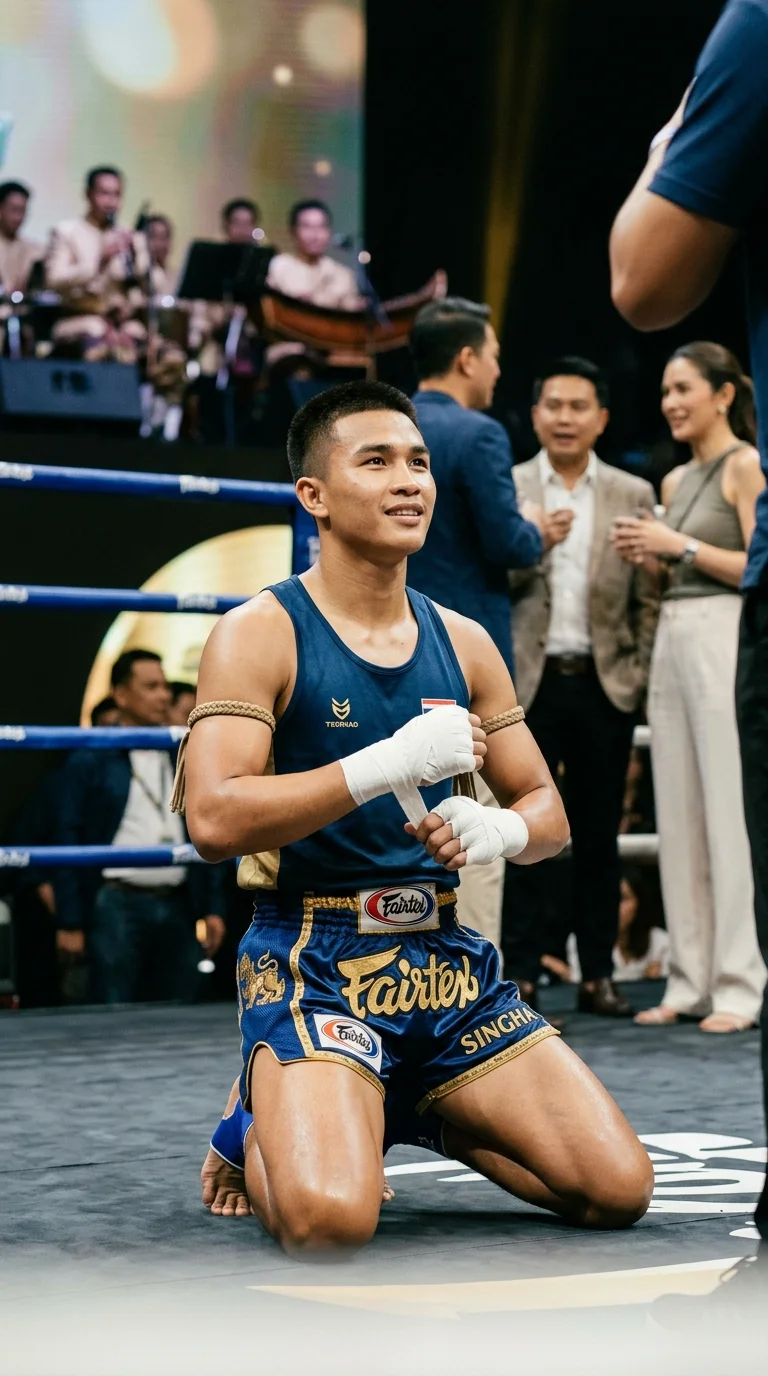
Muay Thai is deeply woven into the social and economic fabric of the country, acting as a legitimate career path out of rural poverty rather than just a fitness trend. When you watch a local fight in the provinces, you are witnessing an ecosystem where entire villages might pool their money to back a hometown fighter. The pre-fight ritual, known as the Wai Kru Ram Muay, is a solemn demonstration of respect to the fighter's teachers, parents, and ancestors, accompanied by the hypnotic wailing of the pi-chawa, a traditional Javanese oboe. Understanding this context elevates the experience from a simple display of violence to a strategic, highly technical art form built on profound discipline. In professional stadium bouts, the first two rounds often serve as a slow-paced feeling-out process for gamblers to set the odds, before the intensity explodes violently in round three. Western practitioners, known locally as "nak muay farang", are broadly respected if they show dedication to the gruelling routine of twice-daily runs and endless pad work.
Plan your Thailand water sports adventure. Discover the best spots for kitesurfing, kayaking, and rafting, plus essential safety, costs, and seasonal tips.
Approach the sport with obvious respect for its traditions, and trainers will reward you with genuine instruction rather than a superficial tourist workout.
Watching Elite Fights in Bangkok
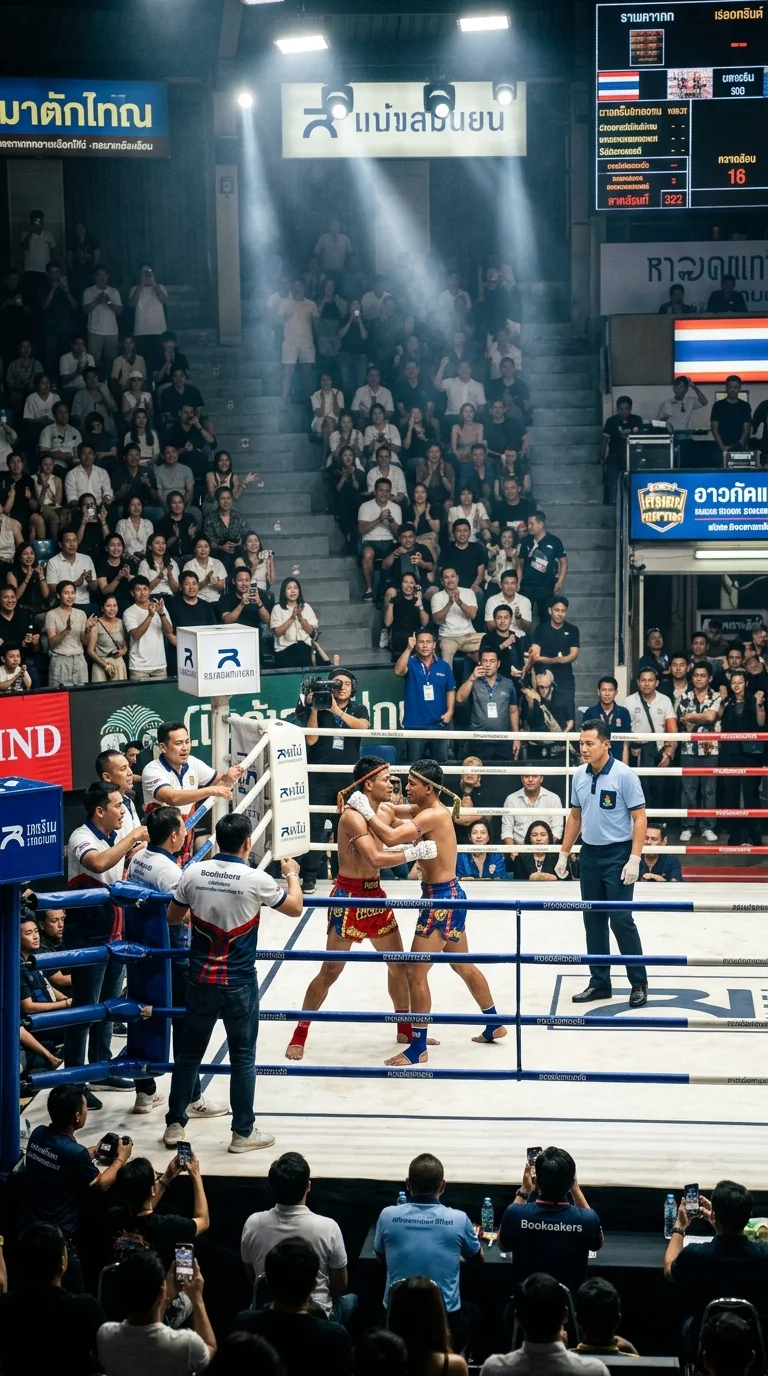
Bangkok is the undisputed global epicentre of professional Muay Thai, hosting the highest level of competition in the world. Rajadamnern Stadium, built in 1945, retains a classic, gladiatorial atmosphere, especially during the heavily promoted Rajadamnern World Series events on Friday nights. Tickets here range from 1,500 THB (£33) for second-class seating up to 3,500 THB (£77) for ringside spots where you can literally feel the sweat flying off the fighters. Lumpinee Stadium, now operating out of a modern facility on Ramintra Road, hosts the ONE Friday Fights. This offers a much faster-paced, entertainment-heavy production with fighters wearing smaller four-ounce gloves, resulting in frequent knockouts. For a more grassroots local experience, the Channel 7 Stadium near Mo Chit offers free entry on Sundays, provided you arrive early to secure a standing spot among the fiercely vocal Thai gambling crowd. The heat inside Channel 7 is oppressive, but the raw energy is unmatched anywhere else in the capital.
Choose Rajadamnern for traditional atmosphere, Lumpinee for high-octane production value, or Channel 7 for raw betting culture.
| Stadium | Atmosphere | Ticket Price | Best For |
|---|---|---|---|
| Rajadamnern | Historic, intense, traditional | 1,500 - 3,500 THB | Classic Muay Thai experience |
| Lumpinee (ONE Fights) | Modern, loud, fast-paced | 1,000 - 3,000 THB | High action and knockouts |
| Channel 7 Stadium | Sweaty, local, aggressive | Free (standing) | Experiencing local gambling culture |
| JF Boxing (Pattaya) | Tourist-heavy, casual | 1,200 - 2,000 THB | Casual holiday viewing |
Inside a Genuine Training Camp
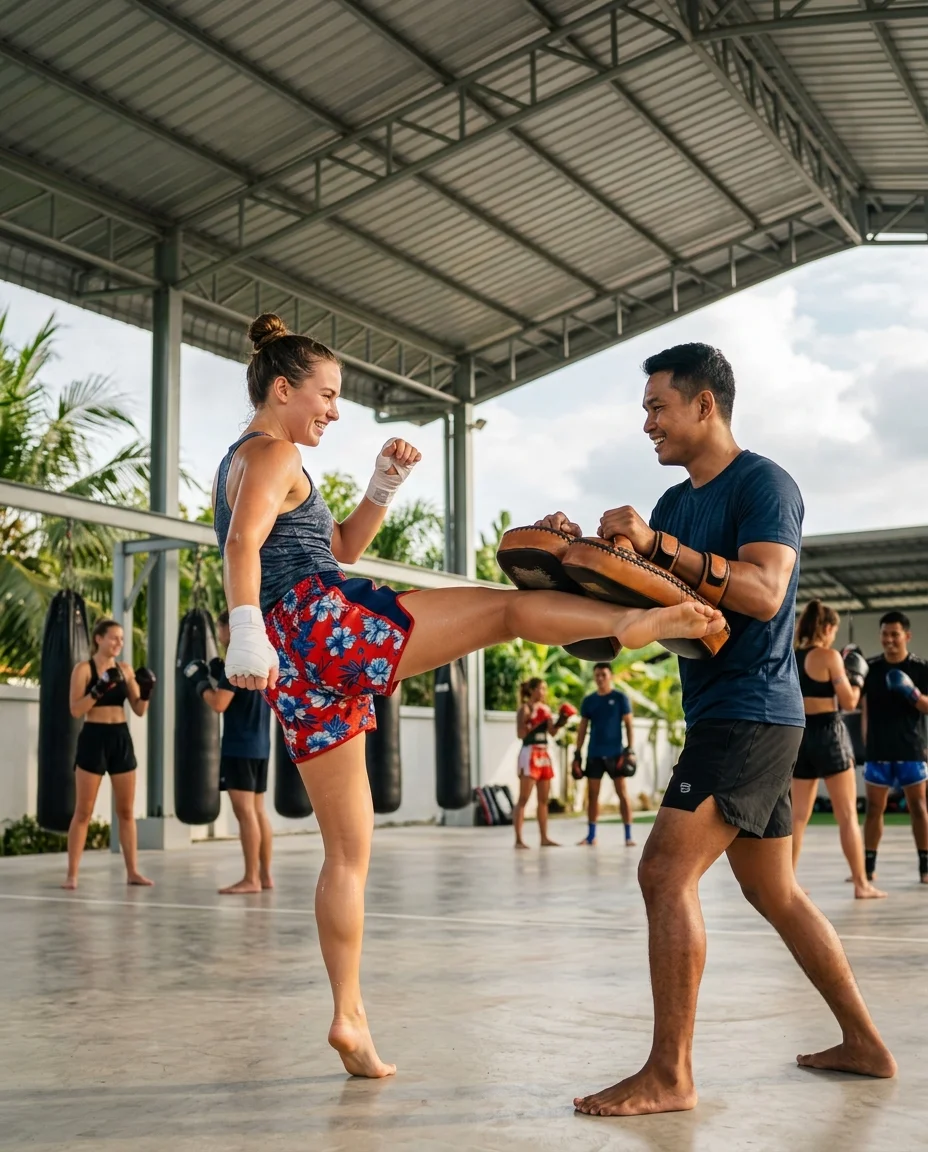
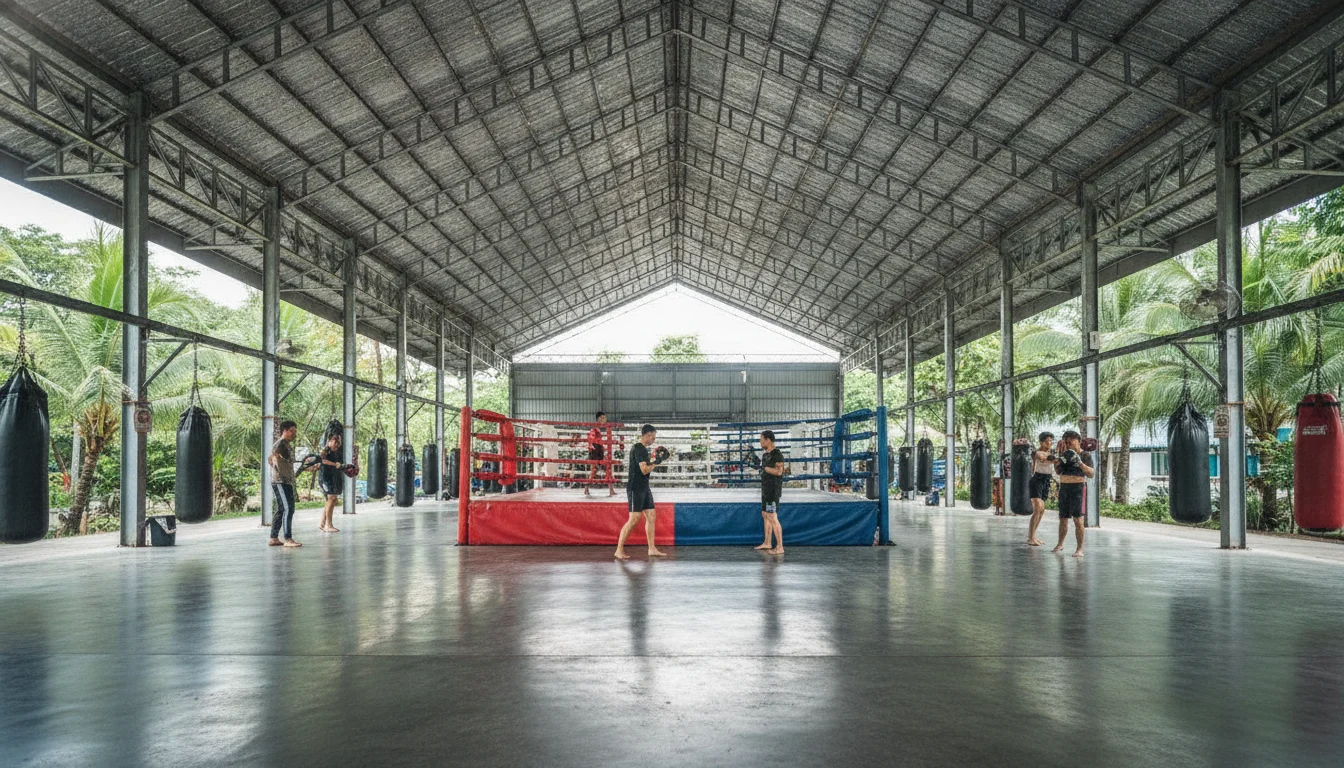
Training at a traditional camp demands a level of cardiovascular endurance that surprises most first-time visitors, regardless of their gym habits back in the UK. A standard session begins with a mandatory five-kilometre run in the tropical heat, followed by skipping, shadowboxing, and the core of the workout: three to five rounds of intense pad work. These trainers, often retired fighters with hundreds of bouts to their name, will push your limits while correcting your posture, demanding you turn your hips over on every roundhouse kick. The physical toll is significant, resulting in bruised shins, blistered toes, and profound dehydration if you fail to manage your electrolyte intake properly. Despite the punishing routine, the atmosphere inside these gyms is invariably welcoming and deeply communal. You will share communal meals, ice baths, and the distinct smell of Namman Muay liniment oil with a mix of aspiring local teenagers and international fighters.
Focus entirely on cardiovascular fitness before you arrive; the technical skills will be taught from scratch, but the conditioning is solely your responsibility.
Choosing Your Training Environment
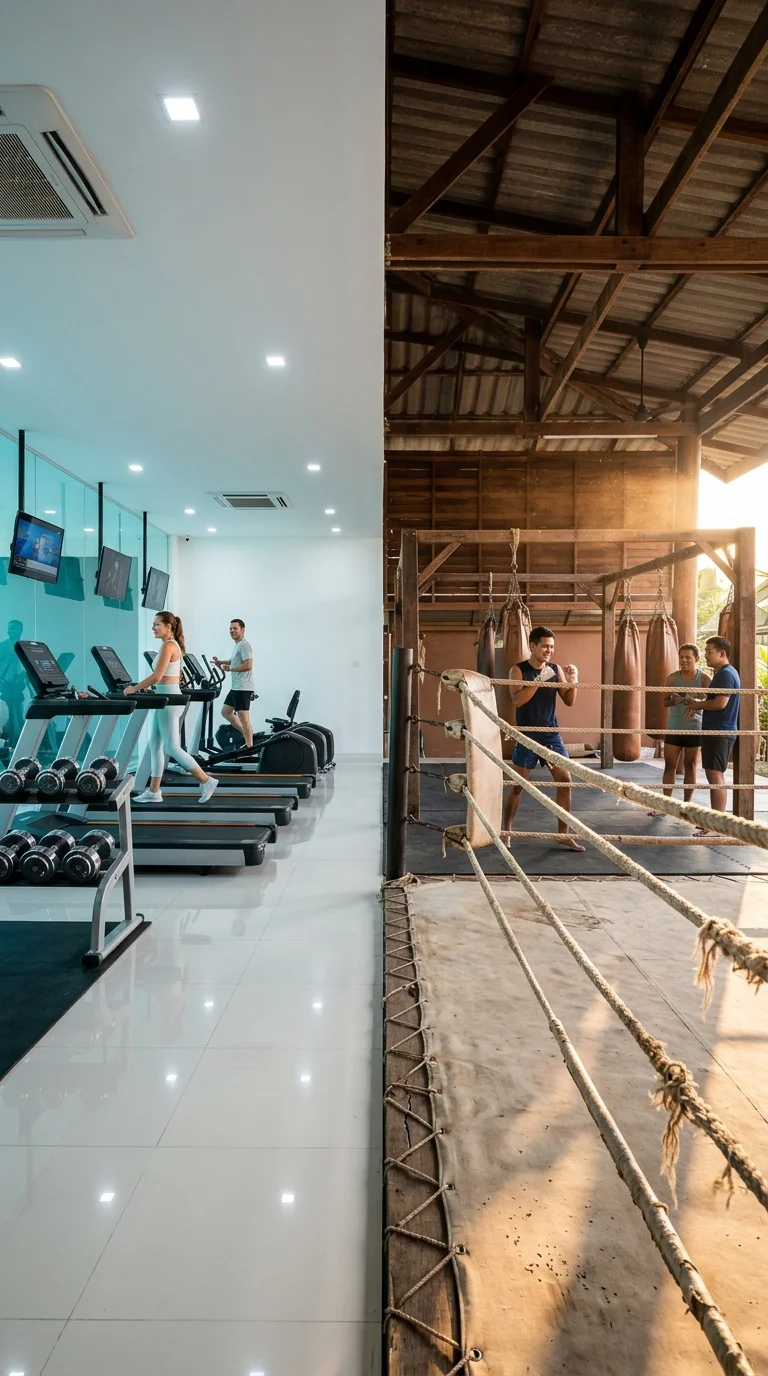
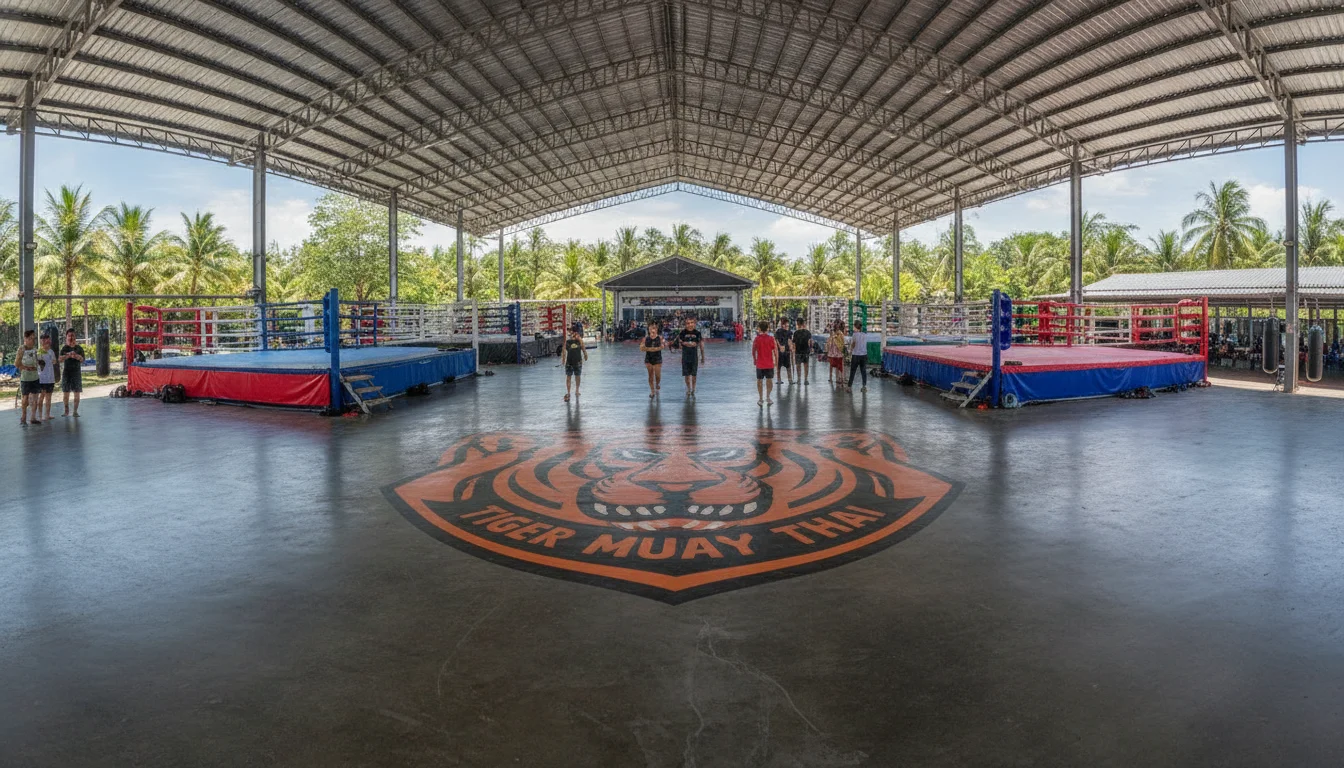
The Thai training market splits sharply between fitness-focused holiday camps and serious fighting institutions. Resort-style camps, prevalent in Phuket and Koh Samui, cater heavily to westerners looking to lose weight or improve general fitness. These facilities offer air-conditioned dormitories, on-site cafes serving protein shakes, and classes scaled to absolutely all fitness levels. You will hit pads, sweat profusely, and enjoy a highly social environment without any pressure to spar or fight professionally. Conversely, serious fight gyms in Bangkok or the rural Isaan region exist purely to produce stadium champions. Facilities are deliberately basic, often consisting of a tin roof over a concrete floor, and the training schedule is unyielding. If you attend a fight gym, trainers expect you to show up twice a day, six days a week, and they will quickly lose interest if you treat the experience casually or skip the morning runs.
Be fiercely honest about your goals; book a resort camp for a fitness holiday, but seek out a traditional gym only if you are genuinely dedicated to learning the martial art.
| Gym Style | Environment | Accommodation | Training Focus |
|---|---|---|---|
| Resort Fitness Camp | Highly social, English-speaking | Premium, air-conditioned | Weight loss, basic technique, fun |
| Traditional Fight Gym | Intense, disciplined, local | Basic, fan-cooled rooms | Professional fighting, clinching |
| Hybrid Gym | Balanced, commercial | Mid-range | Good technique with modern comforts |
| Rural Isaan Camp | Extremely basic, isolated | Very basic, communal | Total immersion, raw conditioning |
The Best Training Destinations
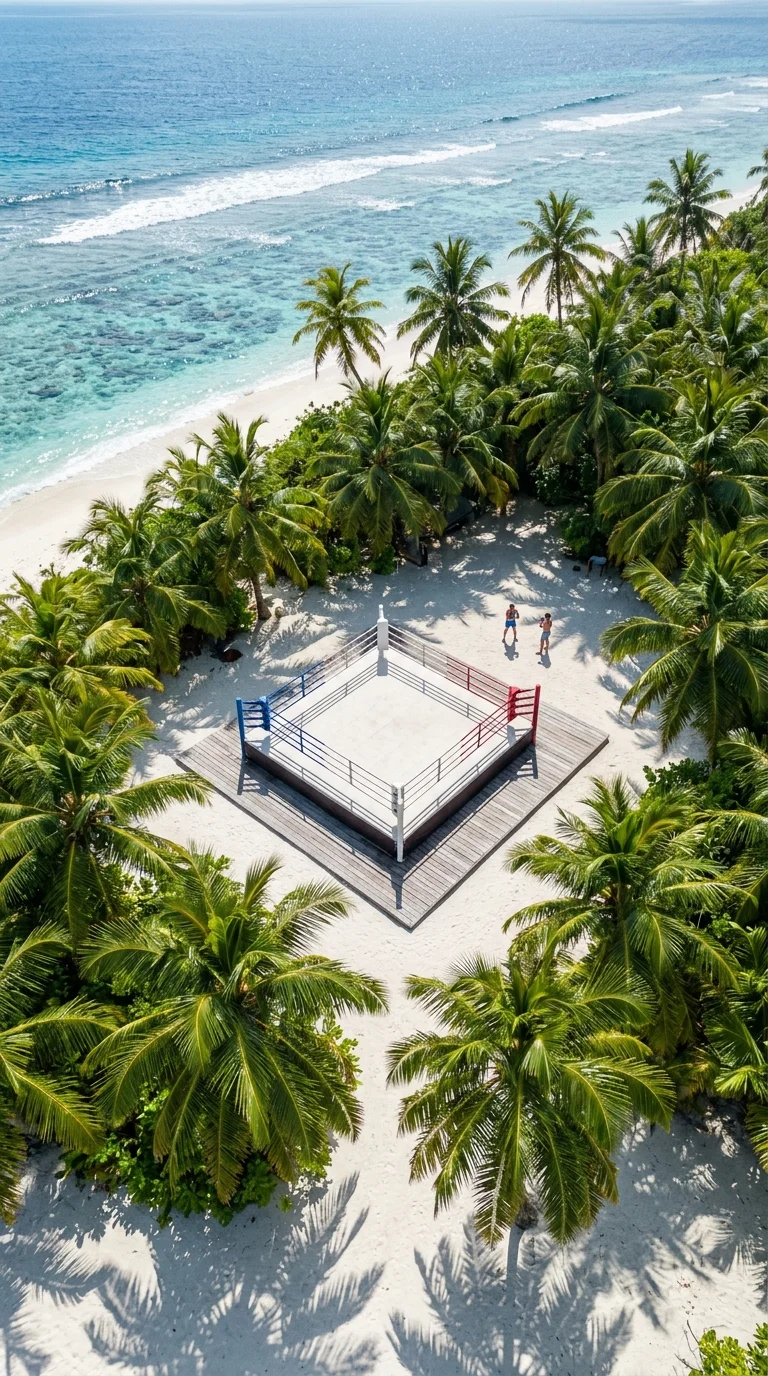
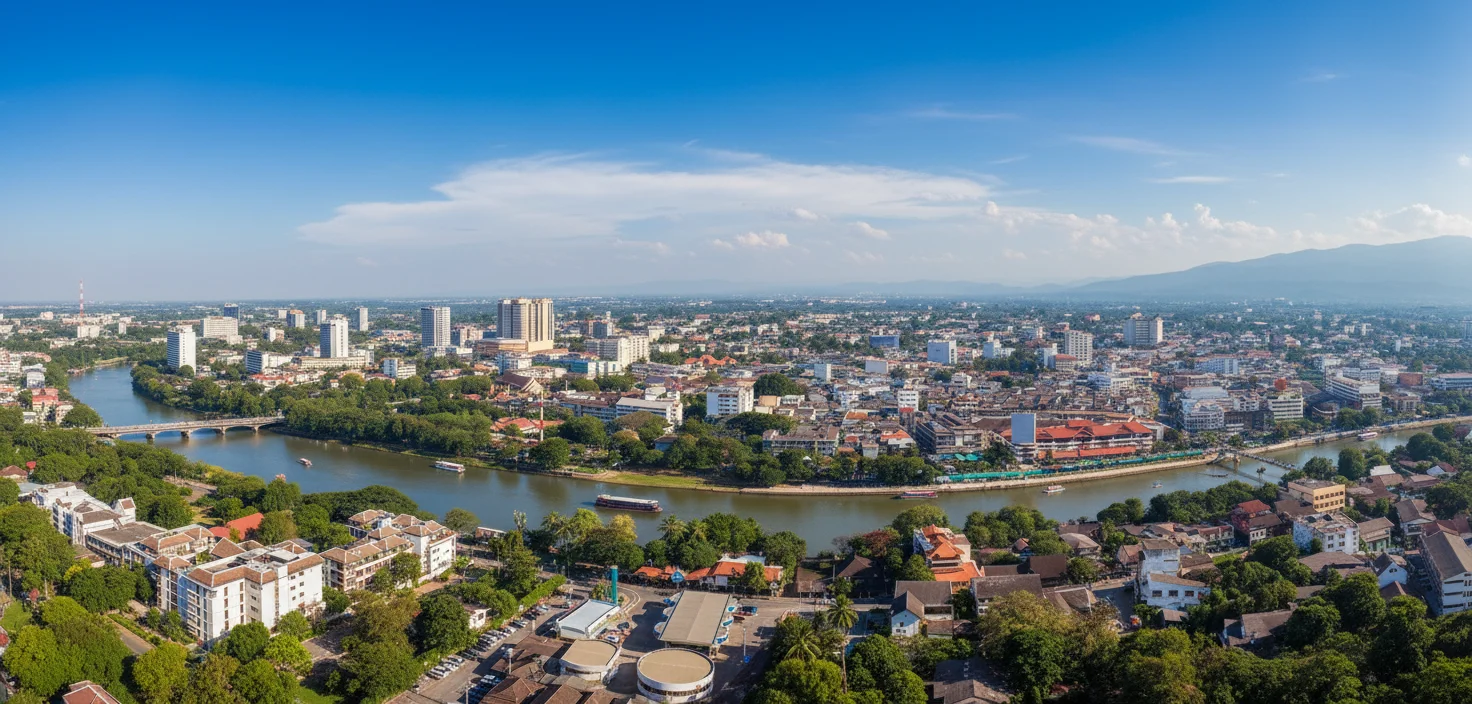
Where you decide to train in Thailand will heavily dictate the lifestyle you lead outside of gym hours. Bangkok offers elite instruction and the chance to spar with current stadium champions, but you must endure severe traffic, high pollution, and a concrete-heavy environment. Chiang Mai provides a cooler climate, significantly cheaper living costs, and a laid-back cafe culture that makes recovery days highly enjoyable, though the agricultural burning season from February to April makes outdoor cardiovascular work hazardous. Phuket, particularly the Soi Ta-iad area in Chalong, functions as a massive fitness enclave with dozens of gyms, nutrition shops, and recovery centres lined up on a single street. Koh Samui strikes a comfortable middle ground, offering high-quality instruction with immediate access to beaches, making it ideal for those bringing non-training partners or families.
Select your location based on your preferred downtime activities, as you will spend four to six hours a day recovering from the physical demands of the sessions.
| Destination | Vibe | Cost of Living | Best Time to Train |
|---|---|---|---|
| Bangkok | Urban, intense, elite | High | November to February |
| Chiang Mai | Relaxed, cultural, affordable | Low | October to January |
| Phuket (Chalong) | Commercial, fitness-focused | Very High | November to April |
| Koh Samui | Beachside, balanced | High | January to August |
Top Muay Thai Gyms for UK Visitors
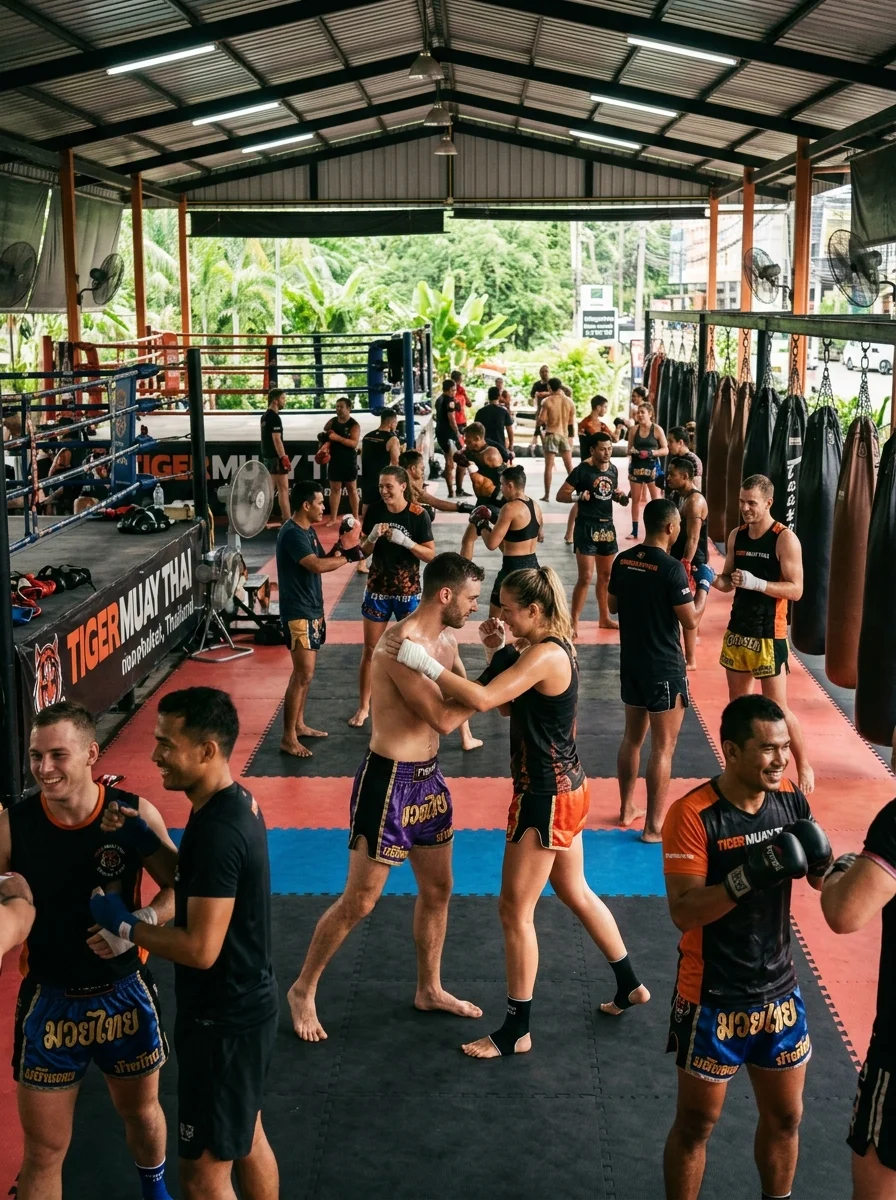
Finding the right gym requires matching your current ability with the facility's culture. In Bangkok, PK Saenchai Muay Thai Gym attracts serious practitioners wanting to train alongside legends, while FA Group is globally renowned for its brutally exhausting clinch-work sessions. For those heading to the southern islands, Tiger Muay Thai in Phuket is the largest and most famous facility, offering a highly structured, commercial environment perfect for absolute beginners and MMA crossovers. Just down the road, Sinbi Muay Thai provides excellent technical instruction with a slightly more traditional feel, leaning heavily on former stadium champions as trainers. In Chiang Mai, Sit Thangmo and Hong Thong offer welcoming environments with highly technical trainers who speak excellent English, making them ideal for a month-long immersion. If you want a luxury fitness holiday, Fit Koh on Koh Samui provides premium accommodation, tailored nutrition plans, and highly accessible classes.
First-timers should look toward established southern camps like Tiger Muay Thai or Sinbi, where the infrastructure for western beginners is already firmly in place.
Costs and Budgeting
Training costs scale dramatically depending on the location, the prestige of the gym, and whether you want private accommodation or a basic fan-cooled dorm. A single group class at a reputable gym typically costs between 400 THB and 600 THB. Private one-on-one sessions, which are highly recommended for beginners needing technical correction, run from 800 THB to 1,500 THB per hour. Multi-week packages offer significantly better value. A basic training-only package for a month usually costs around 12,000 THB. If you opt for an all-inclusive month at a premium Phuket fitness resort covering training, meals, and air-conditioned accommodation, expect to pay upwards of 45,000 THB. Do not forget to budget for gear; while gyms provide shared pads, you must buy your own hand wraps, gloves, and mouthguard for hygiene reasons.
| Option | Cost (THB) | Cost (GBP approx) | Notes |
|---|---|---|---|
| Single Group Class | 400 - 600 THB | £9 - £13 | Standard two-hour session |
| Private 1-on-1 Session | 800 - 1,500 THB | £18 - £33 | Essential for fixing early bad habits |
| One Month Training Only | 10,000 - 15,000 THB | £220 - £330 | Usually covers two sessions per day |
| One Month All-Inclusive | 35,000 - 55,000 THB | £770 - £1,220 | Includes food, AC room, and training |
| Basic Gear Bundle | 3,500 - 5,000 THB | £77 - £110 | Gloves, wraps, and two pairs of shorts |
Essential Preparation for Muay Thai in Thailand
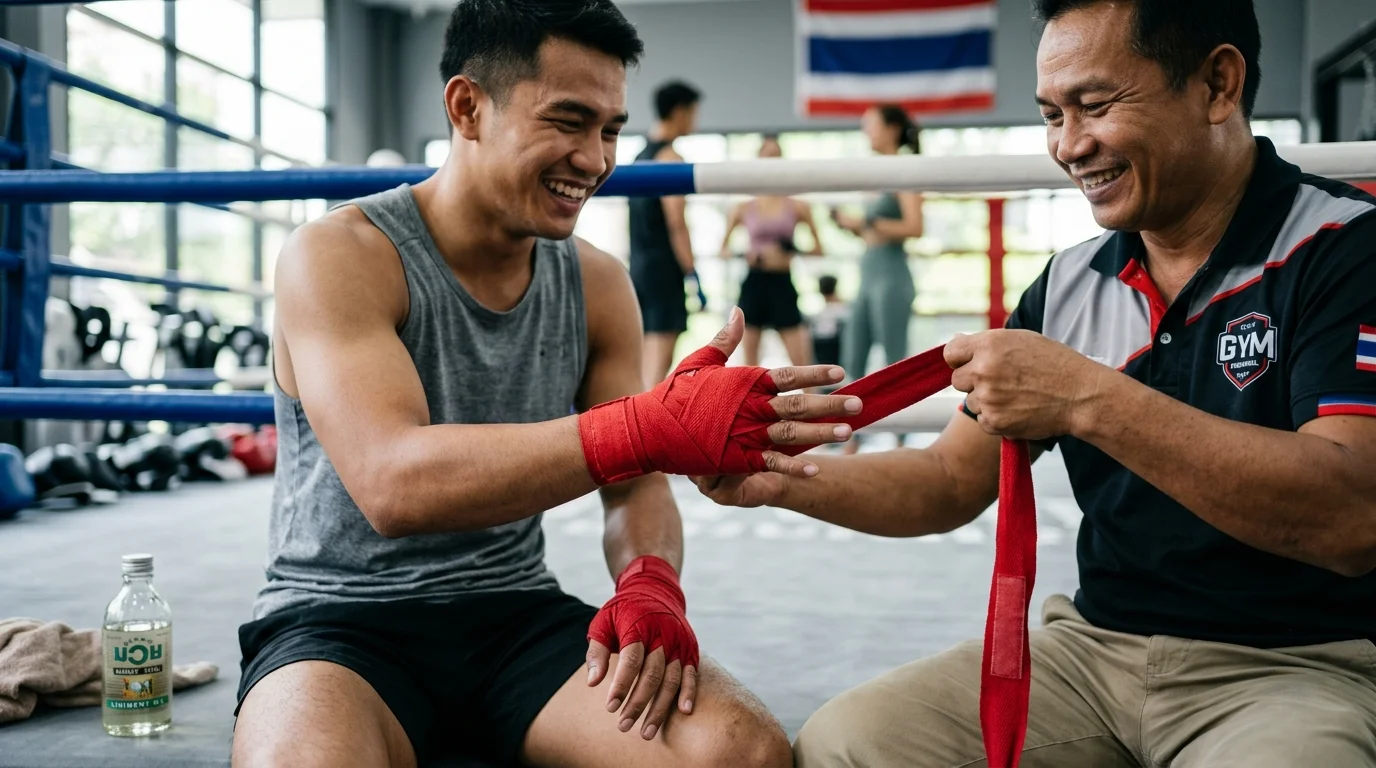
You will sweat more than you thought humanly possible, losing litres of water in a single two-hour session under the tropical sun. Failing to replace electrolytes with pharmacy-bought packets or fresh coconuts will lead to severe cramping and total exhaustion by day three. Gym etiquette dictates that you never step over the ring ropes, but always climb through or under them. The head is sacred and the feet are dirty in Thai culture, so the ropes must be respected, and women are historically required to enter beneath the bottom rope in traditional gyms. Staph infections and ringworm thrive in hot, sweaty environments with shared canvas mats. You must shower immediately after training, wash your hand wraps daily, and treat any small cuts with iodine without delay. You do not need to be fit to start, but you must be willing to try. Trainers respect effort over innate ability, and pushing through a tough round will earn you more goodwill than showing up with perfect technique.
Practical Tips for Training and Watching
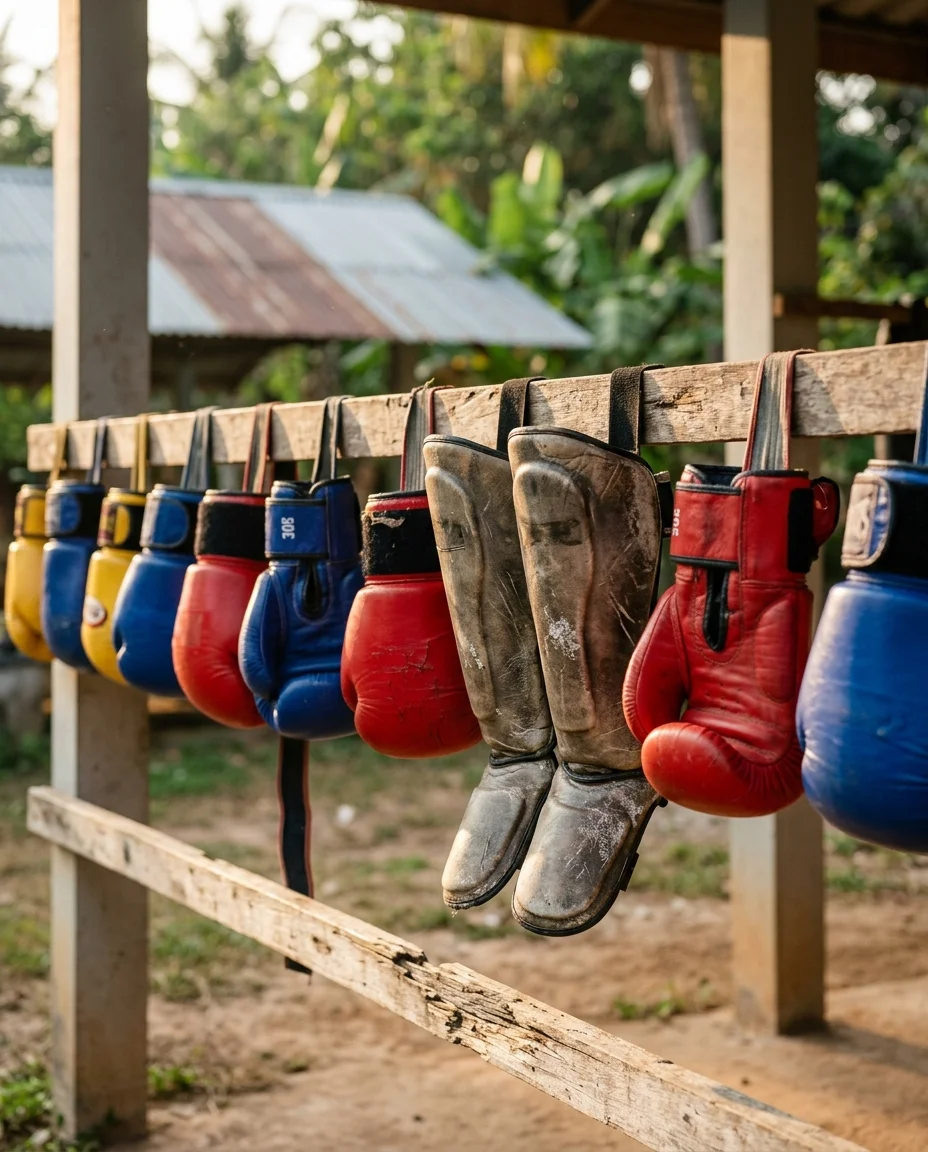
Buy your training gear in Thailand rather than the UK. Brands like Fairtex, Twins, and Top King are manufactured locally and cost roughly half of what you would pay in a British martial arts store.
Pack plenty of zinc oxide tape for your toes and feet. The canvas and rubber mats will tear the skin off your bare feet during the first week of pivoting for kicks.
Book your first few nights of accommodation separately from your gym package. This allows you to inspect the gym's actual hygiene standards and training vibe before committing thousands of Baht to a month-long stay.
Bring multiple pairs of moisture-wicking training shorts and shirts. Cotton becomes heavy and unbreathable within ten minutes, and you will go through two distinct outfits a day.
Never touch a Thai person’s head, including your trainer's, even in a joking manner during clinching practice. The head is considered the highest and most sacred part of the body.
When attending a stadium fight, dress smartly in a collared shirt and closed-toe shoes. Thais treat stadium events with respect, and turning up in a singlet and flip-flops marks you out poorly.
Use Namman Muay liniment oil sparingly on your shins and thighs before training. It warms up the muscles effectively but will burn fiercely if it gets into your eyes or sensitive areas.
Muay Thai Essentials at a Glance
| Item | Detail | Notes |
|---|---|---|
| Best Stadium for Tradition | Rajadamnern Stadium | Book Friday nights for the best atmosphere |
| Best Stadium for Action | Lumpinee Stadium | Hosts ONE Championship with 4oz gloves |
| Top Beginner Area | Soi Ta-iad, Phuket | Fitness street with dozens of commercial gyms |
| Average Class Cost | 500 THB (£11) | Cheaper if bought in blocks of ten |
| Required Gear | Hand wraps, shorts, gloves | Buy locally to save money on premium brands |
| Training Frequency | Up to twice daily | Beginners should start with one session per day |
| Main Health Risk | Dehydration and skin infections | Drink electrolytes and shower immediately |
| Etiquette Rule | Never step over the ropes | Always climb through or under to show respect |