Returns on Property Investment
While Thai property developers frequently advertise guaranteed rental yields of 7% to 10%, true net yields rarely exceed 4% once management fees, void periods, and foreign ownership premiums are deducted. UK investors often miscalculate their actual returns by applying British buy-to-let models to a market that lacks long-term tenancy security and structural capital appreciation.
This guide breaks down the true financial realities of property investment in Thailand, covering accurate rental yields, hidden carrying costs, and realistic capital appreciation across Bangkok, Phuket, Pattaya, and Chiang Mai. It is designed for UK nationals evaluating a Thai property purchase purely for income generation or capital growth. This is not for buyers seeking a primary residence or holiday home, as the financial metrics for lifestyle purchases differ entirely from pure investment analysis.

Gross Versus Net Yields in Key Markets
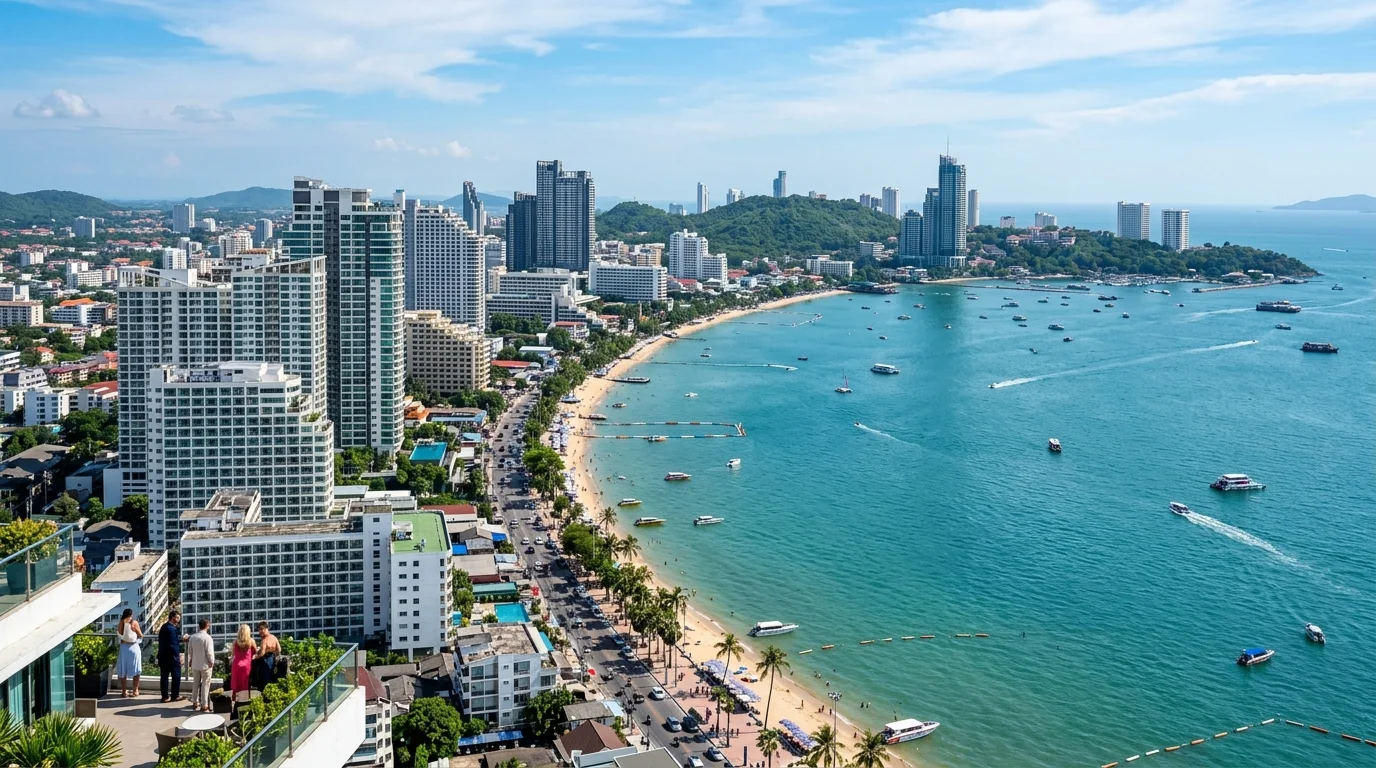
Actual rental yields in Thailand vary significantly by geography and property type, but they rarely match the headline figures marketed to foreign buyers. Bangkok apartments generally deliver gross yields of 4% to 5%, dropping to a net 3% to 3.5% after common area fees and typical void periods between annual tenancies. Phuket and Pattaya offer higher gross yields of 6% to 8% on short-term holiday lets, but the intensive management required consumes 20% to 30% of gross revenue, bringing net returns closer to 4.5%. Chiang Mai yields sit lower at around 3% net, heavily influenced by an oversupply of low-tier units and highly seasonal tenant demand. Unlike the UK, where tenant demand is relatively stable nationwide, Thai yields are hyper-localised down to the specific street and proximity to mass transit lines like the BTS or MRT. You must benchmark your expectations against the secondary resale market, not the developer's initial pricing. Relying on gross figures will severely distort your cash flow projections.
Learn the exact legal process for buying property in Thailand as a UK national. Navigate title deeds, fund transfers, and Land Department due diligence safely.
| Investment Market | Average Gross Yield | Average Net Yield | Primary Tenant Base |
|---|---|---|---|
| Bangkok (Prime Sukhumvit) | 4.5% | 3.2% | Expatriate professionals |
| Phuket (West Coast) | 7.5% | 4.8% | Short-term holidaymakers |
| Pattaya (Central) | 6.5% | 4.2% | Medium-term tourists |
| Chiang Mai (Nimman) | 4.0% | 2.8% | Digital nomads, students |
The Developer Yield Guarantee Trap
Guaranteed rental yield contracts are legally complex instruments that often mask an artificially inflated initial purchase price. Developers frequently promise 7% to 10% annual returns for the first three to five years to attract foreign capital. They fund these payouts by pricing the unit 15% to 20% above its actual market valuation, effectively paying your yield back to you with your own premium. Once the guarantee period expires, the property reverts to the open rental market where it competes with newer buildings, causing yields to drop sharply to the 3% to 4% average. Furthermore, the legal agreements underpinning these guarantees are rarely structured to protect the buyer if the developer's management company goes bankrupt or fails to secure tenants. The contract often stipulates that the owner cannot use the property during the high season, and maintenance costs during the guarantee period may still fall to the buyer. You must value the property strictly on its open-market rental potential without the guarantee attached.
| Yield Structure | Initial Cost Implication | Long-Term Risk Profile | Best Suited For |
|---|---|---|---|
| Developer Guarantee (7-10%) | 15-20% purchase premium | High drop-off after term ends | Hands-off overseas buyers |
| Open Market (Long-term let) | Market rate | Tenant turnover and voids | Yield-focused investors |
| Open Market (Short-term let) | Market rate | High management fee erosion | Active investors with local help |
| Leasehold Yield Model | Lower entry cost | Zero capital appreciation | Maximum short-term cash flow |
Calculating True Buy-to-Let Returns
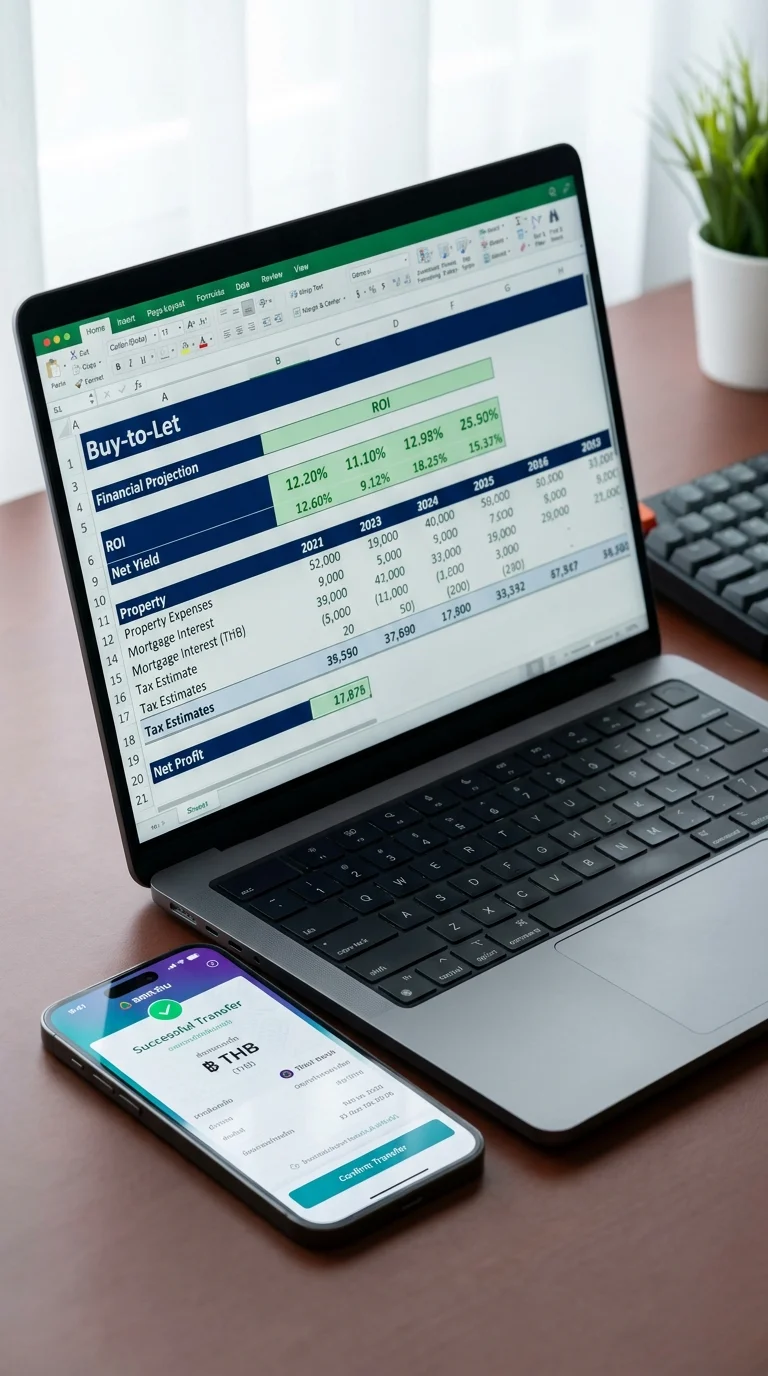
Thai buy-to-let financial models require entirely different cost inputs compared to standard UK property investments. Common area management (CAM) fees are charged annually based on the square metreage of your unit, typically ranging from THB 50 to THB 100 (£1.10 to £2.20) per square metre per month. A 50-square-metre unit will cost you THB 30,000 to THB 60,000 (£660 to £1,320) annually, regardless of whether the unit is occupied. You must also account for property management fees, which are significantly higher than the UK average of 10%. Thai agencies charge between 15% and 30% for short-term holiday lets and usually demand one full month's rent as commission for securing a one-year tenancy. Maintenance costs run higher due to the tropical climate degrading air conditioning units and exterior finishes rapidly. Void periods are a major factor; standard Thai leases are 12 months, and it is standard practice to model a one- to two-month void period between every tenancy. Budgeting for these specific local costs ensures your net yield calculation reflects reality.
| Cost Variable | UK Buy-to-Let Average | Thai Property Average | Impact on Net Yield |
|---|---|---|---|
| Management Fee (Long Let) | 10% to 12% monthly | 1 month rent per 12-month term | Reduces yield by 8.3% |
| Management Fee (Short Let) | 15% to 20% | 20% to 30% | Severe erosion of gross revenue |
| Void Periods | 2 to 3 weeks | 4 to 8 weeks | High impact due to transience |
| Maintenance Provision | 1% of property value | 1.5% to 2% of property value | Accelerated by tropical climate |
Capital Appreciation and Resale Realities
Capital appreciation in Thailand is fundamentally restricted by the continuous oversupply of new-build developments and the limitations of the foreign ownership quota. Over a five-year period, prime Bangkok units near established transit stations might see 15% to 20% capital growth, but older buildings rapidly depreciate as domestic buyers heavily favour new developments. Over a ten-year horizon, structural depreciation often wipes out initial gains unless the building is exceptionally well-managed and maintained. The foreign ownership quota directly impacts your exit strategy and resale value. Under the Apartment Act, foreigners can only own 49% of the saleable area in a building. If the building's foreign quota is full, your unit carries a premium and can only be sold easily to another foreigner, often at a higher price. However, if you need a fast exit, selling to a Thai national means dropping your price to match the domestic market rate, instantly erasing years of marginal rental profits. You must plan your exit strategy before you buy, factoring in the liquidity penalty of foreign quota units.
| Holding Period | Expected Appreciation | Primary Value Driver | Exit Liquidity |
|---|---|---|---|
| 1 to 3 Years | 0% to 5% | Off-plan completion uplift | Very low |
| 5 Years | 10% to 20% | Transit infrastructure completion | Moderate |
| 10+ Years | Highly variable | Building maintenance quality | Low (depreciation risk) |
| Leasehold Resale | Negative | Term reduction diminishes value | Exceptionally low |
Currency Fluctuations and Rental Income Taxes
Your actual return on investment as a UK national is inextricably linked to the GBP/THB exchange rate and the Thai Revenue Department's tax framework. A 5% net yield in Thai Baht can turn into a net loss if the Baht weakens significantly against the Pound over your holding period. Conversely, a strong Baht inflates your initial purchase price but boosts the GBP value of your rental income when repatriated. On the tax front, non-resident property owners are subject to personal income tax on rental earnings generated in Thailand. Tenants or property managers are legally required to deduct a 5% withholding tax from your rental income and remit it to the Revenue Department. At the end of the tax year, you must file a Thai tax return (PND 90), where rental income is taxed at progressive rates from 5% up to 35%, though standard deductions of up to 30% for expenses are permitted. Understanding your tax liabilities in both Thailand and the UK is essential to calculating your true bottom line.
| Tax / Financial Instrument | Rate or Impact | Applicability | Action Required |
|---|---|---|---|
| Withholding Tax | 5% of gross rent | All corporate or managed tenancies | Deducted at source by manager |
| Personal Income Tax | 5% to 35% progressive | Net rental income over THB 150,000 | File PND 90 annually |
| Expense Deduction | Up to 30% flat rate | Applied before calculating income tax | Claim on annual tax return |
| Exchange Rate Risk | Variable | Repatriation of rental profits to UK | Monitor GBP/THB currency pairs |
Transaction Costs and Ongoing Fees
Purchasing and holding property in Thailand involves specific statutory costs that directly erode your gross investment capital. At the Land Department, the standard transfer fee is 2% of the registered appraisal value. If you buy a new build, the developer legally must pay 1%, leaving you with 1%. For resale properties, this 2% is usually split equally between buyer and seller. You will also face a Specific Business Tax of 3.3% or a Stamp Duty of 0.5%, though these are typically the seller's responsibility. Legal fees for due diligence and conveyancing range from THB 30,000 to THB 100,000 (£660 to £2,200). Ongoing costs include the annual Land and Building Tax, which for residential property used for rental purposes is calculated at 0.02% to 0.1% of the appraised value. You must also pay the sinking fund contribution upon purchase, typically THB 500 to THB 800 (£11 to £17) per square metre.
| Cost Item | Rate or Amount | Paid By | Notes |
|---|---|---|---|
| Transfer Fee | 2% of appraised value | Split 50/50 (usually) | Developer pays 1% on new builds |
| Specific Business Tax | 3.3% of registered value | Seller | Applies if sold within 5 years |
| Stamp Duty | 0.5% of registered value | Seller | Applies if SBT is exempt |
| Legal Fees | THB 30,000 - 100,000 | Buyer | Depends on transaction complexity |
| Sinking Fund | THB 500 - 800 per sqm | Buyer | One-time payment on new builds |
Common Mistakes and How to Avoid Them

Failing to verify the Foreign Exchange Transaction Form (FETF) during the initial funds transfer is a frequent error. Without this specific Bank of Thailand document, you cannot legally register the property in your name or repatriate the funds to the UK later without massive tax penalties. Ensure your UK bank clearly marks the transfer purpose as 'Apartment Purchase' and request the FETF from the receiving Thai bank immediately.
Trusting a developer's in-house lawyer to represent your interests creates a severe conflict of interest. This leaves you exposed to unfair contract terms, such as assuming liability for the Specific Business Tax which the seller should legally pay. Hire an independent, registered Thai property lawyer to review all contracts before paying any reservation deposit.
Ignoring the building's sinking fund health when buying resale units leads to unexpected capital calls. If the juristic person has depleted the fund, you will be hit with emergency levies to repair major infrastructure like lifts or roofing. Demand to see the juristic person's annual financial audit during your due diligence phase.
Overestimating the liquidity of leasehold structures severely damages exit strategies. Leasehold agreements depreciate in value as the 30-year term reduces, making them exceptionally difficult to resell after year ten. Only purchase leasehold if your financial model relies entirely on rental yield rather than capital appreciation.
Practical Tips for UK Investors

Review the historical common area management (CAM) fee increases before purchasing a resale unit. Thai juristic persons often keep initial fees artificially low to attract buyers, only to double them within three years to cover actual running costs.
Demand proof of the building's current foreign quota ratio from the juristic office. If the building is already at its 49% limit, you cannot legally register the transfer of a freehold unit into your name.
Calculate your rental yields using an 11-month occupancy model rather than 12. Standard Thai rental contracts operate on 12-month terms, but finding a new tenant immediately is rare, making a one-month void period the financial reality.
Register for a Thai Tax Identification Number (TIN) as soon as you begin letting the property. You are legally required to file a PND 90 personal income tax return for rental earnings, and failing to do so incurs escalating fines from the Revenue Department.
Use a specialist currency broker rather than a high street bank for your capital transfer. High street banks offer poor THB exchange rates, which can erode your purchasing power by thousands of pounds on a standard apartment purchase.
Verify the property agent's commission structure for renewals, not just new placements. Many Thai agencies charge a full month's rent even when an existing tenant simply extends their lease, heavily impacting your net yield.
Avoid off-plan developments that lack approved Environmental Impact Assessment (EIA) clearance. If the EIA is rejected, the project cannot be legally built, tying up your deposit in a stalled development for years.
Quick Reference: Thai Property Investment Metrics
| Item | Detail | Notes |
|---|---|---|
| Ownership Route | Freehold (Apartment) or Leasehold | Land freehold is restricted for UK nationals |
| Foreign Quota | 49% of saleable area | Applies to freehold apartment buildings only |
| Legal Title | Chanote (Nor Sor 4 Jor) | Only accept this specific red-stamped deed |
| Transfer Fees | 2% of appraised value | Usually split evenly between buyer and seller |
| Fund Transfer | Foreign Exchange Transaction Form | Mandatory for registering foreign ownership |
| Legal Representation | Highly recommended | No statutory requirement, but vital for safety |
| Typical Void Period | 4 to 8 weeks annually | Budget for an 11-month occupancy rate |
| Average Net Yield | 3% to 4.5% | Varies heavily by location and management costs |