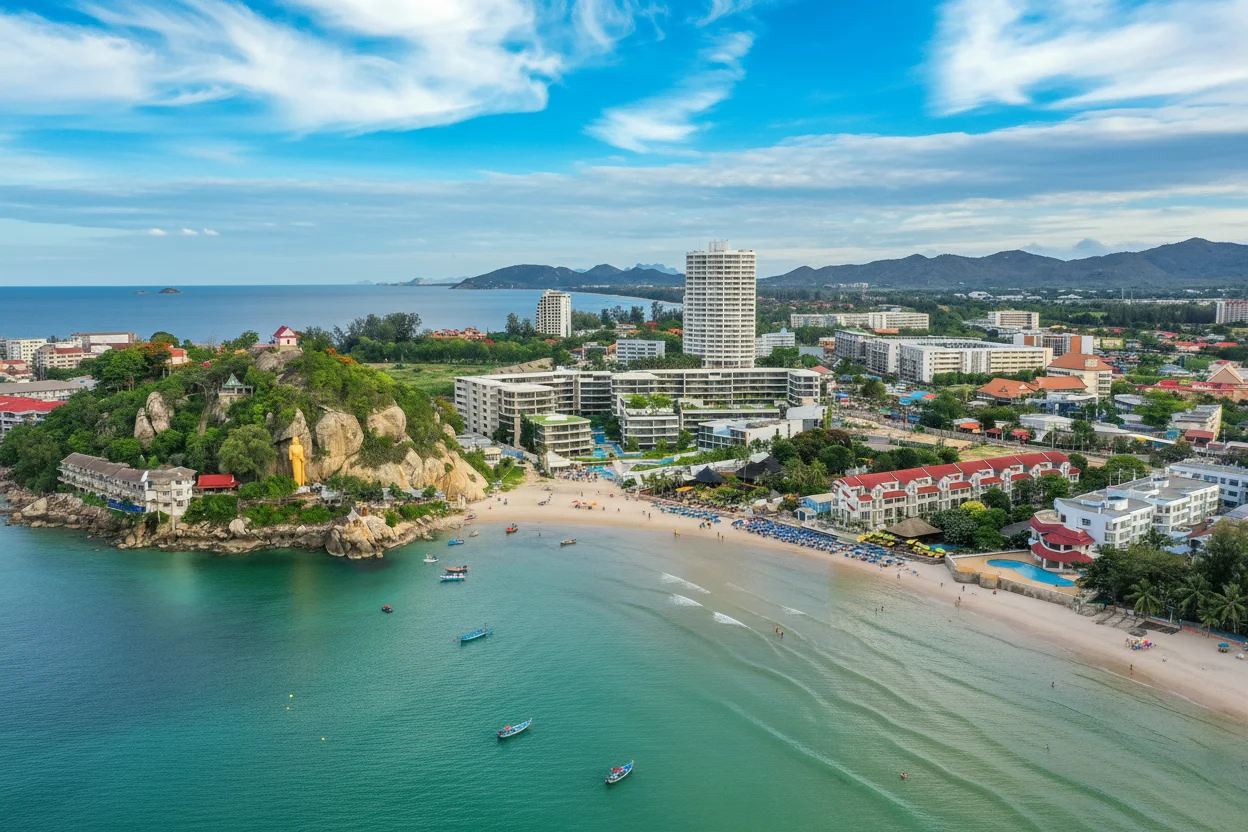
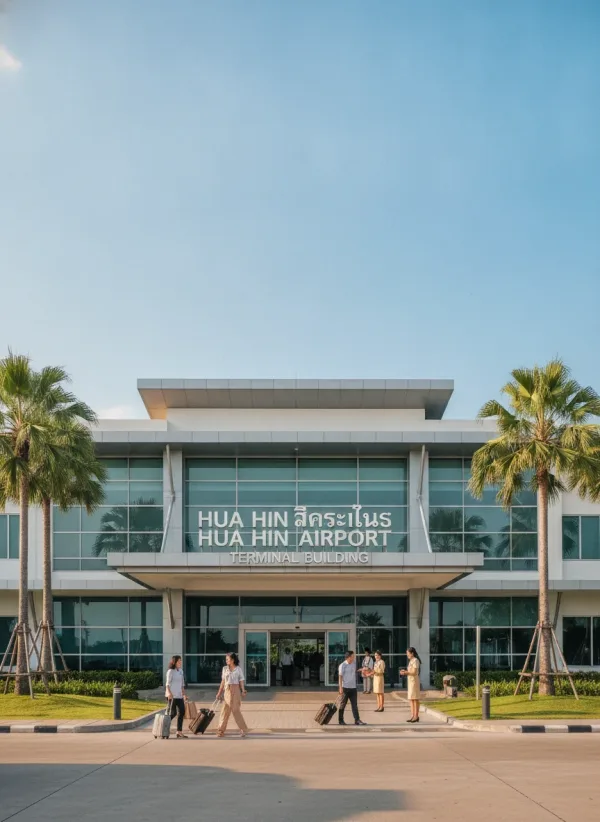
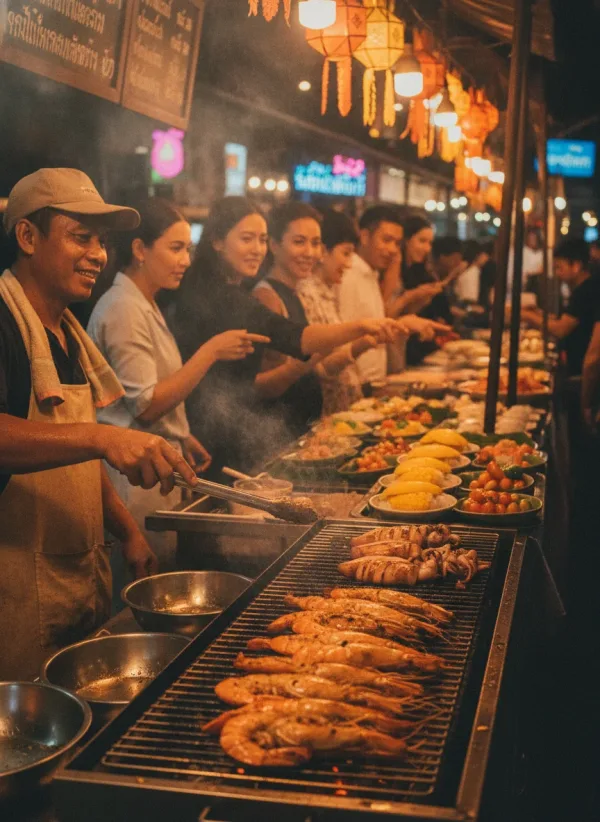
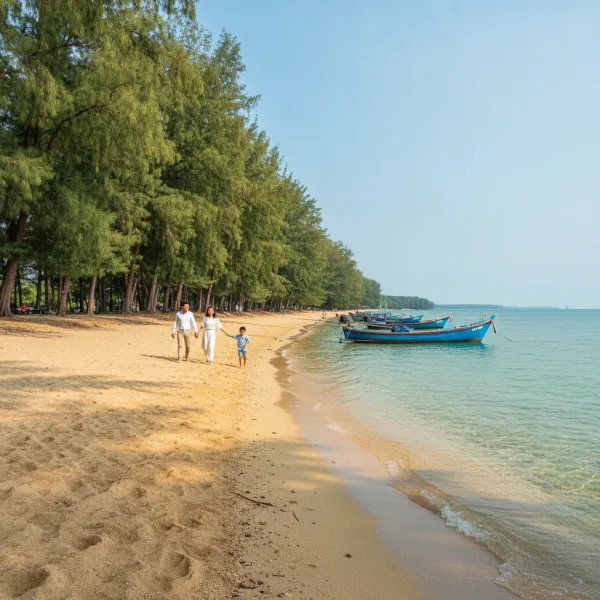
Thailand's oldest resort town, Hua Hin, sits 200km south of Bangkok. It provides a sophisticated urban-coastal lifestyle, with authentic night market fare available for under 200 THB per person.
An Introduction to Hua Hin
Forget the image of neon-lit buckets and full moon parties; this is where the Thai establishment comes to play, trade their suits for linen, and eat some of the best seafood in the Gulf.
Hua Hin sits 200km south of Bangkok on the sunrise coast, serving as a city of 60,000 people that stretches 15km along the water. It is the country’s oldest resort town and suits families, golfers, and retirees who prefer reliable infrastructure and paved pavements over the ruggedness of the deep south.
The beach itself isn't the main draw here; the sand can be coarse and the water is often shallow and murky depending on the tide. However, once you accept that the ocean is a backdrop rather than the main event, you unlock a sophisticated urban-coastal lifestyle that nowhere else in Thailand quite replicates.
This guide breaks down the distinct character of the northern and southern districts, explains how to navigate the green songthaew routes, and details where to find authentic night market fare without the tourist markup. You will find practical advice on accommodation costs, local transport nuances, and the best ways to spend your time whether you are here for a week or a season.
Region
Prachuap Khiri Khan
How to get there
Direct bus, train, or private car
Journey time from nearest hub
3-4 hours from Bangkok
Best time to visit
November to February
Budget per day (budget / mid-range / luxury)
£35 / £75 / £180+
Ideal length of stay
4-6 days
Best for
Families, golfers, and long-stay retirees
AREAS & NEIGHBOURHOODS
The central district near the Clock Tower is the high-density heart of the city, perfect for those who want everything within a ten-minute walk, including the primary night markets and the main train station. Moving south, Khao Takiab offers a more relaxed pace centered around a prominent temple-topped hill, where the beaches are wider and the vibe shifts toward weekenders and kite-surfers. For a more residential feel with better views, the hills of Hin Lek Fai provide cooler breezes and a growing community of long-term expats who prefer garden villas over high-rise apartments. The northern stretch toward Cha-am is dominated by expansive luxury resorts and shopping outlets, suiting those who value privacy and high-end amenities over street-side convenience. Inland areas near the bypass road are becoming a hub for golf enthusiasts, offering easy access to half a dozen courses within a short drive. This guide provides a deeper dive into these locations in the full areas and neighbourhoods section.
TOP EXPERIENCES
Spending an evening at Cicada Market is essential for its curated local art and high-quality food court, which avoids the usual tourist traps found elsewhere. A short drive south leads to Khao Sam Roi Yot National Park, where the hike to Phraya Nakhon Cave rewards you with a sight of a hidden royal pavilion rather than just another viewpoint. Wine enthusiasts should head inland to Monsoon Valley Vineyard to see how grapes thrive in a tropical climate, offering a refined lunch overlooking the rows of vines. Golfers have their pick of several championship courses, including Black Mountain, which provides a challenging layout that justifies its reputation among serious players. Visit the full things to do guide for more details.
GETTING AROUND
Navigating Hua Hin is straightforward thanks to the green songthaews that run a fixed loop along the main Phet Kasem Road for just 15 THB or about 35p per journey. Tuk-tuks are plentiful but require negotiation; expect to pay between 150 and 200 THB (£3.50 to £4.50) for short hops within the centre. Using the Grab app is often more transparent for longer trips to the outskirts, typically costing around 300 THB (£7) for a 15-minute ride. While scooters are available for rent at 250 THB (£6) per day, the heavy traffic on the main artery makes them less appealing than in quieter coastal towns.
WHERE TO STAY
Accommodation in the town centre caters to all budgets, with simple guesthouses near the pier starting at £20 per night for those who don't mind a bit of evening noise. Mid-range travellers should look toward the southern end of the main beach or Khao Takiab, where modern apartments and boutique hotels offer pool access and sea views for roughly £50 to £80. Luxury seekers are spoilt for choice along the northern coastline, where sprawling beachfront estates command upwards of £180 per night for a level of service that remains discreet and polished. This guide recommends booking a heritage-style property if you want to capture the original 1920s charm of the area. Explore the full hotels guide for specific property reviews.
FOOD & DRINK
Seafood is the undisputed king in Hua Hin, with the restaurants built on stilts over the water serving some of the freshest catch in the country. You must try Khao Chae, a refreshing dish of rice soaked in jasmine-scented water served with various side dishes, which is a local royal-inspired specialty perfect for a hot afternoon. A full seafood dinner for two with drinks usually lands around 1,200 THB (£27), while a hearty meal at the Chatchai Night Market will cost less than 200 THB (£4.50) per person. The coffee scene is also sophisticated, with numerous independent roasters tucked away in the side streets.
ESSENTIAL TIPS
Check the tide tables before planning a beach day in Hua Hin, as high tide can often swallow the sand entirely against the sea walls in the central areas. Be wary of the macaques at Khao Takiab; they are bold and will snatch bags if they suspect food is inside, so keep your belongings tucked away. While horse riding on the beach is a classic activity, watch your step as the cleanup isn't always immediate and can be an unpleasant surprise for barefoot walkers. Lastly, the sun here is deceptively strong due to the constant sea breeze, so apply more protection than you think necessary even on overcast days to avoid a painful evening.
Hua Hin is ideal for families, golfers, and long-stay retirees. It appeals to travellers who prefer reliable infrastructure and paved pavements over the ruggedness of deep southern Thailand.
How far is Hua Hin from Bangkok and how do you get there?
Hua Hin is located 200 kilometers south of Bangkok along Thailand's sunrise coast. The journey takes approximately 3 to 4 hours from Bangkok and can be made direct by bus, train, or private car.
When is the best time of year to visit Hua Hin?
The best time to visit Hua Hin is between November and February. Visitors during this period can expect the most favorable weather for exploring the coastal town and nearby attractions.
What are the main areas to stay in around Hua Hin?
The central district near the Clock Tower is best for walking to night markets and the train station. Khao Takiab to the south offers wider beaches and a relaxed vibe, the northern coastline toward Cha-am features expansive luxury resorts, and the hills of Hin Lek Fai appeal to long-term residents seeking garden villas and cooler breezes.
What public transportation options are available in Hua Hin?
The green songthaew is the cheapest transport option, running a fixed loop along main Phet Kasem Road for a small flat fare of 15 THB. Tuk-tuks are also widely available but require price negotiation, while using the Grab app offers transparent pricing for longer journeys to the outskirts.
What should you check before planning a beach day in Hua Hin?
You should check the local tide tables before planning a beach day in central Hua Hin. High tides can swallow the sand entirely against the sea walls, leaving no visible beach area.
How should visitors handle the monkeys at Khao Takiab?
Visitors to Khao Takiab should keep personal belongings securely tucked away. The local macaques are bold and will snatch bags if they suspect food is hidden inside.
What traditional food specialty should you try in Hua Hin?
A local royal-inspired specialty to try is Khao Chae, which consists of rice soaked in jasmine-scented water served alongside various savory side dishes. It is a traditional meal choice that is especially refreshing on a hot afternoon.
Is renting a scooter recommended for getting around Hua Hin?
Scooter rentals are available in Hua Hin, but riding one is less appealing than in quieter coastal towns due to heavy traffic on the main Phet Kasem Road. Many visitors prefer using songthaews, tuk-tuks, or ride-hailing apps instead.
This page is provided for general information only. While we aim for accuracy, details can change — please verify anything important independently before relying on it.
STAY UP TO DATE
Join our community to get the newest Thailand destination
guides, travel advice, and expat resources delivered straight to your inbox.