About Bangkok

The humidity greets you the moment the airport terminal doors open: a warm, fragrant rush of charcoal smoke, traffic, and tropical air that immediately signals Bangkok.
Sprawling across the Chao Phraya River delta in central Thailand, this metropolis of more than ten million residents moves at an intense, round-the-clock pace. It rewards visitors who lean into its layered landscape, where high-rise commercial centres and sleek elevated rail lines sit directly above centuries-old canal communities and quiet Buddhist shrines.
First-time visitors often find their initial twenty-four hours demanding. Postcard visions of tranquil gold-spired temples can clash with heavy road congestion and humid heat. Treating the noise and movement as the everyday rhythm of the capital rather than an inconvenience reveals an exceptionally welcoming and well-ordered city beneath the sensory rush.
Whether arriving for a two-week holiday, preparing for relocation, or passing through on a wider Southeast Asian itinerary, this overview provides clear orientation for navigating Thailand's capital. The accompanying sections break down district geography, public transport systems, realistic daily spending, and lodging choices.

AREAS & NEIGHBOURHOODS
Bangkok has no single downtown core; it operates instead as a patchwork of distinct neighbourhoods shaped by the Chao Phraya River and transit lines.
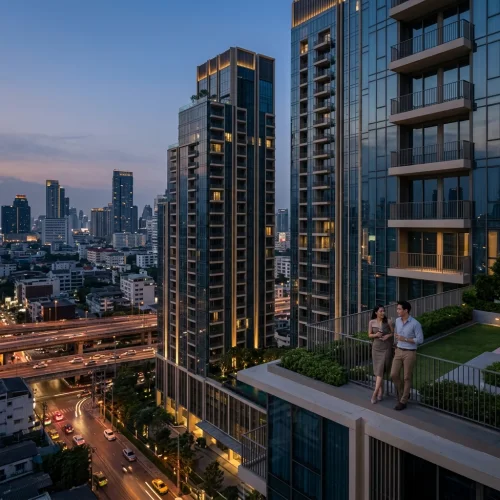
Sukhumvit acts as the modern commercial spine, strung along the elevated Skytrain with high-rise hotels, rooftop cocktail bars, and international restaurants.
To the west, Rattanakosin (the Old City) contains the capital's premier historical monuments, including the Grand Palace and Wat Pho. While the underground MRT Blue Line now reaches its southern edge at Sanam Chai station, northern pockets still rely primarily on river express boats and road transport.
South of the centre, Silom and Sathorn form the financial hub by day and an energetic dining and nightlife quarter after dark, where office workers queue for 50-baht noodle bowls in the shadow of corporate glass towers.
Across the Chao Phraya River, Thonburi preserves a quieter, low-rise pace laced with residential canals, providing a glimpse of older riverfront life away from the commercial high-rises.
TOP EXPERIENCES
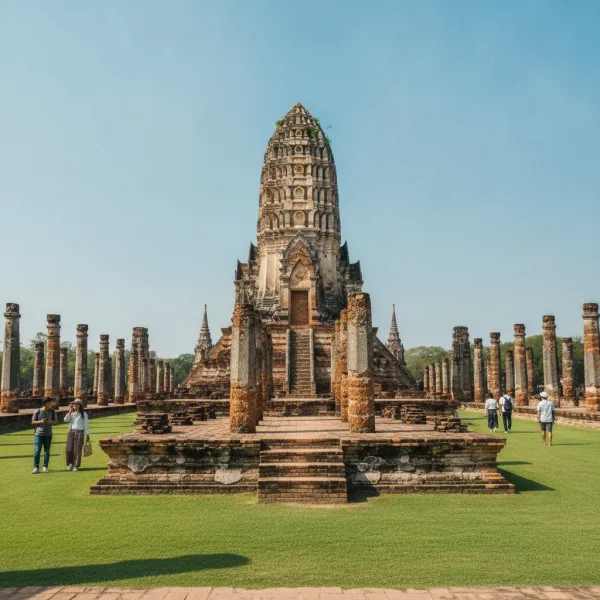
Visiting Wat Pho in the late afternoon avoids the heavy coach tours that dominate the Grand Palace nearby. Arriving before the temple halls shut allows a calm view of the 46-metre reclining Buddha, after which the courtyards and tiled stupas quieten significantly toward dusk.
Chartering a traditional longtail boat into the Bangkok Noi canals across the Chao Phraya River reveals wooden stilt houses, neighbourhood temples, and water monitor lizards sunning themselves on concrete banks—a stark contrast to the modern downtown core.
In Chinatown, evening street diners pack the pavements along Yaowarat Road, but weaving into the narrower side alleys leads to quieter stalls selling crisp roast duck and peppery rolled noodle broth. On Saturdays and Sundays, Chatuchak Weekend Market fills an immense maze of alleys with thousands of stalls, where dedicated browsing uncovers everything from vintage denim to handcrafted ceramics.
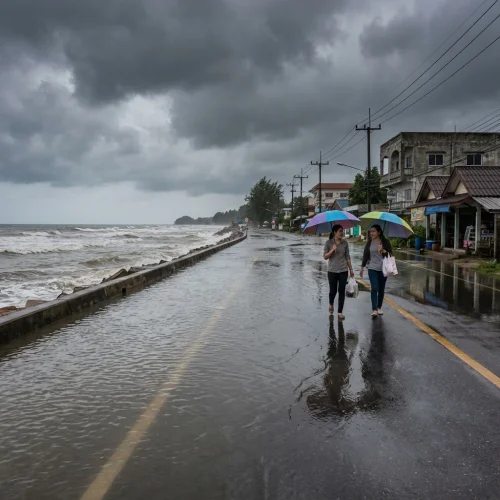
Expect 32C days and 80 percent humidity in Bangkok. Beat the 4 PM monsoon downpours by grabbing a 49 THB / 1.15 GBP local poncho at any corner shop.
GETTING AROUND
Navigating Bangkok efficiently requires bypassing road gridlock with the BTS Skytrain and MRT underground networks. Both systems are clean, air-conditioned, and affordable, with single fares starting at 17 THB (around 40p), capping at 44 THB on the MRT Blue Line and reaching 62 THB (£1.40) on extended BTS routes. The MRT accepts contactless bank cards at the turnstiles, while the BTS requires cash for single tickets or a stored-value Rabbit card.
Metered taxis provide low-cost travel, starting at a 35 to 40 THB (around 80p to 90p) flag fall. However, road congestion causes severe delays, and drivers near tourist hubs frequently refuse the meter; ride-hailing apps like Grab provide upfront pricing and prevent fare disputes. For short hops down narrow side streets, licensed motorcycle taxi riders wearing orange vests bypass traffic for roughly 15 to 40 THB (35p to 90p). Three-wheeled tuk-tuks lack meters and charge higher, negotiated fares, making them a novelty experience rather than practical daily transit.
WHERE TO STAY
Bangkok accommodation delivers remarkable value across every budget, though location choice dictates how easily you navigate the city. Selecting a base close to the BTS Skytrain or MRT subway spares you long delays in road traffic.
Budget travellers seeking character rather than train links can head to the side alleys branching off Khao San Road, such as Soi Rambuttri. Here, clean, private guesthouse rooms cost around £20 a night, placing you within walking distance of the Grand Palace while shielding you from late-night street noise.
Mid-range visitors will find stylish boutique hotels in the leafy Ari neighbourhood for around £60 per night. Straddling the Sukhumvit BTS line, Ari combines quiet residential streets with independent coffee houses and design-forward rooms.
For high-end comfort, the historic Chao Phraya riverside near Saphan Taksin station remains the classic luxury enclave. Rooms in established five-star riverfront properties start from roughly £200 to £250 a night, providing private ferry shuttle services, river views, and attentive heritage hospitality.
FOOD & DRINK
Bangkok's dining spans a wide spectrum, from roadside stalls on pavement corners to multi-course Michelin-starred dining rooms. The city is celebrated for fast, wok-cooked dishes. A staple order is stir-fried minced pork with holy basil and fiery bird's eye chillies, served over rice with a crisp-edged fried egg. In residential neighbourhoods such as Huai Khwang, everyday street carts and neighbourhood shophouse kitchens typically charge between 50 THB and 80 THB (around £1.10 to £1.80) for a standard plate. Air-conditioned food courts inside central shopping centres provide similar classic dishes for roughly 60 THB to 120 THB (£1.35 to £2.70). At the upper end of the scale, fine dining tasting menus in commercial districts like Sukhumvit frequently run from 3,500 THB to over 7,000 THB (approximately £80 to £160) per diner before drinks and service charges. For day-to-day eating, neighbourhood cook-to-order stalls deliver exceptional flavour at modest prices.
PRACTICAL TIPS
Managing Bangkok’s tropical heat requires deliberate pacing. Schedule open-air sightseeing, particularly expansive temple grounds, before 10:00 or in the late afternoon, retreating to air-conditioned museums, galleries, or shopping complexes during the midday peak.
Modest dress is strictly required at sacred sites: shoulders and knees must remain covered, and footwear must be removed before stepping inside shrine halls. Carrying a small packet of tissues and hand sanitiser is sensible, as public conveniences in markets and older transport stations rarely provide paper.
Around major historical landmarks, particularly the Grand Palace, treat unsolicited street approaches with caution. Strangers who claim that a monument is closed for a Buddhist holiday or state ceremony are running a long-standing touting scam. Their aim is to divert visitors into private transport bound for commission-paying tailoring or gem shops. In reality, the Grand Palace opens daily from 08:30 to 15:30. For urgent travel disputes or assistance, contact the Tourist Police on 1155.
FAQ: Bangkok Travel Guide
What should first-time visitors to Bangkok expect?
What is the best time to visit Bangkok?
When is the best time to visit Wat Pho?
What are the best ways to get around Bangkok efficiently?
What should I know about using taxis in Bangkok?
Why is location important when choosing accommodation in Bangkok?
How can I manage the heat when sightseeing in Bangkok?
What is the dress code for sacred sites in Bangkok?
What essential items should I carry for public conveniences in Bangkok?
What is a common scam to be aware of near historical landmarks in Bangkok?
Reviewed by the Thailand Guide Editorial Team • Last reviewed: 9 September 2026
This page is provided for general information only. While we aim for accuracy, details can change — please verify anything important independently before relying on it.