Bangkok is the only place in Thailand where you can spend 40 minutes moving three miles in a taxi while a canal boat zips past you for 15 pence.
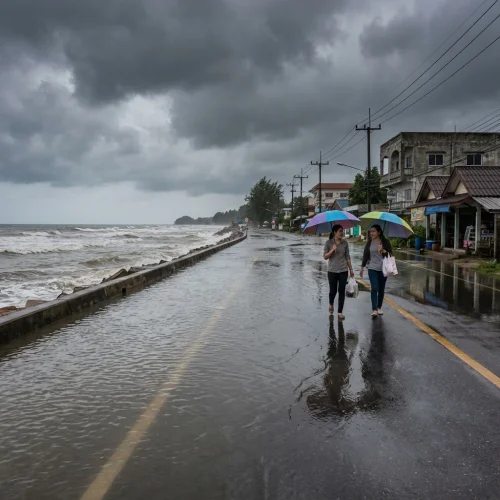
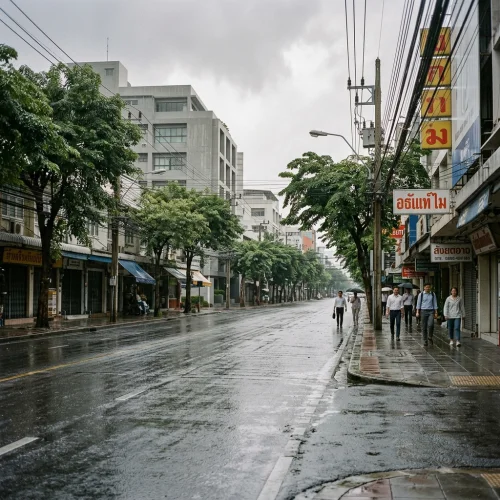
The logistical reality is that Google Maps often underestimates travel times here because it cannot account for the way a sudden tropical downpour turns the Sukhumvit Road into a temporary car park. Success in this city depends entirely on your willingness to switch between three different rail systems and a river boat rather than relying on a single car.
Direct flights from London Heathrow with Thai Airways or EVA Air take roughly 11 hours and 30 minutes, usually costing between £750 and £1,100 (33,000 to 48,000 THB) for a return ticket. If you opt for a layover in Doha or Dubai with Qatar or Emirates, you might save £150 (6,600 THB), but your total travel time will swell to 16 or 18 hours. Since Bangkok is the national hub, getting here from other Thai cities is straightforward via the State Railway of Thailand. A second-class sleeper train from Chiang Mai takes 13 hours and costs about 800 THB (£18). While the train is a classic experience, the air conditioning is often set to a freezing temperature, so keep a hoodie in your carry-on. Internal flights from Phuket or Samui via Bangkok Airways or AirAsia take 90 minutes and range from 1,200 THB (£27) to 4,000 THB (£90). Always book the first flight of the morning to avoid the inevitable afternoon knock-on delays.
The BTS Skytrain and MRT Subway are your lifelines, with fares ranging from 17 THB (£0.40) to 62 THB (£1.40) per journey. Use them religiously between 07:00 and 09:00 or 17:00 and 19:00 unless you enjoy sitting in stationary traffic. For areas the trains do not reach, download Grab or Bolt. A four-mile car journey usually costs 150 THB (£3.40), but a motorbike taxi through the same traffic is 60 THB (£1.35) and takes half the time. If you use a motorbike, keep your knees tucked in as drivers squeeze through gaps that look physically impossible. Avoid any tuk-tuk driver who offers a 20 THB (£0.45) city tour, as this is a precursor to an afternoon visiting overpriced tailor shops. Instead, use the Khlong Saen Saep canal boats for 12 THB (£0.27) to move through the city centre. It is loud and the water is murky, but it is the fastest way to get from the shopping districts to the Old City. Always insist that taxi drivers use the meter; if they refuse, simply step out and find another within thirty seconds.
GETTING OUT
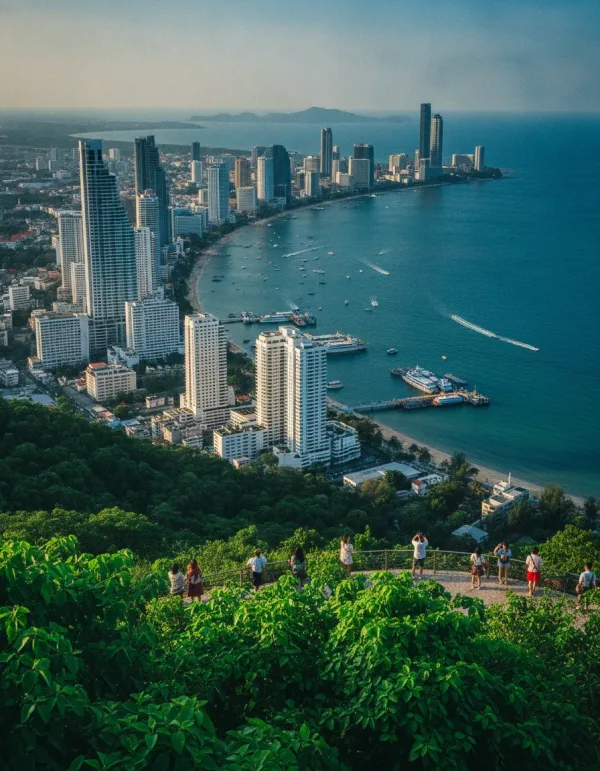
Pattaya is two hours away by private car for 1,500 THB (£34) or a public bus from Ekkamai for 131 THB (£3). For a quieter escape, the train to Kanchanaburi leaves Thonburi station twice daily, taking three hours for just 100 THB (£2.25). If you are heading to the southern islands, the Lomprayah bus and ferry combo to Koh Tao takes about 10 hours and costs 1,450 THB (£33). For a quick day trip, take a 45-minute van from Mo Chit to Ayutthaya for 70 THB (£1.60) to see the temple ruins before the midday heat becomes unbearable.
Suvarnabhumi (BKK) handles long-haul carriers like British Airways and Thai Airways; use the Airport Rail Link for 45 THB (£1) to reach the city in 30 minutes. Don Mueang (DMK) is the low-cost hub for AirAsia and Nok Air. A taxi between the two takes an hour and costs roughly 500 THB (£11). Suvarnabhumi has a hidden food court on Level 1 near Gate 8 where a meal costs 60 THB (£1.35) instead of typical airport prices.
A budget day is £25 (1,100 THB), covering street food and hostels. Mid-range travellers should budget £70 (3,100 THB) for boutique hotels and sit-down dinners. Luxury starts at £200 (8,800 THB) for five-star riverside stays. ATMs charge a flat 220 THB (£5) fee per withdrawal, so take out the maximum 20,000 THB (£450) each time to minimise losses. Most malls accept cards, but street vendors are cash-only. Use a Wise card to get the mid-market exchange rate and always decline the terminal's offer to convert the currency for you.
CONNECTIVITY
Buy an AIS or DTAC SIM card at the airport for 699 THB (£16), giving you 30 days of unlimited 5G data. While hotel wifi is generally excellent at 100Mbps+, public signals often drop out inside the massive concrete skeletons of shopping malls. If you are working remotely, avoid the free city wifi which requires a complex login and stick to a personal hotspot. One quirk is that some UK banking apps require a VPN to function on Thai networks.
UK passport holders receive a 30-day visa exemption on arrival at mainland airports (60 days for entries made before 15 September 2026, under the previous exemption scheme).. Tipping is not mandatory, but rounding up a 280 THB bill to 300 THB (£6.80) is appreciated in casual restaurants. Power outlets are Type A or B, the same as the US, though many modern hotels take European Type C. Dial 1155 for the Tourist Police if you have issues. Carry a small pack of tissues as many public toilets in older areas charge 5 THB (£0.11) for entry but provide no paper.