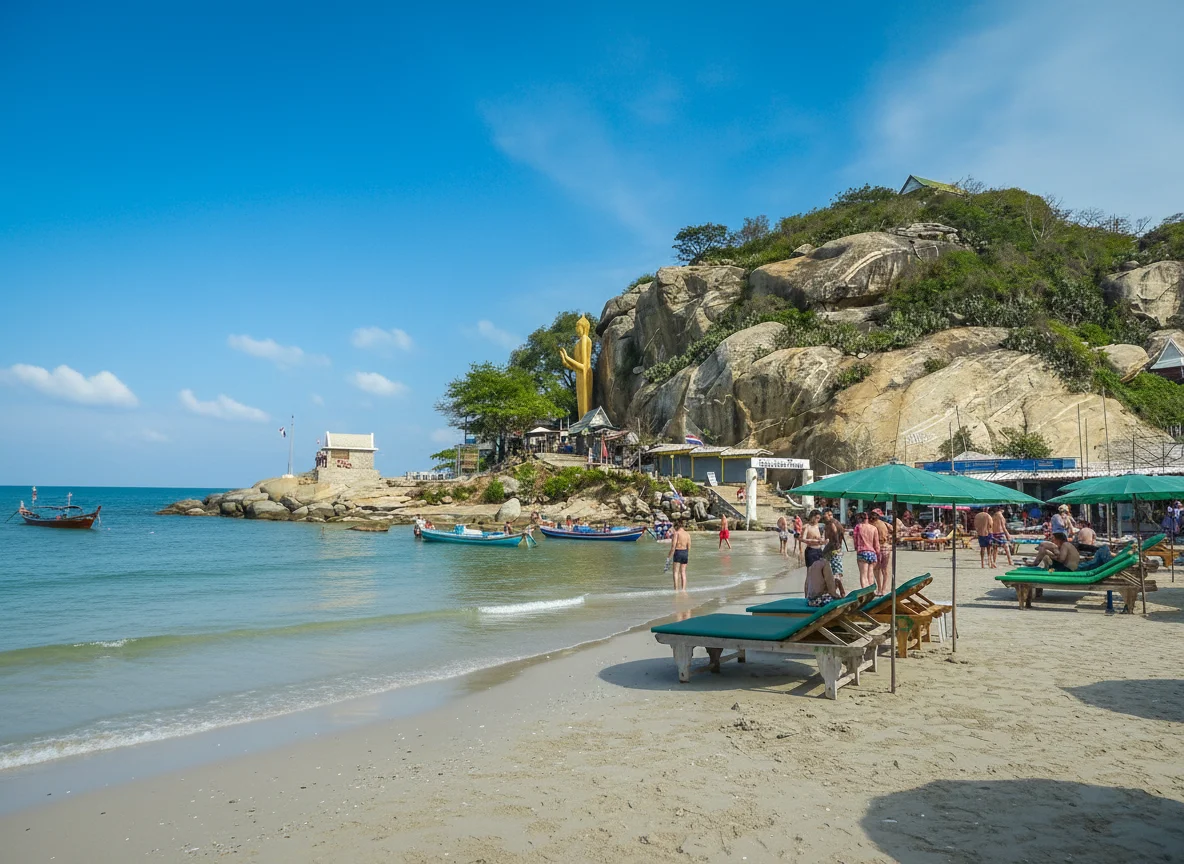
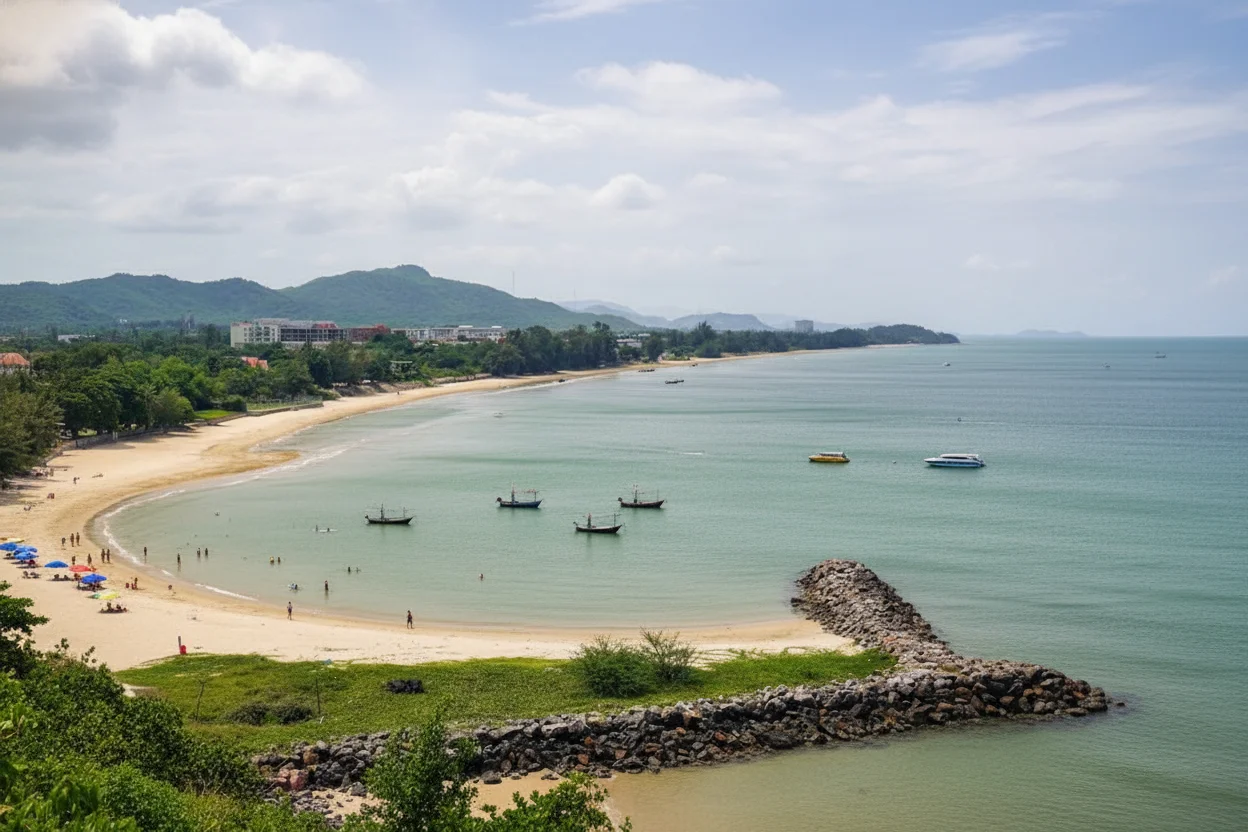
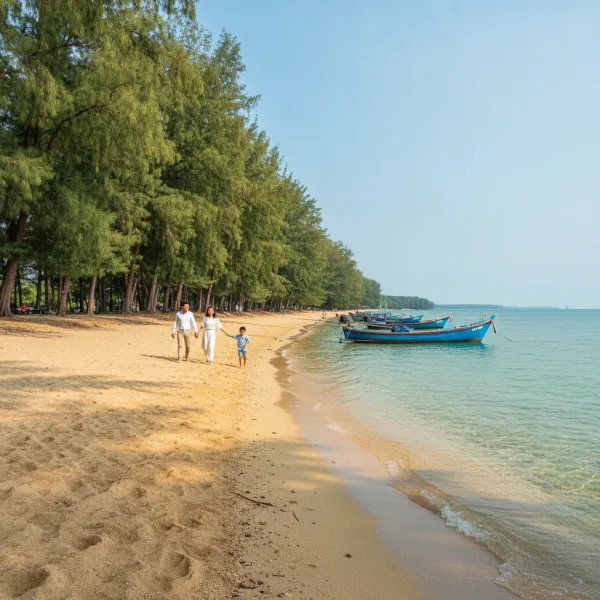
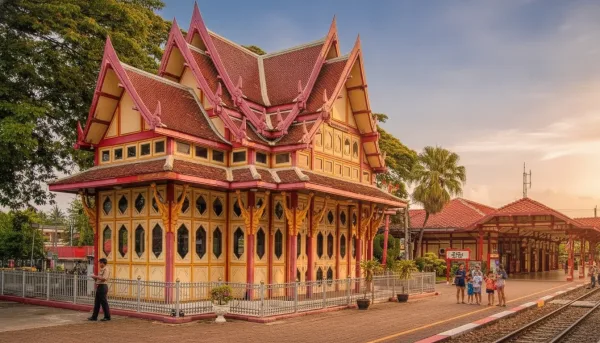
This seaside retreat blends royal heritage with a blue-collar fishing history, resulting in a food scene that prioritises fresh catches and refined Thai-Chinese techniques over the heavy spice found further south.
You might expect a resort town to be purely international, but the local obsession with high-quality ingredients means even the humblest street stalls serve produce that would satisfy a palace kitchen.
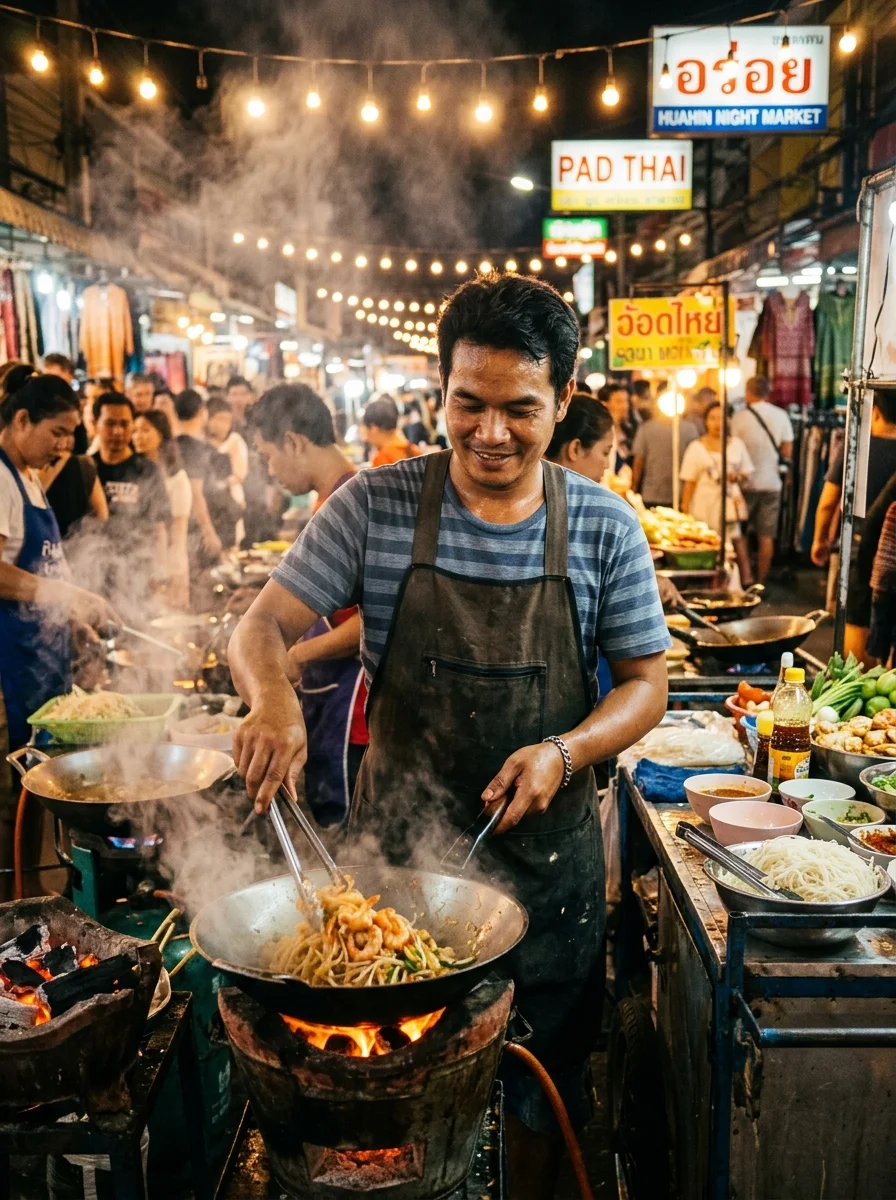
The crispy oyster omelette, or Hoy Tod, is the first thing you should track down at the Hua Hin Night Market. Unlike the soft versions found in Bangkok, the coastal style here is brittle and golden, providing a sharp crunch that gives way to plump, briny oysters and a pile of flash-fried bean sprouts. Expect to pay around 80 THB (£1.80) for a plate served with a tangy chilli vinegar that cuts through the richness. Moving to something more substantial, Khao Pad Sappa-rod, or pineapple fried rice, is a regional staple due to the vast plantations in the nearby countryside. At Jek Piek, this dish is a complex balance of sweetness, curry powder, and crunchy cashews, often topped with salty pork floss and costing about 150 THB (£3.30). For dinner, the salt-crust grilled fish known as Pla Pao is essential. A whole sea bass is stuffed with lemongrass and kaffir lime, coated in a thick layer of rock salt, and grilled over charcoal until the flesh is moist and flaky. You can find these at Chatila Night Market for approximately 350 THB (£7.80), served with a pungent lime and green chilli dipping sauce. If you need a quick snack, the Moo Ping skewers near the clock tower are marinated in coconut milk and coriander root, offering a smoky, sweet hit for 12 THB (£0.27) per stick. Finally, seek out Mae Nong Nuch for their legendary mango sticky rice. This shop has operated since the 1940s, using high-fat coconut cream and premium Nam Dok Mai mangoes to create a rich dessert for 100 THB (£2.20) that sets a high bar for any other versions you might try.
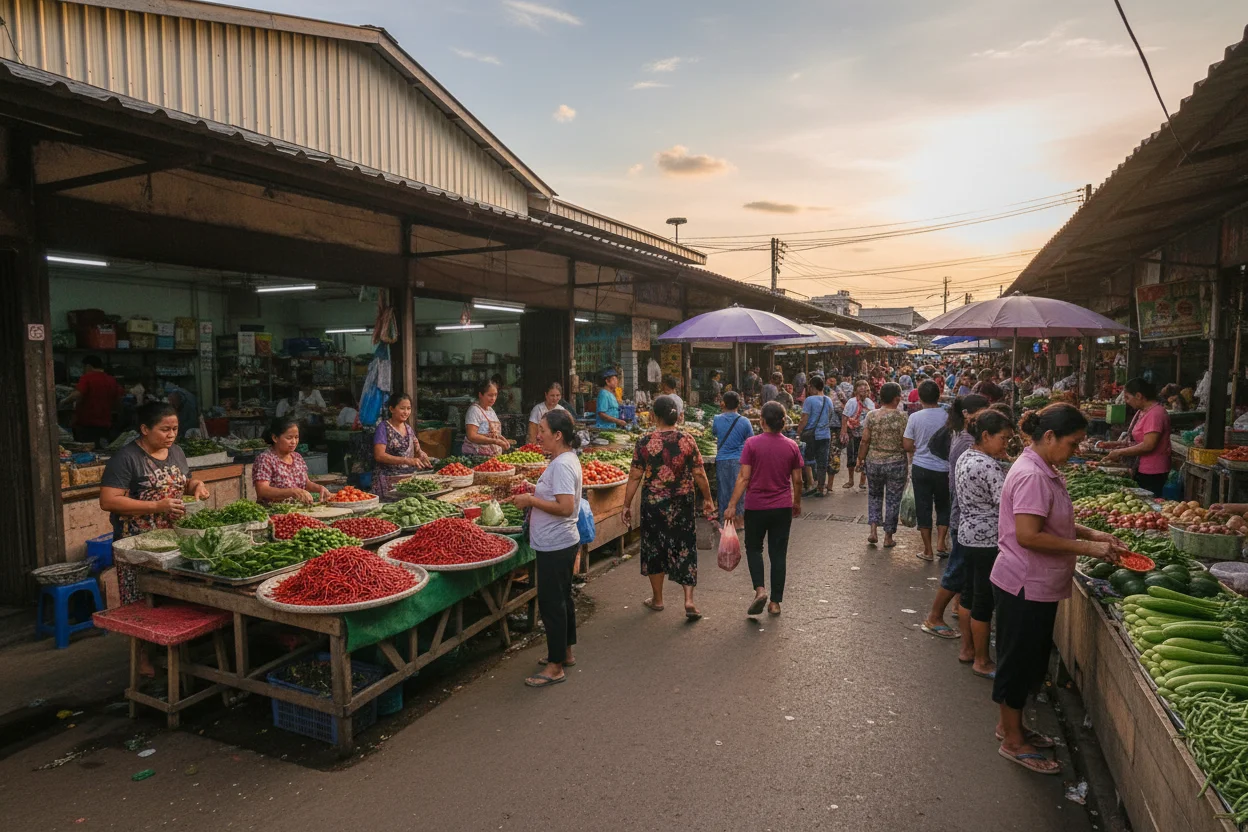
For an early start, Chatchai Market is where the town wakes up; a bowl of steaming rice porridge here costs roughly 40 THB (£0.90) and offers a window into local life. Lunch is best spent at Jek Piek on the corner of Dechanuchit Road, where the queue for their clay pot coffee and braised pork is a testament to the quality, with meals averaging 120 THB (£2.70). As evening approaches, bypass the central tourist hubs and head south to Khao Takiab. This fishing village atmosphere is home to restaurants like Krua Kannikar, where you can eat lime-drenched seafood for about 400 THB (£9) per person. If you prefer a curated environment, Cicada Market provides high-end street food in a park setting for around 200 THB (£4.50) per dish. A spot most visitors overlook is the Isaan food cluster behind Market Village, where punchy papaya salads go for 50 THB (£1.10).
STREET FOOD GUIDE
Street food here is at its peak after 7:00 PM when the night markets are in full swing. The secret to a great meal is looking for vendors who specialise in just one or two dishes, as this usually indicates a recipe honed over decades. When you sit at a communal table, it is standard etiquette to find the small metal container of cutlery and clean your own spoon with a tissue provided on the table. Avoid any pre-cooked seafood sitting out on ice; instead, choose stalls where you can see the raw ingredients being tossed into a wok or onto a grill.
Cold beer is the natural partner for spicy coastal food, with a large bottle of Singha costing around 90 THB (£2) at a local convenience store. For a more refined choice, the local Monsoon Valley Vineyard produces a crisp Colombard white wine that cuts through chilli heat, priced at roughly 1,200 THB (£27) in restaurants. If you want something non-alcoholic, try Nam Matum, a sweet bael fruit tea with woody notes, available for 25 THB (£0.55) at market stalls.
The row of seafood restaurants built on stilts over the water near the Hilton offers great views but frequently charges a significant premium for the location. You will find higher quality prawns and crab for nearly half the price by walking just two streets inland. If a menu features more international fast food than Thai classics, it is a sign to keep moving. Exploring the smaller alleys like Soi 51 will lead you to better, more authentic kitchens.