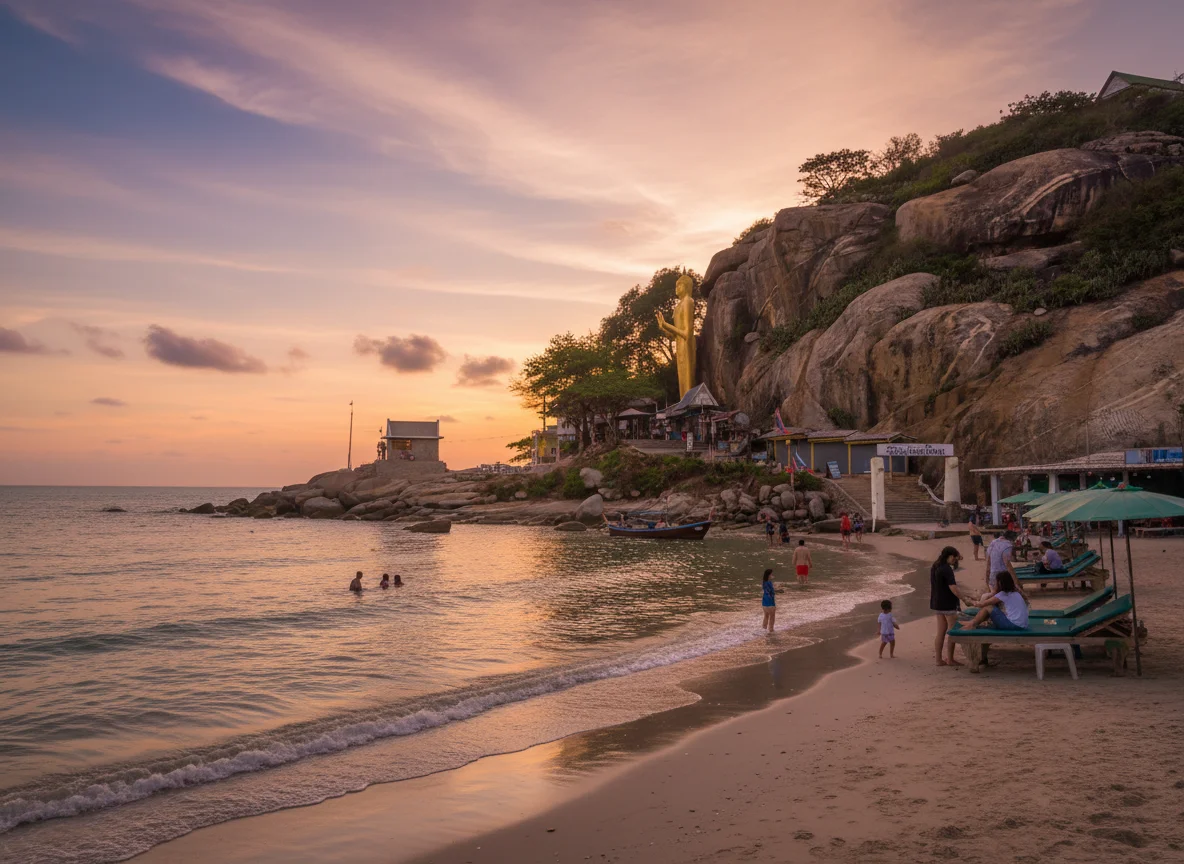
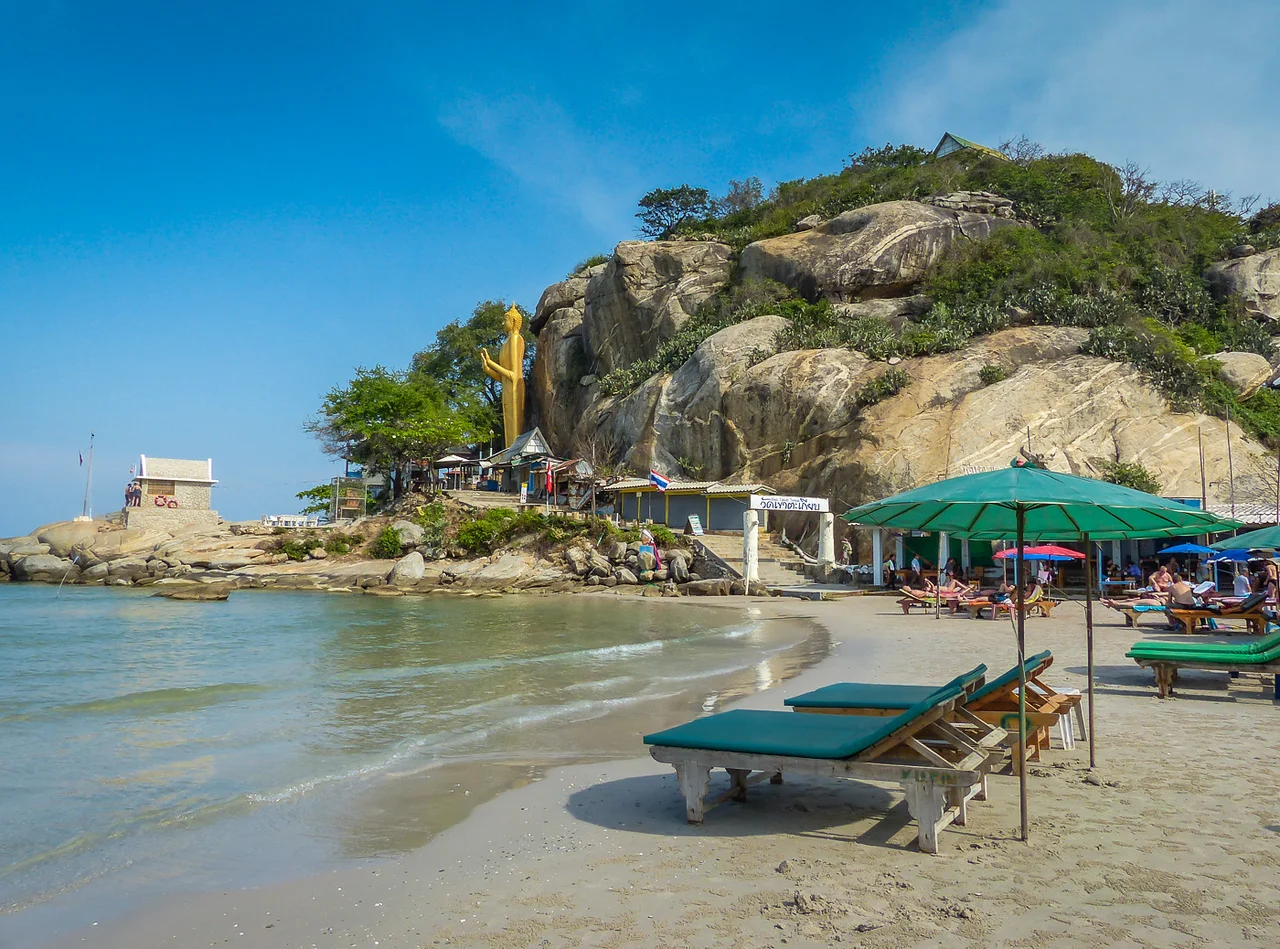
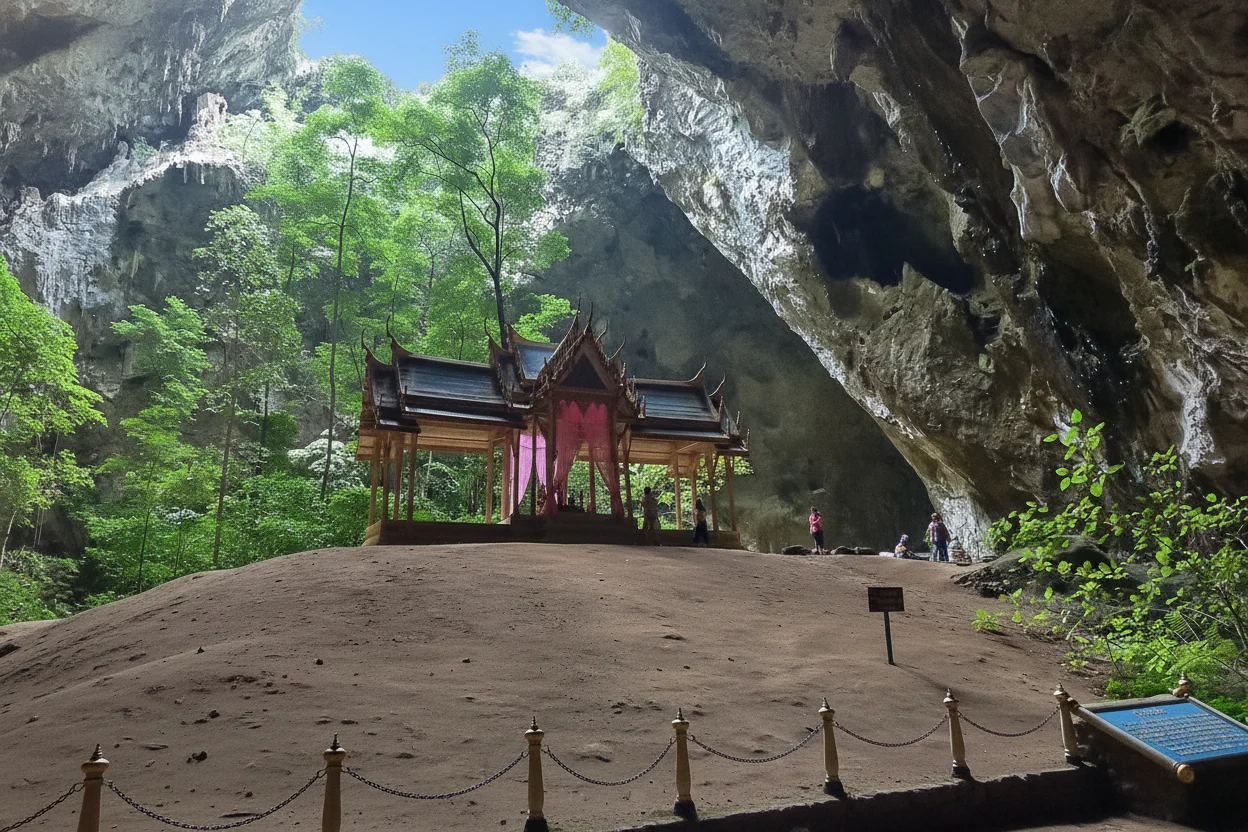
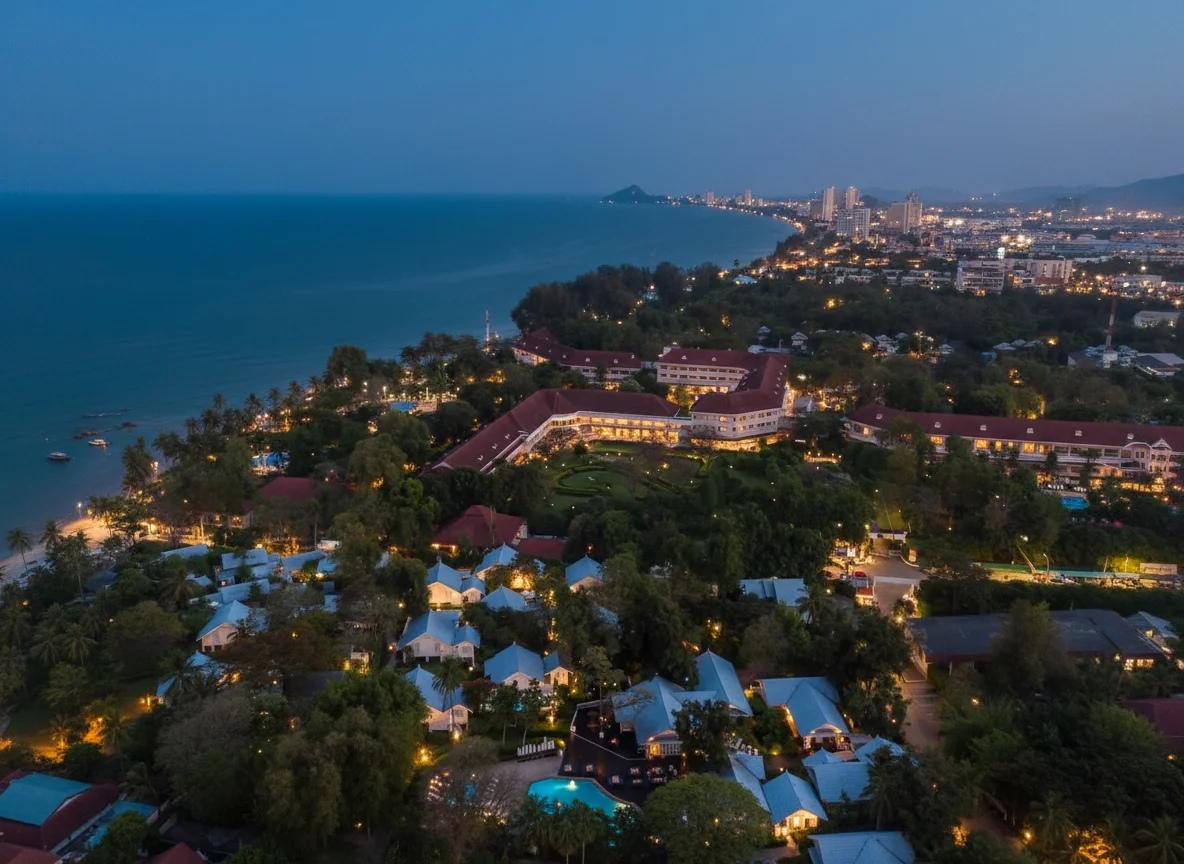
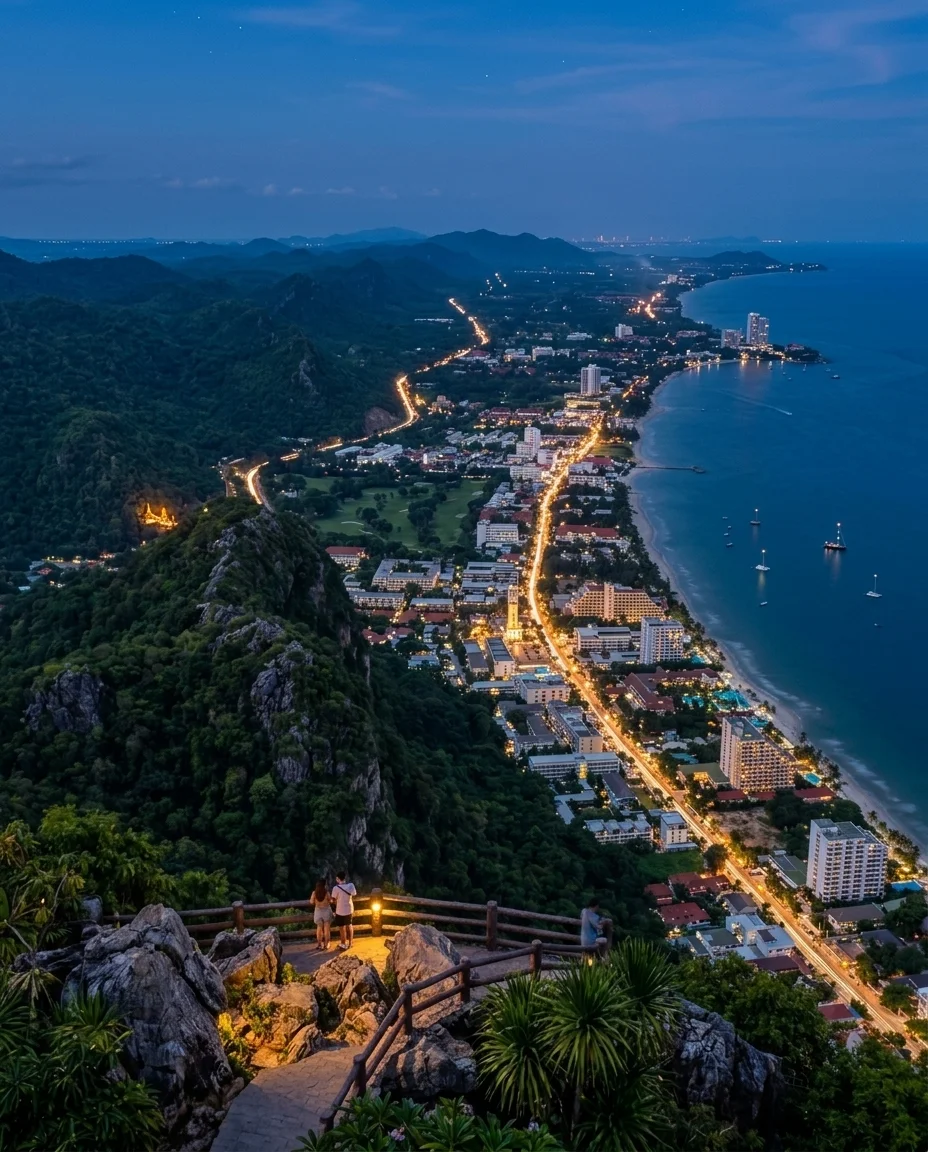
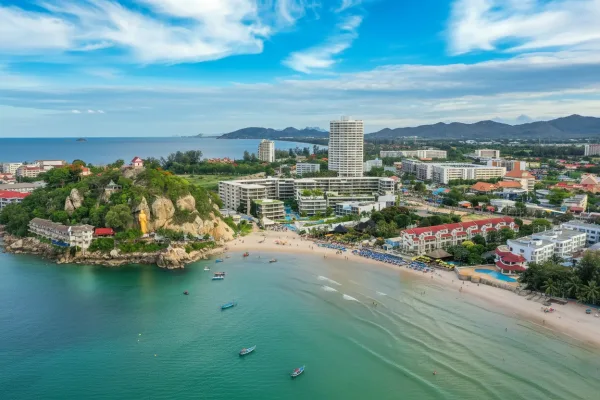
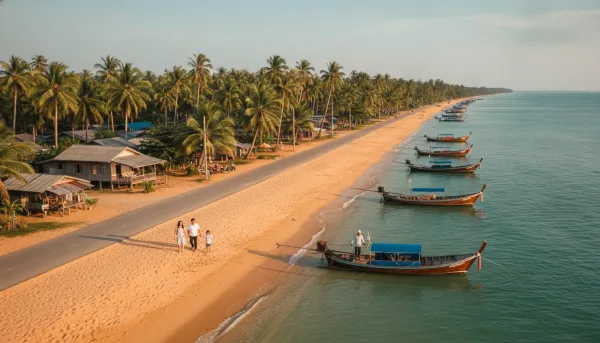
This stretch of the Gulf coast operates on a strictly linear logic where almost everything of interest sits on a single, long artery connecting the royal palace to the southern hills.
You will quickly learn that while it looks walkable on a map, the heat and the lack of pavements mean you are going to become very well-acquainted with the back of a green pickup truck. The town moves at a dignified pace compared to the frantic energy of the capital, requiring a bit of patience when the single main road inevitably slows down during the mid-afternoon school run.
Flying from London Heathrow to Bangkok Suvarnabhumi with Thai Airways or EVA Air usually costs around £800 return for a twelve-hour direct flight. Once you land, the Roong Reuang coach is the most reliable choice, departing from Level 1 Gate 8 every hour from 07:30 to 19:30. It costs 300 THB (£6.60) and takes exactly four hours, dropping you at the New Hua Hin Bus Station near the airport. For those who value their personal space, a private car booked via a service like Hua Hin Cars costs roughly 2,000 THB (£44) and shaves thirty minutes off the journey. If you are coming from central Bangkok, the train from Krung Thep Aphiwat Central Terminal is a classic experience. A second-class air-conditioned seat costs about 412 THB (£9) and takes four hours. Just be aware that the legendary old wooden station is now mostly for photos, as most long-distance trains now use the elevated concrete tracks at the new station nearby.
The green songthaew is the lifeblood of the town, running a fixed loop from the airport in the north to Khao Takiab in the south every ten to fifteen minutes. You hop on the back, ring the bell when you want to get off, and pay the driver 15 THB (£0.33) through the window; after 19:00, the price bumps up to 20 THB (£0.44). For door-to-door service, the Grab app is essential, with a typical cross-town trip costing 150 THB (£3.30), though the Bolt app often offers the same ride for 110 THB (£2.40) if you do not mind waiting five minutes longer for a driver. Tuk-tuks here are not the three-wheeled variety found in Bangkok but small four-wheeled vehicles that charge a flat minimum of 150 THB (£3.30) for even the shortest hops. They are excellent for catching a sea breeze, but always agree on the price before sitting down to avoid the 100 THB (£2.20) premium some drivers try to add for those staying in high-end resorts. Motorbike taxis, identifiable by their orange vests, are the fastest way through the 17:00 traffic, costing between 40 THB (£0.88) and 80 THB (£1.76) depending on the distance.
GETTING OUT
For a change of pace, a taxi to the dramatic peaks of Khao Sam Roi Yot National Park takes sixty minutes and costs around 1,500 THB (£33) for a return trip including three hours of waiting time. If you want to head further south to the quiet beaches of Prachuap Khiri Khan, the local train takes ninety minutes and costs a mere 40 THB (£0.88) for a third-class fan seat. Minivans to Bangkok leave every thirty minutes from the station on Soi 51, costing 180 THB (£4) and taking three and a half hours, though they can be a tight squeeze for those with large suitcases.
Most visitors arrive at Suvarnabhumi Airport (BKK), where the Roong Reuang bus station is clearly marked on the ground floor. Hua Hin has its own airport (HHQ), but it currently only handles occasional domestic hops to Chiang Mai via AirAsia for about 1,800 THB (£40). To save time, buy your coach ticket online forty-eight hours in advance during peak season, or you might find yourself waiting three hours for the next available seat.
A budget traveller can survive on £35 a day by eating at the Chatchai Market, where a bowl of noodles is 50 THB (£1.10). A mid-range budget of £85 allows for a boutique hotel and seafood dinners on the piers costing 800 THB (£17.60) for two people. Luxury seekers should budget £200 plus per day for five-star resorts and fine dining. ATMs are everywhere, charging 220 THB (£4.85) per withdrawal, so take out the maximum 20,000 THB (£440) each time to minimise fees. Use a travel card like Monzo or Starling to avoid extra bank charges on the Thai side.
CONNECTIVITY
Pick up an AIS or TrueMove H SIM card at the airport for 699 THB (£15.40), which provides unlimited data for thirty days. Signals are exceptionally strong in the town center, but can drop to a single bar if you head into the hills toward the Monsoon Valley Vineyard. Most cafes offer download speeds of at least 50Mbps, which is more than enough for remote work. One quirk is that some older apartments have thick concrete walls that effectively kill 5G signals indoors, so always check the signal in your specific room.
UK citizens currently get a thirty-day visa-free entry on arrival. Tipping is not mandatory, but rounding up the bill or leaving 40 THB (£0.88) for a massage is a appreciated gesture. Thailand uses Type A, B, and C plugs, so a universal adapter is vital for your 230V electronics. In an emergency, dial 1155 for the Tourist Police who speak English. A pro tip: the sun here is deceptively strong due to the sea breeze; buy your SPF 50 at a local Watsons for 450 THB (£10) to avoid the inflated resort shop prices.