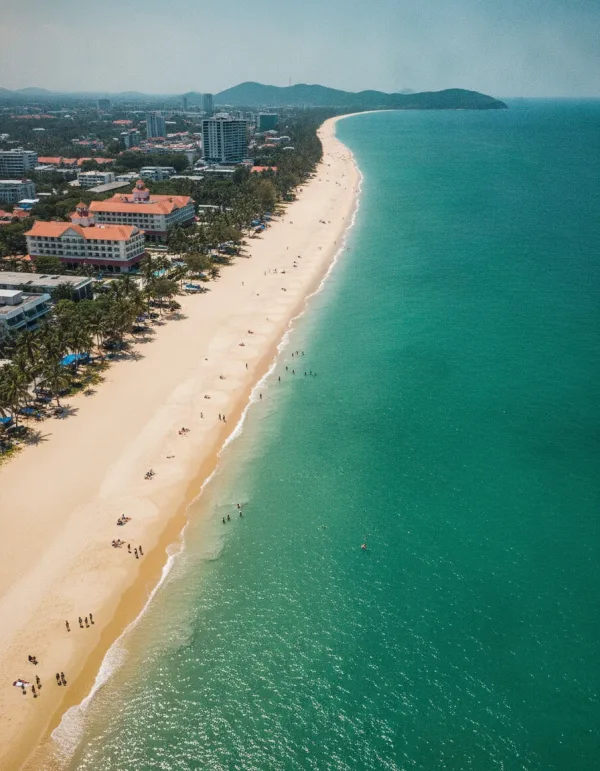
The enduring presence of the Thai royal family has instilled this seaside town with an atmosphere of polite restraint that feels a world away from the chaotic southern islands.
Travel brochures often paint the area as a sleepy retirement haven, completely missing the fact that this is actually where upper-middle-class Bangkokians come to meticulously perform traditional Thai etiquette by the sea. You will notice the difference immediately in the quiet, measured way locals speak and the distinct lack of late-night beach parties.
Faith here intertwines seamlessly with the town’s aristocratic undertones. Rather than the grand spectacles found in Bangkok, local Buddhism manifests in quiet morning routines. Monks from Wat Hua Hin collect alms at first light, walking past heritage wooden houses while locals wait barefoot to offer rice and curries. Visiting Wat Khao Takiab, the monkey temple at the southern end of the bay, costs 50 THB (about 1.10 GBP) for the viewpoint, though the temple itself is free. You might be surprised to see residents offering red Fanta and placing miniature zebra statues at roadside shrines. These zebras are believed to ensure safe passage for motorists, an animist custom happily coexisting with formal Buddhist practice. Watch how locals pause their scooters to wai these shrines mid-commute.
Songkran, the Thai New Year in April, takes on a distinctly different character here. While other tourist hubs descend into week-long water wars, the local administration enforces a much more respectful celebration. Water throwing is largely confined to April 13th, leaving the remaining days for merit-making and family gatherings. You will see younger Thais gently pouring jasmine-scented water over the hands of their elders rather than blasting them with plastic guns. In August, the Hua Hin Food Festival takes over Queen’s Park. Most guides skip the real highlight, which is the ice carving competition. It is a bizarrely popular local obsession leaving the tropical lawns covered in melting swans. During these events, Phetkasem Road becomes practically impassable. Abandon any plans to use taxis. Walk or rely on the green songthaews. Even these shared trucks will inch along at walking pace packed with domestic holidaymakers.
TRADITIONS & CUSTOMS
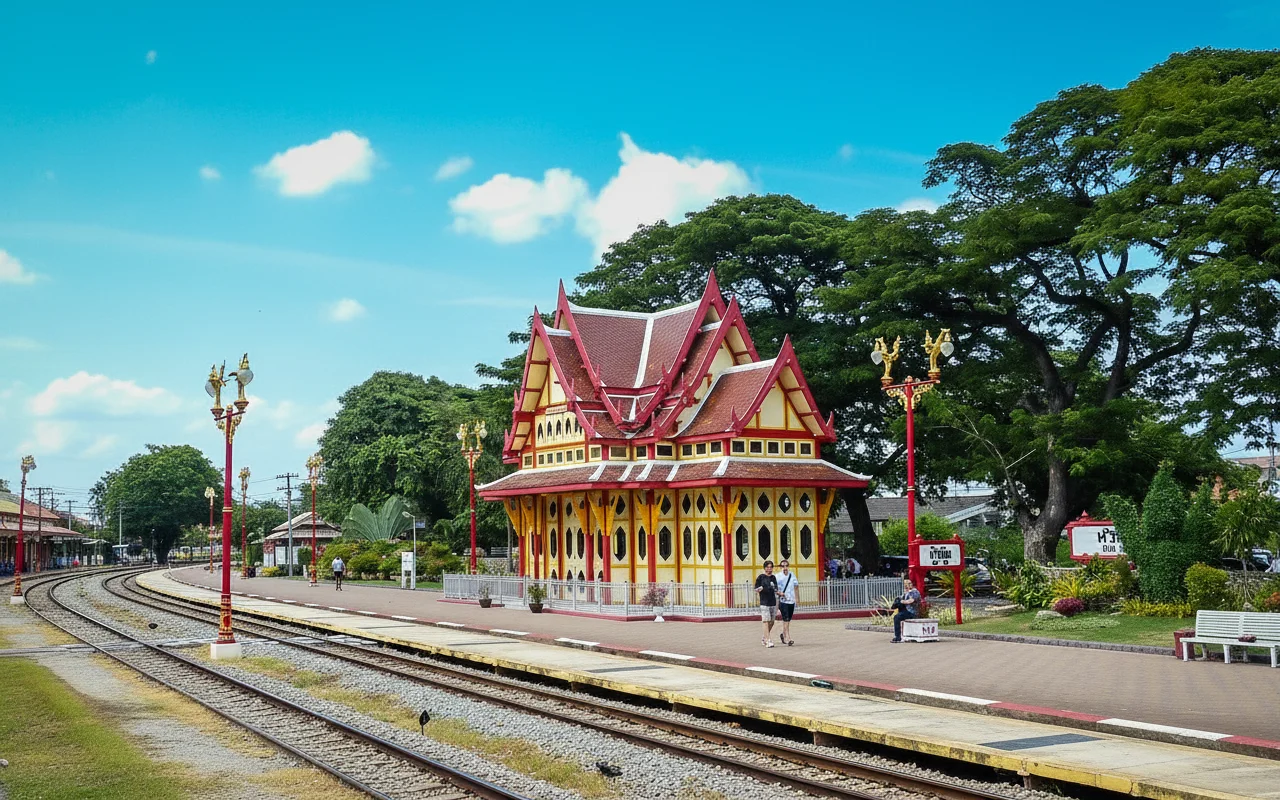
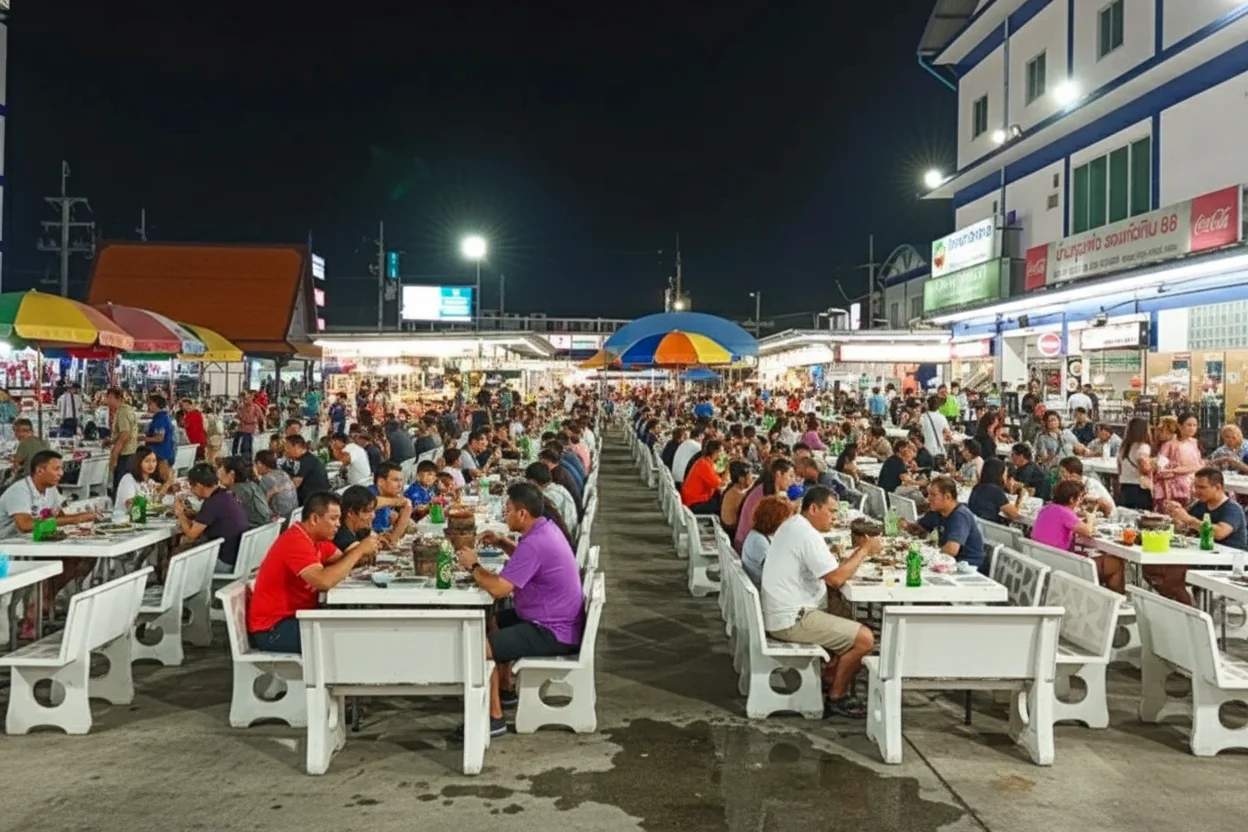
Because of the nearby Klai Kangwon Palace, a profound sense of decorum governs public behaviour. The unwritten rule is modesty in both dress and volume. Unlike southern resort islands where walking into a minimart in swimwear is tolerated, doing so here is considered intensely rude. Locals expect visitors to cover up immediately after leaving the sand. A specific local custom dictates that whenever the royal motorcade passes, all traffic stops and pedestrians must stand perfectly still with heads slightly bowed. The most common mistake British visitors make is attempting to negotiate aggressively at the night markets. Local vendors prefer a quiet, smiling inquiry about a discount. Raise your voice over twenty baht and the vendor will simply refuse to sell to you, prioritising dignity over a minor sale.
This coastal stretch is historically known for printed cotton called Khomapastr, originally produced for the royal household. The fabric features intricate gold motifs on deep indigo or maroon backgrounds. You can find authentic pieces at the original Khomapastr store on Naresdamri Road. A standard length of cotton costs around 800 THB (17.50 GBP), while smaller cushion covers go for 300 THB (6.50 GBP). Be wary of night market stalls selling cheap elephant-print fabrics masquerading as local silk. These are mass-produced in factories outside the province and lack the durability of genuine textiles.
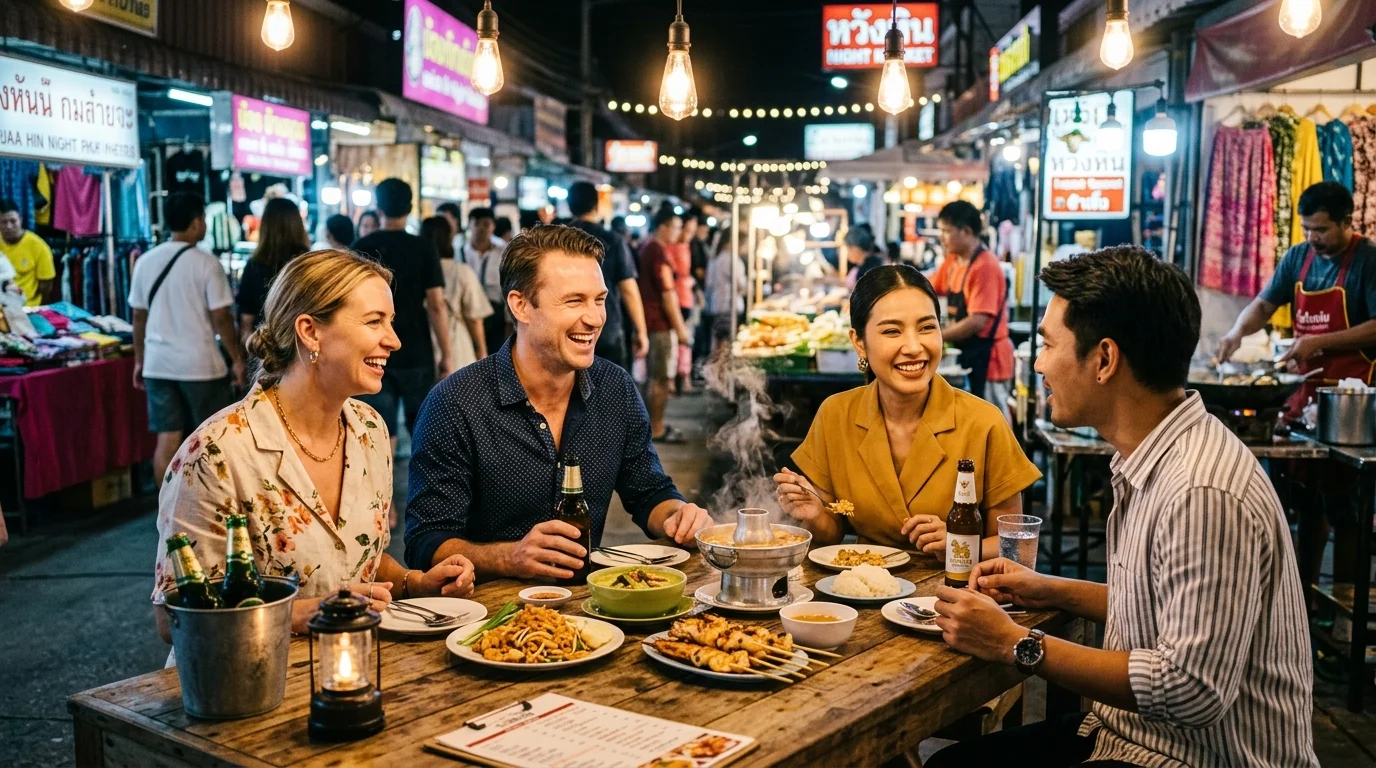
Dining is a communal anchor revolving heavily around the night markets and freshly caught seafood. Ordering a whole steamed sea bass with lime and chilli is a social ritual meant to be shared by at least three people, slowly picked apart over a couple of hours. Eating alone is viewed with polite bewilderment. Locals treat the evening meal as a crucial decompression from the day, preferring to graze on multiple small plates of grilled squid and som tam rather than individual main courses. Sharing food demonstrates trust, turning a market dinner into a quiet celebration of community.
LANGUAGE & COMMUNICATION
The local dialect is standard Central Thai, spoken with a softer, slower cadence than in the capital. To make locals genuinely warm to you, use the phrase a-roi mak na khrap (or kha for women) meaning this is very delicious, while smiling at the cook. It works wonders. A basic ten-hour conversational Thai course at a local language school costs roughly 3,500 THB (77 GBP).
Always dress neatly when walking around the town centre, treating it like a provincial capital rather than a beach resort. Do not touch anyone on the head or point your feet at people, as these are deeply offensive gestures across the country. Specifically in this district, never speak critically about the monarchy. The royal presence is deeply respected here, and strict laws regarding this respect are firmly enforced. When entering someone's home or a small shop, always check if shoes are piled outside. If they are, remove yours before stepping over the threshold.