Wat Rong Khun
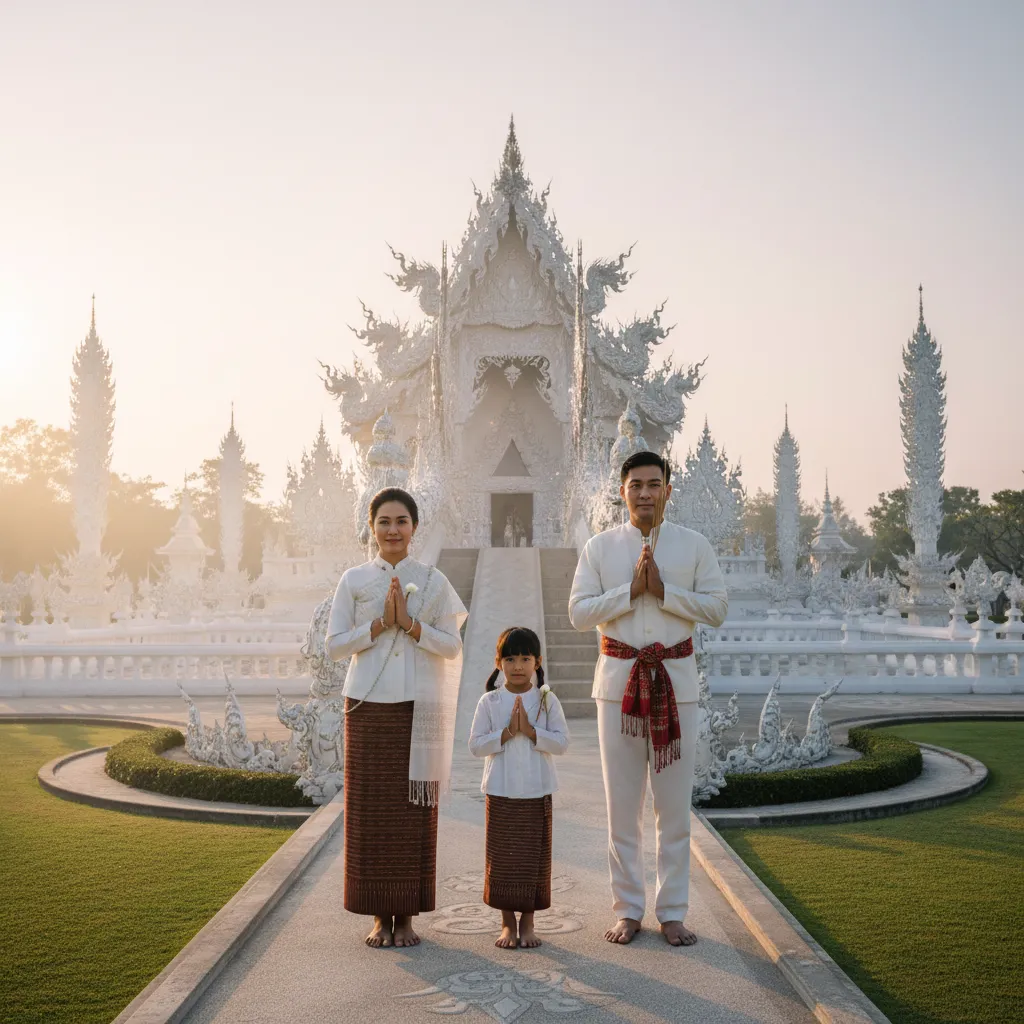
Wat Rong Khun is not an ancient religious ruin but a privately funded, ongoing art installation designed in 1997 by national artist Chalermchai Kositpipat. This striking white structure functions as a visual representation of Buddhist teachings on heaven, hell, and human desire.
Constructed on the site of a dilapidated local temple, Wat Rong Khun is a modern art exhibit styled as a traditional Thai Buddhist ubosot. Owned and funded entirely by Chalermchai Kositpipat, the complex represents an investment of over 40 million THB (£920,000) to create a national centre of contemporary Buddhist art. It occupies a distinct position in the Northern Thailand travel market, serving as an avant-garde cultural attraction rather than a quiet place of worship. The site primarily attracts independent international travellers, architecture enthusiasts, and organised tour groups exploring the Chiang Rai province.
Architectural Design and Visual Concept
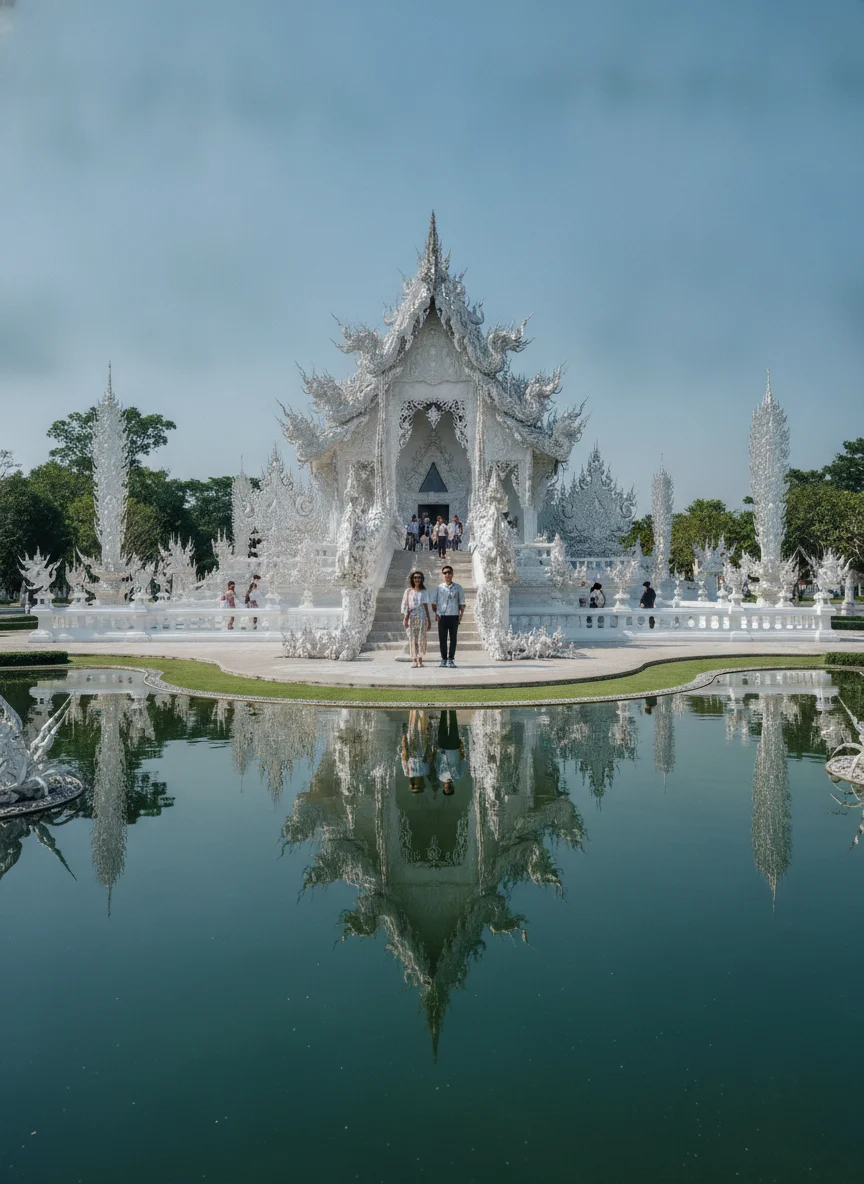
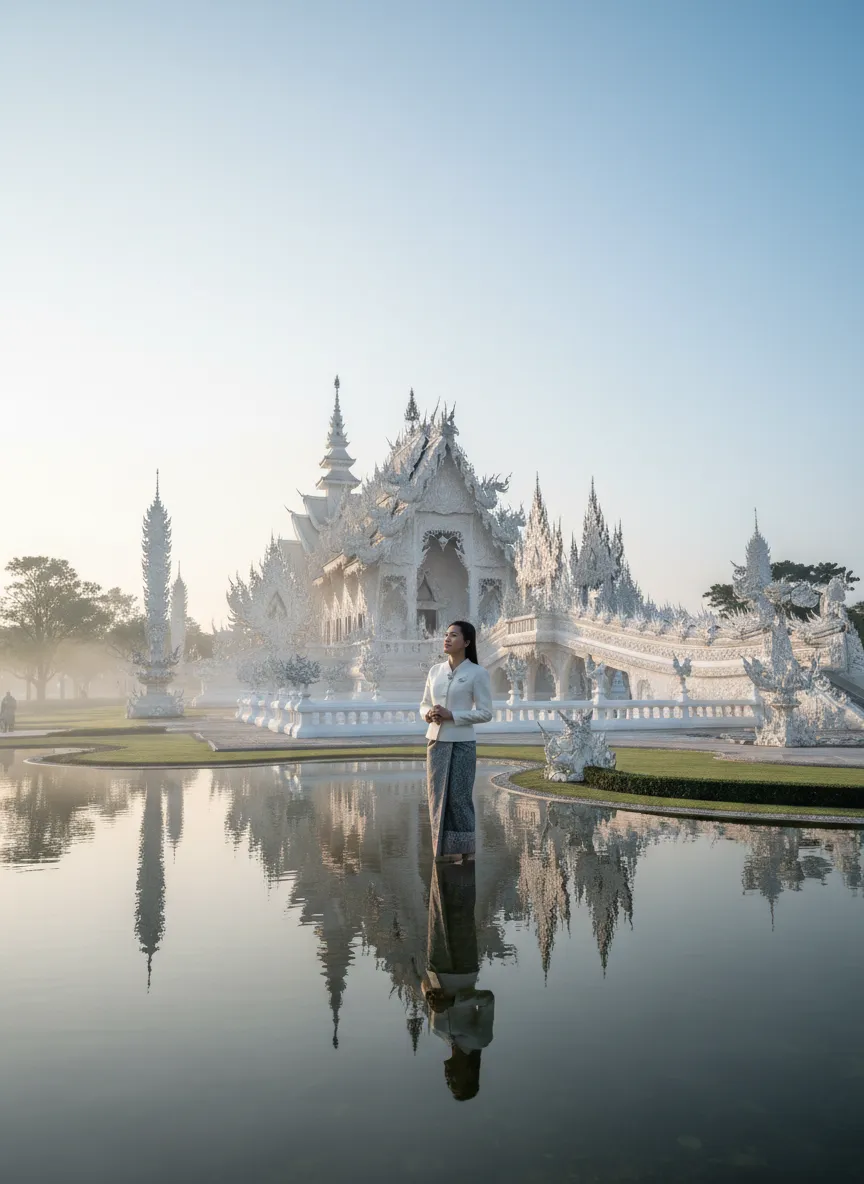
The defining characteristic of the architectural design is its uniform white plaster coating embedded with thousands of tiny fragments of mirrored glass. This specific choice of white symbolises the purity of the Buddha, while the reflective glass represents the Buddha's wisdom shining across the universe. Construction began in 1997, and the artist projects that the complete complex will eventually feature nine distinct buildings, including a hall of relics, a meditation hall, and an art gallery. Every roof gable features elaborate, flame-like Naga serpents that differ significantly from the more restrained designs found in historic Lanna temples. The entire structure is designed to be viewed under bright sunlight, which makes the plaster appear to glow and sparkle against the northern Thai sky. Visitors can walk along the concrete paths to view how the mirrors reflect different angles of light depending on the time of day. This creates a shifting visual experience that cannot be replicated by traditional paint or stone materials.
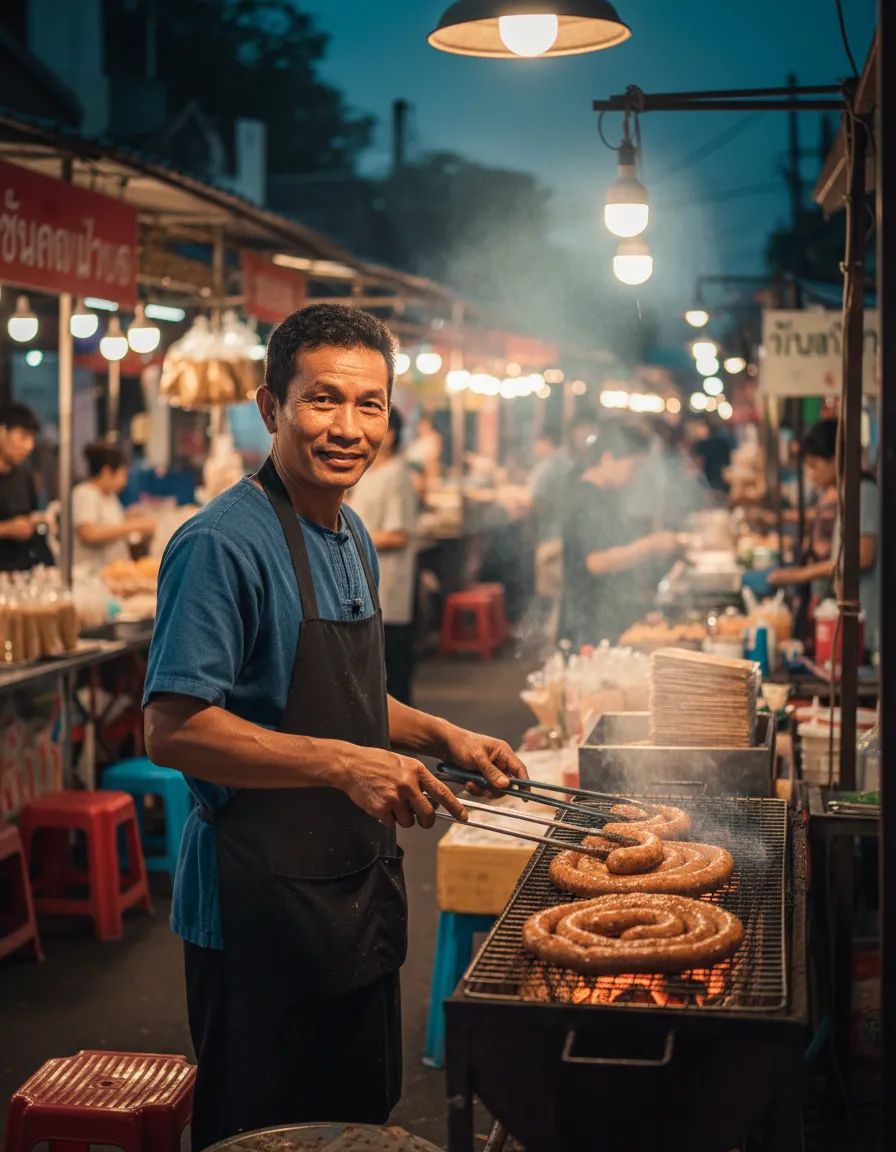
Discover the best Chiang Rai food, from earthy khao soi to fiery sai ua sausage. Find out exactly where to eat and what to pay in this northern Thai city.
Takeaway: Arrive before the mid-morning peak to see the clean light hitting the mirrors without crowds blocking your view.
The Bridge of the Cycle of Rebirth
The defining characteristic of this central crossing is the visceral representation of human suffering and unrestrained desire that greets you before you reach the sacred sanctuary. To enter the main ubosot, you must cross a narrow ornamental bridge built over a pit of hundreds of outspread plaster hands reaching upward. These hands represent individuals trapped in the cycle of rebirth (samsara), representing greed, temptation, and worldly attachment. Two imposing death figures and several skeletal claws frame the entrance to the bridge, warning visitors of the perils of earthly desire. Security guards operate a strict one-way system across this bridge, using megaphones to prevent visitors from pausing to take photos or backtracking. Once you cross this threshold, you enter the area representing the realm of heaven, indicating that overcoming desire is the path to enlightenment. The path is narrow, allowing only two people to walk abreast, which intensifies the feeling of moving through a physical transition.
Takeaway: Keep your camera ready but move continuously across the bridge to respect the flow of foot traffic and temple rules.
The Contemporary Murals of the Ubosot
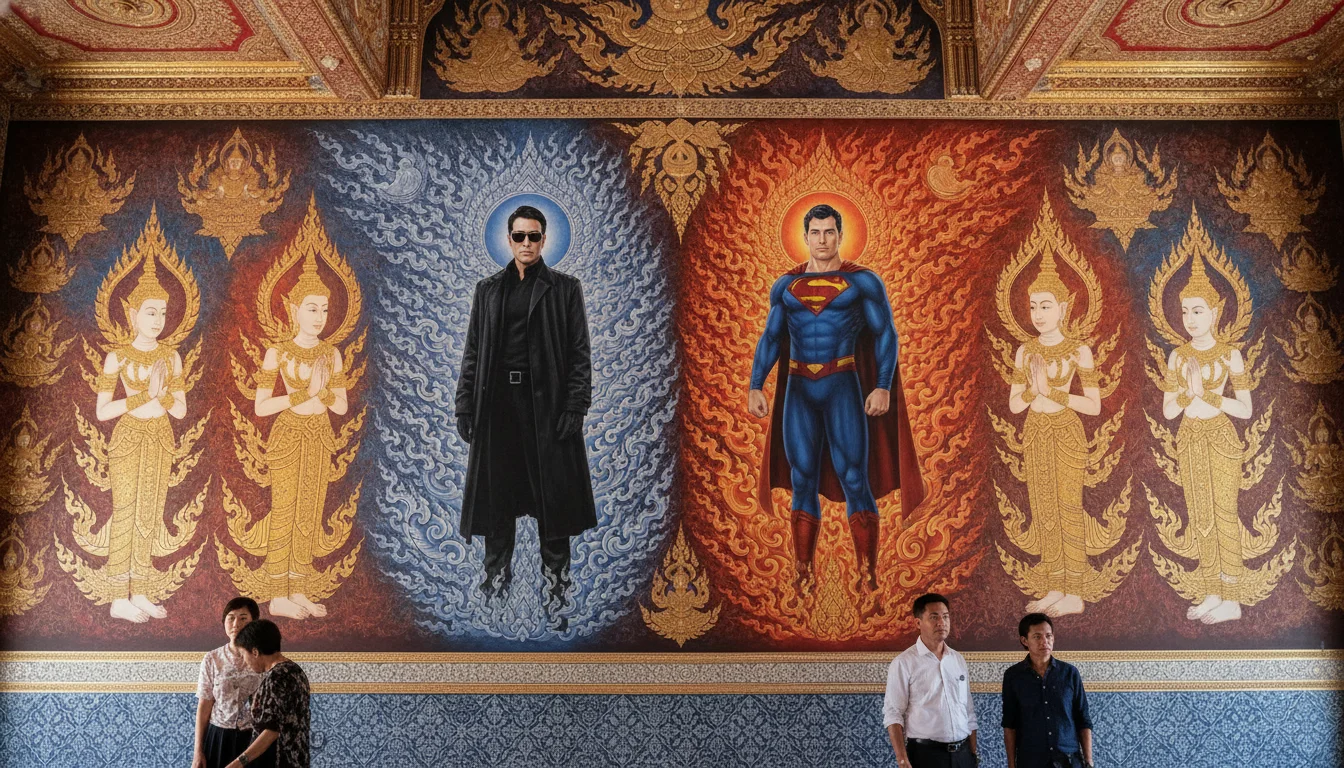
The defining characteristic of the main chapel's interior is the unexpected juxtaposition of ancient Buddhist cosmology with contemporary Western pop-culture imagery. Instead of traditional depictions of the Jataka tales, the back wall features hand-painted murals showing modern global crises, spaceship attacks, and iconic film characters. You will spot Neo from The Matrix, Spider-Man, Superman, and even references to the September 11 attacks painted alongside traditional depictions of the demon Mara. The artist uses these modern icons to illustrate the continuous struggle between good and evil, suggesting that contemporary media figures are modern-day myths. Photography is strictly prohibited inside this inner chamber, which is heavily policed by resident staff. The contrast between the stark white exterior and the warm, golden-orange hues of the interior murals creates a dramatic sensory shift as you step through the threshold. This room remains a functioning shrine, and a small altar sits at the front where visitors can pay respects to a traditional white Buddha statue.
Takeaway: Take your time walking through the inner chamber to spot the tiny, hidden pop-culture figures painted into the flames of the murals.
The Golden Restrooms and Art Gallery
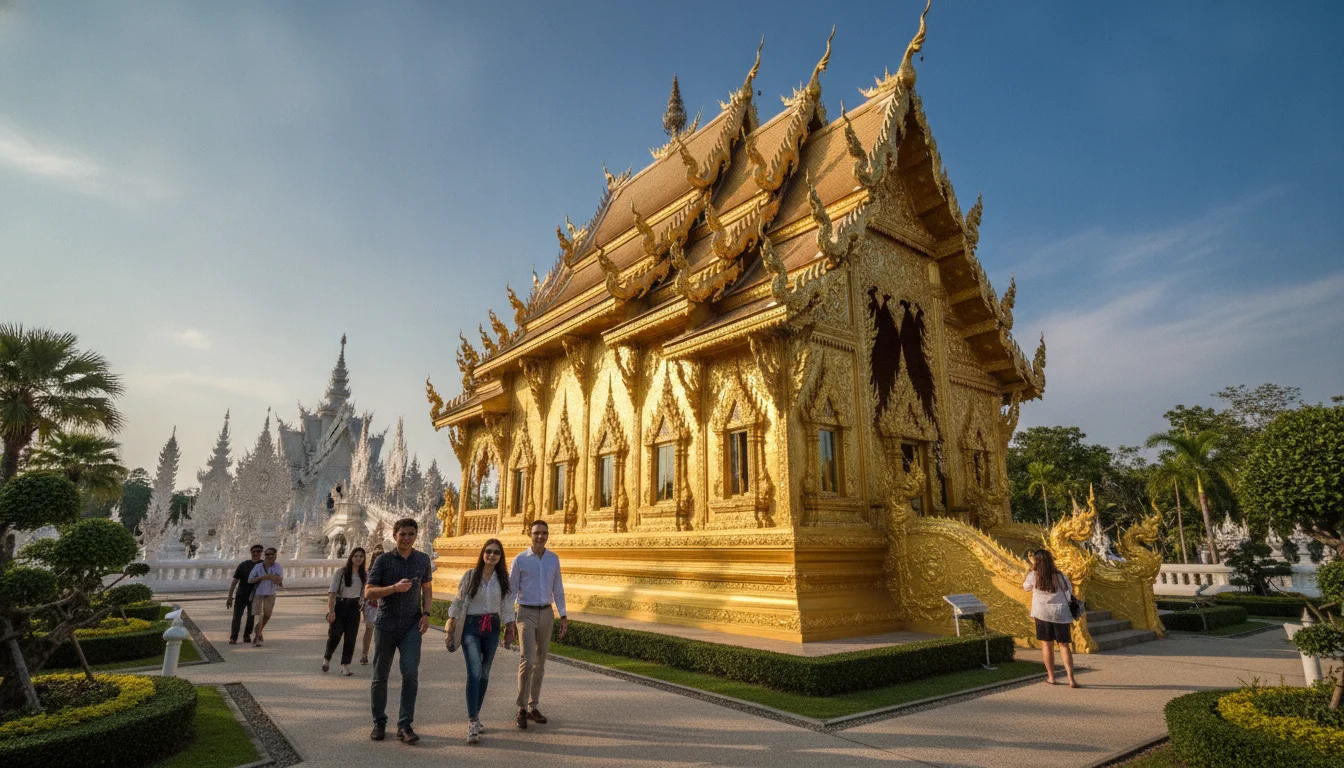
The defining characteristic of the auxiliary buildings is the stark colour contrast between the main white temple and the brilliantly gilded secondary structures. The most famous of these is an ornately carved, entirely golden building that houses the public restrooms, costing over 5 million THB (£115,000) to construct. This gold colour scheme represents the physical body and worldly desires, contrasting with the spiritual purity of the white ubosot. Nearby, the Chalermchai Kositpipat Art Gallery houses a vast collection of the artist's original paintings and draft drawings. This air-conditioned exhibition space allows you to inspect the intricate details of his work up close without the outdoor heat. The gallery displays original oil paintings that explain the complex theological ideas behind the temple's design. It also features a gift shop where you can purchase high-quality prints and books to support the ongoing construction of the site.
Takeaway: Budget at least thirty minutes to explore the free art gallery to appreciate the artist's broader creative vision.
Comparing the Contemporary Temples of Chiang Rai
The defining characteristic of the Chiang Rai art scene is the dialogue between three distinct colour-coded installations created by local masters. While Wat Rong Khun represents spiritual purity in white, the Baandam Museum (Black House) uses dark wood and animal remains to explore mortality, and Wat Rong Suea Ten uses deep blue and gold to create a modern place of worship. Wat Rong Khun remains the most internationally famous of the three, resulting in higher visitor numbers and stricter crowd control measures. It is the only one of the three that charges an entry fee for international tourists, reflecting its status as a premium art monument. Understanding these differences helps you appreciate how northern Thai artists use religious architecture to convey personal artistic philosophies. Visiting all three sites in a single day provides a comprehensive look at the modern art movement in Chiang Rai.
| Attraction | Dominant Colour | Primary Theme | Entry Fee (International) |
|---|---|---|---|
| Wat Rong Khun (White Temple) | White and Silver | Purity, Rebirth, and Samsara | 100 THB (£2.30) |
| Baandam Museum (Black House) | Black and Dark Wood | Mortality, Darkness, and Nature | 80 THB (£1.85) |
| Wat Rong Suea Ten (Blue Temple) | Deep Blue and Gold | Modern Buddhist Devotion | Free Entry |
| Wat Huay Pla Kang (Big Buddha) | White and Pastel | Compassion and Mercy | Free (Ascent via lift 40 THB / £0.90) |
Location and Getting There
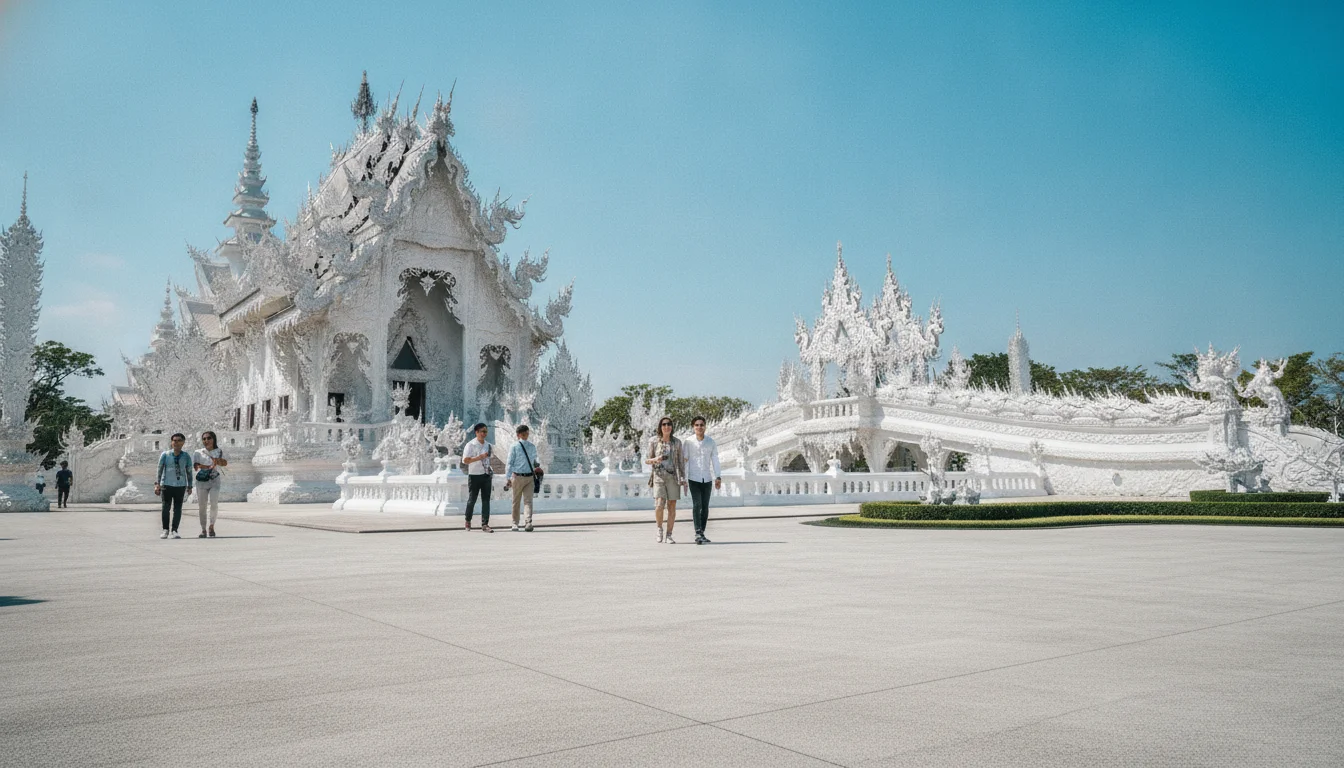
Wat Rong Khun is located in the Pa O Don Chai sub-district, approximately 13 kilometres south-west of Chiang Rai city centre. For UK travellers starting in Bangkok, you can fly to Chiang Rai International Airport (CEI) followed by a 25-minute taxi ride costing roughly 300 THB (£6.90). To reach the temple from Chiang Rai city centre, you can take a local public bus from Bus Terminal 1 near the Night Bazaar. These blue buses depart regularly, taking 30 minutes and costing a flat rate of 20 THB (£0.46) per person. Alternatively, hiring a private blue songthaew (passenger vehicle) for a return journey costs around 300 THB to 400 THB (£6.90 to £9.20), including waiting time. Private cars can park in the large designated lot opposite the main entrance for a small fee.
Costs and Booking
Unlike historical national temples in Thailand, Wat Rong Khun operates as a private art exhibition with a structured ticketing system. Entry for international visitors is 100 THB (approximately £2.30), while Thai nationals enter free of charge. Your ticket grants access to the main courtyard, the bridge of rebirth, the ubosot, and the golden restroom building. The adjacent Chalermchai Kositpipat Art Gallery is free for all visitors and does not require a separate ticket. Tickets must be purchased in cash at the physical ticket booths near the main entrance gates, as digital payments are not widely accepted for walk-ins. There are no seasonal price fluctuations, but visiting during the high season (November to February) requires booking tours well in advance to secure transport.
| Ticket Option | Cost (THB) | Cost (GBP approx) | Notes |
|---|---|---|---|
| International Adult Entry | 100 THB | £2.30 | Cash only at the main ticket counter |
| Thai National Entry | Free | Free | Must present Thai ID card |
| Art Gallery Admission | Free | Free | Open to all ticket holders and public |
| Guided Tour Package | 500 - 1,200 THB | £11.50 - £27.60 | Purchased via external agencies, includes transport |
Who It Suits Best
This attraction is highly suited for cultural tourists, photography enthusiasts, and independent travellers who appreciate unconventional modern art. Families with older children will enjoy identifying the pop-culture characters hidden within the murals. It is not recommended for travellers seeking quiet, contemplative Buddhist meditation, as the constant crowd movement and loudspeaker announcements disrupt the atmosphere. Budget travellers will find it highly accessible, but those who dislike highly commercialised tourist sites may find the extensive souvenir markets at the exit off-putting.
What to Know Before You Book
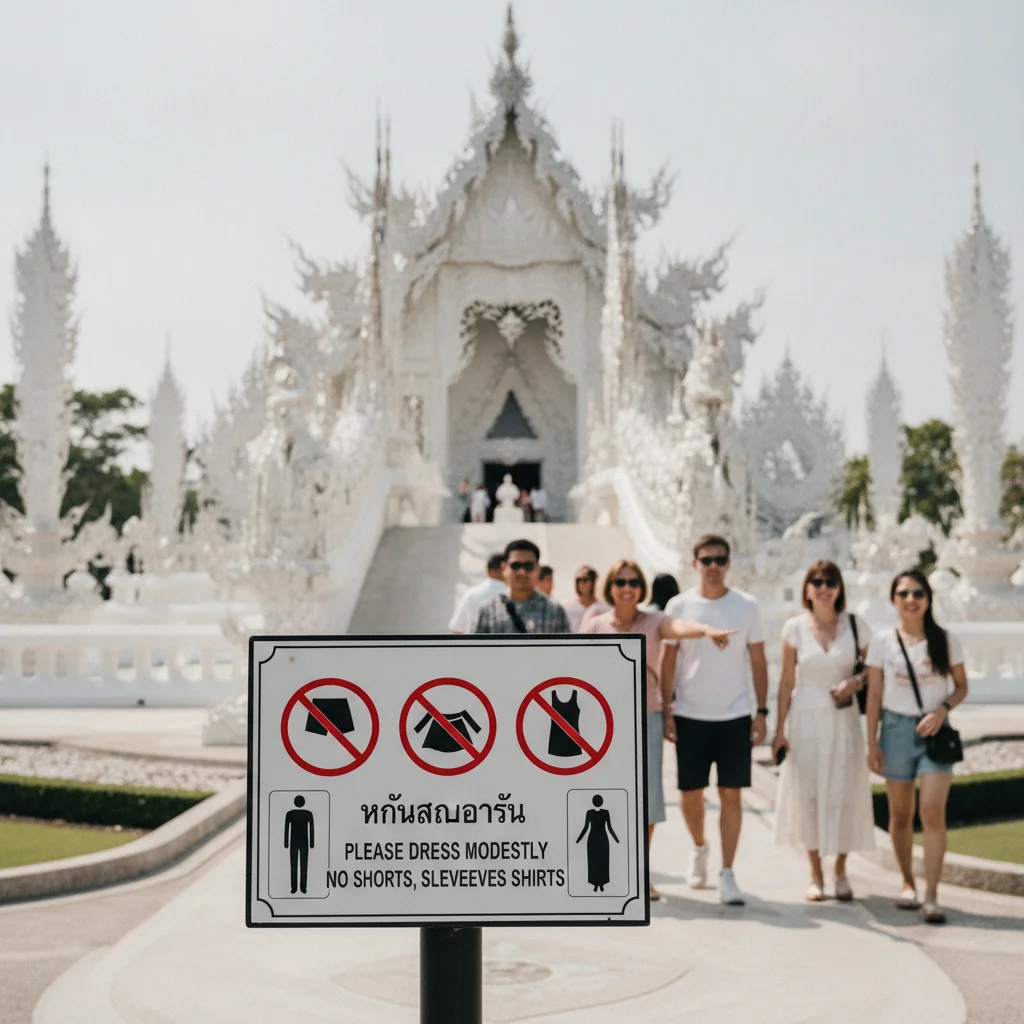
The temple enforces a strict dress code requiring your shoulders and knees to be completely covered. If you arrive in shorts or sleeveless tops, you will be forced to buy a sarong at the entrance stalls for around 100 THB (£2.30). Massive tour bus crowds consistently arrive between 09:30 and 13:00 daily. Planning your arrival for exactly 08:00 allows you to photograph the bridge without hundreds of tourists in your frame. The bridge of rebirth operates under a strict one-way walking system. You cannot stop or turn back for photos once you begin crossing, meaning you must set your camera settings before stepping onto the path. Wheelchair access is limited on the bridge itself due to steps and narrow channels, though the rest of the grounds are flat.
Practical Tips
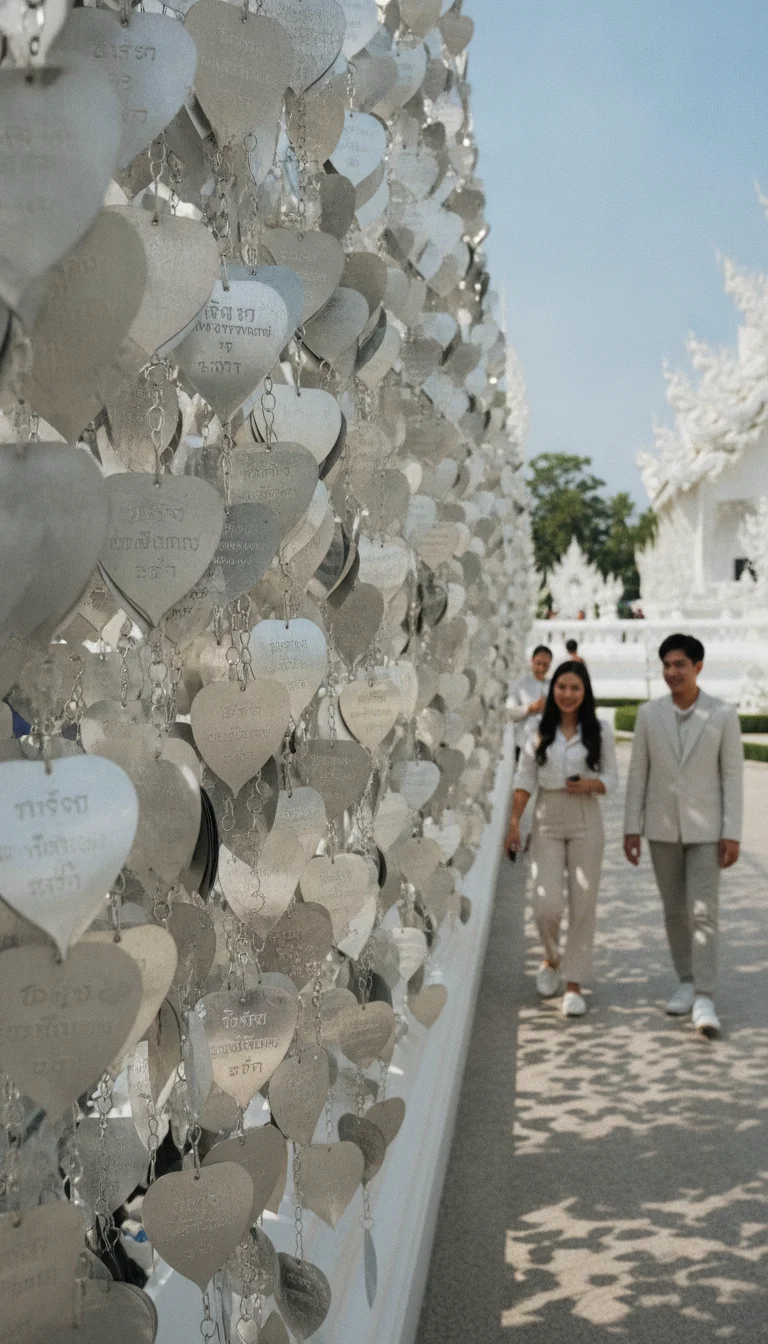
Arrive at the gates by 07:45. This ensures you are first in line when the ticket office opens at 08:00 before the tour buses arrive.
Bring cash in small denominations. The ticket counters and nearby drink stalls do not accept international credit cards or mobile bank transfers.
Carry a lightweight scarf or sarong in your daypack. You can quickly wrap this around your legs or shoulders to avoid renting dirty communal garments.
Explore the souvenir shops behind the art gallery. Here you can buy authentic, signed prints of Chalermchai Kositpipat's work at reasonable prices.
Write a wish on a silver metallic leaf. For 30 THB (£0.70), you can hang your message on the ornate metal structures shaped like sacred trees.
Avoid visiting during the midday heat. The white plaster surfaces reflect intense heat and glare, making walking around the unshaded plaza uncomfortable.
Combine your trip with the Blue Temple. These sites are located on opposite sides of the city, making a hired songthaew the most efficient transit option.
Respect the photography ban inside the ubosot. Staff will immediately demand you delete any photos taken inside the main mural room.
Quick Reference Table
| Item | Detail | Notes |
|---|---|---|
| Property Name | Wat Rong Khun (The White Temple) | Privately-owned art exhibit and temple |
| Location | Chiang Rai, Thailand | 13 km south-west of the city centre |
| Property Type | Cultural Attraction and Art Exhibit | Designed by Chalermchai Kositpipat |
| Entry Fee | 100 THB (£2.30) | Free for Thai citizens |
| Opening Hours | 08:00 - 17:00 daily | Art gallery closes at 17:00 |
| Dress Code | Strict (Shoulders and knees covered) | Sarongs available for purchase nearby |
| Wheelchair Access | Limited | Main paths are accessible, bridge has steps |
| Nearest Airport | Chiang Rai International Airport (CEI) | Approx 25 minutes by taxi |
| Photography | Allowed outdoors, banned inside Ubosot | Strictly enforced by staff |
| Recommended Duration | 1.5 to 2 hours | Allows time for the art gallery |