Thailand Temples & Buddhism
At sunrise in Chiang Mai, barefoot monks in saffron robes walk silently through the morning mist, receiving handfuls of sticky rice from kneeling locals. This daily ritual of almsgiving has shaped Thai rhythm and routine for over a thousand years, anchoring the country in the quiet discipline of Theravada Buddhism.
This guide decodes the complex world of Thai Buddhism so you can navigate the country’s sacred spaces with confidence. You will learn the difference between a wat, a chedi, and a viharn, alongside strict dress codes and essential behavioural etiquette. We cover how to experience major sites without falling victim to common scams, while showing you how to observe genuine daily rituals respectfully during your stay in the kingdom.
The Role of Theravada Buddhism in Daily Thai Life
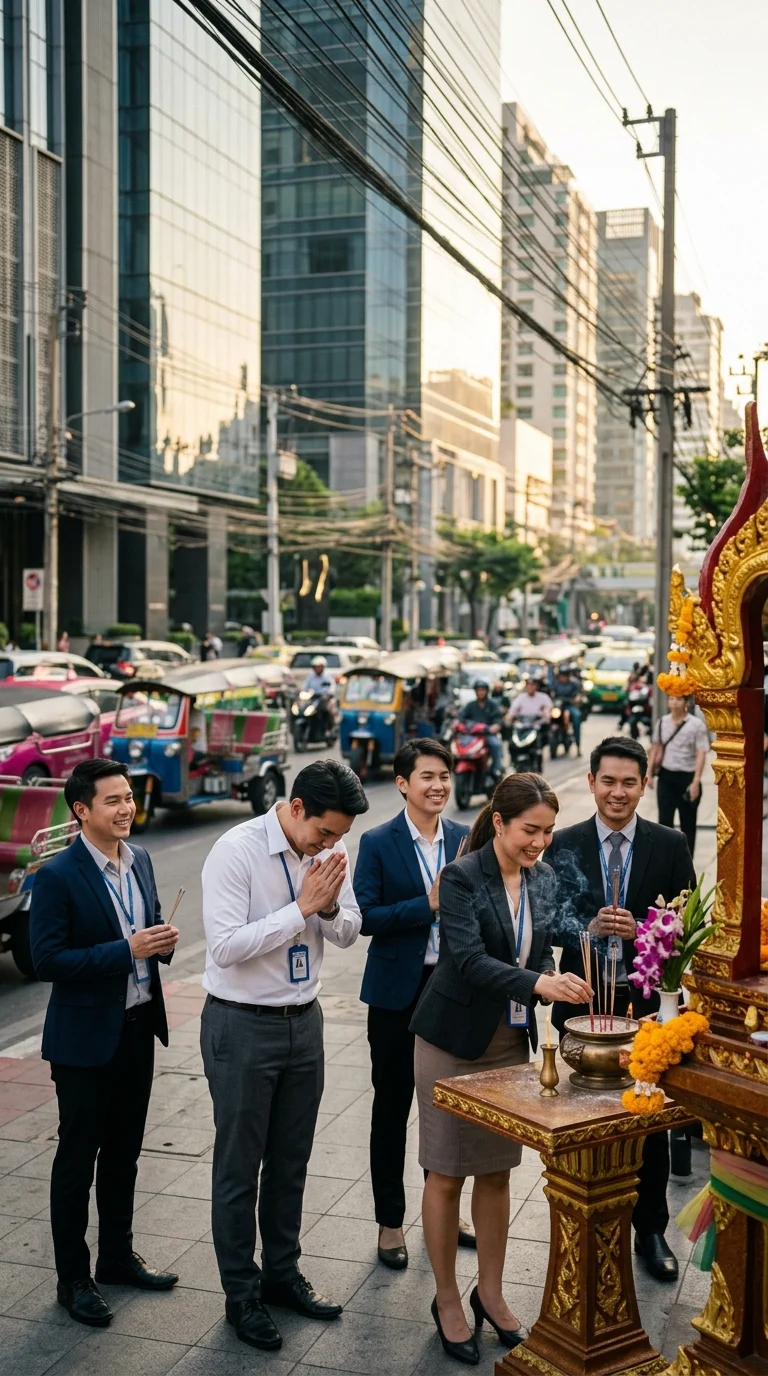
Theravada Buddhism operates as the undisputed foundation of Thai society, influencing everything from national holidays to ordinary daily routines. It is not merely a Sunday obligation, but a continuous, pragmatic thread woven through the minutiae of everyday existence. You will quickly notice that genuine religious life here is highly transactional. The primary focus for most locals is making merit, known in Thai as tham bun. This practice involves performing good deeds, donating money, or offering food to monks to ensure better fortune in this life and the next. Monks hold the highest social status in the country, and their blessings are sought for everything from opening a new noodle stall to buying a second-hand car. Religion here blends orthodox Buddhist philosophy with ancient animist beliefs, creating a highly practical system of spiritual protection and community support. As a visitor, grasping this everyday practicality stops you viewing the country's temples purely as historical monuments. You begin to see them as active, essential community centres where real life unfolds. Understanding this mindset completely transforms how you interpret the interactions happening around you.
Discover Thailand's nightlife scene, from Bangkok clubs and beach parties to local drinking culture. Get realistic costs, safety tips, and venue advice.
Watch how locals subtly lower their heads when walking past a revered shrine or a seated monk, and try to adopt this gesture of respect yourself.
The Function of Spirit Houses and Amulets
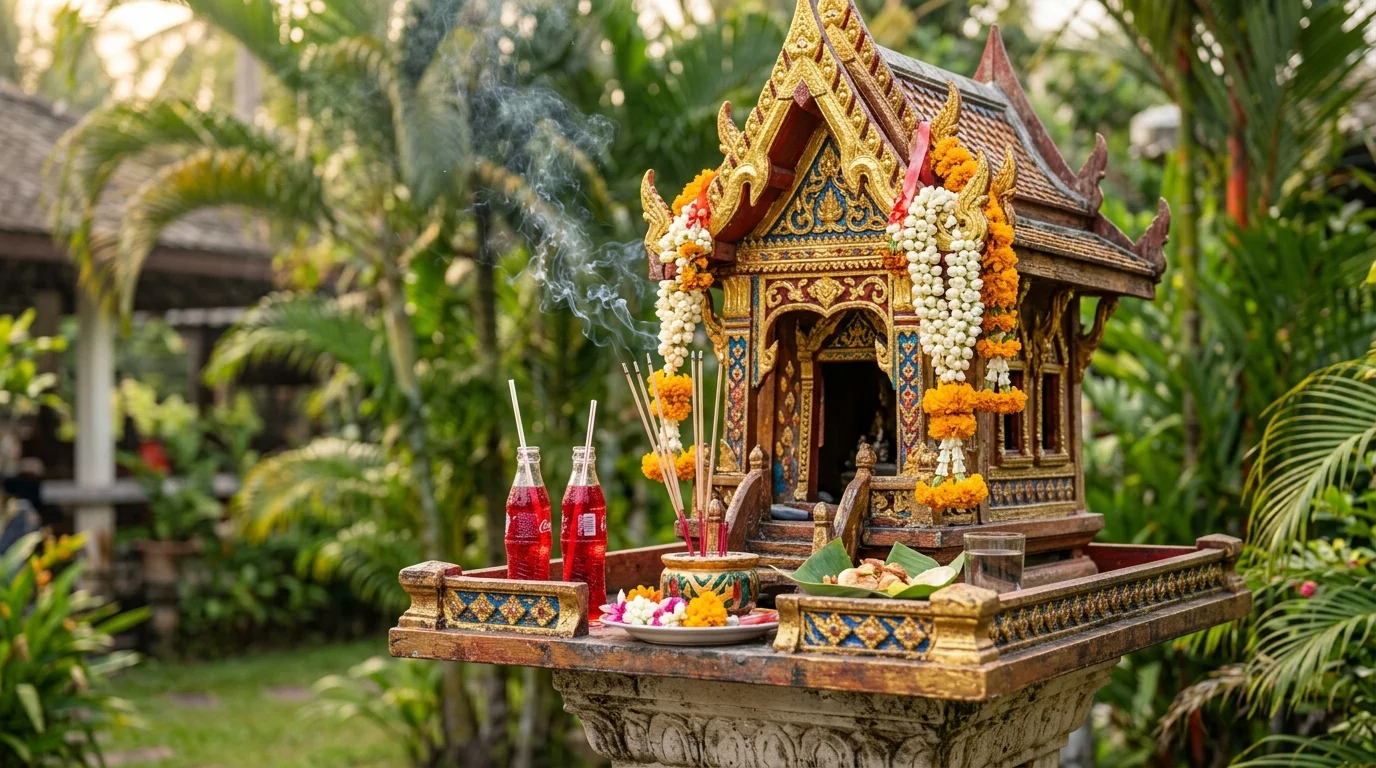
Before laying the foundation for any building in Thailand, a spirit house must be erected to appease the unseen entities displaced by the construction. You will see these miniature, ornate shrines mounted on pillars outside nearly every property, from humble corrugated-iron food shacks to towering luxury shopping malls. They provide shelter for the local spirits, who demand daily offerings to remain content and protective. Locals diligently supply these shrines with opened bottles of red Fanta, fresh jasmine garlands, and lit incense. Personal spiritual protection is equally vital, which explains the enormous popularity of Buddhist amulets. Many Thai people wear heavy chains of clay or metal amulets concealed under their shirts. These small pendants are blessed by highly revered monks and are firmly believed to ward off road accidents, deter physical harm, or bring sudden financial success. Amulet trading is a serious business, with rare pieces exchanging hands for thousands of pounds in dedicated street markets. Recognising these elements helps you understand that Thai spirituality extends far beyond the temple walls.
Never step on the shadow of a spirit house or touch the offerings placed upon it, as this is considered highly disrespectful to the resident entities.
Decoding Temple Architecture
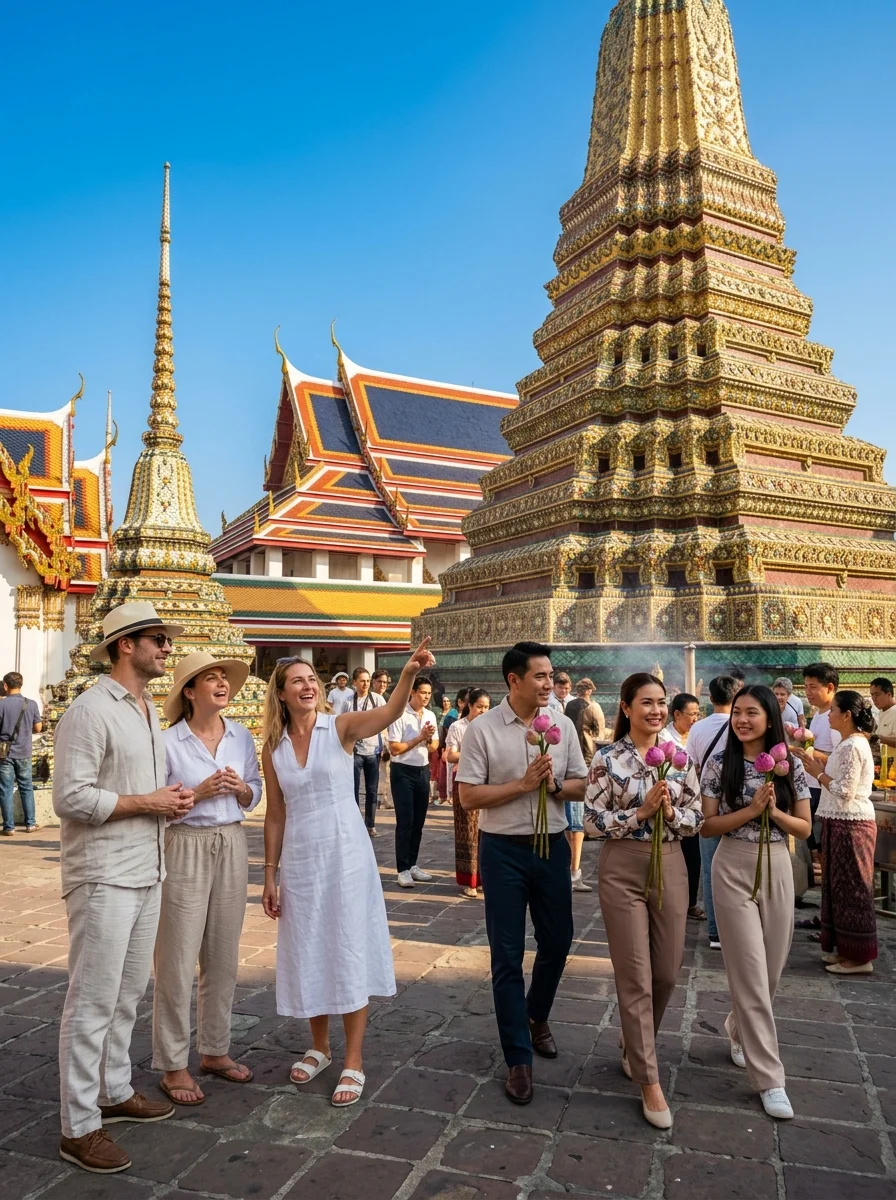
A Thai temple complex consists of multiple distinct structures, each serving a specific religious or community function. The entire walled compound is known as a wat, though foreign visitors frequently use this term to describe just the main buildings. Inside the walls, the most prominent monument is usually the chedi. This is a bell-shaped stupa that traditionally houses holy relics or the ashes of former kings. You cannot step inside a chedi; it is a solid, sealed monument designed to be circumambulated in a clockwise direction. The primary hall where local people gather for sermons and where the largest Buddha images reside is called the viharn. This is consistently the busiest building, dense with chanting, heavy incense smoke, and active merit-making. Nearby sits the ubosot, the most sacred ordination hall where new monks officially take their vows. You can identify the ubosot by the eight carved boundary stones placed carefully around its perimeter. Understanding these architectural distinctions helps you navigate the complex with purpose. It explains why certain areas buzz with loud family activity while others demand total silence.
Look for the eight boundary stones to identify the ubosot, as this holiest building often requires the strictest adherence to silence and dress codes.
| Structure | Primary Function | Accessibility | Identification Feature |
|---|---|---|---|
| Wat | The entire walled temple complex | Fully accessible | Enclosed by boundary walls |
| Chedi | Houses relics or royal ashes | Exterior only | Tall, solid, bell-shaped stupa |
| Viharn | Public sermons and merit-making | Fully accessible | Large assembly hall with main Buddha |
| Ubosot | Sacred monk ordination hall | Restricted during ceremonies | Surrounded by eight boundary stones |
Dress Codes and Temple Etiquette
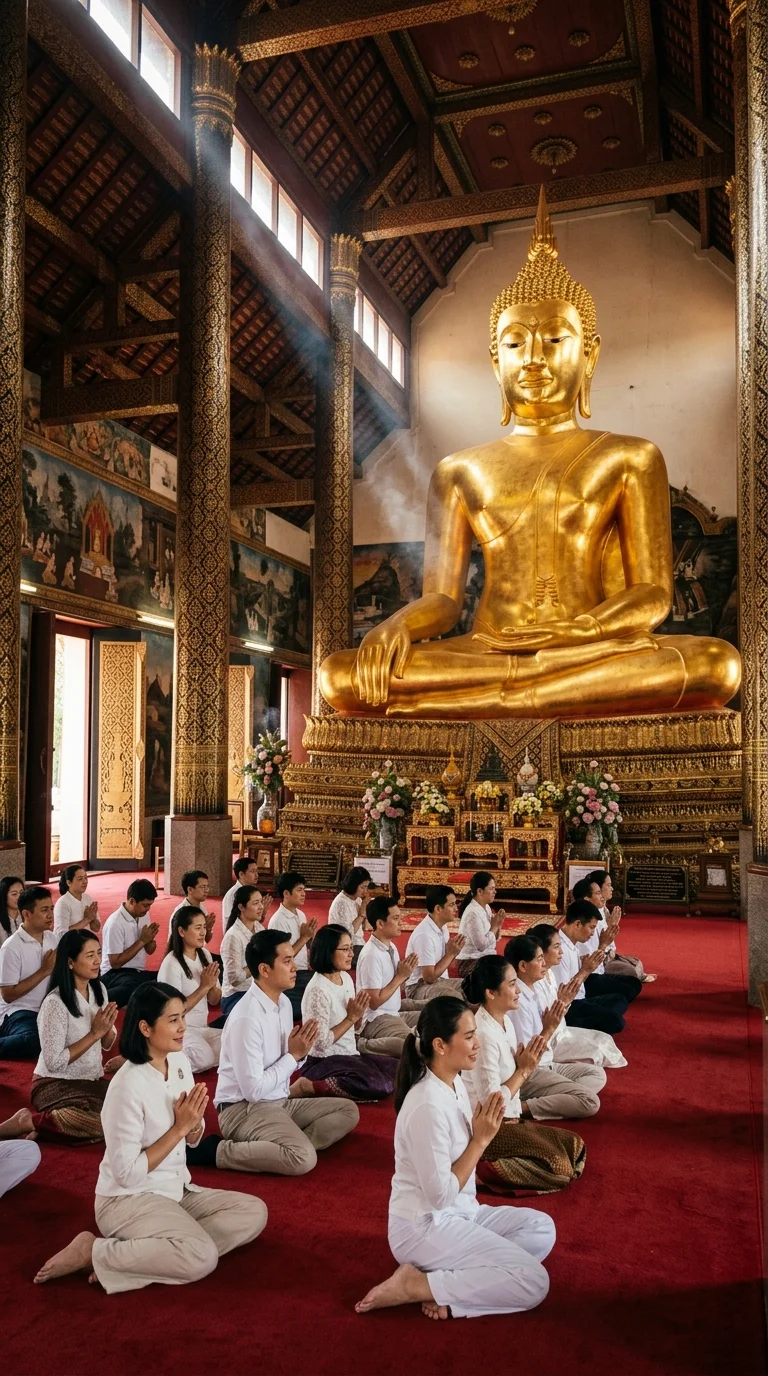
Showing respect inside a Thai temple requires strict physical discipline, beginning with your clothing and ending with the exact position of your feet. Both men and women must cover their shoulders and knees completely before approaching sacred grounds. If you arrive wearing a vest top or short shorts, security guards will deny you entry or force you to rent an oversized sarong for 50 THB (£1.10) from a kiosk. When entering a viharn, you must remove your shoes and step carefully over the raised wooden threshold. Thai folklore states that guardian spirits reside within the doorframe, and stepping directly on it causes profound offence. Once inside, your head should remain physically lower than the Buddha images and any seated monks. When sitting on the carpeted floor, you must fold your legs underneath or beside your body. Pointing the soles of your feet at a Buddha statue or another person is considered incredibly rude, as feet are viewed as the lowest, dirtiest part of the body.
Carry a lightweight pair of trousers and slip-on shoes in your day bag to ensure you can enter any sacred site without facing delays or extra fees.
Observing the Morning Almsgiving Ceremony
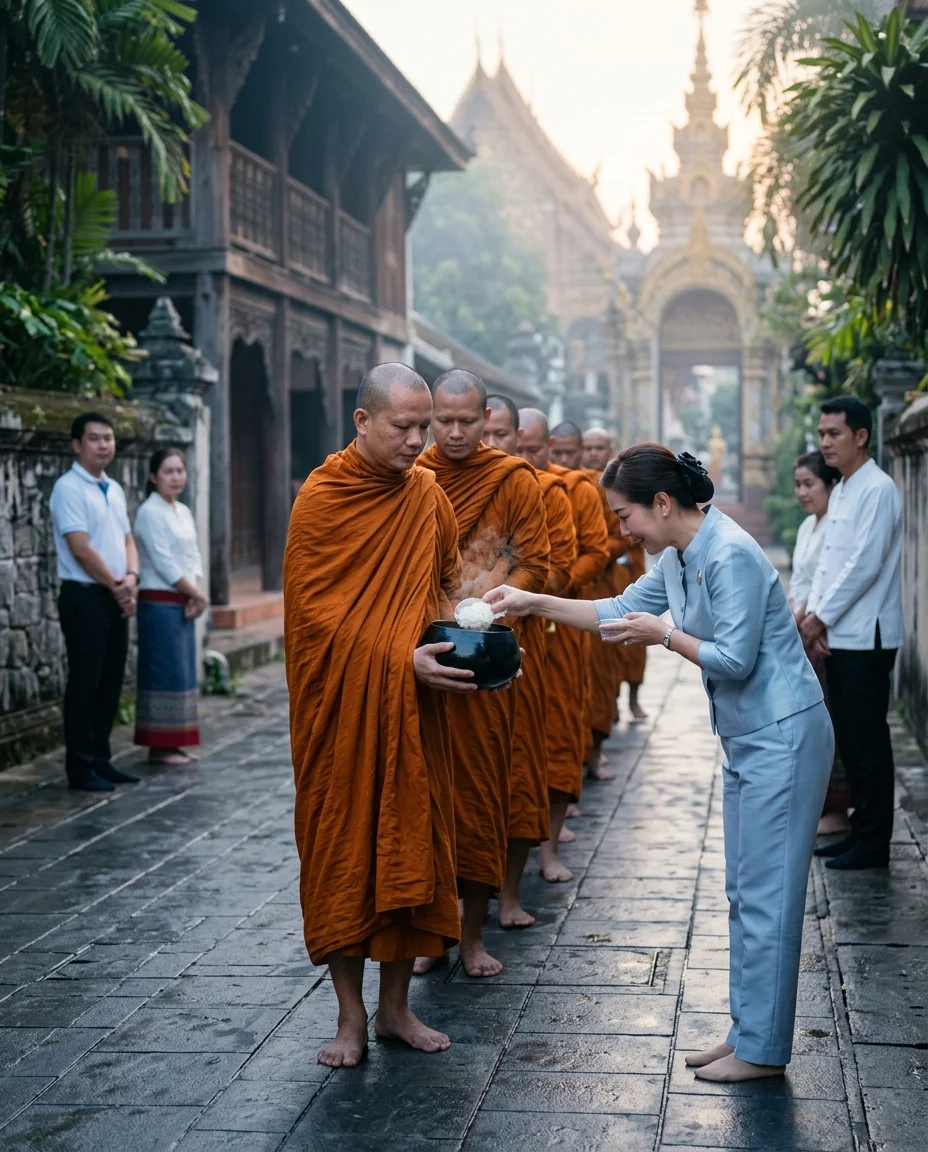
The morning almsgiving ceremony is a deeply significant exchange of merit and sustenance that occurs shortly after sunrise. Barefoot monks leave their temple compounds carrying large iron alms bowls to collect food from the surrounding neighbourhood. They do not beg for this food. Instead, they provide laypeople with a vital daily opportunity to make merit by offering freshly cooked rice, curries, and packaged goods. The monks walk silently in single file, ordered strictly by seniority, keeping their eyes cast downwards. Local residents wait patiently by the roadside, kneeling as the monks approach. They place the food carefully into the iron bowls and receive a short, rhythmic chanted blessing in return. For visiting tourists, this is a profoundly moving sight, but it demands extreme sensitivity and restraint. You should observe the ritual from a respectful distance, switch off your camera flash, and maintain complete silence. Do not stand directly in the monks' path or attempt to pose for photographs alongside them.
Ask your hotel reception to arrange a proper offering set for around 100 THB (£2.20) and instruct you on the correct kneeling posture if you wish to participate.
Navigating Tourist Temples and Touts
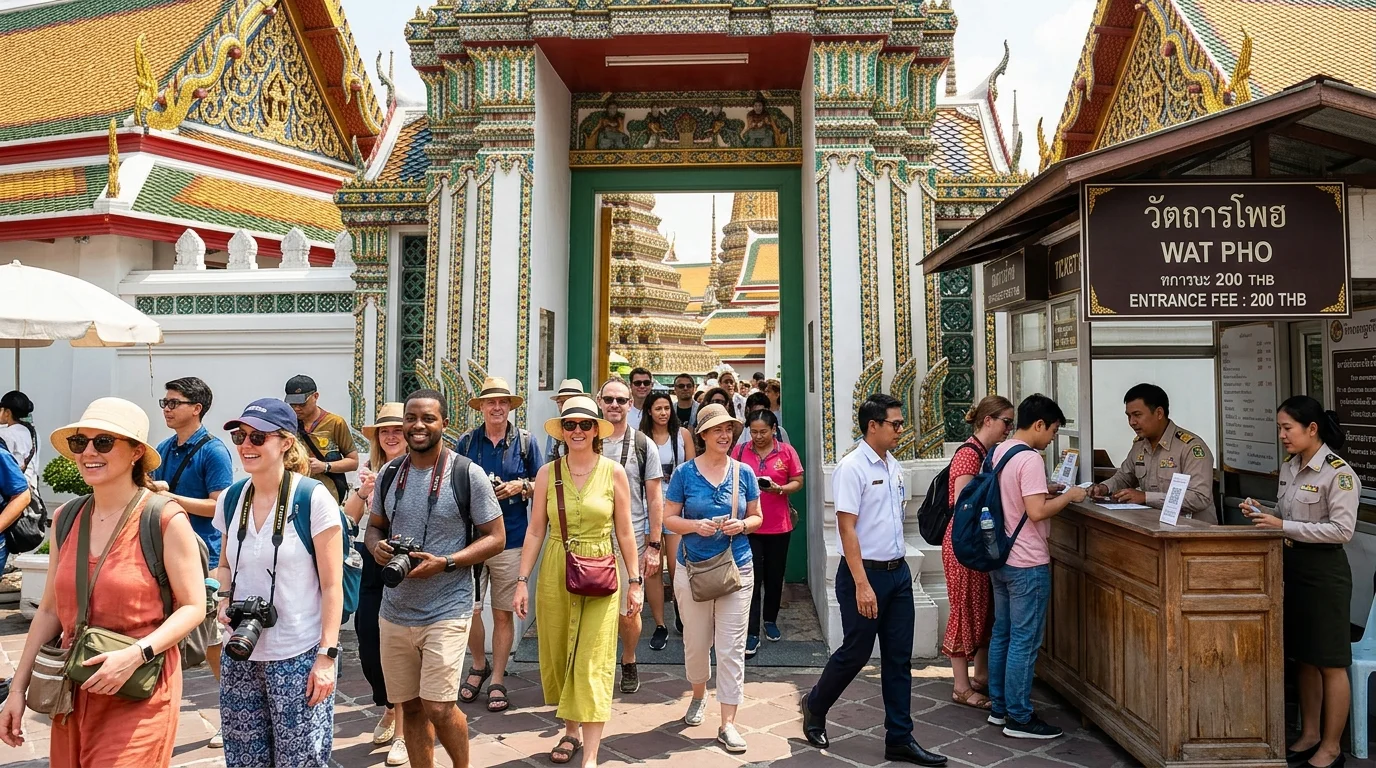
The experience of visiting a major royal temple in Bangkok differs vastly from stepping into a quiet neighbourhood shrine. Sites like Wat Phra Kaew operate heavily as mass tourist attractions, complete with entry fees of 500 THB (£11.00), audio guides, and strict crowd control cordons. These royal complexes are meticulously maintained and architecturally magnificent, yet they often lack the intimate, smoky atmosphere of genuine community worship. The high volume of foreign visitors also attracts opportunistic touts near the exterior walls. A well-dressed man may approach you on the pavement, claiming the temple is closed for a "Buddhist holiday" or "cleaning." He will aggressively offer a cheap tuk-tuk tour to alternative temples instead. This inevitably involves high-pressure stops at tailor shops or gem merchants where he earns a lucrative commission. Ignore these individuals completely. Major temples rarely close unannounced during daylight hours. Always walk straight to the official ticket booth, which is clearly marked inside the main gates.
Download the official opening hours of major sites onto your phone so you can confidently ignore anyone outside claiming the temple is shut.
The Most Significant Temples to Visit
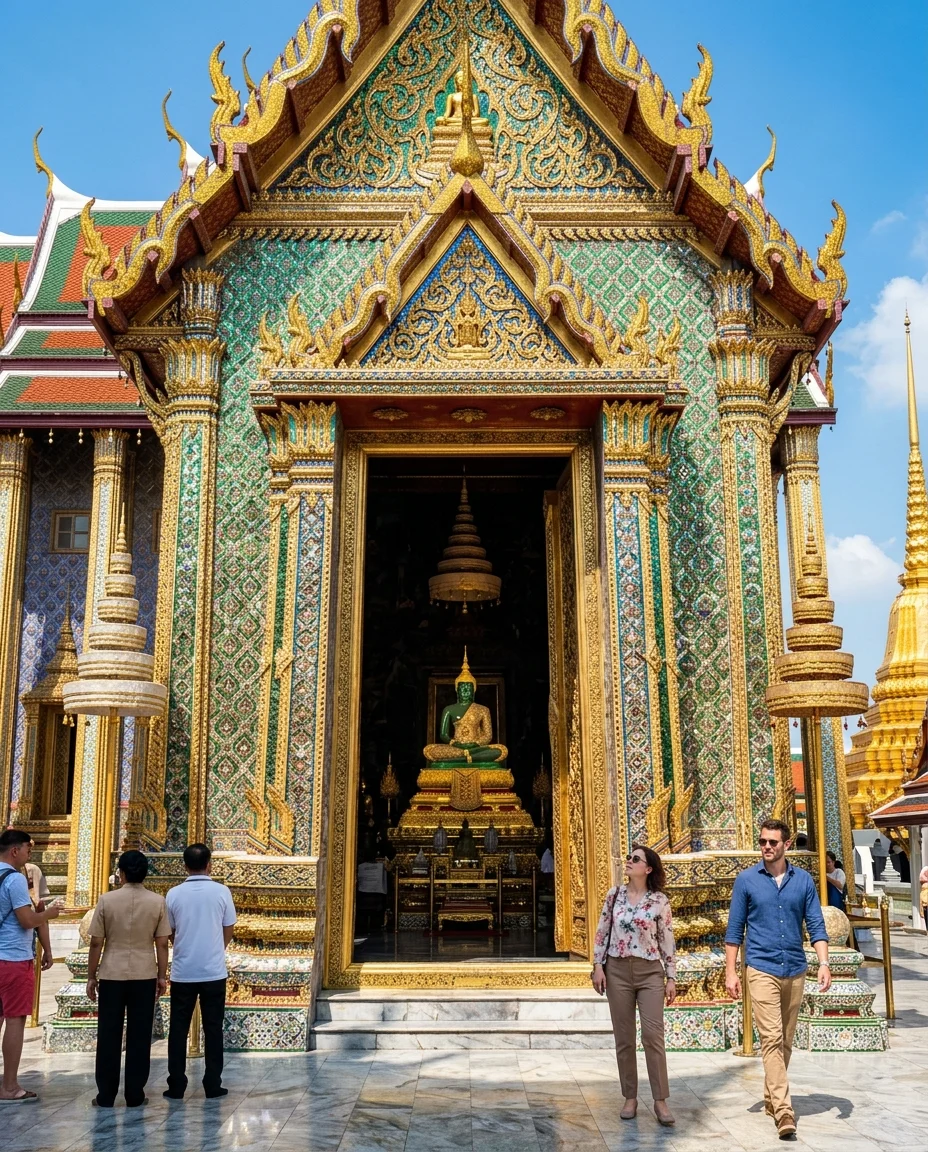
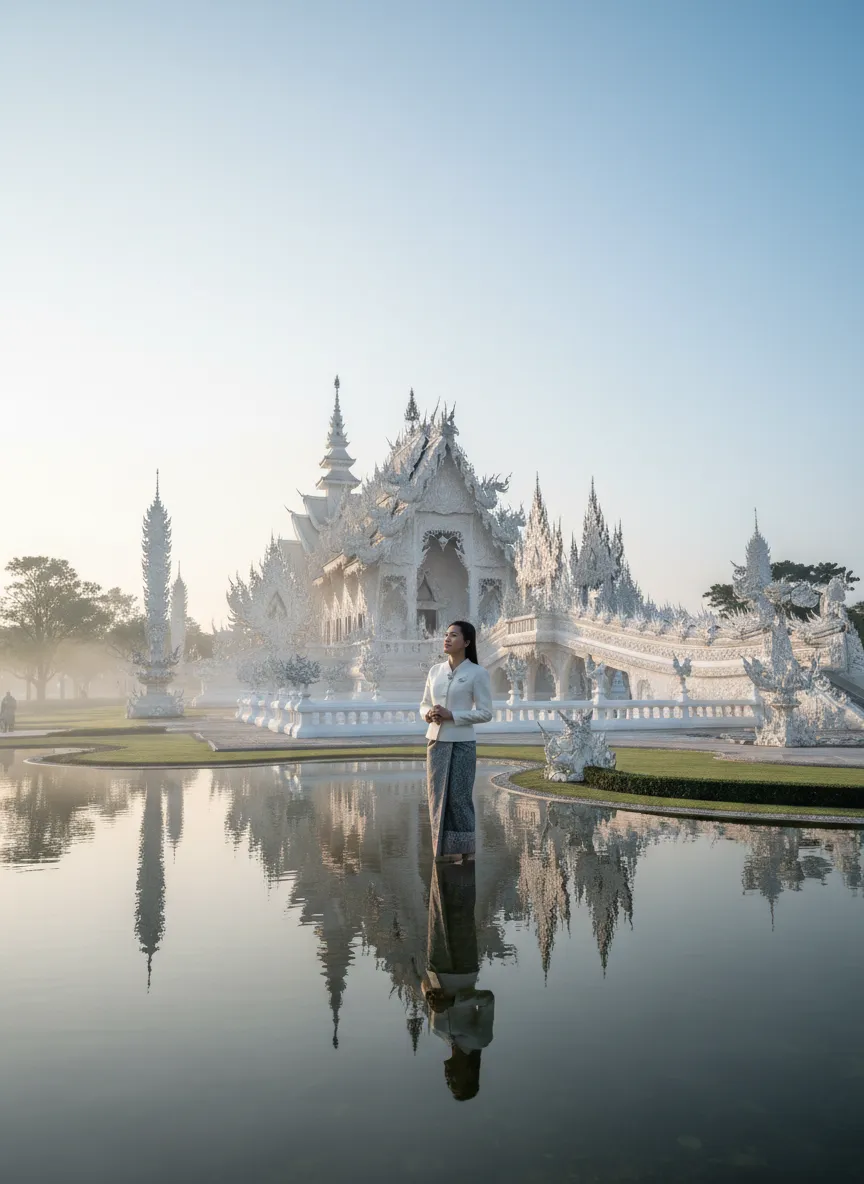
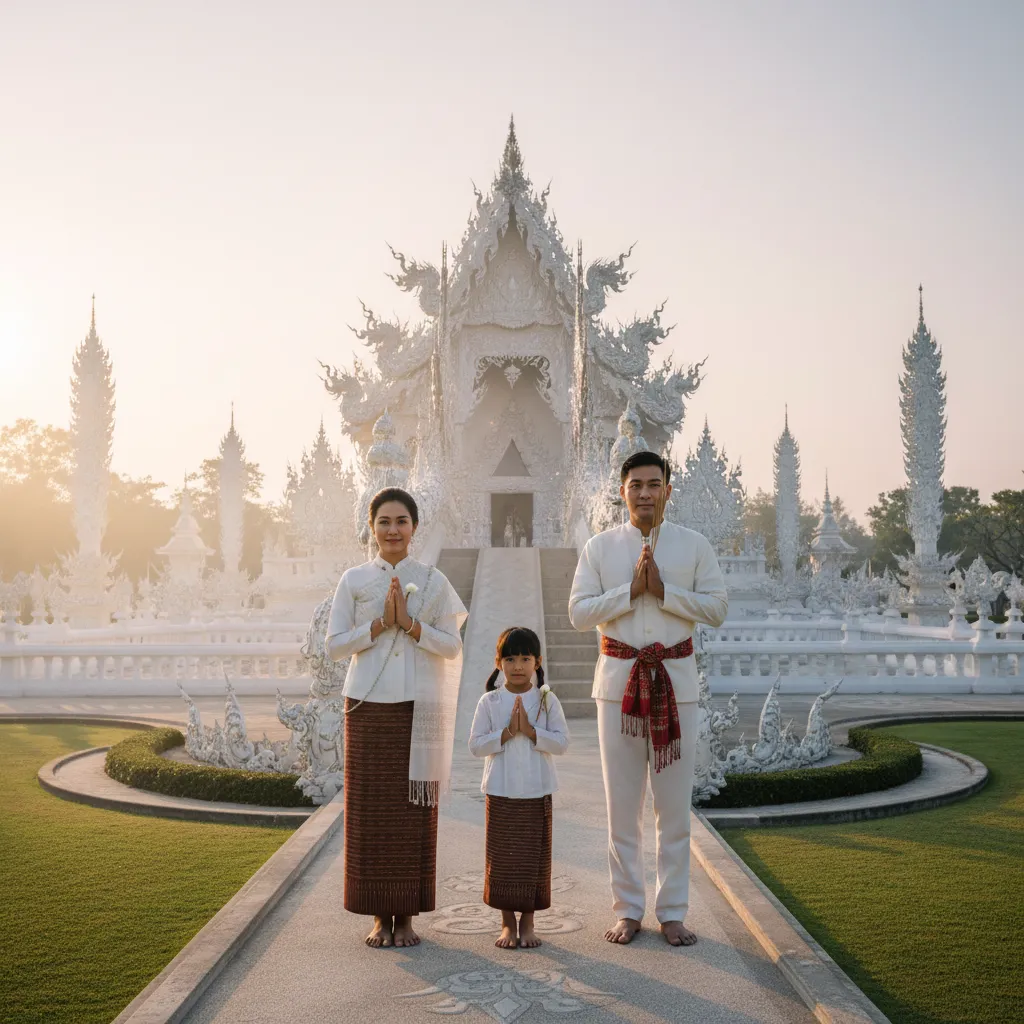
Thailand contains over 40,000 temples, but a select few demand specific attention due to their architectural scale or cultural gravity. In Bangkok, Wat Phra Kaew sits within the Grand Palace grounds and represents the absolute pinnacle of Thai royal architecture. It demands at least two hours to explore its detailed murals and gilded stupas, which house the highly revered Emerald Buddha carved from a single block of jade. Just a short walk south is Wat Pho, home to the massive 46-metre reclining Buddha and the historical birthplace of traditional Thai massage. You can actually book a deeply restorative massage here from students training at the on-site medical pavilion. Moving north to Chiang Mai, Wat Phra That Doi Suthep dominates the mountain overlooking the city. You reach the main viewing terrace by climbing a steep 306-step staircase flanked by mythological Naga serpents. This rewards you with panoramic city views, rows of ringing prayer bells, and access to a highly active pilgrimage site. In Chiang Rai, Wat Rong Khun, widely known as the White Temple, offers a completely different visual experience. Designed by contemporary artist Chalermchai Kositpipat, it is an unconventional, surrealist art exhibit masquerading as a temple. You must cross a bridge over a sea of sculpted reaching hands, representing human desire, before entering a hall filled with modern pop culture references embedded in its murals.
First-timers should begin their exploration with Wat Pho in Bangkok, as it balances spectacular scale with an accessible, relaxed atmosphere compared to the intensely crowded Grand Palace.
Temple Entrance Fees and Expected Costs
Budgeting for temple visits requires understanding the severe price split between major royal complexes and standard local shrines. Everyday neighbourhood temples are entirely free to enter, though you should leave a 20 THB (£0.45) note in the donation boxes to help with essential maintenance. Mid-tier historical sites, particularly the ruined stone temples in Ayutthaya or prominent wats in Chiang Mai, usually charge a standardised foreigner fee of 40 THB to 50 THB (£0.90 to £1.10). If you plan to visit multiple ruins in Ayutthaya, you can purchase a combined historical park pass for 220 THB (£4.80) to save money. The premium costs apply exclusively to Bangkok's highest-profile royal sites. Wat Phra Kaew is the most expensive at 500 THB (£11.00), while Wat Pho charges a slightly lower 300 THB (£6.60). If you hire an official on-site guide at these major locations, expect to pay an additional 500 THB to 800 THB (£11.00 to £17.60) for a comprehensive two-hour walking tour.
| Option | Cost (THB) | Cost (GBP approx) | Notes |
|---|---|---|---|
| Neighbourhood Temple | Free | Free | A 20 THB donation is highly recommended. |
| Regional Historical Wat | 40 - 50 | 0.90 - 1.10 | Applies to Ayutthaya and Chiang Mai sites. |
| Ayutthaya Park Pass | 220 | 4.80 | Grants access to six major historical temple ruins. |
| Wat Pho Entrance | 300 | 6.60 | Includes access to the Reclining Buddha. |
| Wat Phra Kaew Entrance | 500 | 11.00 | The most expensive royal site in Thailand. |
| Official Walking Guide | 500 - 800 | 11.00 - 17.60 | Negotiated on-site for a two-hour tour. |
What to Know Before You Go
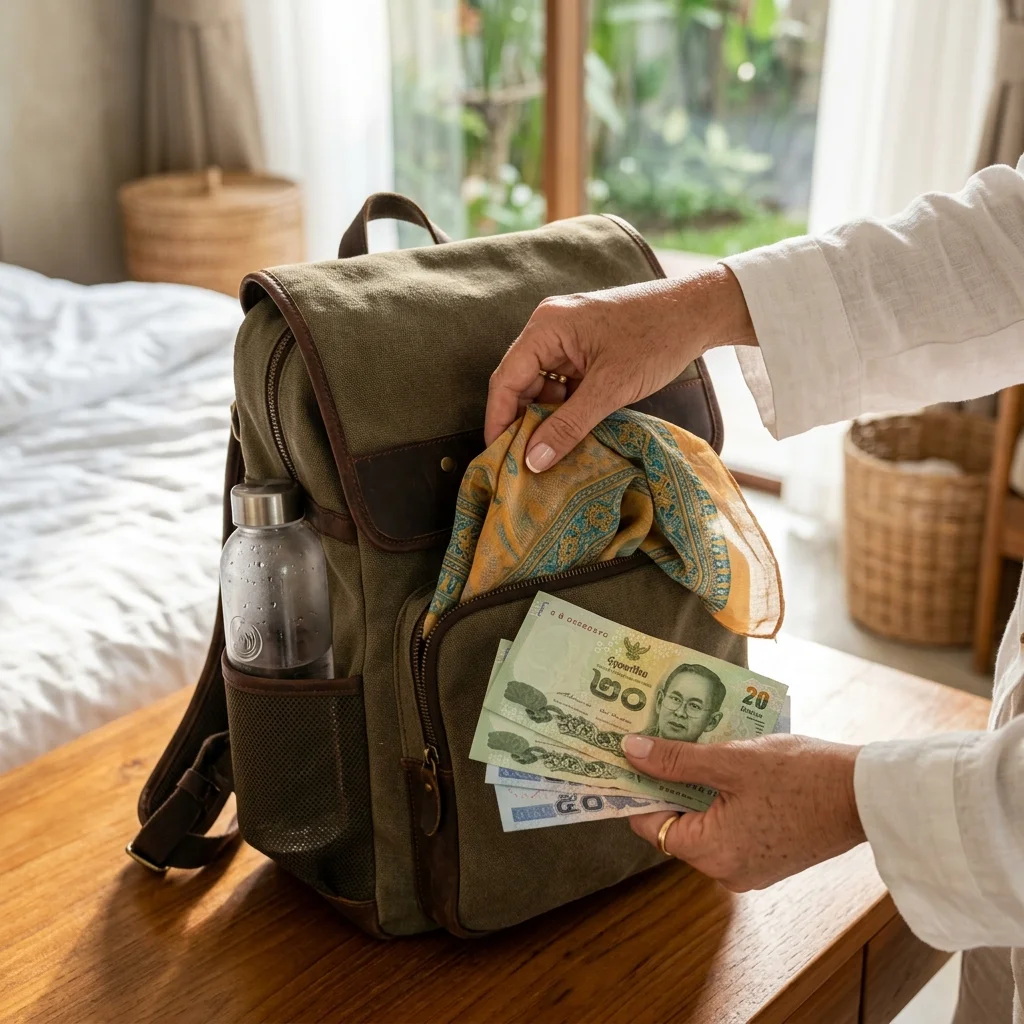
You must carry physical cash in small denominations. Temple donation boxes, flower vendors, and shoe-minders do not accept credit cards or digital payment applications.
Women must never hand anything directly to a monk. Monastic rules strictly forbid physical contact with females, so you must place items on a cloth for the monk to retrieve.
Photography is forbidden inside certain highly sacred buildings. If you ignore the clearly posted warning signs at places like the Emerald Buddha, security guards will confiscate your camera.
You should visit major Bangkok temples as soon as they open at 8:30 AM. The midday heat radiating off the stone courtyards is intensely draining, and the tour bus crowds peak early.
Practical Tips for Temple Visits
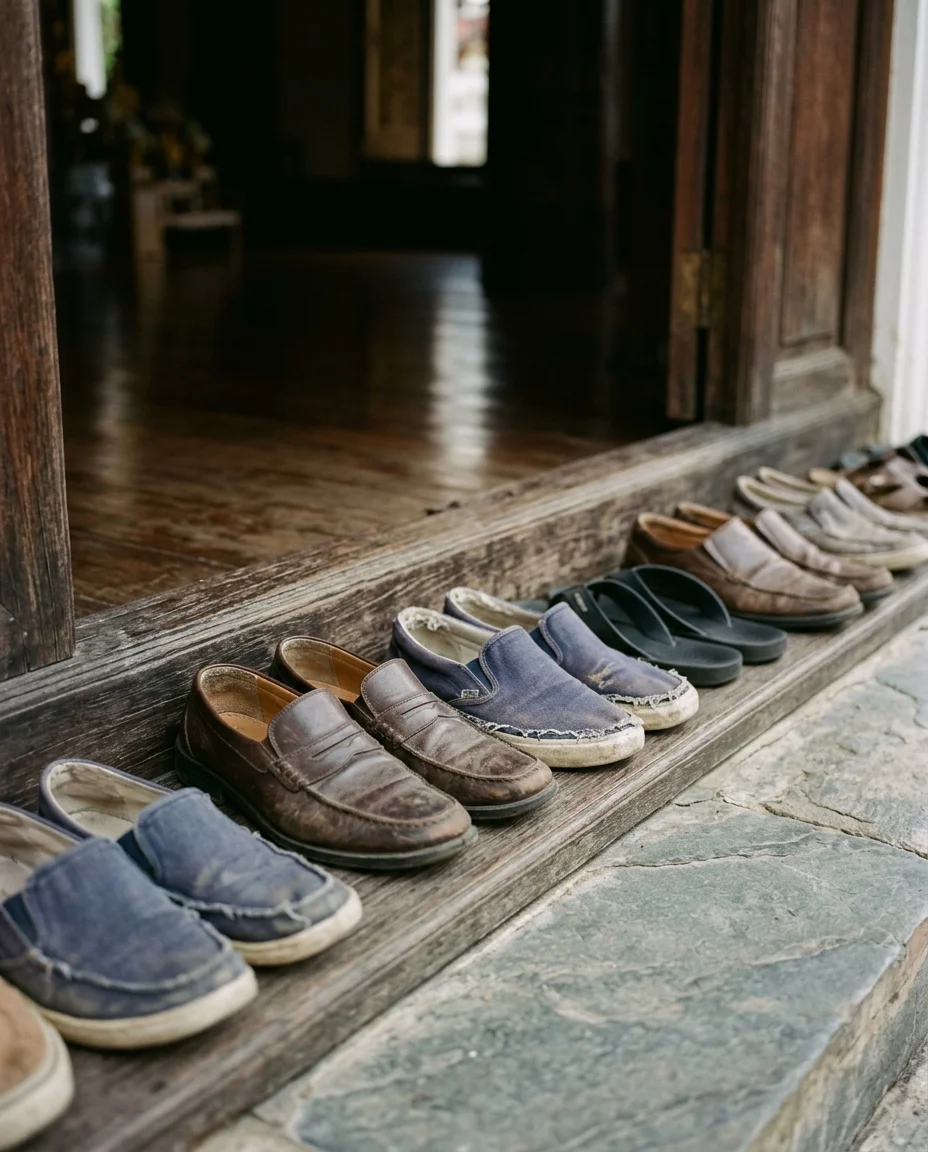
Wear slip-on trainers or sandals without complicated straps. You will take your shoes off dozens of times a day, and laces quickly become a frustrating barrier.
Buy a pre-made offering bucket from a local supermarket rather than the temple gates. The orange buckets sold outside tourist sites are heavily marked up and often contain expired goods.
Pack a pair of clean socks in your day bag. Temple floors get surprisingly hot under the afternoon sun, and socks protect your feet while adhering to the no-shoes rule.
Walk around sacred objects in a clockwise direction. Thai Buddhist tradition dictates that clockwise movement generates positive merit, while anti-clockwise walking is reserved for funerals.
Keep your voice down when entering a viharn. Locals use these spaces for quiet meditation and silent prayer, making loud conversations highly disruptive.
Never point your finger directly at a Buddha statue to show your friends a detail. Pointing is considered rude, so you should gesture with your whole hand flat and palm facing upwards.
Use the provided metal bowls to pour water over Buddha statues during the Songkran festival. This specific ritual cleanses the spirit and brings good fortune for the upcoming new year.
Leave a small donation if you take a sacred thread from a monk. These blessed white bracelets offer spiritual protection, and a 20 THB note shows proper gratitude for the blessing.
Quick Reference Guide
| Item | Detail | Notes |
|---|---|---|
| Primary Religion | Theravada Buddhism | Practised by over 90% of the Thai population. |
| Dress Code | Shoulders and knees covered | Strictly enforced at all major royal temples. |
| Footwear | Slip-on shoes recommended | Must be removed before entering a viharn or ubosot. |
| Major Bangkok Sites | Wat Phra Kaew, Wat Pho | Arrive at 8:30 AM to beat the intense heat and crowds. |
| Almsgiving Time | 6:00 AM to 7:00 AM | Observe silently and do not block the monks' path. |
| Average Entry Fee | Free to 500 THB | Neighbourhood wats are free; royal sites charge a premium. |
| Photography | Permitted in most exterior areas | Strictly banned inside the Temple of the Emerald Buddha. |
| Behaviour | Never point your feet at Buddha | Fold legs underneath or beside your body when sitting. |