The Golden Spire of Kho Thong Chai
Situated atop Kho Thong Chai mountain, Wat Thang Sai features a colossal nine-spired pagoda built to mark King Rama IX's Golden Jubilee alongside a 26-metre-tall golden Buddha that gazes directly across the Gulf of Thailand. This architectural masterpiece provides a highly serene, crowd-free alternative to the heavily commercialised temple circuits found in Bangkok or Phuket.
Wat Thang Sai is a grand Theravada Buddhist temple complex situated on Thong Chai Mountain overlooking the coastal settlement of Ban Krut in Prachuap Khiri Khan province. Managed by resident Buddhist monks and supported by local community donations, this cliffside sanctuary sits at the intersection of royal commemoration and regional pilgrimage. Unlike more accessible urban landmarks, it caters primarily to independent travellers, cultural purists, and road-trippers navigating the upper southern peninsula of Thailand. It offers an authentic spiritual experience combined with dramatic coastal geography, far removed from mass tourism corridors.
The Architecture of Phra Mahathat Chedi Pakdeeprakat
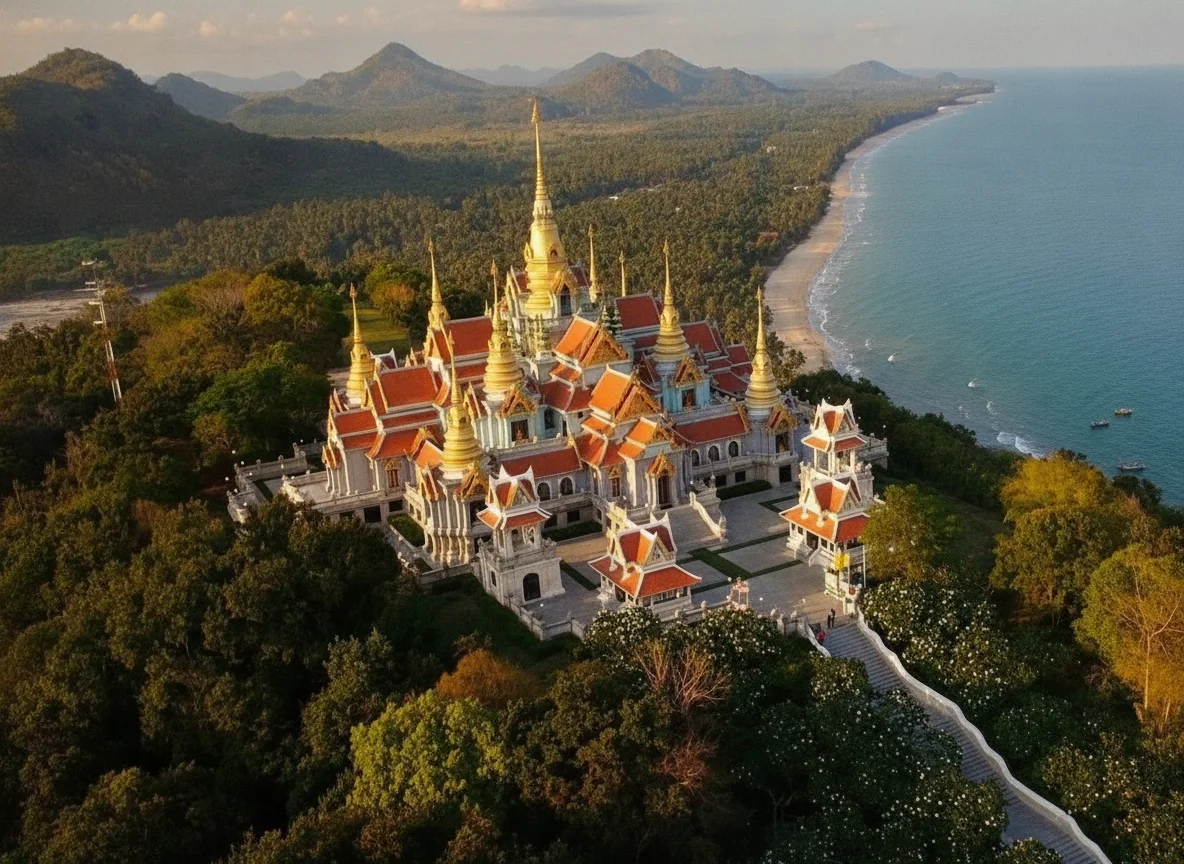
This multi-tiered monument stands as a physical manifestation of traditional Rattanakosin design, engineered to honour King Bhumibol Adulyadej’s fifty-year reign. The structure comprises nine distinct golden spires, a deliberate architectural choice representing the ninth monarch of the Chakri dynasty. Built over several years and completed in 1996, the main chedi spans a massive square base measuring 50 metres by 50 metres, symbolising the golden jubilee. You will find that the exterior walls feature complex stucco reliefs, intricate gold stencilling, and tiered roof tiles painted in deep blues and greens. Step onto the elevated stone plaza to observe how the structures are aligned to capture both natural sunlight and ocean breezes. The ground level houses large ceremonial halls, while the upper levels contain relics of the Buddha, requiring visitors to ascend via a polished marble staircase. This design creates a vertical journey through Buddhist cosmology as you climb higher. Walk slowly around the outer balustrades to appreciate the symmetry of the surrounding smaller stupas.
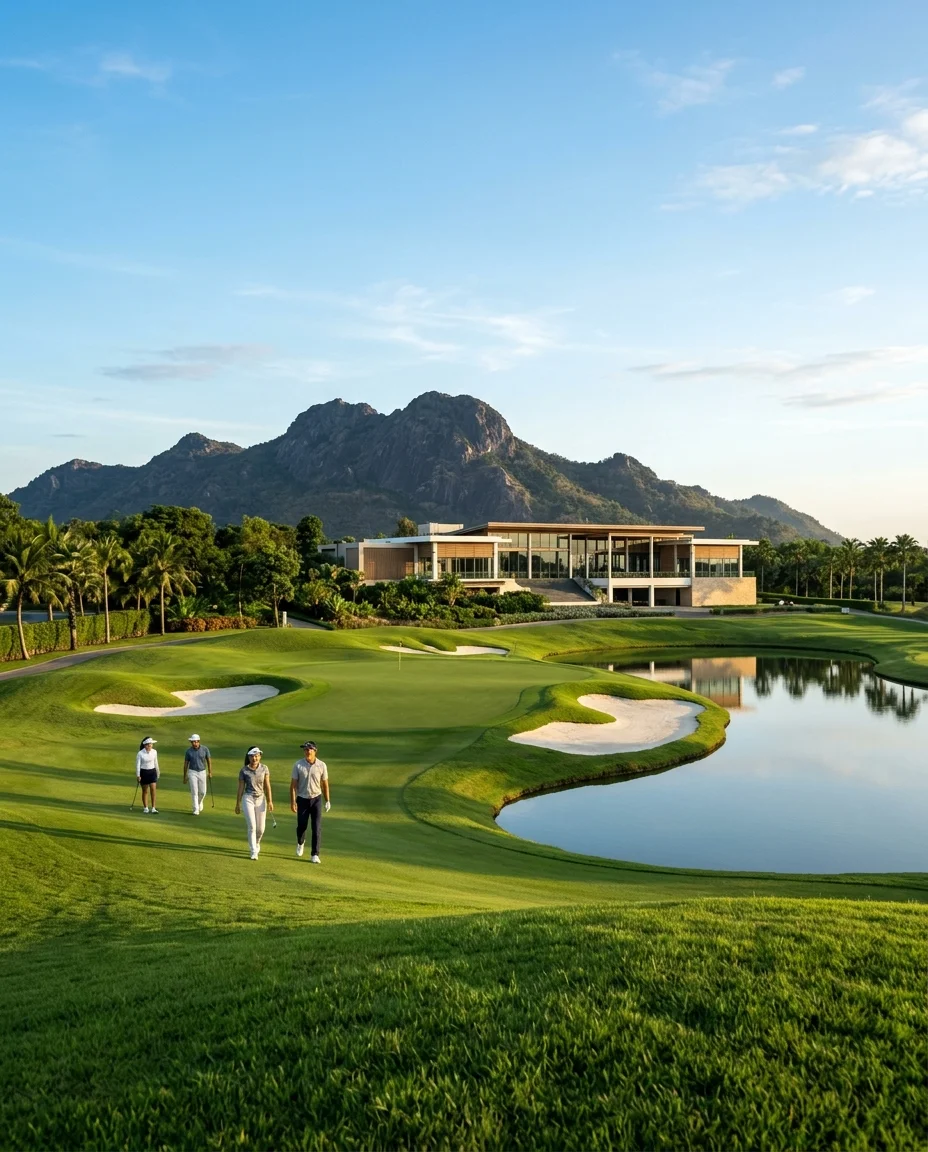
Plan your round at Pineapple Valley Golf Club in Hua Hin. Read our expert guide on green fees, layout, signature holes, and booking tips.
Plan to spend at least forty-five minutes exploring the exterior tiers to fully appreciate the complex mathematical symmetry of the nine spires.
The Colossal Phra Buddha Kitti Sirichai
Seated majestically on the eastern slope of Kho Thong Chai, the enormous golden statue of Phra Buddha Kitti Sirichai looks out directly over the waters of the Gulf of Thailand. This monumental image of the Buddha was cast in the classical Sukhothai style, depicting him in the meditation posture of subduing Mara. It stands 26.3 metres tall and measures 10 metres across the lap, presenting an imposing silhouette that is visible from miles down Ban Krut beach. Built in 1996 to honour Queen Sirikit on her fifth-cycle birthday, the statue consists of a steel frame coated in concrete and finished with gold-coloured glass mosaic tiles imported from Italy. The base of the statue is designed as a large pavilion where locals gather to light incense, offer lotus flowers, and recite morning chants. Unlike major urban temples where visitors are rushed through viewing areas, the layout here allows you to sit quietly on the stone steps for as long as you wish. This atmosphere of quiet contemplation highlights the local devotion that keeps the site operational.
Ensure you approach the statue with quiet respect, keeping your head lower than the seated Buddha when local devotees are praying at the base.
| Feature | Wat Thang Sai (Prachuap Khiri Khan) | Urban Alternatives (Wat Phra Kaew / Wat Chalong) |
|---|---|---|
| Visitor Volume | Extremely low; primarily local pilgrims and independent travellers. | Exceptionally high; thousands of tour group visitors daily. |
| Entry Fees | Entirely free admission, though donations are highly appreciated. | 500 THB (£11.50) for Wat Phra Kaew; free but highly commercialised at Wat Chalong. |
| Spiritual Atmosphere | Serene, quiet, and highly conducive to meditation or quiet reflection. | Fast-paced, noisy, and strictly regulated along designated pathways. |
| Setting & Views | Elevated mountaintop location with panoramic views of the Gulf of Thailand. | Flat urban terrain surrounded by palace walls or busy main roads. |
Interior Murals and Devotional Art
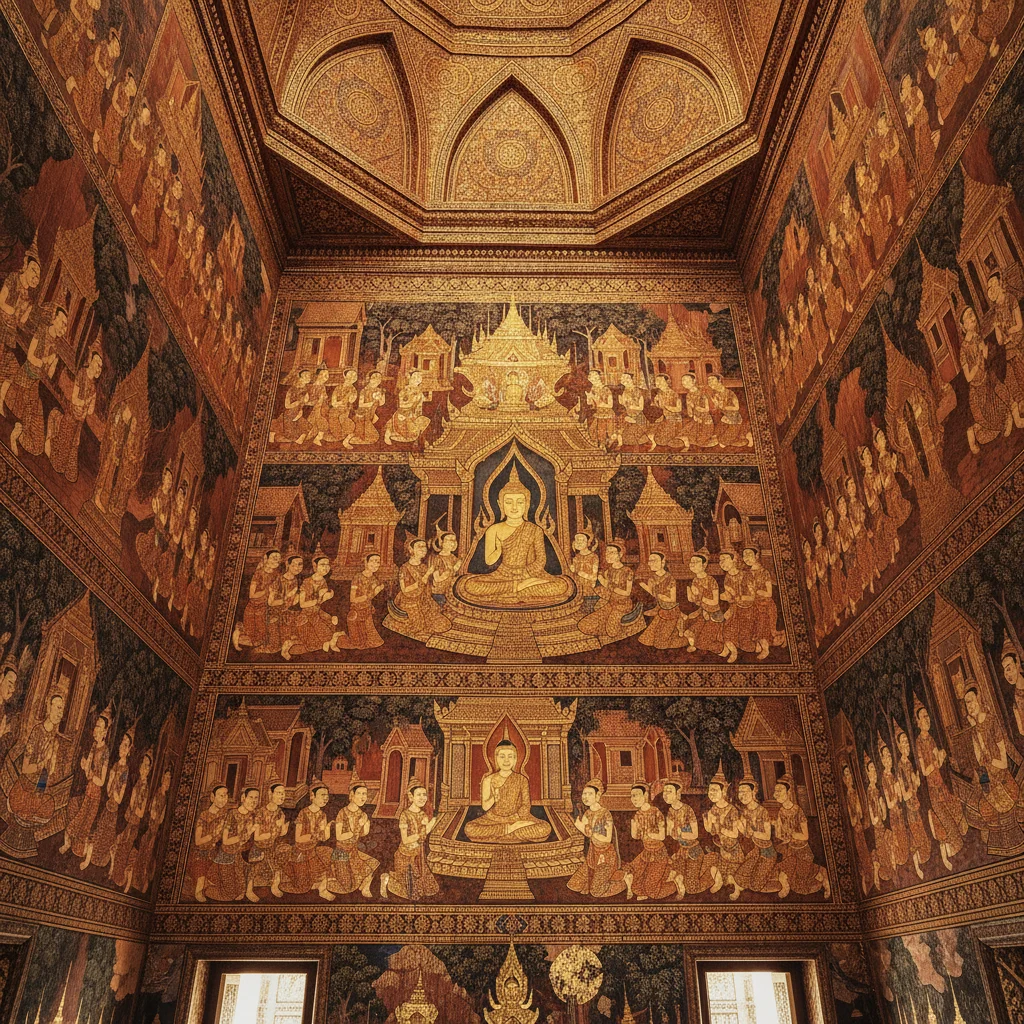
The interior spaces of the Phra Mahathat Chedi are decorated with custom-designed hand-painted murals that tell the story of the Buddha's previous lives and key moments in Thai royal history. These murals were executed by skilled traditional artists who spent years working inside the temple to create a continuous visual narrative across the three main storeys. Unlike modern printed temple art, these paintings use traditional mineral pigments and gold leaf application to ensure the colours do not fade in the humid coastal climate. The ground floor murals focus heavily on the Jataka tales, illustrating the ten virtues of the Bodhisattva. As you ascend to the second and third levels, the paintings transition into scenes depicting the history of the Chakri dynasty, highlighting agricultural reform and royal initiatives under King Rama IX. Windows cut into the thick plaster walls illuminate the paintings with soft natural light, allowing you to study the fine brushwork without glare. The upper sanctuary houses a collection of ancient Buddha images in various postures, displayed in glass cases alongside sacred relics.
Bring a small pocket torch to examine the intricate details of the murals on the darker, north-facing walls of the second tier.
Coastal Panoramic Viewpoints
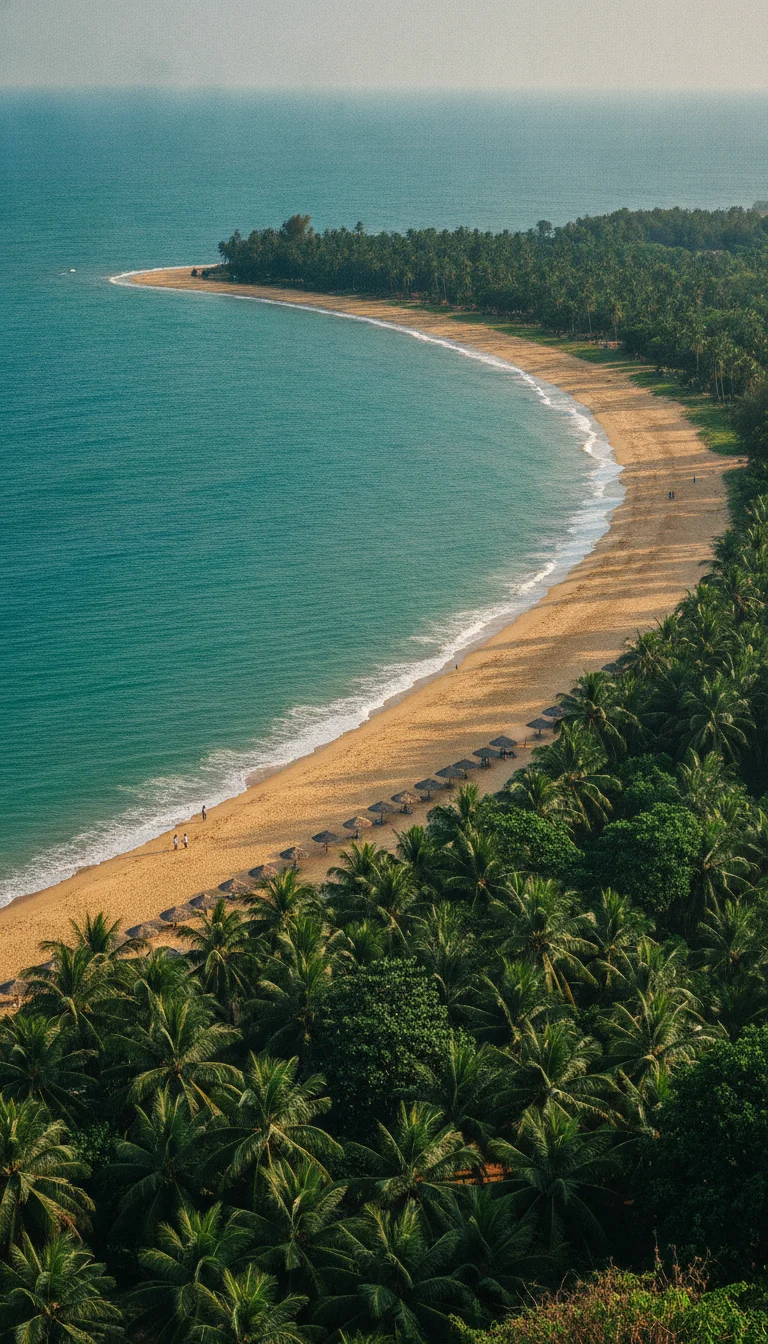
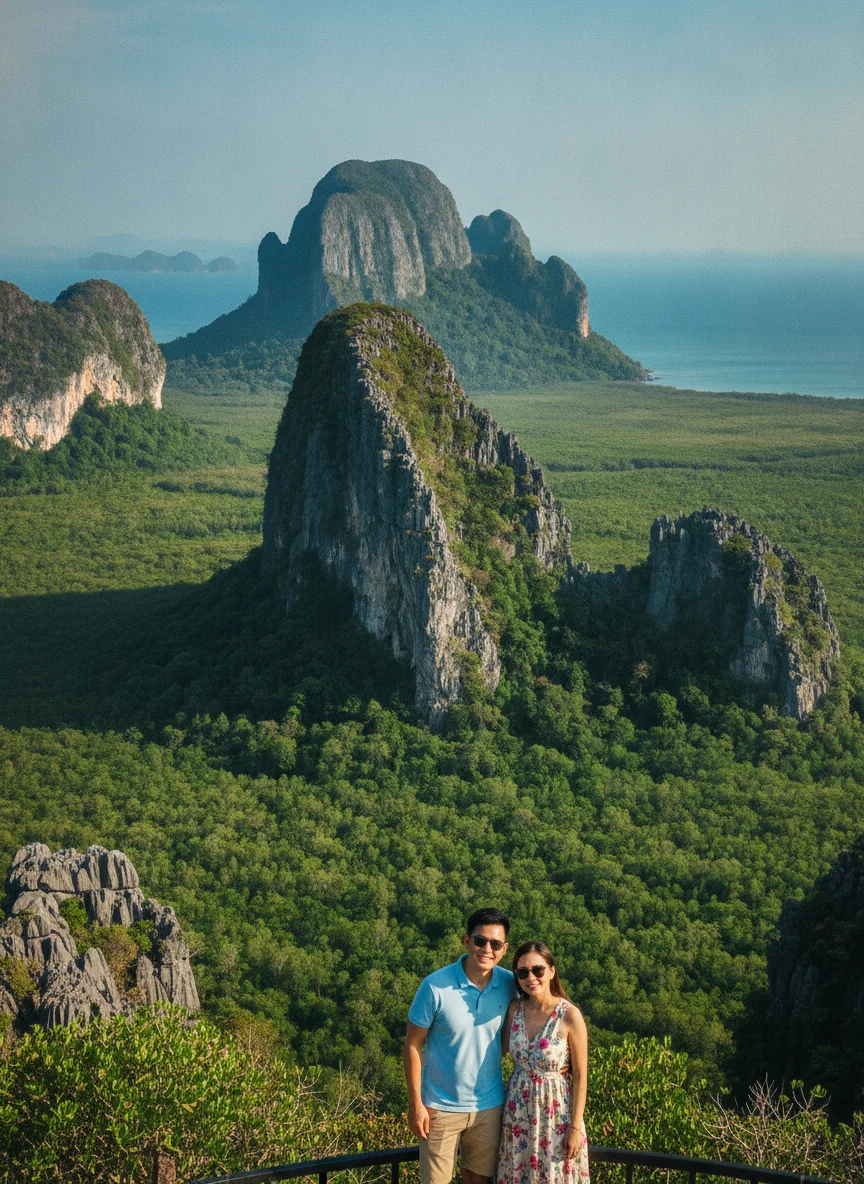
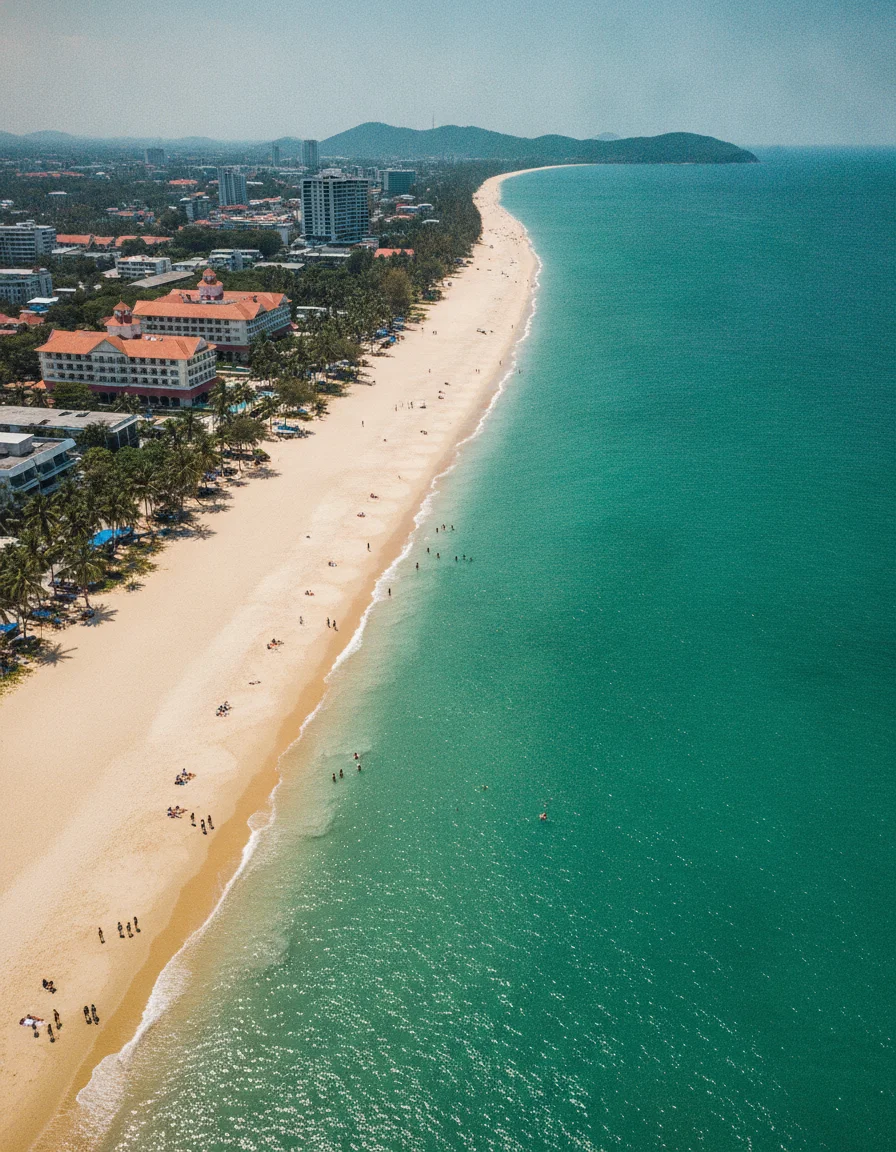
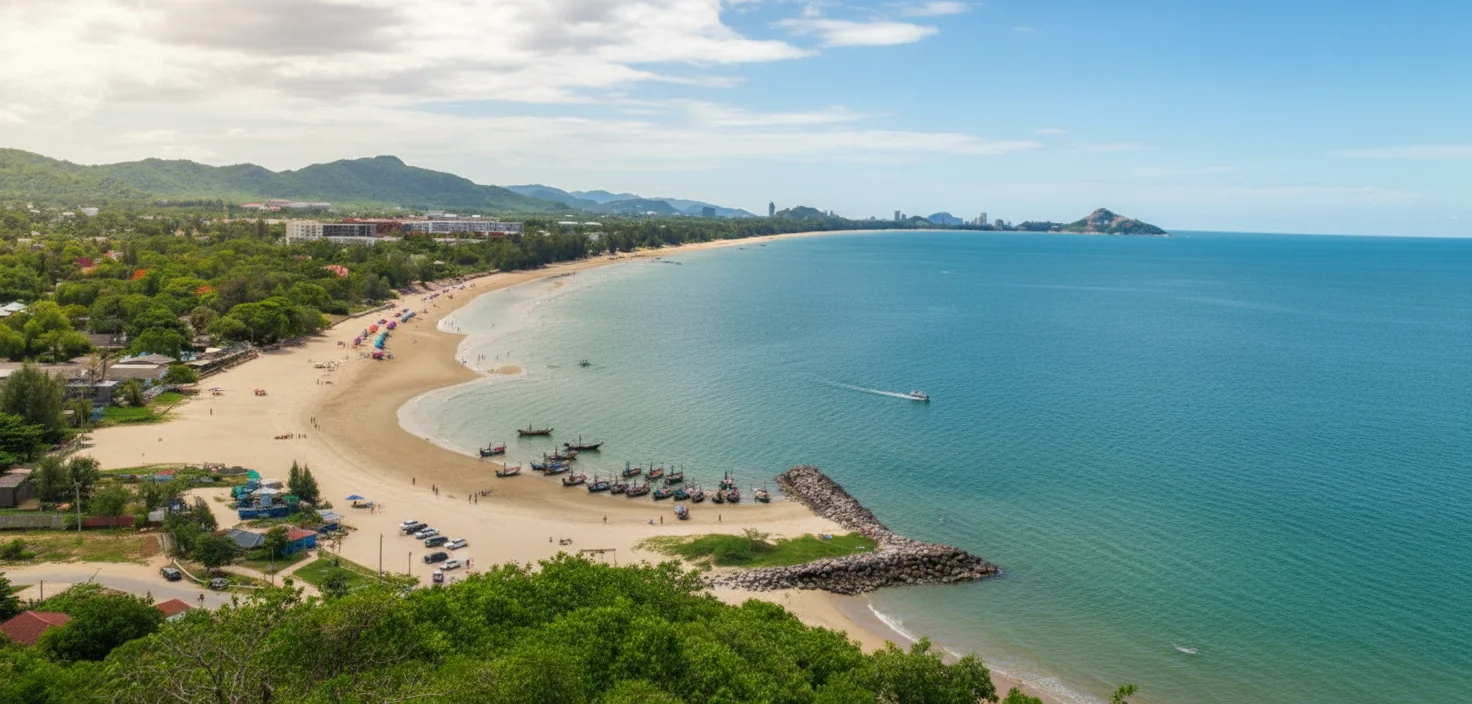
The vantage point from the temple terraces offers an unobstructed, 360-degree vista of the Prachuap Khiri Khan coastline. Standing on the marble-tiled viewing platforms, you can look down at the curving sands of Ban Krut beach, which stretches for several kilometres to the south. The contrast between the dark green of the coastal coconut groves and the deep blue of the Gulf of Thailand is exceptionally sharp on clear mornings. To the west, the landscape transforms into rolling hills and pineapple plantations that extend toward the Tenasserim Hills bordering Myanmar. The elevated position of Kho Thong Chai means that the temple catches a constant sea breeze, keeping the terrace significantly cooler than the lowlands. This makes the outer walkways an ideal spot for quiet contemplation after exploring the warm interior halls of the chedi. Photographer enthusiasts will find that the late afternoon light casts long shadows across the terraces, highlighting the golden details of the spires.
Time your visit for around 4:30 PM to catch the softer light on the coastline before the temple gates close at sunset.
The Sacred Grounds and Monk Quarters
The lower forested slopes of the mountain contain the living quarters of the resident monks who maintain the daily spiritual routines of Wat Thang Sai. These simple wooden and concrete kutis are tucked away amongst native trees and rock formations, purposefully separated from the public viewing areas to preserve quietude. A network of clean paved paths connects these residences to the main ordination hall where daily morning and evening chanting takes place. You will occasionally see monks sweeping the pathways or tending to the native flora, representing the Buddhist practice of mindfulness through physical labour. Visitors are welcome to walk along the lower paths, provided they maintain a quiet demeanour and avoid entering restricted residential zones. The temple grounds also feature small stone gardens and wooden benches under shade trees where visitors can rest. This integration of natural coastal forest and sacred architecture emphasizes the temple's role as a forest monastery.
Keep your voice to a whisper when walking past the signposted monastic paths to respect the meditation practices of the resident community.
Location and Getting There
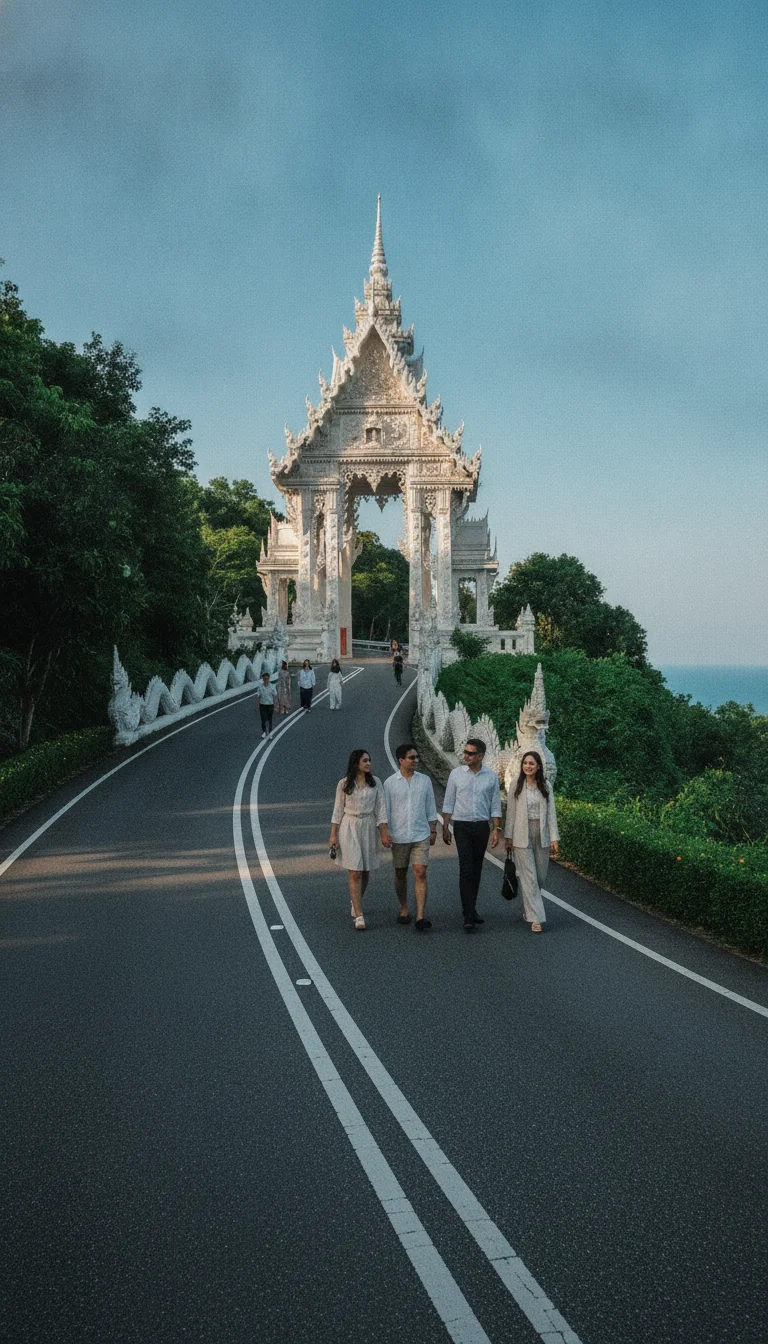
Wat Thang Sai is located on Kho Thong Chai mountain at the northern end of Ban Krut Beach, within the Bang Saphan District of Prachuap Khiri Khan province. This destination is approximately 380 kilometres south of Bangkok and 150 kilometres south of the resort town of Hua Hin. To reach the temple from Bangkok, you can board a southern line train to Ban Krut Railway Station, a journey of roughly five to six hours costing around 150 THB to 400 THB (£3.50 to £9.20) depending on the carriage class. From the station, a local songthaew or motorcycle taxi ride to the mountain peak takes ten minutes and costs 50 THB to 100 THB (£1.15 to £2.30). If you are driving along Highway 4, turn off at km 382 and follow the well-signposted rural roads toward Ban Krut for twenty minutes.
Costs and Practicalities
Access to Wat Thang Sai is entirely free of charge, reflecting the traditional Buddhist principle that spiritual teachings and sacred spaces should be accessible to all. However, visitors are highly encouraged to leave a donation in the charity boxes located inside the Phra Mahathat Chedi to help fund the continuous preservation, cleaning, and electricity costs. Seasonal pricing does not apply to the temple itself, but local accommodation in the nearby Ban Krut beach area experiences peak rates during the dry high season from November to February. During the low wet season from May to October, nearby resort rates drop significantly, though rain may make the mountain road slick. There are no mandatory resort fees or commercial tickets required to enter any part of the temple grounds, making this an highly economical cultural excursion.
| Option | Cost (THB) | Cost (GBP approx) | Notes |
|---|---|---|---|
| Temple Admission Fee | Free | Free | Donations are highly encouraged at the main entrance boxes. |
| Songthaew Ride from Ban Krut Station | 50 THB to 100 THB | £1.15 to £2.30 | Flat rate per passenger; confirm the price before boarding. |
| Standard Temple Donation | 100 THB to 300 THB | £2.30 to £6.90 | Optional contribution toward temple maintenance and utilities. |
| Parking Fee | Free | Free | Available at the lower car park and the upper peak. |
Who It Suits Best
Wat Thang Sai is highly suited for independent travellers, cultural enthusiasts, and road-trippers seeking an authentic spiritual destination devoid of commercial crowds. Those exploring the southern Thai peninsula by car or motorbike will appreciate the scenic drive and quiet atmosphere. It is also perfect for budget-conscious travellers who value architectural detail and scenic viewpoints over busy tourist amenities. Conversely, this site is not suitable for those seeking high-energy resort entertainment, guided tour group environments, or individuals with severe mobility issues who may struggle with the steep stairs and uneven stone terraces.
What to Know Before You Visit
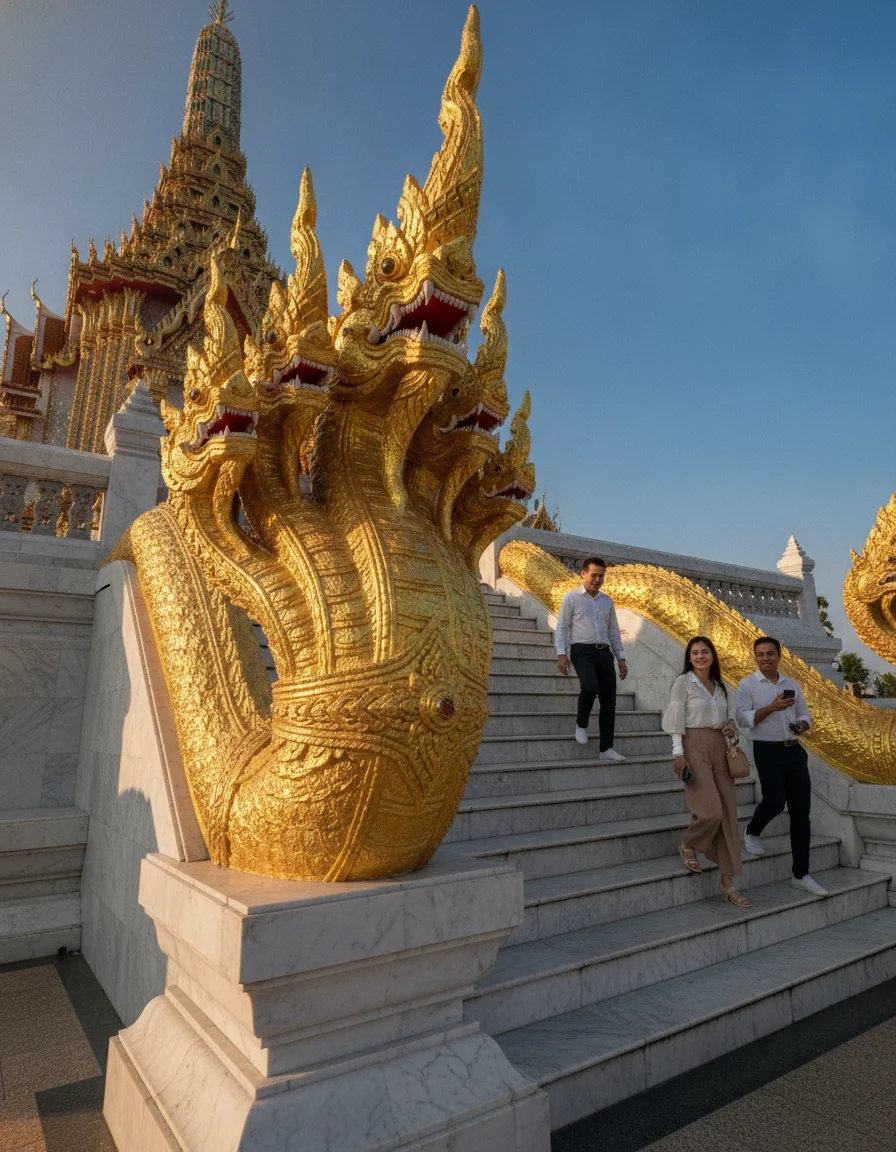
Strict temple dress codes must be observed during your visit. You must ensure that your shoulders and knees are fully covered before entering the sacred areas, as failure to do so is considered highly disrespectful. Footwear must be removed before entering any indoor sanctuary or the upper terraces of the chedi. This means you should wear slip-on shoes that are easy to remove and prepare for warm marble underfoot on sunny afternoons. Public transport to this remote coastal district is limited compared to major tourist hubs. You should plan your train schedules carefully or hire a private vehicle to avoid being stranded in the late afternoon. The physical climb to the upper levels of the chedi requires a moderate level of physical fitness. There are multiple flights of steep stone steps, so visitors with mobility issues should pace themselves and use the handrails provided.
Practical Tips for Your Visit
Bring bottled water
You will need to stay hydrated during the humid climb up the mountain stairs. There are no retail shops at the very top of the peak to buy drinks.
Arrive early in the morning
This allows you to explore the stone terraces before the midday sun makes the marble flooring too hot to walk on barefoot. The morning light is also ideal for photography.
Carry small banknotes
Most donation boxes inside the chedi only accept physical cash and cannot process electronic cards. Having notes of 20 THB or 100 THB makes offering donations straightforward.
Check the train timetable
The trains servicing Ban Krut station run infrequently throughout the day. Checking schedules in advance prevents long waits at the quiet local station.
Dress in breathable fabrics
Lightweight cotton trousers and long-sleeved shirts keep you cool while meeting the strict religious dress code. This ensures comfort without compromising respect.
Use sun protection
The upper viewing terraces are highly exposed to the sun with minimal overhead shade. Applying sunscreen and wearing a hat beforehand prevents sunburn.
Respect the silence
Avoid speaking loudly or taking noisy phone calls while inside the main relic chambers. This preserves the tranquil atmosphere for local devotees who come to pray.
Quick Reference Guide
| Item | Detail | Notes |
|---|---|---|
| Property Name | Wat Thang Sai | Located on Kho Thong Chai mountain. |
| Location | Ban Krut, Prachuap Khiri Khan | Southern Thailand peninsula. |
| Property Type | Buddhist Temple and Cultural Attraction | Sacred pilgrimage and monument site. |
| Star Rating / Category | Cultural and Religious Site | Free entry to all public visitors. |
| Opening Hours | Open daily from 8:00 AM to 6:00 PM | Gates close promptly at sunset. |
| Nearest Airport | Hua Hin Airport (HHQ) | Approximately 150 km north of the temple. |
| Distance to Beach | Directly overlooking Ban Krut Beach | Accessible via a 10-minute drive or songthaew. |
| Entry Requirements | Covered knees and shoulders, no shoes indoors | Dress code is strictly enforced by site wardens. |
| Parking | Free on-site parking available | Located at both upper and lower levels. |