Co-Working Spaces in Thailand
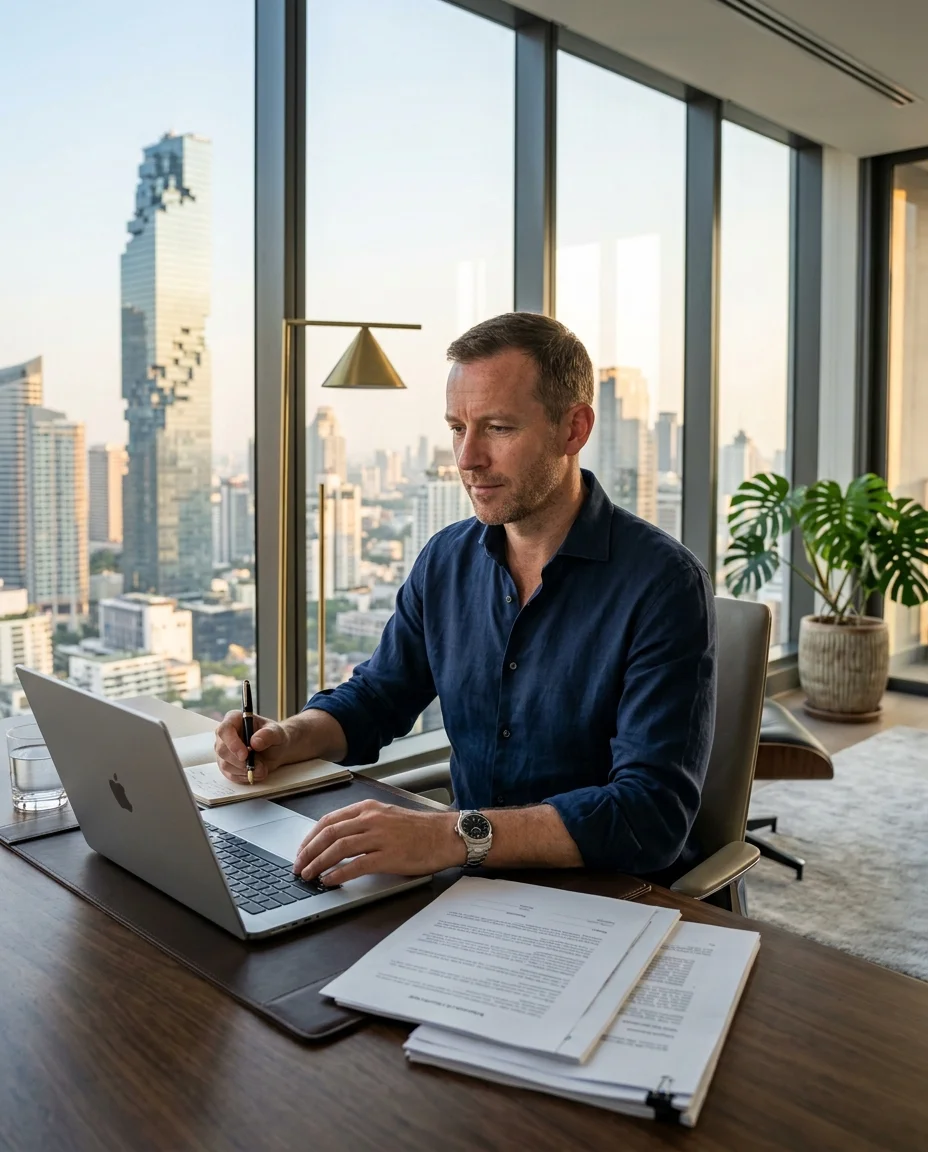
Securing the new Destination Thailand Visa (DTV) allows UK remote workers to live legally in the country for up to five years while operating online. Monthly hot desk memberships in major Thai tech hubs average around 3,500 THB (£75), delivering enterprise-grade fibre internet at a fraction of standard London prices.
This guide details the co-working infrastructure across Thailand, helping you choose the right workspace, city, and membership tier for your remote career. We cover the major operators, realistic monthly costs, internet reliability, and the distinction between dedicated workspaces and casual cafe setups. This information is exclusively for digital nomads and remote professionals earning an income outside Thailand who need dependable infrastructure. It is not for those seeking local employment or traditional corporate office leases.

Visa Routes and Legal Remote Work
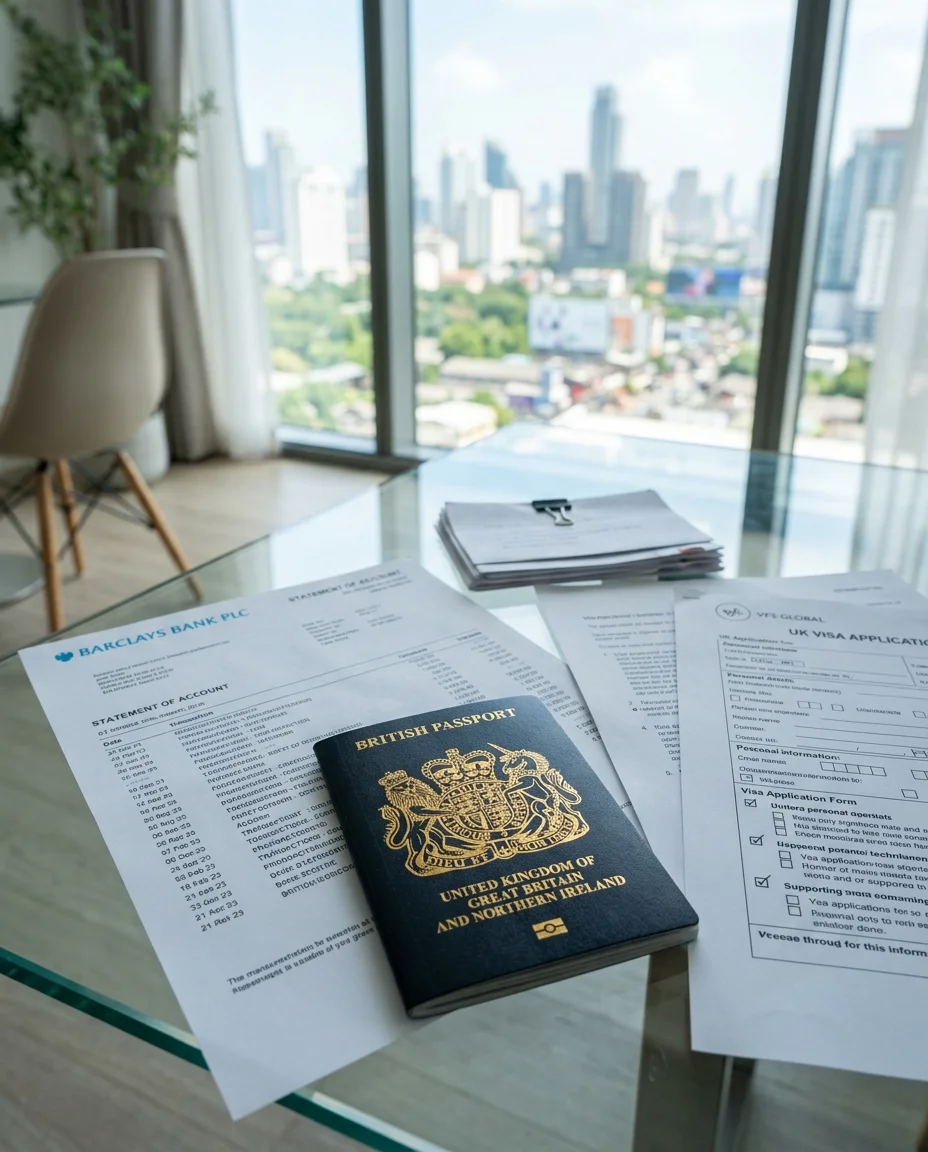
You cannot legally work remotely in Thailand on a standard tourist exemption or tourist visa. The introduction of the Destination Thailand Visa (DTV) has fundamentally changed how UK remote workers operate here. This multiple-entry visa costs 10,000 THB (£215) and grants a five-year validity with 180-day stays permitted per entry. Applicants must prove a minimum bank balance of 500,000 THB (£10,750). You must also provide an employment contract or portfolio confirming your income originates completely outside Thailand. Alternatively, high earners might qualify for the Long-Term Resident (LTR) visa. This route requires an annual income of $80,000 USD (£63,000) but offers a ten-year stay and tax exemptions. Working illegally on a tourist stamp risks deportation and permanent blacklisting from the country. Co-working spaces do not check your visa status upon entry. However, the immigration bureau frequently conducts random sweeps of known digital nomad hubs in Chiang Mai and Phuket. Choose the correct legal route before committing to long-term workspace memberships or apartment leases. Secure your DTV or LTR visa before arriving to ensure uninterrupted access to Thailand’s remote working infrastructure.
Discover exactly how to find, secure, and rent a property in Thailand as a UK national. Compare costs, avoid contract traps, and understand TM30 laws.
| Visa Route | Key Requirement | Validity |
|---|---|---|
| Destination Thailand Visa (DTV) | 500k THB savings, foreign income | 5 years (180 days per entry) |
| Long-Term Resident (LTR) | $80k USD annual income | 10 years |
| Tourist Exemption | None (Remote work strictly illegal) | 60 days |
| Non-Immigrant B | Thai employer sponsorship | 1 year (renewable) |
The Co-Working Landscape and Major Operators
Sponsored
Thailand’s remote work infrastructure relies heavily on established domestic operators and regional Asian networks. The Hive operates premium, multi-level spaces in Bangkok with strong community management. They target established professionals who require reliable meeting rooms and soundproof call booths for daily operations. HUBBA focuses heavily on tech startups and entrepreneurs. Their spaces host regular networking events and pitch nights that consistently attract venture capital scouts. Up in Chiang Mai, Punspace dominates the market with multiple branches. They provide quiet, focused environments built into converted warehouses featuring high ceilings and ergonomic furniture. Down south, Mango Co-Working in Phuket caters to a more transient nomad crowd. This operator effectively balances high-speed fibre internet with proximity to the island's coastal infrastructure. Internet speeds across these dedicated facilities consistently exceed 300 Mbps symmetrical. Most locations maintain backup generators to counter seasonal power outages effectively. Community managers actively facilitate introductions between members. This makes these spaces vital for UK expats looking to build a professional network quickly upon arrival. Tour multiple operators during your first week to find the community atmosphere that best matches your professional industry.
Types of Workspaces and Membership Tiers
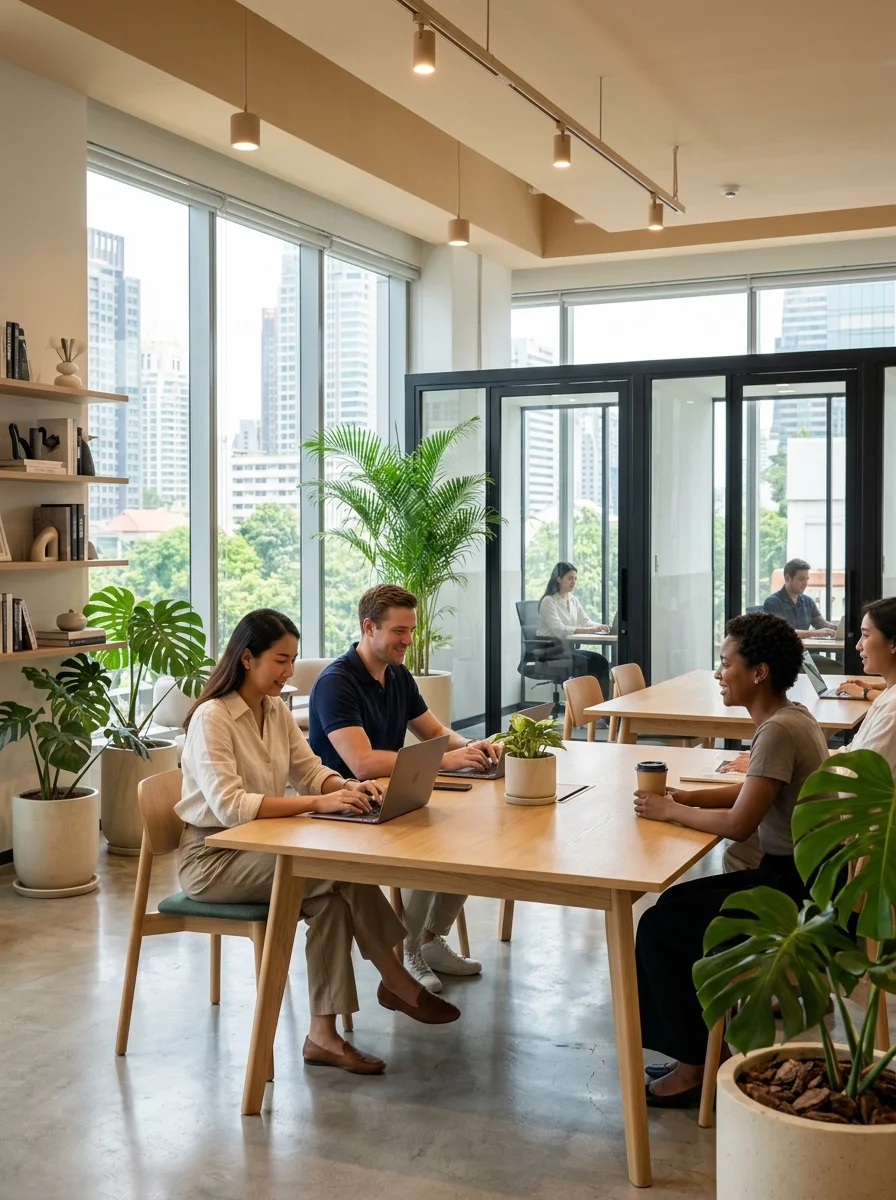
Co-working operators structure their pricing around three distinct access tiers tailored to different remote working needs. Hot desking is the most flexible option. It allows you to claim any available unassigned seat in the communal area. This typically costs between 3,000 THB and 5,000 THB (£64 to £107) per month, depending heavily on the city and specific operator. Dedicated desks provide a permanent assigned workstation. You can securely leave monitors and equipment overnight, with prices usually ranging from 6,000 THB to 9,000 THB (£129 to £193) monthly. For small teams or executives needing absolute privacy, private glass-walled offices start around 15,000 THB (£322) per month and scale up based on seating capacity. Most memberships include a generous allowance of meeting room credits, free printing, and access to the communal pantry. UK expats accustomed to rigid commercial office leases will appreciate the rolling month-to-month contracts common across Thailand. Operators usually require a one-month deposit for dedicated desks and private offices. Conversely, hot desk memberships operate on a simple pay-as-you-go basis with no long-term commitment. Start with a one-week hot desk pass to test the internet stability and desk ergonomics before signing a monthly contract.
| Workspace Type | Average Monthly Cost (THB) | Equipment Storage | Best For |
|---|---|---|---|
| Hot Desk | 3,000 - 5,000 | None (Take home daily) | Freelancers, casual remote workers |
| Dedicated Desk | 6,000 - 9,000 | Yes (Leave overnight) | Full-time remote employees |
| Private Office | 15,000+ | Yes (Lockable room) | Small teams, agency owners |
City Infrastructure and Nomad Hubs

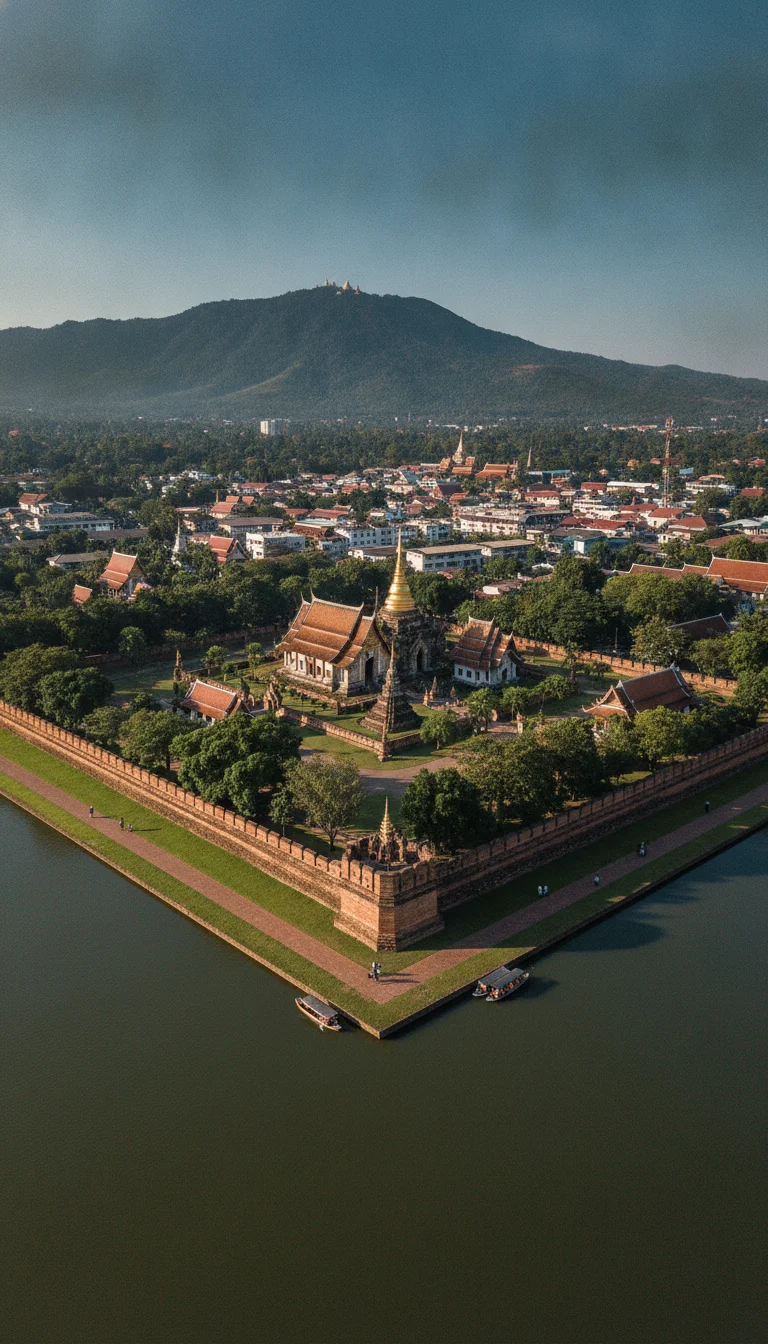
Your choice of Thai city dictates both your workspace options and your daily lifestyle. Bangkok offers the most advanced infrastructure available. You will find 24/7 co-working facilities directly connected to the BTS Skytrain network for easy commuting. Chiang Mai remains the global capital for digital nomads. The city concentrates dozens of affordable workspaces within the Nimman district and the Old City walls. The northern capital offers a highly collaborative atmosphere. However, you must factor in the annual burning season from February to April when poor air quality forces many remote workers to relocate entirely. Phuket provides premium workspaces in areas like Rawai and Chalong. The island’s heavy reliance on private transport makes commuting to your desk far more challenging than in Bangkok. Koh Lanta serves as a quieter alternative. Facilities like KoHub blend reliable fibre internet with a highly relaxed, beachfront environment. While islands offer an exceptional lifestyle, their electrical grids are far more susceptible to monsoon storm disruptions than the mainland cities. Base yourself in Bangkok or Chiang Mai for maximum networking opportunities before transitioning to the islands once your routine is firmly established.
Dedicated Co-Working Spaces vs Café Culture
Many UK remote workers initially attempt to work exclusively from Thailand’s extensive network of independent coffee shops. Thai café culture is highly accommodating to laptop workers. Most venues offer free Wi-Fi and easily accessible power outlets at every table. Working from a café costs only the price of a daily iced coffee, roughly 80 THB to 120 THB (£1.70 to £2.50). However, cafés lack the ergonomic seating, dual-monitor setups, and secure networks required for serious professional work. Internet speeds in public coffee shops fluctuate wildly during peak hours. Background noise makes taking professional client video calls nearly impossible. Furthermore, lingering for eight hours on a single beverage purchase strains goodwill with local business owners who rely on table turnover. Dedicated co-working spaces resolve these issues entirely. They provide enterprise-grade routers, soundproof call booths, and strict noise policies in designated focus areas. The transition from café hopping to a paid co-working membership ultimately separates casual tourists from committed remote professionals. Use dedicated spaces for client meetings and heavy data tasks, reserving local coffee shops for casual afternoon email management.
Costs and Budgeting
Living as a remote worker in Thailand requires careful financial planning, particularly when balancing workspace fees with standard living expenses. Your monthly budget will fluctuate significantly based on your chosen city. Bangkok and Phuket demand considerably higher outgoings than Chiang Mai or Koh Lanta. A modern one-bedroom apartment near a popular co-working hub typically costs between 12,000 THB and 25,000 THB (£258 to £537). Utilities add approximately 2,500 THB (£53) monthly, covering high-speed home fibre internet and heavy air conditioning use. Food expenses vary depending on your reliance on street food versus imported Western groceries, averaging around 15,000 THB (£322). Transport costs remain low if you use the Skytrain or rent a scooter, usually coming in around 2,000 THB (£43). You must also factor in international health insurance. Comprehensive expat coverage averages 4,000 THB (£86) per month. Maintaining a dedicated desk membership adds another 7,000 THB (£150) to your core expenses.
| Item | Monthly Cost (THB) | Monthly Cost (GBP approx) | Notes |
|---|---|---|---|
| 1-Bed Apartment Rent | 15,000 | 322 | Varies by city and proximity to transport |
| Utilities & Home Internet | 2,500 | 53 | Higher if running air conditioning 24/7 |
| Food & Groceries | 15,000 | 322 | Mix of local dining and supermarket shopping |
| Transport | 2,000 | 43 | BTS/MRT passes or scooter rental/fuel |
| Dedicated Desk Membership | 7,000 | 150 | Mid-tier workspace access with overnight storage |
| Health Insurance | 4,000 | 86 | Essential for comprehensive medical cover |
Common Mistakes and How to Avoid Them

Assuming tourist visas are sufficient for long-term remote work is a frequent error. Border officials frequently deny re-entry to individuals attempting to live in Thailand on multiple back-to-back tourist stamps. Apply for the DTV visa from the UK before departure to secure five years of legal remote working status.
Committing to a long-term private office lease without testing the internet is another misstep. You might discover the network drops packets constantly during peak afternoon hours, ruining important client presentations. Always purchase a day pass to test upload speeds and latency before signing a monthly contract.
Relying exclusively on island infrastructure during the monsoon season causes severe professional disruption. Power outages on Koh Lanta or Koh Phangan can last for hours, cutting off your access to cloud servers entirely. Keep a fully charged power bank and a local 5G mobile hotspot ready as an essential backup.
Ignoring the annual burning season in northern Thailand damages both your health and productivity. The severe air pollution in Chiang Mai between February and April forces many nomads to stay sealed indoors. Plan to relocate your base to the southern islands or Bangkok during these specific months to maintain your working routine.
Practical Tips
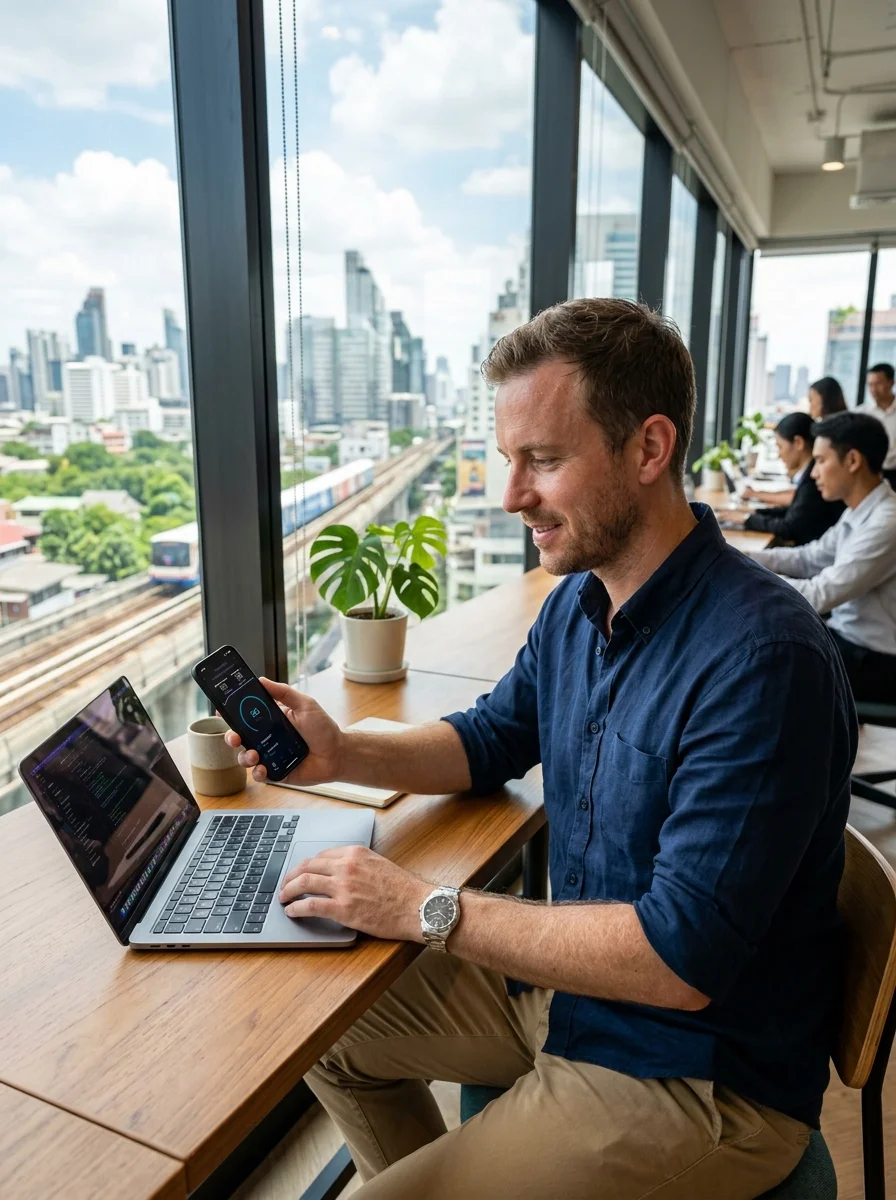
Purchase a local TrueMove or AIS 5G SIM card immediately upon arrival. Thailand’s 5G network is exceptionally fast and provides a vital backup connection when co-working Wi-Fi occasionally drops.
Check the air conditioning policy of your chosen workspace before joining. Some Thai operators turn off the central cooling after 6 PM, making evening work unbearable during the hot season.
Pack a universal travel adapter and a UK power extension lead in your luggage. While most Thai sockets accept UK plugs, having an extension lead ensures you can power multiple devices from a single distant wall outlet.
Join local Facebook groups like "Chiang Mai Digital Nomads" or "Bangkok Remote Workers" prior to your move. These communities offer real-time updates on workspace promotions, networking events, and local internet outages.
Verify the availability of soundproof call booths if your role requires frequent Zoom meetings. Open-plan hot desk areas in spaces like HUBBA or The Hive can get loud during afternoon networking hours.
Open a Wise or Revolut account to manage your currency conversions efficiently. Transferring GBP to THB through traditional high-street banks incurs heavy hidden fees that drain your monthly budget.
Move abroad with confidence — get a free Thailand relocation plan from expat specialists.
Quick Reference Guide
| Item | Detail | Notes |
|---|---|---|
| Primary Visa Route | Destination Thailand Visa (DTV) | Allows legal remote work for foreign employers |
| Minimum Visa Savings | 500,000 THB | Must be held in a bank account |
| Average Desk Cost | 3,500 THB to 9,000 THB | Varies by hot desk vs dedicated desk |
| Internet Speeds | 300 Mbps to 1 Gbps | Symmetrical fibre is standard in major spaces |
| Top Cities | Bangkok, Chiang Mai, Phuket | Chiang Mai has the largest nomad community |
| Lease Terms | Month-to-month | Co-working rarely requires long contracts |
| Healthcare | Private international insurance | Required for expats, use private hospitals |
| Language | English widely spoken | Most community managers speak fluent English |