Thai Language Basics
Dropping the wrong pitch on the word for "near" turns it into the word for "far", leaving you stranded on the opposite side of Bangkok. Mastering just ten essential phrases in Thai alters how local residents treat you entirely, turning transactional exchanges into genuine interactions.
This guide covers the foundational mechanics of the Thai language for British visitors and expats, from navigating the five distinct tones to mastering essential survival vocabulary. You will learn how to confidently order food at the correct spice level, effectively bargain at markets, and use polite particles to instantly improve your reception. It also outlines realistic timelines for fluency, the differences in regional dialects, and the most effective digital resources to start your learning process before your flight departs.

The Transformative Power of Polite Particles
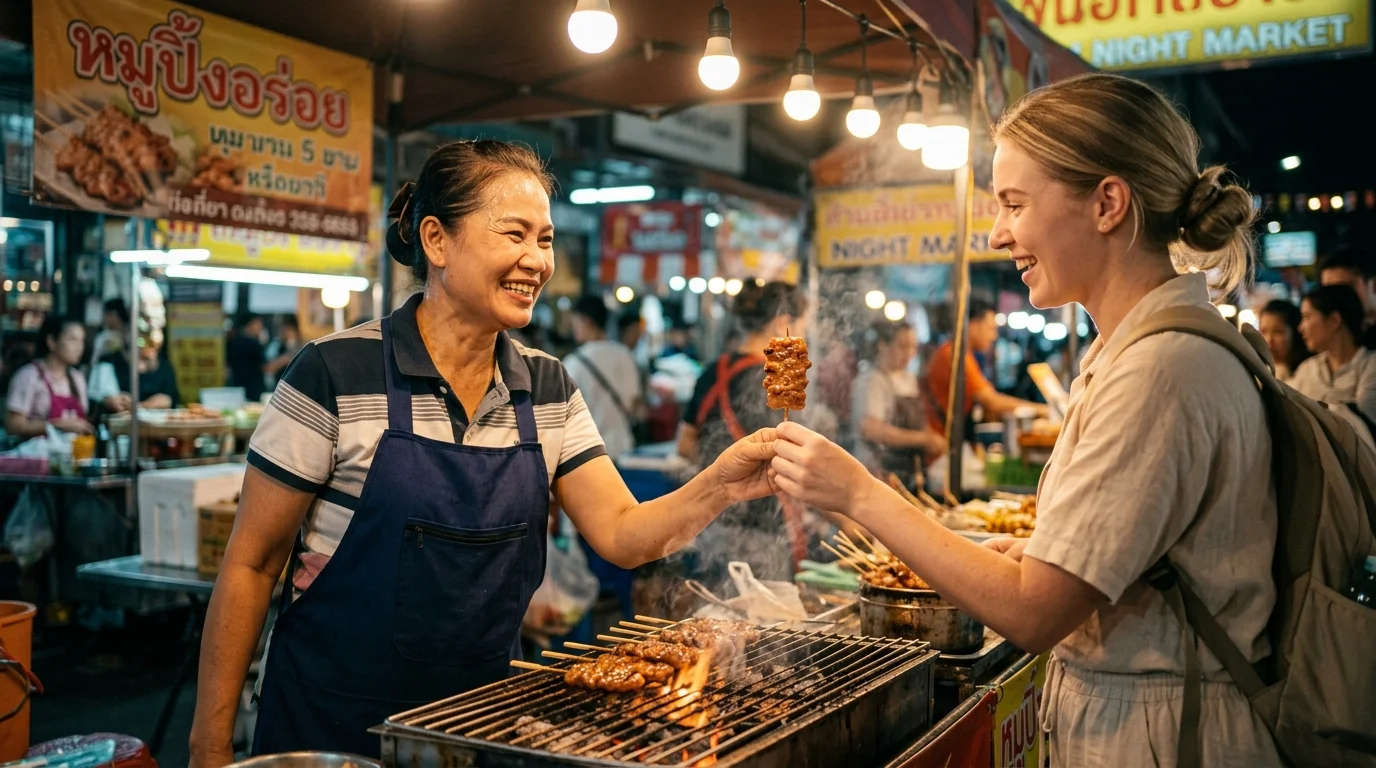
Understanding the polite particles krap and ka is the single most effective way to improve how Thai people respond to you. Men say krap and women say ka at the end of sentences, regardless of who they are speaking to. Use them constantly. Adding this tiny syllable immediately softens your speech and signals cultural respect. A blunt demand for water becomes a polite request simply by appending your gendered particle. Walk into a 7-Eleven in Chiang Mai, say "Sawasdee krap" instead of a flat hello, and the cashier’s demeanour will visibly warm. This applies across all social interactions. You use it when negotiating a 150 THB (£3.30) tuk-tuk fare on Sukhumvit Road. You use it when thanking a waitress in a high-end Thong Lo restaurant. UK visitors often forget this rule because English relies on intonation and modal verbs like could or would for politeness, rather than sentence-ending tags. In Thailand, omitting the particle makes you sound abrupt. Overusing it slightly is far better than ignoring it entirely. Memorise your particle before you land and append it to your greetings, your expressions of gratitude, and your everyday requests.
Plan your Thailand water sports adventure. Discover the best spots for kitesurfing, kayaking, and rafting, plus essential safety, costs, and seasonal tips.
Essential Greetings and the Rules of the Wai
"Sawasdee" is the universal greeting, but the physical action accompanying it requires a basic understanding of social hierarchy. The wai—a slight bow with palms pressed together at chest height—is the standard physical greeting across the country. British tourists frequently overdo this gesture. They return a deep wai to absolutely everyone they meet. You do not wai service staff, children, or casual vendors selling 40 THB (£0.90) skewers on the street. A polite nod and a verbal greeting suffice for these interactions. You wai people of equal or higher social standing, such as a business associate, a senior relative, or a respected teacher. Monks receive the highest wai, with the thumbs touching the forehead. When you arrive at Suvarnabhumi Airport, the immigration officer will not expect a wai from you. When paying your 500 THB (£11.10) entry fee at the Grand Palace, the ticket clerk simply expects payment. Handing over cash does not require a physical bow. Watch how Thai people interact in public spaces to gauge the appropriate level of physical deference. Return a wai only to equals or elders, and use a polite nod for everyone else.
Tackling Tones and Embarrassing Pronunciation Traps
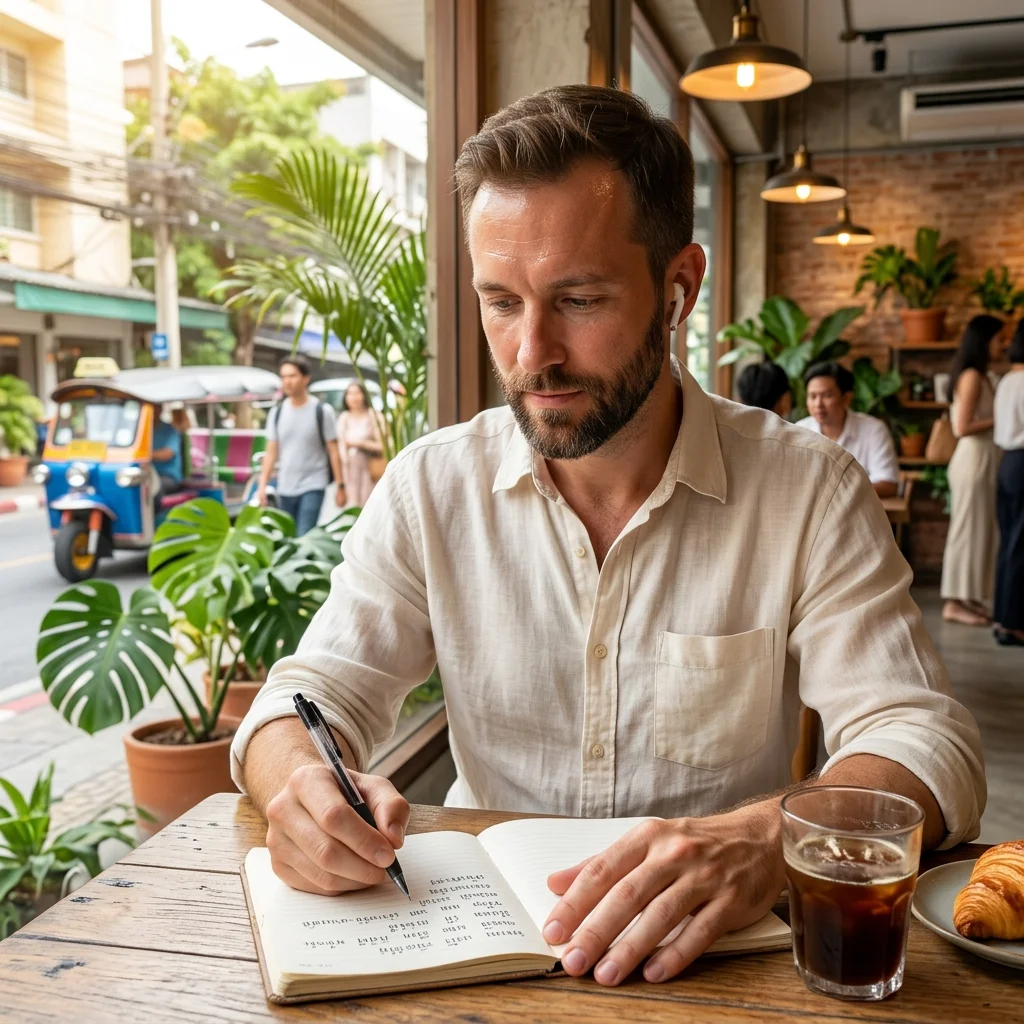
Thai is a tonal language, meaning the pitch of your voice dictates the definition of the word just as much as the consonants do. The language utilises five distinct tones. These are mid, low, falling, high, and rising. Saying the syllable mai with a falling tone means not. A rising tone means silk, a low tone means new, a high tone means wood, and a mid tone turns the sentence into a question. English speakers naturally use tone to express emotion. We raise our pitch at the end of a sentence to indicate surprise or ask a question. Doing this in Thai changes the actual vocabulary you are speaking. The classic trap for UK visitors is the word for beautiful, suay. Speak it with a rising tone to compliment someone. Say it with a flat or mid tone, and you have just called someone cursed or unlucky. Attempting to praise a nurse after paying a 1,200 THB (£26.60) consultation fee at a private hospital and accidentally insulting her fortune is a common expat error. You can easily avoid this with a little awareness. Pay active attention to the pitch native speakers use rather than just mimicking the phonetic sounds.
| Tone | English Pitch Equivalent | Thai Word Example (mai) | Meaning |
|---|---|---|---|
| Mid | Normal speaking voice | Mai | Question particle |
| Low | Dropping pitch slightly | Mai | New |
| Falling | High to low (like a sigh) | Mai | Not |
| High | High pitch (like a squeak) | Mai | Wood |
| Rising | Low to high (like a question) | Mai | Silk |
Ordering Food and Surviving Spice Levels
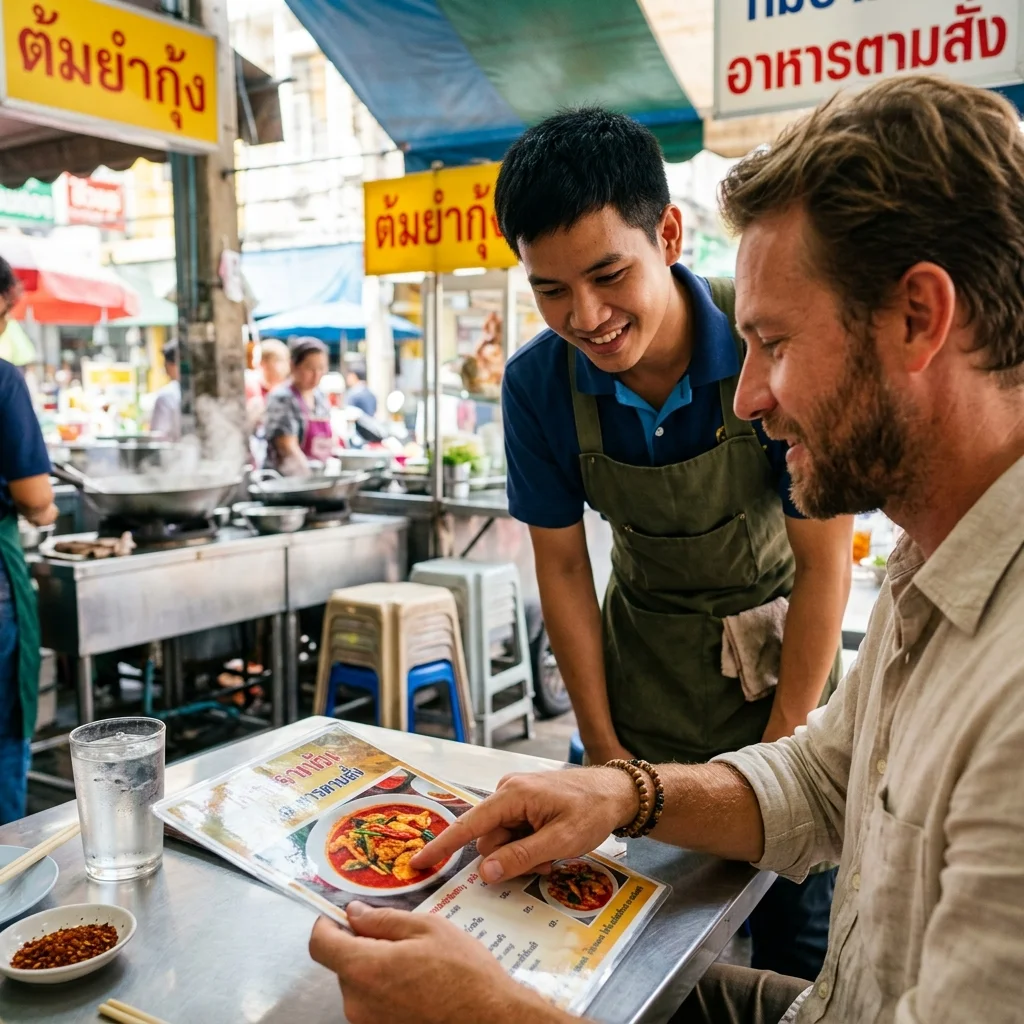
Mastering food vocabulary prevents a two-week holiday of severe indigestion and wasted meals. When ordering a 50 THB (£1.10) plate of pad krapow from a street cart in Silom, the most critical phrase any British visitor needs is mai pet, meaning not spicy. Thai palates operate on an entirely different scale to the UK high street. A standard local dish ordered without modification will often contain a handful of bird's eye chillies. This renders the meal completely inedible for the uninitiated. If you want a mild kick, ask for pet nit noi (a little spicy). Beyond heat management, knowing how to ask "how much?" (tao rai?) and "too expensive" (paeng pai) serves you well in both dining and market haggling. When eating at the famous seafood stalls along Yaowarat Road, prices are usually fixed. However, knowing the numbers and asking the cost in Thai often results in slightly larger portions or a wider smile from the vendor. To order politely, use ao (I want) followed by the dish name, such as ao pad thai krap. Keep your requests simple, combine them with your polite particle, and you will navigate any local menu with ease.
The Thai Script and Regional Dialects
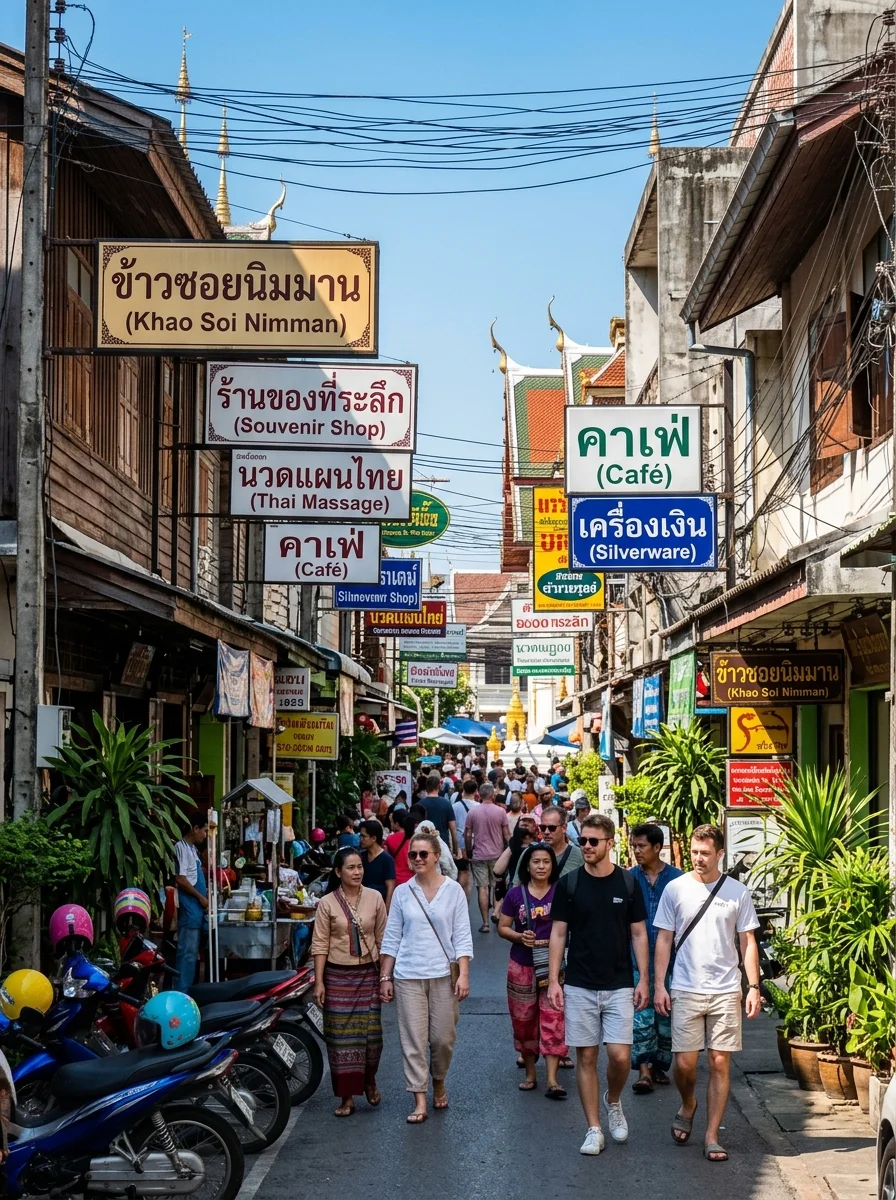
The Thai alphabet consists of 44 consonants and 32 vowels, presenting a steep but rewarding learning curve for dedicated expats. For a standard two-week holidaymaker, learning to read Thai script is entirely unnecessary. English signage is prevalent across Bangkok, Phuket, and major tourist hubs. If you are renting a 15,000 THB (£333) per month apartment for a six-month stay, learning the alphabet becomes essential. The English transliterations on street signs are wildly inconsistent. The airport is spelled Suvarnabhumi but pronounced Su-wan-na-poom, a fact that makes perfect sense once you read the original script. Vocabulary also shifts depending on where you travel. Bangkok Thai is the standard taught in textbooks. Head north to Chiang Mai, and you will hear Kam Mueang, the local dialect. The standard greeting sawasdee often becomes a drawn-out sa-wat-dee-jao in the north. Down south in Krabi or Koh Samui, the dialect is spoken at a rapid, clipped pace that even Bangkok natives struggle to understand. Focus entirely on standard central Thai initially, as it is understood perfectly nationwide.
| Region | Standard Thai (Bangkok) | Regional Dialect Example | Notes |
|---|---|---|---|
| Central | Sawasdee (Hello) | Sawasdee | Understood everywhere in Thailand. |
| North | A-roi (Delicious) | Lam | Spoken slower, uses "jao" as a polite particle. |
| South | Tao rai (How much) | Tao roe | Spoken very fast, often clipping the ends of words. |
| Northeast | Sabai dee mai (How are you) | Sam bai dee bo | Heavily influenced by the Lao language. |
Realistic Expectations and Learning Timelines
Setting realistic goals prevents frustration when tackling a complex language like Thai. In a two-week holiday, your objective should purely be survival and basic politeness. You need to master greetings, numbers one to ten, food ordering, and bathroom directions. You can achieve this with ten hours of focused app-based learning before your flight. If you are staying for six months, you can realistically achieve conversational competence. This allows you to negotiate rent, chat with taxi drivers about their hometowns, and order a 70 THB (£1.55) latte in an Ekkamai cafe without using English. Achieving full fluency requires years of dedicated study and immersion. English speakers often hit a wall around month three. The novelty wears off and the complexity of sentence structure becomes apparent. Thai grammar is actually incredibly straightforward, featuring no verb conjugations, plurals, or complex tenses. The vocabulary and tones, however, require relentless rote memorisation. Do not expect to debate politics during a gap year. Do expect that holding a three-minute conversation entirely in Thai by week four will feel like a massive victory. Consistency over a long period matters far more than cramming vocabulary before a short holiday.
Where to Learn Thai Before and During Your Trip
Choosing the right resources determines whether you actually retain the language or abandon it after three days. For pre-trip preparation, the Ling app is highly effective. Created by developers in Chiang Mai, it uses gamification to drill vocabulary and incorporates native speaker audio. This makes it far superior to generic global platforms that lack focus on Asian tonal languages. If you learn better by listening, the Pimsleur Thai audio course is excellent for mastering the rhythm and pitch of standard Bangkok Thai during your daily commute.
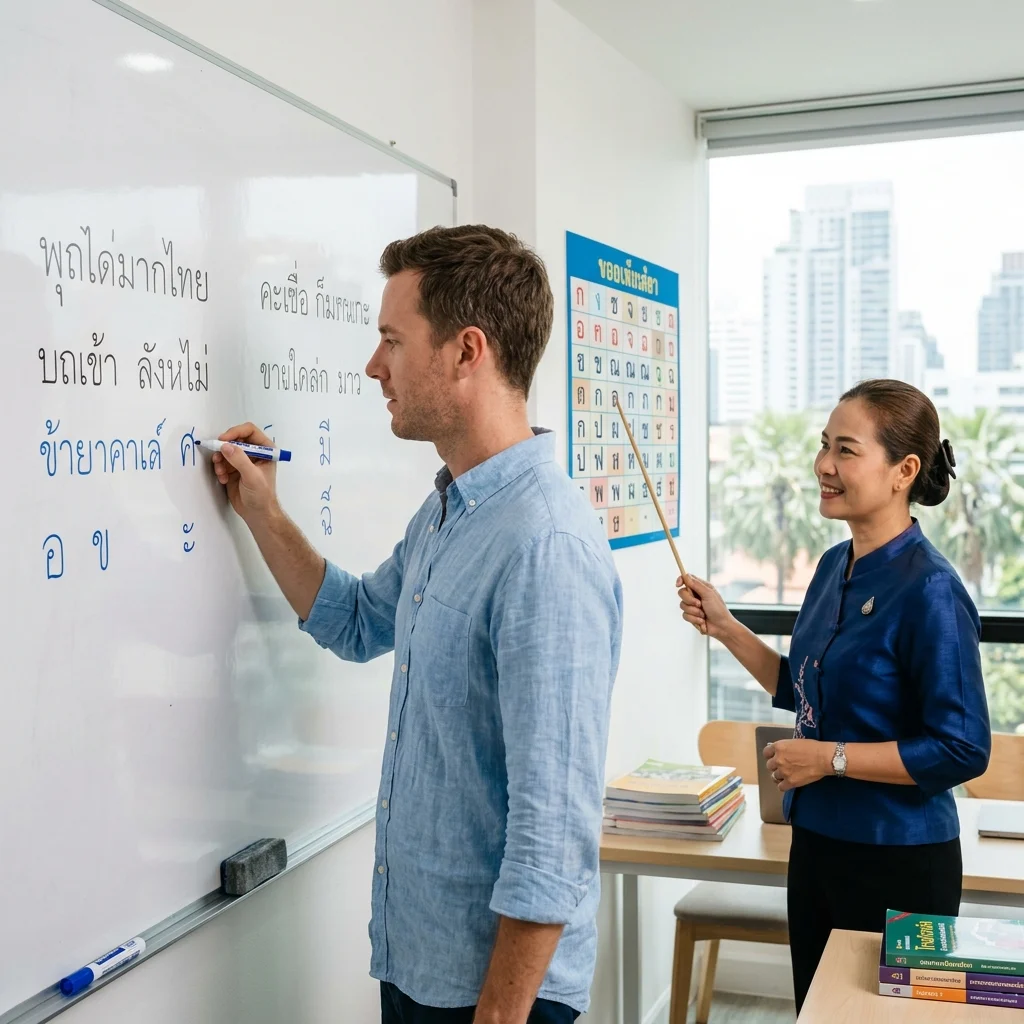
Once on the ground, face-to-face instruction accelerates your progress exponentially. In Bangkok, Duke Language School in the Trendy Building on Sukhumvit Soi 13 is widely regarded by expats as the premier intensive learning environment. They focus heavily on speaking and listening before introducing the complex alphabet. For those basing themselves in the north, Chiang Mai University offers excellent short courses and long-term education visa programmes. If you prefer flexibility, booking one-on-one sessions on italki allows you to practice conversational skills from your hotel room. For a first-timer, download Ling a month before departure to build a foundational vocabulary.
Costs and Budgeting
Learning Thai scales easily to fit your budget, from free introductory apps to intensive private tuition. Budget learners can rely entirely on digital tools and local language exchange meetups. Mid-range budgets allow for structured group classes at established schools. These provide the added benefit of socialising with other expats and practicing conversation in a structured environment. Premium options involve hiring a private tutor to come to your apartment or office. This offers bespoke lesson plans tailored to your specific industry or lifestyle needs. An intensive four-week group module in Bangkok typically requires an upfront commitment. It dramatically reduces the cost per hour compared to casual tutoring. Expect to pay significantly less for instruction in northern cities like Chiang Mai compared to central Bangkok or Phuket.
| Option | Cost (THB) | Cost (GBP approx) | Notes |
|---|---|---|---|
| Language App (Ling) | 300 - 500 / month | £6.60 - £11.10 | Excellent for building basic vocabulary pre-trip. |
| Private Online Tutor (italki) | 300 - 600 / hour | £6.60 - £13.30 | Highly flexible, allows focus on specific conversational goals. |
| Group Intensive Course (Bangkok) | 8,000 - 10,000 / month | £177 - £222 | Typically involves 3 hours of study per day, 5 days a week. |
| Private In-Person Tutor | 800 - 1,500 / hour | £17.70 - £33.30 | Premium option for tailored vocabulary and immediate correction. |
What to Know Before You Go
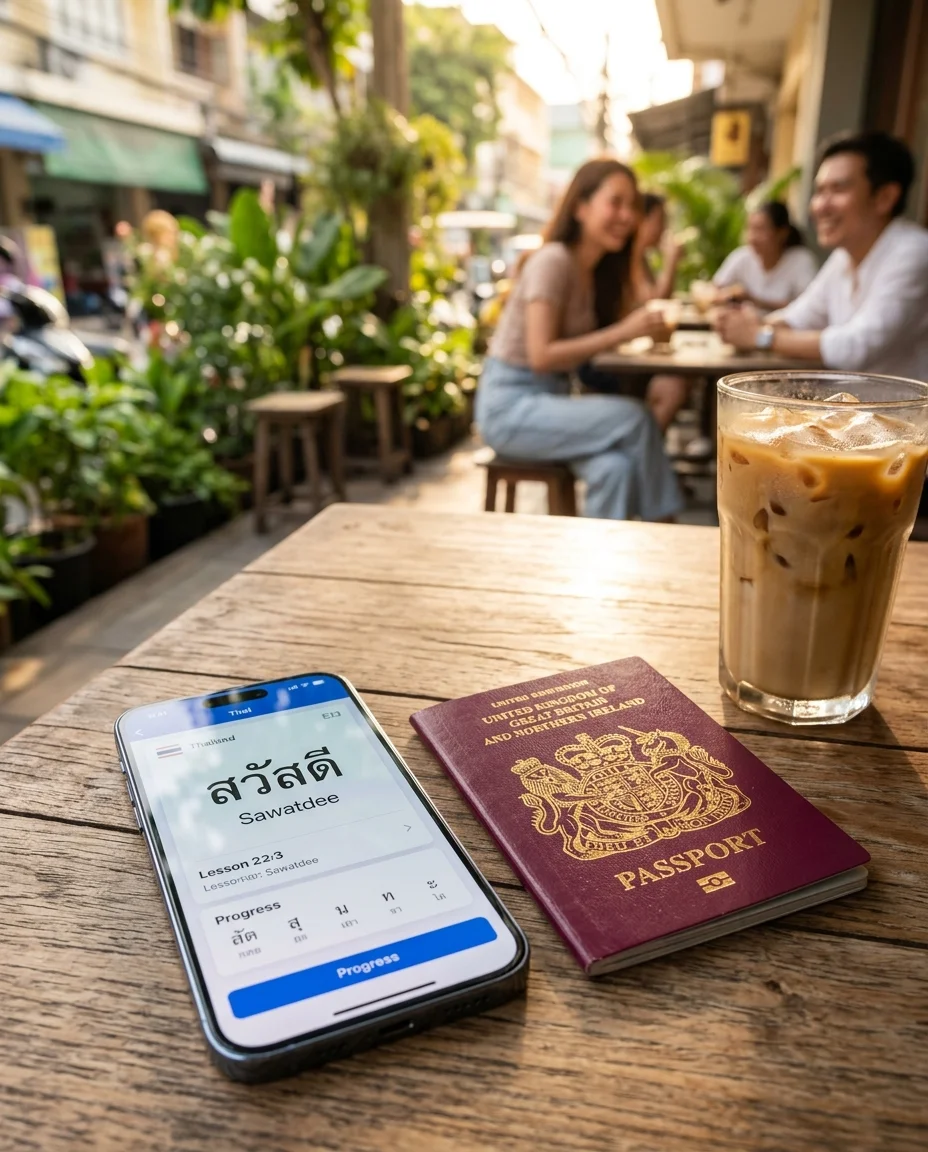
Your English transliteration will fail you entirely. Because there is no standardised system for converting Thai script into the Roman alphabet, you will see the same street spelled three different ways, so rely on audio pronunciation guides instead.
Speaking loudly does not aid comprehension. British tourists often raise their volume when misunderstood, but in Thai culture, raising your voice causes an immediate loss of face and guarantees the listener will disengage.
You will be asked overly personal questions. Thais often ask your age, salary, or marital status within minutes of meeting you as a practical way to determine their relative social status and which pronouns to use.
Smiling is a versatile form of communication rather than just an emotion. A smile can mean apology, embarrassment, or a polite refusal, so pay attention to the context of the interaction rather than assuming agreement.
Practical Tips
Download a translation app with image recognition. Google Translate allows you to point your camera at Thai script on menus or warning signs and read a live English overlay.
Drop your English pleasantries immediately. Thai does not translate the word "please" directly in the way we use it; politeness comes entirely from your tone of voice and your gendered particle.
Point with an open hand rather than a single finger. Pointing directly at a person with your index finger is considered highly aggressive in Thailand.
Record native speakers on your phone. If a hotel concierge teaches you the correct pronunciation of your street name, record the audio to play back later for taxi drivers.
Skip the phrasebooks and use YouTube. Hearing the physical pitch of the language on video is infinitely more useful than reading phonetic approximations in a guidebook.
Do not worry about making mistakes. Thai people are overwhelmingly appreciative of foreigners attempting their language and will rarely mock a mispronounced word.
Keep a digital notebook of your communication failures. Writing down the words that taxi drivers consistently misunderstand helps you identify which specific tones you are failing to hit.
Quick Reference Table
| English Meaning | Thai Phrase (Phonetic) | Notes |
|---|---|---|
| Hello / Goodbye | Sawasdee (krap/ka) | The universal greeting used at all times of day. |
| Thank you | Kop khun (krap/ka) | Add your polite particle to ensure respect. |
| How much? | Tao rai? | Crucial for markets, taxis, and street food. |
| Too expensive | Paeng pai | Use with a smile when haggling at markets. |
| Not spicy | Mai pet | The most important phrase for British stomachs. |
| I want... | Ao... | Follow this directly with the name of the item. |
| I do not understand | Mai kao jai | Useful when a local speaks back to you too quickly. |
| Sorry / Excuse me | Kor tot (krap/ka) | Used when bumping into someone or getting a waiter's attention. |