Hiking and Trekking in Thailand
Stepping onto the forested trails of Khao Yai, you are more likely to hear the territorial call of white-handed gibbons echoing through the canopy than the sound of traffic. Thailand’s hiking network stretches far beyond the commodified tourist circuits, offering steep ascents to 2,565-metre peaks and dense jungle corridors where wild elephants still roam.
This guide breaks down exactly how to tackle Thailand's trails, whether you want to navigate self-guided routes near Bangkok or commit to a multi-day hill tribe trek in the far north. You will learn the stark differences between the cool hiking season and the hazardous burning months, alongside practical advice on national park permits and ethical guide selection. It provides the groundwork you need to choose the right region, budget effectively, and pack appropriately for tropical terrain.
Multi-Day Hill Tribe Trekking in the North
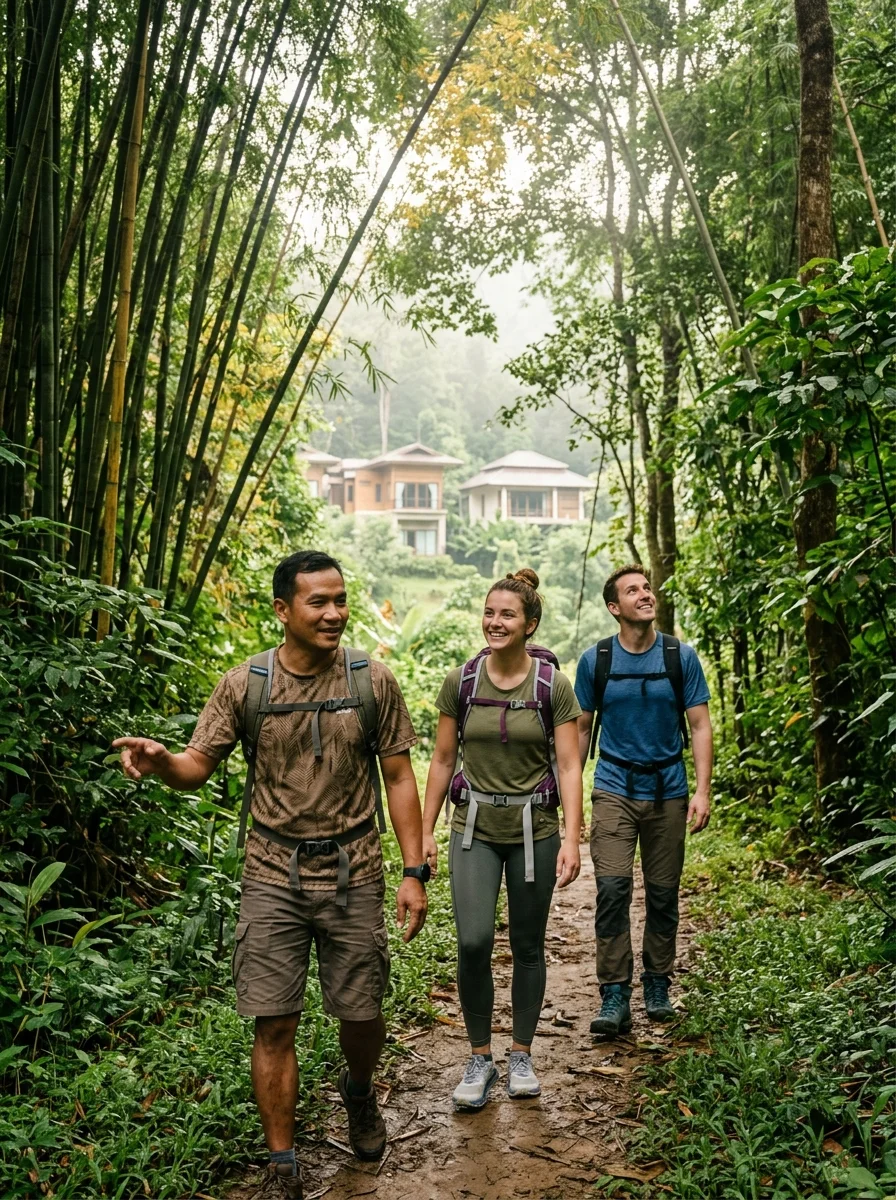
A multi-day trek through Chiang Mai or Chiang Rai requires surrendering your usual comforts for an immersive, deeply physical experience. Routes typically span two to four days, taking you deep into the mountainous terrain of areas like Mae Taeng or Mae Wang. You will walk four to six hours daily across steep ridges, navigate muddy river crossings, and sleep on thin mattress pads under mosquito nets in Lahu or Karen village homestays. Meals are cooked over open fires, often consisting of simple rice, forage-heavy curries, and seasonal fruit. Prices vary drastically depending on the operator's practices. A heavily commercialised group trek might cost 1,500 THB (£33) for three days, while private, ethically focused operators charge closer to 6,000 THB (£133) to ensure fair wages for local guides and direct financial benefit to the host villages. Choosing the latter means avoiding the exploitative dynamic of visiting unconsenting villages and instead engaging with communities on their terms. The terrain is relentlessly undulating, demanding sturdy footwear and a strong cardiovascular base. Always vet your operator to ensure your money stays within the communities you visit rather than foreign-owned agencies.
Plan your Thailand diving trip. Compare the Andaman Coast to the Gulf, discover Koh Tao open water costs, liveaboard options, and top snorkel sites.
Jungle Trails and Wildlife Encounters Near Bangkok
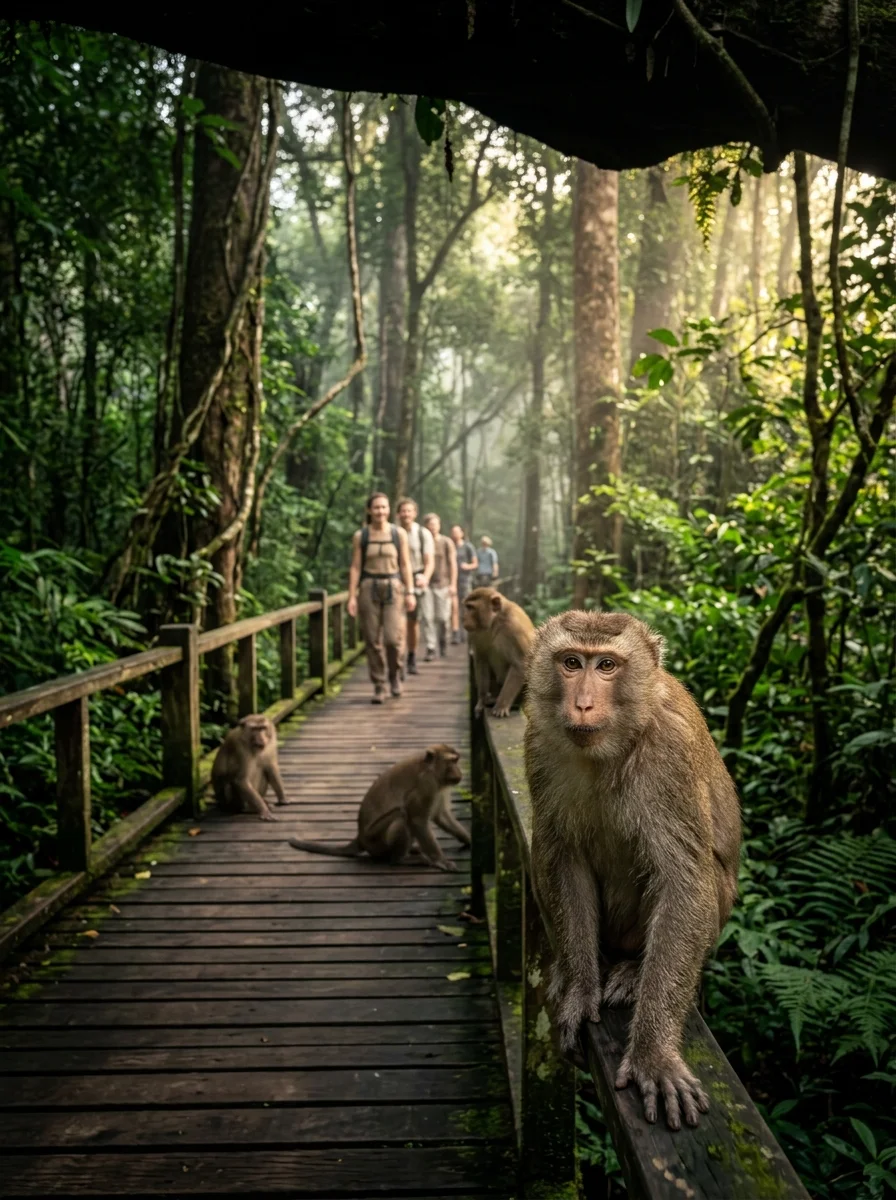
If you want to trade northern mountains for dense, humid rainforest, the national parks within a three-hour drive of Bangkok offer an entirely different ecosystem. Khao Yai National Park is the undisputed heavyweight for accessible wildlife trekking in the country. Hiring a park ranger or local naturalist is essential here, as the trails are often overgrown and spotting animals requires an expert eye. A full-day guided trek costs around 1,500 THB (£33) per person and significantly increases your chances of seeing great hornbills, pig-tailed macaques, and occasionally wild elephants grazing at the salt licks. Over in Kanchanaburi, Erawan National Park provides a different focal point. While the famous seven-tiered waterfall draws immense crowds to the lower levels, pushing past tier four introduces steep, root-tangled paths that weed out casual day-trippers. Park entry fees apply across the board, typically 400 THB (£9) for foreign adults in Khao Yai and 300 THB (£6.50) in Erawan. Hiring a local guide for deep jungle trails guarantees you stay safe while actually spotting the wildlife hiding in the canopy.
| Park Destination | Primary Hiking Focus | Entry Fee (Foreigner) | Guide Requirement |
|---|---|---|---|
| Khao Yai National Park | Wildlife tracking, deep jungle | 400 THB (£9) | Mandatory for long trails |
| Erawan National Park | Waterfall tiers, steep ascents | 300 THB (£6.50) | Self-guided permitted |
| Doi Inthanon National Park | High altitude, cloud forest | 300 THB (£6.50) | Mandatory on specific paths |
| Khao Sam Roi Yot | Coastal ridges, cave trails | 200 THB (£4.50) | Self-guided permitted |
High Altitude Trails in Doi Inthanon and Mae Hong Son
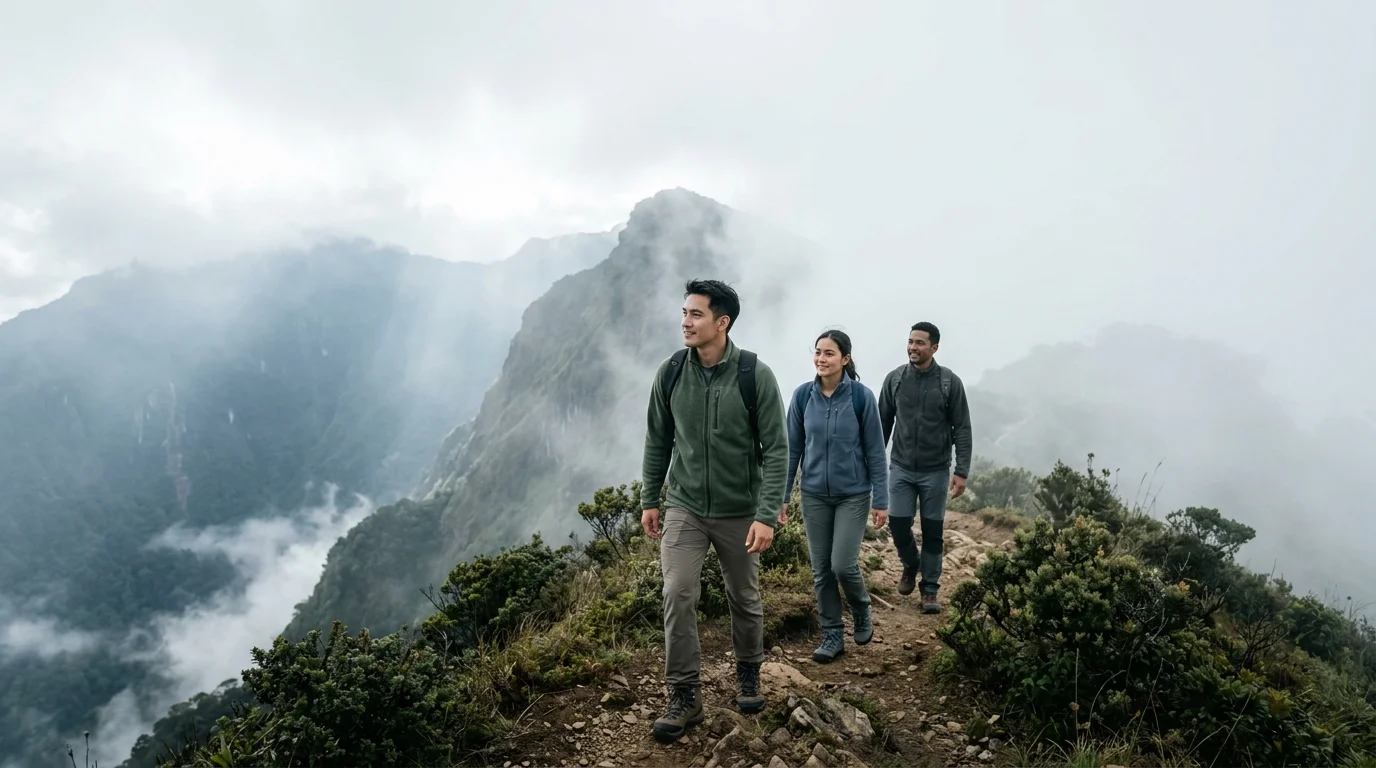
Thailand's highest elevations offer a sharp drop in temperature and a shift from tropical jungle to alpine flora. Doi Inthanon, peaking at 2,565 metres, anchors the country’s high-altitude hiking scene. The Kew Mae Pan Nature Trail is the most prominent route here, a heavily regulated 2.7-kilometre circuit requiring a local Hmong guide for 200 THB (£4.50) per group. It is a short but steep hike that breaks through the cloud forest onto an exposed ridge with sweeping views across the Mae Chaem district. For more isolation, you must head further west to the Mae Hong Son province. The trails surrounding Pai and Soppong remain largely unmapped on standard hiking apps, winding through limestone karst formations and deep cave systems. You will need to hire local guides from the Shan or Lisu communities, often arranged directly through guesthouses in Pai for roughly 1,200 THB (£26) a day. The trails here are rugged and lack maintenance, meaning you will often bushwhack through thick vegetation. Hire a local guide when hiking the far northwest to navigate unmarked paths and secure permission to cross agricultural land.
Navigating Guided and Self-Guided Routes
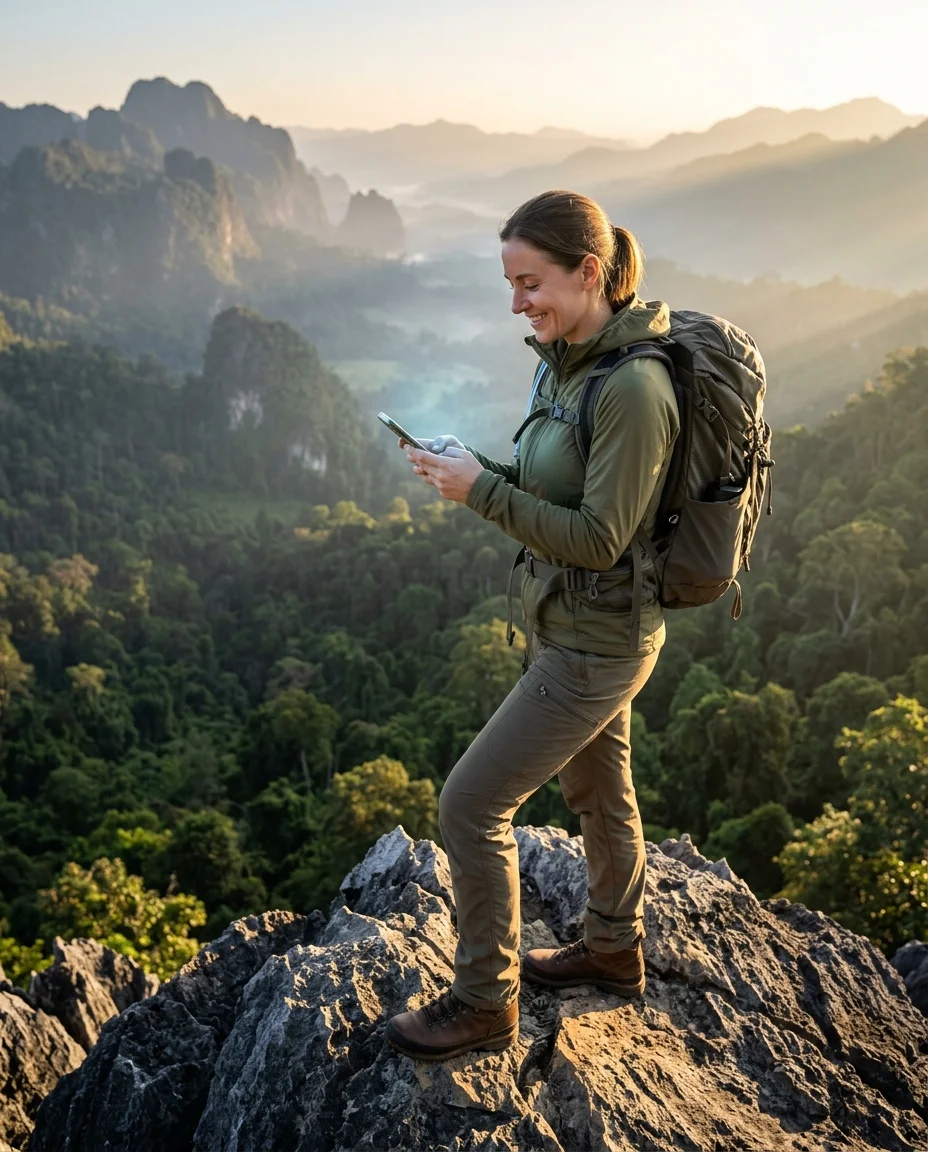
The line between trails you can tackle alone and those requiring a guide is strictly enforced in Thailand. Self-guided hiking is largely restricted to clearly marked national park nature trails, such as the lower tiers of Erawan or the Monk’s Trail leading to Wat Pha Lat in Chiang Mai. These paths are well-trodden, feature clear signage, and carry minimal risk of getting lost. However, venturing into deep jungle or undertaking multi-day mountain routes legally and practically demands a guide. Thai national parks enforce strict rules; wandering off designated trails in places like Khao Yai without a ranger can result in heavy fines, getting lost in featureless bamboo forests, or stumbling into wild elephant territory. A private guide costs between 1,000 THB (£22) and 2,500 THB (£55) per day, depending on the region and their English proficiency. They handle navigation, carry machetes to clear overgrown paths, and know which streams are safe to drink from after boiling. Stick to self-guided walks for short waterfall routes, but always hire a ranger or local expert for deep jungle or overnight hikes.
Seasonal Shifts and the Northern Burning Season
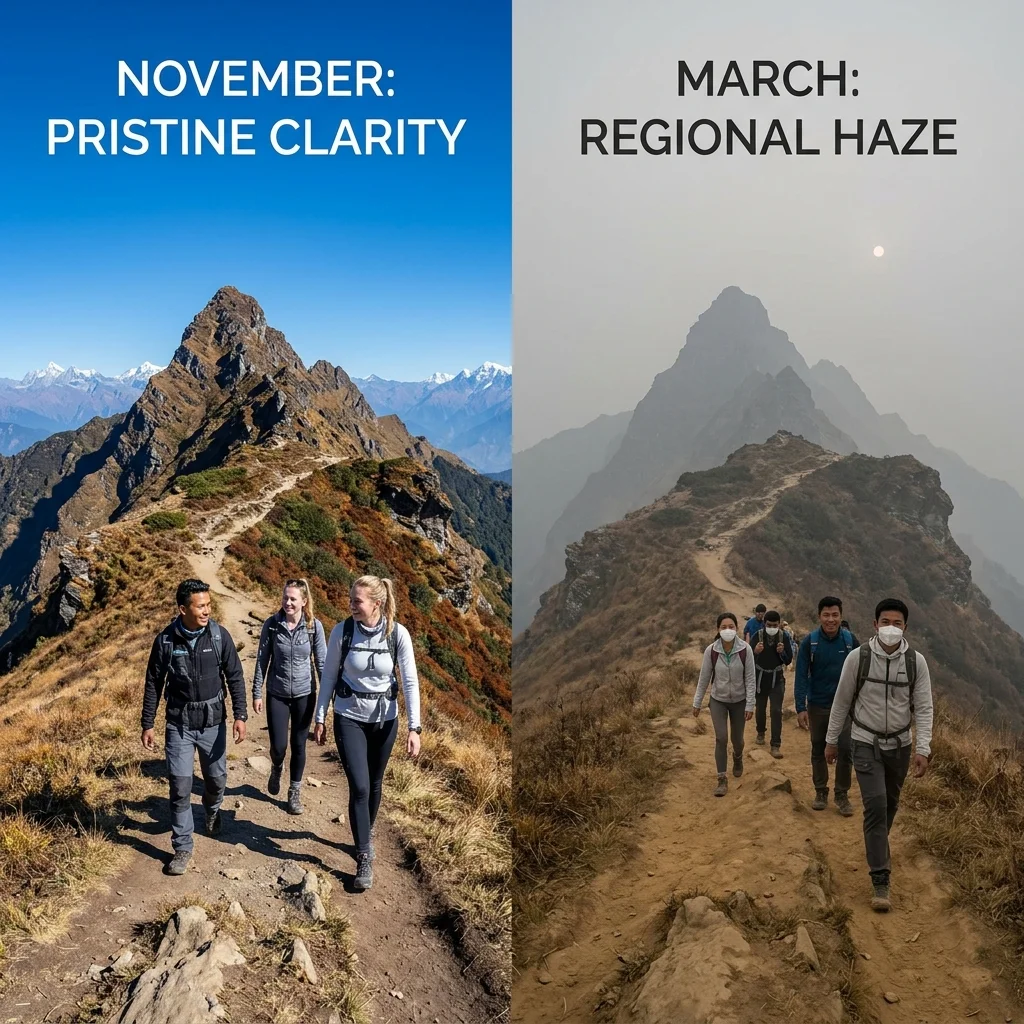
Timing your hike in Thailand is not just about avoiding rain; it is about protecting your respiratory health. The optimal trekking window runs from November to February, known as the cool season. During these months, northern temperatures drop to a comfortable 15°C at night, trails dry out, and visibility stretches for miles. Once late February arrives, the north enters the burning season. Farmers across Thailand and neighbouring countries burn agricultural waste, blanketing Chiang Mai, Chiang Rai, and Mae Hong Son in thick, hazardous smog. PM2.5 levels routinely exceed hazardous limits, completely obscuring mountain views and making cardiovascular exertion actively dangerous. This smoke usually persists until the monsoon rains arrive in May. If you visit between March and April, abandon northern trekking plans entirely and head south to the islands or stick to the coastal national parks like Khao Sam Roi Yot. Always check the Air Quality Index (AQI) apps before committing to a northern hike between February and April.
The Best Trekking Hubs in Thailand
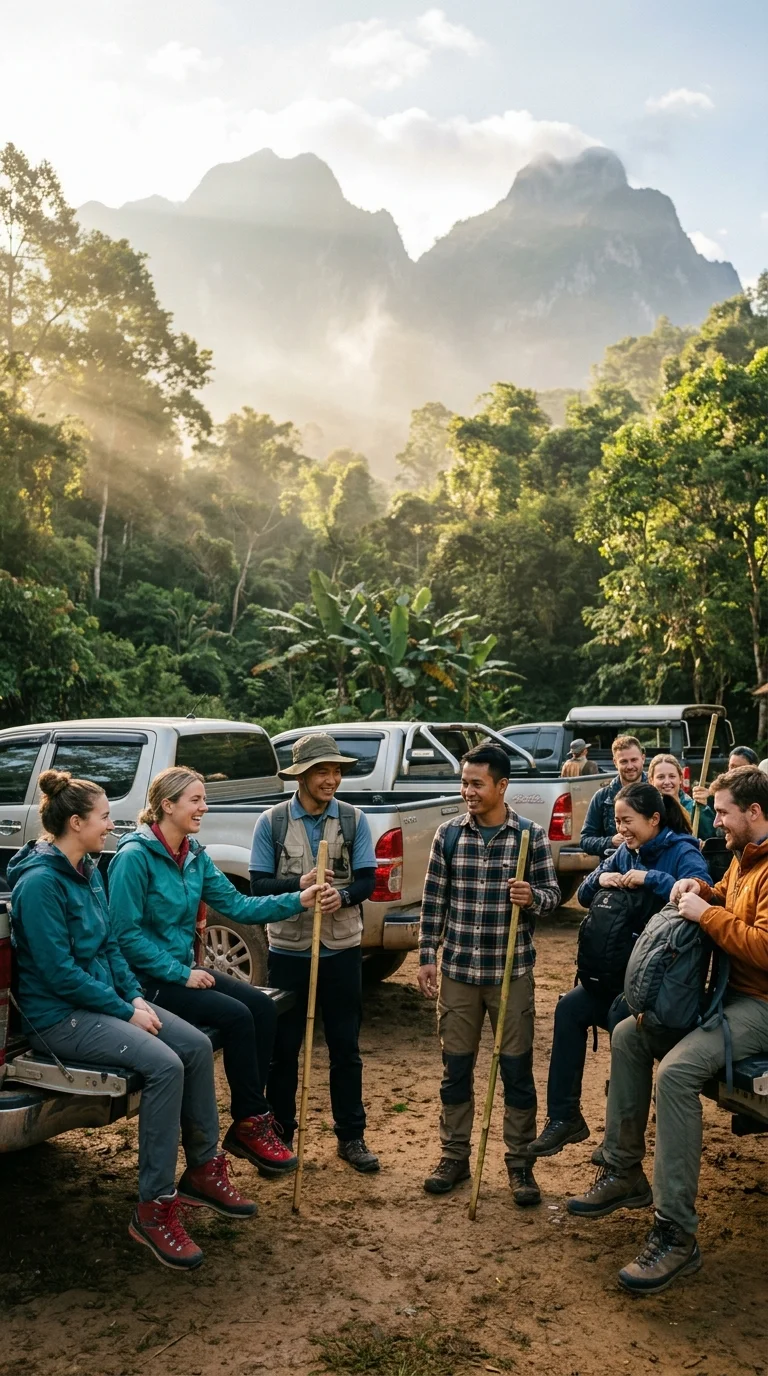
Thailand’s geography dictates your trekking options, heavily weighting the best experiences towards the north and the western border. Chiang Mai acts as the primary hub, offering everything from soft half-day walks near Doi Suthep to rigorous three-day expeditions into the Mae Taeng valley. If you want authentic, low-impact hill tribe encounters, skip the highly marketed tours in Chiang Mai's old city and base yourself in Chiang Dao. Here, operators can arrange challenging ascents up Doi Luang Chiang Dao, a massive limestone peak requiring advance permits and physical endurance. For wildlife enthusiasts, Pak Chong is the gateway town for Khao Yai National Park; staying at eco-lodges just outside the park gates allows you to secure early morning ranger-led walks before the day-trippers arrive from Bangkok. Far western Kanchanaburi provides dense, humid jungle routes with historical context, particularly around the Hellfire Pass walking trails. For a first-timer seeking a balance of physical challenge and cultural immersion, start with a two-day ethical hill tribe trek operating out of Chiang Mai.
Trekking Costs and Budgeting
Trekking in Thailand accommodates almost every budget, though paying extreme budget prices often means compromising on ethical standards and safety. A self-guided day hike on marked national park trails costs nothing beyond the standard entry fee and your transport. Mid-range budgets open up group hill tribe treks or full-day ranger hires in national parks, providing reliable transport, basic meals, and knowledgeable local guides. At the premium end, you are paying for private excursions, highly fluent English-speaking naturalists, upgraded camping equipment, and direct financial contributions to remote communities. Ensure your budget accounts for mandatory national park fees, which are rarely included in base tour prices and must be paid in cash at the gate.
| Option | Cost (THB) | Cost (GBP approx) | Notes |
|---|---|---|---|
| Self-Guided Park Hike | 300 - 500 THB | £6.50 - £11 | Covers national park entry fee only |
| Group Hill Tribe Trek (3 Days) | 1,500 - 2,500 THB | £33 - £55 | Budget options often lack ethical pay structures for locals |
| Full-Day Private Ranger | 1,000 - 1,500 THB | £22 - £33 | Essential for wildlife tracking in Khao Yai |
| Premium Ethical Trek (3 Days) | 5,000 - 7,000 THB | £110 - £155 | Includes fair guide wages, private transport, and village donations |
Essential Knowledge for Thailand Trails
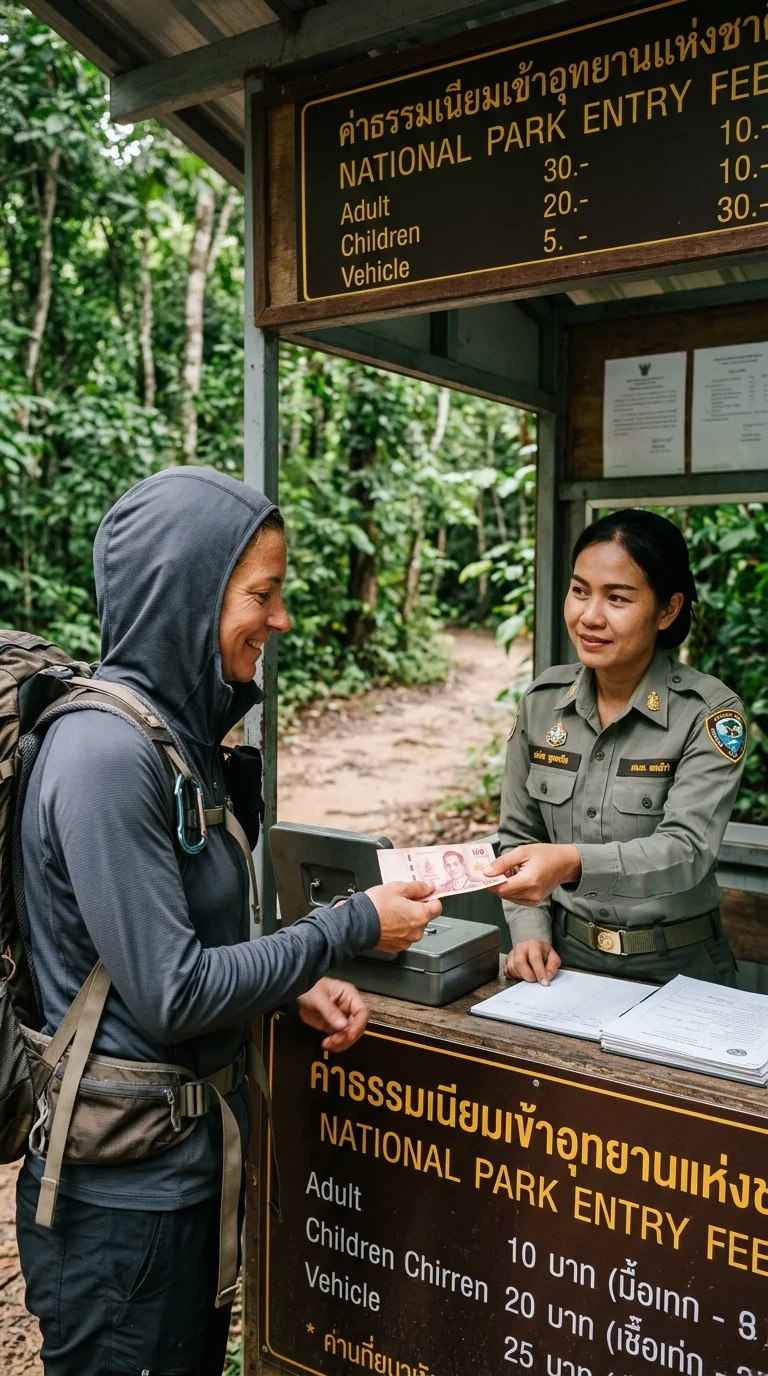
National park dual pricing is standard practice across the country. Foreign visitors pay up to ten times more than Thai nationals for entry, typically 300 to 500 THB (£6.50 to £11) per park, and you must bring exact cash.
Mosquitoes and leeches are a constant reality in the tropical canopy. You need high-DEET repellent for the mosquitoes and specialised canvas leech socks if you are hiking Khao Yai or Erawan during the wet season.
Ethical trekking operators will never offer elephant riding or visits to "long-neck" villages as part of their itineraries. These activities rely on animal exploitation and human confinement, so their inclusion is an immediate red flag regarding the company's practices.
Altitude sickness is not a concern, but heat exhaustion is highly probable. Even in the cool season, midday humidity trapped beneath the jungle canopy drains your electrolytes rapidly, requiring you to carry oral rehydration salts on every hike.
Practical Tips for Hiking and Trekking
Pack lightweight, long-sleeved clothing rather than shorts and t-shirts. The jungle is full of thorny rattan vines, stinging insects, and razor-sharp elephant grass that will shred bare skin.
Carry your own toilet paper and a small bottle of hand sanitiser. Facilities in national parks and remote villages consist entirely of basic squat toilets with no paper provided.
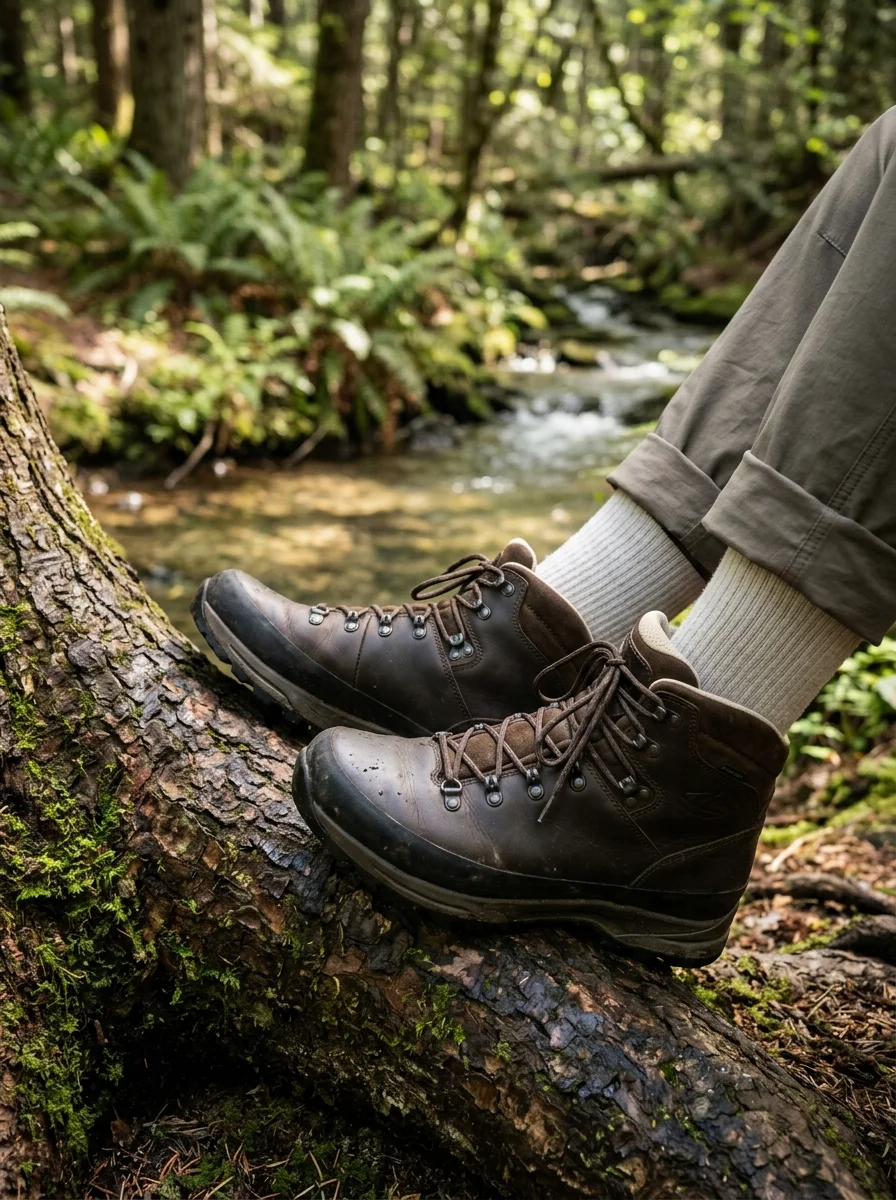
Break in your hiking boots well before arriving in Thailand. The steep, slippery descents on clay trails will destroy your toes if you are wearing poorly fitted or brand-new footwear.
Purchase comprehensive travel insurance that explicitly covers trekking up to 3,000 metres. Many standard policies exclude activities deemed hazardous or limit coverage to low-altitude walking on paved paths.
Leave your heavy, insulated sleeping bag at home if doing a multi-day trek. Homestays provide thick blankets, and carrying excess winter gear in tropical heat is a miserable experience.
Download offline maps via apps like Maps.me or AllTrails before leaving your hotel. Mobile signal vanishes entirely once you cross the first ridgeline in northern Thailand or enter deep jungle valleys.
Bring a high-capacity power bank for multi-day trips. Hill tribe villages run on limited solar power, meaning you will not be able to charge your phone or camera overnight.
Hiking and Trekking at a Glance
| Item | Detail | Notes |
|---|---|---|
| Best Time to Trek | November to February | Coolest temperatures and clear skies |
| Worst Time to Trek | Late February to April | Severe air pollution in the north |
| Top Wildlife Hub | Khao Yai National Park | Best for gibbons, hornbills, and elephants |
| Highest Peak | Doi Inthanon (2,565m) | Requires a local guide for the main nature trail |
| Average Park Fee | 300 - 500 THB (£6.50 - £11) | Cash only at the gates |
| Ethical Red Flags | Elephant riding, human zoos | Avoid operators offering these activities |
| Essential Gear | Leech socks, DEET, trail runners | Heavy waterproof boots are often too hot |
| Health Risk | Heat exhaustion | Carry rehydration salts on all routes |