Ayutthaya Historical Park
Ayutthaya Historical Park preserves the principal monuments of the former Siamese capital founded in 1350. The city flourished for more than four centuries as a centre of government, religion, diplomacy and international trade before it was attacked and destroyed in 1767. Its surviving prang, chedi, monasteries and palace foundations now form one of Thailand’s most important archaeological landscapes.
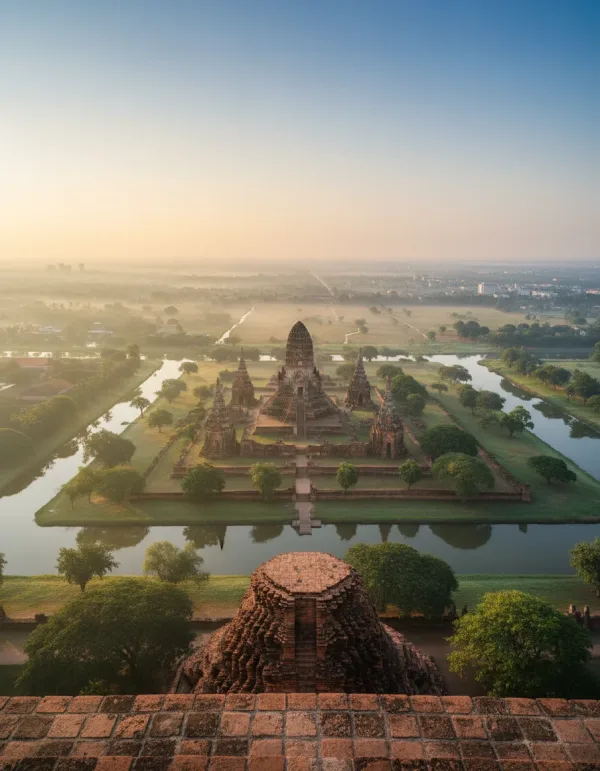
The Historic City of Ayutthaya became a UNESCO World Heritage Site in 1991. The inscribed property covers 289 hectares, while historic monuments and active temples extend across and beyond the river island. This is not a single gated attraction: visitors travel between separate sites, some free and others individually ticketed by the Fine Arts Department. Understanding that layout is the key to planning a useful day rather than rushing between disconnected ruins.
Monumental Temples and Archaeological Highlights
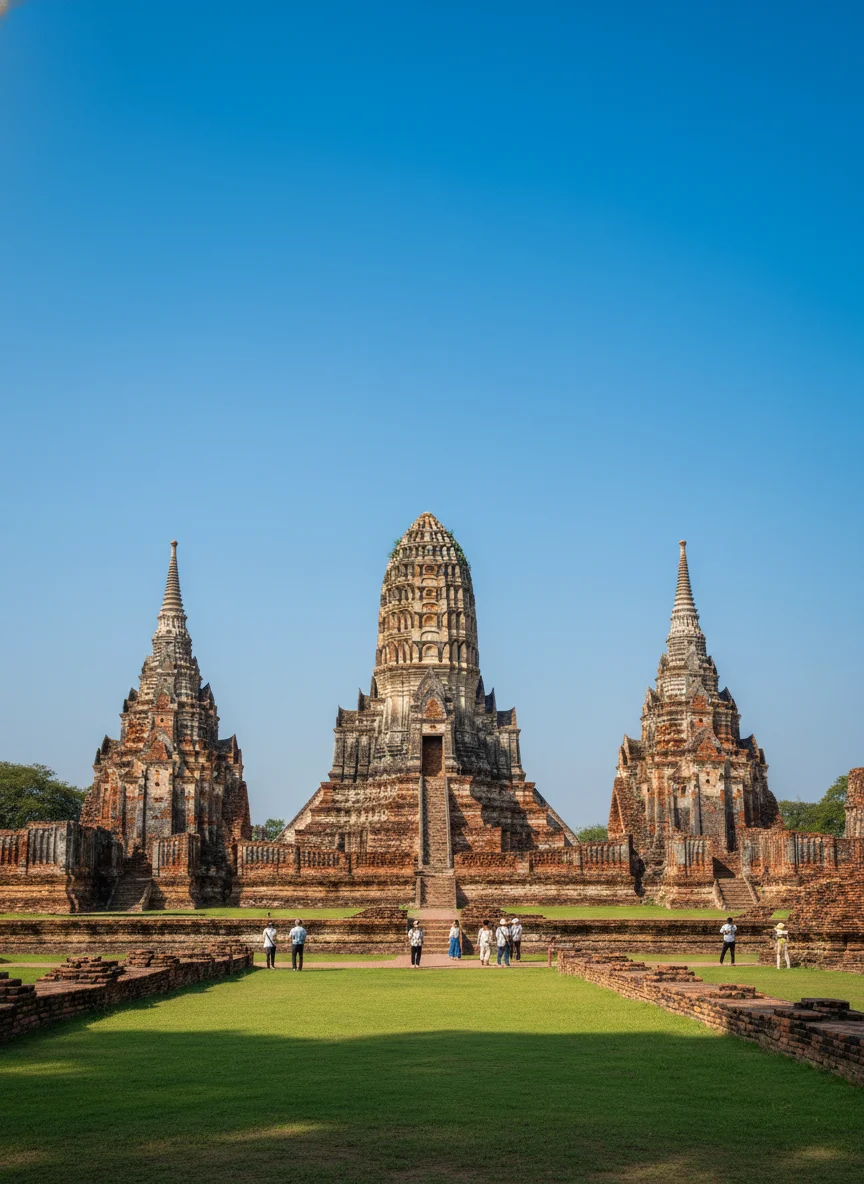
Wat Phra Si Sanphet was the principal royal monastery within the former palace compound. Its three bell-shaped chedi, aligned on an elevated platform, are among Ayutthaya’s most recognisable surviving structures. They were associated with the ashes of Ayutthaya kings, while the monastery itself was reserved for royal use. The adjoining foundations help reveal how religious and ceremonial buildings related to the palace at the centre of the old capital.
Wat Mahathat was another institution of exceptional importance. It enshrined relics of the Buddha, served as a royal monastery and was associated with the Supreme Patriarch. Today its best-known feature is the stone Buddha head held within tree roots. Visitors should approach the image respectfully, avoid touching the tree or sculpture and follow any instructions displayed around it. The wider site deserves equal attention: surviving prang bases, rows of Buddha images and fragments of stucco decoration show the scale of the former monastery.
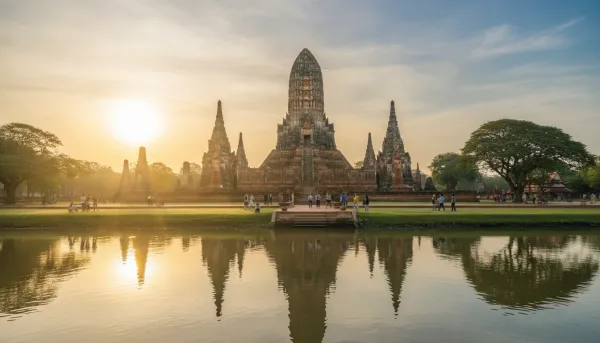
Wat Chaiwatthanaram stands beside the Chao Phraya River, south-west of the historic island. Its tall central Khmer-style prang and surrounding towers form one of Ayutthaya’s most complete monumental compositions. The site is included in the combined admission ticket but requires a separate journey from the central group. Visiting it later in the day can fit a logical circuit, although opening arrangements should be checked rather than assuming evening access; extended illumination has operated as a seasonal programme, not a permanent nightly schedule.
Together these three sites introduce the royal, religious and architectural importance of Ayutthaya. They also demonstrate why the park requires more than a quick stop: each complex contains multiple structures whose functions become clearer with a map or guide.
Auxiliary Historical Monasteries
Wat Ratchaburana stands immediately north of Wat Mahathat and is distinguished by its substantial fifteenth-century Khmer-style prang. Surviving stucco includes mythical figures and ornamental details. The temple’s crypt paintings are particularly important evidence for Ayutthaya art, although access to internal areas can be restricted for safety or conservation. Follow barriers and staff directions rather than climbing beyond the designated visitor route.
Wat Phra Ram lies near Wat Phra Si Sanphet and the former royal palace. Its central prang rises above a quieter group of brick structures, making it a useful continuation of the central circuit. Wat Maheyong and Wat Kudi Dao are farther east and are now included among the seven monuments covered by the Fine Arts Department’s combined ticket. Their position away from the best-known central cluster makes transport planning important.
Several major religious sites associated with Ayutthaya lie outside the UNESCO core or remain active monasteries. Wat Yai Chai Mongkhon, east of the island, has a large chedi on a raised base and a reclining Buddha near its entrance. Wat Na Phra Meru contains an important principal Buddha image, while Wat Phanan Choeng and Wat Phutthaisawan add further perspectives on the city’s religious history. These sites have their own visitor arrangements and are not automatically included in the historical park combination ticket.
Chao Sam Phraya National Museum is valuable for understanding objects removed from vulnerable archaeological contexts. Its collections provide detail that can be difficult to recover from ruined foundations alone, including material connected with royal and religious life. The museum currently publishes daily opening from 09:00 to 16:00 and foreign adult admission of 200 THB (approximately £4.50). It has a separate ticket from the monuments.
Master your visit to Ayutthaya with exact train times, 50 THB bicycle rentals, and practical tips for navigating the ancient ruins like a local.
Practical Transport and Exploration Methods
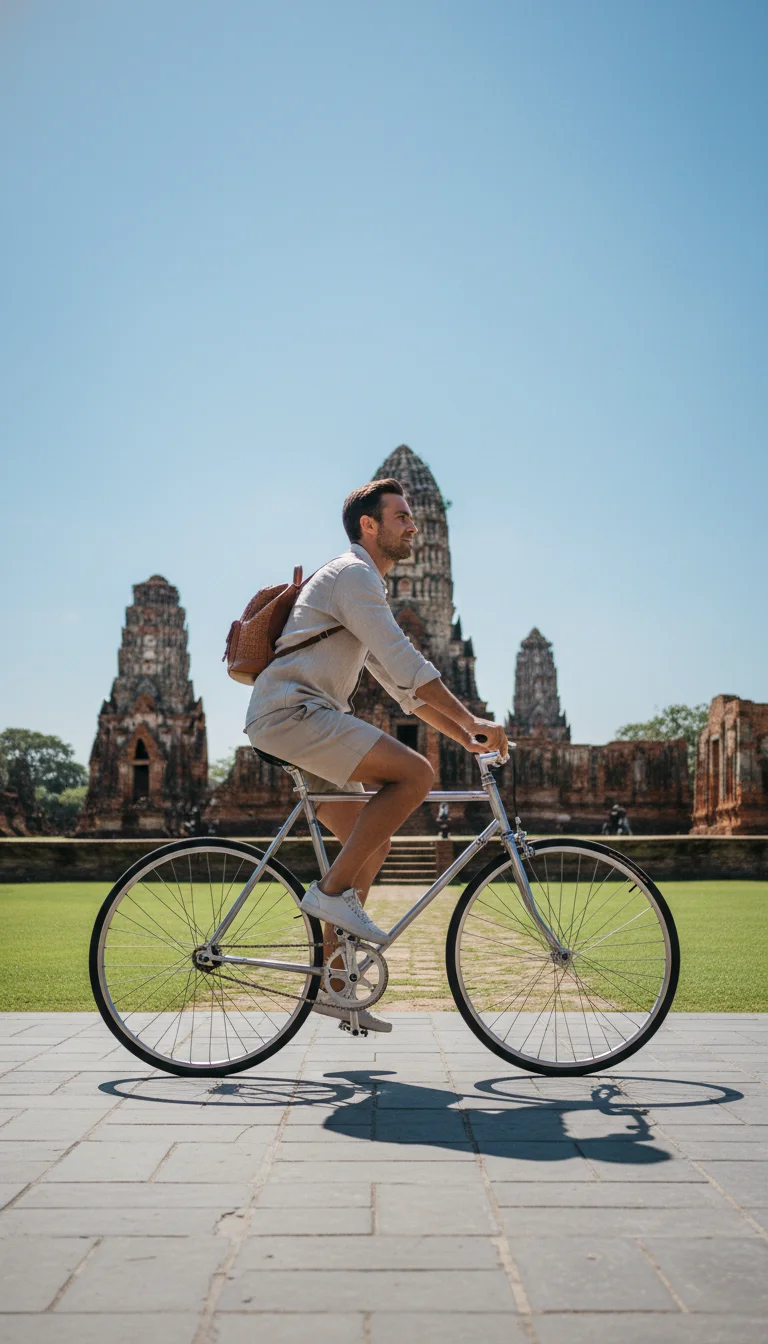
Most central monuments can be connected by bicycle, and the Tourism Authority of Thailand specifically recommends cycling as a way to explore the old city. Wat Mahathat, Wat Ratchaburana, Wat Phra Ram and Wat Phra Si Sanphet form a manageable central group. The roads are generally level, but riders share space with local traffic and remain exposed to sun and rain. Use lights if conditions become dull, wear a helmet when available and secure the bicycle at each stop.
A chartered local tuk-tuk is practical for reaching outlying sites such as Wat Chaiwatthanaram, Wat Maheyong, Wat Kudi Dao and active temples beyond the island. Agree the duration, total price, waiting arrangements and exact itinerary before departing. Do not assume the driver is acting as a licensed historical guide unless that service has been specifically arranged.
Walking works for a limited central circuit but is inefficient for a broader visit. A combination of walking and local transport can be more comfortable than committing to one method for the whole day. Travellers arriving by train should also account for the journey between Ayutthaya station, on the eastern side of the Pa Sak River, and their first monument.
Carry an offline map or save the relevant locations before setting out. “Ayutthaya Historical Park” can refer to the broad archaeological area rather than a single entrance, and mapping individual monuments prevents confusion about where a ticket is valid.
Ticket Options and Entry Pass Packages
The Fine Arts Department currently charges foreign visitors 80 THB (approximately £1.80) for a single ticket at each of its seven principal ticketed monuments. A combined foreign visitor ticket costs 300 THB (approximately £6.75) and covers Wat Mahathat, Wat Ratchaburana, Wat Phra Ram, Wat Phra Si Sanphet and the former royal palace, Wat Chaiwatthanaram, Wat Maheyong and Wat Kudi Dao.
For Thai visitors, the corresponding prices are 10 THB for an individual monument and 40 THB for the combined ticket. The combined pass becomes economical for a foreign visitor intending to enter four or more of the included sites. Confirm its current validity conditions when purchasing and retain the physical or digital ticket for inspection at each monument.
The broader historic city contains free ruins, separately managed active temples and other attractions with their own charges. The combined ticket should therefore be treated as admission to seven named Fine Arts Department sites rather than an all-inclusive pass for everything in Ayutthaya.
Transport, bicycle hire, guiding and museum admission are separate expenses. Rental and tuk-tuk prices vary by operator, bicycle type, route and duration, so agree the full amount before accepting a vehicle. Confirm current monument prices locally or through the Ayutthaya Historical Park office before travelling, particularly around festivals or special evening programmes.
| Option | Cost (THB) | Cost (GBP approx) | Access Details |
|---|---|---|---|
| Foreign individual ticket | 80 THB | £1.80 | One of the seven named Fine Arts Department monuments |
| Foreign combined ticket | 300 THB | £6.75 | Covers seven named monuments |
| Thai individual ticket | 10 THB | £0.25 | One named monument |
| Thai combined ticket | 40 THB | £0.90 | Covers seven named monuments |
Cultural Dress Code and Temple Etiquette
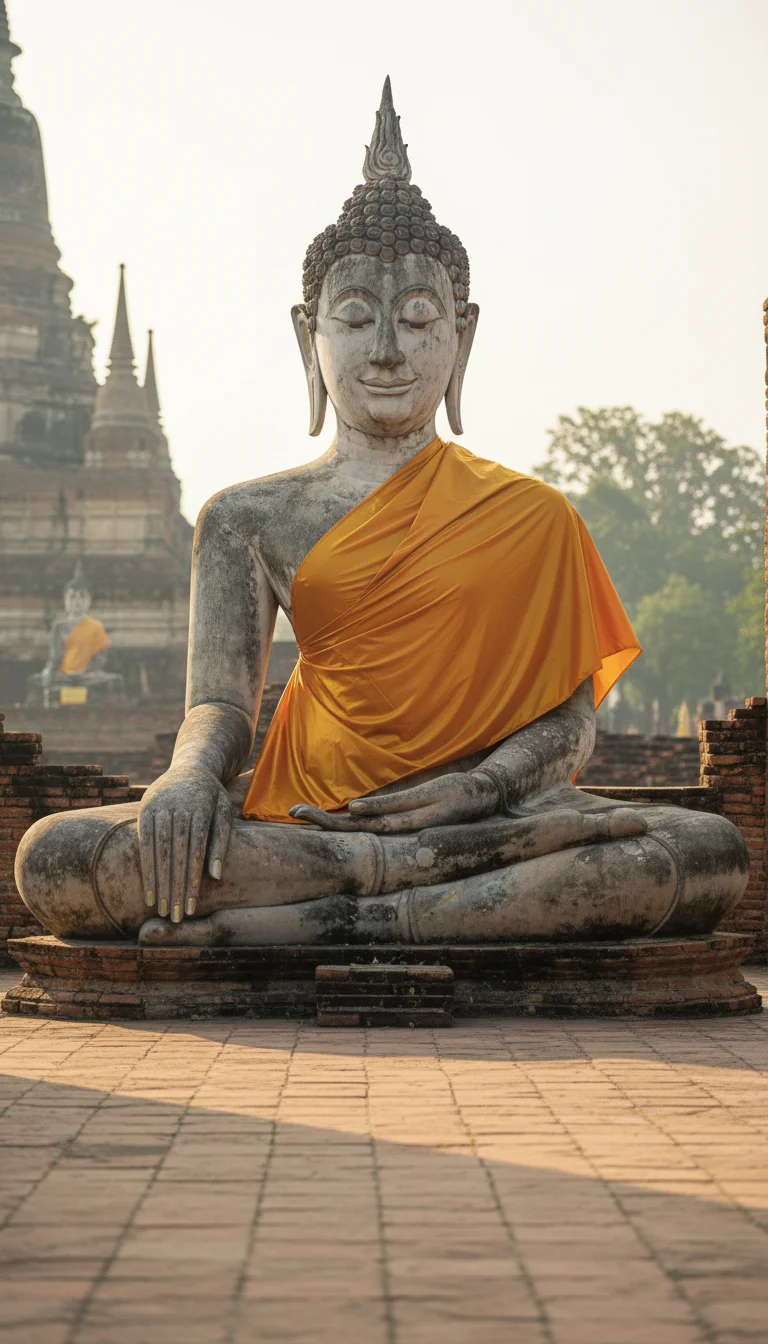
Ayutthaya’s ruins remain religious and cultural heritage, even where a monastery is no longer active. Wear clothing that covers shoulders and knees when entering active temple buildings and choose modest clothing throughout the archaeological sites. A lightweight long-sleeved layer or scarf can be useful, but a scarf should not be assumed to satisfy staff where a site applies a formal dress rule.
Never climb on chedi, prang, walls, Buddha images or fragile brickwork unless a clearly marked visitor stairway is open. Do not sit on ancient pedestals or pose in a way that places your feet towards a Buddha image. Keep your head lower than the Buddha head at Wat Mahathat when photographing it, following the signs and established visitor etiquette around the enclosure.
Remove shoes before entering active worship halls when instructed. Keep voices low around people praying, and ask before photographing worshippers or ceremonies. Conservation barriers protect both visitors and unstable structures; crossing them can damage irreplaceable masonry and stucco.
Traditional Thai clothing is available from businesses around several monuments and is popular during special events. If hiring an outfit, confirm the rental period, deposit, accessories and return arrangements directly with the shop.
Location and Getting There
Phra Nakhon Si Ayutthaya is north of Bangkok in Thailand’s central plains. The historic city developed on an island surrounded by the Chao Phraya, Pa Sak and Lopburi rivers, a position that connected it to regional and international trade routes. The UNESCO property covers the former royal palace and principal monuments within and around this urban landscape.
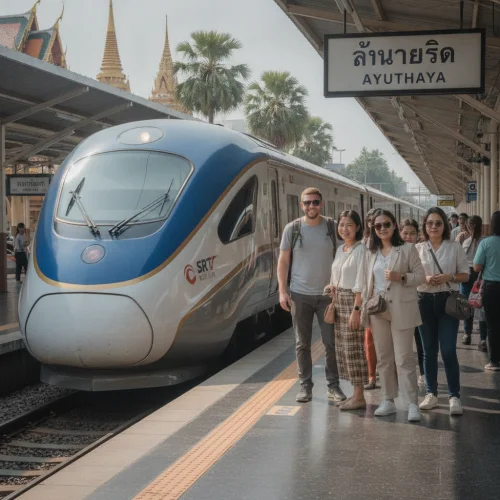
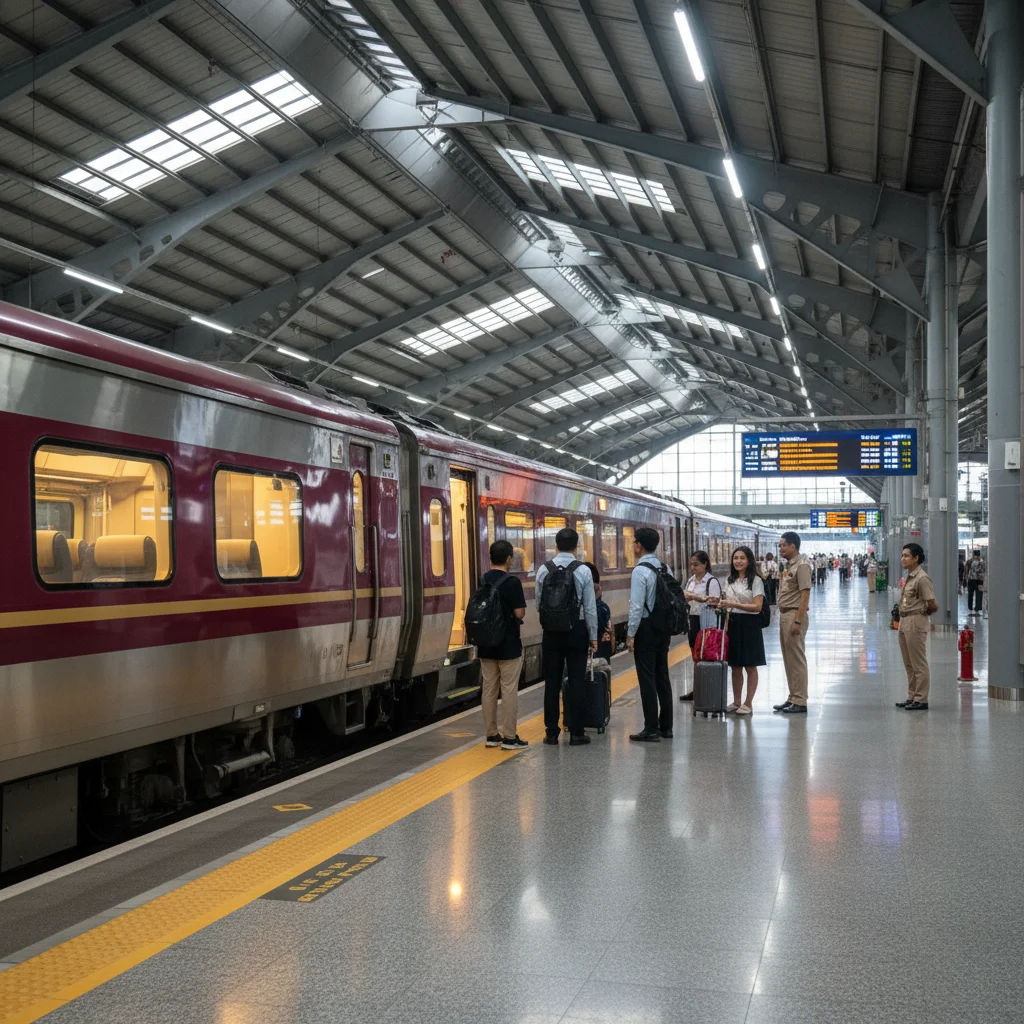
State Railway of Thailand trains serve Ayutthaya from Bangkok, but the departure station, service type, journey time and fare depend on the selected train. Long-distance services generally use Krung Thep Aphiwat Central Terminal, while some ordinary services may follow different Bangkok arrangements. Check the official SRT timetable for the chosen date rather than relying on a fixed fare or departure point.
Ayutthaya Railway Station is east of the historic island. Local tuk-tuks are normally available nearby, and a small passenger ferry can provide a river crossing when operating. Confirm the current fare and hours at the pier. Travellers with luggage or limited time may prefer direct road transport to their accommodation or first monument.
Private transfers and organised tours can collect from Bangkok, but inclusions vary. Check whether the quoted price covers tolls, parking, admission, guiding, meals and the driver’s waiting time. For a day trip, allow enough flexibility for traffic in both directions rather than scheduling an inflexible evening commitment immediately after the expected return.
Costs and Booking
Admission costs depend on how many ticketed monuments you enter. A visitor concentrating on Wat Mahathat, Wat Phra Si Sanphet and Wat Chaiwatthanaram would pay 240 THB (approximately £5.40) in individual foreign admission fees. The 300 THB (approximately £6.75) combined ticket is better value from the fourth included site onwards and supports a more extensive itinerary.
Chao Sam Phraya National Museum charges foreign visitors 200 THB (approximately £4.50) and Thai visitors 30 THB (approximately £0.70), according to its current official visitor information. Add transport, meals and any guide separately. Bicycle and tuk-tuk prices are commercially set and should be confirmed on the day because the park does not operate those services.
Organised tours range from shared coach trips to private car-and-guide arrangements. Before booking, compare the actual temple list, the time allowed at each stop, whether Wat Chaiwatthanaram is included and whether museum admission is part of the programme. A low headline price may exclude the monument tickets.
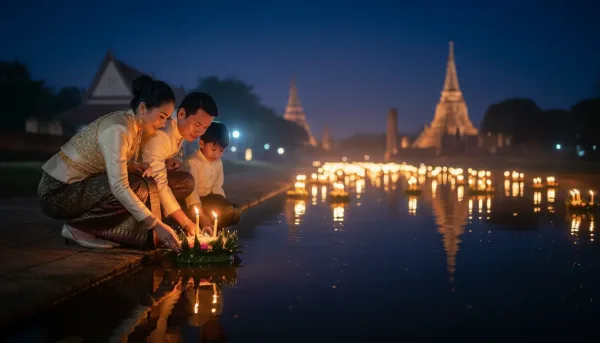
Special night openings are seasonal. Recent Fine Arts Department and Tourism Authority programmes have extended access at selected monuments on specified dates, but ordinary planning should use the current daytime arrangements published by the park. Confirm all prices and hours shortly before visiting.
| Option | Cost (THB) | Cost (GBP approx) | Notes |
|---|---|---|---|
| Three individual monument tickets | 240 THB | £5.40 | Suitable for a tightly focused visit |
| Seven-site combined ticket | 300 THB | £6.75 | Best value from four included sites |
| Chao Sam Phraya Museum, foreign adult | 200 THB | £4.50 | Separate museum admission |
| Chao Sam Phraya Museum, Thai visitor | 30 THB | £0.70 | Separate museum admission |
Who It Suits Best
Ayutthaya Historical Park suits travellers interested in Thai history, Buddhist architecture, archaeology and historic urban planning. Independent visitors can build a route around a few major monuments, while a full day gives time to connect the central royal area with riverside and eastern sites.
Cycling appeals to active visitors comfortable with local roads and exposed conditions. A tuk-tuk or private vehicle is more suitable for travellers prioritising outlying monuments, travelling as a group or limiting physical exertion. A guide adds the most value when you want to understand how scattered foundations once formed monasteries, courts and ceremonial spaces.
Families should choose a realistic number of stops and schedule breaks. Uneven surfaces, open drops, steep historic steps and limited shade can make a long circuit demanding for young children or anyone with restricted mobility. Access varies significantly by monument, so contact the park office before travelling if step-free routes or other assistance are essential.
What to Know Before You Book
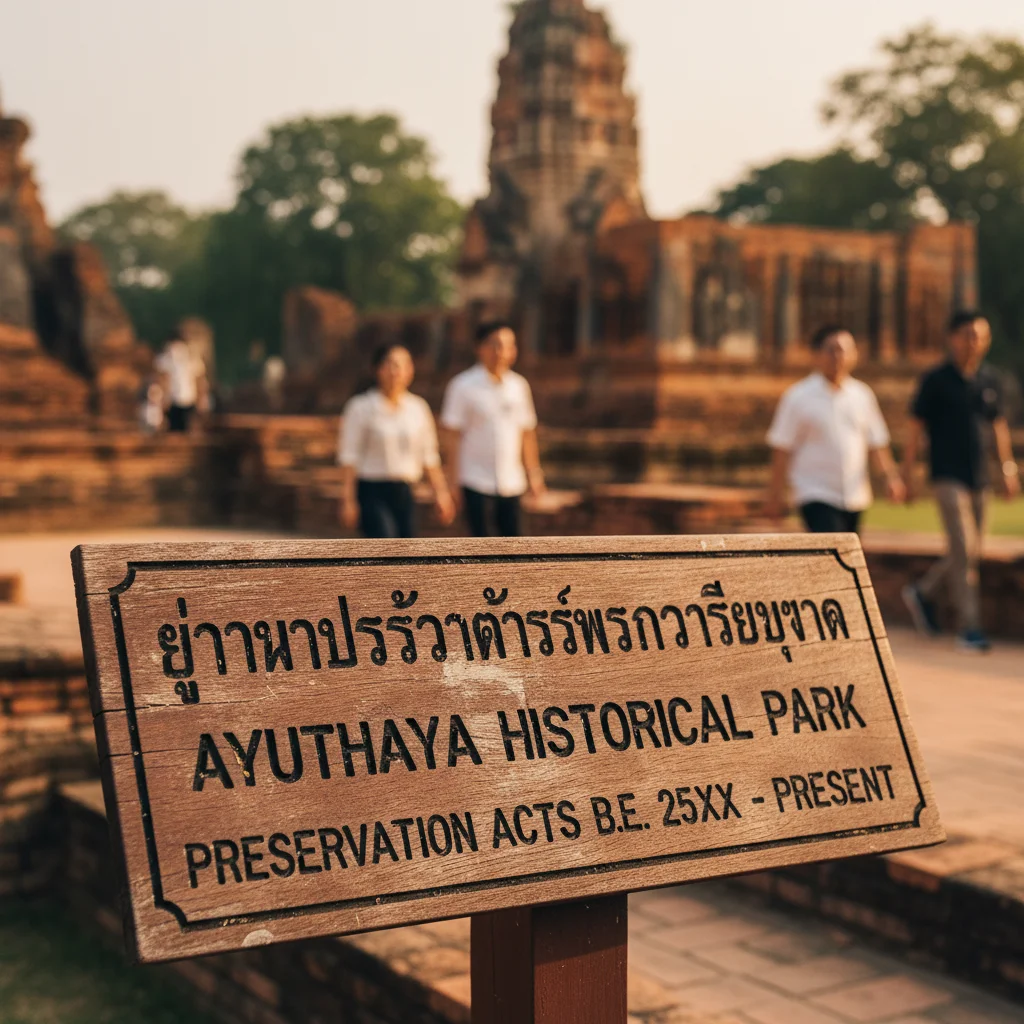
The historical park is an urban archaeological landscape rather than a self-contained campus. Ticketed monuments have separate entrances, and travel time between them matters. Mark your priorities before choosing transport and buying the combined pass.
The UNESCO World Heritage boundary does not encompass every place commonly included in an “Ayutthaya temples” tour. Active monasteries and sites outside the central island can be historically significant while operating under separate arrangements. Check the exact names on any tour itinerary.
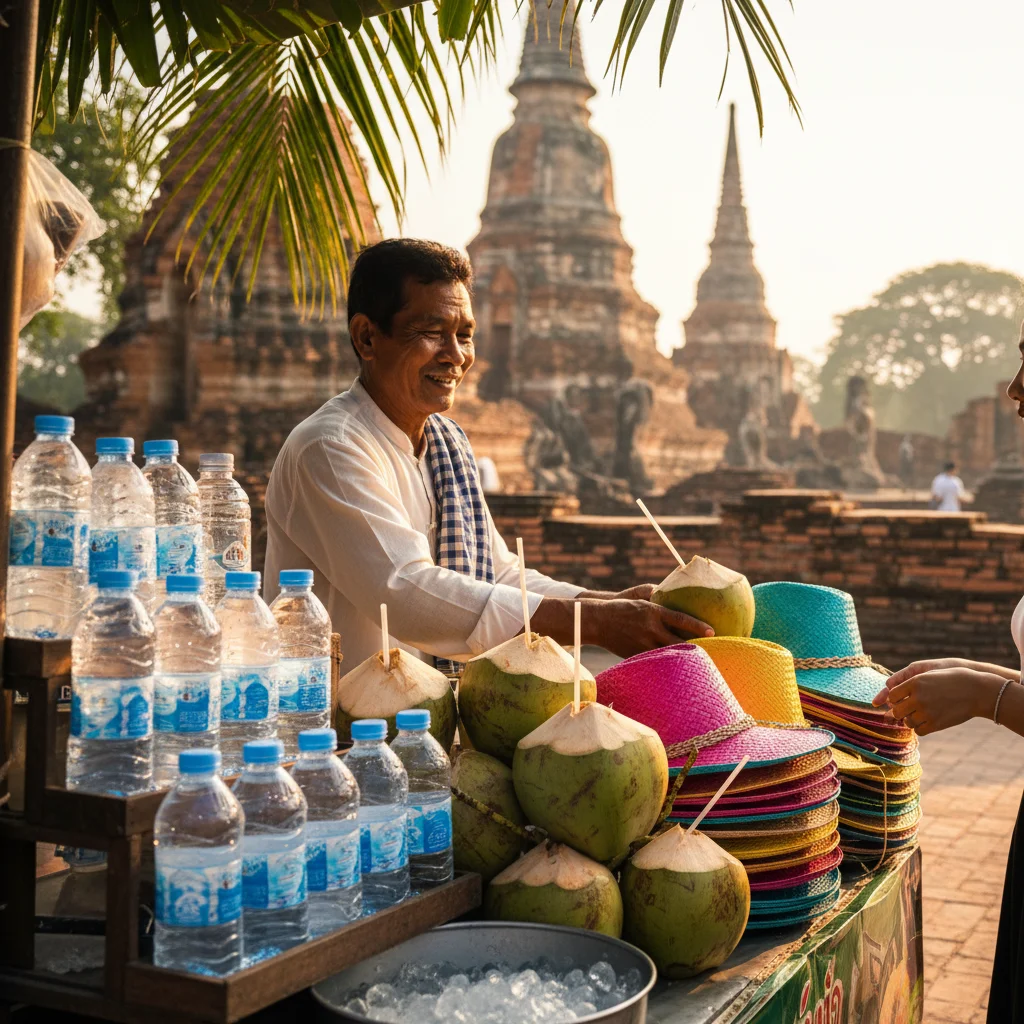
Outdoor conditions shape the visit. Start earlier or pause during the hottest part of the day, carry drinking water and use sun and rain protection appropriate to the season. Historic brick, gravel and worn steps can become slippery after rain.
Conservation work may occasionally affect access or sightlines. Seasonal festivals and night programmes can also change opening arrangements around selected monuments. Check recent announcements from Ayutthaya Historical Park rather than assuming an old timetable still applies.
Practical Tips
Choose four or more of the seven included monuments if buying the 300 THB combined foreign visitor ticket. For three sites, individual tickets currently cost less.
Keep the ticket accessible as you move between monument entrances. Carry some small-denomination Thai currency because payment facilities can vary.
Save an offline map showing individual temples, the railway station and your accommodation. Searching only for the historical park can lead to the wrong part of the old city.
Use a bicycle for the central cluster only if you are confident in traffic. For Wat Chaiwatthanaram and the eastern ruins, a tuk-tuk can reduce transit time.
Wear secure, comfortable shoes for brick steps and uneven paths. Remove them only where an active temple or sign requires it.
Carry water, a hat and sun protection. A compact rain cover is useful during wetter months, but avoid sheltering beneath unstable ruins during a storm.
Photograph Buddha images respectfully and remain below the Buddha head at Wat Mahathat. Never climb on unmarked masonry for a better viewpoint.
Add Chao Sam Phraya National Museum if you want to connect the surviving ruins with excavated objects and court culture. Allow for its separate 09:00–16:00 schedule and admission.
Quick Reference Table
| Item | Detail | Notes |
|---|---|---|
| Property Name | Ayutthaya Historical Park | Managed by Thailand’s Fine Arts Department |
| Location | Phra Nakhon Si Ayutthaya, Central Thailand | Monuments spread across and beyond the river island |
| Property Type | Historic city and archaeological park | Former capital of the Siamese kingdom |
| Category | UNESCO Cultural World Heritage Site | Inscribed in 1991 |
| UNESCO Property Area | 289 hectares | The wider historic city contains additional monuments |
| Admission | 80 THB per named site or 300 THB combined for foreign visitors | Combined ticket covers seven monuments |
| Layout | Multiple separate monument entrances | Not one enclosed attraction |
| Museum | Chao Sam Phraya National Museum | Separate ticket; open daily 09:00–16:00 |
| Transport | Bicycle, tuk-tuk, private vehicle or organised tour | Choose according to the monuments planned |
| Nearest Rail Station | Ayutthaya | East of the historic island |
| Official Website | finearts.go.th/ayutthayahistoricalpark | Check current announcements and access |
| Booking Platform | GetYourGuide / 12Go | Tours and transport; verify inclusions independently |
FAQ: Ayutthaya Historical Park Guide and Ruins
How is Ayutthaya Historical Park structured for visitors?
How should visitors behave when viewing the Buddha head at Wat Mahathat?
Is Wat Chaiwatthanaram open for evening visits?
Are all major religious sites in Ayutthaya included in the historical park combination ticket?
What are some safety tips for cycling around Ayutthaya Historical Park?
What should visitors confirm before hiring a tuk-tuk in Ayutthaya?
Why is it important to use an offline map when visiting Ayutthaya Historical Park?
When is the combined ticket for Ayutthaya Historical Park a better value for foreign visitors?
What is the dress code for visiting Ayutthaya Historical Park?
What kind of footwear is recommended for visiting Ayutthaya Historical Park?
Reviewed by the Thailand Guide Editorial Team • Last reviewed: 26 August 2026
This page is provided for general information only. While we aim for accuracy, details can change — please verify anything important independently before relying on it.