The former Siamese capital traded with the globe centuries before Bangkok existed, leaving behind a culinary footprint heavily influenced by early Portuguese, Persian, and Japanese merchants.
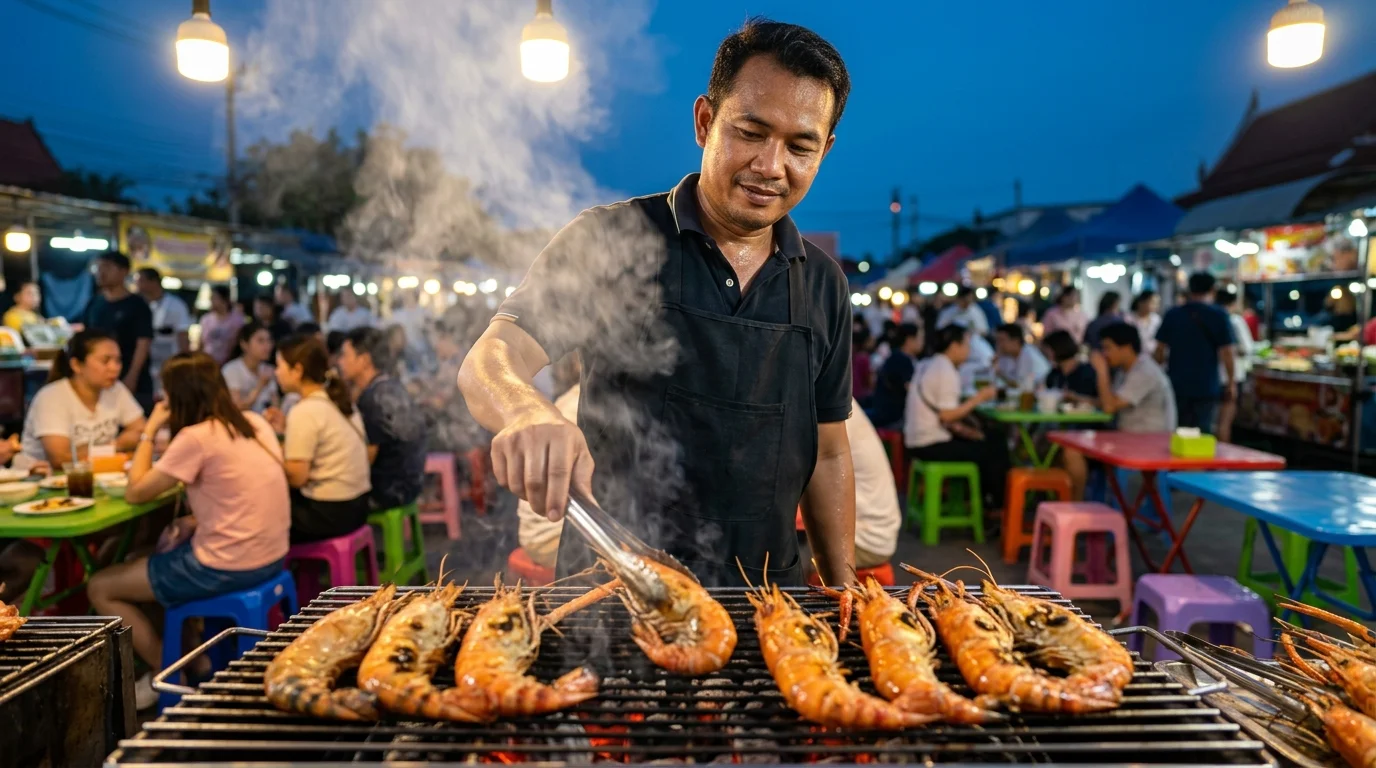
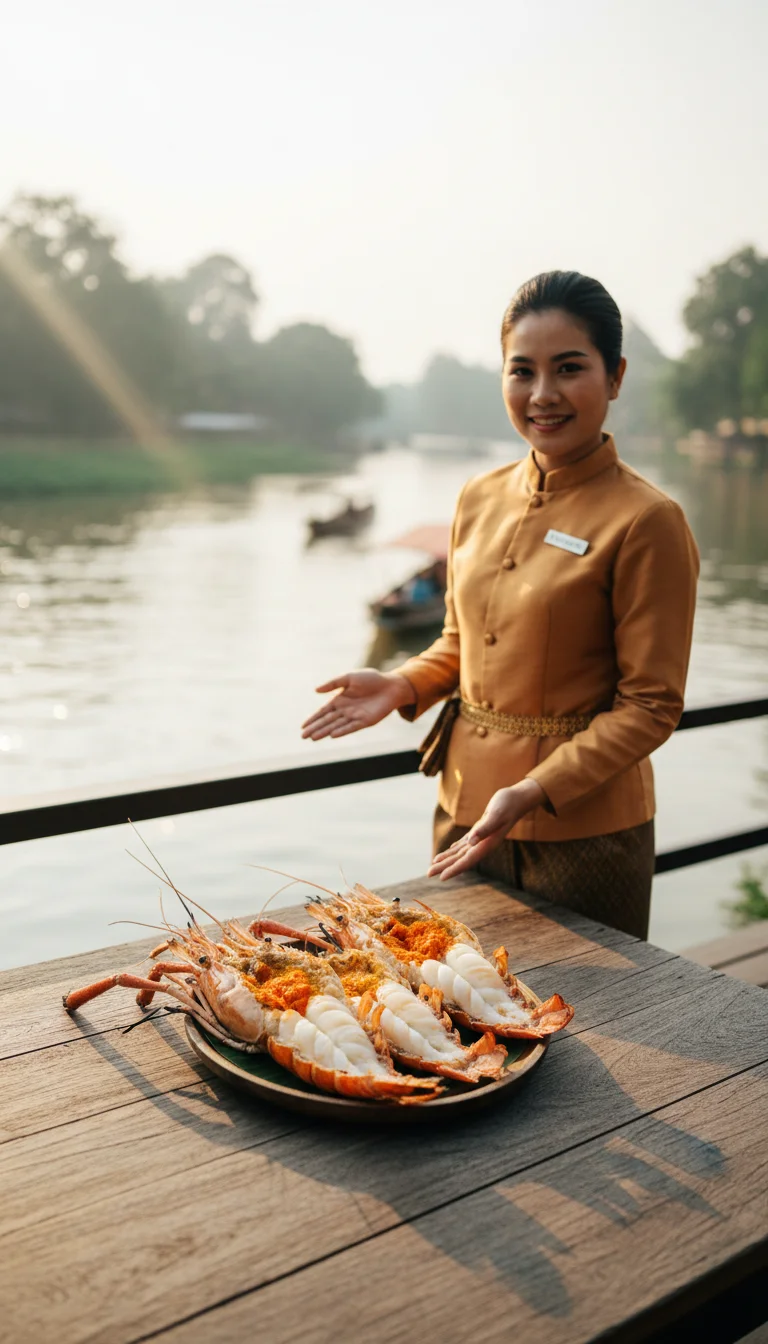
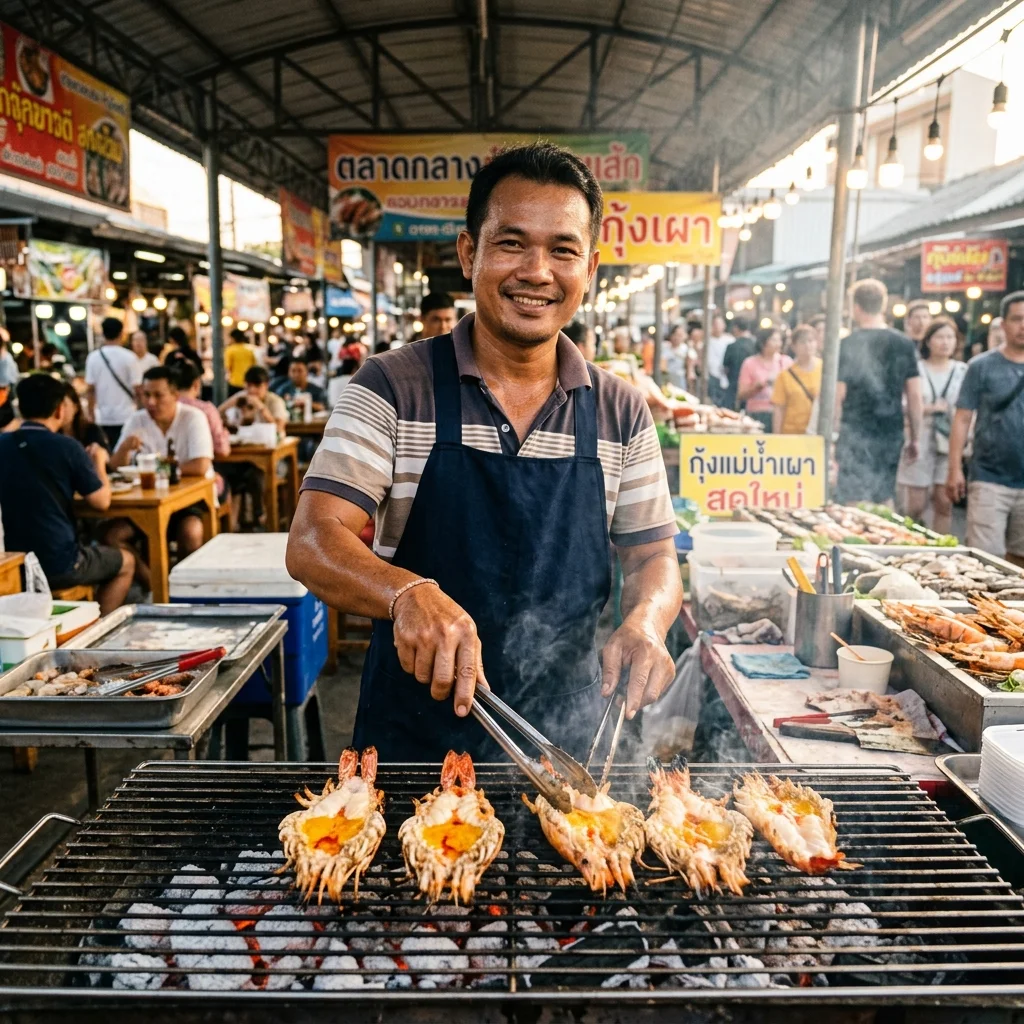
You come here for the river prawns, which are graded by size like precious stones and grilled over charcoal until the head fat turns to a rich, molten custard. It is a striking collision of ancient royal recipes and unapologetic river-dwelling comfort food that you simply cannot replicate downriver.
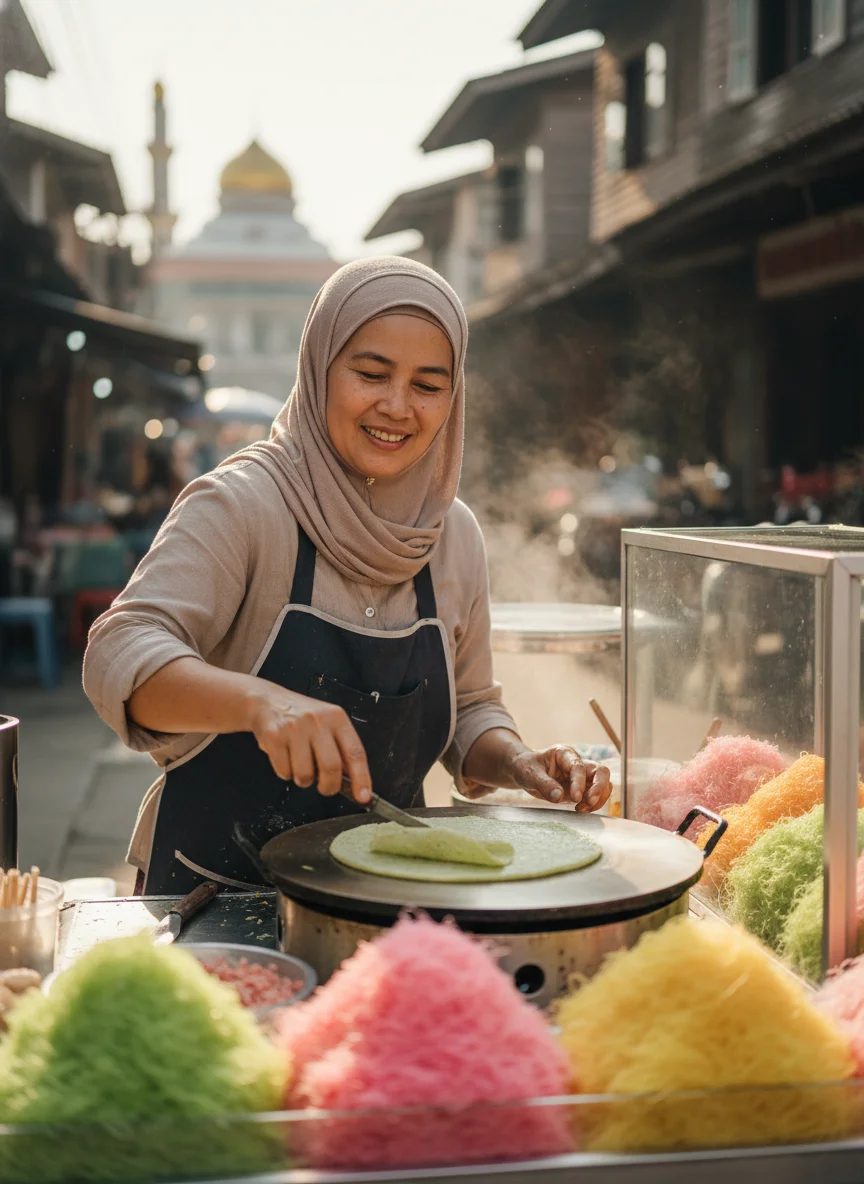
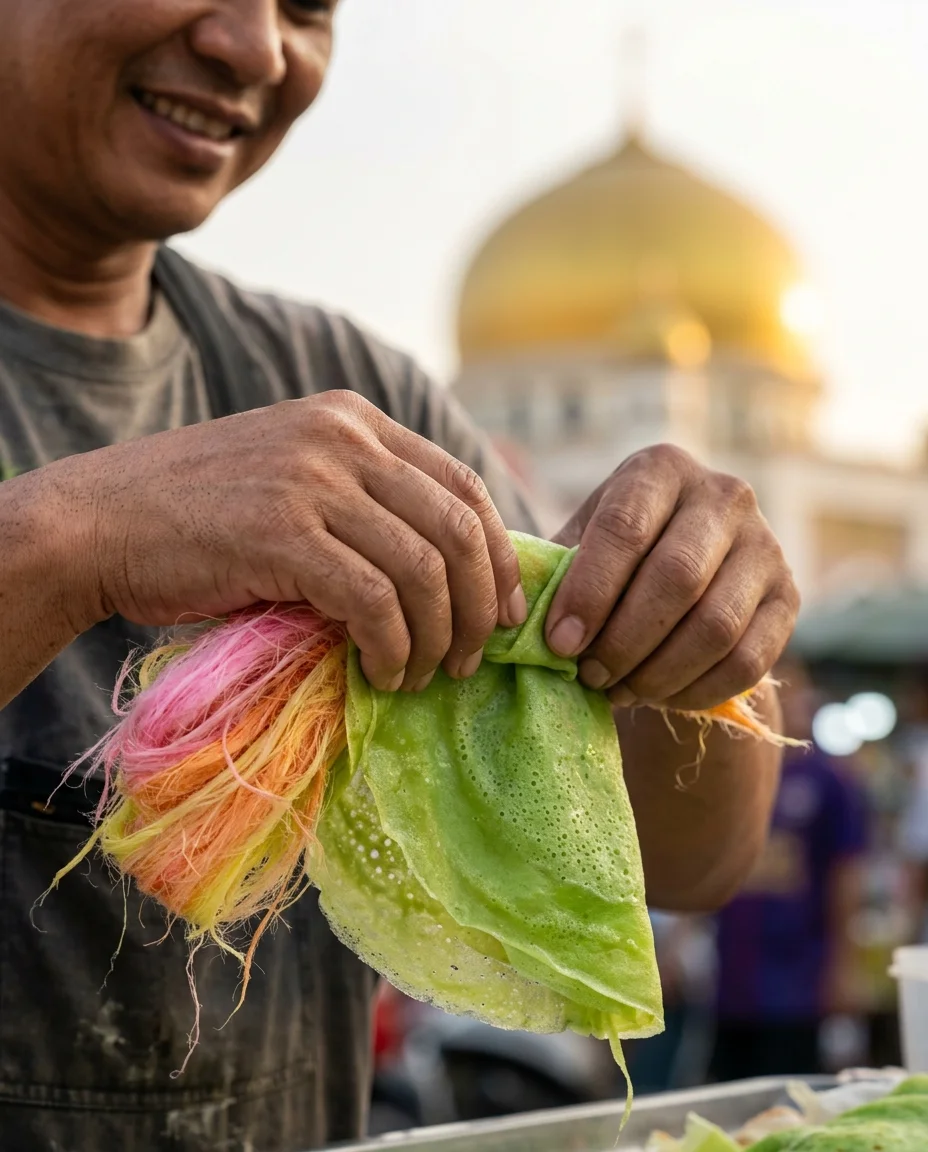
The crown jewel of the local food scene is the giant river prawn, known locally as goong mae nam pao. These beasts are halved and grilled over fierce heat until the meat tightens and the tomalley melts into an intensely rich, savoury liquid. Expect to pay anywhere from 800 to 1,500 THB (£17 to £32) per prawn at Talad Klang Market. You must also seek out authentic boat noodles, or kuay teow reua. Originally sold from tiny sampans navigating the ancient canals, these small bowls of rice noodles sit in a dark, complex broth thickened with pig or cow blood. They taste heavily of star anise, cinnamon, and dark soy. Grab three or four bowls at the stalls near Wat Mahathat for about 20 THB (40p) each. The city’s Islamic heritage gives us roti saimai for dessert. Vendors pan-fry paper-thin, slightly salty crepes and hand you a bag of spun sugar resembling brightly coloured hair. The textural contrast between warm, chewy dough and crunchy sweet floss is striking. Dozens of vendors spin sugar outside the hospital on Uthong Road, charging 50 THB (£1.10) a set. Round off your eating itinerary with hor mok. This steamed fish curry custard arrives wrapped in banana leaves, delivering a punchy hit of red chilli paste tempered by coconut cream. Buy it fresh off the grill at the night markets for 40 THB (85p).
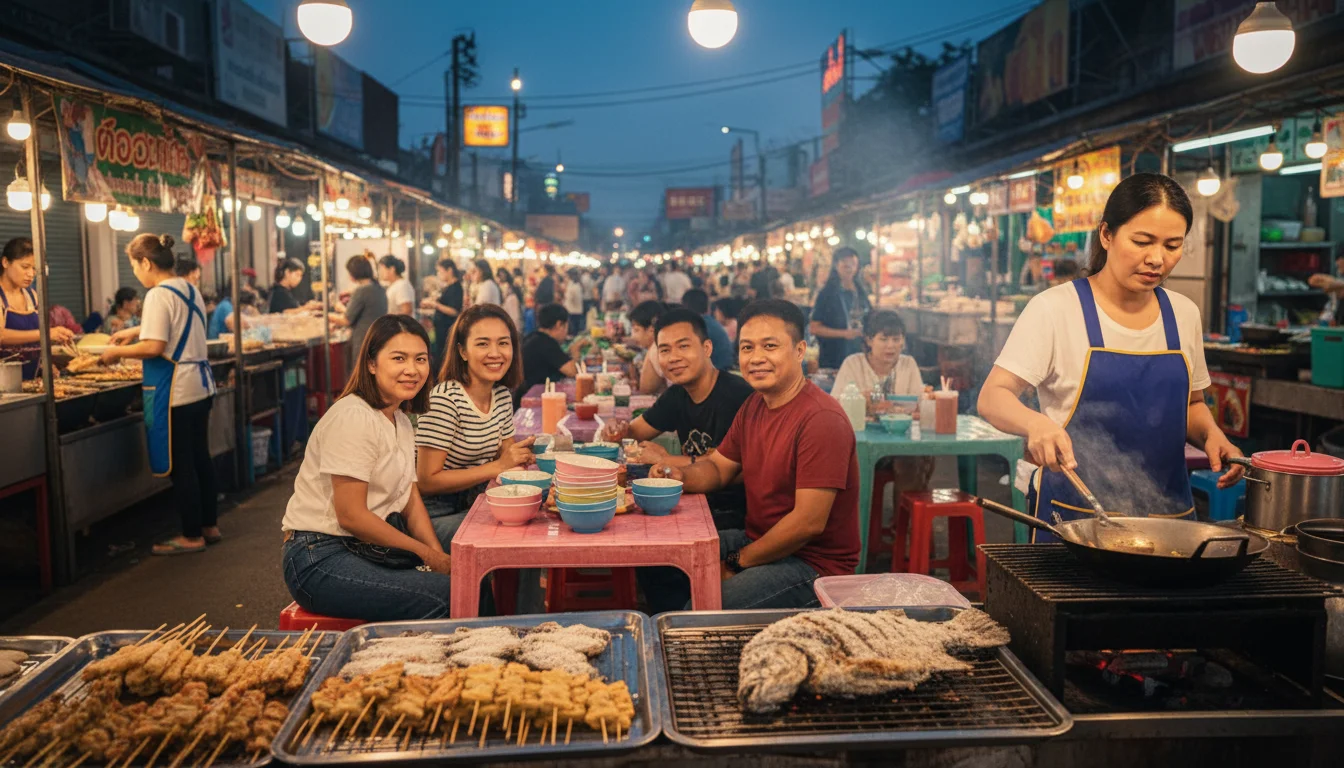
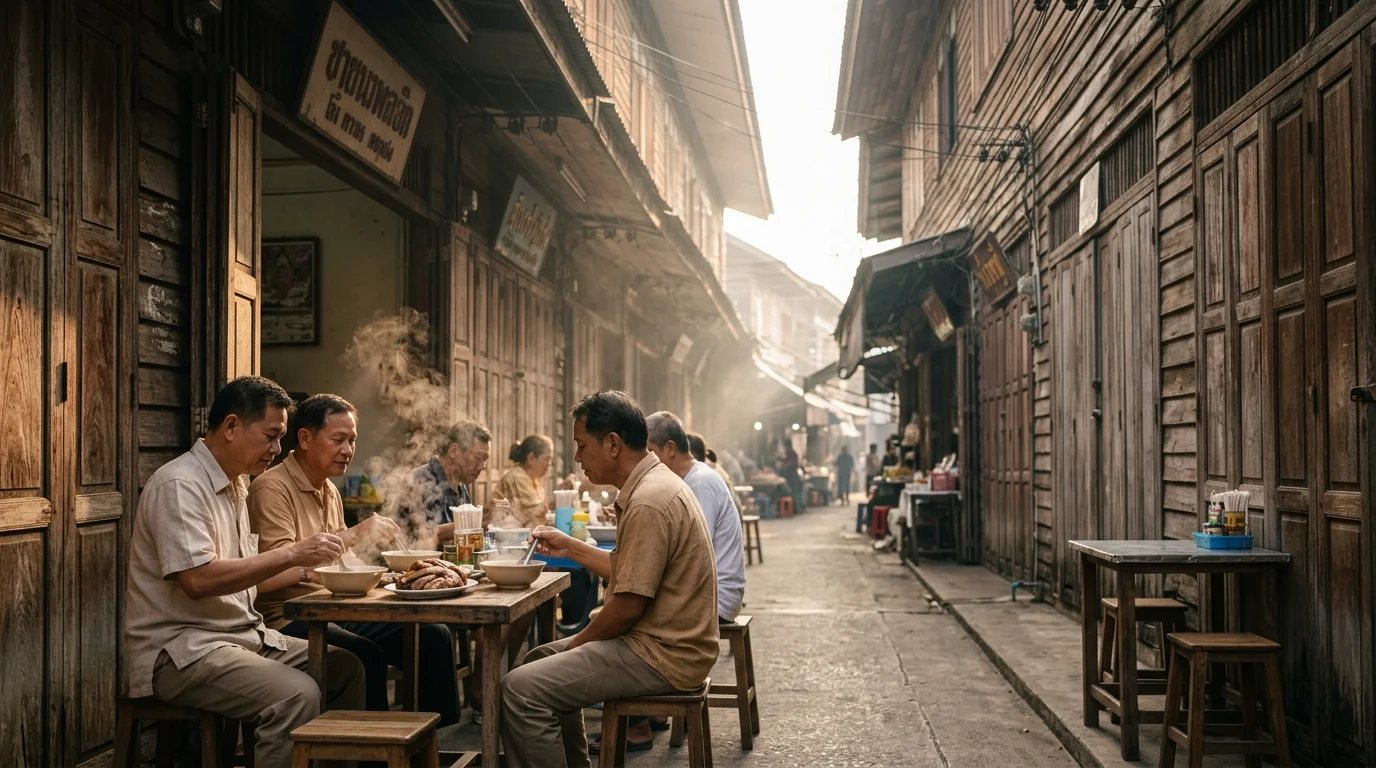
Your first stop should be Talad Klang Market on the Asian Highway. This sprawling complex of wet market stalls and vast outdoor seating areas is the undisputed headquarters for grilled seafood. A feast here will set you back around 1,000 THB (£21) per head. For mid-range riverside dining, head to the western stretch of Uthong Road. Wooden terraces overhang the Chao Phraya, serving rich curries and river fish for roughly 400 THB (£8.50) a person. Budget eaters should make a beeline for Bang Lan Night Market, which sets up near the government offices at dusk. Graze on skewers and noodles for under 150 THB (£3.20). Most foreign visitors miss Hua Ro Market entirely. This two-hundred-year-old traditional market in the northeast corner of the island is a labyrinth of ancient wooden shophouses. Locals queue here for obscure Thai-Chinese breakfasts of rice porridge and braised duck for just 50 THB (£1.10).
STREET FOOD GUIDE
Hit the night markets between 6pm and 8pm. The turnover of food is highest then and the charcoal grills are roaring. Look for stalls where the vendor cooks one specific dish rather than a sprawling menu of fifty items. Skip pre-cut fruit sitting under harsh lights. Opt instead for vendors who peel and slice a green mango to order. When securing a table at busy street side spots, leave a packet of tissues on your plastic stool. This is the universally accepted method for reserving your seat while you wander off to order your noodles.
The punishing heat demands ice-cold refreshment. Locals stick to large bottles of Leo or Chang beer poured over ice, costing about 80 THB (£1.70) at street tables. For something entirely local, seek out nam tan sod. This roasted palm sap juice tastes like a smoky, liquid caramel. Vendors sell it in bamboo tubes near the historical park for 40 THB (85p). Iced Thai milk tea remains the default daytime caffeine fix.
Give the floating market a miss. It was built specifically for tourism and features inflated prices for entirely average noodles. The restaurants immediately facing the main temple ruins also charge a heavy premium for the view. Walk five minutes toward the river instead to find authentic shophouse joints serving better food for half the price. Pass on generic green curries and order the local river fish boiled in sour tamarind broth.