Thailand faces a heightened risk of significant flooding, with a particularly high-risk period projected between 2030 and 2034. Experts warn that the Chao Phraya River basin, including Bangkok, now experiences severe flooding almost annually, a shift from previous decades. This increased frequency is attributed to global warming and rapid urban development across low-lying areas, which hinder natural water flow.
Bangkok’s Vulnerability and Response
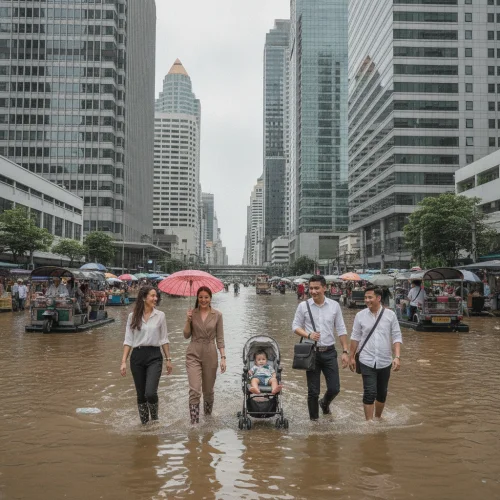
Bangkok’s low elevation, often less than one metre above sea level, combined with ongoing land subsidence, exacerbates flood challenges. The city contends with three main water threats: heavy rainfall, run-off from northern regions, and storm surges. Notably, intense local downpours, often called "rain bomb" events, are a growing concern.
To counter these issues, the Bangkok Metropolitan Administration is upgrading its infrastructure. Flood embankments along the Chao Phraya River are being raised to 2.80-3.50 metres. Four large drainage tunnels are operational, with another undergoing testing to alleviate flooding in areas like Udom Suk. The city has also installed underground "Water Bank" storage systems in low-lying zones. These efforts have reportedly increased rainwater drainage capacity from 60 to 80 millimetres per hour. Flood-risk points across Bangkok have decreased from 481 to 256.
Future Flood Outlook
Despite these measures, the forecast for 2030-2034, particularly 2031, indicates substantial flood risk. Analysis suggests floodwater volume in the Chao Phraya basin could increase by 20-25% by 2030 without further protective measures. Government agencies are implementing major drainage canal projects, such as the Bang Ban-Bang Sai scheme, intended to double drainage capacity by 2030. Another project aims to significantly increase the Chai Nat-Pa Sak canal’s capacity, diverting water before it reaches the capital. These developments, however, face obstacles including land acquisition and environmental assessments.
For British expats in Thailand, these projections highlight the importance of understanding local flood risks when choosing residences or planning long-term stays. While city authorities are addressing the challenges, the long-term forecast suggests ongoing vigilance will be necessary.