Thai Street Food Guide
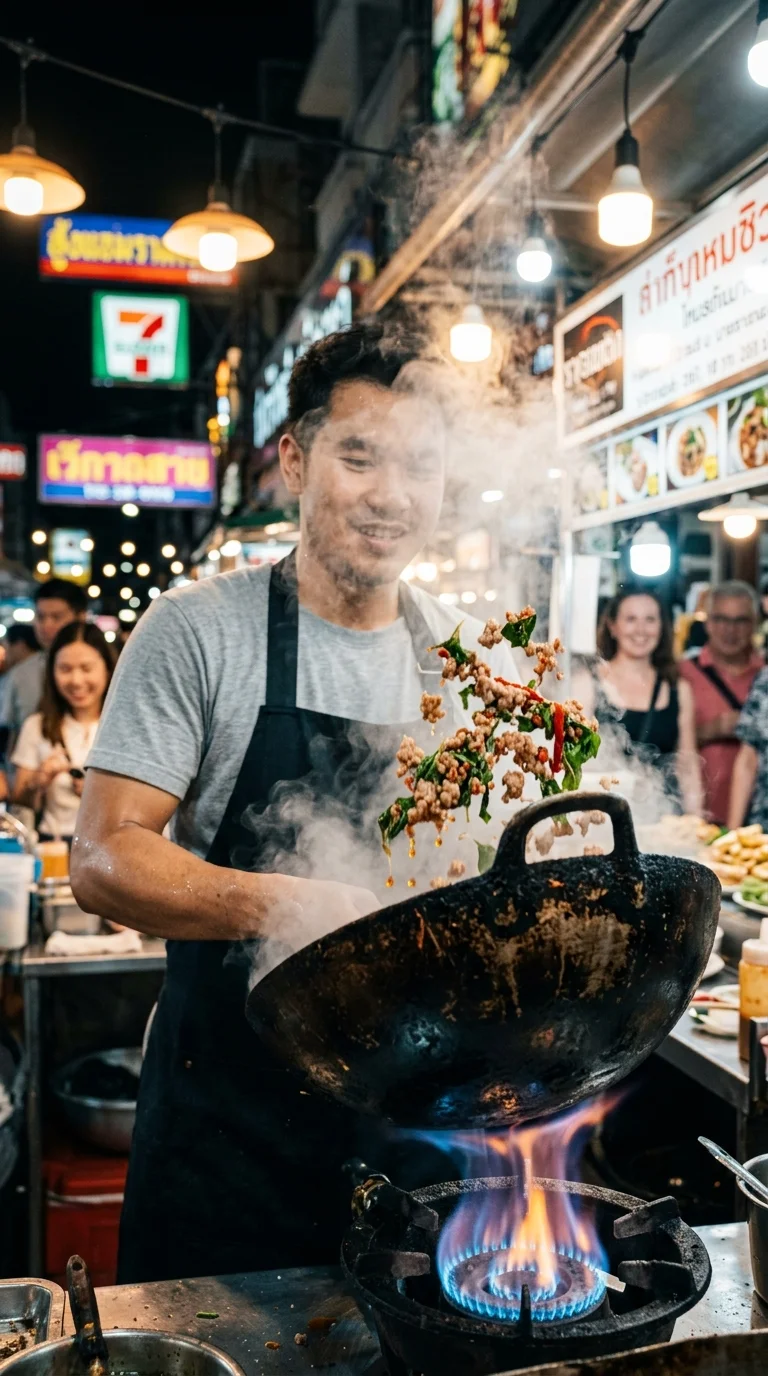
The sharp, peppery sting of holy basil hitting smoking hot oil at a kerbside wok station will make you cough long before you take your first bite. That involuntary cough is the universal indicator that your dinner is about to deliver a level of heat, salt, and fat completely absent from the polite menus of British Thai restaurants.
This guide equips you to navigate Thailand's street food scene with confidence, covering everything from identifying the best roadside woks to ordering when you speak no Thai. You will learn the stark differences between daytime market grazing and late-night pavement eating, alongside regional variations between Bangkok, Chiang Mai, and the islands. By the end, you will know exactly where to go, what to eat, and how to avoid hygiene pitfalls.

The Reality of Thai Street Food Versus the UK
Real Thai street food is an unapologetic assault of salt, fat, sugar, and chilli that bears almost no resemblance to the sweetened, sanitised dishes served in UK restaurants. When you order from a roadside cart in Bangkok, you are eating food cooked rapidly over extreme heat, designed to deliver maximum flavour to local workers rather than cater to cautious foreign palates. The pad thai you know from London is often a polite, ketchup-tinged noodle dish. In stark contrast, the authentic version from a cart on Charoen Krung Road is a complex, aggressive balance of pungent dried shrimp, sharp tamarind, and smoky wok hei (the breath of the wok), costing around 50 THB (£1.10). You sit on flimsy plastic stools inches from gridlocked traffic, sweating heavily in the humidity while eating off melamine plates wrapped in plastic bags to save the vendor from washing up. The atmosphere is loud, fast-paced, and completely devoid of the serene dining experience heavily marketed to tourists back in the UK. Leave your preconceptions at the airport, embrace the unfiltered energy of the city, and let your palate adjust to the sheer intensity of authentic Thai seasoning.
Discover how to experience Muay Thai in Thailand. From watching ringside in Bangkok to booking the perfect training camp, plan your trip with honest advice.
Essential Street Dishes for First-Time Visitors
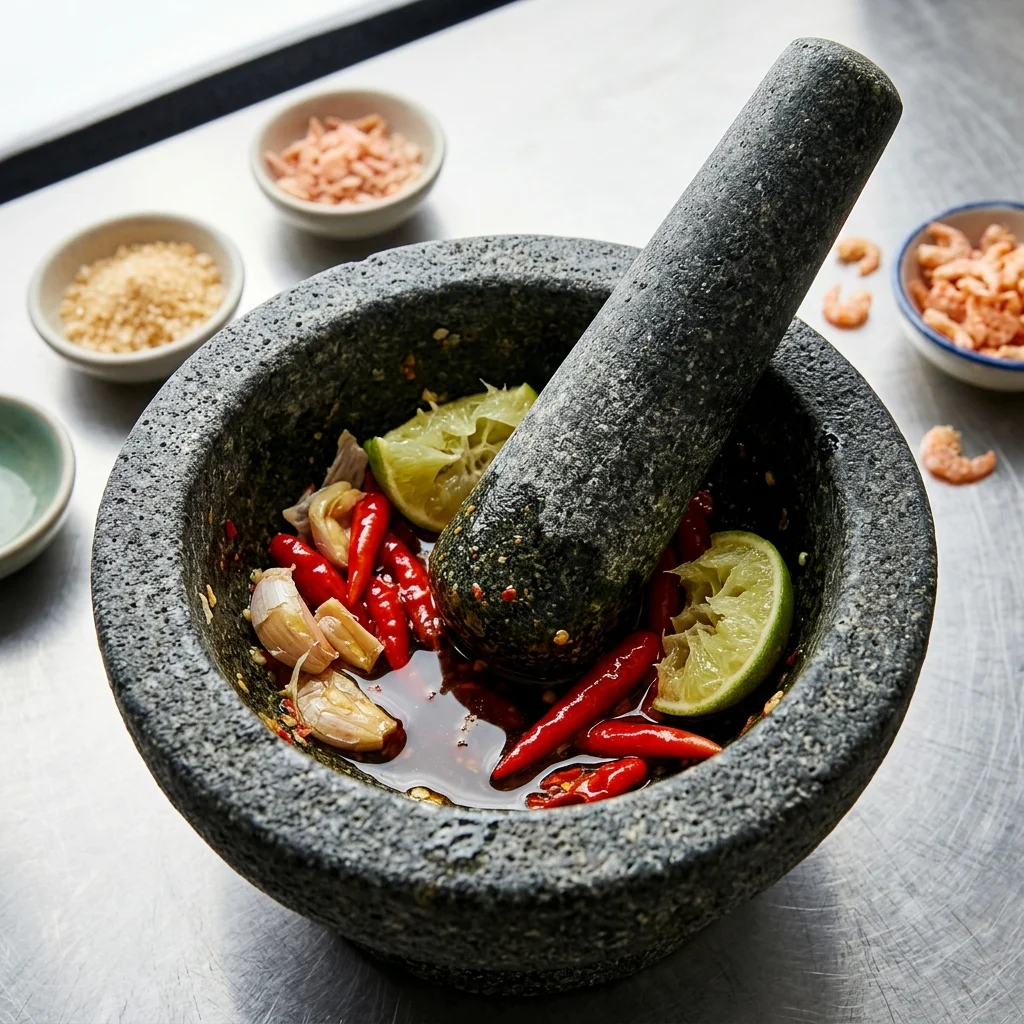
Mastering the street food scene starts with knowing exactly which fundamental dishes to look for beyond the standard tourist orders. Pad Kra Pao (minced pork or chicken stir-fried with holy basil and copious chillies) is the ultimate Thai fast food, usually topped with a crispy-edged fried egg and costing roughly 60 THB (£1.30). You will find Pad Thai everywhere, but seek out carts where the noodles look slightly dry and charred rather than swimming in an artificial orange sauce. Som Tum (green papaya salad) is pounded to order in a clay mortar right in front of you. Vendors will always ask how many chillies you want, and anything more than two will severely test a British spice tolerance. For something deeply comforting, look for Khao Moo Daeng, a plate of rice topped with roasted red pork, crispy pork belly, and a thick, sweet gravy that rarely exceeds 70 THB (£1.50). Finally, Boat Noodles (Kuay Teow Reua) are served in small, dark, intensely porky or beefy broth bowls thickened with pig's blood. These are meant to be consumed rapidly in three bites at 20 THB (£0.45) per bowl. Start your street food journey with these five staples to quickly understand the core pillars of Thai casual dining.
| Dish Name | Key Ingredients | Flavour Profile | Typical Price (THB) |
|---|---|---|---|
| Pad Kra Pao | Minced meat, holy basil, chilli, garlic | Salty, spicy, intensely aromatic | 50 - 70 |
| Pad Thai | Rice noodles, dried shrimp, peanuts, egg | Sweet, sour, slightly smoky | 40 - 80 |
| Som Tum | Green papaya, lime, fish sauce, chilli | Sharp, acidic, spicy, crunchy | 40 - 60 |
| Khao Moo Daeng | Roasted pork, crispy belly, rice, gravy | Sweet, savoury, rich | 50 - 80 |
| Boat Noodles | Rice noodles, dark broth, meat slices | Deep, herbal, metallic edge | 15 - 25 |
Identifying the Best Stalls and Ordering Without Thai
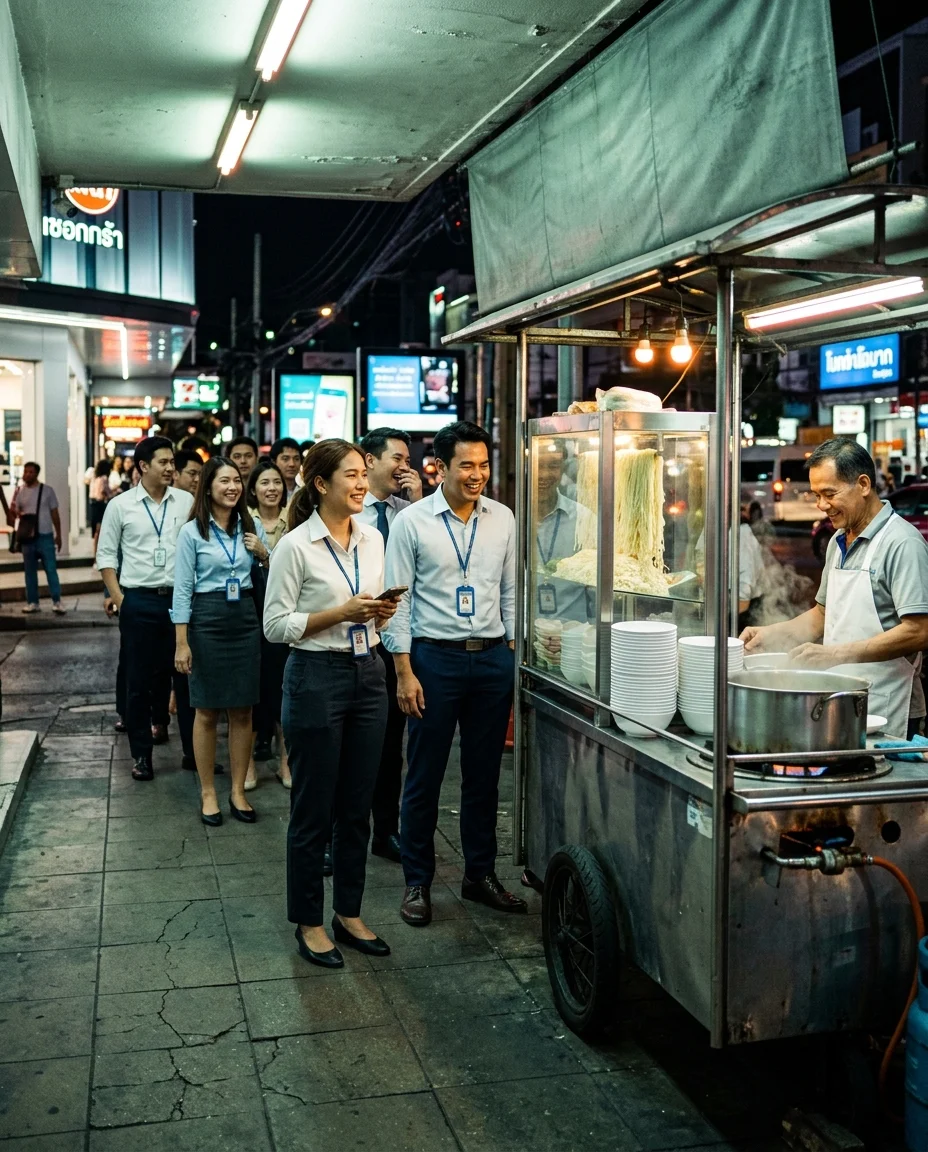
The most reliable metric for street food quality is a long queue of local office workers waiting patiently during their lunch hour or immediately after work. You can also judge a stir-fry stall by the heat of its wok; look for roaring, jet-engine blue flames and vendors working rapidly, as extreme heat is essential for preventing greasy, limp food. When approaching a busy cart, the lack of English menus or spoken English should never deter you from ordering. Most specialist vendors only cook one or two dishes, meaning you simply need to hold up your fingers to indicate the number of portions you want. If a cart offers multiple options, politely point at the raw ingredients displayed in the glass cabinet or gesture to a dish being eaten by a neighbouring customer. Do not attempt to heavily customise your order or ask for complex dietary substitutions, as this disrupts the vendor's rhythm and often gets lost in translation. Smile, point clearly, hand over small denomination notes like 20 or 50 THB bills, and step out of the way while your food is prepared. Observing and mimicking the locals is the quickest way to blend in, and vendors will appreciate your quiet efficiency during their busiest service hours.
Daytime Grazing Versus Late-Night Street Eating
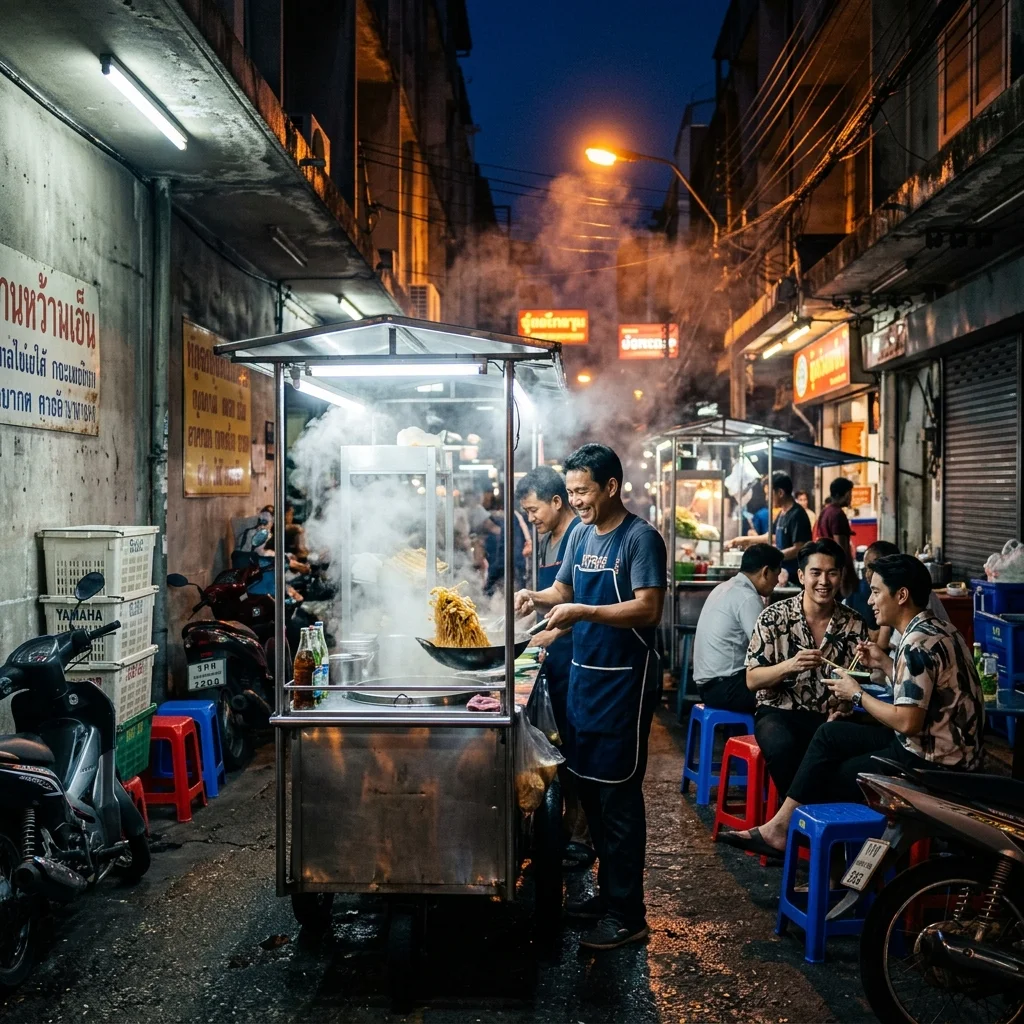
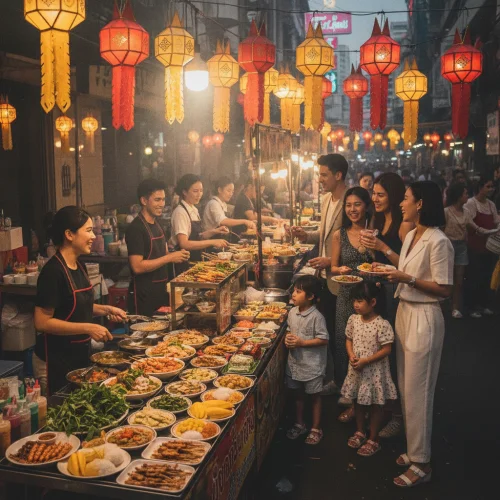
The street food environment completely transforms depending on whether you are eating under the midday sun or late into the sticky tropical night. Daytime eating is largely concentrated in covered wet markets and office district alleyways, catering heavily to workers grabbing takeaway bags of curries and rice between 11:00 and 14:00. This is the best time to find complex, slow-cooked dishes like Massaman curry or braised pork leg (Khao Kha Moo), which are prepared in massive pots early in the morning and sold until they run out. By contrast, late-night pavement eating is all about rapid, made-to-order cooking over high heat to serve drinkers, shift workers, and socialising locals. After 19:00, entire streets turn into makeshift dining rooms with folding tables and plastic chairs completely taking over the pavement. The late-night menu shifts heavily towards grilled skewers (Moo Ping), fiery stir-fries, and restorative noodle soups designed to soak up alcohol after a long evening. Plan your meals strictly according to the clock to ensure you are eating dishes at their freshest and most culturally appropriate time, avoiding carts that serve morning food late into the night.
Regional Variations Across Thailand
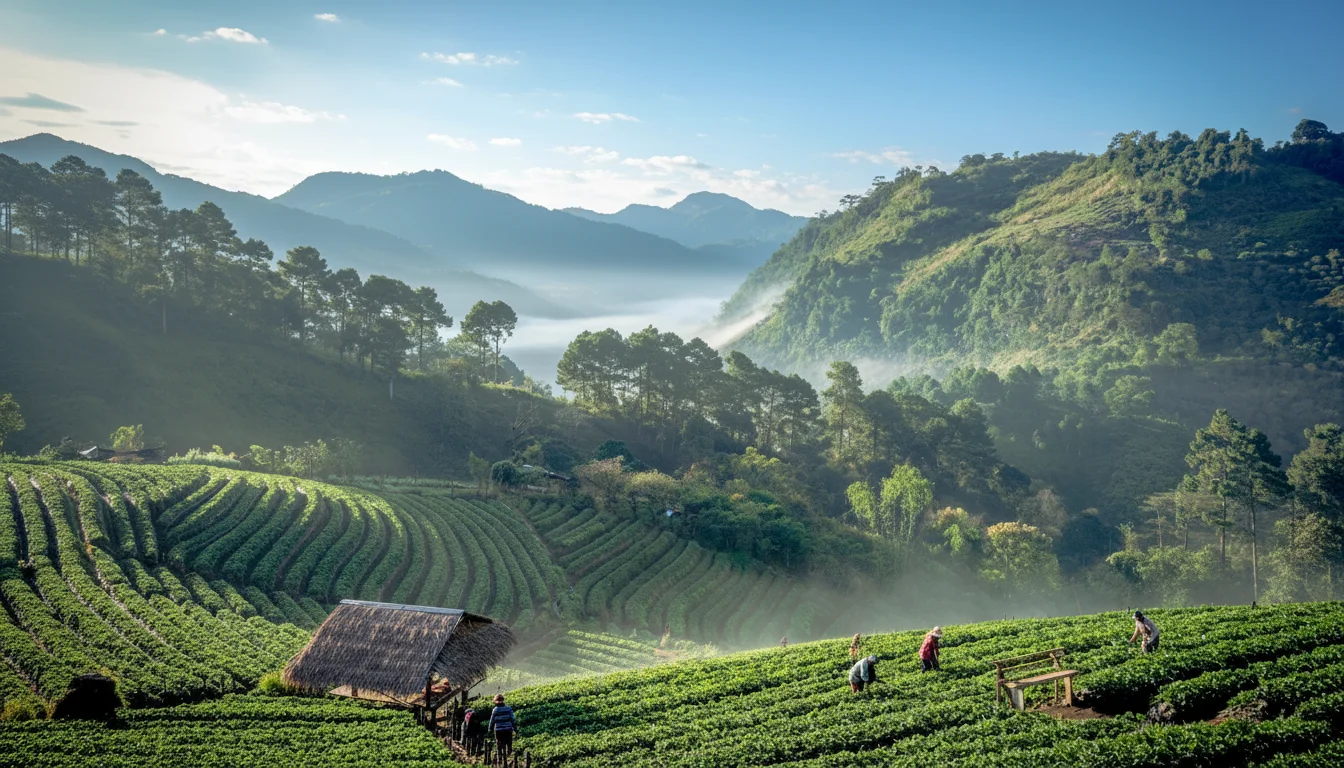
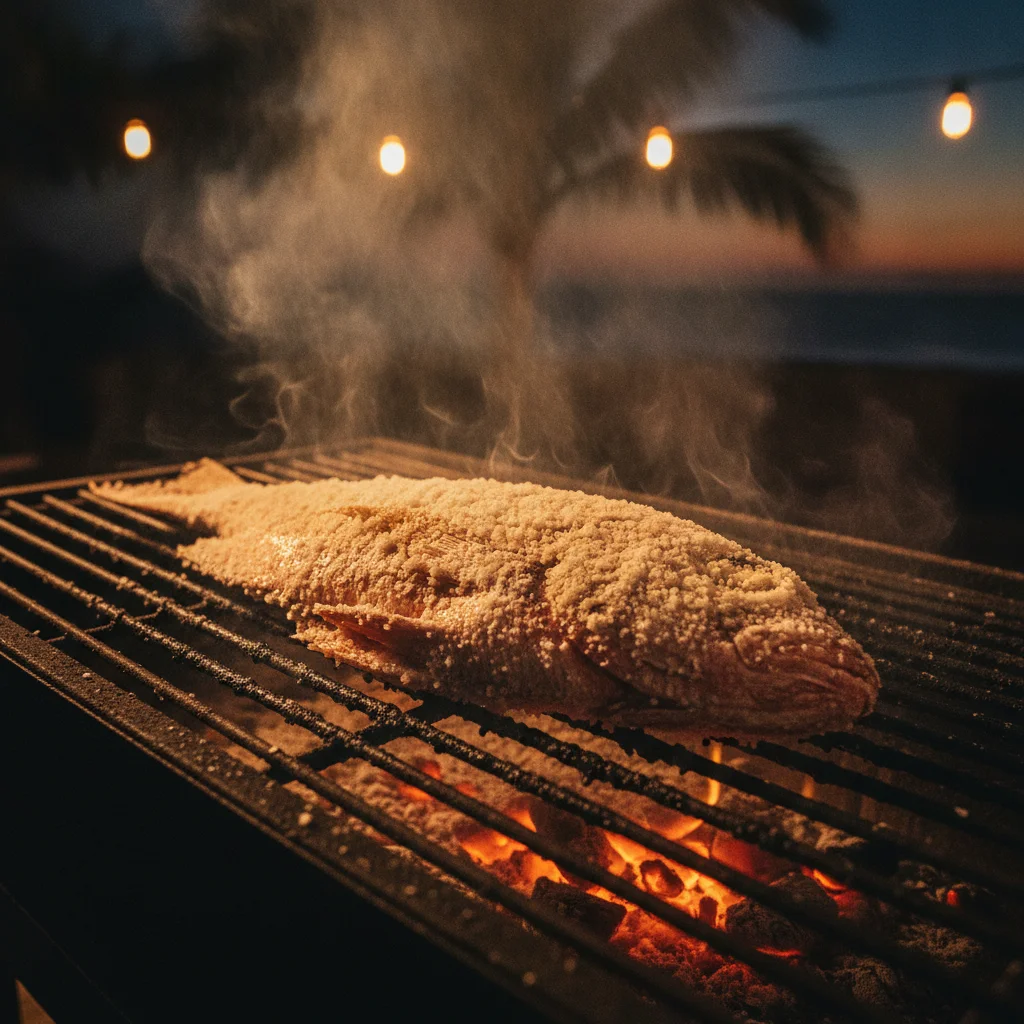
The dishes you find bubbling on a Bangkok pavement are vastly different from the specialities smoking over charcoal in Chiang Mai or the islands. Bangkok acts as a culinary melting pot, offering a heavy concentration of central Thai classics and Chinese-influenced wok dishes, often leaning towards a sweeter, richer flavour profile. Head north to Chiang Mai, and the street food becomes heavily influenced by neighbouring Myanmar and the cooler mountain climate. Here, you will find carts selling Khao Soi (a rich coconut curry noodle soup), smoky grilled northern sausages (Sai Ua), and herbaceous minced meat salads (Larb Kua) eaten by hand with sticky rice. Down on the southern islands like Phuket or Koh Samui, the street food reflects a strong Muslim influence and a heavy reliance on the ocean. Southern carts are dominated by fiery, turmeric-heavy curries, massive grilled prawns, and Roti (flaky flatbreads) served with condensed milk or stuffed with banana for 40 THB (£0.90). Recognising these regional shifts ensures you are eating the freshest local specialities rather than chasing a Bangkok dish in a southern beach town. Always eat what the local geography dictates for the best possible experience.
| Region | Signature Street Dish | Primary Flavour Profile | Key Influences |
|---|---|---|---|
| Bangkok | Pad Kra Pao, Boat Noodles | Sweet, salty, balanced heat | Central Thai, Chinese |
| Chiang Mai | Khao Soi, Sai Ua (Sausage) | Earthy, herbal, bitter, smoky | Lanna, Burmese |
| Southern Islands | Roti, Massaman Curry | Extremely spicy, rich, turmeric-heavy | Southern Thai, Muslim |
The Future of Bangkok Street Food and Vendor Crackdowns
Bangkok's pavement dining culture is currently in a state of transition, with periodic government crackdowns fundamentally altering how and where you can eat. Over the past few years, local authorities have pushed vendors off main commercial thoroughfares like Sukhumvit Road in an effort to clear the pavements for pedestrians. While the immediate kerbside experience is becoming slightly harder to find in prime shopping districts, the deep, uncompromising flavour profile remains completely unchanged in the city's residential alleys. Many famous street food vendors have simply relocated into designated hawker zones, empty lots, or ground-floor shophouses where they can operate without the constant threat of eviction. This shift means you may find yourself eating in a slightly more organised, brightly lit environment rather than directly beside gridlocked traffic. Despite these regulatory changes, the soul of Thai street food remains fiercely intact, driven by working-class locals who demand high-quality, affordable meals daily. You simply need to walk a few streets back from the major Skytrain stations, or explore deeper into residential neighbourhoods, to find the chaotic, smoke-filled dining scene that truly defines the city.
Where to Eat Street Food in Bangkok
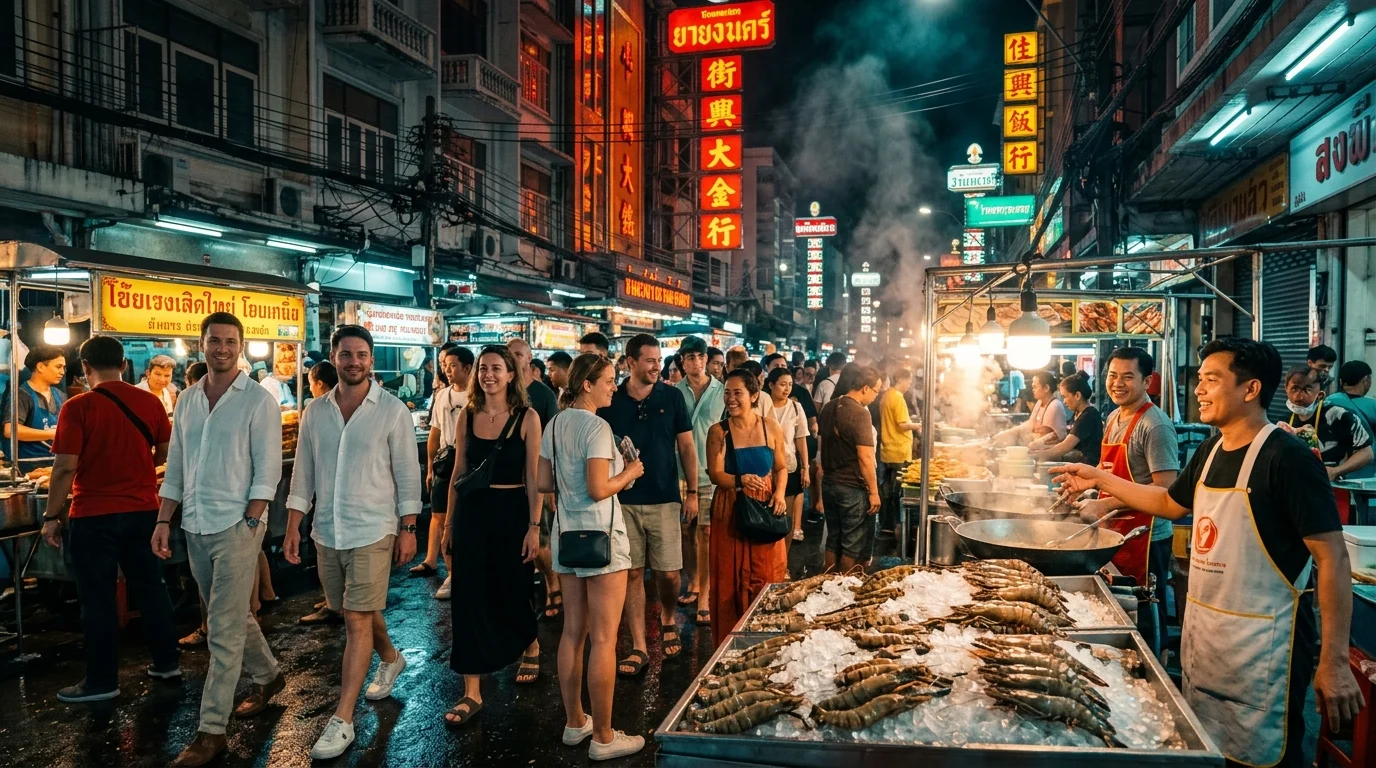
Finding the best street food in Bangkok requires stepping away from the heavily sanitised tourist strips of Sukhumvit and heading into neighbourhoods where locals actually eat. Yaowarat, Bangkok's Chinatown, remains the undisputed king of evening street food, offering everything from peppery rolled noodle soup (Kuay Jab) to toasted buns stuffed with molten pandan custard at the legendary Pa Tong Go Savoey cart. For a more intense, local experience, the Huai Khwang night market operates deep into the early hours, serving fiery Isaan (northeastern) food like raw crab som tum and grilled pork neck to a crowd of hospitality workers coming off shift. If you prefer something highly accessible and close to the Skytrain, the alleys radiating from On Nut BTS station offer a dense concentration of reliable, everyday carts selling excellent chicken rice (Khao Man Gai) and skewers without the overwhelming crowds of Chinatown. Avoid the overpriced, watered-down carts lining Khao San Road, which exist purely to feed intoxicated backpackers. For your very first night, take the MRT to Wat Mangkon and walk down Yaowarat Road to experience the sheer scale of Thai street dining.
Street Food Costs and Budgeting
Eating on the street is the most economical way to survive in Thailand, but prices fluctuate significantly depending on the ingredients and the location of the cart. A basic budget approach, relying on everyday noodle soups, simple stir-fries, and grilled pork skewers from residential alleyway carts, will cost you roughly 150 THB (£3.30) per day for three meals. Mid-range street eating includes larger portions, fresh seafood dishes like crispy oyster omelettes, or eating at famous, Michelin-recommended carts where a single specialist dish might cost 100 to 150 THB (£2.20 to £3.30). At the premium end, ordering massive grilled river prawns, whole steamed fish, or mud crab at popular tourist-heavy markets like Jodd Fairs can quickly push your meal up to 500 THB (£11.00) or more. Drink costs remain low, with bottled water at 10 THB (£0.20).
| Dining Option | Cost (THB) | Cost (GBP approx) | Notes |
|---|---|---|---|
| Budget (Basic Meals) | 40 - 60 | 0.90 - 1.30 | Noodle soups, simple chicken rice, single-plate stir-fries. |
| Mid-Range (Speciality Carts) | 80 - 150 | 1.75 - 3.30 | Michelin-rated stalls, oyster omelettes, large sharing curries. |
| Premium (Seafood Markets) | 300 - 600 | 6.60 - 13.20 | Whole grilled fish, massive river prawns, crab dishes. |
| Snacks and Drinks | 15 - 30 | 0.35 - 0.65 | Meat skewers, Thai iced tea, fresh cut fruit bags. |
What to Know Before You Go
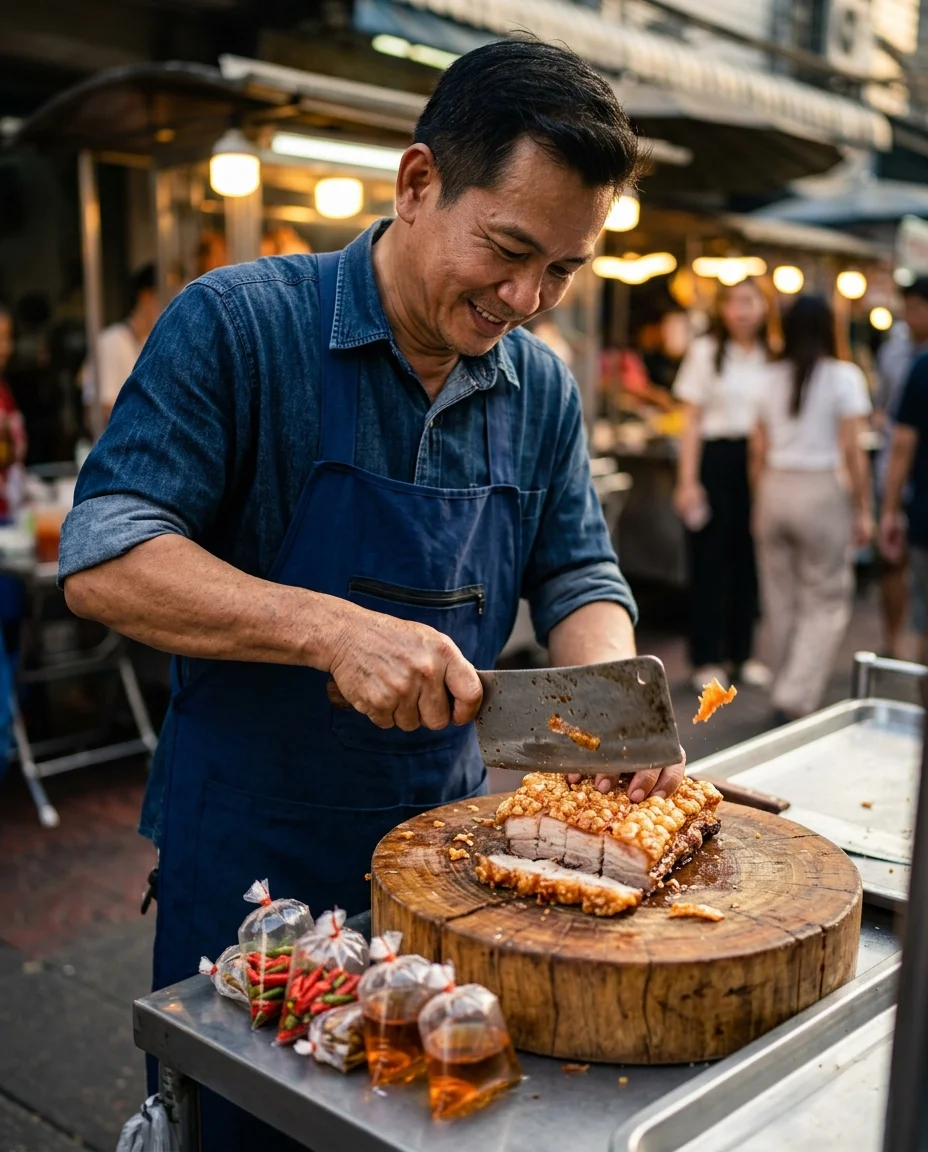
Hygiene standards are generally much better than they appear, provided you eat at stalls with high customer turnover. High turnover guarantees that meat and vegetables are not sitting in the tropical heat for hours, reducing your risk of illness. The ice used in drinks is entirely safe to consume everywhere in Thailand. Commercial factories produce the cylindrical ice cubes with holes using purified water, so you do not need to avoid iced drinks. Your stomach will likely need a few days to adjust to the sheer volume of chilli and cooking oil. This mild distress is a normal reaction to a drastic change in diet, rather than a bacterial infection. Finding a toilet mid-meal can be highly problematic when eating on the pavement. You will often need to rely on a nearby 7-Eleven, so never wait until it is an emergency.
Practical Tips for the Pavement
Always carry small change and low-denomination banknotes. Vendors rarely have change for a 1,000 THB note when you are buying a 50 THB bowl of noodles, and trying to use one will cause immense frustration.
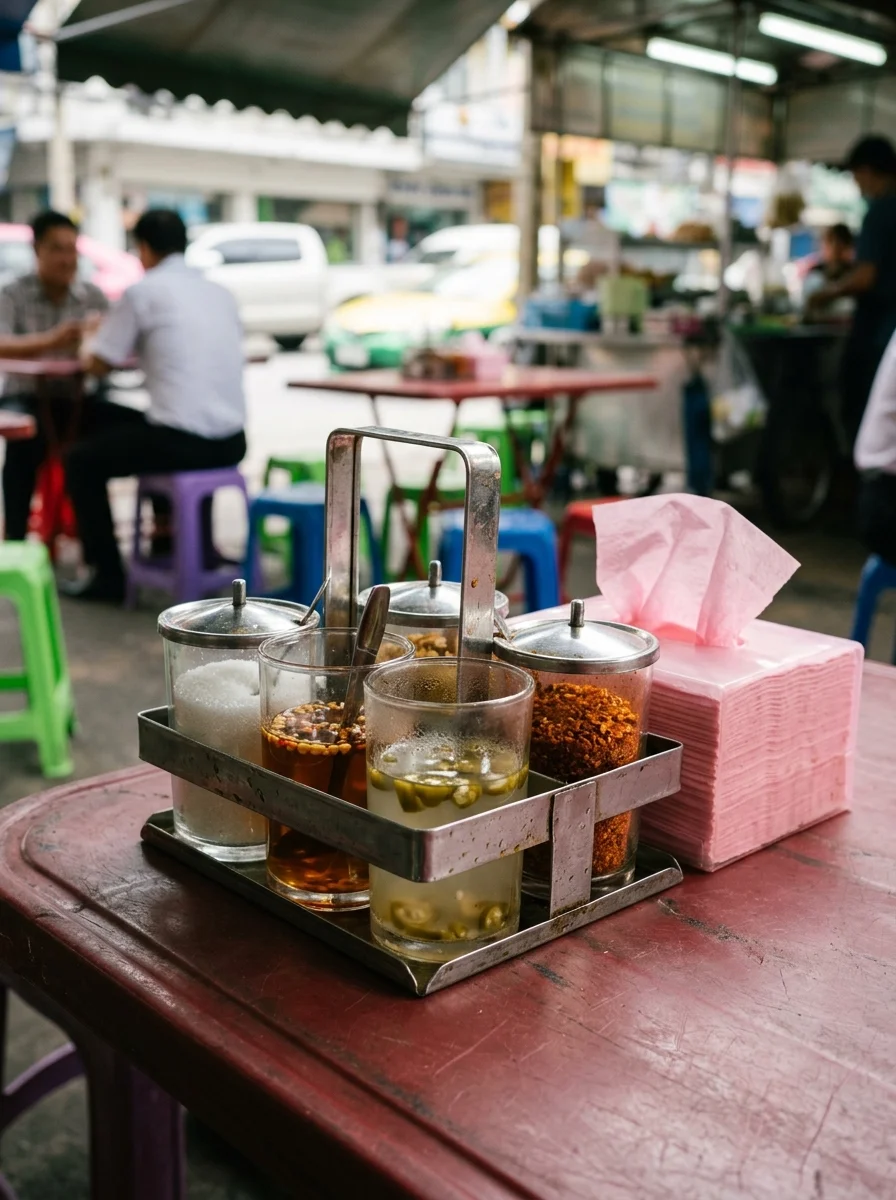
Bring your own hand sanitiser and wet wipes. The thin pink tissues provided on tables are useless for cleaning sticky pork grease off your fingers.
Watch where you sit in relation to the road and the gutter. Pavement dining often means motorbikes squeezing past your chair, and sudden downpours can turn the gutter beside your feet into a rushing torrent.
Customise your dish using the metal condiment caddy found on every table. Thais balance their own meals by adding sugar, dried chilli, fish sauce, or vinegar to reach their preferred flavour profile.
Do not block the pavement while deciding what to eat. Stand well back from the cart to inspect the food, as locals are usually in a rush to grab their dinner and head home.
Eat where you see the food being cooked directly in front of you. Pre-cooked curries sitting in metal trays are fine at 11:30 AM, but by 4:00 PM they have been lingering in the danger zone for far too long.
Say "mai phet" when ordering if you cannot handle intense heat. This translates to "not spicy," though you should still expect a mild kick as the wok usually retains chilli oil from the previous order.
Always double-check the price of seafood before ordering from a cart. Prawns and whole fish are often sold by weight rather than a flat per-dish fee, which can lead to an unexpected bill if you assume standard street food prices apply.
If you want to take these flavours home with you, learning from a local chef is the best investment you can make.
Street Food Quick Reference Guide
| Item | Detail | Notes |
|---|---|---|
| Average Meal Cost | 50 - 70 THB (£1.10 - £1.50) | This applies to standard single-plate dishes like Pad Kra Pao. |
| Safe Ice Indicator | Tubular ice with a hole | Made in commercial factories from purified water; completely safe. |
| Best Time for Curries | 11:00 to 13:00 | Curries are cooked in the morning and sold throughout the lunch rush. |
| Best Time for Wok Food | 18:00 onwards | Late-night carts specialise in high-heat, made-to-order stir-fries. |
| Payment Method | Cash only | Always carry 20, 50, and 100 THB notes; large bills are rejected. |
| Hygiene Check | Look for long local queues | High turnover means ingredients are fresh and safe to eat. |
| Spice Level | "Mai Phet" (Not spicy) | Say this if you cannot handle local heat, though it may still have a kick. |
| Utensils | Fork and Spoon | Use the fork to push food onto the spoon; rarely use chopsticks for rice. |