Shopping, Malls & Markets in Thailand
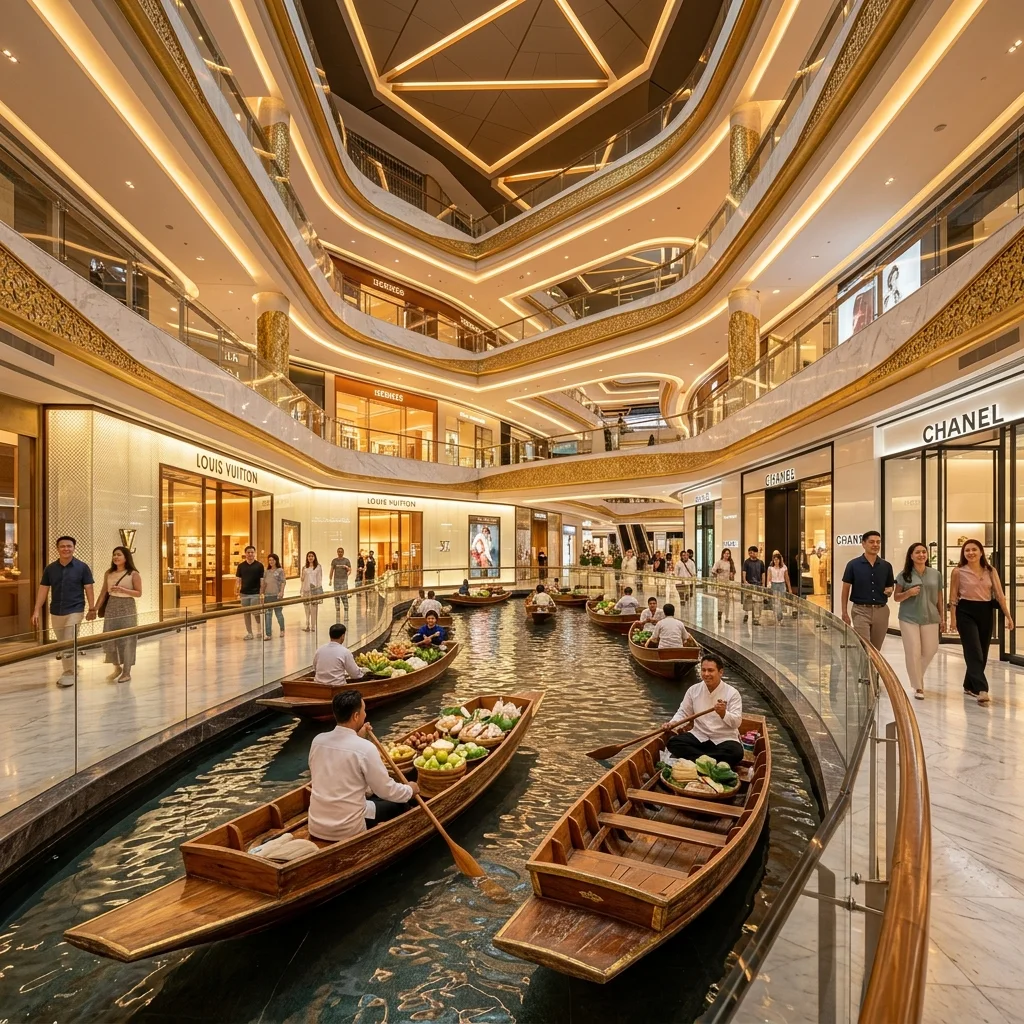
Stepping off the sweltering Sukhumvit pavement into Siam Paragon means swapping 35-degree heat for extreme air-conditioning, where luxury car dealerships sit alongside high-end fashion boutiques. Retail here is not an errand, but an all-day, multi-sensory leisure sport that completely dwarfs the traditional UK high street.
This guide decodes the Thai retail landscape, from navigating Bangkok’s sprawling luxury complexes to haggling for silk in Chiang Mai night bazaars. You will learn how to identify genuine electronics and tailoring bargains, understand where haggling is actually acceptable, and claim your VAT refund at Suvarnabhumi Airport. Armed with these specifics, you can plan exactly where to spend your baht and avoid the notorious tourist traps that catch out first-time buyers.

The Mega-Mall Experience: Bangkok vs The UK
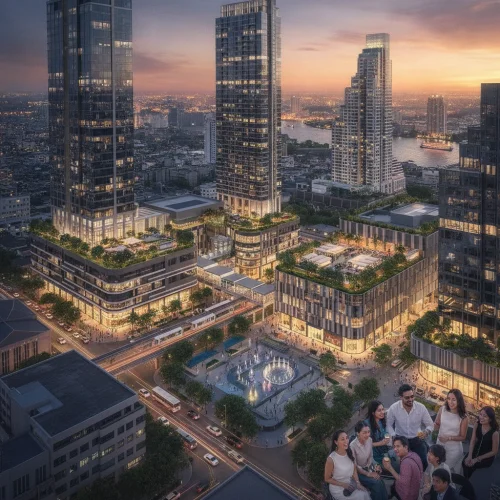
Thai shopping malls operate on a scale that makes Westfield feel like a local corner shop. In Bangkok, these air-conditioned behemoths are social hubs designed to keep you inside for 12 hours straight. IconSiam sits on the Chao Phraya River, housing an indoor floating market alongside an Apple Store with panoramic city views. Central Embassy caters to the ultra-wealthy with minimalist architecture and a dedicated cinema where tickets cost 1,600 THB (£35) for a lie-flat bed and butler service. Siam Paragon remains the heavily foot-trafficked giant in the centre, while Terminal 21 offers a quirky, airport-themed experience with different cities represented on each floor.
Plan your perfect Thailand yoga retreat. Compare luxury resorts, budget ashrams, and teacher training courses, with honest costs and destination advice.
Unlike the UK, where shops close at 5:30 PM, Thai malls peak in the evening, remaining open until 10:00 PM. The infrastructure supports this; elevated BTS Skytrain walkways connect major hubs like Siam Center, Siam Discovery, and CentralWorld, allowing you to traverse miles of retail space without ever touching the humid street level. Food is integral to the experience, with entire floors dedicated to heavily subsidised, high-quality food courts and premium dining. If you want to understand modern urban Thai culture, spend a Saturday afternoon navigating the crowds here.
Treat a Bangkok mall visit as a full-day excursion that includes lunch, dinner, and entertainment alongside your shopping.
| Mall Name | Best For | Price Tier | Nearest BTS Station |
|---|---|---|---|
| Siam Paragon | Luxury brands, massive aquarium, gourmet food | Premium | Siam |
| Terminal 21 | Independent boutiques, themed floors, cheap food court | Mid-Range | Asok |
| IconSiam | Riverside dining, indoor floating market, flagship stores | Premium | Saphan Taksin (then ferry/Gold Line) |
| CentralWorld | High-street fashion, electronics, vast scale | Mid-Range to Premium | Chit Lom |
What Actually Costs Less: Genuine Bargains for UK Buyers
UK visitors often arrive assuming everything in Thailand is cheap, but import taxes heavily skew the reality. Genuine bargains exist in locally produced goods, particularly textiles, ceramics, and high-end spa products. High-quality Thai silk from established brands like Jim Thompson or local weavers offers incredible value. Locally manufactured electronics also present savings; hard drives, memory cards, and specific camera lenses can be 15 to 20 percent cheaper at Fortune Town IT Mall than on Amazon UK. Premium Thai spa brands like Harnn or Karmakamet sell luxury diffusers and lotions at a fraction of what equivalent boutique brands charge in London.
Conversely, imported luxury fashion, European cosmetics, and international fast-fashion brands like Zara or H&M often cost exactly the same, or occasionally more, than in the UK. The real financial wins are found in Thai designer boutiques clustered around Siam Center, offering high-quality, limited-run garments for the price of standard UK high-street wear. When buying electronics, always verify that the warranty is international, as many cheaper items only carry a local Thai guarantee that becomes useless once you fly home.
Focus your budget on Thai-made products, local designers, and regional crafts to secure genuine value rather than hunting for discounted Western brands.
| Product Category | Price Compared to UK | Best Place to Buy | Notes |
|---|---|---|---|
| Thai Silk & Textiles | Significantly Cheaper | Jim Thompson, Chiang Mai | Look for the peacock emblem for authenticity |
| Spa & Aromatherapy | Cheaper | Karmakamet, Harnn | Excellent quality, makes great gifts |
| Camera Gear & Tech | Slightly Cheaper | Fortune Town, Bangkok | Always check for international warranty |
| Imported Fast Fashion | Same or More Expensive | Mega-malls | Not worth luggage space for UK visitors |
Bargaining Culture and the Counterfeit Trap
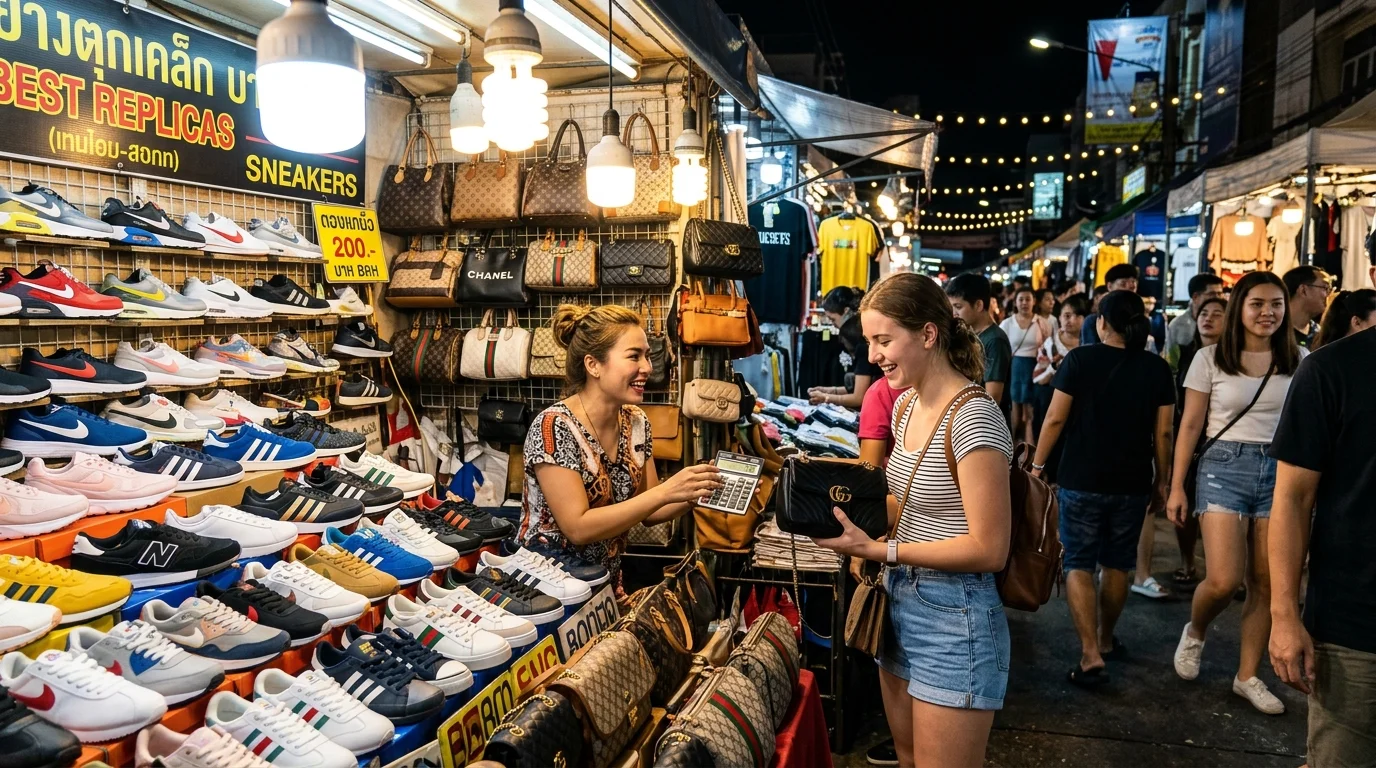
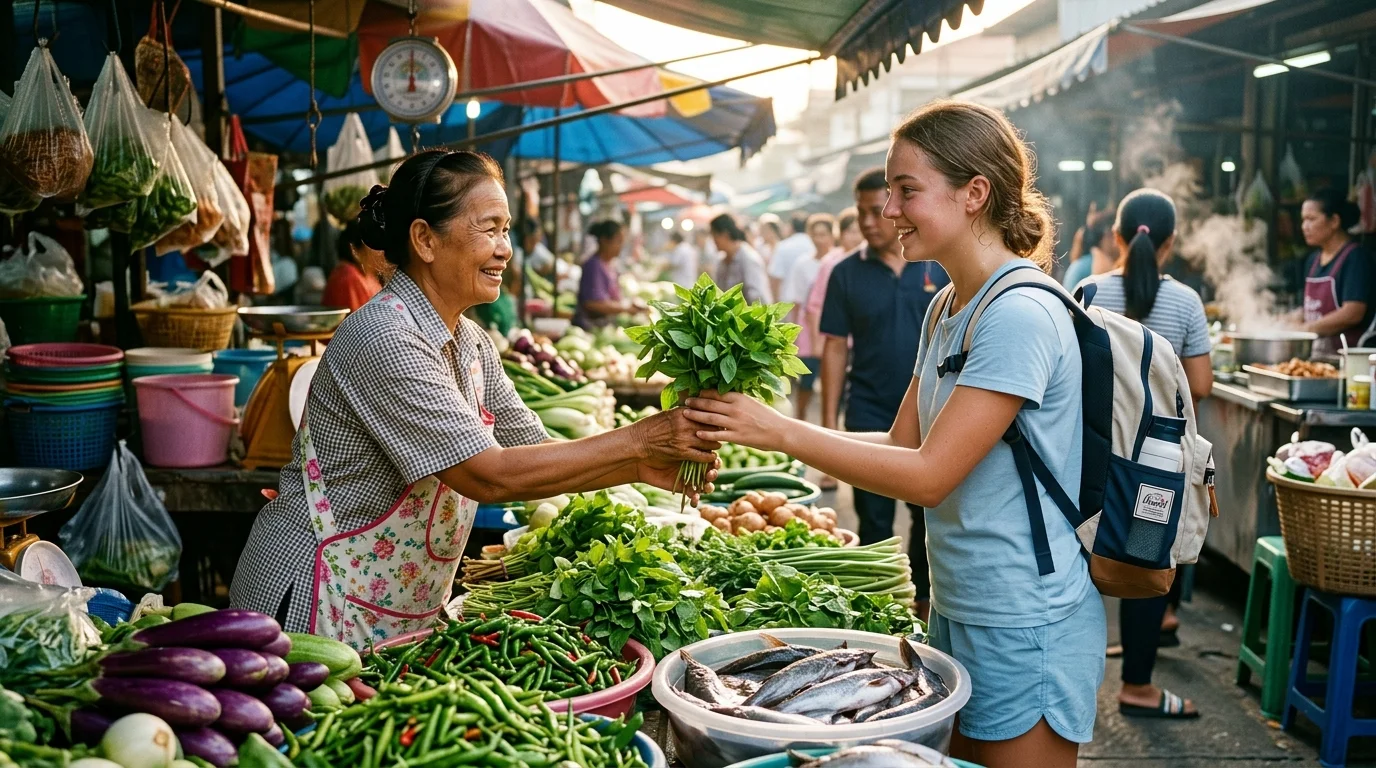
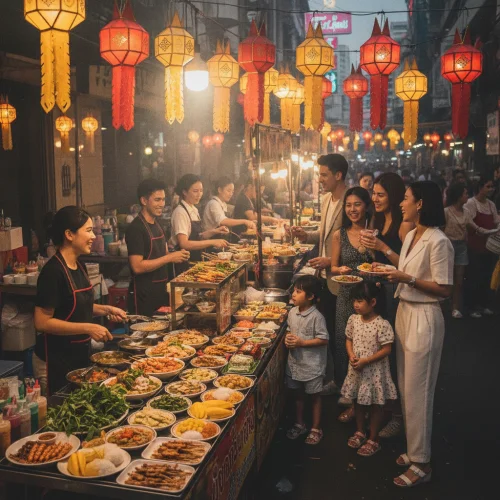
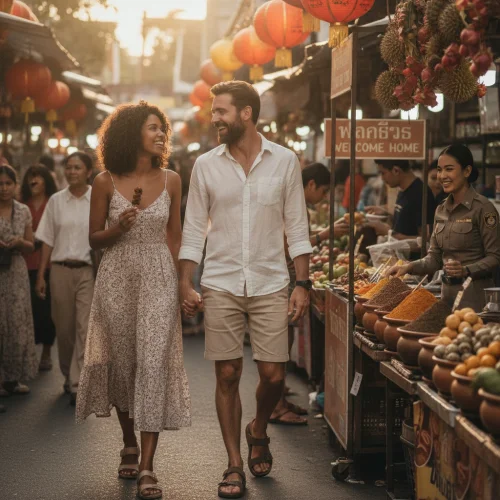
The rule for haggling in Thailand is simple: if the item has a barcode or a printed price tag, the price is fixed. You cannot negotiate in Siam Paragon, 7-Eleven, or established standalone boutiques. In street markets like Chatuchak or the Patpong Night Market, however, bargaining is expected. Start by offering roughly half the quoted price, aiming to settle at around 60 to 70 percent of the initial ask. Do this with a smile. Aggressive negotiating over 50 THB (£1.10) causes both parties to lose face. Walking away politely is often the best tactic to secure a final, lower counter-offer.
You will inevitably encounter counterfeit goods, from fake Rolex watches to counterfeit designer luggage, particularly around MBK Center and night markets. While buying a replica football shirt might seem like harmless fun, UK Border Force actively targets counterfeit imports. Confiscation at Heathrow or Gatwick is a real risk, and carrying large quantities can lead to heavy fines. Furthermore, the quality of these fakes is notoriously poor, with seams splitting and watch movements failing within weeks.
Haggle politely in markets without price tags, but avoid investing significant money in counterfeit luxury goods that could be seized upon your return home.
| Location Type | Haggling Expected? | Starting Offer Strategy | Etiquette Rule |
|---|---|---|---|
| Night Markets | Yes | 50% of asking price | Smile, keep it friendly, walk away if too high |
| Independent Boutiques | Rarely | Ask for a "cash discount" | Do not push if they say prices are fixed |
| Mega-Malls / Supermarkets | No | Do not haggle | Pay the sticker price |
| Tourist Beach Stalls | Yes | 40% of asking price | Vendors heavily inflate initial prices here |
Regional Shifts: Chiang Mai Handicrafts to Beach Markets
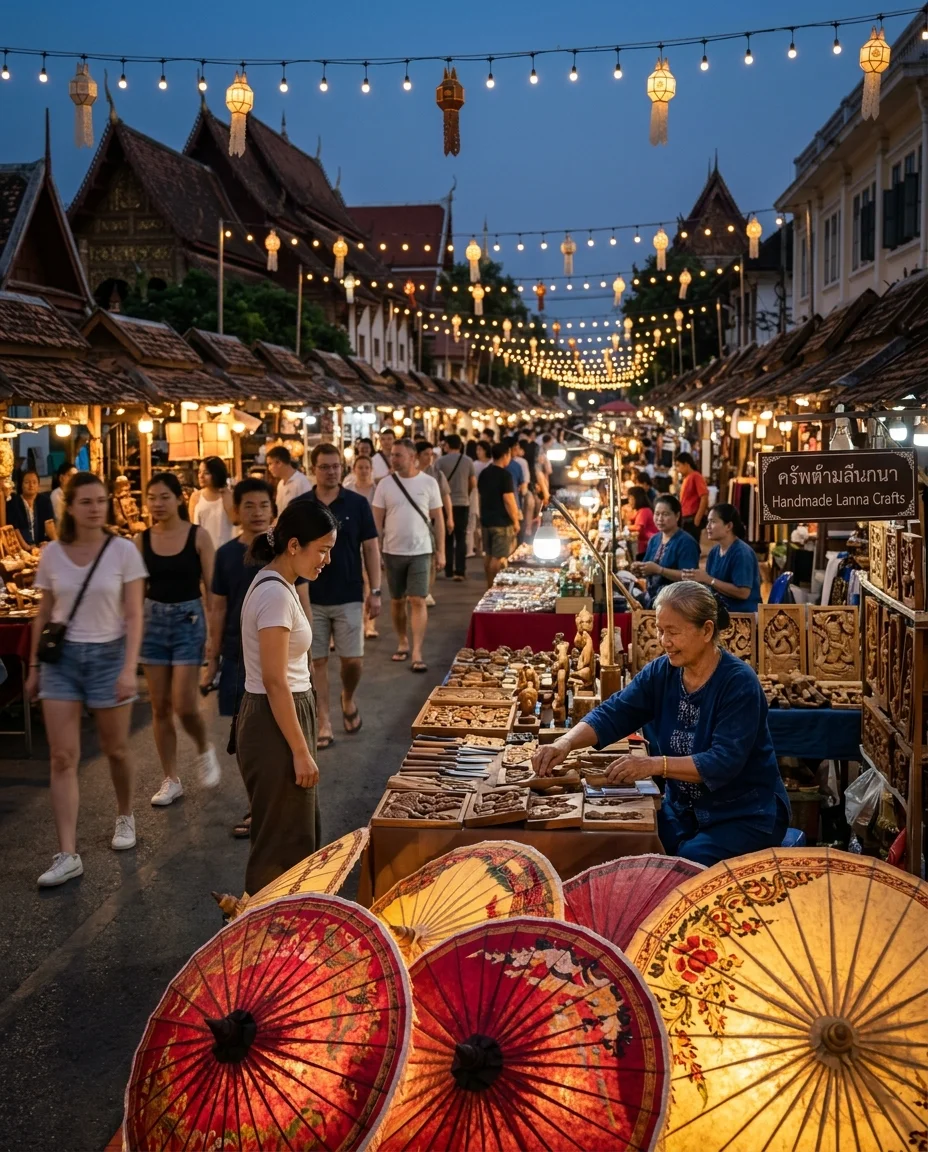
The shopping environment changes drastically once you leave Bangkok. Chiang Mai is the undisputed craft capital of the country. The San Kamphaeng Road, known as the 'Handicraft Highway', stretches for miles and is lined with factories producing celadon ceramics, lacquerware, and silver. In the city itself, the Sunday Walking Street offers genuinely handmade indigo clothing, carved teak, and hill-tribe silver at prices far lower than you will find in the capital. You can meet the artisans directly, ensuring your money goes straight to the creator.
Conversely, the shopping scene in southern beach towns like Phuket or Koh Samui is heavily tailored toward short-term holidaymakers. Markets in Patong or Chaweng are dominated by overpriced beachwear, generic mass-produced souvenirs, and aggressive sales tactics. The quality drops while the prices rise. If you are travelling from north to south, do your souvenir and craft shopping in Chiang Mai before flying down to the islands. Prices for the exact same wooden elephant or silk scarf can double once they hit the beach resort stalls.
Buy your crafts, art, and textiles in northern Thailand where they are made, rather than paying inflated tourist premiums in the southern islands.
| Region | Shopping Specialty | Vibe & Atmosphere | Price Level |
|---|---|---|---|
| Chiang Mai | Handicrafts, silver, wood carving | Relaxed, artisan-focused | Excellent Value |
| Bangkok | Mega-malls, fashion, tech, wholesale | Intense, modern, exhaustive | Varies widely |
| Phuket / Samui | Beachwear, generic souvenirs | Pushy, tourist-heavy | Inflated |
| Hua Hin | Vintage goods, night market art | Laid-back, family-friendly | Moderate |
Navigating Tailor Shops and Avoiding Scams
Getting a suit tailored in Thailand is a rite of passage, but it is also the industry with the highest concentration of tourist scams. You will hear touts on Sukhumvit Road offering a cashmere suit, three shirts, and two silk ties for 3,000 THB (£65). These packages rely on synthetic, sweat-inducing polyester blends and glued seams that bubble after one dry clean. The suit will look terrible the moment you step off the plane in London.
A genuine, high-quality tailored suit in Bangkok will cost between 12,000 and 20,000 THB (£260 to £440). Reputable tailors like Rajawongse Clothier, Tailor On Ten, or Pinky Tailor require at least three fittings spread over four to five days. They will not rush the process for a 24-hour turnaround, and they certainly do not employ touts to drag you off the street. When evaluating a shop, look at the half-finished garments hanging on the racks. A good tailor will proudly show you the canvas construction inside the jacket before the lining goes in, proving the suit is stitched, not glued.
Ignore any tailor offering a 24-hour turnaround or aggressive package deals, and expect to pay over 12,000 THB (£260) for a suit worth wearing in the UK.
| Feature | Genuine Tailor | Tourist Scam Tailor |
|---|---|---|
| Turnaround Time | 3 to 5 days | 24 hours |
| Number of Fittings | 2 to 4 | 1 or none |
| Customer Acquisition | Word of mouth, appointments | Aggressive street touts, tuk-tuk drivers |
| Construction | Stitched canvas inside jacket | Glued seams, cheap synthetic lining |
Claiming Your VAT Refund
Thailand charges a 7 percent Value Added Tax (VAT) on most goods, and as a UK tourist, you are eligible to claim a portion of this back upon departure. To qualify, you must spend a minimum of 2,000 THB (£44) in a single store on the same day. The shop must explicitly display a 'VAT Refund for Tourists' sign. At the till, present your passport and ask the staff to complete a PP10 VAT refund form. Keep this safe with the original tax invoice.
The airport process catches many people out. Before checking in your luggage at Suvarnabhumi or Phuket airport, you must present your goods, receipts, and PP10 forms to the Customs Inspection Office (usually near Door 10 at Suvarnabhumi) for a physical stamp. Do not pack your shopping deep in your suitcase, as officers will ask to see it. Only after passing through immigration and security do you take these stamped forms to the VAT Refund counter to collect your cash. If your luxury purchases exceed 10,000 THB (£220) each, you will need to show them a second time at this final counter.
Always ask for the PP10 form at the point of purchase and ensure you get your paperwork stamped by customs before dropping your checked bags at the airport.
| Step | Location | Action Required | Notes |
|---|---|---|---|
| 1. Purchase | In-store | Spend 2,000 THB+, show passport | Ask for PP10 form and tax invoice |
| 2. Inspection | Airport Departures Hall | Show goods and forms to Customs | Must be done BEFORE checking in bags |
| 3. Collection | Airside (past security) | Hand in stamped forms | Cash refund given in THB |
| 4. Luxury Check | Airside VAT Counter | Show items over 10,000 THB again | Keep expensive items in hand luggage |
Where to Shop in Thailand
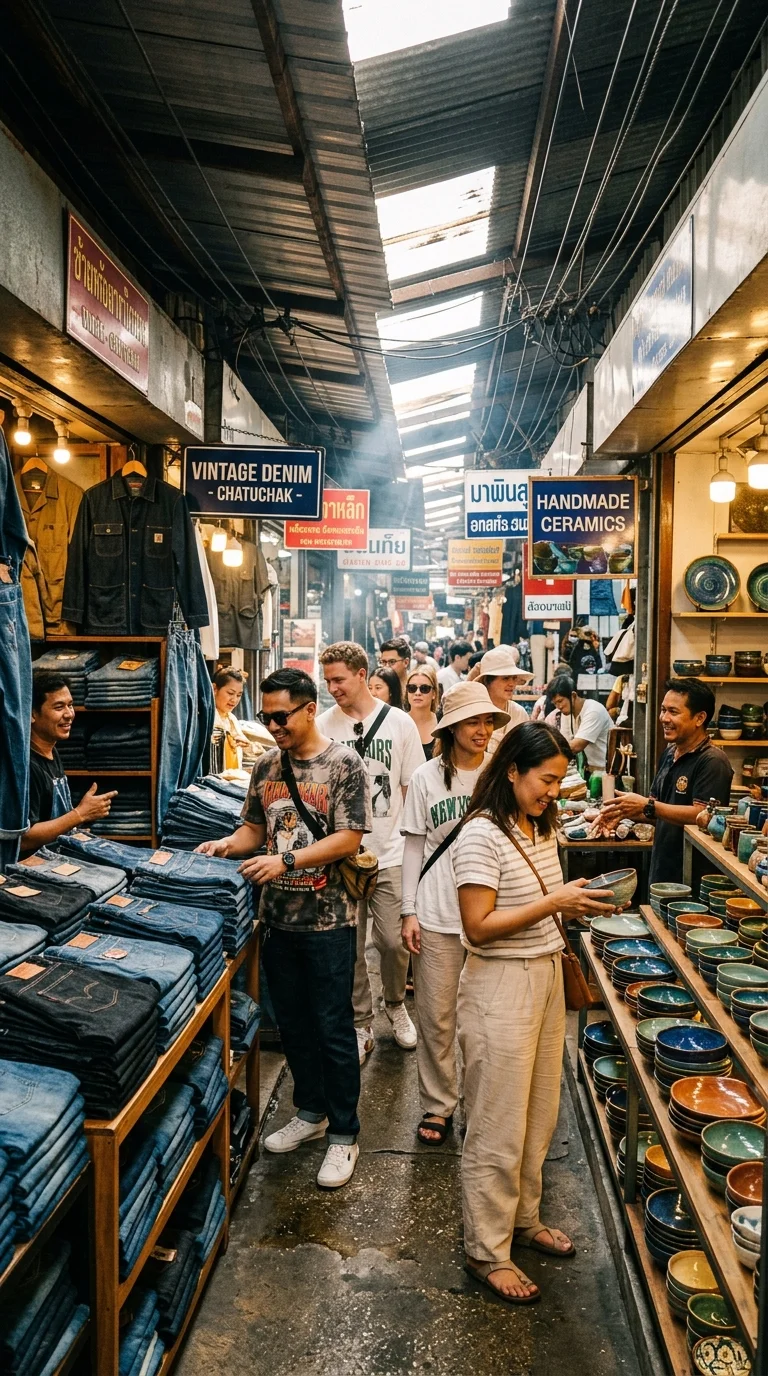
For the ultimate mega-mall experience, head straight to Siam Paragon in central Bangkok; it remains the benchmark for luxury retail and dining. If you prefer independent designers and a younger, more creative atmosphere, Siam Center sits right next door and is packed with flagship stores for local Thai fashion labels. For sheer scale and variety, the Chatuchak Weekend Market in northern Bangkok is essential. Covering 35 acres with over 15,000 stalls, it is the best place to buy homewares, vintage clothing, and wholesale crafts, though navigating the heat requires serious stamina.
When hunting for high-quality electronics, skip the tourist malls and visit Fortune Town IT Mall on Ratchadaphisek Road, where locals go for camera gear and computer repairs. In Chiang Mai, the Baan Tawai Village in the Hang Dong district is the epicentre for carved teak wood and large-scale home decor. Many vendors here have decades of experience offering direct, reliable sea-freight shipping to the UK. Down south, Phuket Town’s Sunday Walking Street offers a much more authentic and reasonably priced craft market experience than anything you will find near the major beaches.
For a first-timer, spending a Saturday morning at Chatuchak Market followed by the air-conditioned relief of Siam Paragon provides the perfect crash course in Thai retail.
Costs and Budgeting
Shopping budgets in Thailand vary wildly depending on whether you are navigating local night markets or high-end retail complexes. At the budget end, you can pick up decent quality cotton t-shirts, phone cases, and simple souvenirs at street markets for under 200 THB (£4.40). Mid-range shopping involves local designer boutiques and high-quality night market finds, where a well-made linen shirt or handmade leather bag will cost between 1,000 and 2,500 THB (£22 to £55). Premium shopping in malls like Central Embassy aligns closely with London prices; expect to pay 15,000 THB (£330) and upwards for international luxury brands or bespoke tailoring. Remember that shipping large items back to the UK will add significant cost, often starting around 3,000 THB (£65) for a basic sea-freight box.
| Option | Cost (THB) | Cost (GBP approx) | Notes |
|---|---|---|---|
| Budget (Street Markets) | 100 - 500 THB | £2 - £11 | Simple clothing, souvenirs, basic accessories |
| Mid-Range (Local Boutiques) | 1,000 - 3,000 THB | £22 - £65 | Thai designer wear, quality leather, ceramics |
| Premium (Mega-Malls/Tailors) | 12,000 - 50,000+ THB | £260 - £1,100+ | Bespoke suits, international luxury brands |
| Sea-Freight Shipping to UK | 3,000 - 8,000 THB | £65 - £175 | Depends heavily on volume and weight |
What to Know Before You Go
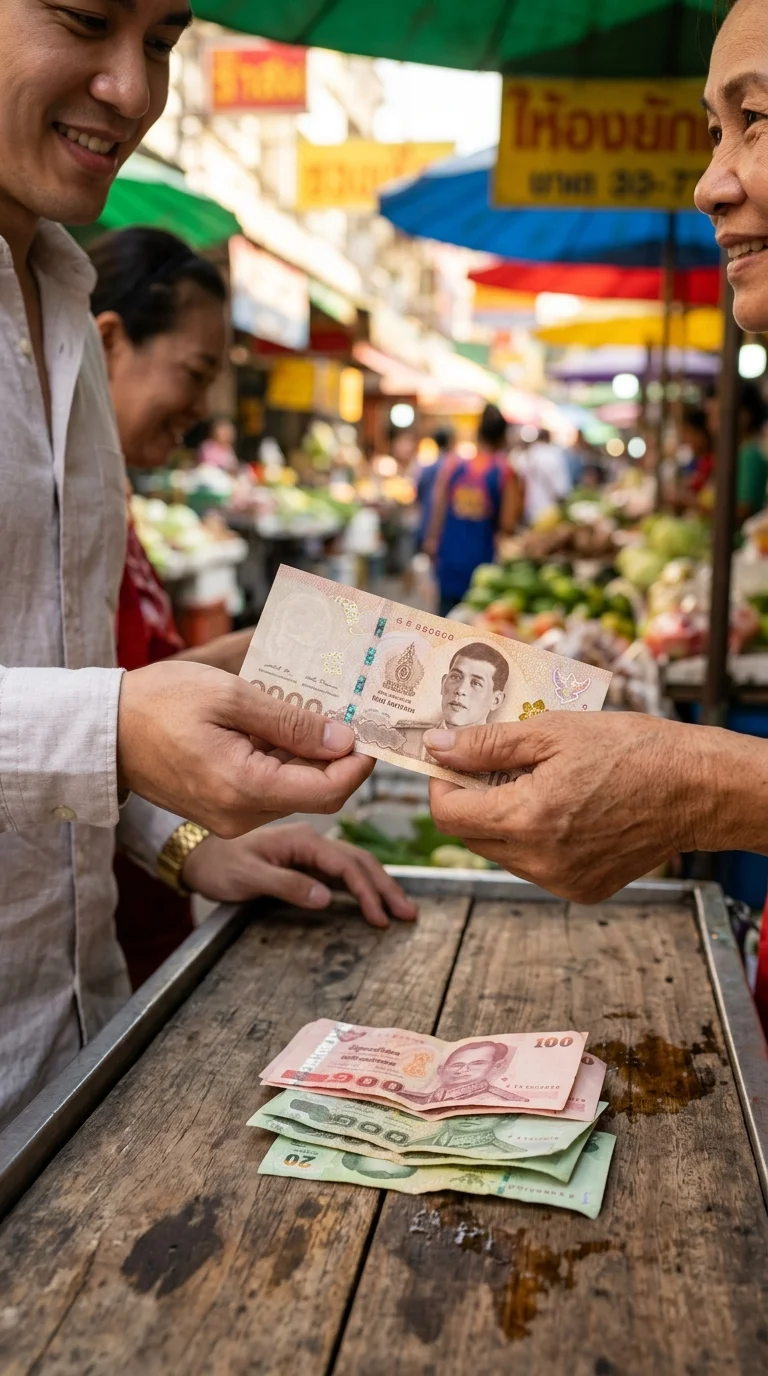
You will need physical cash for almost all market purchases and smaller independent shops. While mega-malls and hotels accept Visa and Mastercard, street vendors operate entirely on cash or local QR code systems that UK bank apps cannot scan.
Clothing sizes run significantly smaller than in the UK, particularly in local markets. An 'Extra Large' in a Thai street market often equates to a UK Medium, so always hold items up to your shoulders or ask to try them on.
Exporting Buddha images requires a specific license from the Fine Arts Department. Buying a decorative Buddha head and packing it in your suitcase is technically illegal and risks confiscation at the airport.
You must carry your physical passport if you want to claim VAT refunds. A photocopy or a picture on your phone will not be accepted by the shop staff when filling out the PP10 tax form.
Practical Tips for Shopping in Thailand
Carry a lightweight, reusable tote bag in your daypack. Thailand has largely banned single-use plastic bags at major retailers, including 7-Eleven, so you will need your own carrier.
Dress for severe air-conditioning if you plan to spend the day in the mega-malls. The temperature drop from the street is drastic, and a light jumper is highly recommended for cinema or food court visits.
Break your 1,000 THB notes at convenience stores before hitting the night markets. Small vendors often struggle to provide change for large bills early in the evening and may refuse the sale.
Wear slip-on shoes if you plan to use changing rooms in independent boutiques. Many small shops require you to remove your footwear before stepping onto their carpeted fitting areas.
Check the voltage on any electrical appliances before purchasing. While Thailand uses 220V like the UK, you will need to buy a plug adapter as Thai sockets use flat two-pin or round two-pin configurations.
Ship heavy items via Thai Post directly from Chatuchak Market. Several logistics companies have kiosks inside the market offering reliable sea-freight services straight to your UK address.
Keep your VAT refund goods easily accessible in your luggage. Customs officers at the airport need to physically see the items before they will stamp your refund paperwork.
Quick Reference Guide
| Item | Detail | Notes |
|---|---|---|
| Best Mall for Luxury | Siam Paragon & IconSiam | Premium brands, vast food options |
| Best Market for Variety | Chatuchak Weekend Market | 15,000+ stalls, go early to beat the heat |
| Best Area for Handicrafts | Chiang Mai (San Kamphaeng) | Cheaper and higher quality than the south |
| Haggling Rule | Only if there is no price tag | Aim for 60-70% of the initial asking price |
| VAT Refund Minimum | 2,000 THB per shop, per day | Must get customs stamp BEFORE checking bags |
| Tailor Scam Warning | Avoid 24-hour turnarounds | Real suits take 3-5 days and multiple fittings |
| Payment Method | Cash for markets, Cards for malls | UK phones cannot scan Thai payment QR codes |
| Export Restriction | Buddha images/statues | Requires official export permit |