Car and Motorbike Insurance in Thailand
Over 70% of road traffic fatalities in Thailand involve motorbikes, yet thousands of British tourists rent scooters with insurance policies that are completely void from the moment they turn the key. Operating a vehicle here without understanding the distinct layers of compulsory and voluntary insurance risks both financial ruin and immediate arrest.
This guide breaks down the essential legal and voluntary vehicle insurance framework in Thailand, ensuring you do not fall into common coverage traps. You will learn how the compulsory Por Ror Bor layer works for both cars and motorbikes, how to select voluntary Type 1, 2, or 3 policies, and why your UK travel insurance likely excludes scooter accidents. Use this information to rent or drive vehicles safely and legally across the country.

Understanding Por Ror Bor Compulsory Insurance
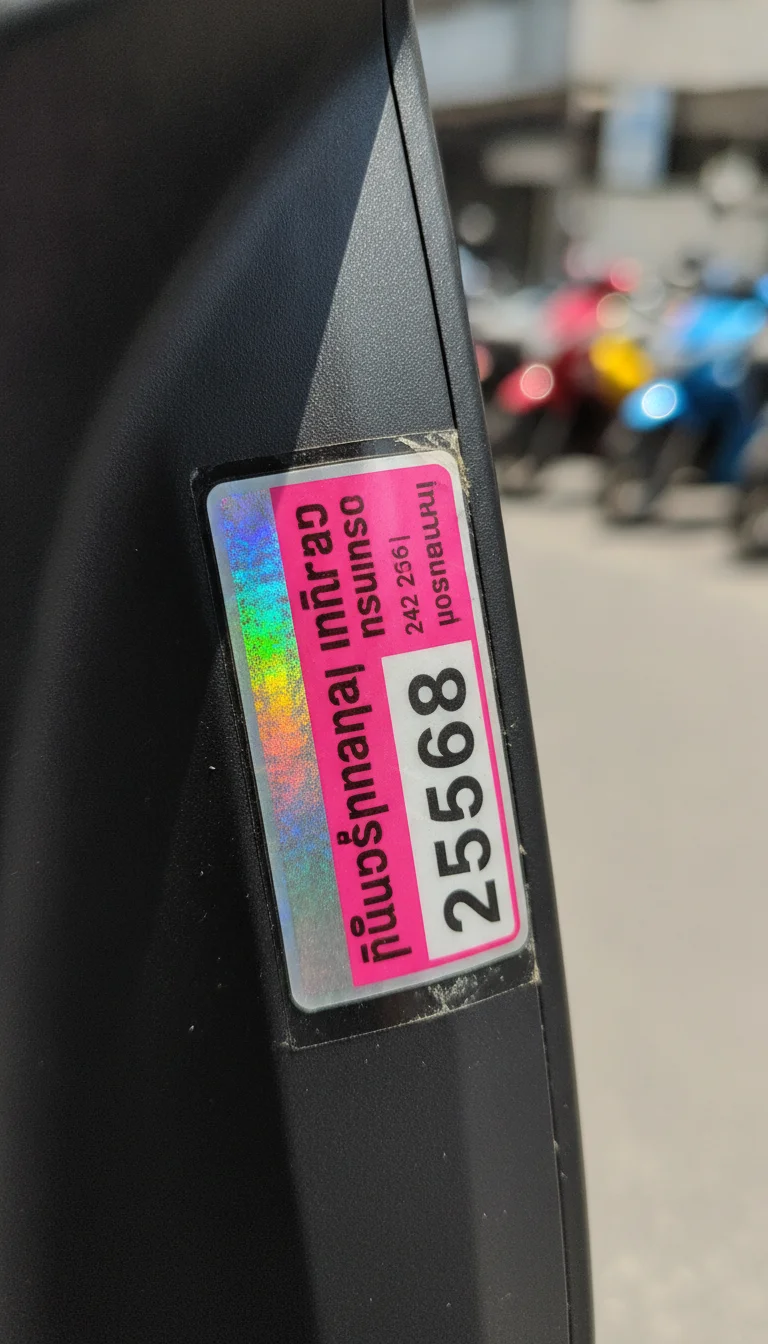
Every motorised vehicle in Thailand must carry Por Ror Bor, the compulsory third-party insurance mandated by the Motor Victim Protection Act. You cannot renew your vehicle's annual road tax sticker without showing proof of this policy. For a standard passenger car, the annual premium is roughly 645 THB (£15), while motorbikes range from 161 THB (£3.70) to 645 THB (£15) depending on engine capacity. This policy provides basic medical coverage for road accident victims regardless of who was at fault. According to Thailand's Office of Insurance Commission (OIC), the policy pays an immediate medical expense cover of up to 30,000 THB (£700) per person. If investigations prove you are not the party at fault, this medical compensation limit increases to 80,000 THB (£1,860). In the event of permanent disability or death, the payout rises to 500,000 THB (£11,630) per person. Do not rely on Por Ror Bor to cover damage to vehicles or property, as its sole purpose is human medical costs. You must secure voluntary policies if you want coverage for repairs to your own or third-party vehicles.
Stay safe in Thailand with our practical guide for UK travellers. Learn to avoid common scams, handle road risks, and protect your health. Get covered today.
| Insurance Layer | Medical Cover Limit | Vehicle Damage Cover | Legal Defense Included |
|---|---|---|---|
| Compulsory Por Ror Bor | Up to 80,000 THB (£1,860) | None | No |
| Voluntary Type 1 | Unlimited or policy limit | Full (Own & Third-Party) | Yes |
| Voluntary Type 2 | Specified policy limit | Third-Party only | Yes |
| Voluntary Type 3 | Specified policy limit | Third-Party only | Yes |
Voluntary Car Insurance Classes Explained
Sponsored
Voluntary car insurance in Thailand is divided into clearly defined classes, with Type 1 offering the most comprehensive protection. Type 1 covers damage to your own vehicle, third-party property damage, bodily injury, theft, fire, and natural disasters. Most expat drivers opt for this coverage, which typically costs between 10,000 THB (£230) and 25,000 THB (£580) annually through insurers like Roojai, Viriyah, or LMG Insurance. Type 2 insurance covers third-party damage and bodily injury, alongside theft and fire protection for your own car, but excludes own-vehicle collision repairs. Type 2 Plus is a popular hybrid that adds own-collision cover, provided another vehicle was involved and can be identified. Type 3 is the most basic voluntary policy, covering only third-party property damage and medical expenses, leaving your own vehicle entirely unprotected. If you rent a car from reputable agencies like Drive Car Rental or Hertz, a Type 1 policy is normally included, but you must check the excess amount. This deductible or excess typically ranges from 3,000 THB (£70) to 10,000 THB (£230) per claim. Always verify the policy details on the insurance certificate before driving off the rental lot.
Motorbike and Scooter Insurance Realities
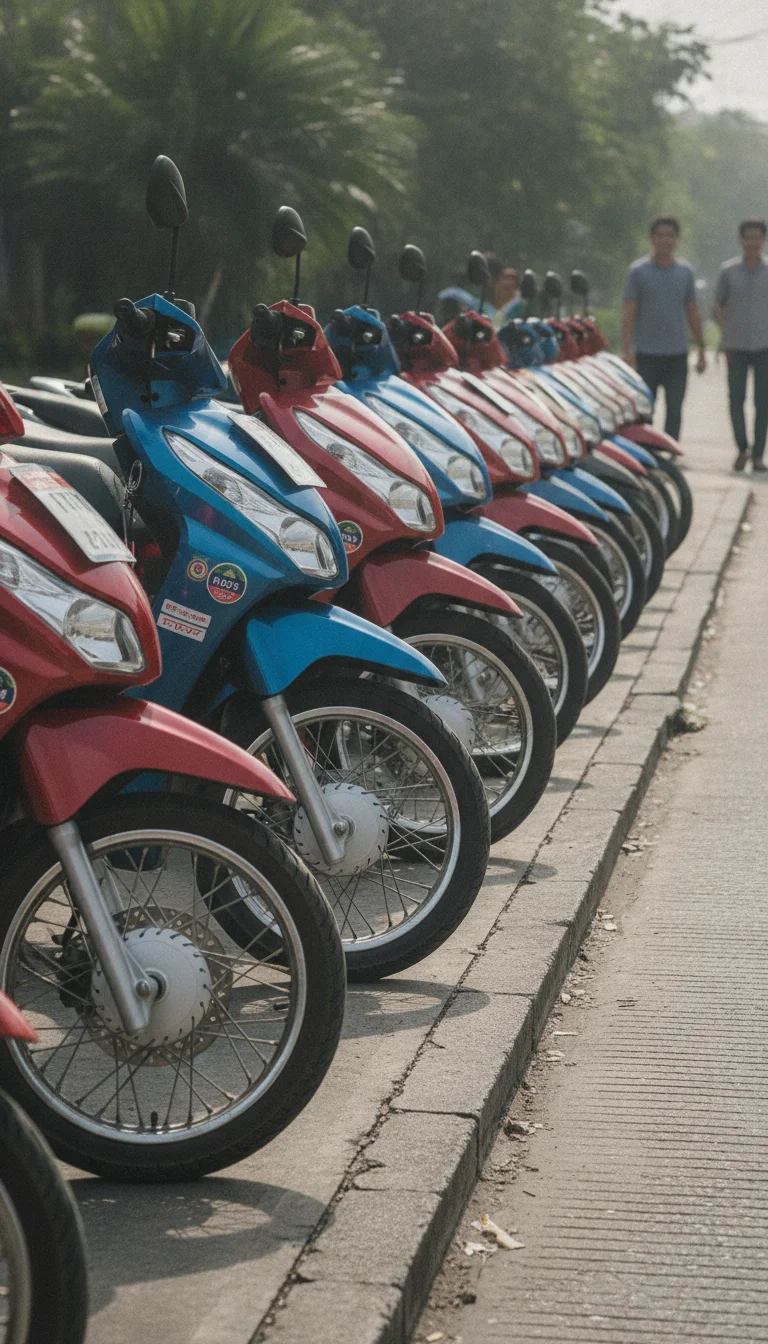
Scooter rentals are ubiquitous in Thailand, yet they represent the highest financial and physical risk for UK travellers. Most standard UK travel insurance policies specifically exclude motorcycle accidents or restrict coverage to engines under 50cc, which are virtually non-existent in Thailand where standard rental scooters are 110cc to 125cc like the Honda Click. To be legally covered by any local voluntary policy or your travel insurance, you must hold a full UK motorcycle licence (Category A) alongside an International Driving Permit (IDP) 1949 driving document stamped with the motorcycle category. If you only hold a UK car licence, you are riding illegally, which immediately invalidates all insurance cover. Rental shops often tell you that "insurance is included" in the 200 THB (£4.60) daily rental rate, but this is almost exclusively the basic Por Ror Bor compulsory policy. If you crash, you will be personally liable for every Baht of damage to the scooter, which can easily exceed 40,000 THB (£930). Reputable rental shops offer optional damage waivers for an extra 50 THB (£1.15) to 100 THB (£2.30) per day, which you should always purchase. Ensure you understand what is covered before signing the rental contract.
How To Claim After An Accident
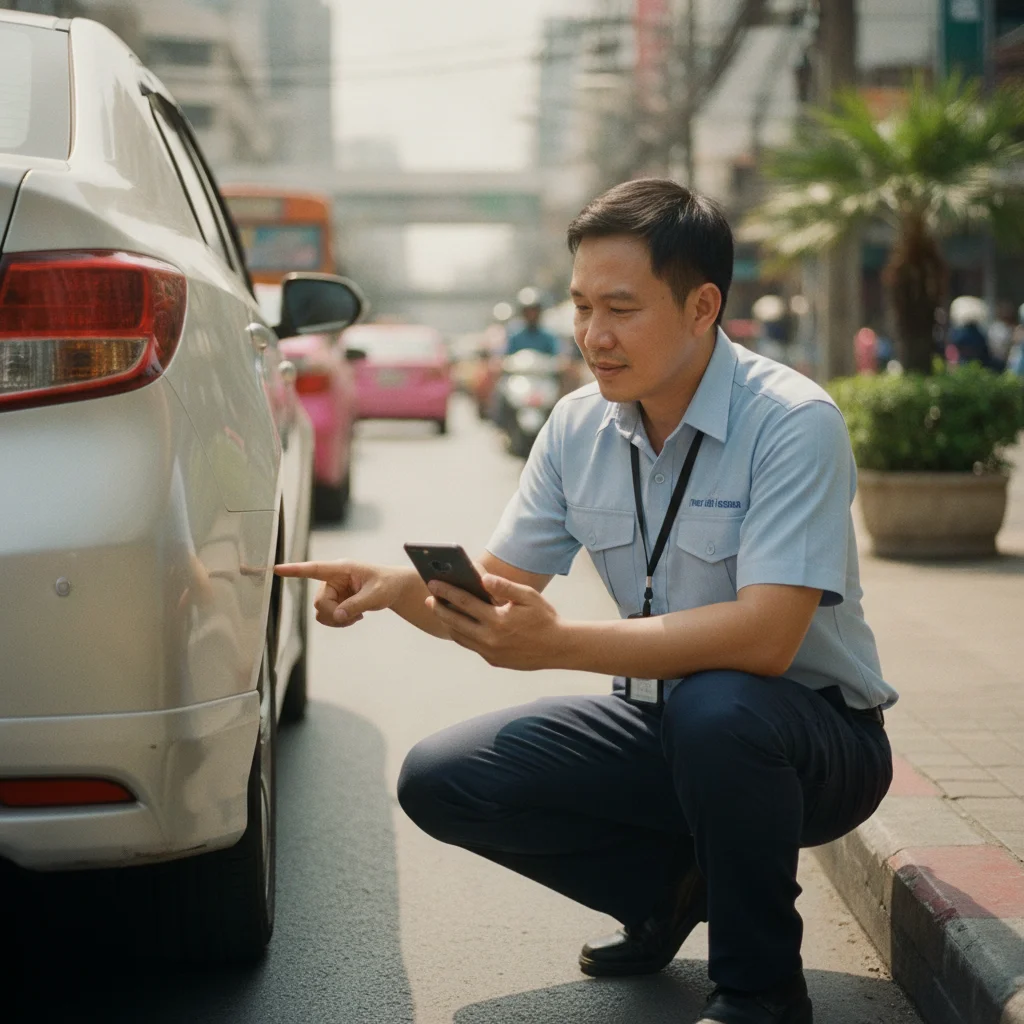
Handling an accident correctly in Thailand requires adherence to a specific protocol to ensure your insurance claim is approved. You must call your insurance company immediately from the scene of the accident, as they will dispatch an active surveyor to inspect the vehicles. Large insurers like Bangkok Insurance or AXA Thailand have surveyors stationed across major cities who arrive via motorcycle within thirty minutes. Do not move the vehicles unless directed to do so by the police, as doing so can be interpreted as an admission of fault. The surveyor will document the damage, interview both parties, and issue a claim slip known as a Bai Claim on the spot. You will need to present this paper slip to an authorised garage to have your repairs completed without paying out of pocket. If injuries have occurred, ensure the police are called immediately to file an official report, which is required for high-value claims. Keep copies of your passport, driving licence, IDP, and the vehicle's registration document handy. These documents are vital for processing your paperwork efficiently.
Costs and Budgeting
Budgeting for vehicle insurance in Thailand depends heavily on the level of protection you choose and your vehicle type. For motorbikes, the compulsory Por Ror Bor costs around 323 THB (£7.50) annually for a 125cc scooter, while voluntary Type 3 coverage adds roughly 1,500 THB (£35) per year. Cars are more expensive, with compulsory cover at 645 THB (£15) and comprehensive Type 1 policies averaging between 12,000 THB (£280) and 20,000 THB (£465) annually. If you are renting, expect to pay around 150 THB (£3.50) to 300 THB (£7) per day for collision damage waiver (CDW) add-ons. These expenses are essential additions to your travel budget to avoid massive out-of-pocket bills.
| Option | Cost (THB) | Cost (GBP approx) | Notes |
|---|---|---|---|
| Compulsory Por Ror Bor (Scooter 125cc) | 323 THB | £7.50 | Annual cost, legal minimum for medical only |
| Compulsory Por Ror Bor (Car) | 645 THB | £15.00 | Annual cost, required to renew road tax |
| Voluntary Car Insurance (Type 1) | 12,000 - 25,000 THB | £280.00 - £580.00 | Annual comprehensive premium for experienced drivers |
| Rental Collision Damage Waiver (Daily) | 150 - 300 THB | £3.50 - £7.00 | Daily add-on to eliminate rental vehicle excess |
Common Mistakes and How To Avoid Them
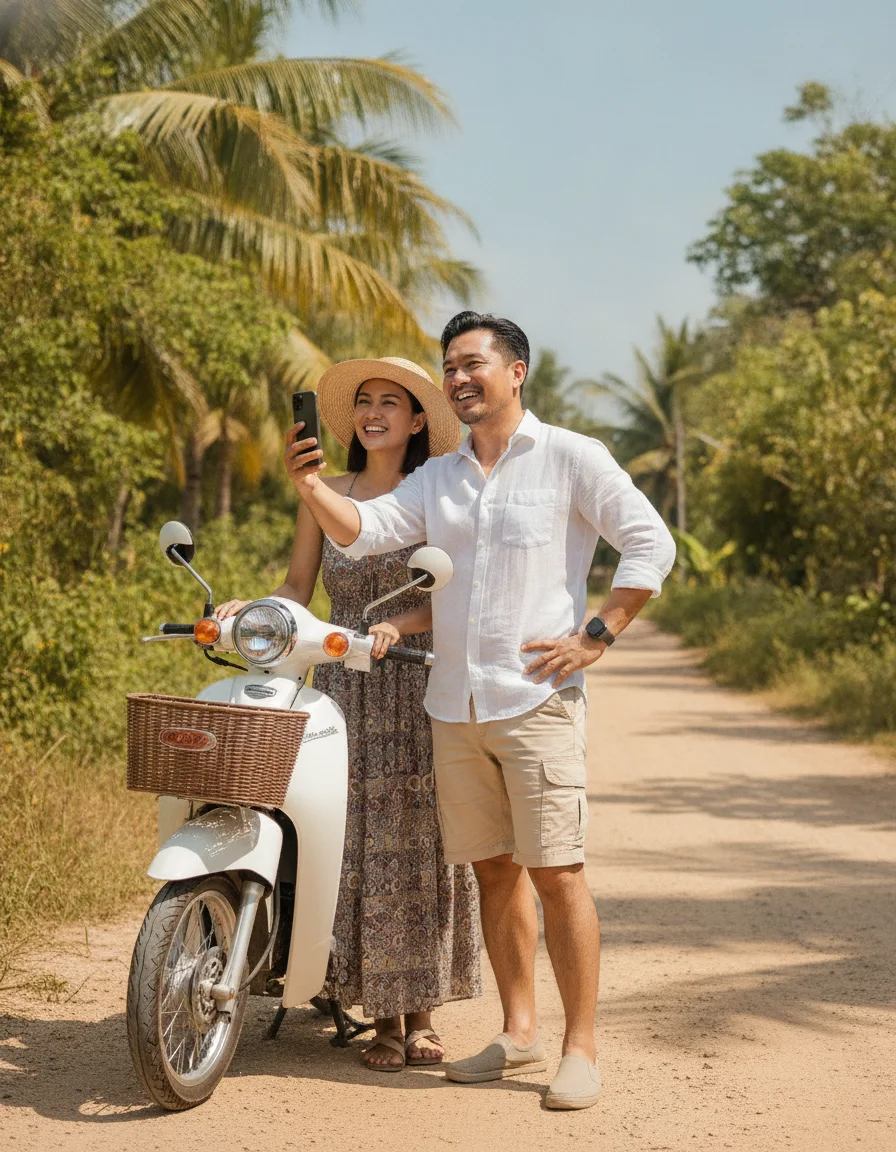
Leaving your actual passport as a deposit with a scooter rental shop is another frequent error. Unscrupulous shops can use your passport as leverage to demand inflated repair costs for pre-existing scratches. Always offer a cash deposit of 1,000 THB (£23) to 3,000 THB (£70) and a photocopy of your passport photo page instead.
Assuming the basic rental insurance covers third-party property damage is a costly misunderstanding. If you damage a luxury car, you will have to pay for the repairs entirely out of your own pocket. Always buy voluntary third-party liability top-up coverage.
Failing to photograph the vehicle before driving away is a critical oversight. You may be blamed for old scratches and forced to pay repair fees when you return the vehicle. Always take a high-definition video of the entire vehicle in front of the rental staff before departing.
Practical Tips
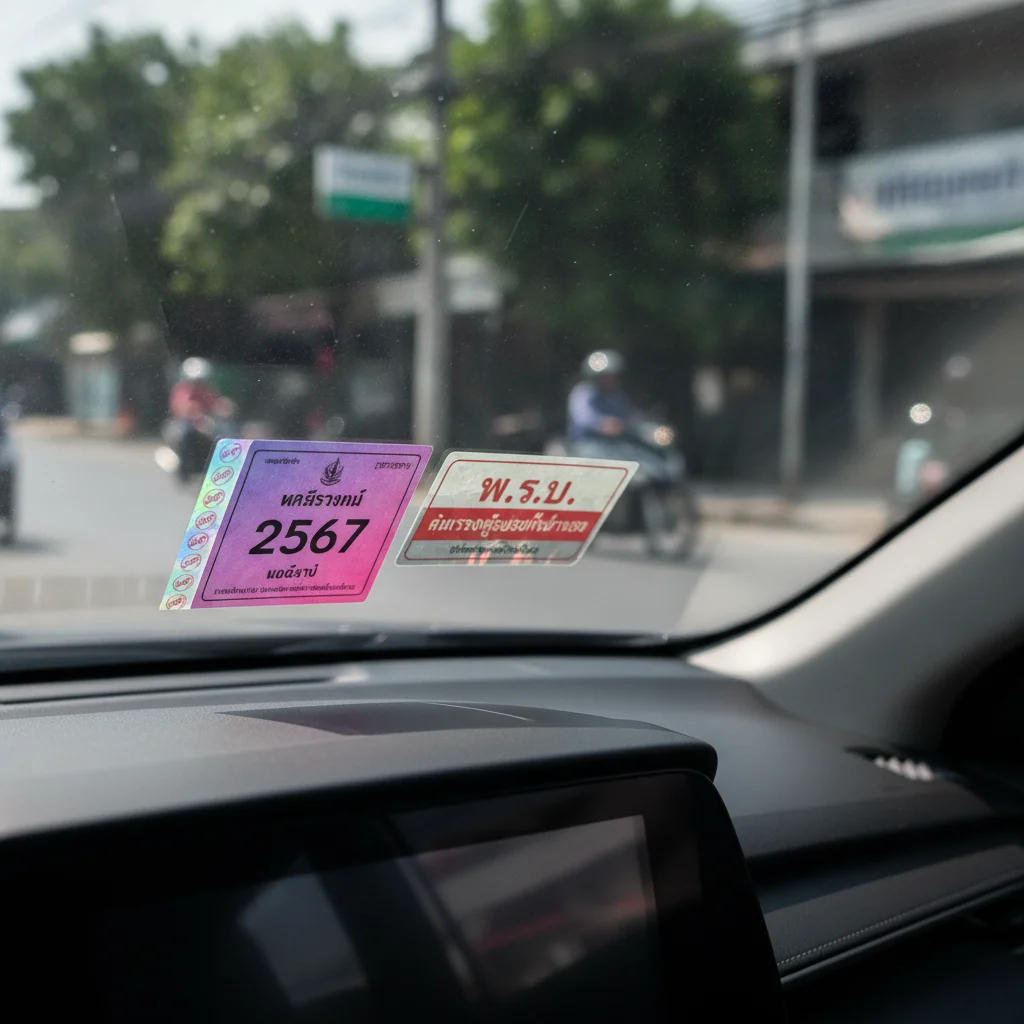
Always check the expiration date on the square road tax sticker on the windscreen or license plate frame. Driving with expired tax can result in a fine and invalidates voluntary insurance policies.
Save your insurance company's emergency hotline number in your phone contacts. Quick access to this number ensures you can summon an insurance surveyor to an accident scene without delay.
Use a dashcam in your car to record all journeys. Video evidence is highly valued by Thai insurers and police when determining fault in multi-vehicle collisions.
Do not sign any settlement agreement at an accident scene without your insurance surveyor present. Verbal agreements made in the heat of the moment are difficult to dispute later.
Verify that your rental agreement specifically mentions the insurance coverage level. Do not rely on verbal promises from rental shop staff regarding collision damage waivers.
Choose major, internationally recognised insurers when purchasing voluntary policies. Companies like Roojai, AXA, or Bangkok Insurance have extensive network garages and efficient claim services.
Quick Reference Table
| Item | Detail | Notes |
|---|---|---|
| Por Ror Bor | Compulsory third-party bodily injury insurance | Legal requirement for all vehicles; approx 645 THB (£15) for cars |
| Road Tax | Paid annually alongside compulsory insurance check | Cannot renew without active Por Ror Bor certificate |
| Type 1 Insurance | Comprehensive voluntary cover (own and third-party) | Recommended for expats and high-value cars |
| IDP Requirement | 1949 International Driving Permit | Must match the vehicle category (A for motorbike, B for car) |
| Emergency Call | Call the insurer's hotline or 1155 (Tourist Police) | Do not move the vehicles until the surveyor or police arrive |
| Rental Deposit | Use cash (1,000 - 3,000 THB) instead of passport | Never leave your physical passport with any rental shop |