Mobile Networks & SIM Cards
Stepping out of Suvarnabhumi Airport into the Bangkok humidity means nothing if your phone cannot immediately load the Grab app to book a taxi. Securing a local Thai data connection takes less than ten minutes and costs a fraction of standard UK roaming charges.
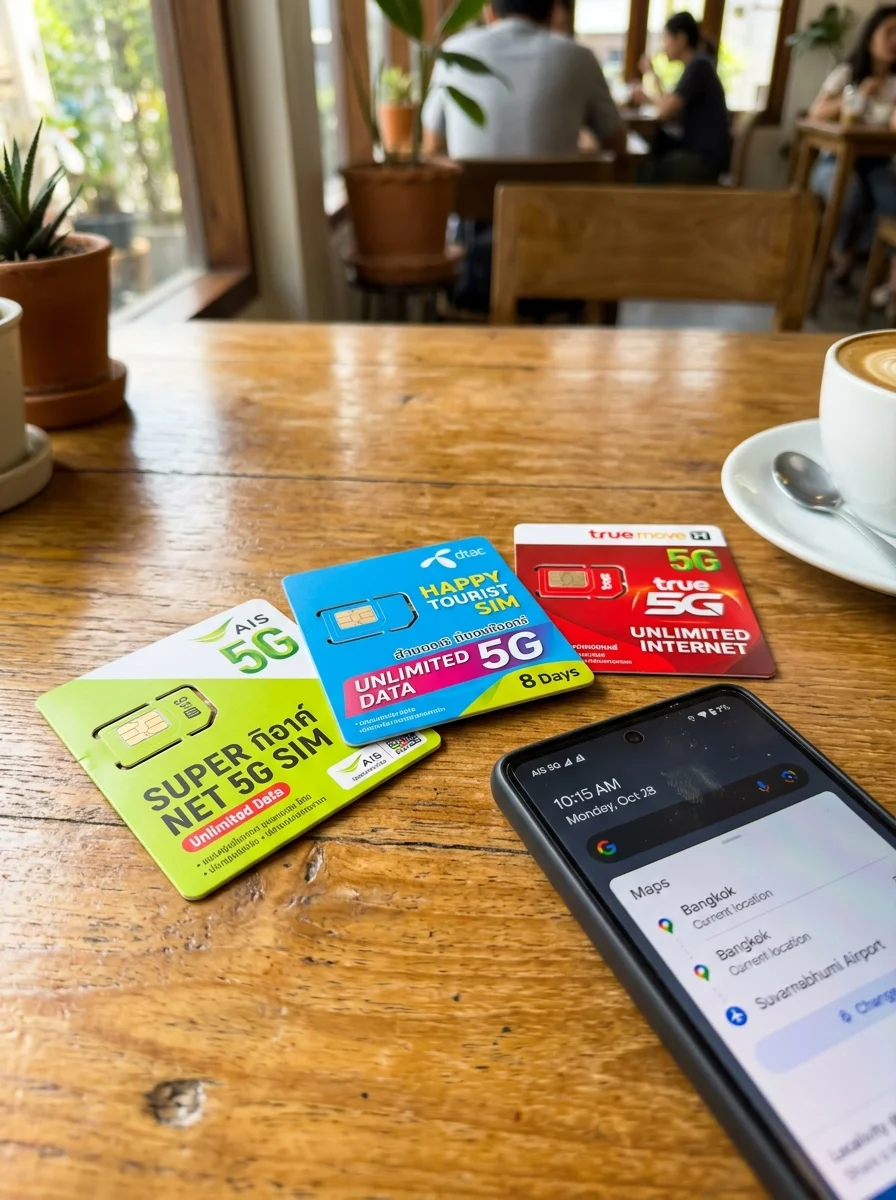
This page breaks down exactly how to get connected in Thailand, whether you opt for a traditional physical SIM or a digital eSIM. We cover the coverage differences between the major networks—AIS, DTAC, and True Move—and explain why buying a tourist package at the airport arrivals hall might not be your most cost-effective option. You will learn how to choose the right 30-day data plan, manage top-ups, and keep your UK number active for banking texts while travelling.

The Three Main Thai Networks Compared
Choosing between AIS, DTAC, and True Move dictates the reliability of your mobile internet as you move across different Thai provinces. AIS (Advanced Info Service) is Thailand’s largest mobile network and consistently provides the strongest 5G and 4G coverage in rural areas, national parks, and smaller islands like Koh Lanta or Koh Yao Noi. True Move H is a very close second, offering excellent data speeds across Bangkok, Chiang Mai, and major tourist hubs like Phuket. DTAC recently merged with True Move, meaning they now share cellular towers, but DTAC-branded SIMs still exist and generally perform well in urban centres, though they can occasionally drop to 3G in remote northern villages. For a UK traveller planning to spend extensive time island-hopping in the Andaman Sea or riding motorbikes through Mae Hong Son, AIS is the superior choice. If you intend to stay primarily in Bangkok or major coastal resorts, True Move often provides slightly cheaper data allowances with identical urban speeds. Speeds on all three networks routinely exceed 50 Mbps in cities, easily supporting video calls and remote work. Default to AIS if your itinerary includes remote islands or rural northern provinces, but accept True Move or DTAC if you are staying strictly within major cities.
Learn how to rent and drive a car in Thailand safely. Discover UK licence rules, IDP requirements, costs, and toll tips. Compare rental cars today.
Tourist SIMs vs Standard Prepaid Plans
Sponsored
Tourist packages offer immediate convenience for short holidays, but standard prepaid plans provide far more data for less money if you stay longer than two weeks. When you approach a network counter, staff will instinctively push tourist SIM packages designed specifically for foreign passports. These plans typically offer unlimited data for 8, 15, or 30 days, but the reality involves heavily throttled internet speeds. A standard 15-day tourist SIM costs around 599 THB (£13.30) and often caps high-speed data at 15GB or 30GB, after which your connection slows to a crawl of 384 Kbps. Standard prepaid plans, conversely, require you to buy a basic SIM card for 49 THB (£1.10) and then add a specific 30-day data package. For 200 to 300 THB (£4.40 to £6.60), you can secure a standard 30-day package with 50GB of high-speed 5G data or a fixed-speed unlimited plan running at a constant 15 Mbps. Acquiring a standard plan requires explicitly asking the staff for a normal prepaid SIM and pointing to the specific add-on package you want, which can sometimes involve a slight language barrier. Insist on a standard 49 THB prepaid SIM and a monthly data add-on if you are staying in Thailand for more than 14 days and want to avoid paying a premium for tourist packaging.
| Plan Type | Duration | Typical Cost (THB) | Data Allowance | Speed Profile |
|---|---|---|---|---|
| Tourist SIM | 8 Days | 299 THB | 15GB high-speed | Drops to 384 Kbps after 15GB |
| Tourist SIM | 15 Days | 599 THB | 30GB high-speed | Drops to 384 Kbps after 30GB |
| Standard Prepaid | 30 Days | 250 THB | Unlimited | Capped at constant 15 Mbps |
| Standard Prepaid | 30 Days | 300 THB | 50GB high-speed | Drops to 1 Mbps after 50GB |
Buying at the Airport vs In Town
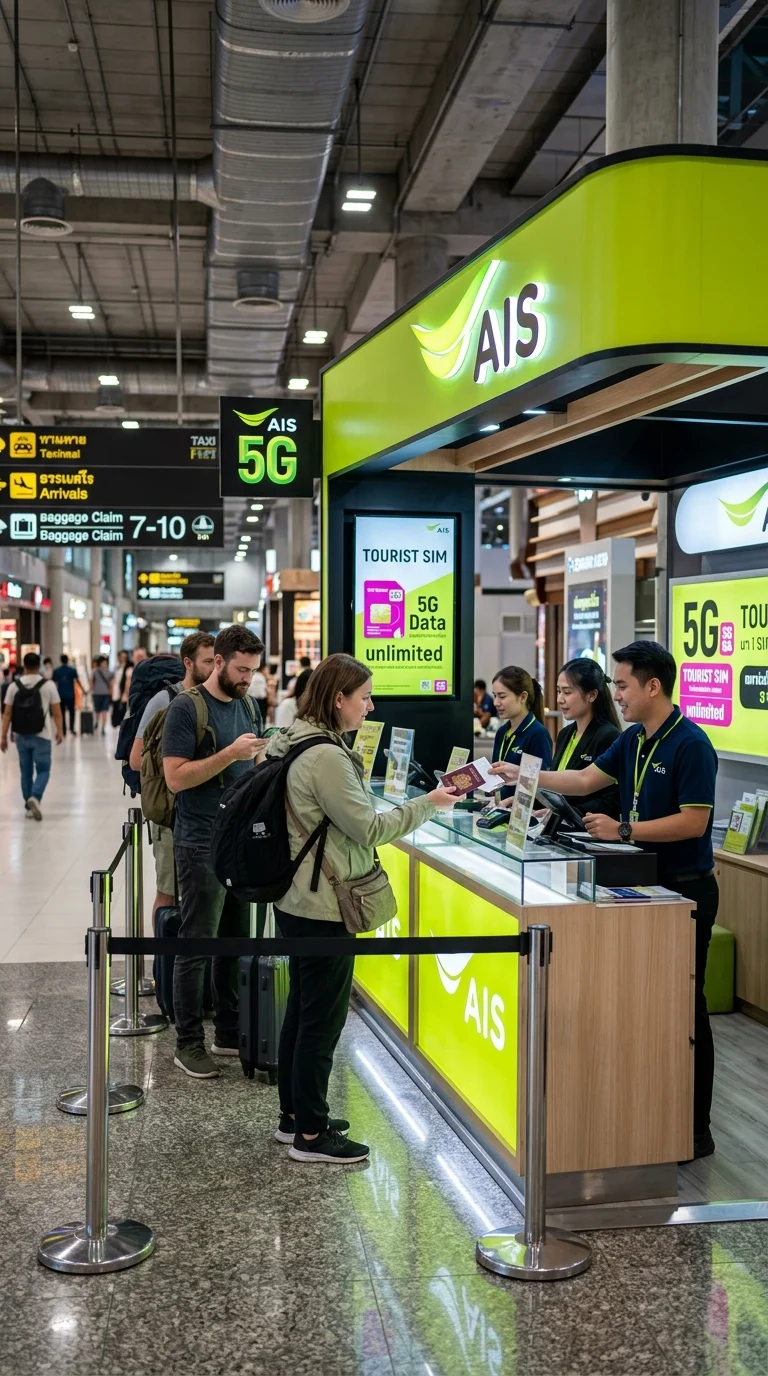
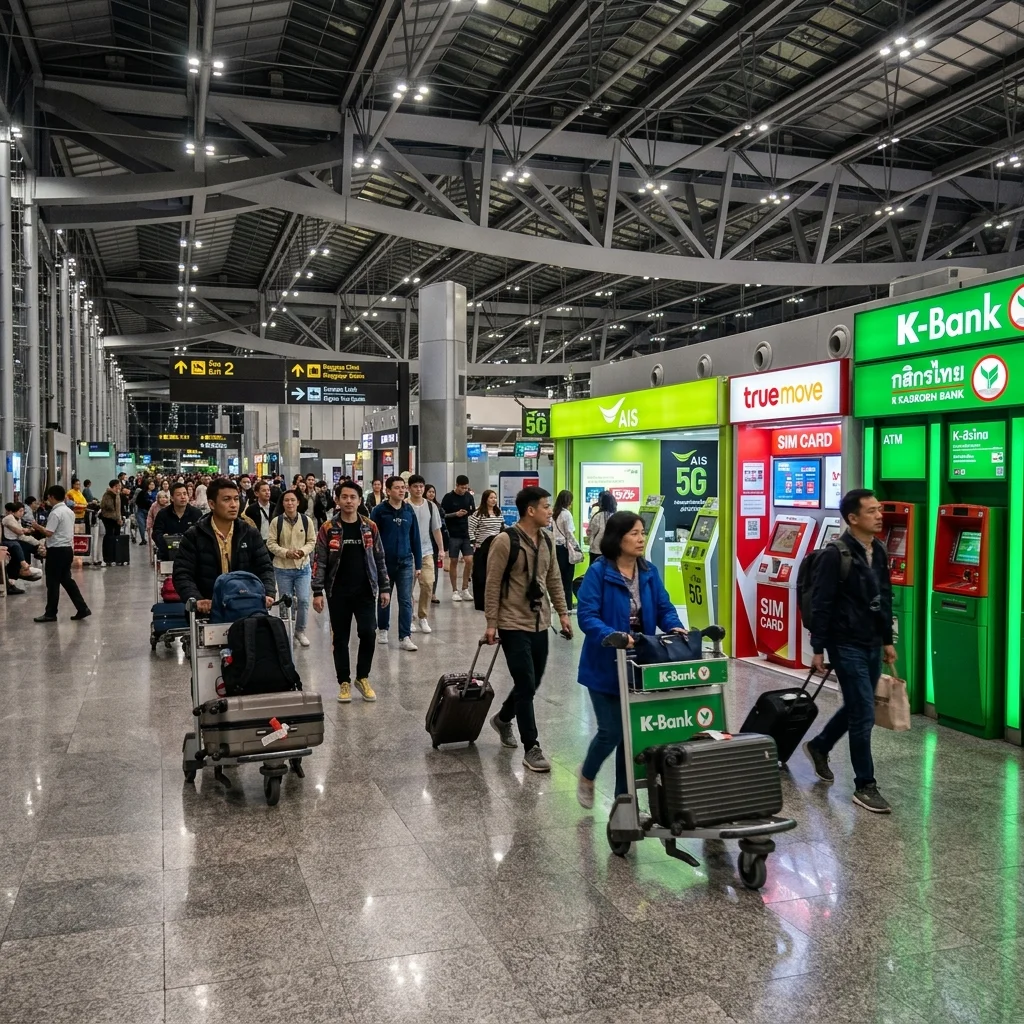
Purchasing your SIM card at the airport guarantees immediate connectivity upon landing, but restricts you entirely to expensive, fixed-duration tourist packages. The mobile network kiosks at Suvarnabhumi (BKK), Don Mueang (DMK), and Phuket (HKT) airports are located immediately after customs control. They operate 24 hours a day and the staff will expertly swap your physical SIM, tape your UK SIM to the cardboard packaging, and activate the Thai network within two minutes. However, these airport counters strictly sell high-margin tourist packages, and staff will routinely refuse to sell standard 49 THB prepaid SIMs. If you want the cheaper standard plans, you must wait until you reach a city centre. Every major shopping mall in Thailand features official AIS, DTAC, and True Move shops, usually on the upper electronics floors. Convenience stores like 7-Eleven also sell True Move and DTAC SIM cards, though the staff there rarely speak enough English to help you navigate data packages or activate the card, which requires scanning your passport and face using a dedicated app. Buy a cheap 7-day tourist SIM at the airport if you need instant maps and transport apps, then visit an official network shop in a mall to buy a standard 30-day package once that expires.
The eSIM Option for UK Travellers
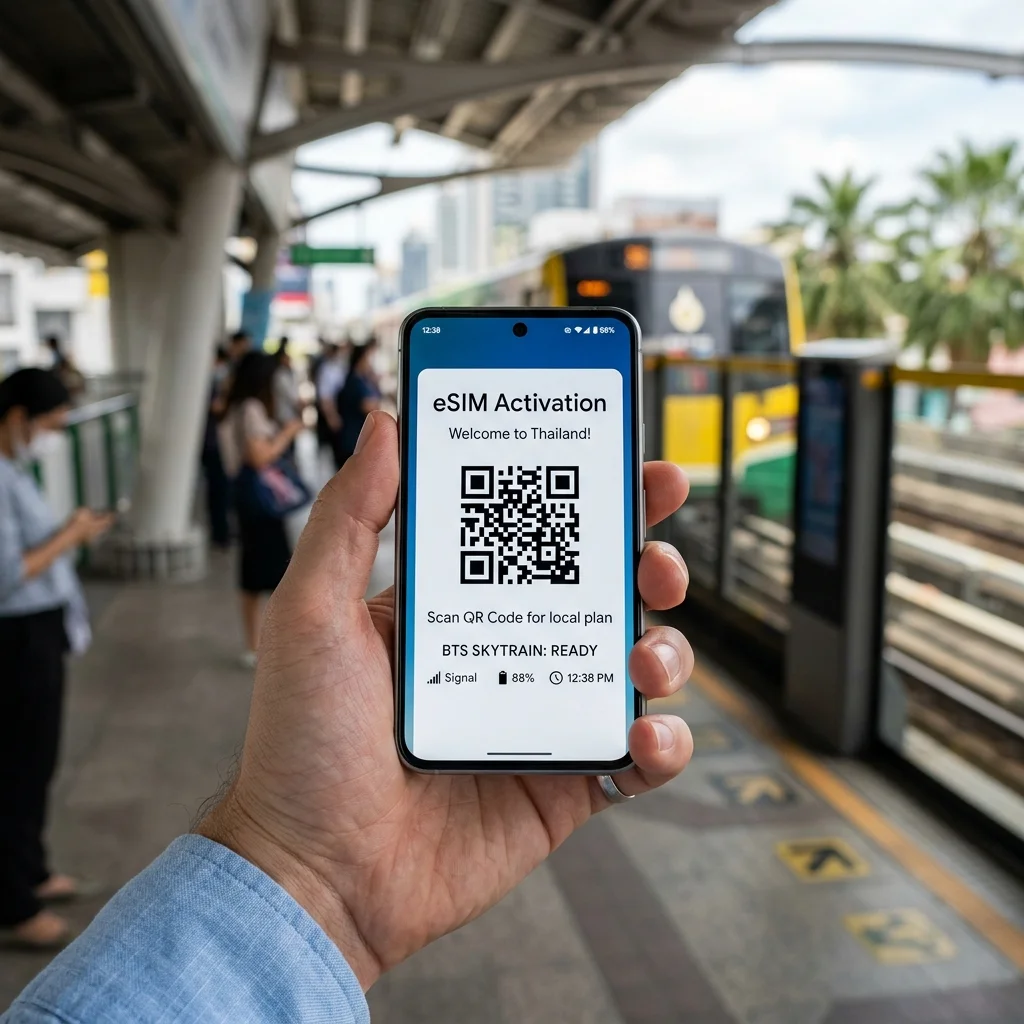
Activating a digital eSIM before you fly removes the need to queue at airport kiosks or handle easily lost physical plastic cards. If your smartphone was manufactured within the last four years, it almost certainly supports eSIM technology. Using a global provider like Airalo, Nomad, or Holafly allows you to purchase a Thai data profile while still sitting in the UK. You simply scan a QR code, install the digital profile, and turn it on the moment your flight touches down in Bangkok. These global eSIMs usually route through the DTAC or AIS networks, providing excellent 5G speeds. Prices are slightly higher than buying a standard local SIM in a Thai mall—a 10GB Airalo package for 30 days costs approximately 360 THB (£8.00)—but the convenience factor is substantial. Alternatively, you can buy an official local eSIM directly from AIS or True Move, but this generally requires visiting one of their official mall branches in person with your passport to complete the biometric registration. Purchase a digital travel eSIM before departure if your phone supports it, ensuring you land with an active data connection without having to remove your primary UK SIM card.
Keeping Your UK Number Active
Managing two phone numbers is essential for UK travellers who need to receive banking verification texts while using a Thai data connection. When you remove your UK physical SIM card to insert a Thai one, you immediately lose the ability to receive SMS messages from your UK bank or credit card provider. To solve this, you must either use a phone with dual physical SIM slots, or rely on an eSIM setup. The most effective strategy is to convert your UK number to an eSIM before leaving the UK. This frees up your physical tray for a cheap Thai SIM card. You then go into your phone settings and set the Thai SIM as the primary source for mobile data, while leaving the UK eSIM active solely for calls and SMS. Ensure you turn off data roaming on your UK profile to prevent daily £6.00 or £7.00 network charges. Receiving SMS messages abroad is almost always free across UK networks, meaning you can safely receive two-factor authentication codes without incurring fees. Convert your UK number to an eSIM before your trip, allowing you to use a physical Thai SIM for data while safely receiving UK banking texts for free.
Costs and Budgeting
Mobile data in Thailand is notably cheaper than in the UK, provided you navigate away from the heavily marketed tourist options. A budget approach involves purchasing a standard prepaid SIM and applying a speed-capped unlimited data package, which costs less than 300 THB (£6.60) a month and is perfectly adequate for messaging apps, maps, and general browsing. Mid-range budgets will comfortably cover maximum-speed 5G packages with generous 50GB or 100GB allowances, ideal for remote workers needing to tether laptops in cafes. Premium spending is entirely reserved for global eSIM packages or lengthy 90-day unlimited tourist SIMs bought at the airport, which prioritise absolute convenience over value. Keep in mind that making local phone calls to Thai numbers requires topping up your main balance with voice credit, which costs around 1 THB (£0.02) per minute, as most data packages do not include unlimited local calls.
| Option | Cost (THB) | Cost (GBP approx) | Notes |
|---|---|---|---|
| Budget 30-Day Plan | 250 THB | £5.50 | Standard prepaid SIM with 15 Mbps unlimited data add-on. |
| Mid-Range 30-Day Plan | 350 THB | £7.70 | Standard prepaid SIM with 100GB of 5G speed data. |
| Premium Tourist SIM | 999 THB | £22.20 | 30-day airport tourist package with unthrottled 5G data. |
| Global eSIM (10GB) | 360 THB | £8.00 | Digital activation from the UK, valid for 30 days. |
Common Mistakes and How to Avoid Them
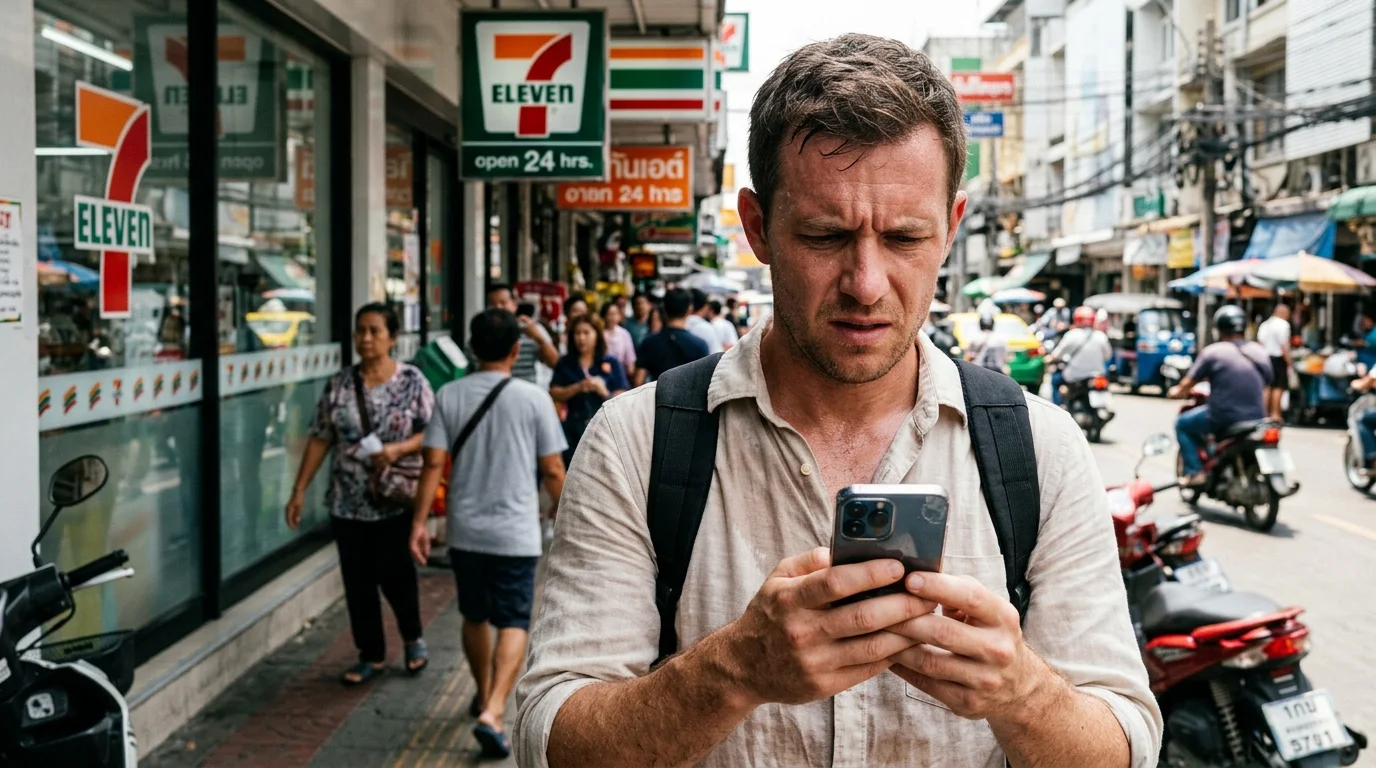
Failing to unlock your UK handset before travelling is the most frequent error made by tourists. If your phone is locked to EE or Vodafone, a Thai SIM card simply will not register on the network, leaving you entirely dependent on hotel Wi-Fi. Contact your UK provider at least 48 hours before your flight to request an unlock code or remote network release.
Throwing away the cardboard packaging of your Thai SIM card immediately after installation causes major headaches later. This packaging displays your new Thai mobile number, which you will need to give to new contacts, enter into the Grab app, and use at top-up machines. Take a photograph of the barcode and phone number on the back of the packet before disposing of it.
Letting your primary UK SIM card connect to mobile data upon arrival will instantly trigger expensive daily roaming charges. A single background app refresh will cost you up to £7.00 depending on your UK network tariff. Turn off mobile data and data roaming for your UK line in your phone settings before the aircraft wheels touch the tarmac in Bangkok.
Attempting to buy a standard SIM card at a convenience store without your passport will result in a refused sale. Thai law dictates that every active mobile number must be biometrically linked to a registered ID document. Always carry your physical passport, not just a photocopy, when purchasing mobile services at any 7-Eleven or official network shop.
Practical Tips
Download the official app for your chosen Thai network (myAIS, dtac, or True iService) while connected to a strong Wi-Fi network. These apps allow you to track your live data usage, change packages, and top up your credit using a UK credit card.
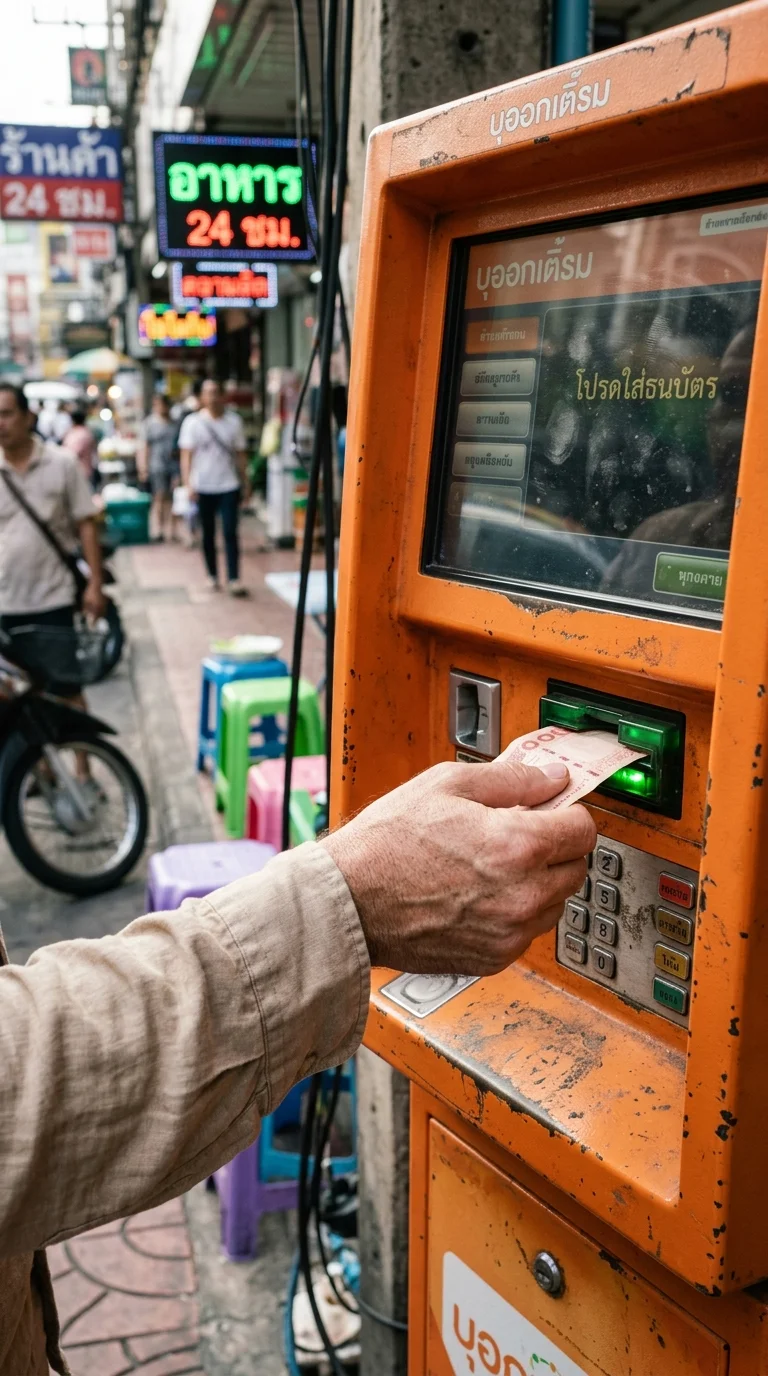
Use the orange Boonterm top-up machines found outside almost every 7-Eleven if your UK bank card fails in the network apps. These machines accept physical Thai Baht notes and coins, automatically applying the exact credit to your mobile number.
Dial 102# on an AIS SIM, 1038# on DTAC, or 933# on True Move to instantly view your own mobile number. This USSD code flashes your number on the screen, which is vital when filling out immigration forms or booking domestic transport.
Check your phone's APN (Access Point Name) settings if your newly inserted Thai SIM shows signal bars but refuses to load web pages. Sometimes UK phones fail to automatically update these network settings, requiring you to manually type in 'internet' as the APN value.
Register for a free TrueID account if you choose the True Move network and plan to spend time in shopping malls. This grants you access to their extensive network of high-speed public Wi-Fi hotspots, saving your mobile data allowance.
Top up your prepaid SIM by a minimum of 10 THB (£0.22) each month to artificially extend the validity of your number. Every top-up adds 30 days to the lifespan of the SIM, keeping it active for your next holiday to Thailand.
Set a monthly calendar reminder to check your data package expiry date if you are staying long-term. Thai prepaid packages do not automatically renew if you lack sufficient main balance, dropping you onto expensive pay-as-you-go data rates that will drain your credit in minutes.
Quick Reference Table
| Item | Detail | Notes |
|---|---|---|
| Best Network for Rural Coverage | AIS | Strongest 4G/5G on remote islands and in northern provinces. |
| Best Network for Urban Hubs | True Move / DTAC | Excellent city speeds, often with slightly cheaper data packages. |
| Airport Tourist SIM Cost | 299 to 999 THB | Convenient but expensive, heavily throttled after initial data cap. |
| Standard 30-Day SIM Cost | 250 to 350 THB | Requires buying in a mall shop, offers the best value for long stays. |
| Passport Requirement | Mandatory | Physical passport needed for biometric registration on all physical SIMs. |
| Best Way to Keep UK Number | Convert to eSIM | Allows your physical tray to hold a local Thai SIM for cheap data. |
| Top-up Methods | Network Apps or Boonterm Machines | Orange street machines accept cash if UK bank cards are declined online. |