Bo.lan - Restaurant Bangkok
Founded in 2008 by chefs Duangporn ‘Bo’ Songvisava and Dylan Jones, Bo.lan is one of Bangkok’s most influential culinary institutions. Set in a converted wooden house along Sukhumvit Soi 53, the Michelin-starred restaurant champions the slow-food movement, presenting historical Thai recipes rooted in centuries-old palace and regional traditions.
Bo.lan rejects modified heat profiles and Westernised adaptations, maintaining the assertive, uncompromised chilli levels, sourness, and salinity of traditional Thai gastronomy. Courses draw on meticulously researched archival recipes alongside artisan ingredients sourced exclusively from independent domestic farmers and sustainable fisheries. Dining centres on multi-course tasting menus—most notably the Bo.lan Balance—which culminate in a shared, communal format known as samrup, where curries, relishes, soups, and stir-fries arrive simultaneously. For travellers seeking an uncompromising exploration of Thailand's culinary heritage, Bo.lan provides a focused, rigorous dining experience that bridges environmental responsibility with historical gastronomy.

A Philosophy of Zero-Waste and Heritage Preservation
Bo.lan operates under an environmental manifesto aimed at achieving zero waste to landfill and a minimal carbon footprint. Rather than treating sustainability as an afterthought, founders Duangporn “Bo” Songvisava and Dylan Jones built circular practices directly into daily service. In the kitchen, waste is divided into at least eight separate sorting streams. Scraps undergo strict upcycling before disposal: spent citrus peels and coffee grounds are infused into house-made syrups, leftover cooked rice is dried and toasted for tea blends, and used cooking oil is converted into dish soap.
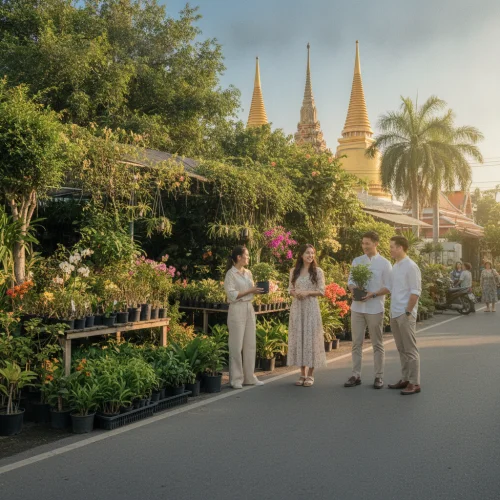
Non-reusable organic matter feeds an on-site composting system that nourishes the surrounding kitchen garden. This green perimeter, entered via an air-filtering bamboo pathway, yields fresh indigenous herbs, edible flowers, and leafy aromatics for the kitchen while insulating the property against the ambient noise of Sukhumvit. Greywater is filtered on-site to irrigate these raised garden beds, and an in-house water-filtration and bottling plant eliminates single-use plastic bottles from the dining room.
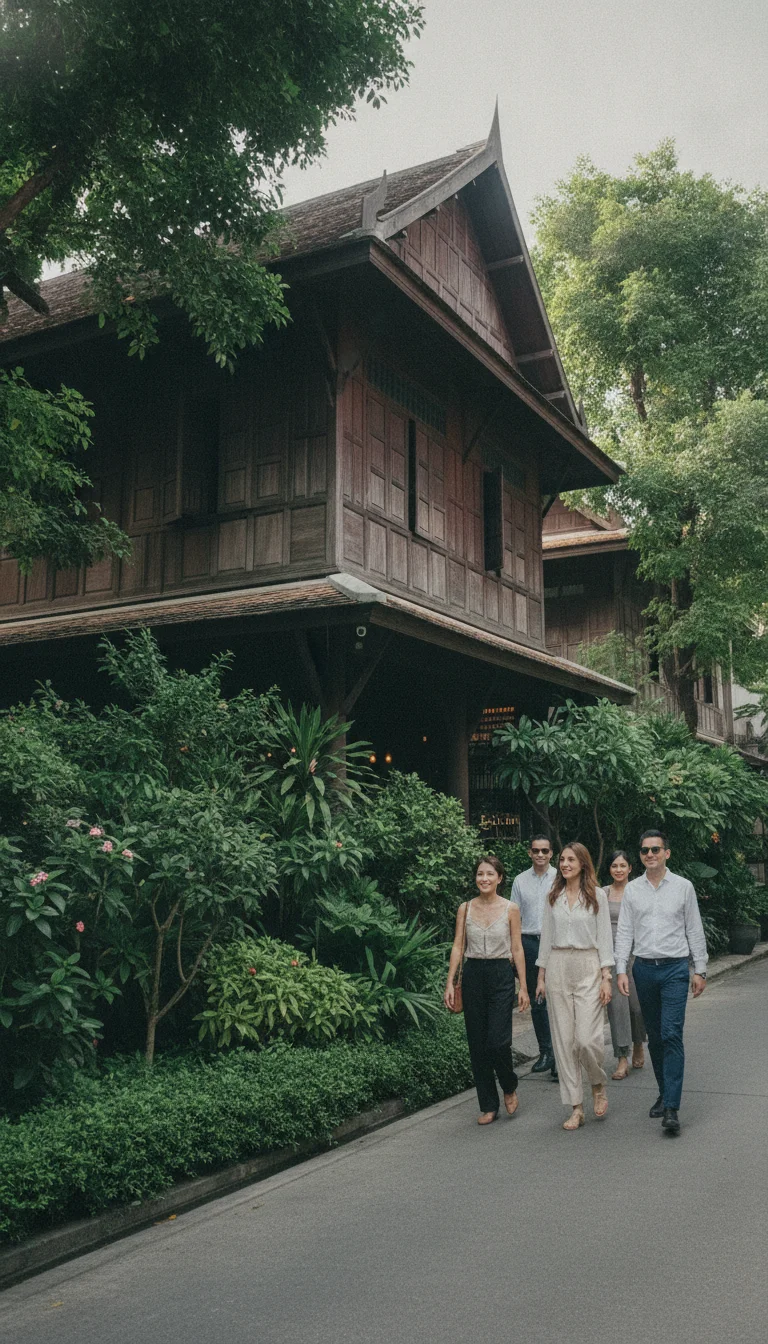
The restaurant’s interior architecture mirrors this ecological discipline. Set inside a repurposed timber residence, the dining room incorporates reclaimed teak floors, dark wooden furniture, and woven bamboo rice-sorting trays repurposed as soft overhead lighting fixtures. Dining here immerses you in a setting designed around resourcefulness, where traditional Thai material culture and rigorous modern conservation shape every detail of the experience.
Artisanal Sourcing and Hand-Pounded Foundations
At Bo.lan, culinary preparation begins with strict ingredient provenance and ancient, labour-intensive kitchen techniques. Co-founders Duangporn 'Bo' Songvisava and Dylan Jones bypass commercial industrial suppliers, working directly with smallholder farmers, artisanal salt harvesters, and traditional coastal fisheries across Thailand. Base condiments are selected with meticulous precision: fish sauces are sourced from independent makers in Rayong and Trat who age their anchovy ferments naturally, avoiding mass-market chemical additives.
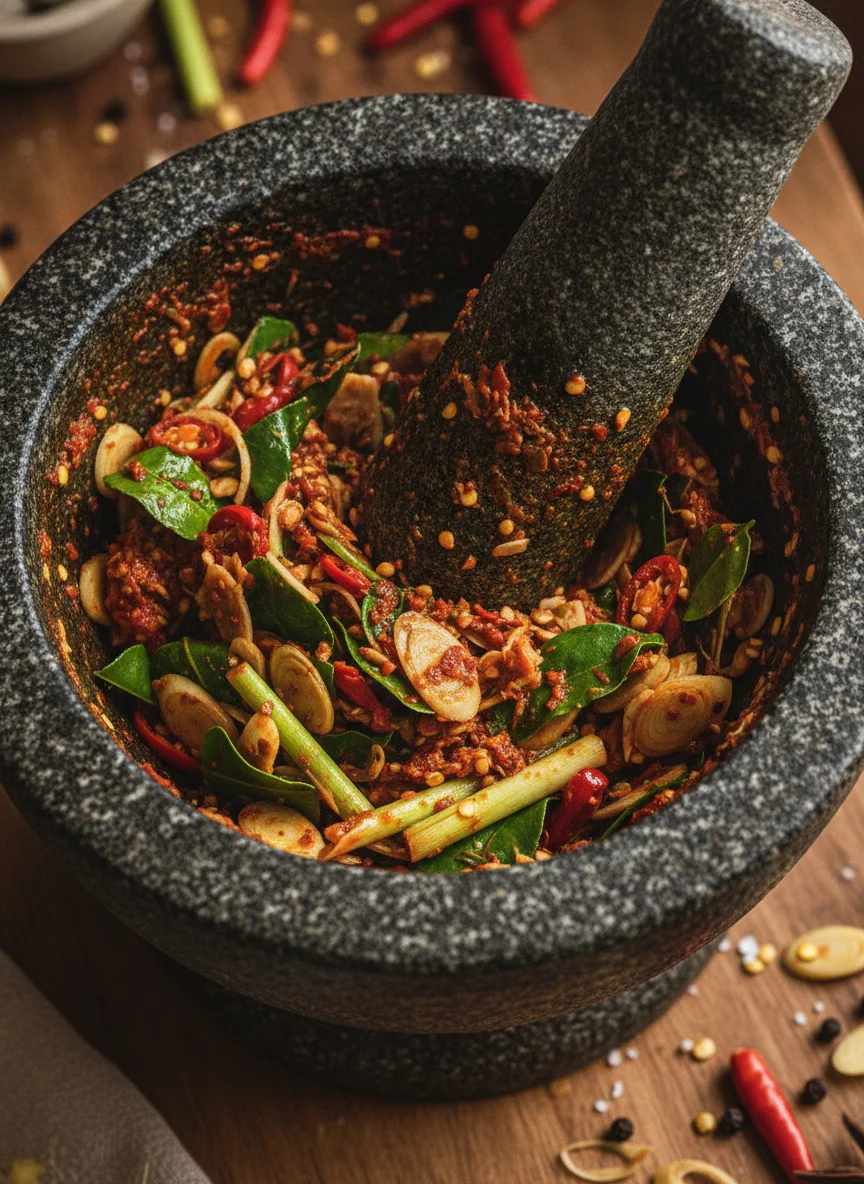
Every curry paste served in the dining room is made from scratch. The kitchen avoids electric food processors for this work; staff pound fresh roots, chillies, and herbs by hand using heavy granite mortars and pestles. This traditional crushing ruptures plant cells without the friction heat generated by motorised blades, preserving volatile aromatic compounds that yield distinct depth and texture. Coconut cream and milk are pressed fresh in-house daily rather than poured from commercial cartons, while unrefined palm sugars and native sea salts are matched to the seasonal requirements of each dish. By buying directly from smallholders, the kitchen actively supports agricultural biodiversity and preserves rare Thai culinary traditions.
Discover Bangkok's 1.5-metre altitude delta terrain, winding khlongs, and alluvial plains. Master the city's flat geography for your urban adventure.
The Ritual of Organic Heritage Rice
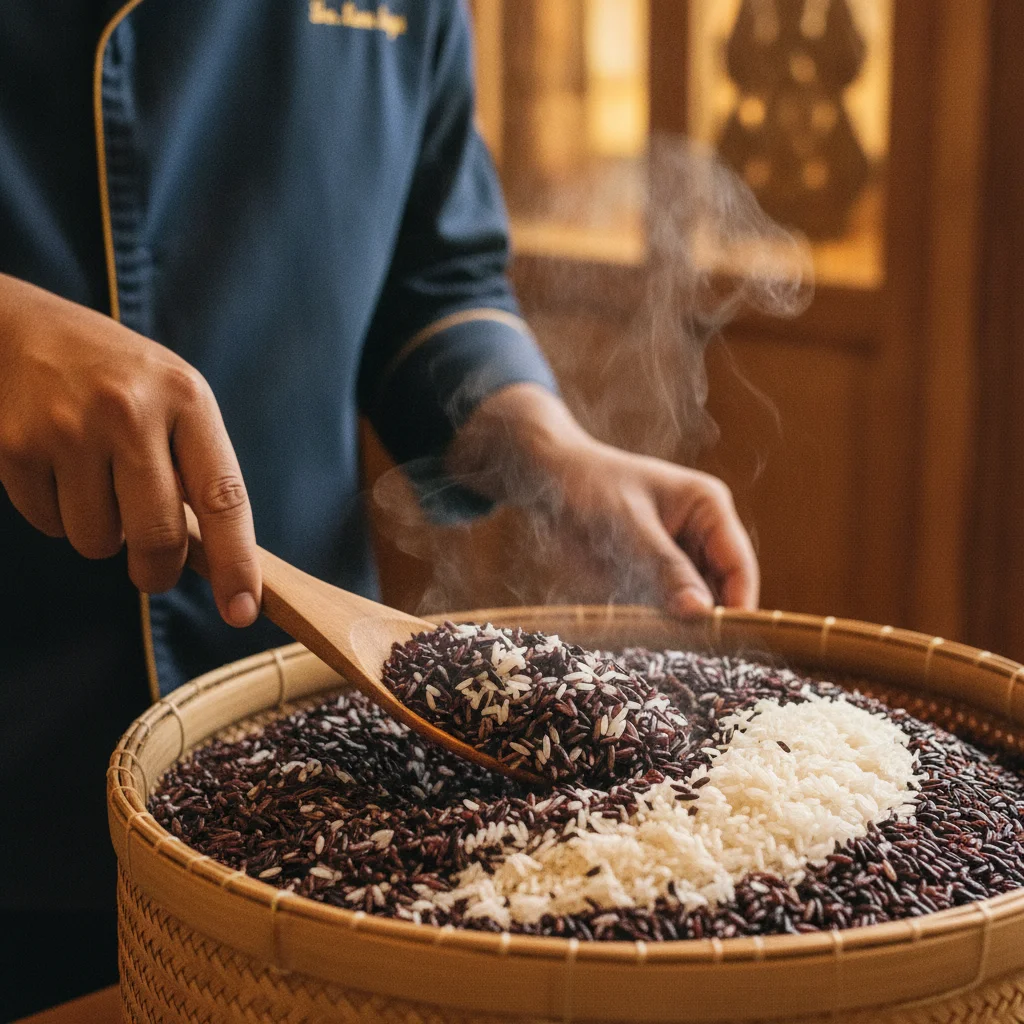
In traditional Thai dining, savoury dishes are termed gap khao—literally "things eaten with rice"—placing the grain at the physical and cultural centre of the meal. Bo.lan honours this custom by treating rice not as an inert side dish, but as the foundational element of the table.
When the communal dishes arrive, front-of-house staff circulate table-side with traditional woven baskets to serve hot, freshly steamed rice. Diners are invited to choose between—or sample both of—distinct heritage grains sourced directly from smallholder organic farms across northeastern Thailand. Selections typically include fragrant Khao Dawk Mali 105 jasmine rice from Yasothon, renowned for its floral aroma, alongside nutrient-rich, sprouted GABA brown rice harvested in Sisaket.
Staff explain the provincial provenance and characteristics of each grain, illustrating how they interact with the food. The soft sweetness of the polished jasmine rice soothes the intense chilli heat of the curries, while the nutty chew of the germinated brown rice stands up to dense, pounded relishes. Staff replenish portions freely throughout the main course, reflecting the restaurant's active partnership with independent agricultural networks and the preservation of indigenous Thai rice varieties.
The Uncompromising Tasting Menu Experience
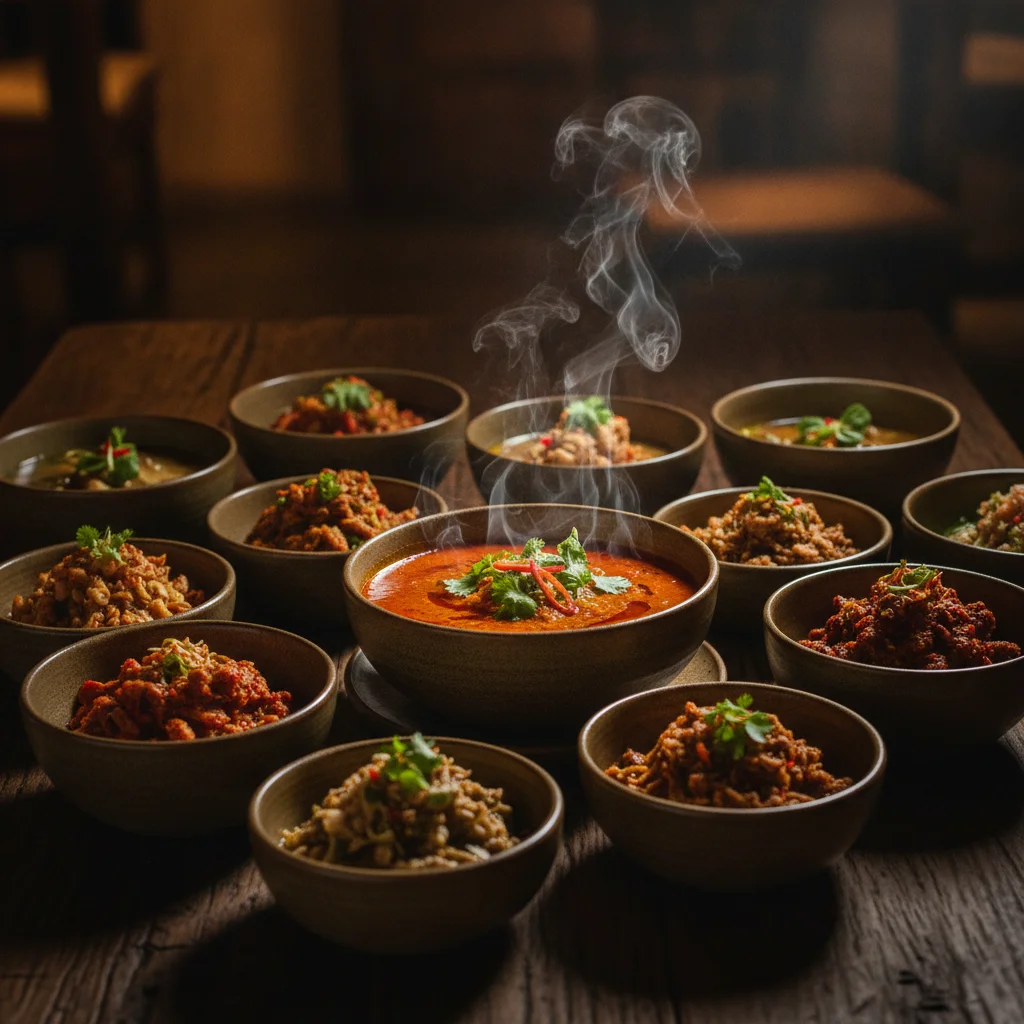
The tasting menu at Bo.lan—anchored by its flagship "Bo.lan Balance" sequence—is structured around traditional Thai dining customs rather than standard Western degustation models. The meal opens with a series of intricate appetisers and street-food-inspired canapés, frequently paired with a customary herbal ya dong liquor shot, preparing the palate for the contrasting flavours ahead. These initial bites introduce the foundational spectrum of Thai cooking: fiery, sour, salty, sweet, and bitter.
Instead of presenting dishes one by one, the main course arrives as a traditional Thai samrup. Multiple bowls land on the table simultaneously, typically bringing together a robust curry, a soothing clear soup, a pungent relish with raw greens, an acidic salad, and a mild stir-fry. Dining this way allows you to balance each mouthful, counteracting the searing heat of a regional curry with a cooling broth or neutral vegetables. The kitchen refuses to dial back chillies or modify ancestral recipes for foreign palates, presenting every dish at its full, intended potency.
The meal winds down with a palate-cleansing pre-dessert, followed by an elaborate spread of heritage Thai sweets and confectioneries. Because the kitchen prepares dozens of complex components to order across each serving, dinner is an unhurried experience that typically requires between two and a half and three hours. Travellers keen to explore this uncompromising culinary journey should secure their table well ahead of their visit.
Benchmarking Bo.lan Against Bangkok Fine Dining
Bangkok contains several Michelin-recognised establishments dedicated to traditional Thai culinary heritage, yet each interprets historical gastronomy through a distinct culinary lens. Sorn, led by Chef Supaksorn Jongsiri, concentrates specifically on the culinary traditions of southern Thailand, working with coastal fishermen and agricultural suppliers across fourteen southern provinces. Paste, headed by Chef Bongkoch "Bee" Satongun, reconstructs nineteenth-century aristocratic and regional recipes, presenting complex flavour profiles through contemporary, intricate plating. At Nahm, located within the COMO Metropolitan Bangkok, Chef Pim Techamuanvivit draws upon antiquarian cookbooks to reproduce classic heritage preparations, prioritising smallholder farmers and traditional producers.
Bo.lan distinguishes itself from these contemporaries by pairing a nationwide historical repertoire with an operational zero-waste model. Where peers present meticulously sculpted individual courses, Bo.lan serves its central feast in the communal samrup format, presenting relishes, curries, soups, and stir-fries simultaneously to preserve the flavour interplay of traditional domestic dining. The comparison below outlines how Bo.lan sits alongside its peers across culinary focus, service style, and operational approach.
| Restaurant | Primary Focus | Service Format | Sustainability Focus |
|---|---|---|---|
| Bo.lan | Nationwide heritage recipes | Communal samrup feast | Closed-loop zero-waste programme |
| Sorn | Southern Thai regional traditions | Multi-course progression and shared mains | Direct sourcing from 14 southern provinces |
| Paste | Heirloom recipes with modern presentation | Multi-course individual and shared plates | Sourcing from provincial artisan growers |
| Nahm | Antiquarian and heritage Thai recipes | Multi-course progression with shared mains | Sourcing from small-scale Thai producers |
Location and Getting There
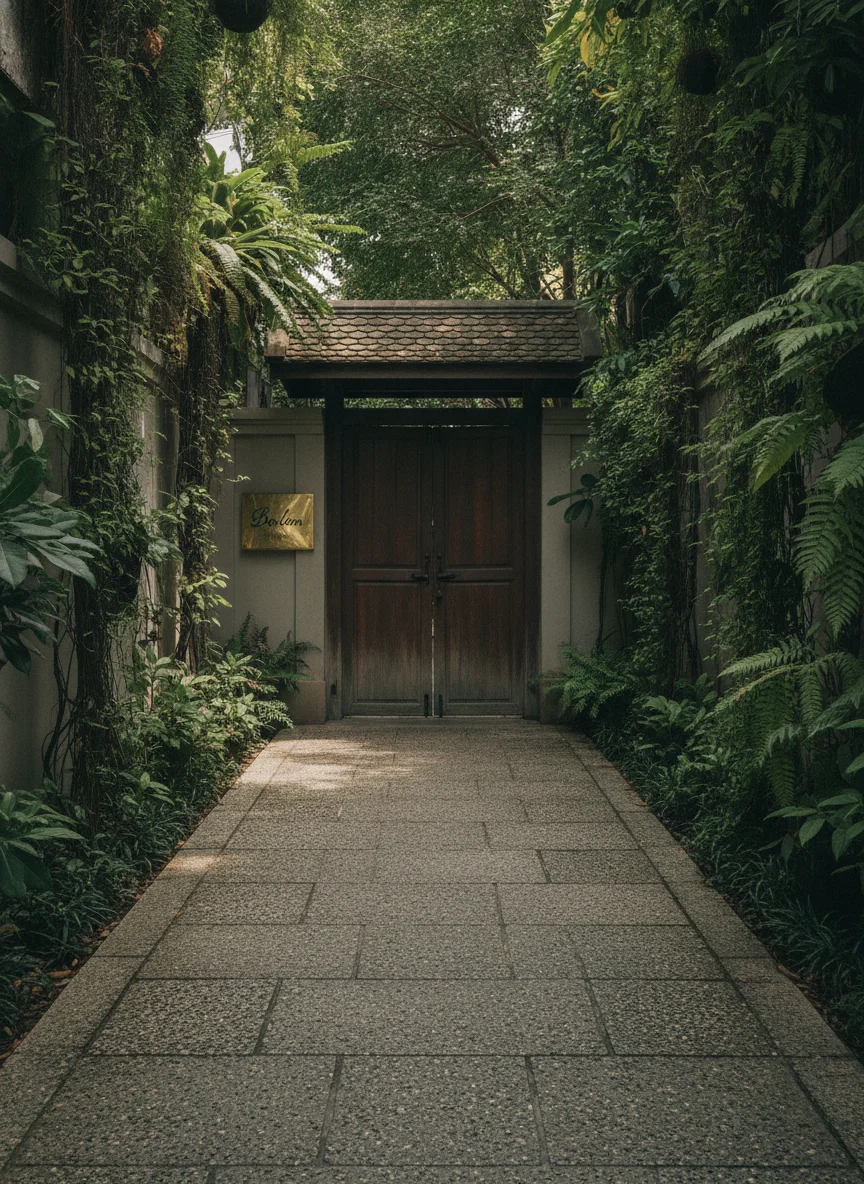
Bo.lan is located at 24 Sukhumvit Soi 53, also known locally as Soi Paidee-Madee, in Bangkok's Thong Lo neighbourhood. The restaurant occupies a converted residential property set back along a private driveway on the right-hand side of the street.
The BTS Skytrain provides a direct, reliable route. Alight at Thong Lo Station (E6) and take Exit 1 down to the pavement. Turn into Sukhumvit Soi 53 and continue along the street; the entrance is approximately 150 to 200 metres from the junction, a walk of roughly four to five minutes.
Taxis and private hire vehicles from Suvarnabhumi Airport typically take between 45 and 60 minutes in moderate traffic, costing approximately 450 THB to 600 THB (£10 to £14) including expressway tolls and airport surcharges. On-site vehicle parking is strictly limited, and both Sukhumvit Road and the entrance to Soi 53 suffer from severe gridlock during the evening rush hour. Diners travelling from the Chao Phraya riverside, the historic Old City of Rattanakosin, or central commercial areas like Siam and Silom should factor in significant extra journey time or rely on the Skytrain.
Costs and Booking
At the time of writing, dining at Bo.lan operates exclusively around multi-course tasting menus. The signature Bo.lan Balance menu serves as the primary dining experience, priced at 4,600 THB (approximately £105) per person for a 13-serving progression. Diners seeking the most comprehensive selection can choose the Bo.lan Feast at 4,800 THB (around £110) for 15 servings. For those with tighter schedules or lighter appetites, the kitchen provides the condensed Bo.lan Brief menu of 10 servings at 3,980 THB (£91), alongside daytime lunch services featuring the Bo.lan Discovery menu.
Published rates exclude Thailand's standard 10% service charge and 7% government value-added tax, which together add roughly 17.7% to the final food bill. Optional wine pairings focus heavily on low-intervention, organic, and biodynamic labels selected to complement pungent spices, adding between 2,500 THB and 2,800 THB (£57 to £64) per person. Diners bringing their own wine incur a corkage fee of 1,500 THB plus tax and service per bottle, though the venue waives this charge for one bottle if you purchase a selection from their cellar.
With covers strictly limited to maintain kitchen execution across each service, booking two to three weeks ahead is advisable. Demand peaks during Bangkok's high tourist season between November and February, when weekend tables fill weeks in advance.
| Option | Cost (THB) | Cost (GBP approx) | Notes |
|---|---|---|---|
| Bo.lan Balance Menu | 4,600 | £105 | Signature 13-serving progression |
| Bo.lan Feast Menu | 4,800 | £110 | Extended 15-serving dinner |
| Bo.lan Brief Menu | 3,980 | £91 | Condensed 10-serving progression |
| Curated Wine Pairing | 2,500 - 2,800 | £57 - £64 | Organic and biodynamic labels |
| Bottle Corkage | 1,500 | £34 | Per bottle; waived with cellar purchase |
Who Bo.lan Suits
Bo.lan suits dedicated food lovers and environmentally minded diners keen to explore regional Thai culinary traditions in depth. The setting works well for couples and small parties of adults who value culinary storytelling and want to set aside an unhurried evening for their meal. Diners who appreciate bold savoury profiles, complex ferments, and unadjusted heat will find the kitchen's uncompromising approach rewarding.
Conversely, the restaurant does not suit travellers seeking a fast meal before evening drinks or a show. Families travelling with young children often find the extended sitting and assertive spice profiles challenging, particularly with set menus structured around shared dishes rather than separate child-friendly plates. Diners expecting Westernised, mild Thai dishes or the hushed formality of European multi-course service should also look elsewhere; Bo.lan centres on communal dining where main courses arrive together in traditional style, accompanied by hearty flavours that refuse to tone themselves down for casual tourist tastes.
What to Know Before You Book
A booking at Bo.lan requires commitment to both time and tradition. The restaurant operates a full-table tasting menu policy, meaning every diner at your table must take part in the same menu format. This rule enables the kitchen to orchestrate the elaborate sumrup service, where multiple main dishes arrive simultaneously rather than as individual plated courses. Dinner unfolds at an unhurried pace, so you should set aside around three hours to complete the meal.
Prospective diners should also understand the kitchen's culinary philosophy before committing. Recipes follow uncompromising historical balance, which includes unabashed heat from fresh chillies and complex pastes; the chefs do not prepare milder adaptations or tone down fiery curries for cautious palates. Securing a table requires a credit card guarantee at the time of booking. Cancellation terms are stringent: cancelling within 48 hours of your seating, or failing to arrive, results in a charge of the full tasting menu price per person.
Practical Tips
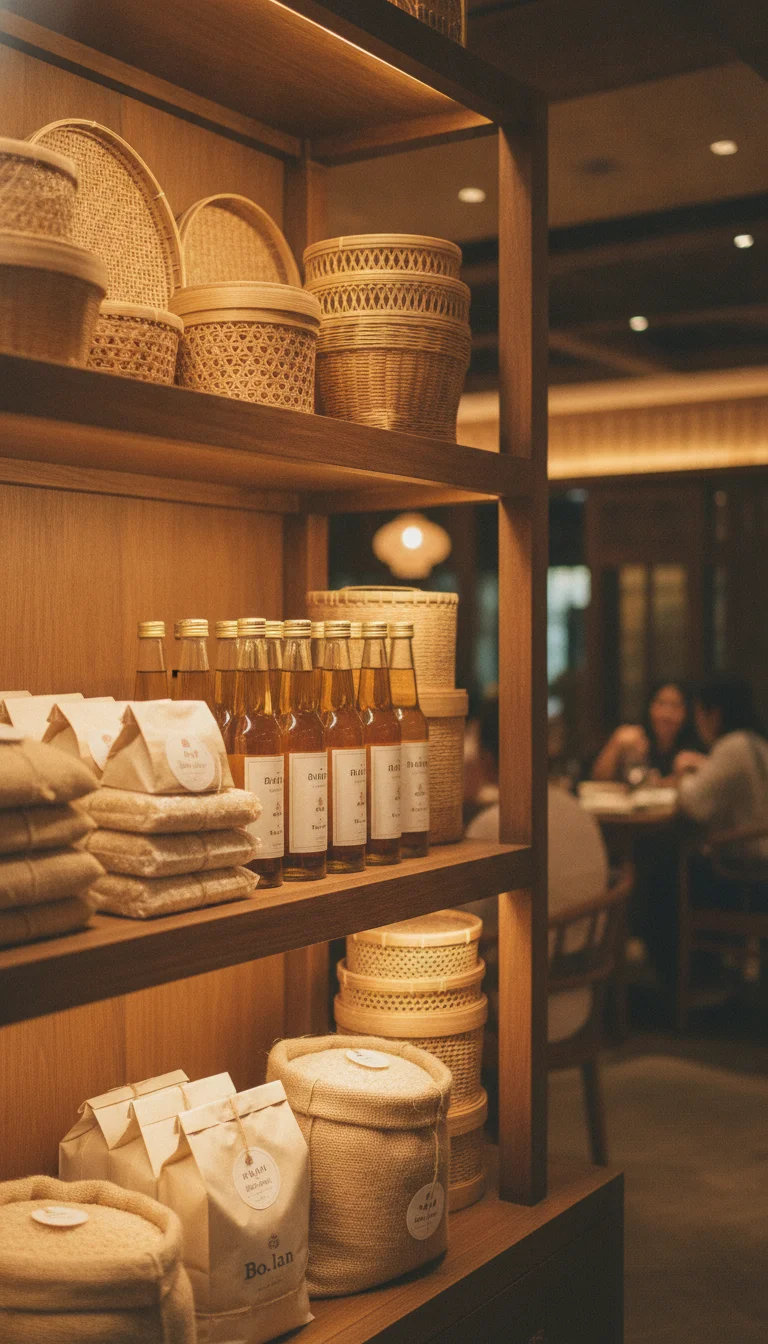
Plan to arrive around fifteen minutes before your booking time. The Sukhumvit 53 compound features an open-air garden walkway and the on-site Bo.lan Grocer shop, which stocks the artisanal fish sauces, unrefined palm sugars, and organic kitchen sundries featured across the menu. Stepping in early gives you time to decompress from Bangkok’s heavy traffic before the meal begins.
Submit any severe food allergies or strict dietary requirements at least 24 hours before your booking, preferably at the time of reservation. Because the kitchen prepares complex curry pastes and marinades well ahead of service, chefs have minimal scope to adjust recipes or assemble bespoke substitutions on the night.
Follow the restaurant's smart-casual dress code to avoid any awkwardness at reception. Athletic wear, torn clothing, beach sandals, and flip-flops are prohibited for all guests, including children. Men should wear trousers, shirts with sleeves, and closed shoes rather than shorts, singlets, or open footwear.
When considering drinks, the organic wine or craft beer pairings are tailored to balance the kitchen’s punchy chilli heat and rich coconut curries. If you prefer to bring your own vintage, Bo.lan permits BYO at a corkage fee of 1,500 THB plus taxes per bottle, which the venue waives if you buy another bottle from the dining room's cellar. You should also request the house-filtered drinking water; it is purified on-site and served in reusable glassware as part of the restaurant's zero-waste policy.
Keep your schedule clear after dinner. The extended course sequence, dense botanical herbs, and uncompromised spice levels demand considerable stamina, making a quiet ride back to your hotel far more sensible than late-night plans across the capital.
Quick Reference Table
| Item | Detail | Notes |
|---|---|---|
| Established | 2008 | Founded by chefs Duangporn ‘Bo’ Songvisava and Dylan Jones |
| Nearest BTS Station | Thong Lo (E6), Exit 1 | 150–200 m walk along Sukhumvit Soi 53 (approx. 4–5 minutes) |
| Airport Taxi Transfer | 45–60 minutes from Suvarnabhumi | Approx. 450–600 THB (£10–£14) in moderate traffic, including tolls and surcharges |
| Bo.lan Balance Menu | 4,600 THB (approx. £105) per person | Signature 13-serving progression; excludes 17.7% tax and service |
| Bo.lan Feast Menu | 4,800 THB (approx. £110) per person | Extended 15-serving progression; excludes 17.7% tax and service |
| Bo.lan Brief Menu | 3,980 THB (£91) per person | Condensed 10-serving progression; excludes 17.7% tax and service |
| Wine Pairing | 2,500–2,800 THB (£57–£64) per person | Low-intervention, organic, and biodynamic selections |
| Taxes and Service | 10% service charge plus 7% VAT | Adds approximately 17.7% to published menu rates |
| Corkage Fee | 1,500 THB plus tax and service per bottle | Waived for one bottle with the purchase of a bottle from the cellar |
| Advance Booking | 2–3 weeks in advance recommended | Credit card required; high season runs November to February |
| Cancellation Policy | 48 hours notice | Full tasting menu price charged per person for late cancellation or no-show |
| Dietary Requirements | Minimum 24 hours notice required | Curry pastes pounded ahead; minimal scope for substitutions on the night |
| Dress Code | Smart-casual | No athletic wear or flip-flops; trousers, sleeved shirts, and closed shoes for men |
| Website | https://www.bolan.co.th | Official website and information |
FAQ: Bo.lan Bangkok: Heritage Thai Dining & Zero-Waste Guide
How does Bo.lan restaurant implement its zero-waste policy?
Why does Bo.lan hand-pound its curry pastes?
Do all diners at a table need to order the same menu at Bo.lan?
How are the main courses served at Bo.lan?
Does Bo.lan adjust the spice levels of its dishes for diners?
What is the best way to get to Bo.lan restaurant by public transport?
How far in advance should I book a table at Bo.lan?
What is the dress code at Bo.lan restaurant?
What is Bo.lan's cancellation policy?
How should I communicate dietary restrictions or allergies to Bo.lan?
Reviewed by the Thailand Guide Editorial Team • Last reviewed: 2 September 2026
This page is provided for general information only. While we aim for accuracy, details can change — please verify anything important independently before relying on it.