Non-Immigrant O Retirement Visa
Converting to a Thai Non-Immigrant O retirement visa from within Thailand allows British nationals aged 50 and over to transition from a standard tourist entry into renewable long-term residency. By completing the process in-country, applicants avoid several requirements associated with applying for an equivalent retirement visa through the Royal Thai Embassy in London, including a UK police clearance certificate, document legalisation, and mandatory private health insurance.
The conversion follows a two-stage procedure: an initial change of visa status granting an authorised stay of 90 days, followed by an annual extension of stay granted at a local immigration office. Qualifying requires holding a domestic Thai bank account with at least 800,000 THB on deposit, or demonstrating qualifying monthly pension income. This guide sets out the financial thresholds, banking procedures, and formal filing requirements across both stages.

Non-O Retirement Visa In-Country vs OA Visa From the UK
Applying for a Non-Immigrant O visa inside Thailand provides an alternative route to securing a Non-Immigrant OA long-stay visa before departing the UK. Both pathways cater to individuals aged 50 and over who intend to live in Thailand without working, but their administrative burdens differ significantly. Applying in advance through the Royal Thai Embassy in London grants an initial 12-month multiple-entry permission on arrival, yet demands extensive paperwork before departure. Converting to a Non-Immigrant O visa at an immigration office within Thailand removes the requirement to supply an ACRO police certificate, undergo a medical examination with a UK general practitioner, or arrange document legalisation with the Foreign, Commonwealth & Development Office (FCDO).
A major divergence between the two routes involves medical cover. Applicants using the London embassy route must hold an approved health insurance policy providing at least 3,000,000 THB (or 100,000 USD) in overall medical coverage for the entire 12-month stay. For older retirees or individuals managing pre-existing health conditions, securing a policy that satisfies Thai consular specifications can entail expensive annual premiums. In contrast, Thai immigration regulations governing in-country Non-Immigrant O conversions and subsequent annual retirement extensions do not enforce a mandatory health insurance requirement.
| Requirement | In-Country Non-Immigrant O | London-Issued Non-Immigrant OA | Practical Consideration |
|---|---|---|---|
| Application Location | Thai immigration office inside Thailand | Royal Thai Embassy in London | In-country route requires initial entry on tourist status |
| Police Clearance | Not required | Mandatory ACRO certificate | Avoids UK police record checks and legalisation |
| Medical Certificate | Not required | Mandatory medical certificate | Avoids UK medical examination fees |
| Health Insurance | Not mandatory for visa approval | Mandatory 3,000,000 THB total cover | Avoids high insurance premiums for older retirees |
| Financial Evidence | 800,000 THB in a Thai bank account | 800,000 THB in a UK or Thai bank account | Requires opening a domestic Thai bank account |
Entering Thailand on standard tourist permission allows applicants to complete necessary domestic banking steps, including opening a local bank account and transferring qualifying capital from the UK. The in-country conversion grants an initial 90-day permission to stay, which is subsequently extended for 12 months at the local immigration office. While the London-issued visa allows applicants to prove their finances using an established UK bank account prior to flight, the in-country Non-Immigrant O route spares applicants the delays, administrative costs, and recurring private insurance commitments associated with pre-travel clearance in the UK.
Eligibility Criteria and Financial Proof Options
Applicants must be at least 50 years of age on the date of submission and meet strict financial thresholds through a personal Thai bank account. The account must be held solely in the applicant's name at a commercial bank licensed in Thailand; joint accounts are not accepted for retirement status. Thai immigration rules provide three statutory routes to demonstrate financial solvency: a lump-sum bank deposit, monthly overseas income, or a combination of both.
Under the deposit route, you must hold at least 800,000 THB. For an initial 90-day visa conversion within Thailand, these funds must be transferred from an overseas source and shown in the account alongside official evidence of international remittance. When applying for the subsequent one-year retirement extension, the 800,000 THB must have been seasoned in the account for at least two consecutive months before the application date. Once the extension is approved, the full 800,000 THB must remain untouched for a further three months. Thereafter, the balance must not fall below 400,000 THB for the rest of the visa year, before returning to at least 800,000 THB two months prior to the next annual renewal.
Under the income route, applicants must show verifiable pension or monthly earnings of at least 65,000 THB. The British Embassy in Bangkok ceased issuing income confirmation affidavits in 2019, meaning UK nationals must prove earnings through bank statements showing international transfers entering their Thai account. Because immigration offices require 12 consecutive months of overseas deposits to verify this threshold on an extension, new arrivals converting from tourist status rarely qualify immediately and typically rely on the 800,000 THB deposit instead. Immigration regulations also recognise a combination route where annual income and savings together reach 800,000 THB, though without embassy income letters, provincial immigration offices frequently decline combined applications in practice.
Complete UK guide to the 5-year Destination Thailand Visa (DTV). Learn financial criteria, e-visa application steps, stay rules, and extension procedures.
Step-by-Step Conversion Process inside Thailand
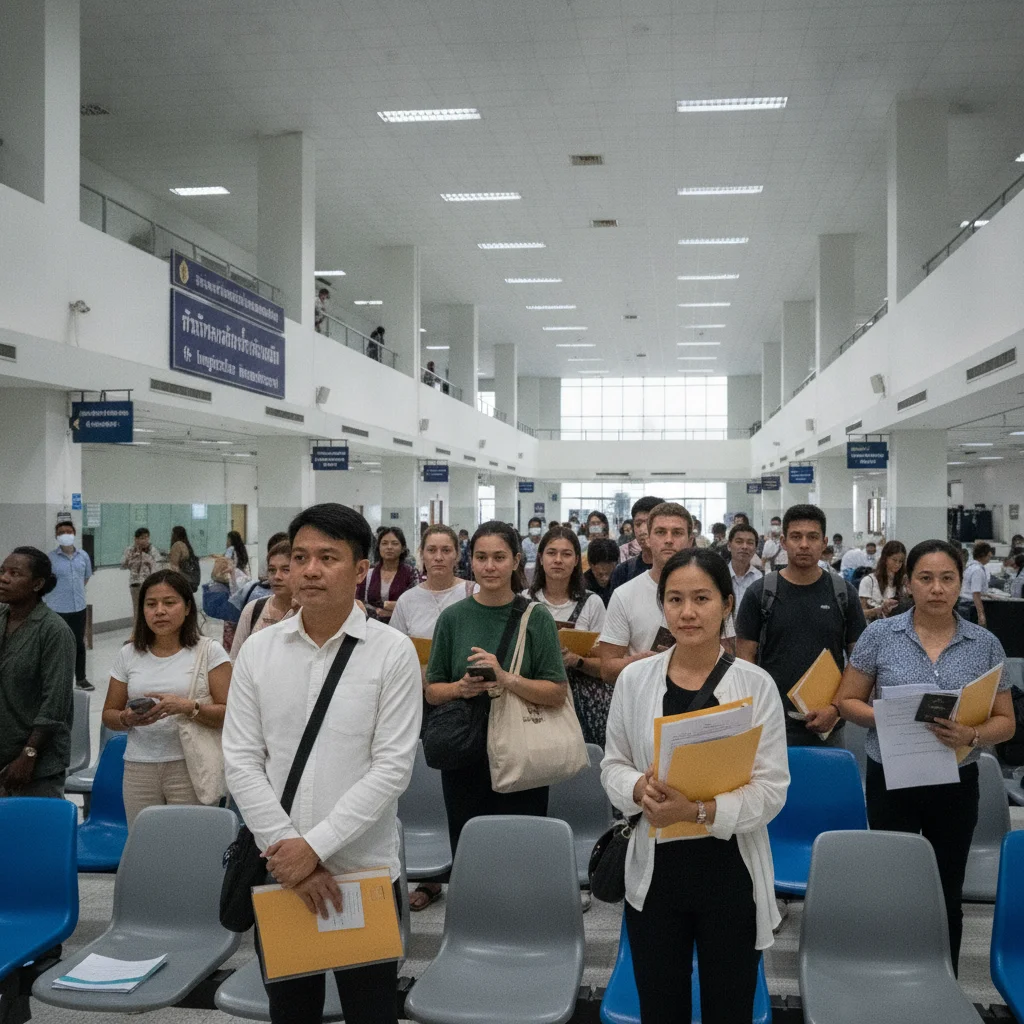
Converting to a retirement visa inside Thailand requires strict attention to timing, ensuring your initial tourist permission remains valid while immigration officers review your application.
First, enter Thailand under standard tourist conditions, such as the 30-day visa exemption granted to British passport holders or a 60-day tourist visa. Immediately ensure your accommodation host or landlord files your address registration with immigration to obtain your official residence notification receipt.
Second, open an individual savings account at a commercial Thai bank. Banks typically require your UK passport, a signed lease agreement, and a formal certificate of residence issued by your local Thai immigration office.
Third, transfer at least 800,000 THB directly from your UK bank account into your Thai account. The remittance must arrive as an international incoming wire transfer to generate the foreign exchange transaction evidence required by immigration authorities.
Fourth, attend your local immigration office while you still have at least 15 days of permission to stay remaining. Submit the conversion paperwork using Form TM87 (application for visa) if you arrived under a visa exemption, or Form TM86 (application for change of visa category) if you entered on a tourist visa. Pay the 2,000 THB statutory fee. Approval grants an initial 90-day Non-Immigrant O permission of stay.
Fifth, during the final 30 days of this 90-day stay—once your 800,000 THB deposit has remained in the account for the mandatory two-month seasoning period—apply for your formal one-year retirement extension. Submit Form TM7 (extension of temporary stay) alongside updated bank balance confirmation letters and pay the 1,900 THB extension fee.
When entering on a 30-day visa exemption, completing the address registration, bank account setup, and overseas transfer before the 15-day cutoff leaves very little room for administrative delays. Many applicants therefore obtain a standard 30-day tourist extension for 1,900 THB at local immigration simply to buy adequate time to open the bank account and clear international funds before submitting the conversion application.
Ongoing Requirements and Annual Visa Renewal
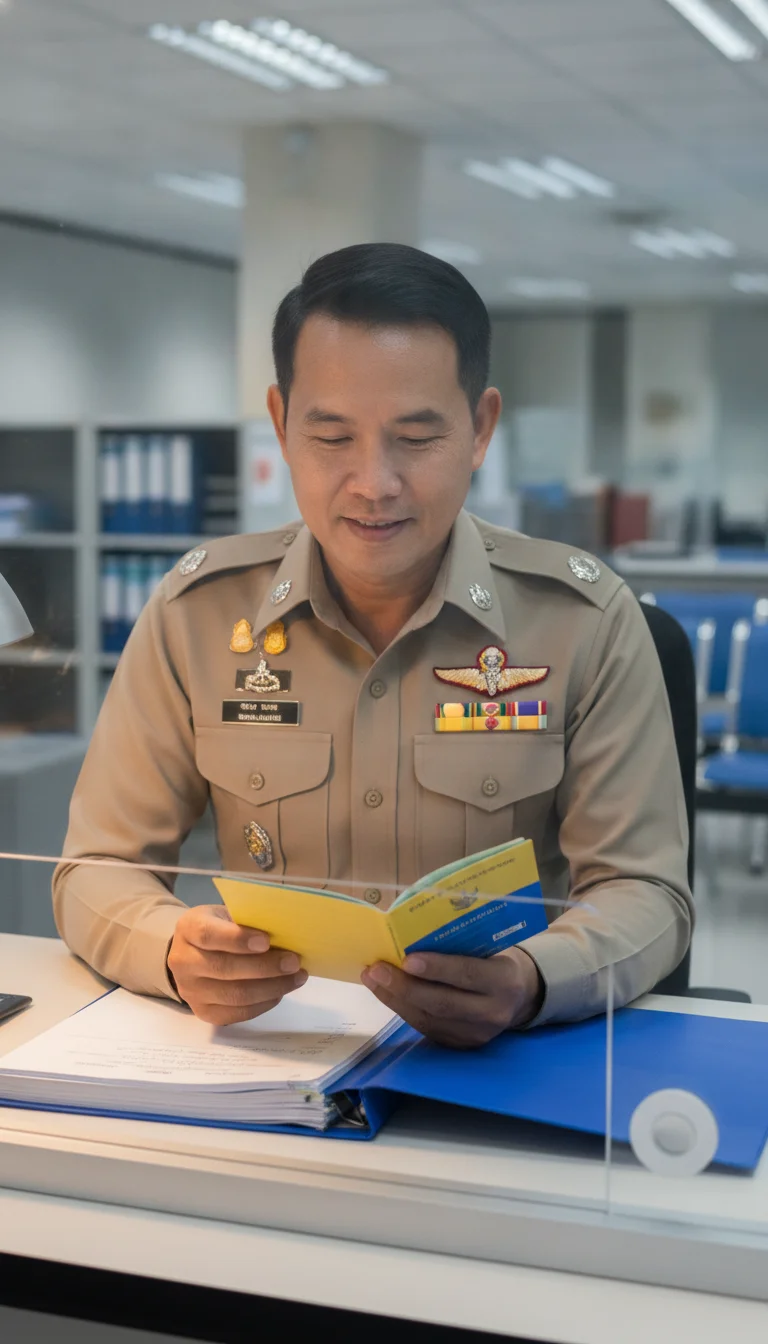
Maintaining permission to stay on a retirement extension involves meeting specific reporting obligations and banking thresholds throughout the year. Foreign nationals residing continuously in Thailand must notify the Immigration Bureau of their residential address every 90 days. This 90-day address notification can be submitted in person at a local immigration office, online through the official immigration system, by registered post, or via an authorised representative. The statutory reporting window runs from 15 days before until 7 days after the scheduled due date. If you leave Thailand during the 90-day cycle, the count resets, and day one begins upon your return.
Residential reporting also applies when your living arrangements change. Whenever you move to a new permanent address, your property owner, landlord, or accommodation provider must submit an official notification of residence to immigration. Under national regulations, returning to your registered residence after temporary domestic travel no longer requires a fresh notification, though some provincial offices request confirmation of an updated lodging report when you return from overseas or attend subsequent visa appointments.
Travelling outside Thailand requires securing a re-entry permit before departure to keep your permission to stay intact. Leaving the country without an active re-entry permit cancels your extension immediately. At the time of writing, official fees stand at 1,000 THB for a single re-entry permit and 3,800 THB for a multiple re-entry permit. You can obtain either permit at provincial immigration offices or at dedicated desks inside international airport departure halls before passing through passport control.
Securing each annual extension requires proving continued compliance with strict bank seasoning rules. Under the lump-sum deposit route, you must submit an updated bank passbook alongside a bank verification letter issued close to your renewal date. The mandatory 800,000 THB must sit in your Thai bank account for at least two months before you lodge your application. Following approval, that 800,000 THB balance must remain untouched for three full months. For the remainder of the year, your balance must never fall below 400,000 THB, before you replenish the account back to at least 800,000 THB two months ahead of your next annual renewal filing.
Costs and Budgeting
Budgeting for an in-country transition to a retirement permission involves fixed statutory immigration charges alongside variable administrative banking fees and personal maintenance funds. Thai immigration sets statutory fees under official ministerial regulations. Converting an existing tourist entry permission into an initial 90-day retirement visa incurs an official government fee of 2,000 THB (approximately £44). Once you reach the final 30 to 45 days of that 90-day permission, submitting the formal application for a full one-year extension of stay costs 1,900 THB (approximately £42). Both charges are payable in cash directly at the immigration service desk at the time of submission.
Planning international travel during your permission of stay requires factoring in re-entry permit fees to avoid voiding your permission upon departure. A single re-entry permit costs 1,000 THB (around £22) and covers one departure and return, whereas an annual multiple re-entry permit costs 3,800 THB (around £84) and allows unlimited trips abroad throughout the visa term. Routine paperwork also carries modest administrative expenses. Thai commercial banks charge between 100 THB and 200 THB (around £2.20 to £4.50) to issue the required bank confirmation letter and updated statement printouts. When required for administrative tasks, a certificate of residence issued by provincial immigration offices typically costs between 300 THB and 500 THB (around £7 to £11) where local counter fees or expedited processing apply, although some central offices provide routine processing without charge.
Transferring your financial capital from the United Kingdom introduces foreign exchange conversion spreads, intermediary bank handling charges, and international transfer fees. The core financial requirement of 800,000 THB (approximately £17,800) remains your personal capital rather than a state payment, but this sum must remain deposited in a domestic Thai bank account throughout the mandatory holding windows before and after each renewal. Moving funds into Thailand early allows you to absorb currency fluctuations and ensure incoming international transfers register with clear foreign transaction codes before your formal appointment.
| Item | Cost (THB) | Cost (GBP approx) | Notes |
|---|---|---|---|
| Initial Retirement Visa Conversion | 2,000 | 44 | Payable at immigration counter during the 90-day conversion |
| One-Year Extension of Stay | 1,900 | 42 | Annual extension processing fee |
| Single Re-Entry Permit | 1,000 | 22 | Preserves permission of stay for one international trip |
| Multiple Re-Entry Permit | 3,800 | 84 | Allows unlimited departures throughout the visa year |
| Bank Guarantee Letter | 100–200 | 2.20–4.50 | Standard administrative charge per bank branch request |
| Residence Certificate | 300–500 | 7–11 | Issued by local immigration offices where fees apply |
Common Mistakes and How to Avoid Them

Allowing your permitted stay to run below 15 days before applying for an in-country visa conversion is a frequent and costly mistake. Official Thai immigration regulations require applicants to hold more than 15 days of valid permission to stay on their entry stamp at the time of submission, and several provincial offices insist on at least 21 days. If your remaining time drops below this threshold, immigration officers will reject the application, leaving you to either pay for a standard 30-day extension of stay to reset your window or leave Thailand to start over.
Misunderstanding the bank seasoning schedule causes immediate refusals at renewal. For the annual retirement extension, the 800,000 THB lump sum must be deposited into your personal Thai bank account at least two months before you apply. After approval, the full 800,000 THB must remain untouched for three months. For the rest of the year, your balance must not drop below 400,000 THB. Dipping below these figures by even a nominal sum breaches immigration orders and disqualifies your subsequent renewal.
Depositing domestic physical cash into your Thai account instead of sending an electronic international transfer is another common ground for refusal. Immigration rules mandate formal documentation proving your 800,000 THB originated from abroad. Paying in cash locally produces no paper trail of foreign funds. Sending the capital directly from a UK bank account generates the necessary foreign exchange transaction certificates and bank letters that immigration requires.
Leaving Thailand without an endorsement to re-enter instantly cancels your status. An extension of stay grants legal residence within the country, but it lapses the moment you pass outbound passport control unless protected by a valid single-entry or multiple-entry permit. You must obtain this permit from an immigration office or an international airport checkpoint before departing, otherwise you return as an ordinary tourist and forfeit your retirement permission.
Practical Tips

Opening a Thai bank account is generally smoothest at head offices or large central branches in major hubs such as Bangkok, Chiang Mai, or Pattaya. These branches handle foreign retirement accounts daily and have established compliance procedures for British passport holders.
Coordinate your banking paperwork precisely around your appointment. Immigration desks require an official bank balance confirmation letter alongside a physical bank passbook updated on the day of application. Making a small cash deposit or withdrawal at an automated teller machine or branch counter on the morning of your visit ensures your passbook prints with the current day's date. Keep all international transfer advice receipts issued by your bank, as you must prove that your retirement funds originated from the United Kingdom rather than within Thailand.
Prepare photocopies of all relevant passport pages, including your photo identification page, current entry stamp, and visa stamps. Standard practice across all immigration offices requires signing every individual photocopy by hand in blue ink. Using blue ink makes it immediately clear to the processing officer that your signature is genuine rather than a photocopied reproduction.
Ensure you carry passport-style photographs measuring 4 cm by 6 cm, taken against a plain white background within the preceding six months. Standard United Kingdom passport photos measuring 3.5 cm by 4.5 cm are undersized and routinely rejected by officers. Most immigration compounds host on-site photo stalls and copy shops that can produce compliant prints and photocopies for a modest fee.
Bring sufficient cash in Thai Baht banknotes. Counter desks do not accept foreign currency, British debit cards, or credit cards for statutory fees. Carrying at least 3,000 THB covers the application charge comfortably alongside ancillary expenses for photos and photocopies. Finally, dress respectfully in smart-casual clothing covering your shoulders and knees, as immigration facilities operate under standard Thai government office decorum.
DISCLAIMER: Visa rules and fees are subject to change. Always verify current requirements with the official Thai Immigration Bureau at immigration.go.th or the Royal Thai Embassy before applying.
Quick Reference Table
| Item | Detail | Notes |
|---|---|---|
| Minimum Age | 50 years of age | Must be reached on or before the date of application |
| Entry Status Required | Tourist visa or 30-day visa exemption | Must hold at least 15 days of valid stay remaining (some offices require 21 days) |
| Initial Stay Granted | 90 days | Issued via Form TM87 (from visa exemption) or Form TM86 (from tourist visa) |
| Subsequent Extension | 12 months (renewable annually) | Applied for using Form TM7 during the final 30 days of the 90-day permission |
| Financial Requirement (Deposit) | 800,000 THB in a personal Thai bank account | Sole name only; funds must be remitted electronically from an overseas account |
| Bank Seasoning Schedule | 2 months prior, 3 months post-approval at 800,000 THB; 400,000 THB minimum balance thereafter | Required for the 1-year extension; balance must return to 800,000 THB 2 months before renewal |
| Financial Requirement (Income) | 65,000 THB monthly pension or earnings | Requires proof of 12 consecutive months of international bank transfers into Thailand |
| Mandatory Health Insurance | Not required | In-country Non-O route exempts applicants from the London OA medical insurance mandate |
| Police & Medical Clearances | Not required | No ACRO certificate, FCDO legalisation, or UK GP medical examination needed |
| 90-Day Address Reporting | Every 90 consecutive days in Thailand | Window opens 15 days before and closes 7 days after due date; resets upon overseas exit |
| Visa Conversion Fee | 2,000 THB | Statutory fee payable in cash at immigration counter |
| Annual Extension Fee | 1,900 THB | Statutory fee payable in cash at immigration counter |
| Re-Entry Permit Fees | Single: 1,000 THB; Multiple: 3,800 THB | Mandatory before departing Thailand to prevent cancellation of permission to stay |
| Ancillary Documentation Costs | Bank letter: 100–200 THB; Residence certificate: 300–500 THB | Bank letter required on application day; residence certificate fees apply at select offices |
| Photo Specifications | 4 cm x 6 cm on plain white background | Taken within the preceding 6 months; UK standard 3.5 cm x 4.5 cm photos are not accepted |
| Official Source (UK) | Royal Thai Embassy London (london.thaiembassy.org) | Thai diplomatic mission in the United Kingdom |
FAQ: Non-Immigrant O Retirement Visa
What are the main benefits of applying for a Thai retirement visa from within Thailand?
Is health insurance required for a Thai Non-Immigrant O retirement visa obtained in-country?
What is the minimum age requirement for a Thai Non-Immigrant O retirement visa?
What are the financial requirements for a Thai Non-Immigrant O retirement visa based on a bank deposit?
Can I qualify for a Thai retirement visa based on monthly income?
What is a common mistake to avoid when applying for a Thai retirement visa conversion in-country?
Why is it important to transfer funds from an overseas bank account for a Thai retirement visa?
What happens if I leave Thailand without a re-entry permit while on a retirement visa?
What are the photo requirements for a Thai retirement visa application?
What payment method is accepted for Thai immigration fees?
Reviewed by the Thailand Guide Editorial Team • Last reviewed: 20 October 2026
This page provides general information only and is not financial, legal, or immigration advice. Always verify current rules with official Thai government sources or a qualified professional before making decisions.