Chiang Mai Flower Festival
The Chiang Mai Flower Festival transforms Thailand's northern capital with over 30 intricately decorated floats constructed entirely from hundreds of thousands of locally grown chrysanthemums, orchids, and damask roses. Held over the first weekend of February, this 40-year-old event marks the end of the cool season with one of Southeast Asia's most meticulously engineered botanical parades.
Organised by the Chiang Mai Municipality, this three-day civic event serves as northern Thailand's premier horticultural exhibition, celebrating the province's status as a major exporter of temperate plants. Unlike the water-soaked street parties of Songkran, this festival delivers a highly structured, orderly environment centred around agricultural competitions, Lanna cultural performances, and botanical artistry. It suits photography enthusiasts, cultural travellers, and families seeking a large-scale Thai public event without overwhelming chaos. However, it draws massive domestic crowds, requiring international visitors to secure flights and central accommodation several months in advance.

The Floral Parade Route
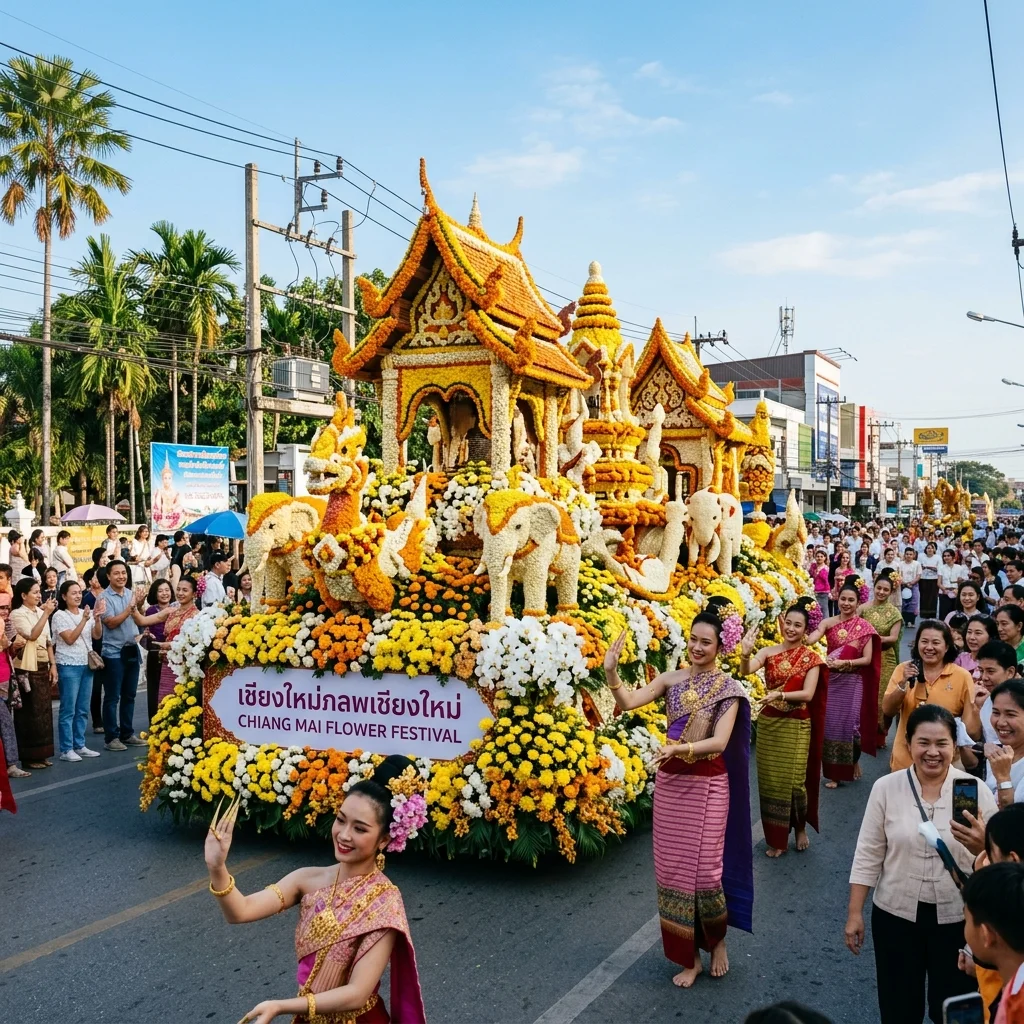
The Saturday morning parade operates as the undisputed centrepiece of the entire festival. Staging begins before dawn along the Superhighway Road, where the sheer scale of the operation becomes apparent as marching bands, hill tribe representatives, and municipal workers assemble. The procession officially departs at 8:00 AM, moving deliberately across Nawarat Bridge and down Thapae Road towards the old city walls. This highly choreographed movement includes over 30 massive floats, each representing different districts, corporate sponsors, and agricultural colleges. You will see groups of local students performing traditional Lanna dances, accompanied by the rhythmic striking of long wooden drums. The procession moves at a very slow walking pace, allowing ample time to observe the intricate construction of the floats and the elaborate silk costumes of the performers. The route eventually turns south along Kotchasarn Road before concluding at Buak Hard Public Park in the southwest corner of the moat. To secure an unobstructed viewpoint, you must arrive at the eastern approach to Nawarat Bridge or Thapae Gate by 7:00 AM at the latest.
Discover the real cultural rules of Chiang Mai, from ancient Lanna spirit worship to sharing a communal khantoke meal and navigating local temple etiquette.
Buak Hard Public Park Exhibitions
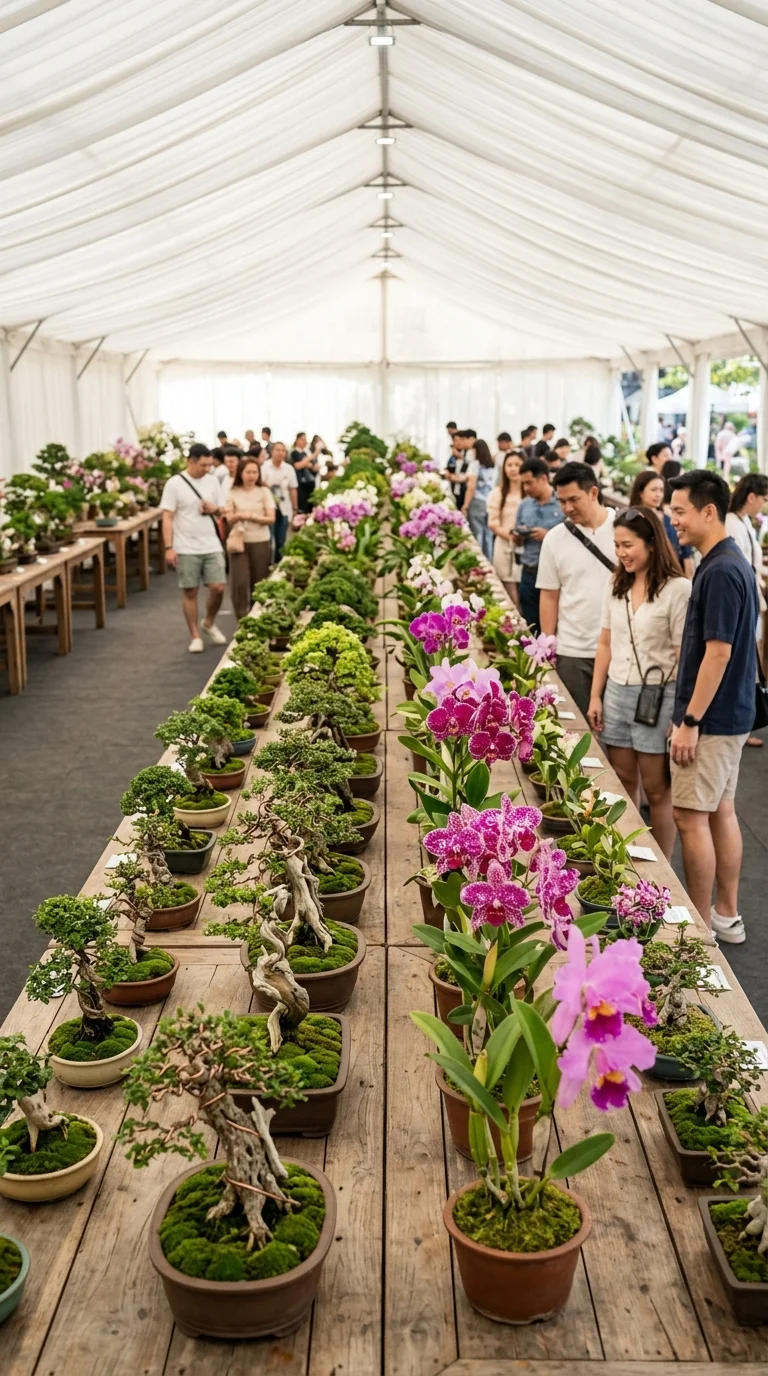
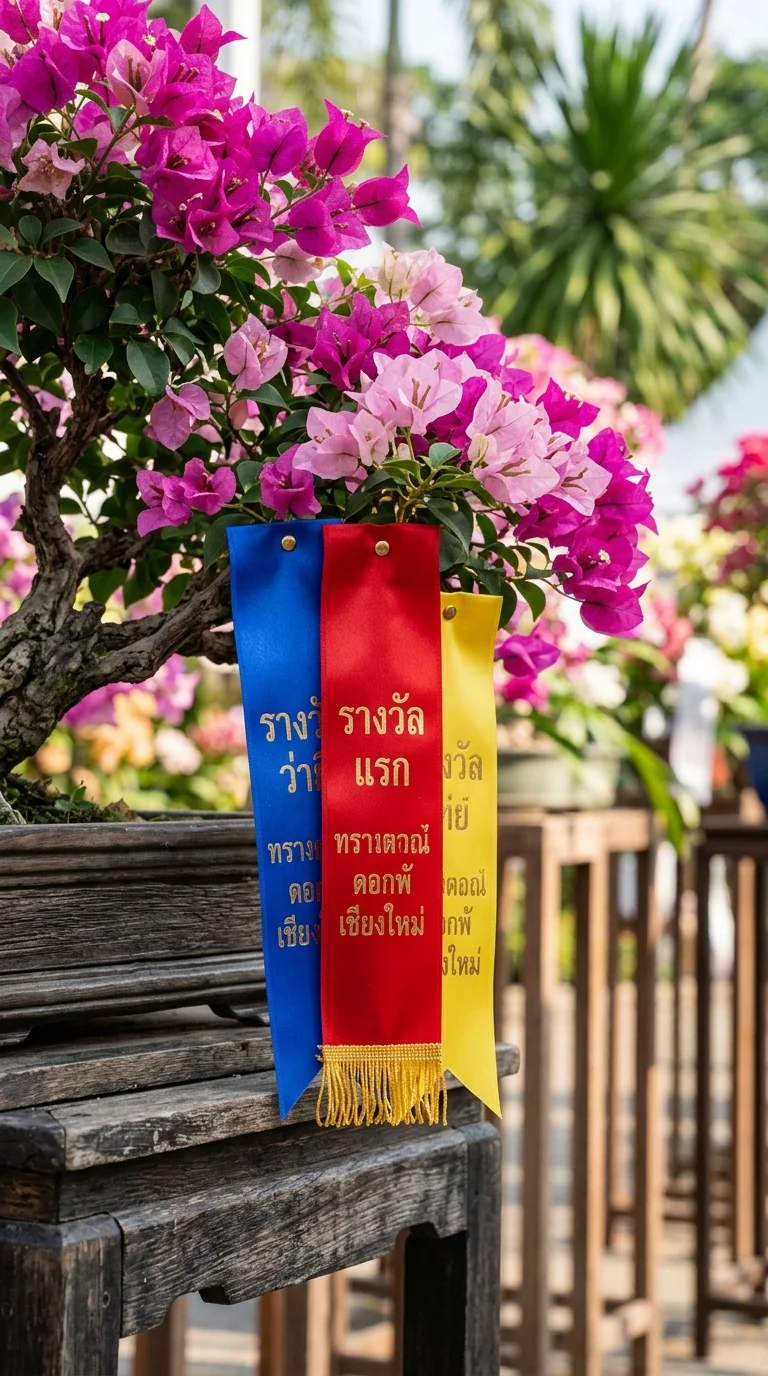
Once the parade concludes, the focus shifts entirely to Buak Hard Public Park, which serves as the permanent exhibition ground for the duration of the weekend. The municipality redesigns the park's landscaping months in advance, planting thousands of tulips, lilies, and marigolds specifically timed to bloom for these three days. The lawns are divided into competitive exhibition zones featuring rare plant species cultivated by specialist growers from across the northern provinces. You will find dedicated marquees housing the national orchid competition, showcasing hundreds of hybrid Vanda and Dendrobium varieties evaluated on colour saturation and petal symmetry. Adjacent to the orchids, the bonsai and miniature landscape competitions display decades-old specimens trained into precise geometric forms. The park also hosts static displays of the parade floats, allowing you to examine the floral engineering up close once the vehicles are parked. Because the park offers very little shade during the midday heat, visiting after 4:00 PM provides more comfortable temperatures for exploring the displays.
Cultural Performances and Beauty Pageants
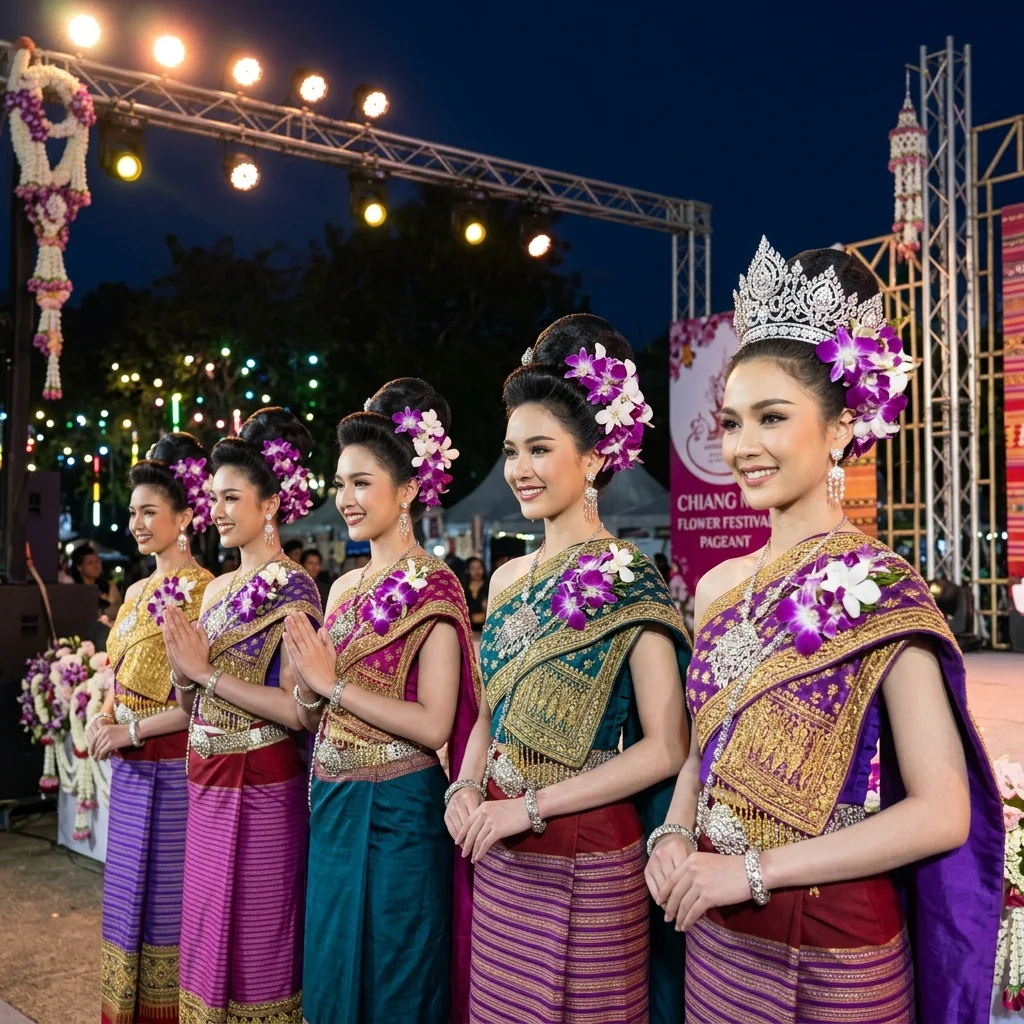
As daylight fades, the festival transitions from an agricultural exhibition into a celebration of northern Thai heritage. A large temporary stage erected inside Buak Hard Public Park hosts a continuous programme of Lanna cultural arts, featuring regional folk music played on traditional stringed instruments like the salor and saw. The focal point of the evening entertainment is the Miss Chiang Mai Flower Festival beauty pageant, a highly competitive event that draws participants from across the northern provinces. Contestants are judged not only on their presentation but on their knowledge of regional agriculture and Lanna customs. The pageant unfolds over two evenings, with the final crowning ceremony taking place on Saturday night amidst elaborate floral stage dressings. Smaller secondary stages near Thapae Gate offer alternative entertainment, usually featuring contemporary Thai pop music and youth dance troupes. Securing a seat near the main stage requires arriving at least an hour before the scheduled 7:00 PM start time.
Botanical Artistry and Float Construction
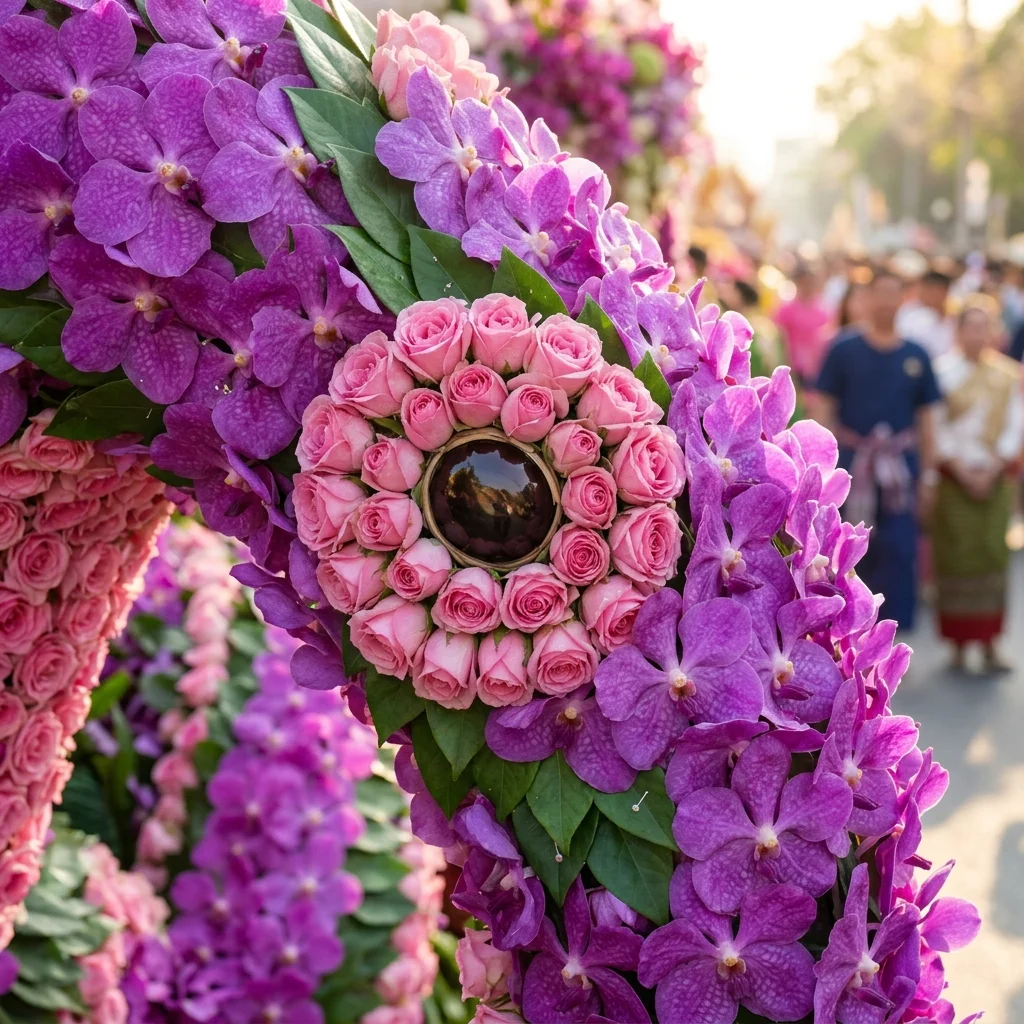
The engineering behind the festival floats represents a highly specialised form of temporary architecture. Designers construct elaborate frameworks from steel and carved polystyrene, which are then entirely concealed beneath a dense layer of fresh organic material. Builders use thousands of individual flower heads, pinning them directly into the foam bases to create textured, colour-blocked patterns depicting Buddhist mythology, Lanna folklore, and royal tributes. The dominant materials are bright yellow and white chrysanthemums, chosen for their durability and volume. Intricate details are rendered using pink damask roses, purple orchids, and various seeds or dried beans to create contrasting borders. The application of the flowers must occur within the 24 hours immediately preceding the parade to prevent wilting, requiring teams of volunteers to work continuously through the Friday night.
| Flower Material | Primary Application on Floats | Longevity in Heat |
|---|---|---|
| Yellow Chrysanthemums | Large surface areas and base structures | High (up to 3 days) |
| Vanda Orchids | Intricate detailing and colour contrast | Medium (requires misting) |
| Damask Roses | Focal points and mythological figures | Low (wilts within 24 hours) |
| Marigold Heads | Borders, trims, and geometric framing | High (highly resilient) |
The sheer scale and perishable nature of these botanical monuments make the floats the most compelling reason to attend the festival.
Street Markets and Local Vendors
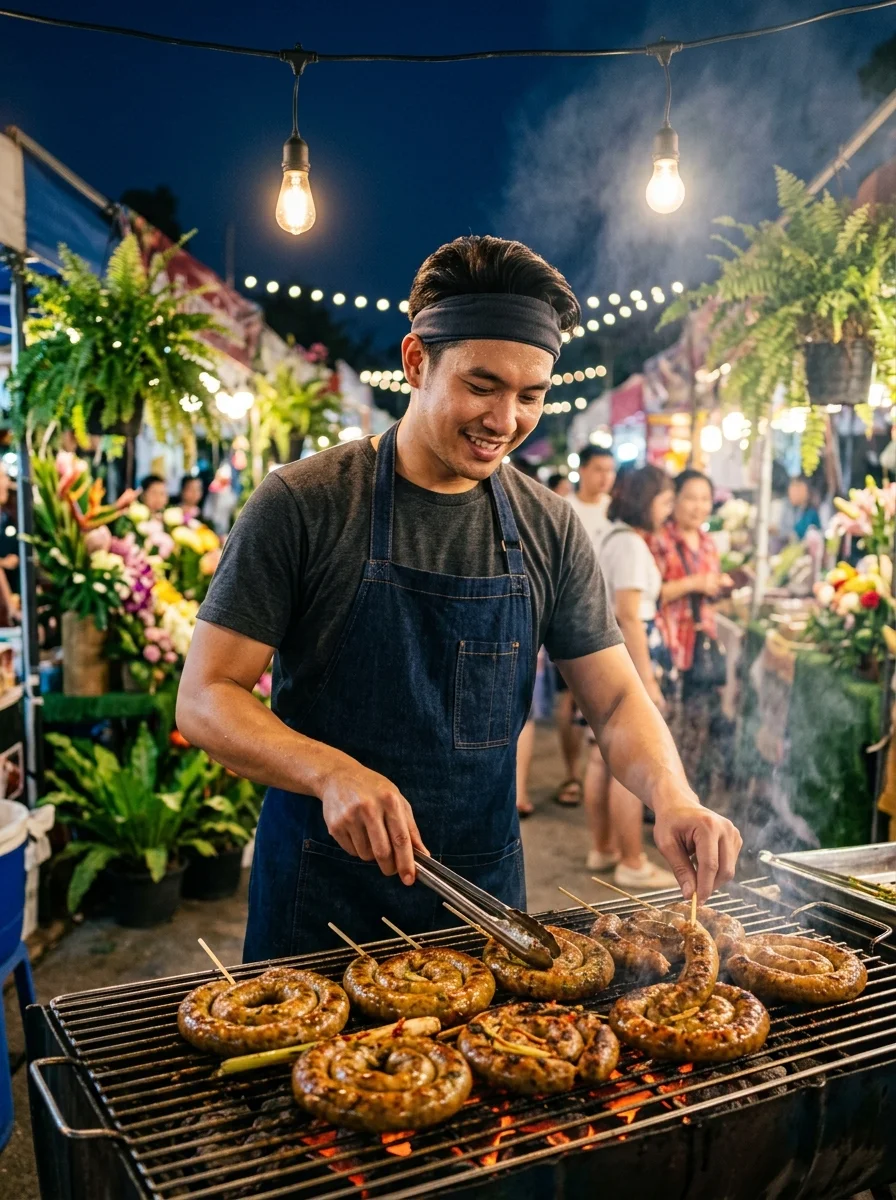
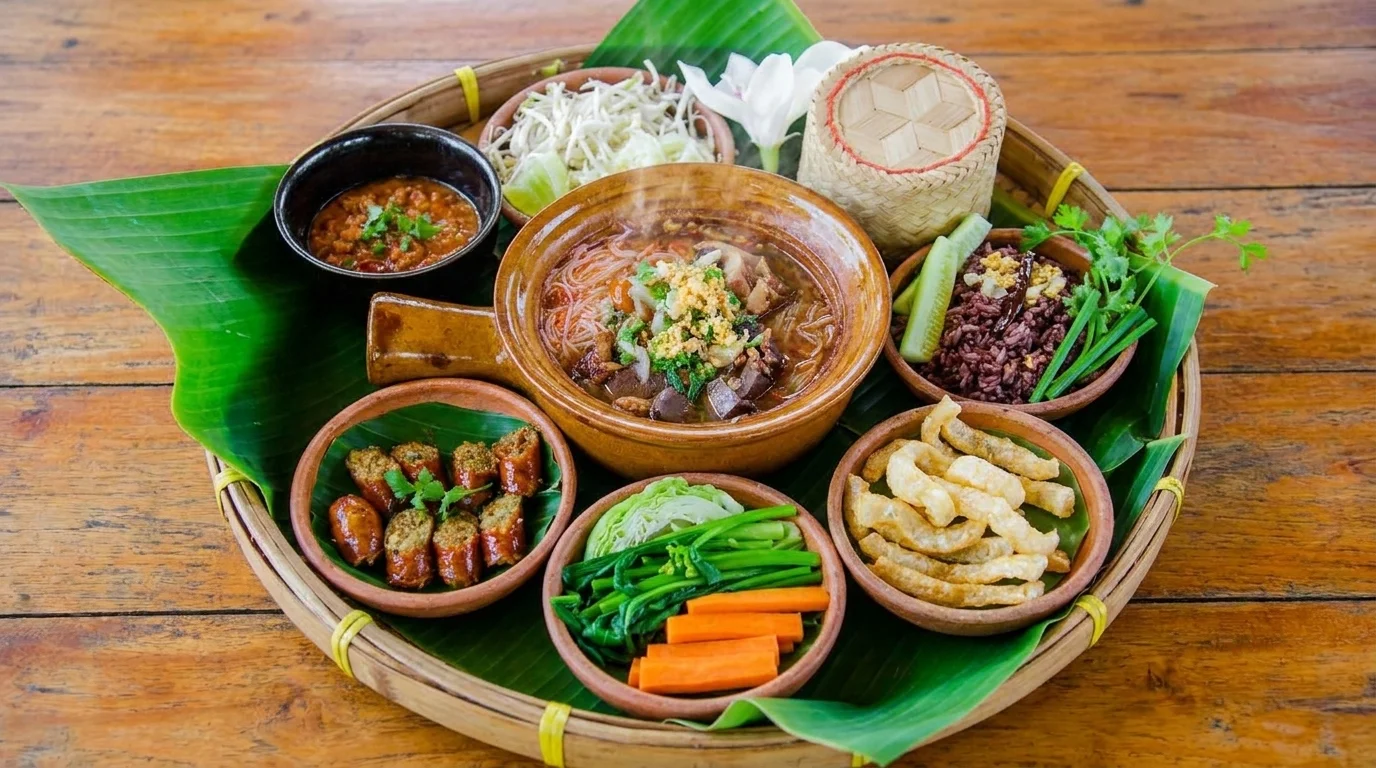
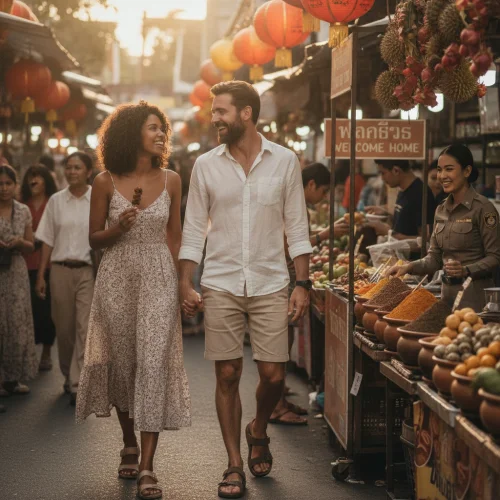
A vast temporary market wraps around the southern and western edges of the old city moat, operating from Friday morning until late Sunday evening. This commercial zone extends from Suan Prung Gate down to the corner of Buak Hard Public Park, effectively closing the inner ring road to vehicle traffic. The market is divided into distinct sections, with the largest area dedicated to regional street food. You can purchase northern specialties including khao soi, grilled sai oua sausages, and sticky rice served in bamboo tubes. Beyond the food stalls, agricultural vendors sell seeds, gardening equipment, and hundreds of potted plants, allowing domestic visitors to purchase the species they have seen in the exhibitions. A significant portion of the market is also allocated to the One Tambon One Product (OTOP) initiative, featuring handmade textiles, wood carvings, and silver jewellery produced by rural cooperatives in Chiang Mai province. Navigating this market requires patience, as the walkways become densely packed with slow-moving crowds after 6:00 PM.
Location and Getting There
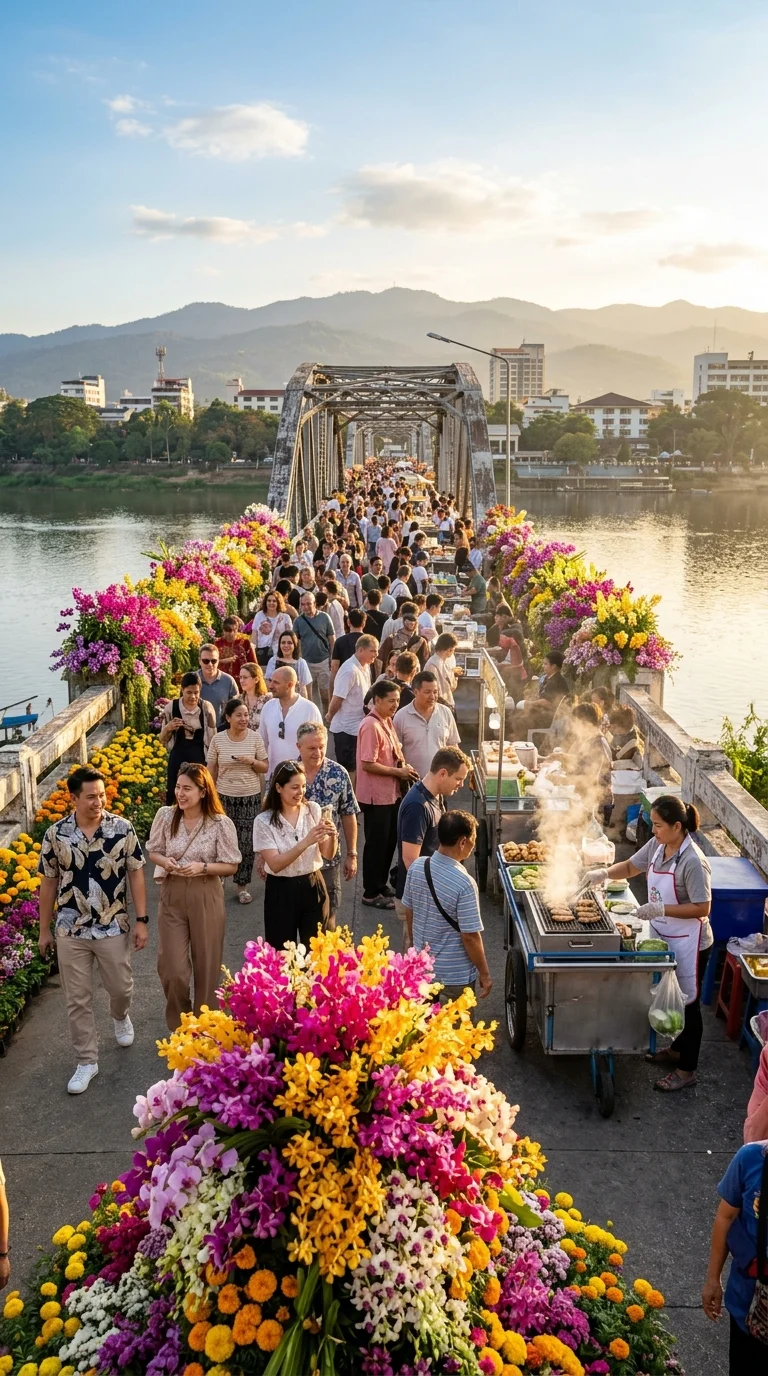
The festival occupies multiple locations across Chiang Mai city, primarily concentrated around the eastern and southwestern sections of the old city moat. The parade originates near the railway station and Superhighway Road, approximately 3 kilometres east of the old city, before marching across the Ping River. The main exhibitions are anchored at Buak Hard Public Park in the southwest corner of the moat. From Chiang Mai International Airport (CNX), a fixed-rate official taxi to the old city costs 150 THB (approx 3.30 GBP) and takes just 15 minutes in standard traffic. However, during the festival weekend, widespread road closures around Thapae Gate and the southern moat cause severe congestion. If you are staying within the old city walls, walking is the most efficient way to reach the parade route and the park. If travelling from outside the moat, use ride-hailing apps like Grab to get as close to the perimeter as possible, then complete the journey on foot.
Costs and Accommodation Strategies
Attending the Chiang Mai Flower Festival is entirely free, with no admission charges for the parade, the park exhibitions, or the cultural performances. The financial considerations for a UK visitor relate strictly to travel and accommodation during this peak-demand weekend. February sits at the tail end of northern Thailand's high season, meaning hotel rates are already at their annual peak. The influx of domestic tourists specifically for the festival drives prices up further, and central hotels routinely reach full capacity. You must book accommodation at least four to six months in advance to secure a room within walking distance of the moat. Staying in the Nimmanhaemin area or along the Ping River provides higher quality hotel options, but will require navigating heavily congested traffic to reach the festival events.
| Accommodation Type | Cost (THB per night) | Cost (GBP approx) | Notes |
|---|---|---|---|
| Old City Guesthouse | 1,200 - 2,500 | 26 - 55 | Basic amenities, excellent walking access |
| Mid-range Boutique | 3,500 - 6,000 | 77 - 133 | Usually includes breakfast and a pool |
| Riverside Luxury | 8,000 - 15,000+ | 177 - 333+ | Premium facilities, requires transport to events |
| Nimman Area Hotel | 2,500 - 5,000 | 55 - 111 | High standard, 15-minute drive to the old city |
Who It Suits Best
The Chiang Mai Flower Festival is highly recommended for photography enthusiasts, botany professionals, and travellers interested in traditional Thai arts and agriculture. It is an excellent event for families and older visitors, offering a completely dry, polite, and heavily policed environment that feels notably safer and more structured than other major Thai street events. It is less suitable for visitors expecting the high-energy, participatory street parties associated with Songkran, or those who suffer from severe pollen allergies or discomfort in very dense, slow-moving crowds.
What to Know Before You Book
The event occurs during the burning season transition. While early February usually precedes the worst of northern Thailand's agricultural smog, air quality can sometimes begin to deteriorate, so asthmatic visitors should monitor local pollution indexes.
Crowd density peaks significantly on Saturday evening. The walkways around Buak Hard Public Park and the adjacent night markets become tightly compressed, requiring a high tolerance for slow walking and crowded conditions.
Road closures disrupt standard travel plans. The municipal police close major sections of Thapae Road, Kotchasarn Road, and the inner moat ring to all vehicles, complicating airport transfers and standard sightseeing routes.
The festival does not justify a standalone flight from the UK. While highly impressive, it is best experienced as a strategically timed two-day component of a wider two-week itinerary exploring northern Thailand or the broader region.
Practical Tips
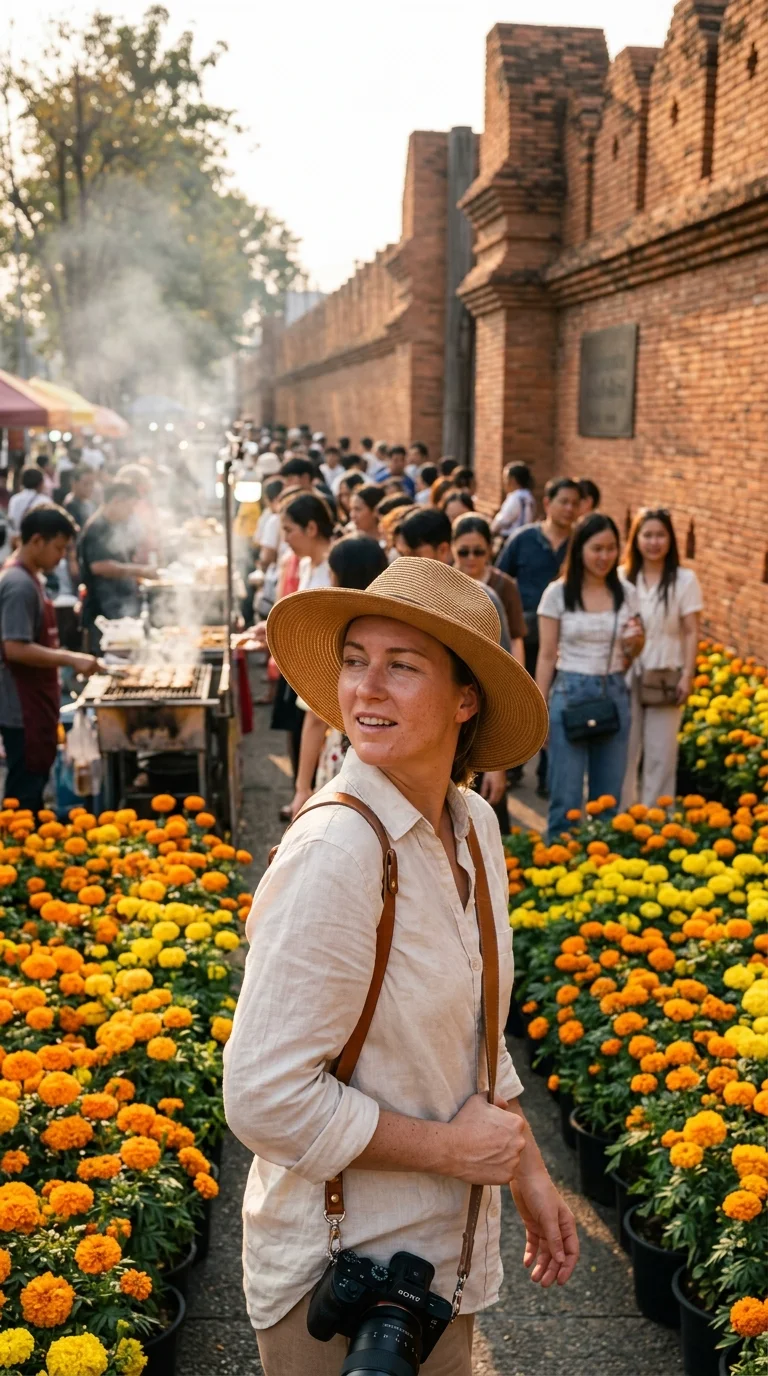
Position yourself on the shaded side of the street for the parade. The morning sun rises in the east, meaning the western pavements of Kotchasarn Road offer crucial relief from the direct heat while you wait for the floats.
Carry small denomination Thai Baht for the market stalls. Most street food vendors, agricultural sellers, and local craftsmen do not accept card payments or large 1,000 THB notes.
Visit Buak Hard Public Park twice to see different atmospheres. Walk through on Friday afternoon to see the floral displays in pristine condition with fewer crowds, then return on Saturday evening for the illuminated stages and pageant.
Book dining reservations well in advance for the Friday and Saturday nights. Restaurants along the Ping River and near Thapae Gate fill up rapidly with large domestic tour groups.
Utilise the side streets to navigate around the moat. When the main road outside Buak Hard park becomes impassable, walking one street deep into the old city allows you to bypass the bottlenecks entirely.
Do not attempt to touch the parade floats. The organic materials are highly fragile, and municipal workers will quickly intervene if spectators attempt to pull flowers from the displays.
Bring a dedicated telephoto lens if you plan to photograph the parade. The floats are large and the crowds are deep, making a 70-200mm equivalent lens ideal for isolating details and performers from a distance.
Quick Reference Table
| Item | Detail | Notes |
|---|---|---|
| Event Name | Chiang Mai Flower Festival | Held annually |
| Location | Chiang Mai, Northern Thailand | Spans multiple city locations |
| Event Type | Cultural and Horticultural Festival | Civic public event |
| Timing | First weekend of February | Friday to Sunday |
| Main Parade | Saturday morning, 8:00 AM | Departs from eastern city limits |
| Core Venue | Buak Hard Public Park | Southwest corner of the old city moat |
| Admission Fee | Free | No tickets required for any public areas |
| Nearest Airport | Chiang Mai International (CNX) | 15 minutes to the old city without traffic |
| Official Website | chiangmaicity.go.th | Municipal site, often limited English |