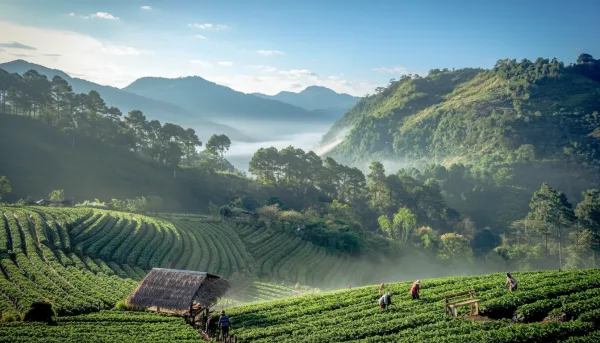
The northern capital operates on a rhythm dictated entirely by its geography.
Historically, mountains isolated the Lanna kingdom from Bangkok's influence. Most guidebooks portray this deeply rooted heritage as a frozen museum piece, but you will actually find ancient silver-smithing and animist spirit houses sitting effortlessly alongside world-class specialty coffee shops. Monks scroll on smartphones under seven-hundred-year-old teak temple roofs. The city is perfectly comfortable with one foot in the past and the other stepping firmly forward.
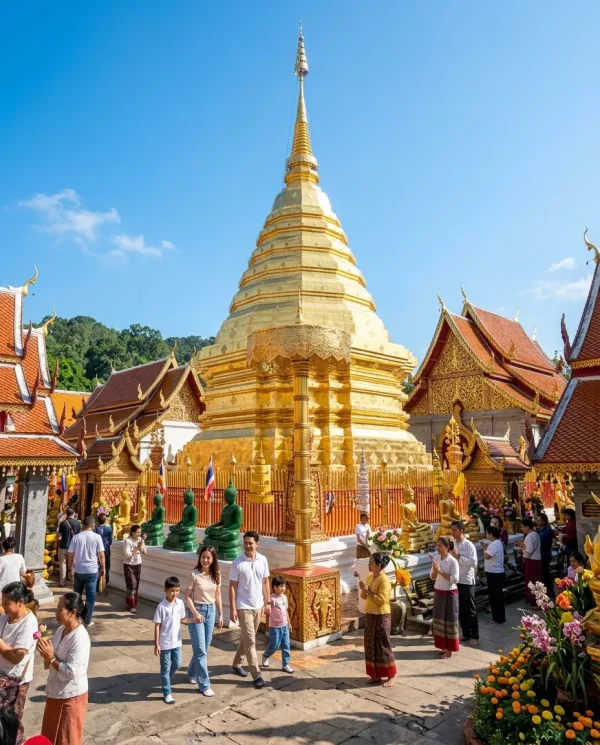
Buddhism here feels distinctly grounded, woven directly into the morning commute rather than confined behind compound walls. Before sunrise, locals line the moat to offer sticky rice to barefoot monks. It is a quiet daily exchange of merit that happens long before the tourist buses wake. You will notice spirit houses everywhere. Look closer and you might spot red Fanta bottles left as offerings to animist ghosts, a surprising blend of Lanna spirit worship and modern convenience. Wat Chedi Luang charges 50 THB (about 1.10 GBP) to see its earthquake-damaged stupa. The silver-clad Wat Sri Suphan asks the same fee, though women are strictly forbidden from entering the main ordination hall due to ancient Lanna beliefs about menstruation and sacred relics. If that feels exclusionary, slip away to Wat Umong. This forest temple lets you wander through mossy meditation tunnels entirely for free.
November brings Yi Peng, the northern lantern festival that coincides with the national Loy Krathong celebration. The sky fills with thousands of paper lanterns. What the brochures fail to mention is the overwhelming smell of paraffin and the occasional rogue lantern getting tangled in a telephone wire. Do not let that put you off. The community spirit is infectious. Entire neighbourhoods gather by the Ping River to launch banana-leaf floats into the dark water. Expect gridlock traffic and soaring hotel prices. Book your accommodation at least six months ahead and walk wherever possible. April turns the city into a good-natured battleground for Songkran, the Thai New Year water festival. While Bangkok celebrates for three days, the north stretches the soaking to almost a week. The detail often missed is that locals use the moat water to fill their buckets, which can occasionally lead to impromptu ear infections. Wear earplugs, buy a waterproof pouch for your phone, and embrace the absolute drenching you will receive the second you step outside. It is impossible to stay dry. You might as well join the locals dancing to Thai country music on the back of pickup trucks.
TRADITIONS & CUSTOMS
Social harmony dictates almost everything in the north. The pace of life, known locally as 'jai yen' or having a cool heart, means rushing someone is considered incredibly rude. A specific northern custom you will encounter is the 'wai' greeting accompanied by a slight bow of the head. It is performed far more frequently and deeply here than in the south. When eating, meals are always shared. Ordering an individual dish for yourself while others share plates will mark you out as profoundly foreign, though your hosts will be far too polite to point it out. The most common mistake Westerners make is pointing their feet at people or religious objects when sitting on temple floors. Simply tuck your legs to the side or sit cross-legged to avoid causing quiet offence. If you do slip up, a quick smile and adjustment is usually enough to smooth things over.
The region is the undisputed heartland of Thai celadon ceramics and intricate silverwork. You can watch artisans hammer silver sheets in the Wua Lai neighbourhood. Genuine, hand-stamped Lanna silver bowls start around 3,000 THB (about 65 GBP) here. Be wary of the Sunday Walking Street stalls selling mass-produced trinkets marketed as tribal handicrafts. Many are simply imported factory pieces. To find the real thing, visit the smaller studios down the side lanes of the silver district. You can literally feel the weight and see the hammer marks of authentic craftsmanship.
Khao soi is more than a curried noodle soup. It is a bowl of regional history tracing the migration of Chinese Muslims down through Myanmar. Eating here revolves heavily around the 'khantoke' tradition. This distinctly northern practice involves diners sitting on the floor around a low, round pedestal tray laden with small bowls of curries, sticky rice, and chilli dips. This is not just a method of serving food. It is a deliberate social equaliser. Sharing a khantoke forces everyone to lean in, pass dishes, and engage in the communal intimacy that defines northern Thai hospitality.
LANGUAGE & COMMUNICATION
The northern dialect, Kam Mueang, sounds softer and more melodic than standard Thai. Swapping the standard 'kap' or 'ka' for the northern 'jao' at the end of your sentences will make locals visibly beam at your effort. A simple 'lam tae tae' means truly delicious, which works wonders at street food stalls. If you want to dive deeper, a basic conversational Thai course locally costs around 4,500 THB (roughly 98 GBP) for thirty hours.
Dress conservatively when crossing the moat into the old city. The entire square mile is considered historically sacred ground, not just the individual temple complexes. Do not ride rented scooters shirtless under any circumstances. It deeply offends the local sense of modesty. Remove your shoes before entering any home or small shop. Look for a pile of sandals at the door as your cue. Never touch anyone on the head, as it is considered the highest and most sacred part of the body. Finally, avoid raising your voice in frustration. Keeping your cool solves problems far faster than anger.