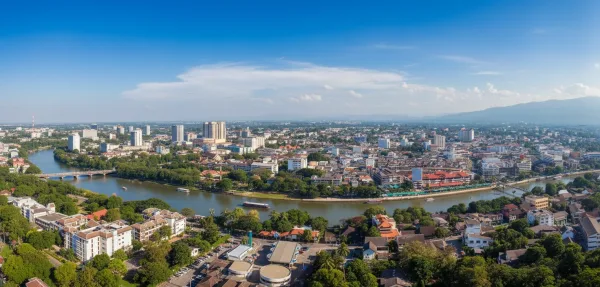
Chiang Mai is the only major Thai city where you can walk from a 13th-century temple to a modern co-working space in under ten minutes, though the square moat surrounding the old city acts as a giant one-way traffic filter that dictates every journey you take.
Most guides skip the reality that the city air quality fluctuates wildly, so checking the AirVisual app before booking for February or March is just as essential as packing your passport.
From London, you will likely fly into Bangkok Suvarnabhumi Airport with Thai Airways or EVA Air, costing roughly £800 to £1,200 for a return ticket with a flight time of 12 hours. To reach the north from the capital, Thai VietJet and AirAsia offer hourly flights from Suvarnabhumi or Don Mueang for 1,200 THB to 2,500 THB (£27 to £56), taking about 70 minutes; just ensure you book your luggage online in advance to avoid the 500 THB (£11) per kilo gate fee. For a more scenic entry, the overnight sleeper train from Krung Thep Aphiwat Central Terminal costs 1,050 THB (£23) for a lower berth in second class and takes 13 hours. It is remarkably reliable and saves you a night on accommodation, though the air conditioning is often set to freezing, so keep a hoodie in your day bag. If you are on a tight budget, the 10-hour government bus from Mo Chit station costs 650 THB (£14), but the winding mountain roads near the end can be a test for those prone to motion sickness.
The red trucks, known locally as Songthaews, are the backbone of transport here and cost a flat 30 THB (£0.67) for any trip within the old city walls. You simply flag one down, tell the driver your destination, and hop in the back if they nod, but always pay the driver exactly 30 THB upon arrival to avoid the tourist surcharge that often pops up if you ask the price beforehand. For private trips, Bolt is significantly cheaper than Grab in this city; a cross-city ride usually costs 80 THB (£1.80) compared to Grab’s 150 THB (£3.40), though Grab allows you to book a GrabBike for about 40 THB (£0.90) to weave through the 5:00 PM rush hour traffic. Renting a 125cc scooter costs 200 THB to 250 THB (£4.50 to £5.60) per 24 hours, which is the ultimate freedom for exploring the hills, provided you have an International Driving Permit to show at the frequent police checkpoints on Huay Kaew Road. Avoid the tuk-tuks for anything other than a novelty photo, as they frequently demand 150 THB (£3.40) for distances that a Songthaew covers for a fraction of that. If a driver offers you a tour of silk or jewellery factories for a suspiciously low price like 20 THB (£0.45), politely decline, as they are chasing commissions rather than showing you the sights.
GETTING OUT
Pai is the most popular escape, reached via a three-hour minibus journey from Arcade Bus Station for 210 THB (£4.70), famously involving 762 curves that make ginger sweets a necessity for the trip. For a quieter retreat, a private car to the mountains of Chiang Dao takes 90 minutes and costs roughly 1,500 THB (£34), offering a dramatic limestone backdrop without the backpacker crowds. Chiang Rai is a three-hour trip by the Green Bus service, costing 250 THB (£5.60) for a VIP seat, which provides more legroom than a standard economy flight and includes a small snack and water.
Chiang Mai International Airport (CNX) is located just 15 minutes from the city center, making it one of the easiest arrivals in Asia. Domestic flights use the northern end of the single terminal, while international arrivals from hubs like Singapore or Seoul use the southern end. Instead of the 150 THB (£3.40) fixed-price airport taxis, walk 100 meters past the exit to the public bus stop where the R3 bus costs just 30 THB (£0.67).
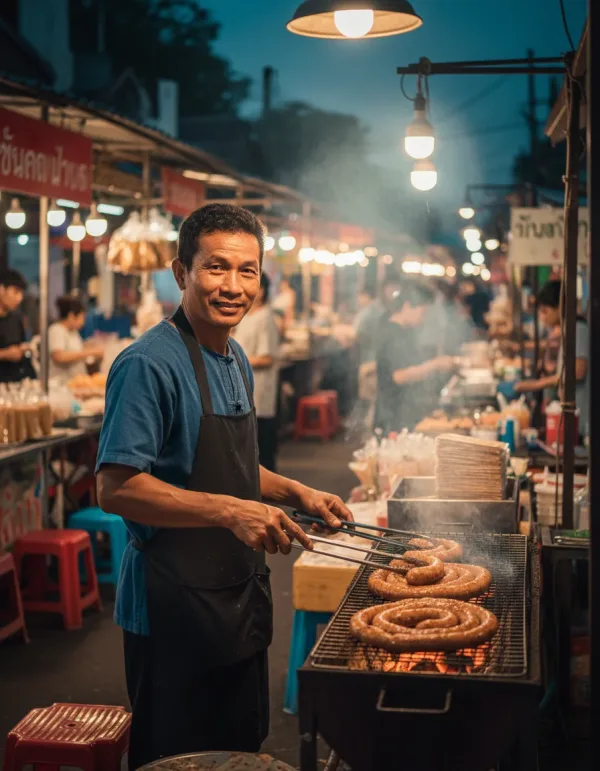
A budget traveller can manage on £25 a day, covering a 500 THB hostel bed and street food meals like Khao Soi for 60 THB (£1.35). Mid-range travellers should budget £60 daily for a boutique hotel and sit-down dinners with wine, while luxury seekers will spend upwards of £150 for five-star riverside resorts. ATMs charge a standard 220 THB (£4.95) fee per withdrawal, so withdraw the maximum 20,000 THB to minimise these costs. While cards are accepted in malls, the Saturday Walking Street is strictly cash-only for those 40 THB (£0.90) handmade souvenirs.
CONNECTIVITY
AIS offers the most reliable coverage in the mountainous north, with a 30-day unlimited data SIM costing around 700 THB (£15.70) at the airport arrivals hall. Most digital nomads rely on the city’s impressive fiber-optic wifi, which averages 200Mbps in most guesthouses and cafes. Be aware that during heavy monsoon downpours in September, localised power cuts can briefly knock out routers, so having a personal hotspot as a backup is a smart move for those working remotely.
UK passport holders receive a 30-day visa exemption on arrival at mainland airports (60 days for entries made before 15 September 2026, under the previous exemption scheme). Tipping is not mandatory but rounding up the bill or leaving 40 THB (£0.90) for a massage therapist is a appreciated gesture. Power outlets are Type A or B, the same as the US, though many modern hotels accept European Type C plugs too. In an emergency, dial 1155 for the Tourist Police, who speak excellent English. Always carry a small pack of tissues, as many public toilets in the markets still lack paper.