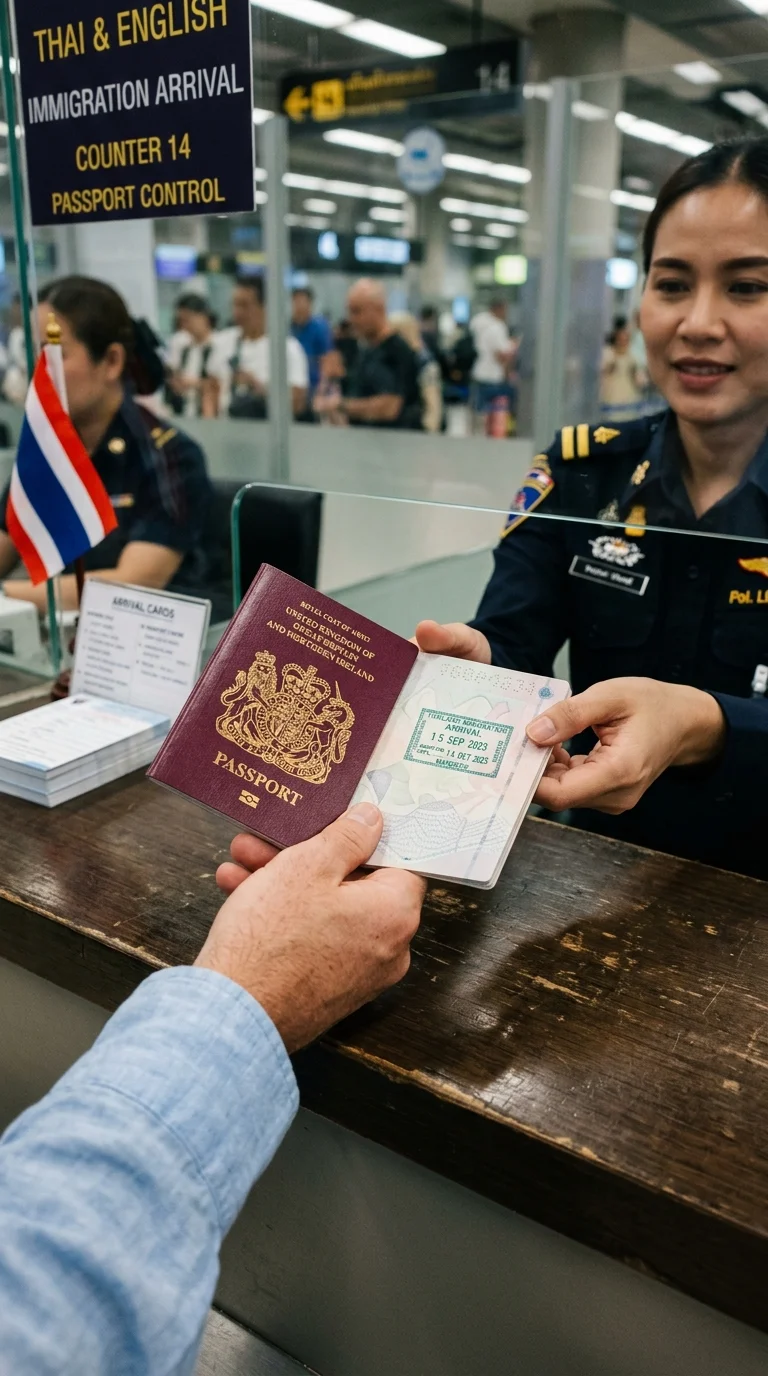
Visa Agents in Thailand
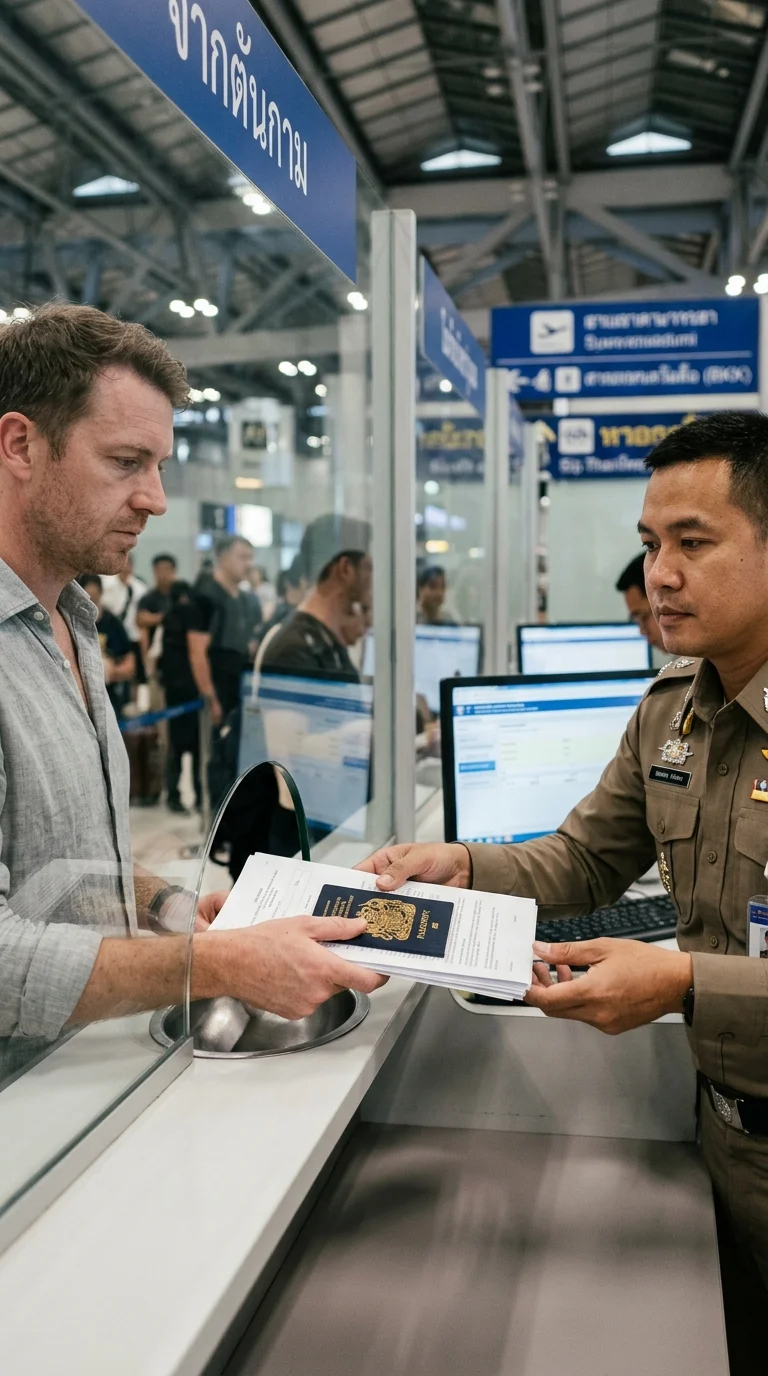
Using a visa agent in Thailand does not bypass legal immigration requirements, but it can cut processing times for complex non-immigrant extensions from weeks to mere days. While tourist e-visas cost just £30 directly, hiring an agent for a Retirement or Marriage Visa extension will typically add 15,000 THB (£330) to the official fees.
This guide breaks down exactly when UK nationals should hire a Thailand visa agent and when to handle the paperwork independently. You will learn the difference between online service platforms and on-the-ground fixers, what a specialist actually does, and how to spot illegitimate operators. This information is essential for anyone applying for complex long-stay visas, work permits, or in-country extensions. It is not for holidaymakers simply needing a standard tourist entry, which is easily processed online.

Visa Agents Versus Visa Service Platforms
Understanding the distinction between an online visa service platform and a local Thai visa agent is the first step in deciding what help you actually need.
Learn exactly how to apply for a Thailand Marriage Visa as a UK national. We cover 400k THB financial requirements, document legalisation, and renewals.
Online platforms operate globally, acting as an interface between you and the official Thai e-Visa system. These companies charge a moderate premium to check your digital uploads, resize your photographs, and ensure your application meets the Royal Thai Embassy in London’s technical requirements. They are highly effective for securing standard 60-day Tourist Visas. You can also use them for the initial entry of a Non-Immigrant O visa before leaving the UK. Local Thai visa agents are entirely different entities. Operating out of physical offices in cities like Bangkok, Chiang Mai, or Phuket, these businesses handle the physical, on-the-ground reality of Thai immigration. They do not just check digital forms. A local agent will physically take your passport to the local immigration office, queue on your behalf, negotiate with officers over minor document discrepancies, and manage complex in-country processes like converting a tourist stamp into a Non-Immigrant B visa. You pay online platforms for digital convenience. You pay local agents for physical representation and deep knowledge of specific provincial immigration office quirks.
Choosing the right type of service depends entirely on whether you are applying from the UK or already dealing with bureaucracy inside Thailand.
When You Genuinely Need A Visa Agent
Sponsored
Not every Thai visa application justifies paying a third party to manage the process for you.
If you are applying for a Tourist Visa (TR) or a Destination Thailand Visa (DTV) from the UK, the official e-Visa portal is highly functional and requires no specialised legal knowledge. You simply upload your bank statements showing the required 500,000 THB (£11,000) for the DTV and wait for approval. However, the calculation changes dramatically once you enter Thailand and begin applying for long-term extensions. Securing a one-year extension based on marriage (Non-Immigrant O) requires photographs of you and your spouse in specific rooms of your house, hand-drawn maps to your property, and multiple witnesses. Attempting this independently often results in multiple rejected visits to the immigration office because a photograph was taken from the wrong angle. Similarly, setting up a Thai company to secure a Non-Immigrant B visa and a work permit involves coordinating with the Ministry of Labour, the Department of Business Development, and the Immigration Bureau. A reputable agent synchronises these distinct government departments. They know exactly which official requires original signatures in blue ink and which will accept a stamped copy.
Pay an agent when the cost of your time and the risk of a rejected application outweigh their service fee.
| Visa Type | Independent Difficulty | Agent Value | Recommendation |
|---|---|---|---|
| 60-Day Tourist Visa | Low | Minimal | Apply independently via Thai e-Visa portal |
| Destination Thailand Visa (DTV) | Medium | Moderate | Apply independently unless document translation is needed |
| Non-Immigrant O (Retirement) Extension | Medium | High | Use an agent to bypass complex financial verification queues |
| Non-Immigrant O (Marriage) Extension | High | Very High | Use an agent due to extreme document scrutiny and witness rules |
| Non-Immigrant B & Work Permit | Very High | Essential | Always use a corporate visa agent or legal firm |
What A Specialist Agent Actually Handles
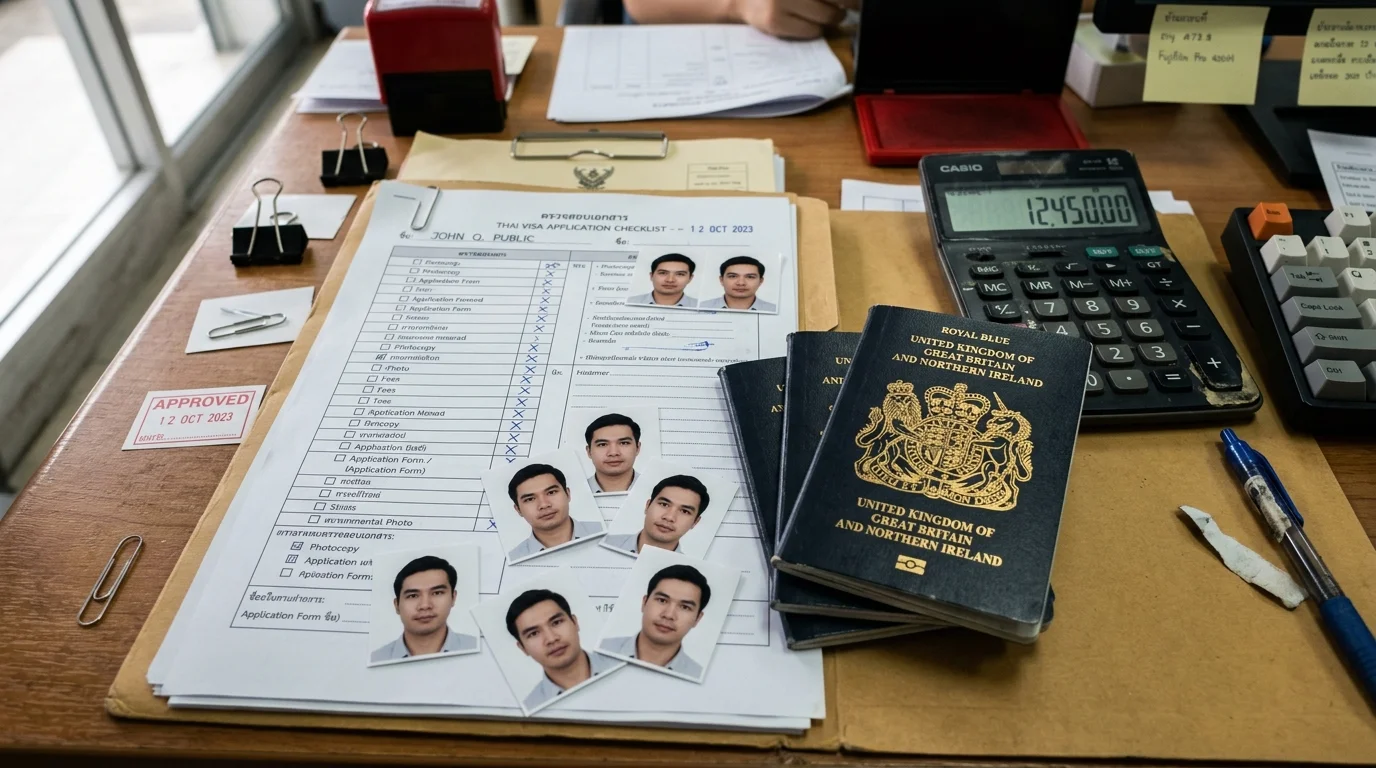
A specialist visa agent essentially acts as a buffer between you and the highly discretionary nature of Thai immigration officers.
The core value of an agent lies in their pre-approval vetting process. Before your application ever reaches an immigration desk, an agent will review your UK bank statements, income affidavits, and rental contracts to ensure they meet the specific, often unwritten, preferences of the local immigration chief. For a retirement extension requiring 800,000 THB (£17,700) in a Thai bank account, the agent ensures your bank letter is dated on the exact day of application. They translate vital UK documents, such as marriage certificates or police clearances, into Thai and arrange for their legalisation at the Ministry of Foreign Affairs in Bangkok. Crucially, a local agent handles the queuing. Rather than arriving at Chaeng Watthana in Bangkok at 5:00 AM to secure a queue number, you simply arrive at an appointed time to sign the final forms while the agent manages the waiting. They also track your 90-day reporting dates and manage the physical submission of your passport.
An agent's true service is transforming an unpredictable bureaucratic ordeal into a scheduled, predictable transaction.
How To Find And Vet Legitimate Agents
Identifying a legitimate visa agency requires looking past slick websites to examine their physical presence and local reputation.
A legitimate agent will always have a registered physical office that you can visit in person. Before handing over your passport, insist on visiting their premises to observe their operation. Look for business registration certificates displayed on the wall and verify they have dedicated staff, rather than a single individual operating out of a coffee shop. Legitimate agencies will provide a clear, itemised invoice separating the official government fee—such as the 1,900 THB (£42) extension fee—from their service charge. They will ask detailed questions about your immigration history, previous overstays, and financial standing. Conversely, avoid any agent who promises a guarantee of approval before seeing your documents. Run away from anyone offering to secure a visa without you meeting the legal financial requirements. In the UK, vetting an agent means checking their registration with relevant immigration authorities and searching for independent reviews on expat forums. Do not rely solely on basic star ratings, as these are easily manipulated by online operators.
Always demand a written contract and an official receipt when handing over your passport and payment.
The Legal Position Of Visa Agents In Thailand
Operating as a visa agent in Thailand is a legal and recognised business activity, provided the agency operates within the boundaries of immigration law.
Agents hold no official government authority. They are simply facilitators who understand the administrative machinery. Thai immigration officers are accustomed to working with registered agents, and many provincial offices have dedicated queues specifically for agency representatives. However, the legal liability for your visa application rests entirely with you, the applicant. If an agent submits forged bank statements or falsified rental agreements on your behalf, you are the one who will face deportation, not the agent. The Thai Immigration Bureau has increasingly cracked down on illegal agency practices, particularly the creation of fake foundation visas or volunteer visas designed to bypass standard long-stay requirements. Using an agent to purchase a visa you are not legally qualified for is a criminal offence. You must sign the official TM.7 extension form yourself, and you must appear in person for your photograph to be taken by the immigration officer. An agent who claims you do not need to visit the immigration office at all is likely engaging in corrupt practices.
Protect yourself by verifying every document submitted in your name and ensuring you genuinely meet the visa criteria.
What Happens When Your Visa Agent Makes A Mistake
Even the most experienced visa agents occasionally encounter issues with Thai immigration, and understanding how to handle these errors is vital for your legal safety.
When an agent misses a crucial deadline or incorrectly formats a document, the immediate consequence falls squarely on you. If an agent fails to submit your passport before your current stamp expires, you will incur an official overstay fine of 500 THB (£11) per day. Legitimate agencies will immediately take financial responsibility for this fine and negotiate with the immigration officer to ensure no permanent black mark is placed on your record. However, unscrupulous operators may simply hand your passport back and deny any wrongdoing. If your application is formally rejected due to an agent's error, you typically have a very brief window, often just seven days, to rectify the situation or leave the country. You must immediately retrieve your passport from the agent and assess the damage. Do not blindly trust an agent who claims they can fix a major rejection with a bribe, as this compounds the problem.
Always demand immediate, transparent communication the moment an application encounters resistance from the immigration bureau.
Costs and Budgeting
Budgeting for visa services requires separating fixed government fees from highly variable agency service charges. Official Thai immigration fees are strictly regulated. A standard 60-day Tourist Visa costs £30 when applying via the official portal in the UK. In-country extensions, regardless of the visa category, cost exactly 1,900 THB (£42). Agency fees, however, depend entirely on the complexity of the visa and the province where you apply. A basic tourist visa extension handled by an agent might incur a service fee of 2,000 THB (£44) on top of the government charge. Processing a Non-Immigrant O Retirement Visa inside Thailand will typically cost between 15,000 THB and 25,000 THB (£330 to £550). Establishing a Thai limited company to secure a Non-Immigrant B visa and work permit usually ranges from 40,000 THB to 60,000 THB (£880 to £1,330), excluding statutory registered capital requirements. Always budget for additional supporting costs. Document translation and legalisation can easily add 3,000 THB (£66) to your total bill.
| Item | Cost (THB) | Cost (GBP approx) | Notes |
|---|---|---|---|
| Official In-Country Extension Fee | 1,900 THB | £42 | Fixed government rate for all extension types |
| Agent Fee: Tourist Extension | 2,000 - 3,000 THB | £44 - £66 | Covers queuing and document prep |
| Agent Fee: Retirement Extension | 15,000 - 25,000 THB | £330 - £550 | Includes financial document vetting |
| Agent Fee: Marriage Extension | 20,000 - 30,000 THB | £440 - £660 | Higher cost due to extreme document scrutiny |
| Translation & Legalisation | 1,000 - 3,000 THB | £22 - £66 | Per document, depending on complexity |
Common Mistakes And How To Avoid Them
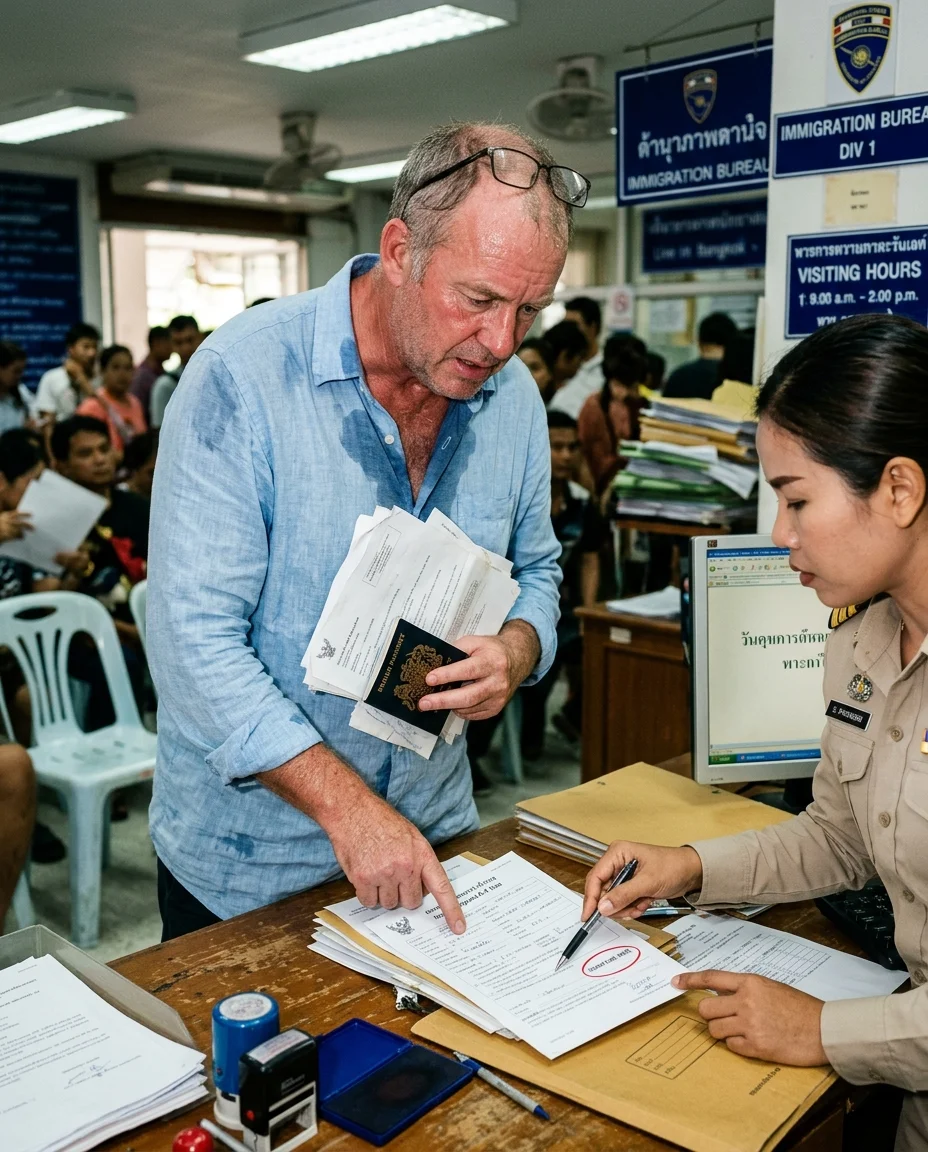
The first mistake is handing over your passport to an agent without securing an official, itemised receipt. You risk losing your most vital travel document with zero proof the agent ever held it. Always demand a signed, stamped receipt detailing your passport number and the exact date it will be returned.
Another common error is trusting agents who promise you do not need to show any personal financial proof. This indicates the agent is illegally falsifying bank records on your behalf, which can lead to your permanent deportation. Only use agents who insist on seeing your genuine bank statements and income affidavits.
Many applicants make the mistake of paying the entire service fee upfront before any work begins. If the agent fails to secure the visa, you have zero leverage to demand a refund. Negotiate a payment structure where you pay a deposit initially, with the balance due only upon successful stamping of your passport.
The final mistake is failing to check the new visa stamp before leaving the immigration office or agency. You might inadvertently overstay if the agent secured a shorter extension than promised or missed a critical reporting date. Always open your passport immediately and verify the admitted until date matches your exact expectations.
Practical Tips

Keep personal copies of every document you provide to your agent. Immigration files can be lost, and having a backup ensures you can reconstruct your application instantly.
Track your own 90-day reporting dates independently. While good agents offer this service, the legal penalty of 2,000 THB (£44) for a late report falls entirely on you.
Sign all document photocopies with blue ink only. Thai government offices frequently reject black ink signatures because they look too much like standard printed pages.
Ensure your passport has at least two completely blank pages before initiating any long-stay application. Non-immigrant visas and their accompanying entry stamps consume significant space, and agents cannot process applications in full passports.
Never use a general tourist visa agent to set up a corporate entity or work permit. Business immigration requires specific legal expertise that a standard high-street visa fixer simply does not possess.
Ask for a specific communication schedule when you hand over your paperwork. Knowing exactly when the agent will update you prevents unnecessary anxiety during the processing window.
Verify your agent's operating hours during Thai public holidays. Immigration offices close frequently for national events, and your agent needs a plan if your expiry date falls on a closure day.
Research the specific requirements of your local provincial immigration office before meeting an agent. Knowing the baseline rules helps you identify if the agent is quoting accurate fees or overcharging for unnecessary services.
[DISCLAIMER: Visa rules and fees are subject to change. Always verify current requirements with the official Thai Immigration Bureau at immigration.go.th or the Royal Thai Embassy before applying.]
Quick Reference Table
| Item | Detail | Notes |
|---|---|---|
| Primary Function | Administrative facilitation and document preparation | Agents do not grant visas; they manage the application process |
| Best For | Non-Immigrant extensions, work permits, complex cases | Not necessary for simple 60-day tourist entries |
| Official Extension Fee | 1,900 THB (£42) | This is the government fee, regardless of visa type |
| Typical Agent Fee | 2,000 THB to 30,000+ THB (£44 to £660+) | Varies drastically based on visa complexity and region |
| Legal Status | Legitimate business facilitators | You remain legally responsible for all submitted documents |
| Financial Requirements | Must be met genuinely by the applicant | Falsifying funds via an agent is a criminal offence |
| Processing Time | Saves hours of queuing, days of prep | Does not bypass mandatory government review periods |